Unknown's avatar

About Barbara Harper

https://barbarah.wordpress.com

Friday’s Fave Five

I feel like a lot of this week has been lost in a fog. I’ve been battling intermittent headaches since Tuesday. The first day was the worst, so hopefully this will fade out soon. I almost wonder if it’s viral, since Jim had a headache Saturday night and Sunday and Mittu had one Sunday.

Even still, there are blessings scattered throughout our days. I’m sharing a few with Susanne and friends at Living to Tell the Story.

1. The annual Chalk Walk. I’ve wanted to attend this for years, but somehow we always missed it until now. It’s a day when people are invited to do chalk drawings on Market Square downtown. I’m not sure how it works–they have to sign up ahead of time and are assigned a number, and people can vote for their favorites. There are prizes in several categories, but I am not sure what they were. Some squares were done by professional artists, some just for fun, some by children. Here are a few I got pictures of:

This gives you an idea how big the squares were.

Some, like this one, took up two squares.


In all honesty, the event wasn’t quite as epic as I expected. It was incredibly crowded. We went in the later afternoon, when most of the artists would be done or nearly so. But I guess a lot of people had the same idea. 🙂 Downtown Knoxville isn’t usually hard to navigate–nowhere near as bad as Atlanta–but with this and some other events going on, it took forever to get in and out of the parking garage.

Still, I was glad I finally got to attend. I don’t know if we will next year. We wondered whether enough of the drawings would still be visible the next day–we might be able to stroll around at more leisure then.

Jason, Mittu, and Timothy had gone with us to the chalk drawings. They’re more familiar with the downtown area than we are and recommended going for a late lunch/early dinner at Maple Hall. It’s a bowling alley in an old building, but they also serve great food, and most of the crowd would probably be going to other restaurants. That turned out to be true–the place was not crowded, though it was loud. Their turkey club sandwich was wonderful.

Then we went to a nearby chocolate shop for some take-home sweets. When Jim and I got home, we crashed on the couch and dozed off.

2. Another serendipitous coupon. I got a notice that I received a $3 coupon for a Kindle book due to their rewards program right when I was considering a book for $2.99.

3. Intersections of reading. I’m in Philippians, and a few days ago read in chapter 2 to “Have this mind among yourselves, which is yours in Christ Jesus” (verse 5) and some of the surrounding verses about unity and humility. I’m using Wiersbe’s commentary, Be Joyful (Philippians): Even When Things Go Wrong, You Can Have Joy. A couple of days later, I started reading Humble Roots: How Humility Grounds and Nourishes Your Soul by Hannah Anderson. Her introductory pages mentioned the same passage. A couple of days later, I turned on BBN Radio while puttering in the kitchen, and Chuck Swindoll was discussing the same passage. Then a few friends from a church we attended when we were first married posted a sermon by the pastor there, so I listened to it–and he discussed the same passage.

Do you think maybe God wants me to hone in on this passage? 🙂

4. Another Crumbl cookie. They change their menu every week, only offering six choices at a time. This week they had a glazed oatmeal cookie that was incredible.

5. My thoughtful husband got dinner out for us the day my headache was the worst.

So it was not a bad week, even though I wasn’t operating on all cylinders most of it.

Most of all this week, I am thankful that we celebrate Jesus’ death for our sins and His resurrection on Sunday. Happy Easter to you and yours.
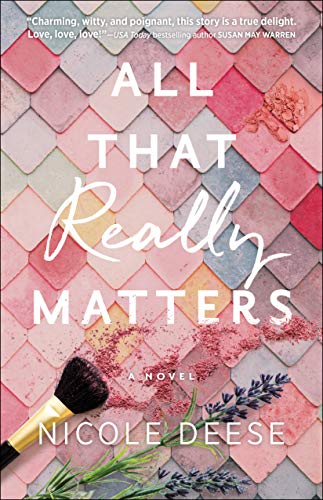
All That Really Matters

In Nicole Deese’s novel All That Really Matters, Molly McKenzie’s video channel about makeup and fashion has over half a million followers. She has corporate sponsors, a virtual assistant, and a manager who became her boyfriend.

Her manager shares an opportunity to host a makeover show. But first, she needs to increase her followers even more. And she needs a cause to show her compassionate, involved side.

Molly seeks advice from her pastor brother, and he directs her to a mentor program for kids transitioning out of the foster care program.

But the program director, Silas, is not impressed by Molly at their first interview. His kids are dealing with serious, real-life problems Molly knows nothing about. How could she help them?

When Molly comes back to him with a well-thought-out plan for classes, Silas decides to give her a chance. And his life and program are never the same.

At first, Molly is motivated to simply get this requirement out of the way. But as she gets involved with the kids, especially Wren, a quiet outsider of the group, Molly begins to really care about them.

Just as Silas begins to appreciate that there’s more to Molly than her sparkling online presence, a series of crises come that cause Molly to question her identity and purpose.

The first part of this book was just delightful. Molly is not the kind of character I’d normally connect with, but Nicole took care not to make Molly a caricature. She’s enthusiastic, but not overly bubbly. And, as Silas discovered, she’s not empty and vain.

Silas is a serious, caring, but by-the-book director. I like how Molly’s influence loosened him up a little. One reviewer thought they had something like the Maria/Captain Von Trapp vibe in The Sounds of Music.

When the crises came, my heart went out to Molly and the other people involved. Nicole drew all the characters so well and infused the plot with both humor and pathos.

Here are a few of the quotes I loved:

Of helping without overstepping. It’s difficult to see real needs and not want to rush the process to appease our own desire for restoration (p. 125, Kindle version).

But more often than not, the best rescue plan we can offer someone we care about is our support for each step they take forward (p. 209).

I think we first have to understand just how deeply we are already loved that way—by God. Then we can love each other out of the response to His love for us (p. 247).

You don’t honor God with your life by changing your personality and tossing out everything that is unique about who you are. You honor Him by offering those very gifts back to Him (p. 331).

This is the first book I’ve read by Nicole, but it won’t be the last. In fact, I loved this book so much, I already started the sequel, All That It Takes.

Applying God’s Word

The Bible tells us to be doers of the Word, not just hearers (James 1:22, Matthew 7:21, Luke 6:46, Romans 2:13).

But sometimes it’s hard to know what we’re supposed to do with some parts of the Bible.

Some verses are easy to understand how to put into practice. For instance, Ephesians 4:28 says, “Let the thief no longer steal, but rather let him labor, doing honest work with his own hands, so that he may have something to share with anyone in need.” The thief needs to stop stealing, obviously. But the instruction doesn’t stop with a “don’t.” It continues with a “do” to replace the “don’t”: work hard and give to others who have a need.

But what do we do with passages that don’t explicitly contain instructions about what to do or not do?

I read somewhere about a man who, after reading the creation account in Genesis 1 and 2, felt that in response he needed to clean out his garage. Well, yes, God is orderly, and to some extent He wants us to be orderly as well. But I’m not sure that’s what the creation account is in the Bible to tell us.

Here are a few tips I’ve found helpful to understand how to apply Scripture.

Pray. We need God’s wisdom to know how to put His Word into practice.

Observe and interpret first. Observation, interpretation, and application are the three sides of Bible study. If we’re off on the first two, we’ll be off on the third.

Part of observation is seeing who said what to whom in the passage. Sometimes a command or promise is given to one person or group of people in the Bible, but they are not meant for all people or all time. However, God included those passages for a reason and there’s something He wants us to learn from them.

For instance, the Old Testament law in the first five books of the Bible was given partly to express God’s holiness and partly to show people that they could never earn righteousness by keeping it, because no one could keep it completely. New Testament writers take pains to explain that Jesus fulfilled all the law in our place and we’re not under it any more. But we learn about the cost and pervasiveness of sin in Leviticus and see symbols of Christ in the sacrifices (I wrote more about what we can get out of Leviticus in Where Bible Reading Plans Go to Die.)

Study the context. Mark 14 tells of a woman who broke open an expensive alabaster box and poured the costly perfume on Jesus. I read an article years ago where the writer compared the alabaster box to a girl’s virginity, something rare and precious that she could only give once. While I appreciated the parallel the author was trying to make, she completely missed the point of the passage. Instead, she made the passage mean something it didn’t mean. This demonstration was an outpouring of the woman’s love and a foreshadowing of Jesus’ death and burial. Jesus Himself said she had “done what she could; she has anointed my body beforehand for burial” (14:8). Imagine the girls who read that article associating it with virginity for the rest of their lives and missing the extravagant love of this woman as well as the reference to Jesus’ death.

Prescriptive or descriptive? Part of interpreting the Bible (which I wrote more about here) is determining whether the passage is describing something we should emulate. Just because the Bible records people doing things in Scripture doesn’t mean it’s approving what they do or saying we should follow their example. Some of the historical passages are descriptive: they just tell us what people did. We can still make observations, but the passage isn’t there to give us an example to follow.

A prescriptive passage, though, is one that “prescribes” a certain behavior. Much of Proverbs and the epistles are prescriptive, though prescriptive passages are throughout Scripture.

I’ve seen people use Abraham’s example of looking for a wife for his son, Isaac, to say that we should promote courtship rather than dating among young people. Some said that fathers should choose spouses for their adult children, or at least be heavily involved in the process. The courtship vs. dating debate has been a hot topic that I don’t want to get into any more here; I just wanted to say that this passage in particular doesn’t teach it. We can learn from it the necessity to be careful and prayerful in finding a spouse, to look for one of the same faith, to trust God and seek His direction. But nowhere in the Bible are we told to find spouses for our children in the same way Abraham did.

Find principles to draw on. A former pastor once read an OT passage about oxen to the congregation. Then he asked, “Do any of you own oxen?” No one did. He asked, “How many of you have ever even seen an ox?” A couple of people raised their hands. The pastor said, “So this doesn’t apply to us. We just turn the page and move on, right?” We didn’t think so, and he agreed. Then he brought out several principles from the passage. An ox who accidentally gored someone was handled one way. But if the ox was known to be cantankerous and try to gore people, and the owner didn’t take any means to keep the animal penned in, the owner was more liable if the animal hurt someone. We can see the parallel with dogs prone to bite. If someone saw their neighbor’s ox wandering far from home, he wasn’t supposed to ignore it. He was supposed to help his neighbor.

Romans 14 lists several principles involving meat offered to idols. Some of the early Christians felt that meat was okay to eat, because the idol is a false god and the sacrifice didn’t taint the meat. Others felt it was wrong to eat that kind of meat because of the association with idol worship. Even though we don’t deal with this issue in most of the world today, several issues apply to actions like this where the Bible doesn’t give any clear teaching: do whatever you do as unto the Lord; be fully convinced in your own mind; don’t judge the brother who handles the meat differently than you would; don’t do anything that would cause another to stumble.

Some responses are inward. One source I read years ago said that we should end every time of Bible reading with an action item, a plan to put into practice what we read.

To be sure, if we’re convicted from the passage we’re reading that we need to confess something to the Lord or apologize to someone, we need to act as soon as possible.

But some parts of Scripture are there to promote wonder, awe, and worship of God and faith in His ability and power and wisdom. Those passages will affect our actions, but they’re concerned with the condition of our hearts.

And some passages can’t be obeyed just by checking off an action item. Say, for instance, we read the passage about loving our neighbor. We think about our literal next-door-neighbor, an elderly widow living alone. We decide next time we have the mower out, we’ll cut her grass as well as ours. And maybe we’ll make some banana bread and take a loaf over to her. And we brush our hands and think, “There! I’ve loved my neighbor.”

But did God put that command in Scripture to inspire random acts of kindness to check off our to-do list? Yes, love will manifest itself in thoughtfulness and actions. But love is more than an action item. It’s an attitude of heart to carry with us all the time. Like when another neighbor’s backyard party is too loud and long. Or when he keeps borrowing your tools and returns them broken and dirty, if he returns them at all. Or when a neighbor child rings the doorbell just after you finally got the baby to sleep. Passages like the one about the Good Samaritan teach us that our neighbors are not just the friendly ones and that ministering to others can be inconvenient and costly. But what a picture of Christ, who sacrificed Himself for us while we were yet sinners.

Much more could be said about applying Scripture. But one last point I want to make is that the more we read the whole Bible, the more we’ll understand it and know how to apply it.

What tips have you found to help you put Bible teaching into practice?

(I often link up with some of these bloggers.)

Laudable Linkage

Some of the thought-provoking reads found this week:

So You Want to Be a Woman of the Word? “Women of the Word resist the world’s distractions and dedicate time to regular Bible study.”

Can Satan Put Thoughts into Our Heads? HT to Challies. “Yes, he can and he does. And of course, the urgent questions then are, How do we recognize them? And how do we resist them and not get controlled by them?”

Midlife, Christ Is. HT to Challies. This is very encouraging for those of us who are “middle-aged.”

The Wisdom of Avoiding Strife. “Sometimes Christians think God wants them to become punching bags. And at other times, perhaps in rejection of the punching-bag approach, Christians harden themselves to the point of arrogance and condescension toward their opponents. But what does it mean to fight like a Christian in situations of strife?”

I Just Need Something New! HT to Challies. “We know this right? It’s the gospel we have been told—perhaps for years. Yet we can so easily forget it. We get distracted by the shiny and new, and before we know it the false hope of man-centered change can push Christ to the background. We wonder if the novel is what we really need. This new Bible reading plan will get my act together. That new book will finally fix my parenting struggles. These new habits will refocus my heart through the day. Nehemiah 13 reminds us that mastery over outward disciplines just isn’t enough (Col. 2:23).”

Fear After Grief, HT to Challies. “Perhaps you’ve been walking through seasons of grief, as you mourn especially deep pain. The dark clouds have begun to shift, but you’re not sure if you can bear to greet the sun, lest you have to return to the dark.”

Yes, a Loved One Is Watching From Heaven, HT to Challies. “How has the Lord assured you he’s near in the deep grief that accompanies loss? The evidence of his presence is there if we look, but let’s not get confused about who’s watching over us. Look beyond your loved one to see and experience the love and kindness of our great God.”

Behind-the-Scenes: Endorsements. A look at why publishers require endorsements, what they mean, how to regard them.

Friday’s Fave Five

It’s been a fairly low-key week here, which I love. Weeks with big occasions are fun sometimes, but I need quiet ones in-between. And even in quiet weeks, blessings are scattered around if we stop to look. Here are a few of mine. I’m sharing with Susanne and friends at Living to Tell the Story.

1. Catching-up messages. One of my oldest friends, the maid of honor at my wedding, whose family I called my second family, messaged me one day last week for some information. That led to several messages back and forth. I enjoyed catching up with her.

2. Lunch with a newer friend, although Melanie and I have been friends for several years now, online at first, and then in person when she moved to Knoxville. We went to Cracker Barrel, always a favorite spot.

3. Letters from Timothy. He’s learning how to write letters in school and sent one to both his granddad and me individually. Not only are those letters treasures in themselves, but they reminded me of how much I enjoyed sending and receiving letters to my grandmother when I was a child.

4. Restaurant coupons. Domino’s had their pizzas half-price last weekend, plus I had enough reward points for a free one. Then later in the week, we got coupons from Subway in the mail and indulged in a free foot-long sub with the purchase of another (we always cut them in half to save for lunch the next day).

5. Something fun. I play Words with Friends with my sisters and another friend on my iPad mini. Each week the app has optional solo games you can play for tokens that can be used to exchange tiles without skipping a turn and other such things. The solo games are usually grouped around a theme, with some of the app players named for historical figures or made-up ones. Last week the category was Irish authors (I assume due to St. Patrick’s Day), with one of the players being C. S. Lewis. It was fun to seem like I was playing against one of my favorite writers (and I did beat him. 🙂 ).

How was your last week of March?

March Reflections

When I was a child, my siblings and I would sometimes get scolded for coming in and out of the house too often. We didn’t have central air conditioning until I was halfway through high school, so my parents weren’t concerned about letting cool air out or hot air in. But the frequently open door let in mosquitos and flies. Plus it was probably irritating when the door banged shut so often. We were told to decide what we were going to do and do it–either stay in or stay out for longer than a few minutes.

The entrance of spring reminds me of my childhood self. It’s as if the season can’t quite decide whether to settle in or retreat for a while. Or maybe winter is the culprit, setting out to leave, but coming back with, “Oh, and one more thing . . . “

We have a few more nights in the mid-30s coming up next week. But hopefully after that winter will stay out and spring will stay put a while.

March has been a pretty balanced month—not overly busy, but with a few fun things on the calendar. We celebrated my husband’s birthday early in the month. One Saturday we visited Fort Loudoun, a pre-Revolutionary War settlement, and the Sequoyah Birthplace Museum. We enjoyed several family times with dinner and games or just chatting.

Our church search has finally brought us to one that seems very promising. Over the next weeks we’ll explore Sunday School and some of the other get-togethers. I have high hopes.

I can’t recall watching or listening to much of interest this month that I’d want to recommend, so I’ll skip that section this time.

Creating

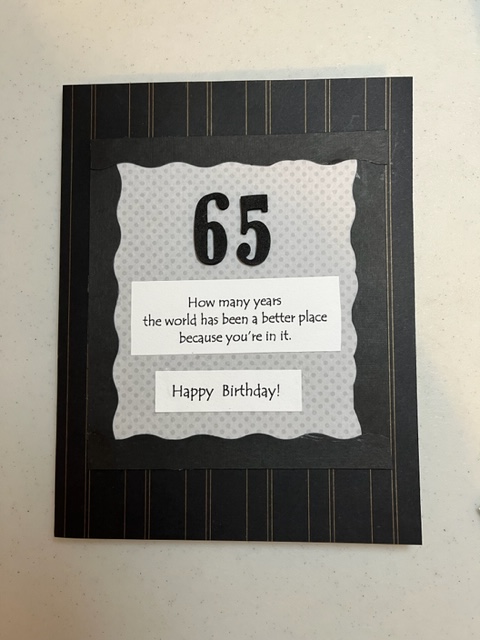
I just made one card this month, for Jim’s birthday.

The numbers are puffy foam stickers.

Reading

Last time, I had just finished Dakota Dawn, Dakota Dream, and Dakota Dusk by Lauraine Snelling, a novella series about Norwegian immigrants who settle in North Dakota in the early 1900s, but hadn’t had a chance to review them yet. They were packaged together in one audiobook.

Since last time, I finished (titles link to my reviews):

I’m currently reading:

  • Be Joyful (Philippians): Even When Things Go Wrong, You Can Have Joy by Warren Wiersbe
  • Humble Roots: How Humility Grounds and Nourishes Your Soul by Hannah Anderson
  • Murder Your Darlings: And Other Gentle Writing Advice from Aristotle to Zinsser by Roy Peter Clark
  • The Forgotten Life of Eva Gordon by Linda MacKillop
  • All That Really Matters by Nicole Deese
  • Ring of Secrets by Roseanna M. White, audiobook

Blogging

Besides the weekly Friday Fave Fives, Saturday Laudable Linkage, and book reviews, I’ve posted these since last time:

Writing

Finally, after a lot of prayer, motivated writing time in order to present to my critique group, and their very helpful and encouraging feedback, I’ve made major headway with my “problem chapter.” I wish I could stop everything and just write for a week. I guess most writers feel that way.

As we turn the calendar page to April, we look forward to Timothy’s birthday, Easter, warmer weather, and more blooms.

How was your March? What are you looking forward to in April?

The Lady and the Lionheart

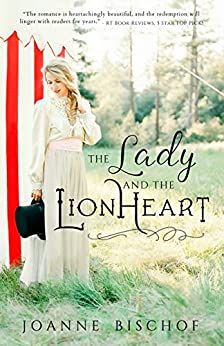
The Lady and the Lionheart by Joanne Bischof takes place in the Virginia of 1890. Ella Beckley has moved away from heartbreak in her mountain hometown to be a nurse in bigger city. The problem is that her knowledge is self-taught. The doctor with whom she applied won’t hire her for her homespun remedies. But he does let her work as a scullery maid, occasionally allowing her to assist in other ways.

One snowy evening, Ella is nearly bowled over by a tall, panicked stranger with a feverish baby. Busy, the doctor tells Ella to attend to the child. Ella learns that the man is a performer with the new circus in town. The doctor only lets the man and baby stay overnight since the man doesn’t have enough money to continue the baby’s care.

Risking her own job, Ella runs after the man, whom she learned was named Charlie Lionheart. She goes to his tent where she meets Regina, a widow who has become the baby’s godmother and who helps Charlie out. Ella tends the baby and checks back each day.

Circus life is a whole new world for Ella. Charlie has always kept his personal life private from “rubes”–circus outsiders who pay to laugh and gawk at performers but who think circus folks “beneath” fine society. But Ella’s kindness and persistent questions slowly break down his resolve, and he opens up to her.

They grow in appreciation and then attraction to each other, but the situation is impossible. Ella can’t run away and join the circus, after all. And Charlie is contracted for more than Ella knows. Plus they each have secrets from their pasts which have scarred them and affected their futures–secrets they’ve not yet shared.

I listened to the free audiobook version of this story, which did not contain any back matter. I’d love to know what inspired the author to write this story. I loved the subtle theme about not judging a book by its cover. The swarthy, heavily tattooed circus performer may have a heart of gold and a selfless reason for what he does. The pretty, kind nurse may hold a depth of pain behind her smile. But I especially loved when one character makes the point that when people are deeply damaged, and no amount of faith will make the circumstances or the past go away, they are still not to be discarded like a broken vase. They still have great value–and not only value, but beauty.

A few reviews I saw expressed dismay at how people perceived a man’s tattoos. They were offended the author would insinuate that anything was wrong with tattoos. But the author was portraying attitudes in the 1890s. The doctor says early on that tattoos were associated with ex-cons in that era.

I had gotten this audiobook not only because it was free, but especially because I had very much enjoyed the author’s Sons of Blackbird Mountain and Daughters of Northern Shores a few years ago. I felt that this story dragged just a bit (although another reviewer appreciated that it was “unrushed,” so maybe the pacing was a matter of perspective). It seemed the two main characters kept circling around the same issues over and over. There were a few editorial oddities that distracted me.

But despite those minor issues, I enjoyed the story, theme, and characters.

The Lost Art of Discernment

Most of think of discernment from the negative side. We want to discern good from bad so we can avoid the bad. We want to teach our families to avoid the bad as well. And that’s necessary. There is a lot of bad to avoid.

But constantly looking out for the potential bad can warp our thinking. Hannah Anderson says, “Facing so many variables, with good and bad so quickly blurring, most of us find it easier to retreat to safe spaces, cluster in like-minded tribes, and let someone else do our thinking for us” (p. 11). She goes on to share:

For a long time, I didn’t think very clearly at all because my actions and choices were shaped more by the brokenness around me than the reality of God’s goodness and nearness. When faced with a decision, I played defense: What will keep me safe? What are other people expecting me to do? What will happen if I make a mistake?

But in trying to keep myself safe, in obsessing over making the “right” choices, I found myself making a whole lot of wrong ones. Because I lacked a vision for goodness, I also lacked discernment. And without discernment, I had little chance of finding the security and happiness that I wanted—that I think we all want (pp. 11-12).

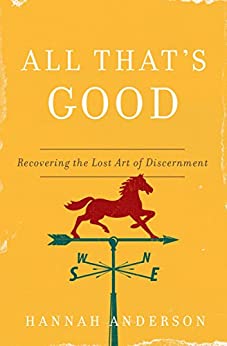
Hannah suggests a different approach. Why not discern good from bad in order to pursue the good? That’s just what she proposes and demonstrates in All That’s Good: Recovering the Lost Art of Discernment.

But what if there were a way to see clearly once again? What if we could see the world as God sees it—in all its brokenness and beauty—and in seeing, be able to do more than endure this life? What if we could flourish in it? I think we can. In fact, I’m convinced of this good news: Despite all the pain, all the sorrow, all the questions, goodness still exists because God still exists. And because He does, He has not left us to sort through the mess alone (p. 11).

God created the world and the people in it and pronounced them good (Genesis 1). But sin marred the world and our hearts (Genesis 3). Yet God has promised to restore goodness some day. And for now, even in spite of a marred visage, we can still trace God’s goodness in what He created. As we believe in and follow Him, “He is busy transforming you, renewing your mind ‘so that you may discern what is [His] good, pleasing, and perfect will'” (Romans 12:2) (pp. 12-13).

Hannah explains what discernment is and isn’t, what hinders “our ability to experience His goodness,” how “simply reacting to established culture is not enough, why naïveté and isolationism can cause us to misstep just as quickly,” how discernment and virtue intertwine,  what habits we can employ, and how God walks with us (p. 12).

Then Hannah devotes a chapter apiece to the things Paul told us in Philippians 4:8 to think on: “whatever is true, whatever is honorable, whatever is just, whatever is pure, whatever is lovely, whatever is commendable, if there is any excellence, if there is anything worthy of praise.”

Hannah weaves each of these truths with observations from everyday life: detective stories, vacations, pearls, art museums, making pies.

I took this book slowly, just reading one chapter a week and letting it sink in. I appreciated so much not only what Hannah said, but how she said it. I marveled at how she wove different elements together in her chapters.

I’ve got dozens of quotes marked, but here are just a few more:

There are no hacks to discernment. No three easy steps to follow, no lists or tricks or tips to ensure that you’ll be able to make good decisions when you need to. In order to make good decisions, you must become a discerning person, a person skilled in wisdom and goodness itself. And to be these kinds of people, we must be humble enough to be willing to learn (p. 27).

What Solomon realizes is that our life on earth, all the things we experience, all the work we do, all the good things we enjoy, aren’t simply a hurdle to the next life. They are designed by God to lead us to the next life. They are designed to lead us to Him. Like the grooves on a record, God’s good gifts are designed to draw us closer and closer to the center, to draw us closer and closer to eternity and Him (p. 53).

At its essence, worldliness is a disposition of the heart—the belief that goodness comes from the immediate satisfaction of temporal desire. But because worldliness is a disposition of the heart, we can’t simply retreat into religious contexts to escape it. We also can’t rely on adopting certain positions or practices to avoid it—especially if we use them to avoid the more difficult task of examining our own heart motives. As long as we’ve picked the “right” education for our children, go to the “right” church, watch the “right” movies, and vote for the “right” candidate, we won’t have to face the deeper truth about how easily our hearts are led astray. We could be consumerist, pragmatic, and completely worldly but never know it because we see our choices as “right” and thus are convinced that we are as well (pp. 53-54).

You develop discernment by becoming a person who knows how, not simply what, to think (p. 57).

In order to become discerning people, we also must separate our need for approval from our decision making. But to do that we’ll need a source of honor that is not dependent on how people perceive us. We’ll need a source of honor that doesn’t rest on presenting just the right look at just the right moment. And we find that honor, not in image crafting, but in the One who first crafted us in His own image (p. 84).

I didn’t realize until I was almost finished with the book that the last chapter contained review points and discussion questions for each chapter. That would have been helpful to know and use.

Hannah hosts a podcast called Persuasion along with Erin Straza.

If you are a member of Audible.com, the audiobook of All That’s Good is currently free with your subscription. They shuffle their free titles around at intervals, so I am not sure how long this one will be free. I did not listen to the audiobook—I can’t listen to books like this and get as much out of them as I can when highlighting and occasionally rereading parts. But I know some of you prefer nonfiction via audio.

But I encourage you to get and partake of this book. I can’t recommend it highly enough.

(I often link up with some of these bloggers.)


We Need Time Alone with God

In a recent magazine article, a Christian college professor expressed concern that his students weren’t Biblically literate even though they read their Bibles every day and even had parts of it memorized. His solution was that people should shift away from private, personal time in the Bible to communal times.

I don’t want to dissect and discuss the article here. However, I wanted to focus on the concept of communal vs. private times in God’s Word.

Do we need time together in the Bible? Yes. Reading and studying the Bible with others helps us get more out of the passage, encourages us, and (hopefully) keeps us from going off on tangents due to misinterpretation.

But I’m concerned that, in the battle against individualism and people pulling away from church attendance, we might go too far the other way and de-emphasize our personal walk with God.

God is the heavenly Father of all those who believe in Him. But we don’t relate to Him only as a group. Wise human fathers spend time with the family all together but also with individual members one-on-one. Our Father in heaven is even wiser. Though He created us to interact with and encourage each other, He also has a personal relationship with each of His children. And relationships thrive on communication.

When I was in college, we were sometimes reminded a Christian university was one of the easiest places to grow cold in our walk with God. Even though we heard the Word of God regularly in classes, in chapel, and in prayer groups, we couldn’t just coast on the spiritual atmosphere. We shouldn’t let Bible classes take the place of our personal time in Scripture.

Our time with others informs our personal time with God. And our time alone in His Word informs our time all together.

The psalms were sung in the congregation. Yet they are full of personal singular pronouns.

I sought the LORD, and he answered me and delivered me from all my fears (Psalm 34:4).

He drew me up from the pit of destruction, out of the miry bog, and set my feet upon a rock, making my steps secure. (Psalm 40:2).

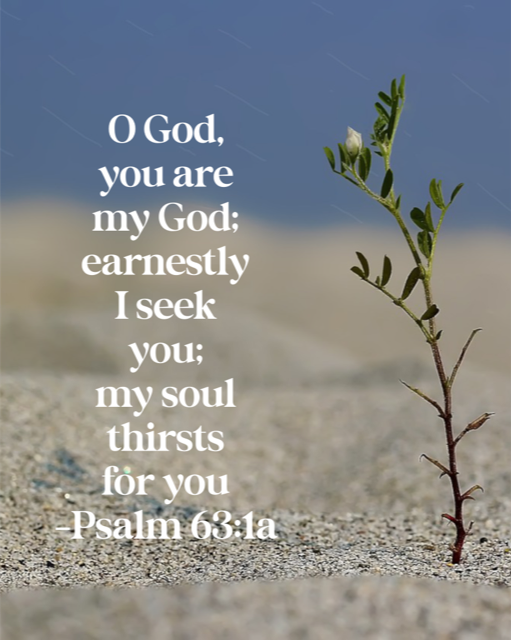
O God, you are my God; earnestly I seek you; my soul thirsts for you; my flesh faints for you, as in a dry and weary land where there is no water (Psalm 63:1).

My soul will be satisfied as with fat and rich food, and my mouth will praise you with joyful lips, when I remember you upon my bed, and meditate on you in the watches of the night; for you have been my help, and in the shadow of your wings I will sing for joy. My soul clings to you; your right hand upholds me (Psalm 63:5-8).

As much as we need each other, sometimes we have to stand alone with God.

David “encouraged himself in the Lord” (1 Samuel 30:6) when the men of Israel were ready to stone him.

Joseph spent years as the only apparent believer in the one true God that he knew when he was a slave in Egypt. His witness did seem to spread to others. But he had to remind himself of God’s truth on his own.

Two turning-point meetings with God in Jacob’s life happened when he was alone.

Daniel had friends of the same faith, but he faced the lion’s den alone, received visions alone, and prayed alone.

Paul ministered with companions but sometimes was alone.

Jesus dealt with crowds of people yet sought His Father alone.

We’ll each give account of ourselves personally to God. “For we must all appear before the judgment seat of Christ, so that each one may receive what is due for what he has done in the body, whether good or evil” (2 Corinthians 5:10).

If we’re reading the Bible regularly and still don’t know much about it, there are ways to improve. Jen Wilkin’s book, Women of the Word, was written for just that reason. I’m trying to write a book on the same topic. There are aids all over the Internet to improve our devotional time, or quiet time, or time in God’s Word. I’ve written about several aspects here.

But let’s keep things in balance. Meet with other believers to read and study God’s Word. But meet with Him alone as well.

(I often link up with some of these bloggers.)

Laudable Linkage

Here are some of the posts that especially resonated with me this week:

If God Would Outsource His Sovereignty. “I want you to imagine that, at least for a time, the Lord would see fit to involve us in selecting the providences we would receive from his hand. I want you to imagine that through one of his deputies—an angel perhaps—he would approach us to ask how we would prefer to serve him.”

Struggling with the Struggle. “The main feeling that is overwhelming me right now is guilt. After all, shouldn’t I be overjoyed that God is teaching me intense lessons right now? And then I judge myself harshly for thinking that hard times are actually hard and not much fun.”

There Is Something Better Than Never Suffering, HT to Challies. “To suffer, with Christ, is a vastly superior to a life of comfort without him. And if he has saved you through his death, manifesting all his divine power in his own human weakness unto death, do you not think he can be your power in your suffering?”

It All Holds True, HT to Challies. “We want to shield our kids from pain. We want them to learn perseverance and endurance and real, personal faith without having to go through anything hard. That’s not quite how it works in the Christian life. Perseverance is cultivated in adversity.”

He Is Not an It: Understanding the Person of the Holy Spirit. “The Holy Spirit is not a force, feeling, or phenomenon. He is not a ghost or an “it.” He is a Person that we should know and love.”

On Being the Main Character in Your Own Sermon. I can identify with this, even though I am not a preacher. “I pray for the humility to go unseen, unacknowledged, and unremembered, so long as Christ is seen, acknowledged, and remembered. In fact, I pray that Christ would be so present and so visible that people would fail to think of me at all.”

Where Do You Get That From the Text? HT to Knowable Word. “This matters because not every comment in every bible study is of equal worth. Not every application of scripture is a valid application of scripture.”

Why Read If You Forget Most Everything Anyway? HT to Challies. “If you can’t remember most of what you read, why even bother? Aren’t there better ways to use your time?”

God's Word is a treasure