Show and Tell Friday: Surprising Picture Book

show-and-tell.jpg Kelli at There’s No Place Like Home hosts “Show and Tell Friday” asking “Do you have a something special to share with us? It could be a trinket from grade school, a piece of jewelry, an antique find. Your show and tell can be old or new. Use your imagination and dig through those old boxes in your closet if you have to! Feel free to share pictures and if there’s a story behind your special something, that’s even better! If you would like to join in, all you have to do is post your “Show and Tell” on your blog, copy the post link, come over here and add it to Mr. Linky. Guidelines are here.“

This was a souvenir we bought the first time we visited the Biltmore House in Asheville, NC. It’s a reproduction of a Victorian-style book and not an actual antique, but I love the poems and illustrations.

Surprising Pictures book

Surprising picture book

This has an added feature of what’s called “Surprising Pictures.” There are pictures throughout that look one way at first…

Surprising Pictures book

but then you pull a little ribbon, and the picture starts to change…

Surprising Pictures book

into another picture.

Surprising Pictures book

Maybe it’s leftover girlhood — the title does say Surprising Pictures for Little Folk — but I love this. 🙂 It’s also fun to bring it out to show children who come over. I keep it put up and handle it very gently while showing children so it stays in good condition. But little ones, especially, are fascinated by the changing pictures. I love that part, but I also love the Victorian-looking illustrations and poems.

Booking Through Thursday: Out of print

btt2.jpg The Booking Through Thursday question for this week is:

Do you have a favourite book, now out of print, that you would like to see become available again?

Yes, I do, though I am guessing they are off the beaten path from the other participants. 🙂

One of my favorites, originally read about 20 years ago, is Sometimes I Prefer To Fuss by Verda Peet. I found a used version earlier this year and reread it (and reviewed it here.) The author and her husband had been missionaries to Thailand for thirty years, and the book is a humorous, honest, and poignant look at missionary life. The title comes from the truth that God’s grace is sufficient for whatever we’re dealing with, but sometimes we choose to fuss instead.

Another missionary book I read years ago is Never Say Can’t by Jerry Ballard, a missionary to Cuba and Panama. All I can remember about it is that he didn’t have much of any self-confidence and felt he had little talent, but he determined that he would never say “I can’t” in the face of any task (in fact, he and his wife wrote those words on a slip of paper and buried them). He went on to be marvelously used of the Lord, trusting in His sufficiency and not his own.

I’ve read most of Elisabeth Elliot’s books, one I’d like to read again that’s out of print is Twelve Baskets of Crumbs. If I remember correctly it’s along the lines of Keep a Quiet Heart — just her thoughts various subjects. There is one particular piece she wrote about widowhood that I have looked for in her other books and old newsletters and can’t find, and I am wondering if it was in that book.

I think I first discovered Richard Armour through a poem in a book, then I searched the web and found he had written lots of books — over 60. He was a professor of English who had a regular newspaper column called “Amour’s Armory,” and many of his books are poems or short essays from that column. Most of his work is humorous in the style of Odgen Nash, but there are some sweet and winsome ones as well.

From his book Richard Armour’s Punctured Poems: Famous First and Infamous Second Lines comes these treasures:

“To err is human, to forgive divine.”

Followed by

“Some errors I forgive, though quickly. . . . Mine.”

From “The Rime of the Ancient Mariner” by Samuel Taylor Coleridge

“Water, water, everywhere;”

Followed by

“The plumbing badly needs repair.”

From “Marmion” by Sir Walter Scott

“Oh, what a tangled web we weave!”

Followed by

“The webs to spiders we should leave.”

I wrote a review of his book The Spouse in the House here.

I’d love to see all of these books come back into print because I feel they’d be both interesting and beneficial. I have found all of them on amazon.com — and even ordered a couple this morning! Other BTT participants have listed other good sites for finding out of print books as well.

Updated to add: I thought of another one. Years ago I was fascinated with a book titled Charlie’s Victory by Charlie Wedemeyer. He was an athlete and coach who developed ALS (Lou Gehrig’s disease). By the end of it, he was an inspirational and motivational speaker — even though he couldn’t speak. It was a wonderful book. I gave my copy away to a friend who is paralyzed, but I’d love to read it again. Two things remain in my memory from this book: one was during a particularly bad night when he finally said his family would be better off without him. His wife said, “I’d rather have you this way than not at all.” Later, when he got to the point where he couldn’t breathe on his own, he was rushed to the hospital where doctors tried to tell his wife it was time t let him go. A nurse told her about portable ventilators. When she asked the doctor, he was angry (!) Finally they found someone who would put her husband on a portable ventilator, and he was able to travel and do many things. So many people regard ventilators as a death sentence or as signal that that’s enough, but for many people, a portable vent can give them enough help to lead a wonderful life — though not ideal and not the life they would have chosen, I know personally people who are paralyzed and on a vent who lead full, active, happy lives.

Bloggy winnings!

I was delighted to receive two items this week that I won recently on various blog contests.

The first was a Scripture tote given away by Paulette at Capturing Today. She’s hosting a giveaway every week until Christmas, with a new item featured on Tuesday and a winner drawn on Saturday.

Scripture tote

Scripture tote

Secondly, I won a set of four books, the Homeland Heroes set by Donna Fleisher through Deena at A Peek At My Bookshelf.

Books I won

Autographed, even!

Autograph

If you’re a book lover, you need to check Deena’s site out — she reviews and frequently gives away books.

I had read the first book in the series, Wounded Healer a couple of years ago, a quite suspenseful Christian novel of two very different female friends who are veterans of Desert Storm. (There is a short interview with Donna at the bottom of that link.). I’m going to reread it to remind myself of what was going on, then continue to the sequels.

Thanks so much Paulette, the Scripture tote folks, Deena, and Donna!!

Book Review: Home to Holly Springs

holly-springs_.jpgJan Karon’s Home to Holly Springs is the first in a new series involving Father Tim. It’s distinct from the Mitford series because it takes place primarily out of Mitford and Father Tim and his immediate family are the only characters, so far, continuing on in the series, though others are referred to occasionally.

In this book Father Tim receives an unsigned note in the mail with only two words: “Come Home.” It is from the town he grew up in, and he has enough curiosity and time in his schedule that he can drive there to spend a few days. There follows the trepidation of facing some of the painful memories of his past, particularly in connection with the harshness of his father, meeting old friends, visiting the old home place and the cemetery where his folks are buried, not to mention finding out who sent the cryptic note and what momentous news they have to share. It’s a journey that, though painful, I imagine many people would like to take to find resolution and closure.

All of Karon’s charm from the Mitford series is displayed in full in this new book.

I did have a couple of disappointments with the book, though. One was the use of some coarse language. I don’t remember this being a part of the earlier books, though it may have been and I have just forgotten. It is the type of thing you might hear as a Christian in the everyday world interacting with non-Christians, but, still, I don’t believe it was necessary to the story and I regret its presence.

Secondly, in the flashbacks we become aware of some of Father Tim’s youthful indiscretions. Of course we wouldn’t expect him to be as a child or teen-ager the man he was in later life, and none of us is perfect, but I was disappointed in the kinds of indiscretions the author had him experiencing, especially a very serious one in his teens. Perhaps the author had in mind to show that one can be forgiven from and recover from the sins of youth, which is certainly true.

The third initial disappointment was resolved later in the book. When in a flashback a young Timothy is being questioned by his priest and is asked about how to become a child of God, his answer is baptism. This was disappointing to me because the way of salvation as being by grace through faith and not of works was very clearly demonstrated in the earlier books. But later on Father Tim explains to someone else that it wasn’t until he was an adult and after he had been a priest for many years that he knew what it was to truly believe and to have truly been changed, and it is much more clear there.

If you liked the Mitford series, I am sure you will like this new one even without some of the characters from Mitford. It’s every bit as heart-warming.

November Christian Book Fair at Chrysalis

Want this button?

Booking Through Thursday: Preservatives

btt2.jpg The Booking Through Thursday question for this week is:

How many of us write notes in our books? Are you a Footprint Leaver or a Preservationist?

I don’t think I mark or leave notes in fiction books generally. I can remember doing it once in a Christian fiction book that had a doctrinal issue I disagreed with that I felt important enough to comment on for the person I was passing the book on to, and once for a book I was reviewing so that I could remember parts I wanted to quote or comment on.

Though most of my books are paperback, I do have several good hardback sets of classics that I would never mark in. But I do need to start making lists of quotes from fiction books that inspire me, though, so I don’t forget them.

I do underline, mark lines or paragraphs, or leave little post-it notes in non-fiction books, though. And in my Bible I often write notes from a sermon I’ve heard or a thought about a certain passage or a reference to another passage.

Book Review: The Restorer’s Son

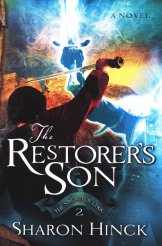
restorers-son.jpgThe Restorer’s Son wasn’t originally on my Fall Reading List simply because I forgot it was coming out in that time frame. How could I have forgotten? Sharon Hinck is one author whose books I eagerly anticipate.

The Restorer’s Son is a sequel to The Restorer (previously reviewed here), second in The Sword of Lyric trilogy. In the first book, Susan, an average “soccer mom,” is suddenly pulled into another reality where she discovers she is the Restorer, one whose purpose is to help the people heart’s return to the One who made them. Feeling overwhelmed and dismayed, she learns to rely on the One for strength for the task to which He has called her. She is startled to find that her husband is originally from this world. At the end of the book, the Restorer gifts are transferred to probably the most unlikely person, Kieran, who is distrustful and antagonistic, who is not even sure what he believes or if he believes, and Susan and husband Mark return to their world thinking that adventure is over only to discover that their son Jake has disappeared through the portal, and they have to go back to find him.

The Restorer’s Son picks up the story right where The Restorer left off. I’ll try not to reveal much more of the plot than the back of the book reveals so as not to spoil it for those who haven’t read it. Kieran is running from his destiny and stumbles upon Jake, who he realizes is Susan’s son. He can’t really afford the time and energy to care for him, but he knows he can’t leave him alone. Susan and Mark return and panic in the unfruitful search for Jake. All are drawn into the events occurring in Lyric and its enemy Hazor.

Whereas Susan’s story was inspired by that of Deborah in the Old Testament book of Judges, Kieran has a very Jacob-like encounter with the One. Parts of his story also remind me of Jonah. He’s not running from the One’s call for the same reasons, but he is running.

Sharon portrays the alternate world as very real, and readers will readily identify with struggles, wrestlings, and feelings the characters have. There are some surprises along the way. The title has at least a double, if not a triple meaning. Gentle humor throughout keeps the book from being too “heavy,” and the spiritual truth is convicting and inspiring.

I can’t wait til The Restorer’s Journey, due out next February.

Spirit of the Rainforest

rainforest.jpgJungle Mom recommended to me the book Spirit of the Rainforest: A Yanomamo Shaman’s Story by Mark Ritchie. If I understand correctly, the Yanomamo territory bordered the Yekwana Indians that the Vernoys worked with, and the Vernoys knew many Yanomamo and their ways and some of the people in this book.

This book is not for the faint of heart, however. It is not gratuitous, but it is very frank in its dealings with demonism, violence, and the treatment of women. It is told through the eyes of “Jungleman,” a powerful shaman. It is interesting to see things through his perspective (told by him to the author, who wrote them down and confirmed the incidents with others).

He tells first of all of the Yanomamo policy of revenge. Any incident calls for revenge from the family or village sinned against, which usually involves a raid on the offending village, clubbings, and capture and group rape of women. The extent of the raid can vary — in some cases two opposing warriors take turns clubbing each other over the head or across the chest. In more serious offenses every male is killed and the remaining women are assaulted multiple times and then carried off to become wives of the raiding village. If a captured woman tries to run away, she is beaten or killed. Children of the raided village are often brutally killed, occasionally captured.

Such raids did not satisfy the revenge, however: it sparked more revenge. Any remaining men or any relatives who lived in other villages were then expected to exact revenge on the raiding village. A war once begun never stopped. In between raids, villages were afraid to go out into their gardens or out to find food, always fearful of an ambush. Sometimes they broke up camp and wandered in the jungle looking for food. Sometimes mighty warriors woke up with nightmares, haunted by the cries of those that they killed. Yet they could never admit this: fierceness was the most valued characteristic in a Yanamamo male.

Gradually white nabas (their word for non-Yanomamo) began to appear in the jungle. They “talked like babies” but sometimes had useful things to trade. The Indians quickly learned, however, through hard trial and error, that all nabas were not the same. Some were interested in trading, some were interested in helping, but some were evil and interested in exploiting (they knew some earned money by taking and selling pictures of them [one even told them to take off their clothes so the pictures he took and sold would be more “authentic”] and stories about them, but there were others whose exploitation was much, much worse). There were a few, however, who said they were followers of the one the Yanomamo regarded as the great enemy spirit. They said the Indians misunderstood Him, that He loved them and had a better way to live. The Yanomamo were naturally suspicious, but they kept interacting with them because of the items they would trade or because of the medical help, and later because of the peace they exhibited. Jungleman and others’ spirits became troubled every time they were near the village where the nabas lived and begged the shamans not to ‘throw them away.”

To me there were several major benefits to this book. One was the fascinating look into Yanomamo culture. One was the immense power of the gospel to miraculously change lives in those who receive it. It was thrilling to read of those who came to believe and how they changed and grew and began to understand the ways in which they had been deceived.

Another major value of this book is the truth that these “primitive” peoples are not living happy lives frolicking in an idyllic Eden. I don’t know if you realize this, but there is a large and growing segment of the population who believes that such people should be left alone to Western influence all together and especially that Christians shouldn’t “force” the gospel on them or cause them to change their ways. Most Christians don’t “force” the gospel, however — they just offer it (and I wonder if the detractors would say the same about Muslim forced conversions).

The following is an interview between “Doesn’t Miss” (their name for the author), Keleewa, the missionary who interpreted, and a Yanomamo called Hairy on pages 180-183:

“The naba wants to know why you want to change the way you live out here in the jungle,” Keleewa said to Hairy after Doesn’tMiss talked.

Hairy was surprised at the question. “Because we’re miserable out here. We are miserable all the time. The people from Honey [predominantly Christian village] came here and made peace with us many seasons ago and their village keeps getting better. We want that for us. If it means throwing spirits away and getting new ones, we will do it. [This is not something said lightly. Many were under the impression that they would be killed if they tried to get rid of their spirits.] But we need someone to teach us these new ways.”

Hairy didn’t have spirits because he was not a shaman. But he followed everything the spirits told his shaman. I knew my spirits would be very irritated if Hairy quit following the spirits. No one who has killed as often and as long s Hairy could ever stop it…

Doesn’t Miss talked with Keleewa for a while. Keleewa paused and thought how to say what the naba said. Then he told Hairy, “He says there are many people in his land that don’t think that he, or any of us, should be here helping you at all. They say that you’re happy here and that we should leave you alone. He wants to know what an experienced killer like you would say to them.”

Hairy grew even more serious. “I say to you, please don’t listen to the people who say that. We need help so bad. We are so miserable here and out misery never stops. Night and day it goes on. Do those people think we don’t suffer when bugs bite us? If they think this is such a happy place out here in the jungle, why aren’t they moving here to enjoy this beautiful life with us?”

Doesn’t-Miss was quiet. Then he got out of his hammock and walked down the trail…When he was too far away to hear, Hairy said to Keleewa, “Is he stupid? Doesn’t he have eyes? Can’t he see these lean-tos we call houses? Can’t he see us roam the jungle every day, searching for food that isn’t here, so we can starve slower? Can’t he see that our village is almost gone, that this move we are making now is our last hope to stay alive?”

Keleewa was slow to answer. He knew Hairy wouldn’t understand what he was about to say. “Most nabas think just like him,” Keleewa told Hairy, and shook his head because he knew he couldn’t explain why.

“Nobody’s that stupid,” Hairy snapped. “They must hate us. They think we’re animals.”

Later Hairy asked Keleewa what they had to do to get a white naba to come to their village and live with them and teach them about Yai Pada (God), offering to clear an airstrip. Kelweewa promised that if they cleared an airstrip someone would come. That day Hairy and his people began clearing the jungle, and Hairy “remembered the wife he had killed. ‘I don’t want to treat women like that any more,’ he thought. ‘I don’t want my children to be killers like me. I want them to follow the spirit of this man of peace. I want us all to be free of our past. I want to sleep again’” (p. 230).

Another time (page 202) an antro (Yanomamo word for the kind of naba who took pictures of them and wrote about them) scolded an Indian named Shortman:

“Don’t you ever speak to me in Spanish! You are a Yanomamo and will always be a Yanomamo. You have no business throwing away your true ways and trying to copy nabas with their clothes, watches, motors, and now even changing to Spanish! Don’t ever speak to me in Spanish again! You want to talk to me? Use Yanomamo.”

“What’s that in your lower lip there?” Shortman asked…

“That’s my wad of tobacco,” the antro answered.

“Where did you learn to chew tobacco that way?” asked Shortman.

“I learned it from your people.”

“You saw us chew tobacco that way and you tried it and you liked it. So you copied us, didn’t you?”

“That’s right,” the antro said, with some pride in his Indian ways.

Shortman shrugged. “If you can copy us,” he paused with a puzzled look, ”then we can copy you.”

Somehow the shamans could “see” when another person had spirits, and they had identified some of the evil nabas as having spirits that the nabas themselves didn’t know about. At one point when Shoefoot, leader of Honey village, came to America with the author, he “identified the signs and symbols of many of the spirits right here in our ‘civilized’ culture. He has no problem understanding the Columbine High School massacre or any other killing spree. The spirits of anger and hatred that own and drive a person are spirits he has known personally. He knows what it means to kill under the influence of something or someone. So when a student asks…”Why can’t you get rid of your spirits without converting to Christianity?’ his answer is simple. ‘I don’t know any other way to get rid of the spirits that are destroying us. And no other shaman does, either’” (p. 251).

As I said in another post months ago, these people deserve as much chance as anyone else has to hear the gospel and have the choice to change their ways.

November Christian Book Fair at Chrysalis
Want this button?

Fall Y’all Giveaway

Comments are now closed and I am about to draw a winner….

fallyall.jpgIf you haven’t heard yet about Shannon’s Fall Y’all giveaway extravaganza, the guidelines are here, and the list of participants is here.

One of my most favorite things to do is read, and I spend a number of posts talking about good books I’ve found, so I wanted books to be a part of my giveaway.

daily-light.jpgI also spend a lot of time talking about the importance of the Word of God, so my first giveaway is a devotional book called Daily Light on the Daily Path. It is made up entirely of Scripture, compiled by the Samuel Bagster family. I don’t know how many times my reading for the day has given me just what I needed for the time.

The other books I want to give away as a set: The Secret Life of Becky Miller and Renovating Becky Miller by Sharon Hinck. I reviewed them earlier here and here. I know a lot of “Mom bloggers” participate in this giveaway, and Becky Miller is a young mom who wants to do “big things for God” but finds out life doesn’t always go the way she dreams it will. There are some hilarious moments as well as sweet and poignant moments. You don’t have to be a mom to get the spiritual lessons in the books, though.

becky-miller.gifrenovating-becky.gif

Leave a comment on this post and let me know if you are interested in either the devotional book or the Becky Miller set or both. I will close comments Friday night at midnight EST and use the random number generator to draw two winners on Saturday morning. This contest is open to anyone anywhere. One comment per person, please. You don’t have to have a blog to enter, but if you don’t just be sure to leave your e-mail address so I have a way to notify you if you’ve won.

I am also going to try to have another crafty give-away in a couple of days if I can get it together — it’s shaping up to be another busy week! But if I do I will post another link to the Fall Y’all giveaway page.

P.S.: Here is a works-for-me tip for keeping up with the giveaways I’ve entered. I started an e-mail to myself (though it could also be done via a Word document — I just used my e-mail because it’s always open when I am online and it’s handy) and listed the item and the address of the contest, then saved it in the “Mail waiting to be sent” folder. It’s easy to open back up when I go back to checking more giveaway posts. I think most of those offering a giveaway notify the winner, but some don’t, so this way I can run back through the list when this week is over and check the winners’ names.

cimg1262.jpg

Book Review: The Parting

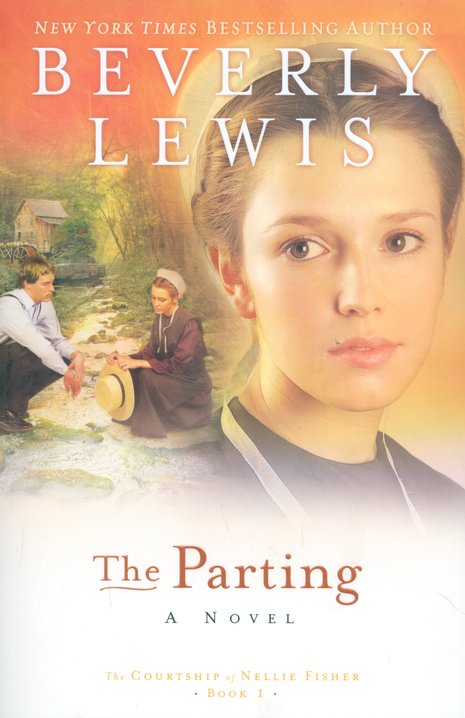
the-parting.jpg The Parting is Beverly Lewis’s newest release and the first book in a new series called “The Courtship of Nellie Fisher.” I enjoy Beverly Lewis’s books about the Amish, based on her grandmother’s Amish heritage, a people so industrious they put me to shame, generally gentle, yet at their harshest when someone wants to step outside their traditions.

This book has many of the same elements as Lewis’s others: focus on an Amish family and their ways and interactions, one member with hidden secrets, young people going through the rituals of courtship, descriptions of wonderful-gut food making which leaves your mouth watering, the dangers of being shunned, and someone who begins to discover that the way of salvation is not in the keeping of man-made traditions. Yet with all the similarities, each book has its uniqueness.

Nellie is a young Amish woman living at home who has not yet “joined church.” She has been secretly interested in a young man named Caleb. There is some question of the reputation of Nellie’s younger sister, Suzy, who has died in a drowning accident while out with non-Amish people, but once Caleb assures himself that whatever happened is not enough to taint the family (and cause his father’s disapproval), he makes his interest known to Nellie.

Nellie’s father, after visiting with a relative who has embraced a different belief system and who shares the Word of God with him, begins to read from portions of Scripture which are not encouraged by the brethren. His heart is overjoyed when his eyes are opened to the gospel of John and the realization that salvation is a free gift and that he can know for sure he belongs to the Lord. He begins to share his newfound knowledge and joy with his family, but Nellie is afraid this is a far bigger threat to her courtship than Suzy’s reputation, for those who profess to know they are saved are shunned and put out of Amish fellowship.

In many of the previous books, the father is the one most rooted in tradition and last to even be open to the idea of change, so it was a delight to me this time to see the father taking the lead. His joy was a rebuke to me: those of us who have known the way of salvation for years can too easily take it for granted. And the courage he and others display when they must follow the way of truth in spite of what it might mean, and the gentle and gracious way he tries to handle sharing that truth and the accompanying reactions are inspiring.

It is heartbreaking when any system denies and squelches the truth and ensnares its people in the darkness of man-made traditions and rituals. I’ve wondered what made the original Amish choose only certain portions of God’s Word and leave out the rest. When I wrote a post earlier this week about our righteousness being based on Christ’s, I had not only just read verses on the subject that morning, but I was also in the midst of reading this book and watching The Last Sin-Eater DVD about another time and place and another system of tradition that keeps its people in darkness. Would that all people would have a chance to at least hear the truth and make their own decisions.

Book reviews

I’ve finished a few books over the last few weeks that I haven’t had a chance to mention yet.

shopping-for-time.jpgShopping For Time was written by the authors of the girltalk blog, mom Carolyn Mahaney and daughters Nicole Mahaney Whitacre, Kristin Chesemore, and Janelle Bradshaw. You might raise a skeptical eyebrow at the subtitle, “How To Do It All and NOT Be Overwhelmed,” until you get to page 13, where it says, “We can actually do all that God has called us to do” without becoming “overwhelmed, miserable, and exhausted.” That sentence succinctly states the theme of this book, and the following chapters outline several tips for using time wisely. Ephesians 5:15-16 is the theme passage of the book: “Look carefully then how you walk, not as unwise but as wise, making the best use of the time, because the days are evil.” “The phrase, ‘making the best,’ means to ‘buy up, rescue from loss, or improve’ the use of time,” (p. 19), so a shopping metaphor is employed throughout the book to illustrate ways to “buy up” the time. There are multiple tips for things like putting time with the Lord first, planning, evaluating relationships, etc.

The book is written in a conversational, encouraging, “coming alongside to help” style rather than having a rigid system of schedules and plans as some time management books do. Sprinkled throughout the tips are anecdotes from the authors’ own lives as well as snippets from notes and e-mails they have received. They frankly deal with issues that must be faced, but they also acknowledge problems women face in managing their time, especially with small children in the home, and offer creative ways to implement their tips in busy households with very different planning styles, schedules and seasons of life. They remind us that our standing before God is secure based on our relationship with Christ, not how well we perform our duties, yet we can improve our stewardship of the time and responsibilities He has given us.

Besides the topic and tips, I enjoyed getting to know the girltalk girls a little bit. When I read the blog I don’t always distinguish between the authors, but I felt I got to know the individual personalities a little better through this book.

258049o.jpgReturn To Me by Robin Lee Hatcher is a prodigal daughter story. Headstrong Roxy Burke left home as soon as she was of age to obtain her grandmother’s inheritance to go to Nashville and become a country music star. Her lack of discipline and listening to those trying to help her plus her spendthrift ways and friends who were just around for the good times eventually left her broke and nearly broken. The only thing she knows to do is go back home to see if her father will help her. He welcomes her back with open arms, but older sister Elena, who has done all the right things, doesn’t feel it’s fair that Roxy gets what seems to her to be easy forgiveness with few consequences. A wrinkle in this version of the story is that Elena is now engaged to Roxy’s old boyfriend, who was her rebel-in-arms at the time but who has now come to know the Lord and is desiring to be a pastor.

This is a well-written story portraying how this scenario might play out in modern times. It’s easy to sympathize with all the characters and their anguish and the lessons each has to learn.

When parts of Roxy and Elena’s parents’ story came out and sounded familiar, I realized they were the main characters in a story I read last year called A Carol For Christmas.

I was a little dismayed at where the author had Roxy “come to herself” in the book, but the more I thought about it the more I realized it was probably a parallel to the prodigal son’s story of coming to himself in about the lowest place he could be.

Overall it is a wonderful book and speaks of the need for redemption and forgiveness on many levels.

kk-clouds.jpgJust this morning I finished Just Beyond the Clouds by Karen Kingsbury. It is the contiuation of the story of Cody Gunner, a bull rider whose story was told in A Thousand Tomorrows.

In that book, Cody is driven to succeed by the anger and pain he feels toward his father, who left the family because he couldn’t handle dealing with the diagnosis of Cody’s younger brother, Carl Joseph, who has Down Syndrome. He meets Ali, another rodeo star, on the circuit and falls in love with her. Unbeknownst to most, Ali has cystic fibrosis, but she would rather live life to the fullest than play it safe at home, even if it means shaving a few years off her life. Cody donates a lung to help Ali, which gives them about 3 years — about a thousand more days together.

In this sequel, Cody still has not “gotten over” Ali’s death four years later. He doesn’t ride bulls any more, but he works on the rodeo circuit in the announcer’s booth, lending his unique understanding and perspective. But he can’t deal with it any more because painful memories of Ali infuse every moment and circumstance. He comes home to try to decide what to do. He finds that his brother is in a center for independent living. Cody fears for Carl Joseph’s safety and is adamantly against his being at the center. He attends class with Carl Joseph for a week and meets his teacher, Elle, with whom he clashes over the needs and abilities of Down Syndrome patients and who is harboring a heartache of her own. Though enemies at first, Cody and Elle are attracted to each other.

I loved the story of how Cody and Elle had to work through their initial first impressions of each other and their firm but opposite viewpoints, and I loved the representation of the Down Syndrome patients and what they could do and how much richer their lives were with some responsibilities and expectations.

The one major disappointment with this book, though, as well as its predecessor, is that the way of salvation is not very clear. I do realize a Christian author may not want to have a full-blown step-by-step salvation experience in each book, and that’s fine, but on the other hand an unsaved reader shouldn’t come away confused or unclear about what is happening if a character does become a Christian. In Cody’s case he goes from not wanting to have much at all to do with God to realizing he needs to pray and seek God’s guidance. That’s a good step, but in itself it is not salvation. I know from reading many Karen’s other books that she does make clear what it is to believe on the Lord Jesus Christ, so I am not sure why it is veiled here. I do remember having the same impression after reading the first book, though I don’t recall the details after so many years. If I remember correctly, I don’t recall that Cody or his family were professing believers who had gotten away from the Lord: that scenario would make a little more sense with their spiritual journeys in this book.

Since this post is longer than I intended, I am thinking maybe I should have made separate posts for each book. But I didn’t want to have three separate book posts right after one another.