Thoughts From a Memorial Service

Last Friday, my husband and I attended the memorial service of one of his primary mentors.

We didn’t really use the word “mentor” back in the day. Pastor Bob was the pastor of Jim’s family’s church and also the father of his best friend. Jim said at the memorial service that he had spent almost more time at this family’s home than his own during his teen years, not counting sleep time.

Three of Pastor Bob’s children were in college when we were, so I got to know them when Jim and I started dating. The youngest came to the university later, but we were living nearby at the time. We saw her sometimes on campus and had her over occasionally. She began attending our church, and when she married, her husband became one of our assistant pastors. So we got to know them well, too.

We had hoped to have time to visit with the family before and after the memorial service, but we also didn’t want to intrude. We knew this was a special time for them when they needed each other, plus they had other friends and relatives there. But we did get to catch up with them during the visitation and at a lunch afterward that they graciously invited us to. Then Jim’s friend invited us to his house afterward, where all the family would be visiting the rest of the afternoon until different ones needed to head back to their homes. It felt something like a family reunion, and we were blessed to be a part of it.

Memorial services are good and sad at the same time. The whole reason for such a service was due to a beloved person’s absence. But it was a joy to hear of his life, his humor, the sayings he was known for, his heart for people, his integrity and work ethic. After each of his children spoke, the mic was open for anyone in the congregation to share a memory or something they appreciated about Pastor Bob. It’s amazing to consider the ripples that spread from one life to so many others.

Ecclesiastes 7:12 tells us, “It is better to go to the house of mourning than to go to the house of feasting, for this is the end of all mankind, and the living will lay it to heart.”

The “house of mourning” reminds us that

  • Our lives will come to an end, and we need to be ready. “Yet you do not know what tomorrow will bring. What is your life? For you are a mist that appears for a little time and then vanishes” (James 4:14).
  • Our lives will influence others for better or for worse. “A good name is better than precious ointment” (Ecclesiastes 7:1a).
  • “Death is swallowed up in victory. O death, where is your victory? O death, where is your sting?” The sting of death is sin, and the power of sin is the law. But thanks be to God, who gives us the victory through our Lord Jesus Christ” 1 Corinthians 15:54-57).
  • Jesus is preparing a place for us (John 14:1-6), a place where He dwells, a place with no sorrow, crying, pain, sin (Revelation 21:1-4).
  • Believers will see their believing loved ones again after death (1 Thessalonians 4:13-18).

I’ve also pondered this last week that what I think of as the “old guard” —the faithful people who were major influences in our lives—is almost gone. They weren’t all old in years, though many were. Both my parents and my husband’s have passed away. The woman who was the greatest influence of my life next to my mom passed away a few years ago. The pastor of my early formative years went to heaven just last year. Now Pastor Bob. Other pastors, teachers, aunts, friends have gone on ahead.

Some of these were the ones I most counted on for prayer and counsel. What am I supposed to do without them?

Well, God is faithful and supplies all our needs. He counsels us through His Word and brings others in our lives to strengthen and support us.

But I’m humbled and stunned that I am supposed to be the “old guard” in others’ lives now. Who is sufficient for these things? Not me. But He is. Memorial services also encourage me to give my one brief life to Him and to others.

Are you ready for heaven? If not please, please, read here.

Two songs have been on my mind the last few days. This first one, Ron Hamilton’s “Goodnight,” came to mind because it was the reality of my husband’s friend, Steve, who took care of his father the last several years. The first stanza tells of a dad tucking his kids in bed and telling them good night. In the second stanza, the son now tucks the father in with the same message. In the third, the father has passed away, and the son looks forward to seeing him “in the morning.”

This one was sung at one of our former churches often and was sung at another former pastor’s funeral. Then I saw it on my friend Kim’s blog just before attending Pastor Bob’s memorial.
(I often link up with some of these bloggers.)

Laudable Linkage

I was sorry to miss Friday’s Fave Five yesterday. We were out of town for a memorial service for the man who was my husband’s pastor in his teens and college years. His son is my husband’s best friend, and the whole family is like second family to us.

I thought we’d arrive early enough Thursday evening to write an FFF post for Friday, but that didn’t work out. We just got home this morning and had a nap, with more to come, I am sure.

Since I post these links in a draft as I find them, this post was nearly ready to go, minus a video or photo at the end this time.

Carry a Candle. “Because it’s increasingly debilitatingly possible, with the rise of instant global communications and now virtual social outlets, to spend – not just whole afternoons – but whole years of our lives torturing ourselves over the state of nations. Cursing the night.”

I Searched for the Key to Discipleship. “Over time, it became painfully clear to me that the answer to the question of discipleship isn’t as easy as finding the right program. This is something that I learned from our church members by watching them live it out: discipleship isn’t nice, crisp books or carefully planned mission trips. It’s something altogether more intimate, more demanding, and more sacrificial.”

God Is Frustrating, but not in the sense we usually mean the word. HT to Challies.

The Early Christians Were Odd, Too. “It can be disheartening, not to mention frightening, when our culture rejects aspects of Christianity as strange or offensive. When Christians feel isolated and alone, it’s helpful to remember this experience is nothing new for God’s people.”

Is There Such a Thing as Righteous Anger? HT to Challies. “Technically, of course, there is such a thing as an empty gun. But if you think it’s empty and you’re wrong, the consequences can be so tragic it’s better to just pretend that no gun is ever empty, except in very specific situations like cleaning or repairing it. I’m beginning to think we should have a similar attitude towards so-called ‘righteous anger.'”

Do Not Trust Your Anger, HT to the article above. “But unlike our Lord, when we get angry, we can corrupt it. We can complicate our anger with selfishness, wounded pride, impatience, lust for revenge, plus a lot more — and without even realizing it. But surely we can all agree on this: our anger can be good, and it can be bad, and it can even mingle good and bad together. So, we must weigh our anger carefully (and continue to weigh it throughout our lives).”

Happy Saturday!

September Reflections

Another month is set to pass the baton to the next, without slowing down for the hand-off. We’re ending September in a flurry of activity, which I will have to tell you about later. But I like to take at least a few minutes to try to remember what filled the busy days.

September is a transition month. We’re finally starting to have cooler temperatures. The leaves have begun their yearly changes.

We had big family get-togethers on Labor Day and Jesse’s birthday. And we had several “ordinary” times, too, which were just as fun. We missed the planned time together for Grandparent’s Day: people at our church and Jason’s company tested positive for COVID that week, and just to be safe, we figured we should isolate for a while. But Jason and Mittu dropped off a delicious meal and some sweet gifts.

Creating

I just made one card this month, for Jesse’s birthday. His work and leisure time is mostly spent on the computer, so this seemed appropriate:

The computer was made with the Cricut, but would be pretty easy to make freehand. I found a computer font online (I think it may have been this one) and used it to make the “Birthday wishes” screen.

Watching

Jim and I finished The Mandalorian series. So good! I’m not all that into Star Wars, so I am sure I missed some of the references and connections. But I loved this series.

We also enjoyed Enola Holmes, about the fictitious younger sister of Sherlock Holmes.

Reading

Since last time I have finished:

I’m currently reading:

  • Gentle and Lowly by Dane Ortlund
  • Be Strong (Joshua): Putting God’s Power to Work in Your Life by Warren W. Wiersbe
  • Only Glory Awaits: The Story of Anne Askew, Reformation Martyr by Leslie S. Nuernberg
  • Catching the Wind by Melanie Dobson

Blogging

Besides book reviews, Friday Fave Fives, and Laudable Linkage, I had these posts on the blog this month:

  • Focus Determines Direction. If I look away from the road, I end up drifting the direction I’m gazing. To follow Christ and keep from drifting, I need to keep my eyes on Him.
  • Kindness. We’re not exempted from showing kindness to those who irritate us or disagree with us.
  • You Don’t Have to Write Devotionals. Writing “lessons” is a fine thing to do, if God so leads. But that’s not the only way to share spiritual truth.
  • Pressure. How can small, delicate deep-sea creatures withstand pressure that crushes submarines? And can we learn anything from them?

Looking ahead, one of my favorite things about October is that there’s nothing “big” during the month. I have my yearly physical at the beginning, and we’ll have a costume party with Timothy at the end (in lieu of trick-or-treating at the mall). But there are no immediate family birthdays or holidays that month, which makes it a nice resting place between our “birthday season” and Thanksgiving and Christmas.

How was your September? What are you looking forward to in October?

(I often link up with some of these bloggers.)

The Man Who Was Q

Charles Fraser-Smith supplied British intelligence and soldiers with a number of innovative gadgets during WWII. When Ian Fleming began writing his James Bond novels, he based the detective’s gadget master, “Q,” on Fraser-Smith. A few months ago, I reviewed Fraser-Smith’s memoir of his war-time activities, The Secret War of Charles Fraser-Smith, the “Q” Gadget Wizard of World War II.

David Porter wrote a full biography of Fraser-Smith in The Man Who Was Q: The True Story of Charles Fraser-Smith, the “Q” Wizard of WWII.

Fraser-Smith’s parents died when he was a child. He was brought up by a missionary family and became a Brethren missionary to Morocco. His ministry was what we’d call a “tent-maker” type today, a phrase coined from when the apostle Paul made tents to support himself for a while. Fraser-Smith directed a large farm for which he hired local workers. He was able to have conversations with them about the Lord while working side by side.

Charles and his wife had to leave Morocco and go back to England when WWII started ramping up. As was told in the previous book, Charles was sharing some of his experiences with a local church one day, especially how he had to come up with innovative ways to do things in Morocco. A British Ministry of Supply official in the audience was impressed by Charles’ innovation and flexibility. A few days later, Charles was invited to work for the Ministry of Supply, but without much information about the work involved. Charles accepted, and his book tells about his experiences obtaining supplies or creating devices to help the British during the war.

Only one chapter here is devoted to Charles’ “Q” activities, since the previous book had already been published.

After the war, Charles was heavily involved in relocating supplies that were no longer needed. He and his wife wanted to go back to Morocco, but a serious illness disrupted their plans.They then began dairy farming, with Charles creating innovative and sometimes controversial improvements in the process. He and he wife continued ministry work in various capacities.

After his wife died of cancer, Charles was involved in a number of ministry enterprises. One was funding a Bible translated into Arabic.

His son talked him into writing about his war experiences, since the period of secrecy he had agreed to was over. Charles did not consider himself very educated or articulate, so two ghost writers worked with him. “Charles was somewhat disappointed that the finished book contained relatively few of his outspoken Christian statements. But enough of his highly individual views, and his remarkable life, characterises the book for the reader to understand that this is no conventional story of espionage and undercover work” (p. 151). The book made him a celebrity, with interviews and showings of some of his gadgets. He wrote a couple of other books, with proceeds going to Arab World Ministries.

An appendix contains a treatise of Charles’ views of how missionary work could be expanded among Arabs by ministering to those who had traveled to Europe so they could go back and be a witness to their own people. He also advocated for unconventional ways (at the time) to minister to them, like hospitality, literature, and other methods. He stresses the importance of establishing indigenous, not westernized churches.

This book was originally written in 1989 and is no longer in print, but I had no trouble finding a used copy. I enjoyed learning more about Charles’ remarkable life.

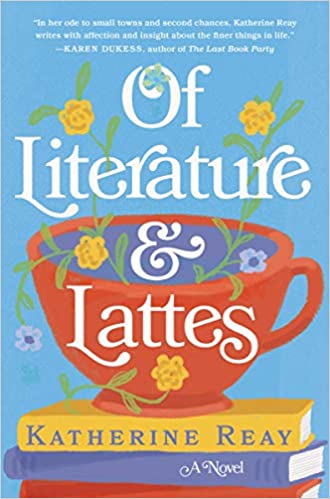
Of Literature and Lattes

Alyssa Harrison got along with her father, but clashed with her mother at every turn. Then her mother committed an unpardonable offense. So Alyssa moved out as fast as she could with no plans to return.

But then the company she worked for in CA was closed down by the FBI over rumored wrongdoing. The FBI interviewed all the employees—except Alyssa. While she waits for their call, she has no job and no way to pay for her apartment. The only place she can go is back home to Winsome, IL.

Her parents were divorced, and she wants to move in with her dad. But he doesn’t have the space and sends her to her mom. Sparks fly from the outset. Her mom doesn’t fight back any more, which somehow makes Alyssa madder. Alyssa can see changes in her mom’s life, but she doesn’t take time to try to understand them. She looks for a job and waits nervously for the call from the FBI.

Jeremy Mitchell moved from Seattle to Winsome to be near his young daughter. His wife had walked out of the marriage while still pregnant, and Jeremy’s visits with his daughter, Becca, have been sparse. But he wants to rectify that. He’s put everything he has into a Seattle-style coffee shop. But Winsome residents resent the changes from the homey coffee shop that Jeremy replaced. And he can’t seem to figure out where all his money is going.

Alyssa’s best friend, Lexi, sets her up to help Jeremy with his business. Alyssa speaks numbers like a second language. Alyssa and Jeremy are drawn to each other. But each has so many issues in their personal lives, and neither is sure they are staying in Winsome.

Of Literature and Lattes by Katherine Reay is the sequel to The Printed Letter Bookshop. It took me a while to remember some of the situations of the characters from the first book. I think the background of the first book would shed light on this one, especially Alyssa’s mother’s situation. But I do think this could be read as a stand-alone book.

The back of the book says, “With the help of Winsome’s small town charm and quirky residents, Alyssa and Jeremy discover the beauty and romance of second chances.”

The second chances theme comes through not only for Jeremy and Alyssa, but for many characters. And Winsome is a lovable small town.

Katherine’s books are always sprinkled with literary quotes and references. I wasn’t familiar with some of the books mentioned this time. The main one was Of Mice and Men, which I’ve never read—but now I am tempted to.

Overall, I really enjoyed the story, the bookshop, the small town atmosphere. It was a little hard to take all the arguing between Alyssa and her mother and Jeremy and his ex-wife. I know stories need conflict, but I am not used to people talking to each other so harshly. The tension in some scenes left me tense after putting the book down. This isn’t a criticism—I’m sure some families duke it out verbally as much as these do, or worse. And their verbal jabs point up the severity of their issues. It was just hard for me to take in personally.

My biggest problem with the book would be hard to explain without going into a lot of detail, which I don’t want to do in a book review. Let’s just say I am not ecumenical. There are times to put differences aside and just love people in Jesus’ name. But there are some differences that should not be put aside—like the truth that a person is saved by grace through faith alone. When the main spiritual spokesperson in a book is from a faith background that adds church ritual and traditions, that seems to emphasize works and faith, that’s a problem for me. Yes, I know James says our faith should manifest itself in works—but the works come as an outgrowth of faith, not in addition to faith to merit favor in God’s eyes. I have some very dear friends in this faith background, but I wouldn’t hold a joint ministry together with them. There are all sorts of angles to this that could be discussed endlessly, thus the difficulty of getting into it in a short book review. So I’ll leave it there for now.

My other problem with this book was not the fault of the author. I listened to the audiobook, which was narrated by an English woman. It felt weird hearing the narration, including the character’s thoughts, in an English accent, but their speaking voices in an American accent. Then, the narrator’s English accent bled through the American voices sometimes. Most words ending in an “a” sound had instead an “r.” The word “idear” came up several times, as did “Grandmar,” “vanillar,” etc. Then there was “enything” for “anything” and “figger” for “figure.” Plus she didn’t do many of the male voices very well. So I’d recommend reading this over listening to it. Most of the comments on the audiobook page were similar. I love English accents in English audiobooks, but I didn’t think the mix worked well here.

If you like small towns with quirky neighbors, stories with a lot of book references, or families coming together over their differences, you’d probably like this book.

Pressure

My husband and I listened to an online sermon recently which contained a story I had never heard before.

The USS Thresher was a nuclear-powered submarine that sank in 1963, killing all 129 people on board. A series of events caused it to sink and then to implode due to the extreme pressure deep in the ocean.

Research equipment with cameras that could withstand the oceanic pressure were lowered and found the Thresher in five pieces.

It’s hard to fathom water pressure strong enough to crush a submarine.

Yet there are fish and creatures that live at such depths. How are they not crushed?

This article tells of some features of a few specific deep-sea creatures. But the bottom line, Wikipedia says, is “Deep-sea organisms have the same pressure within their bodies as is exerted on them from the outside, so they are not crushed by the extreme pressure.”

The fish and other creatures aren’t crushed by deep sea pressure because their internal pressure is equal to it. In fact, many die (even explode) when they are brought to the surface for study because their pressure is no longer equalized.

We face a lot of pressures these days, don’t we? Making a living, keeping up with responsibilities, making time for those we love. Then we all have struggles against our own besetting sins. The world is getting less friendly to Christianity every day. And we have an enemy of our souls who seeks our destruction like a roaring lion.

We’re not equal to it in ourselves. “My flesh and my heart may fail,” Asaph says. Mine, too. But he goes on to say, “but God is the strength of my heart and my portion forever” (Psalm 73:26).

“Little children, you are from God and have overcome them, for he who is in you is greater than he who is in the world” (1 John 4:4). The one within us is more than equal to the pressures around us.

“Now we have this treasure in clay jars, so that this extraordinary power may be from God and not from us. We are pressured in every way but not crushed; we are perplexed but not in despair” (2 Corinthians 4:7-8, HCSB).

Sometimes God relieves pressure by removing a burden from us. Other times, He gives us grace to bear it. He invites us to cast our care on Him, to depend on His strength in our weakness, to come to Him for rest.

(I often link up with some of these bloggers.)

Laudable Linkage

IMG_0195

Here are some noteworthy reads found this week.

On Christians and Vaccines. “Writing about vaccines is going somewhere that angels fear to tread. Last year’s mask controversies pale in comparison to the vaccine discussions going on now.”

Sin Is Death? HT to Challies. “While sin isn’t a substance in itself, that doesn’t make it any less lethal. Sin isn’t just a series or errors or poor judgments with momentary consequences. Sin is taking you somewhere. It’s leading you down a path of decay, a path that ends in spiritual death.”

Relationships 101: One Young Mother’s Journey to Love. “Yet sometimes we find it hard to love anyone, even the most loveable. We may think that God’s greatest command, to love Him with all our heart, soul, mind and strength, is also His hardest command. But honestly, the second great command often feels even more impossible. How can we truly love others as we love ourselves (Matt. 22:37–40)?”

Peanut Butter and the Marriage Supper of the Lamb, HT to Story Warren. “The table is, for many on this broken Earth, a place of struggle. The gift of food itself, in all its savory, salty, sweet wonder, is for many a source of sin or brokenness or fear or lack. The good has become not good, and we suffer for it. The wrong meal in Eden has polluted every meal since, and though we look to redemption, the shadows still lurk.”

21 Things That Are Still True in 2021, HT to Story Warren. “1. God is still God. He is still on His throne, unshaken by what happens. Nothing takes Him by surprise and nothing is out of His control. 2. Right and wrong aren’t subjective.”

Care. “The cares are valid cause for concern as the world is so rapidly changing,” but “The cares of this world will choke out the Word and cause our lives to become unfruitful.”

God, Don’t You Care? “If God cares, why does the storm continue? Why does he let it get so hard? Why doesn’t he do something?”

What If God Doesn’t Speak to Me? HT to Challies. “Rather than giving directions for receiving prophecy, hearing God speak, or discerning nudges and feelings, the New Testament writers beckon us to immerse ourselves in the writings of Scripture.”

The Hidden Harm of Gender Transition, HT to Challies. “Grace is one of many who have been fast-tracked down a pathway of ‘treatments’ for gender dysphoria, while underlying mental health issues have remained undiagnosed and unaddressed. They are victims of the false claims of gender ideology.”

The Secrets of the World’s Most Famous Symphony, HT to Challies. A video that shares “what makes Ludwig van Beethoven’s Symphony Number Five a musical masterpiece, and uncover[s] the story behind its inception.”

I’ve seen Victor Borge perform this before, but not with someone. It never gets old. HT to Steve Laube.

Happy Saturday!

Friday’s Fave Five

It’s Friday, time to look back over the blessings of the week
with Susanne at Living to Tell the Story and other friends.

As another week zooms by, I enjoy these Friday pauses to stop, think, and thank God for His provisions.

1. Dinner and SpaceX viewing.Timothy and Granddad planned to go fishing last Saturday, but plans got canceled for a variety of reasons. But he wanted to “hang out” with us, so later in the day Jason and Mittu brought over rotisserie chicken and mashed potatoes. I have not kept up with the SpaceX flights, but Jason has. They were due to splash down that evening, so we watched the coverage. It was a fun time with the family.

2. The first day of fall came right on time with cooler temperatures.

3. Low carb experiments. We’re trying to lower our carbs–my husband’s blood sugar numbers were running a bit too high, and we could both stand to drop some calories. Frozen riced cauliflower has been a good substitute for rice in soups, stir fry, and even as a side dish with pepper steak. It didn’t work so well in a casserole–it doesn’t absorb liquid like rice does, so the dish was a little soupy. We may add more next time or use half rice, half riced cauliflower.

We had tried frozen pizza with a cauliflower-based crust in the past and didn’t care for it at all. And not having pizza is not an option unless we’re at death’s door. 🙂 But we tried thin crust pizza the last couple of times. Jim prefers pan pizza, but he said the thin crust didn’t raise his blood sugar significantly. I’m a carnivore, and the thinner crust seems to bring out the other flavors better to me. (I’d love to hear any other low carb tips and tricks you have, other than just eat more salad.)

4. Restoring order. My utensil drawers in the kitchen had gotten jumbled up, so I spent a few minutes taking items out, putting like things back together, and cleaning out crumbs that mysteriously gather in drawers that are mostly closed. It’s an oddly peaceful thing to do, and opening those drawers now brings a smile of satisfaction rather than frustration over not being able to find what I need.

5. Preorders of books can be often be had for a cheaper price than what the book will be upon publication. I just found out here yesterday that Christmas in Mistletoe Square is available at $1.49 as a preorder. I’ve only read one of the four authors listed, so I hope it’s good. But $1.49 isn’t a bad risk. 🙂

Book Review: Be Daring

Warren Wiersbe divided his commentary on Acts into two volumes. I reviewed the first, Be Dynamic (Acts 1-12): Experience the Power of God’s People, a few weeks ago. I just finished the second commentary, Be Daring (Acts 13-28): Put Your Faith Where the Action Is.

As I said in the last review, Wiersbe has commented on books longer than 28 chapters in one volume before. But Acts is a pivotal book between the OT, gospels, and the rest of the NT. The death, burial, and resurrection of Christ changed a lot of things, and the early disciples were still figuring out the implications. But this was also probably the biggest expanse of the church in history.

Serious persecution also dogged followers of the Way, as Paul referred to it. Thus Wiersbe’s title to Be Daring fits.

The apostle Paul is the focus of these latter chapters of Acts: his standing as a loyal Pharisee and his persecution of the church, his miraculous conversion, his three missionary journeys, his arrest and imprisonment.

As usual, I have several quotes marked from the book. Here are a few:

The first one was from the context of the big council meeting in Acts 15 about whether the newly-saved Gentiles needed to keep the Jewish laws and customs:

It is beautiful to see that this letter expressed the loving unity of people who had once been debating with each other and defending opposing views. . . . We today can learn a great deal from this difficult experience of the early church. To begin with, problems and differences are opportunities for growth just as much as temptations for dissension and division. Churches need to work together and take time to listen, love, and learn. How many hurtful fights and splits could have been avoided if only some of God’s people had given the Spirit time to speak and to work. . . . Most church problems are not caused by doctrinal differences but by different viewpoints on practical matters (pp. 35-36, Kindle version).

This is still applicable in our times, isn’t it?

[Paul] used one approach with the synagogue congregations and another with the Gentiles. He referred the Jews and Jewish proselytes to the Old Testament Scriptures, but when preaching to the Gentiles, he emphasized the God of creation and His goodness to the nations. His starting point was different, but his finishing point was the same: faith in the Lord Jesus Christ (p. 23).

If God had to depend on perfect people to accomplish His work, He would never ever get anything done. Our limitations and imperfections are good reasons for us to depend on the grace of God, for our sufficiency is from Him alone (2 Cor. 3: 5) (p. 43).

To walk by faith means to see opportunities even in the midst of opposition. A pessimist sees only the problems; an optimist sees only the potential; but a realist sees the potential in the problems (p. 71).

The church ministers by persuasion, not propaganda. We share God’s truth, not man’s religious lies. Our motive is love, not anger; and the glory of God, not the praise of men (p. 91).

Luke did not write his book simply to record ancient history. He wrote to encourage the church in every age to be faithful to the Lord and carry the gospel to the ends of the earth. “What was begun with so much heroism ought to be continued with ardent zeal,” said Charles Spurgeon, “since we are assured that the same Lord is mighty still to carry on His heavenly designs” (p. 174).

Acts doesn’t mention any of the apostles writing epistles, except the joint one in Acts 15. But we have clues from the epistles that many of them were written during this time period.

The book of Acts ends somewhat abruptly, with Paul in prison. Dr. Wiersbe shares from what we know of history what happened during the rest of Paul’s life: he was released from prison, ministered a few more years, was arrested again, and was eventually beheaded. Of course, at the time Luke was writing, they did not know how long Paul would be in prison. Luke probably figured it was a good a time as any to stop where he was and send this long letter to Theophilus. But Luke was also under the inspiration of the Holy Spirit, and perhaps the Spirit’s leading Luke to stop where he did was an indication that the transitional phase was over and the church was established and on its way to continued growth til Christ returns.

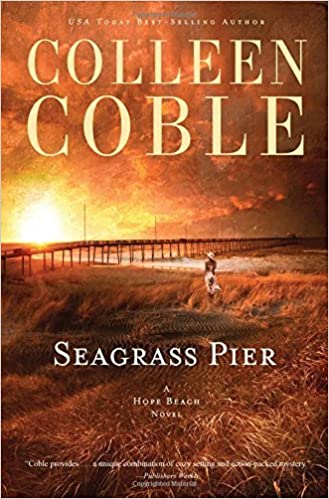
Book Review: Seagrass Pier

Elin Summerall has a lot on her plate. Her husband died a few years ago, leaving her with their baby daughter, now four years old. She took in her mother, who was diagnosed with Alzheimer’s. Then Elin developed a virus in her heart, which required a transplant.

Recovering from transplant surgery, Elin has been having frightening dreams—only they seem more like memories, memories of her donor being stalked and murdered. When she tells people, they think she’s just reacting to the trauma of the surgery and the strong anti-rejection drugs.

But then someone breaks into her home, leaving odd messages.

She takes her daughter and mother and flees to Hope Beach. There she finds an old acquaintance, an off-duty FBI agent, Marc Everton, who takes her story seriously and offers to help. They’ve never gotten along, except for one night in their past that they’ve both repented of.

Can they overcome their differences and work together before it’s too late—especially after Marc finds out Elin’s secret?

Seagrass Pier is the third in Colleen Coble’s Hope Beach series, and to me was the most intense. The first two were Tidewater Inn and Rosemary Cottage (linked to my reviews). Some characters from the first two books appear in the third as well. All of the books are set in a beach town on the Outer Banks, and all feature lovely historic homes I’d love to see in person.

The books have been reprinted with different covers, and one Kindle version bundles all three together.

I don’t know if the concept of “cell memory”—the idea that a transplant recipient can have memories of the donor or take on traits of the donor—goes as far in real life as is portrayed in this book. But as this is a work of fiction and not a medical treatise, I was able to set aside whether this could really happen and just go with the story.

If you like romantic suspense with a Christian undercurrent, you would probably like these books. Just don’t do what I did and start the last one in the evening without being able to put it down until way past bedtime.