Book Review: Amazing Grace: William Wilberforce and the Heroic Campaign to End Slavery

WilberforceA few years ago a video titled Amazing Grace and a companion book, Amazing Grace: William Wilberforce and the Heroic Campaign to End Slavery by Eric Metaxas, were published to commemorate the 200th anniversary of the abolition of the slave trade in Great Britain.  I saw and enjoyed the film, but somehow was not aware of the book until this year.

Wilberforce did not accomplish abolition single-handedly, of course, but he was the driving force behind abolition and a host of other social causes.

William was born into a well-to-do family. He was always small, with poor eyesight and stomach issues (modern historians think he suffered from ulcerative colitis all his life). But he had a sparkling wit, an entertaining personality, and loads of ambition.

As a boy he stayed for two tears with an aunt and uncle to attend school nearby. Unbeknownst to William’s parents, these folks were Methodists whose frequent guest was John Newton. Methodists were thought at the very least to carry religion too far, as evidenced by the nickname used for them, Enthusiasts. Others thought they were radicals. Newton and Wilberforce seemed quite fond of each other, but William’s mother whisked him away as soon as she became aware of the religious climate of her relatives’ home.

Before long William forgot his early religious leanings and became the life of many parties. If he wasn’t hosting, he was a frequent guest. Deaths of his grandfather and uncle had left him wealthy. His friend William Pitt, who was planning to enter into politics (and eventually became Prime Minister), urged William to enter politics as well. William became a Member of Parliament (MP) as an independent at the age of 21. Then he set his sights on “the most coveted seat in all of Parliament” (p. 42), Yorkshire, and was elected to it at the age of 24.

That same year, William was on a holiday with friends and spent most of the journey with the brilliant Isaac Milner. As they traveled, they read and discussed The Rise and Progress of Religion in the Soul by Phillip Doddridge. William had a tendency to think through every aspect of a decision before making it. He came to an intellectual agreement of Christianity’s doctrines first, then heart and will yielded to what he thereafter called “the Great Change.”

At first he thought such a change would necessitate his leaving government. John Newton encouraged him to “stay his post” and assured him God could use him where he was. Newton wrote to his friend, William Cowper, of Wilberforce: “I hope the Lord will make him a blessing both as a Christian and a statesman. How seldom do these characters coincide!! But they are not incompatible” (p. 61).

As William began to be convicted with how he used his resources and time, his attention was drawn to those in need. Slavery was just a given fact in Britain then. The entire economy was built upon it. Because most of the slaves were in the West Indies, they were hardly thought of. But as word began to get out of their harsh and inhumane treatment, various individuals began to call for action on their behalf. Writers and poets like Hannah More and William Cowper used their pens. Artist and industrialist Josiah Wedgwood, of Wedgwood pottery fame, produced medallions with a cameo of a slave kneeling and asking, “Am I not a man and a brother?” People who had been aboard slave ships reported their findings. Others circulated and signed petitions. They thought Wilberforce should be their voice in Parliament, and after giving the matter his characteristic thorough consideration, he agreed.

They thought it would be an easy victory. Who, after all, would disagree with their cause? The ones who benefited from the slave trade, first of all, not only opposed any reforms but used lies and other tactics to sway public opinion. Then when the French Revolution broke out, anything smacking of liberty and equality was decidedly unpopular.

It was twenty long years before legislation passed to outlaw the slave trade. But even then there was still work to be done in enforcing it, dealing with smugglers who would fly other countries’ flags so as not to be stopped, etc. Those fighting for abolition realized they could not stop there: they needed to fight for emancipation.

Abolition of slavery was one of two main objectives in Wiliiam’s life: the other was the “reformation of manners.” By “manners” he did not mean etiquette and politeness. The Clapham Sect or society was a group of people who want to change some of the cruelties common in society then, like hangings for small offenses, public dissection of criminals’ bodies, and even bull-baiting and bear-baiting. Wilberforce financed schools for the poor run by Hannah More and her sisters even though society at large thought their education would either be fruitless or would upset “the order of things.” He was involved in penal reform, improving conditions for laborers, and a host of other causes. Yet he felt he had not done enough. He wrote to a friend:

I am filled with the deepest compunction from the consciousness of my having made so poor a use of the talents committed to my stewardship. The heart knows its own bitterness. We alone know ourselves the opportunities we have enjoyed, and the comparative use we have made of them…. To your friendly ear… I breathe out my secret sorrows. I might be supposed by others to be fishing for a compliment. Well, it is an unspeakable consolation that we serve a gracious Master, who giveth liberally and upbraideth not…. I always spoke and voted according to the dictates of my conscience, for the public and not for my own private interest…. Yet I am but too conscious of numerous and great sins of omission, many opportunities of doing good whether not at all or very inadequately improved.

In his later years he turned his attention to India and the East India Company’s abominable practices like keeping underage mistresses (what we would call a child sex trade today, only it was legal at the time) and the country’s inhumane practices like burning widows at their husband’s funeral pyres.

By the end of his life, most of his wealth was gone. He had heavily invested in his oldest’s son’s business venture, which failed. But before that he had given much to various causes and needs. He had to sell his home and take turns living with his two other sons.

Though most of the book focuses on Wilberforce’s public life, the author gives us glimpses into his private life as well. William married later in life, but was absolutely smitten once he found his wife. Visitors to the Wilberforce home would find the family in the midst of mild but happy bedlam with children and animals running around indoors and out.

Wilberforce was sometimes called the moral conscience of the nation. He did not ask for that position nor think of himself that way, but his character was such that, when he saw a wrong he could help to right, he felt obligated to do so.

My only complaints with the book were with some aspects of the author. Though Wilberforce is an admirable man, and even Lincoln and Frederick Douglass cited him as inspiration, Metaxas laid the praise on a little thick at times. Plus I felt too conscious of Metaxas as the author: usually in a biography the author does not insert himself into the subject’s story so much. Part of that insertion was evidenced in seeming attempts to be witty and clever. Plus, everything I have ever read about writing encourages using recognizable words, not in an attempt to “dumb down” the text, but to make it more accessible to the average reader. But this author sprinkled his narrative with words like uxoriousness that did increase my vocabulary but interrupted the text while I looked them up.

Oddly, Metaxas does not have a list of footnotes or endnotes with citing the sources he used, though he does close with a list of other worthy Wilberforce biographies.

However, overall I thought this was a very good book. I knew a bit about Wilberforce from the Amazing Grace film, Hannah More‘s biography, and assorted other references, but I was glad to hear about the rest of his life and to have a fuller picture of the character of the man himself. He is an example for all of us to use our resources and influences to help others.

(Sharing with Semicolon‘s Saturday Review of Books, Literary Musing Monday, Carole’s Books You Loved)

The Potter’s Loving Care

We walked into church one morning to see the entire platform covered with plastic sheeting and a potter’s wheel in the middle of the stage. One of our missionary deputees was planning to go to a country closed to the gospel. He and his wife were gifted artists and planned to use their skills to work in the country, establish relationships, and and look for ways share the gospel. He was going to actually throw some clay on the wheel that morning and bring out some parallels to God as a potter.

We get that imagery of God as a potter from a few passages in Scripture. Isaiah 29:16Jeremiah 18:1-12, and Romans 9:20-21 assert God’s right to do as He will with the vessels He made and the ludicrousness of the vessel answering back or questioning the potter. In Isaiah 64, the people understand that they are under deserved judgment for their sin, but they issue a plaintive appeal in verse 8, reminding God “But now, O Lord, you are our Father; we are the clay, and you are our potter; we are all the work of your hand.”

An experienced potter’s hand are skillful and sure. The potter, in his wisdom, know just how much pressure to exert where in order to make the shape he has in mind. He wants to make a vessel that’s useful but also pleasing. He has nothing but the best results in mind for the vessel. This particular potter, Mickey, wanted to make excellent and beautiful vases and vessels not only to open doors of ministry, but to reflect his own Creator. Many potters have a distinct style: one can see certain vessels and sculptures and know at a glance who made them. Our Creator wants the vessels He makes to reflect His own glory, not because He “needs” to be glorified, but because it’s by beholding His glory that we’re changed to be more like Him.

But the one picture that stood out the most to me at this demonstration, the one that had not occurred to me in any thoughts of potters, was what Mickey called the intimacy with with he shaped his vessel. He pointed out that the wheel and vessel were practically in his lap, he was bent over it, and both hands were shaping it. His attention was riveted and almost his whole body was involved, surrounding the vessel he was shaping in the closest proximity.

What a picture of our Father’s attention and care as He shapes us! He’s not “watching us from a distance,” as one song used to say. He’s up close, surrounding us, intimately involved in every detail of our shaping.

The pressure the potter exerted on the clay might not feel good, if the clay could feel. But that pressure is necessary to shape the clay into something besides a useless lump.

It’s comical to think of a piece of clay standing up to talk back to the potter, to ask him if he’s sure he knows what he’s doing, to make suggestions. And yet we’re prone to do just that.

How we need to just yield to His wise, skillful, and loving hands.

(Sharing with Inspire Me Monday, Literary Musing Monday, Tell His Story, Woman to Woman Word-filled Wednesday, Porch Stories, Faith on Fire)


Laudable Linkage

Welcome to another gathering of great reads discovered this week:

Imperfections Make Sundays More Beautiful, HT to Challies. “I’ll admit it: these human quirks and errors sometimes exasperate me. I’m here to focus on the Lord! Your awkwardness is distracting me from worship! So mutters my self-righteous heart. Perhaps the real problem isn’t with the clumsiness of others, but with our expectations for corporate worship.”

The Bible: Reading the “Ordinary” Way, HT to Challies. Good thoughts about taking the Bible “literally,” how metaphor is used, etc.

Are You Different Enough? 5 Ways to Use Differences in Your Relationship.

The 17 Phrases That ‘Scare’ Introverts the Most, HT to Lisa. This was posted before Halloween, thus the “scary” faces.

Heartwarming Photos of Acts of Kindness, HT to Lisa.

Back to the Sources, HT to Linda, on cases of what were probably inadvertent plagiarisms by Christian authors (see the comments for how it could possibly have happened).

The 2018 Modern Mrs Darcy Gift Guide for Book Lovers, HT to Linda.

As we look ahead to Thanksgiving in the US this week:

There seems to be a theme running through most of the posts I’ve read concerning Thanksgiving so far this year: the fact that thankfulness isn’t an emotion, but an act of the will, and not always easy. Here are a few:

Gratitude Is a Gift for All Seasons. “To intentionally call to mind images of gratitude in the midst of peace and prosperity is one thing, but it takes a sinewy faith to summon them when chaos reigns and the future looks bleak.”

Being Grateful Ain’t Always Easy (Or Is It Just Me?)

Thankfulness From Those Who Suffer.

Time Out for Thanksgiving

For some Thanksgiving fun:

Free printable Thanksgiving trivia, for use as a game or conversation starter

Thanksgiving Bingo.

Thanksgiving Word Search Place Cards, HT to Laura.

And, finally, a couple of my favorite Thanksgiving quotes:

Happy Saturday!


Friday’s Fave Five

It’s Friday, time to look back over the blessings of the week with Susanne at Living to Tell the Story and other friends.

Halfway through November already! And Thanksgiving is next week! As the days fly by, it helps to slow down, take a moment, and recount the best parts of the week so we don’t lose them altogether.

1. Operation Christmas Child. I had heard about it for years, but this is the first time we’ve been in a church that participates in it. And thanks to Susan’s post about shopping for OCC at the Dollar Tree. We have one nearby, but somehow I just never made it in there. It really helped my OCC dollars go much farther.

2. Having the house all to myself. No offense to my family when I say that! (I love you all! ) But for years, since my youngest started school, I had been used to some quiet time and solitude during the day – amidst running errands, housecleaning, etc., etc. That’s been hard to come by the last few years with my my mother-in-law here, a caregiver and hospice help in and out, my husband working from home some days, and my youngest both working from home and taking classes online at home. Not complaining about any of that. But it made quiet and solitude a little harder to come by. I had to trust that “my heavenly Father knows what things I have need of” and enjoyed pockets of quiet time here and there. So to have a whole day was a treat! My m-i-l was still here, of course, and our helper for her was here for a few hours.

3. A movie night at home. We hadn’t had a movie night all together for a long time.

4. Prompt, helpful customer service has not been the norm the last few times we’ve needed it. Maybe that’s why an excellent customer service encounter this week stood out all the more.

5. Good progress on my book project. I’ve been chipping away in bits and pieces, but it felt good to get big chunks done this week.

Have a good weekend, and a wonderful Thanksgiving week!

Writing Contest: You Are Enough

I am participating in the Writing Contest: You Are Enough, hosted by Positive Writer. The following is my entry.

Writing can be cathartic, healing, freeing. Writing helps me think. Writing is the best way I express myself.

You, too?

But we often talk ourselves out of writing, don’t we?

Anything I could say has already been said by someone else.

Maybe. But each generation wants to hear from its peers as well as its ancestors. And no one else has our exact perspective or sphere of influence.

It’s scary to bare our souls to the general public. What if people laugh – when I didn’t mean to be funny? What if readers belittle and criticize my carefully measured words? Or, worse yet, what if my writing is ignored?

Writing requires a certain amount of vulnerability. But that vulnerability is what makes it good and keeps it from sounding canned and fake. That’s what invites readers in and helps them connect.

Writing is risky. Any of those scary scenarios might actually happen. No one will please everyone. Look for truth in any criticism. Learn from it. Use it to improve. Grow. Ignore haters. Keep going.

My writing isn’t good enough. So many others are much better writers.

There will always be people who write better than we do. There will always be room for improvement. But you know the only way to be a better writer in two, five, ten, twenty years? Start writing now.

Are any of us “enough” in the sense that at this very moment we have all the knowledge, skills, and experience we will ever need?

No. But we have enough to start.

To get there, we have to start here.

It’s in the process of writing, in making mistakes and learning from them, in exercising our writing muscles, that we improve. A baby learns to walk by taking one faltering step at a time. In the process, despite many falls, muscles strengthen, balance improves, sure steps increase until finally the baby is not only walking, but running. But walking never happens without those first shaky steps and many stumbles.

Take in: learn your craft, read books and blogs about writing, attend conferences, listen to speakers.

And step out. Go ahead. You can do it. Before long you’ll be running.


Book Review: Someday Home

Someday HomeIn the novel Someday Home by Lauraine Snelling, Lynn Lundberg is adjusting to widowhood. She loves that her home is the central gathering place for the children and grandchildren who all live nearby, but otherwise it’s too large for just one person. She reads about a concept called house sharing in which rooms are rented out to others and everyone shares responsibilities. After doing some research and convincing her children that the idea is a good one, she begins to seek two other ladies to share her home.

She finds one through her son’s friend. His mom, Angela, was blindsided by her husband’s request for a divorce. She had spent years remaking herself into the kind of wife he wanted, even weighing less than she did in high school – but all for naught since he found someone else. Needing a place to stay, heal, and figure out her next steps, she accepts Lynn’s offer.

A chance meeting leads to another tenant. Judith spent all of her adult life caring for her ailing father, setting aside college and other dreams. Upon his death, she learns he willed the family home not to her, but to the historical society to be made into a public venue. So she also needs a quiet place to stay and time to decide what to do next.

Naturally there are some bumps along the way. Lynn is used to being the family matriarch and has to learn that independent middle-aged women don’t appreciate being “mothered.” The other ladies have not had their own voice for years and have to learn how and when to use it. They all have anger issues and wrestle with the need to forgive those who have wronged them. But ultimately they learn to work together and appreciate each other’s differences.

This story caught my eye both because it was a Kindle sale, plus I had read some of this author’s historical fiction. I enjoyed the aspects of each of these women learning to live together and having to determine in their middle years what to do with the rest of their lives and in

But there are a number of awkward sentences, like this one:

Fighting back the tears—again, she stumbled through her morning routine—and after dressing (which took some serious self-talk; the bed had looked so inviting, or at least oblivion did), she made her way down the split-log stairs and into the kitchen, where the cat was sniffing the dog dish, water bowl, and then looking out the window to the deck.

Thankfully there are only a half-dozen or so, but they are a bit jarring. I don’t remember coming across that kind of thing in her other books, but then it has been a long time since I read them. I thought at first perhaps they were all connected with Lynn, who is in the throes of menopause: maybe this was supposed to reflect her scattered thinking. But they don’t seem to be limited to her scenes.

Other than that, and one minor theological quibble in one sentence, I thought the writing, the characters, and the story were all good.

(Sharing with Semicolon‘s Saturday Review of Books, Literary Musing Monday, Carole’s Books You Loved)
Love Costs

Looking up a reference from a book I was reading, I found myself in Isaiah 58. It’s one of a few chapters in Isaiah that I was somewhat familiar with, but I wanted to look at the referred-to verses in context.

The first twelve verses deal with fasting, a subject about which I know very little. I have low blood sugar problems, so any attempt at fasting ends for me before 10 a.m., if not before, with shaky hands, lightheaded brain, and other issues. But in this chapter Israel is wondering why God had not noticed or responded to their fasting. God pointed out their wrong motives and actions. The kind of fast God wanted them to observe looked more like this:

Is not this the fast that I choose: to loose the bonds of wickedness, to undo the straps of the yoke, to let the oppressed go free, and to break every yoke?

Is it not to share your bread with the hungry and bring the homeless poor into your house; when you see the naked, to cover him, and not to hide yourself from your own flesh? (verses 8-9, ESV).

To be perfectly honest, I’m still working on what verse 8 means. But verse 9 immediately made me think of my mother-in-law’s need of caregiving. I know that’s not specifically what this verse is speaking about, but there are corresponding elements: taking someone into your home, feeding them from your own bread, covering them, not hiding from their need. Verse 10 mentions “pour yourself out for the hungry and satisfy the desire of the afflicted.”

True fasting, then, was not so much a ceremonial observance as a giving from one’s own stores to minister to another. Giving til it hurts, so to speak.

When a repentant David went to build an altar to the Lord and someone kindly offered to give him everything he needed to do so, David responded, “I will not offer burnt offerings to the Lord my God that cost me nothing.

A widow was asked to give her last food to a prophet. The “Good Samaritan” went out of his way and spent his own time and money to minister to a stranger. Paul told the Corinthians he would “very gladly spend and be spent for you; though the more abundantly I love you, the less I be loved.” Paul also speaks of trials, beating, shipwrecks, various dangers in the course of his ministry, not the least of which was “the daily pressure on me of my anxiety for all the churches.” Throughout the Bible we see that ministering to another costs something, culminating in the biggest sacrifice of all when God the Father gave His Son, who willingly laid down His life on the cross.

There are tidy, simple ways to give. A pledge here, a check there, a spaghetti dinner fundraiser. Those aren’t wrong. They’re made possible by hard-earned cash, so they’re costly. Individuals and organizations depend on that kind of support.

But sometimes God wants us to get our hands dirty. Sometimes He wants us in the thick of it.

So then what? We give until, like a leaky balloon, we end up a crumpled, empty mess on the floor?

No. Isaiah 58 goes on to list, among other results:

Then shall your light rise in the darkness and your gloom be as the noonday. And the Lord will guide you continually and satisfy your desire in scorched places and make your bones strong; and you shall be like a watered garden, like a spring of water, whose waters do not fail. (Verses 10b-11, ESV)

Luke 6:38 says, “Give, and it will be given to you. Good measure, pressed down, shaken together, running over, will be put into your lap. For with the measure you use it will be measured back to you.” This is not a “prosperity gospel” proof text: it follows admonitions about forgiving and not judging and condemning. The point is, you reap what you sow. But you can’t outgive God.

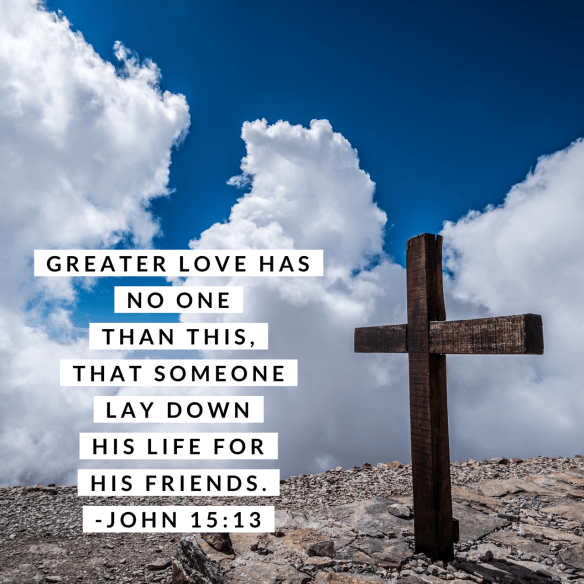
Jesus said, “Greater love has no one than this, that someone lay down his life for his friends (John 15:13, ESV). We think of this as dying for someone, and there is certainly no greater love than giving one’s life for another. But I wonder if there is a sense in which that’s also true of laying down one’s life day by day in the service of another. Jesus demonstrated both kinds of love: the daily pouring Himself out for others as well as laying down His life.

The purpose of this post is not about fasting or caregiving. It’s about the truth that loving others and ministering to them doesn’t always come about in the ways we’d most prefer. It’s often messy and costly.  But “your Father knoweth what things ye have need of, before ye ask him” (Matthew 6:8, KJV). God continues to water our garden as we give out of it.

If anyone would come after me, let him deny himself and take up his cross daily and follow me. For whoever would save his life will lose it, but whoever loses his life for my sake will save it. Luke 9:23-24, ESV

(Sharing with Inspire Me Monday, Literary Musing Monday, Tell His Story, Let’s Have Coffee, Porch Stories, Wise Woman, Woman to Woman Word-filled Wednesday, Faith on Fire)

Veterans in Watership Down

I listened to Watership Down at the end of last year. It’s quite an interesting story about rabbits searching for a new home, figuring out problems, and fighting through dangers. The author, Richard Adams, was careful to have the rabbits act like rabbits, not humans, except for the ability to talk and think, which naturally led to a rabbit history and mythology.

Part of their mythology revolved around a folk hero rabbit, El-ahrairah, clever, cunning, strong and brave. In one of their stories, El-ahrairah has just finished a long, harrowing battle at great personal sacrifice to protect the warren. I took him three months to get back because he had to stop and rest and heal. This is the scene when he returns:

They made their way along the hedgerow, but could not altogether get their
bearings, because apparently the warren had grown bigger and there were more
holes than before, both in the bank and in the field. They stopped to speak to a
group of smart young bucks and does sitting under the elder bloom.

“We want to find Loosestrife,” said Rabscuttle. “Can you tell us where his
burrow is?”

“I never heard of him,” answered one of the bucks. “Are you sure he’s in this
warren?”

“Unless he’s dead,” said Rabscuttle. “But surely you must have heard of Captain
Loosestrife? He was an officer of the Owsla in the fighting.”

“What fighting?” asked another buck.

“The fighting against King Darzin,” replied Rabscuttle.

“Here, do me a favor, old fellow, will you?” said the buck. “That fighting — I
wasn’t born when it finished.”

“But surely you know the Owsla captains who were?” said Rabscuttle.

“I wouldn’t be seen dead with them”‘ said the buck. “What, that whitewhiskered
old bunch? What do we want to know about them?”

“What they did,” said Rabscuttle.

“That war lark, old fellow?” said the first buck. “That’s all finished now. That’s
got nothing to do with us.”

“If this Loosestrife fought King What’s-His-Name, that’s his business,” said
one of the does. “It’s not our business, is it?”

“It was all a very wicked thing,” said another doe. “Shameful, really. If nobody
fought in wars, there wouldn’t be any, would there? But you can’t get old rabbits
to see that.”

“My father was in it,” said the second buck. “He gets on about it sometimes. I
always go out quick. ‘They did this and then we did that’ and all that caper.
Makes you curl up, honest. Poor old geezer, you’d think he’d want to forget about
it. I reckon he makes half of it up. And where did it get him, tell me that?”

“If you don’t mind waiting a little while, sir,” said a buck to El-ahrairah, “I’ll go
and see if I can find Captain Loosestrife for you. I don’t actually know him myself,
but then it’s rather a big warren.”

“That’s good of you,” said El-ahrairah, “but I think I’ve got my bearings now
and I can manage by myself.”

El-ahrairah went along the hedgerow to the wood and sat alone under a nut
bush, looking out across the fields. As the light began to fail, he suddenly realized
that Lord Frith was close beside him, among the leaves.

“Are you angry, El-ahrairah?” asked Lord Frith.

“No, my lord,” replied El-ahrairah, “I am not angry. But I have learned that
with creatures one loves, suffering is not the only thing for which one may pity
them. A rabbit who does not know when a gift has made him safe is poorer than a
slug, even though he may think otherwise himself.”

I fear too many of us are like those young rabbits who had no knowledge or appreciation of the sacrifices made for them, of what could have happened to them without those who fought for them. Whether we agree with certain wars or not, we can appreciate those who serve their country – who serve us – at great cost to themselves.

To all our veterans…Thank you.

1453294_10152514815031165_183870271_n

(Sharing With Literary Musing Monday)

Book Review: Sisters, Ink Series

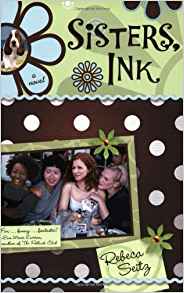
The Sisters, Ink series (also called the Scrapbooker’s series) by Rebeca Seitz is made up of four books focusing on four sisters of different ethnicities adopted by Jack and Marian Sinclair in the small town of Stars Hill, TN. The sisters are adults now and Marian passed away ten years ago. Their father, a pastor, is seeing a new lady named Zelda, but the sisters are having a hard time accepting her, not only because they don’t want their mother replaced, but Zelda is so unconventional and different from their mother. That subplot and others carry over each of the four books, but each focuses on one particular sister. The girls call a “scrapping night” in a room set up for that purpose in their father’s home when they need to talk and solve problems.

Sisters

 Sisters, Ink. spotlights Tandy, a lawyer living in FL. She had been adopted after spending her first eight years on the streets with a junkie parent. I read this book several years ago, but for whatever reason did not review it. But her story involved an extended leave at work, visiting TN, running into and clashing with an old flame. The sisters decide to turn their love of scrapbooking into an online business called Sisters, Ink.


Unglued Coming Unglued focuses on Kendra, an African-American woman who is an artist and sometimes jazz singer. She was also adopted at the age of 8 from a mother whose addiction was men. Because she has her mother’s genes and because some of those men molested her as a child, Kendra struggles with self-worth. She’s dating a great guy named Darin, but she feels that if he really knew her background, he’d drop her in  flash. When a married man at a jazz club is attracted to her, she struggles with knowing that relationship is not right, but feeling flattered by it and  wondering if that’s all she’s good for, if she has no right to rise higher.

On one hand I had a hard time being patient with Kendra as she kept deciding not to see the married guy yet kept being drawn back. But, then, we all do that with different things, don’t we? “I need to cut down on sugar” on Monday, and by Tuesday, “What can a couple of cookies hurt?” So we each struggle with our particular temptations. And people do wrestle with that mindset of being “damaged goods” and “not good enough.”

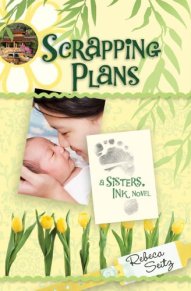
Scrapping Scrapping Plans features Chinese sister Joy. Joy was left on the door of an orphanage in China as a baby and doesn’t know anything of her family and background. She’s the ultimate hostess and most organized of the group, described as a Martha Stewart rival. She and her husband have been trying to have a baby for over a year with no success, and her husband is resistant to testing. She and her husband take a trip back to China to explore her roots.

I liked the play on words with the title, fitting into the scrapbooking theme yet also illustrating the need to realize that God’s plans might be different from ours. I also appreciated the facets of Joy’s experience in grieving over not conceiving, then becoming obsessed with the desire to have a child, and how that impacted her husband.

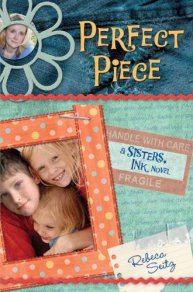
Perfect Piece brings the story back to Meg, the oldest, married the longest, with three kids. Meg was always the quiet but steady influence of the group. But she has been struggling with headaches through everyone else’s story. In this book, she is diagnosed with a brain tumor. Since the tumor is in an area of the brain that affects personality, everyone is warned that Meg may not be the same after surgery, whether the tumor is benign or malignant. Even knowing this, her husband, Jamison, has a hard time with the bitter, angry Meg that emerges on top of the stress of her illness, taking care of the house, dealing with the children, etc. A breakfast at a diner to get away by himself for a bit results in a pleasant conversation with a waitress which leads to regular meetings.

 I thought the sisters might have been a little too up in each other’s business. I have four sisters, and though we love each other and would do anything we could to help each other, I don’t think we’d confront each other like these did. But we’re different personalities and don’t live in the same town, so that makes a difference. I thought the girls were way too harsh concerning Zelda. I understand the issues involved in getting used to a new step-mom, but they all evidenced a lack of grace in dealing with her, until they came to an understanding in the end. Though there were no explicit scenes, there was a bit too much reference to some of the couples’ sexual lives for my tastes. I also didn’t like repeated references to older women in the church as “bluehairs.” It’s sad that there are rampant gossipers in the church and no one ever deals with that, but I doubt every older woman in one church would be gossipy. There seems to be a fundamental disrespect to older people in general except the girls’ parents.

But I liked several themes that emerged through the series: being there for each other, helping each other, adjusting lives and thinking to align with God’s Word. I liked several instances when seeing a situation from a different viewpoint, or understanding the circumstances instead of assuming them, diffused misunderstandings. So, all in all I enjoyed the series.

(Sharing with Semicolon‘s Saturday Review of Books)


Friday’s Fave Five

It’s Friday, time to look back over the blessings of the week with Susanne at Living to Tell the Story and other friends.

I think we’re finally on the mend from whatever we’ve had lately. Hopefully. Still coughing, but without the raging sore throat, tiredness, fuzzy-brained bleah feeling, and other symptoms.

1. A gift of art. My son, Jason, made this bird picture for me. I told about how it came to be here.

IMG_1184

2. An unexpected gift. I had to miss our ladies’ group at church due to being sick, and my pastor’s wife dropped by afterward and left this on my porch, with a card signed by the ladies.

IMG_1186

3. A gift of ham. We also had to miss the church potluck Sunday, and afterward our pastor and his wife dropped off a big pan of leftover ham plus a couple of other goodies. Such a blessing, as I did not at all feel like cooking last weekend. We’ve been eating from it all week.

4. Goodies. We invited Jason and Mittu over to eat some of the ham one night, as Jason and Timothy were sick, too, so wouldn’t be harmed by exposure to us. Mittu made a gluten-free pumpkin spice cake that was really good. Often GF cakes are on the dry side, but this was really moist and tasted so good. Then, I’m not real big on Little Debbies, other than Swiss Cake Rolls, but I keep some in the house for my youngest. I bought this new one to try, and it was really good.

IMG_1187

I try to hold off on Christmas until after Thanksgiving, but thought I could make an exception in this case. 🙂

5. A husband who patiently fixes things. I had wanted to change the inadequate lighting in the sewing/craft room and found what I thought was the perfect light fixture, with three moveable parts that could be aimed at the work desk, sewing desk, and futon. But it not only didn’t shed any more light: it left dark shadows anywhere the light wasn’t pointing. So I searched for ceiling light fixtures online and found another one I thought might do. But I didn’t realize til it got here that it was for a ceiling fan. :/ I finally asked him to just put back the old one. He found an old light fixture that he had saved from somewhere else in the house that had a place for two bulbs and suggested a brighter LED light bulb. So we’re back in business with better lighting. In all of that he didn’t once complain or scold or even sigh – at least not in my hearing. 🙂 And! While putting up the last fixture he found a wire in the ceiling that had been nicked and sparked when it touched the ground wire, so we were glad he discovered that and was able to fix it. Then we had a maddening leaky kitchen faucet for a few days, and he had to order a part to fix it (after having to search and compare pictures since nothing on the faucet itself identified what brand it was), and fixed it right away once the part came in.

So, all in all, a good week. I hope yours was, too.