How Christian Do You Like Your Christian Fiction?

IMG_0728

Recently I was talking with an author friend about a favorite Christian author’s most recent book, which wasn’t particularly Christian, unlike her previous books. He said that Christian publishers are now encouraging authors to write moral stories which are not overtly Christian because there’s no market for the latter.

I was astonished. Admittedly I’m just one small speck in the universe, but I hear from people all the time who want Christian fiction. Clean, moral stories are fine in their place, but readers of Christian fiction want the Christian content. It doesn’t have to contain a full-blown conversion story (though it’s fine if it does), it shouldn’t be didactic, some things may be implied rather than spelled out, but one reason we read Christian fiction is for Christian content. We want to see how people apply Christian principles to their dilemmas and everyday life. We expect to see them acting Christianly, as a friend recently said. That can be done and has been done without the book being preachy or stuffy.

I know there is a market for such books, though I am sure it’s a smaller market than secular or just moral books.

But one major bestselling series with a clear Christian thread running through it is Jan Karon’s Mitford series. I don’t think it’s even marketed as Christian fiction, yet there are conversions, clear gospel presentations, characters attending church, praying, reading their Bibles, Biblical principles worked out into life. I don’t know if it’s so well accepted because the main character is a minister, or if it’s because Jan Karon weaves everything together so naturally and realistically. But it can be done.

I have noticed, though, with some books that seem to be striving for the middle ground, that some reviewers criticize it for having too much religious content and others criticize it for not having enough. So it seems like this is one area where it’s best to be overtly Christian or not at all.

I’d love to know how you feel. If you don’t like Christian fiction, fine, you don’t need to trash it here. But if you do like Christian fiction, how Christian do you like for it to be? And what do you think we can do to let publishers know that, besides, of course, the most important way: buying it?

See also:

Why Read? Why Read Fiction? Why Read Christian fiction?
The Gospel and Christian Fiction.
Sexuality in Christian Fiction.
“Edgy” Christian Fiction.

(Sharing with Faith on Fire, Literary Musing Monday)

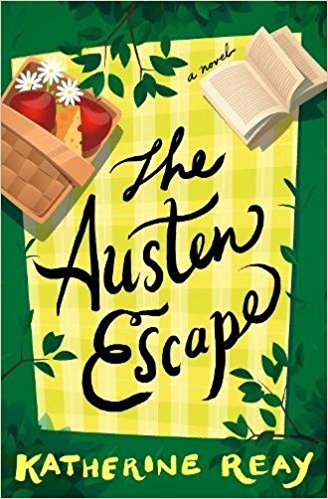
Book Review: The Austen Escape

Austen Escape The Austen Escape by Katherine Reay finds lifelong friends going on vacation to a manor in Bath, England, for a Jane Austen-themed experience. Mary Davies, from whose point of view the story is told, is an engineer, not a Romantic. In fact, all her mother’s Austen books were given to her friend, Isabel Dwyer, who is lively, vivacious, and well-versed in all things Austen. Isabel has some sharp edges, though, and the two friends have been somewhat on the outs for a time. But Isabel begs/drags/insists that Mary go, and as so often happen, Mary concedes.

While at this Austen experience, guests are to choose a character from one of Austen’s books to portray and to dress in Regency outfits provided by the manor. There are a few rough spots until Isabel has some sort of mental issue, forgets who she is, and believes she really is the character she’s portraying.  She’s actually much easier to get along with, though, and some things come out that help Mary put together some of the issues that they’ve had. On the other hand, other issues concerning the guy Mary is interested in come out as well, leaving her feeling betrayed.

My thoughts:

The lost memory issue is mentioned on the back of the book, and I wondered how the author was going to pull that off when it seems likely someone in that condition would be taken to the hospital immediately. But the explanation for why they stay on at the manor seemed plausible. I also had a hard time figuring Isabel out when some times she seemed like Mary’s best-ever friend, and other times she seemed condescending and even haughty. I thought perhaps the back-and-forth was going to be a precursor or related to whatever caused the memory loss. That did not turn out to be the case, at least not directly, but it was explained eventually.

I have read all of Reay’s books and enjoyed them to varying degrees, but I have to confess, this is not a favorite. The premise sounded fun – how great would it be to actually go on an Austen-themed vacation like this?! And all of Reay’s books have a plethora of literary allusions, fun for any reader of classics. Obviously the ones this time were all connected to Austen books.

Two themes in the book have to do with various ways people “escape,” and with vision – lack of seeing things clearly, etc.

But the writing this time just seemed — maybe a little uneven to me. I don’t know quite how to put my finger on it. I didn’t “get” a key factor until the discussion questions after the book, which was probably my own fault.

And then, Reay’s first book was definitely in the Christian or at least inspirational fiction category, but it seems her later books get further away from that category. I don’t recall anything relating at all to Christianity or faith in this book, though it’s possible it’s there and I have forgotten it. But if it’s there, it’s small. Maybe this is meant as a general fiction or romance, I am not sure. There was a comment between Mary and her boyfriend about her chest that totally didn’t need to be there – though it was mild compared to secular standards. And there was a fair bit of alcohol consumption – I know there are Christians with varying degrees of conviction about this issue, and I know alcohol was consumed in the Austen books, but it just seemed like that element was detrimental to me personally.

But all in all it’s an enjoyable story, especially as things come together in the end, and as the discussion questions pulled more of the story together for me.

(Sharing with Semicolon‘s Saturday Review of Books, Carole’s Books You Loved)

Book Review: The Secret Garden and a Discussion of Magic in Children’s Books

Secret Garden I have mixed emotions about The Secret Garden by Frances Hodgson Burnett. I’ll explain why in a moment.

The story opens with nine-year-old Mary Lennox in India with her family. Her father “had held a position under the English government and had always been busy and ill himself, and her mother had been a great beauty who cared only to go to parties and amuse herself with gay people. She had not wanted a little girl at all,” so Mary was left to the care of her Ayah. So as not to bother Mary’s mother and get in trouble, the Ayah and other servants gave Mary her way in everything, leading to her becoming “as tyrannical and selfish a little pig as ever lived.”

A cholera outbreak took her Ayah, both parents, and several others, and everyone else fled the compound, leaving Mary alone and forgotten until some officers discovered her. She was sent to Yorkshire, England, to stay with her mother’s brother, her only relative, Archibald Craven at Misselthwaite Manor. Mr. Craven had a crooked back and had been in deep mourning for the ten years since his wife died. Mary did not meet him for a long time, as he traveled frequently, so she was taken care of primarily by a housemaid named Martha.

No one had thought to provide Mary with books or anything to do. She was strongly instructed not to poke around in the house, rumored to have 100 rooms. Martha encouraged her to go outside, pointing the way to the gardens and mentioning that there was one that had been locked up for ten years. It had been Mrs. Craven’s personal garden, but her husband had it locked up after she died.

That piqued Mary’s curiosity, and, as the title indicates, she does eventually find the garden. And what’s more, she discovers an unexpected person living in another part of the house.

My thoughts:

The story itself is a sweet, cozy, Victorian English tale. It’s not hard to see the symbolism between Mary and the friends she discovers bringing this garden back to life, weeding it, and tending it, and Mary and another orphan’s need for weeding and tending themselves. The story unfolds in a nice way and some of the characters are treasures: Ben Weatherstaff, the gruff gardener who helps Mary make friends with a robin; kindly Dickon, Martha’s brother, who has a way with animals; Mrs. Sowerby, Dickon’s warm and practical mother. I loved Mary’s transformation. The ending is perfect, just the way you’d want a book like this to end.

My mixed emotions are due to the book’s use of magic. Now, magic can mean different things in different books. I wrote some years ago about wrestling with this and concluding that fairy tale magic is not the same thing as the occult (real witches are not warty little old ladies who turn people into frogs). C. S. Lewis uses “magic” as a symbol for God’s ways. When my kids were little, one library haul yielded two books about magic carpets. In one, the “magic carpet” was a rug that the mom and child sat on to read books together – harmless and sweet. The other was a dreadful New Age tale complete with a message from a spirit guide in the back! So when magic comes up in a book, first I have to discern what the author meant by it and how the concept is portrayed.

The gust of wind that revealed the garden door was “a Magic moment.” I didn’t think much about that at first, but more and more as the story went on, Magic was given the credit for many things, until at last the children actually perform an incantation asking Magic (always capitalized) to come and do what they want. Mention is make of tales of Magic Mary heard about in India and the work of fakirs there. As the children themselves ponder what Magic is, one suggests it’s the dead mother of one of them, “lookin’ after Mester Colin, same as all mothers do when they’re took out o’ th’ world.” Other conversations attribute it to some kind of life force, the same thing that makes the flowers grow.

 I am sure there is Magic in everything, only we have not sense enough to get hold of it and make it do things for us—like electricity and horses and steam. When Mary found this garden it looked quite dead…Then something began pushing things up out of the soil, and making things out of nothing. One day things weren’t there and another they were. I had never watched things before and it made me feel very curious. Scientific people are always curious and I am going to be scientific. I keep saying to myself, ‘What is it? What is it?’ It’s something. It can’t be nothing! I don’t know its name so I call it Magic…Sometimes since I’ve been in the garden I’ve looked up through the trees at the sky and I have had a strange feeling of being happy as if something were pushing and drawing in my chest and making me breathe fast. Magic is always pushing and drawing and making things out of nothing. Everything is made out of Magic, leaves and trees, flowers and birds, badgers and foxes and squirrels and people. So it must be all around us. In this garden–in all the places. The Magic in this garden has made me stand up and know I am going to live to be a man. I am going to make the scientific experiment of trying to get some and put it in myself and make it push and draw me and make me strong. I don’t know how to do it but I think that if you keep thinking about it and calling it perhaps it will come. Perhaps that is the first baby way to get it. When I was going to try to stand that first time Mary kept saying to herself as fast as she could, ‘You can do it! You can do it!’ and I did. I had to try myself at the same time, of course, but her Magic helped me—and so did Dickon’s. Every morning and evening and as often in the daytime as I can remember I am going to say, ‘Magic is in me! Magic is making me well! I am going to be as strong as Dickon, as strong as Dickon!’ And you must all do it, too.

When Ben Weatherstaff suggests they sing the Doxology, one of them says, “’It is a very nice song…I like it. Perhaps it means just what I mean when I want to shout out that I am thankful to the Magic.’ He stopped and thought in a puzzled way. ‘Perhaps they are both the same thing. How can we know the exact names of everything?’”

Then when Dickon’s mother is asked whether she believes in Magic, she says:

I never knowed it by that name but what does th’ name matter? I warrant they call it a different name i’ France an’ a different one i’ Germany. Th’ same things as set th’ seeds swellin’ an’ th’ sun shinin’ made a well lad an’ it’s th’ Good Thing. It isn’t like us poor fools as think it matters if us is called out of our names. Th’ Big Good Thing doesn’t stop to worry, bless thee. It goes on makin’ worlds by th’ million–worlds like us. Never thee stop believin’ in th’ Big Good Thing an’ knowin’ th’ world’s full of it–an’ call it what tha’ likes. Tha’ wert singin’ to it when I come into th’ garden…Th’ Magic listened when tha’ sung th’ Doxology. It would ha’ listened to anything tha’d sung. It was th’ joy that mattered. Eh! Lad, lad, what’s names to th’ Joy Maker.

As I read and was trying to discern how to take the Magic in this book, I figured it would be best first to see if I could find out what the author meant by Magic. Wikipedia says, “In the early 1880s [Burnett] became interested in Christian Science as well as Spiritualism and Theosophy.” Sparknotes says “throughout the novel, the idea of magic is heavily inflected by the tenets of both Christian Science and New Thought.” Part of the latter is the idea of “mind over matter,” the thought that repeating something over and over, as the children do in their chanting, can make it become real. Also, near the end of the book, the author writes:

One of the new things people began to find out in the last century was that thoughts—just mere thoughts—are as powerful as electric batteries—as good for one as sunlight is, or as bad for one as poison. To let a sad thought or a bad one get into your mind is as dangerous as letting a scarlet fever germ get into your body. If you let it stay there after it has got in you may never get over it as long as you live.

So long as Mistress Mary’s mind was full of disagreeable thoughts about her dislikes and sour opinions of people and her determination not to be pleased by or interested in anything, she was a yellow-faced, sickly, bored and wretched child. Circumstances, however, were very kind to her, though she was not at all aware of it. They began to push her about for her own good. When her mind gradually filled itself with robins, and moorland cottages crowded with children, with queer crabbed old gardeners and common little Yorkshire housemaids, with springtime and with secret gardens coming alive day by day, and also with a moor boy and his “creatures,” there was no room left for the disagreeable thoughts which affected her liver and her digestion and made her yellow and tired.

There’s a sense in which it’s true that both positive and negative thoughts can affect one’s outlook and even one’s health. But it’s possible to take that philosophy too far. SparkNotes goes on to say:

One of the book’s underlying themes is the way in which happiness begets happiness, and misery begets only more of itself….The source of this notion can again be found in Burnett’s fascination with the New Thought and Christian Science movements, which held that one must think only positive thoughts if one wants good things to happen. The fact that this idea is patently false miraculously did nothing to deter its adherents. Dickon’s remark that “the springtime would be better [for Colin] than doctor’s stuff” provides another instance of Christian Scientist tenets in the novel. Christian Science, as a philosophy, disapproves of medical intervention: no disease is truly corporeal (caused by the body), but is in fact the result of morbid and negative thinking. Colin must have contact with the life of the world if he is to go on living, because this contact will dispel his thoughts of death: Dickon (guided by Burnett’s Christian Scientist beliefs) says that Colin “oughtn’t to lie there thinking [of death and illness]… No lad could get well as thought them sorts of things.” The fact that Colin’s fury at Ben Weatherstaff provides him with sufficient strength to stand reinforces the notion that his previous inability to do so was entirely a product of his negative thinking. It also underlines the idea that if one only wishes to overcome one’s illness, one can. Negative thoughts are the human error to be found at the root of all disease; one must therefore force out ugly thoughts with agreeable ones, for “two things cannot be in one place.” This notion is responsible for both Colin and Mary’s wondrous metamorphoses. Once they are thinking of the garden and nature, of Dickon and of their own blossoming friendship, they can no longer concern themselves with their own contrariness or with the fear of becoming a hunchback and dying an early death. Instead, they become normal, healthy children, full of dreams of the future. This questionable (and inarguably syrupy) goal is given inane epigraphic expression in the phrase “Where you tend a rose, my lad, a thistle cannot grow.”

So there is a sense in which you could think of the Magic in the book as “positive thinking” or the same force that makes the plants grow. Or, as this writer did, you could see it as pluralism, wanting to lump all of these philosophies in with Christianity as if they are the same thing, when they’re not. Knowing more of Burnett’s background and philosophy makes me wary. I don’t know if I would read this to my children, if they were still young enough to read to: we’d at least have to discuss some of these issues as we read.

There is also a bit of colonialism, I guess you’d call it, in the book, with Mary being disdainful of the Indian servants and seeing them always as only servants, and Martha’s ignorance in calling them “blacks.”

A brief biography of the author, unusual in audiobooks, mentions that “Later in life, reporters criticized her lifestyle, and turned public sentiment against her.” But it doesn’t say what exactly they criticized, so I don’t know if it was her philosophies or the fact that she was divorced or something else.

I listened to the audiobook wonderfully read by Josephine Bailey and also looked up some passages in a library copy and on Project Gutenberg.

(Sharing with Semicolon‘s Saturday Review of Books, Carol’s Books You Loved, Literary Musing Monday)

Giving Encouraging Compliments

Have you ever received a gushy compliment that made you feel distinctly uncomfortable? As Christians we want to give glory to God, and we know that nothing good is accomplished except by His grace and help, so we struggle with responding to a compliment that acknowledges the encouragement but diverts the glory to God, yet without sounding overly pious.

Evidently this is a common problem, because as I searched online for ways to give compliments that didn’t put people in that awkward position, instead almost all of the results were about how to receive compliments graciously. The only ones about giving compliments that I saw were work related, e.g., how to compliment your boss without making it sound like you’re trying to gain points.

I used to think that the way to handle compliments was to minimize whatever I was being complimented about. But once while thinking about this, I reflected on the pastor’s wife at the church we were attending at the time. She was a wonderful, accomplished, heartfelt pianist, and if anyone complimented her playing and she had said, “Oh, thank you, but I am really not all that good” – that would have rung false and sounded awkward. Plus it either deflates the complimenter or calls forth more compliments, as if the person now has to convince you that you really are that good.

In Mere Christianity, C. S. Lewis said:

Pleasure in being praised is not Pride. The child who is patted on the back for doing a lesson well, the woman whose beauty is praised by her lover, the saved soul to whom Christ says, “Well done,” are all pleased and ought to be. For here the pleasure lies not in what you are but in the fact that you have pleased someone you wanted (and rightly wanted) to please. The trouble begins when you pass from thinking, “I have pleased him; all is well,” to thinking, “What a fine person I must be to have done it.”

That helped me realize it’s not wrong to want to know you pleased someone and it helped show the dividing line between between that kind of pleasure and the kind that puffs up and oversteps.

The conclusion I gradually came to over many years was to just accept the compliment as the encouragement that it was meant to be, and, if possible to do so naturally and without sounding forced, to somehow acknowledge God in my reply. If, for instance, someone said something favorable about something I had written, my reply would often be something akin to: “Thank you. I’m grateful God could use it.” Sometimes, if there was time and the conversation warranted it, I might go into more detail concerning the Lord’s leading in writing that particular piece, but for a brief, passing response to a compliment, that sort sentence or something like it seemed best.

Besides struggling with this just a handful of times myself, I have sensed that awkwardness in others when I complimented them. Some would say something like, “Well, praise the Lord,” but I could sense they almost felt embarrassed and weren’t sure how best to respond.

So I began to think of how to compliment others in a way that acknowledged God’s part in it and yet let the person know their work was appreciated, too. There may be times a general, gushy “You’re so wonderful!” would be greatly appreciated: most husbands or wives would love to hear that! But it would make a church soloist being complimented for her service to the Lord feel quite awkward.

So what are some ways to graciously compliment people?

1. Avoid flattery. Many of the Bible verses regarding flattery depict it as laying a trap or being deceitful for personal gain. Most of us sincerely trying to compliment someone aren’t trying to do that. The Hebrew word for flattery in Proverbs 26:28 (“A lying tongue hateth those that are afflicted by it; and a flattering mouth worketh ruin”) means “flattery, smooth” – not much help. Dictionary.com sheds more light on the English word. Some of the meanings aren’t bad, like a hairstyle that flatters the face, showing it to its best advantage. But most of them convey that idea of deceptiveness. A few of the definitions that stand out to me are effusiveness, excessiveness, playing “upon the vanity or susceptibilities of.” So the first rule of complimenting would be sincerity and appropriateness. Don’t overdo it, don’t appeal to the person’s pride.

2. Focus on encouragement. You’re not trying to puff them up; you just want to let them know you saw their hard work, their growth, their improvement, their doing the right thing in a trying moment, and you appreciated it. Something Elisabeth Elliot wrote arrested me (as her writing often does):

I turned off the radio and asked myself, with rising guilt feelings, “Do I need approval?” Answer: yes. Does anybody not need approval? Is there anybody who is content to live his life without so much as a nod from anybody else? Wouldn’t he be, of all men, the most devilishly self-centered? Wouldn’t his supreme solitude be the most hellish? It’s human to want to know that you please somebody…Sometimes readers of things that I write tell me long afterward that they have thought of writing me a letter, or have written one and discarded it, thinking, “She doesn’t need my approval.” Well, they’re mistaken–for wouldn’t it be a lovely thing to know that a footprint you have left on the trail has, just by being there, heartened somebody else? (From the chapter “The Trail to Shandia” in Love Has a Price Tag as well as one of the email devotionals of her writings that used to be sent out by Back to the Bible.)

3. Be specific. Instead of “You’re such a wonderful writer” or “You’re a brilliant piano player” or “You sing like an angel” or “You’re the best preacher I’ve ever heard,” which all sound effusive and excessive, perhaps focus on the one thing you most appreciated. “The paragraph about (whatever) really helped me understand it in a way that I hadn’t before” or “Your message on (whatever) really encouraged me (in this particular way).”

4. Acknowledge the Lord, especially if the act in question was something done as unto the Lord. So, instead of telling a musician or soloist, “That was wonderful!” or “I loved your song!” perhaps something more like, “God really spoke to my heart through your song this morning” would be fitting

Sometimes a sincere compliment can do wonders in encouraging someone, especially if that person feels unseen or ineffective.

 A man hath joy by the answer of his mouth: and a word spoken in due season, how good is it! Proverbs 15:23, KJV

Pay to all what is owed to them: taxes to whom taxes are owed, revenue to whom revenue is owed, respect to whom respect is owed, honor to whom honor is owed.
 Romans 13:7, ESV

Therefore encourage one another and build one another up, just as you are doing. 1 Thessalonians 5:11, ESV

Let no corrupting talk come out of your mouths, but only such as is good for building up, as fits the occasion, that it may give grace to those who hear. Ephesians 4:29, ESV

A word fitly spoken is like apples of gold in a setting of silver. Proverbs 25:11, ESV

How about you? Have you found effective ways to compliment others? Has someone complimented you in a way that blessed and encouraged you?

(Sharing with Inspire me Monday, Glimpses, Literary Musing Monday, Tell His Story, Woman to Woman Word-filled Wednesday, Coffee For Your Heart, Porch Stories, Faith on Fire)

Laudable Linkage

IMG_0195

Here are a few thought-provoking posts discovered recently.

Heart Check: 4 Questions to Gauge the Stage of Your Heart.

My Larry Nassar Testimony Went Viral. But There’s More to the Gospel Than Forgiveness. Interview with Rachel Denhollander.

Most of Life Is Waiting. “I feared my circumstances more than I feared God. I had lost sight of the reality that both trials and triumphs are part of the good story God is writing through me.”

On Threats From a Hostile Culture.

Don’t Hold Loved Ones Back From God.

The Simple Beauty of Wisdom. The ladies at Do Not Depart have been studying through Proverbs in January and end with the last two chapters. I thought the comments about the “virtuous woman” in particular were very practical and encouraging.

What Do We Do With the King James Version?

Enneagram: The Road Back to You, Or to Somewhere Else?, HT to Challies.

How the Mom Internet Became a Spotless, Sponsored Void, HT to Challies. I don’t think it’s totally dead, and I think there is a place for both the “raw” and the “pretty” types of mom blogs, but this makes some insightful observations.

Physician to Parents: You’re Doing It Wrong. The title is a little off-putting, but he has some practical advice here.

Why You Can’t Measure the Value of Homemaking, HT to Challies.

Don’t Stop Coming.

Happy Saturday!

Friday’s Fave Five

friday fave five 12
It’s Friday, time to look back over the blessings of the week with Susanne at Living to Tell the Story and other friends.

I hope your end-of-January, beginning-of-February week has been a good one! I have many more than five good happenings his week, but I’ll try to squeeze in as many as I can!

1. Fun family time. I mentioned in an earlier post that we went to the Chocolatefest in town,  but it ended up having lots of booths for clothes and jewelry with just a handful featuring chocolate, unless you paid extra for the section where they were doling out chocolate treats. But it was fun to do something together as a family and go out for lunch afterward. And then one night Jim and I rented a movie to watch together, which is unusual – usually we rent movies to watch as a family. There are a few TV shows we watch together, but it was fun to have our own “movie night.”

2. Dinner. It’s so nice to get a text mid-afternoon from Jason and Mittu asking if they can come over and make dinner. They brought over chili and cornbread. Then Timothy starting playing multiple things with all the throw pillows in the house – piling them up as high as he could, and exultantly knocking them down, making an island, making a puzzle, covering Daddy with them, and I don’t remember what all else.

3. New clothes. Some of my clothes had reached at-home-only status, and sometimes I have a hard time finding things I like that fit well that are a decent price and meet all my other requirements. 🙂 A few things I ordered came in the mail this week, so now I am sufficiently covered (ha!) for a while longer.

4. Lunch with Melanie and a belated Christmas gift exchange. For various reasons we hadn’t seen each other since November, so it was fun to catch up.

5. My first experiment with an Instant Pot. My son had gotten one of these for Christmas and really enjoyed it, and I kept hearing online friends rave about it. So I used my Amazon points* to get a free one for myself. But it sat on the counter for a few weeks until I got brave enough to try it. 🙂 I’ve been collecting recipes on Pinterest and finally last night ventured forth with about four different chicken and dumplings recipes and cobbled them together. I ended up using pretty much the same ingredients as this one, a stove-top recipe I had used before, and the Instant Pot instructions for this one. Some of the others called for milk or heavy cream to make the broth creamier or for a lot of other spices, but I liked the simpler, traditional version. Some also called for rolling out the dumpling dough and using a pizza cutter to make little rectangular shaped ones, like Cracker Barrel, but what few times I’ve had it before, other than CB, I’ve had the round, fluffy dumplings. And it’s a lot easier to drop the dough into the broth by spoonful than to roll it out. Anyway – I loved how it came out! Comfort food!

27337028_10214686361569704_4701128694223315721_n

I was also excited to find that you can put frozen chicken breasts in the Instant Pot and have them “fork-tender” in 12 minutes!

Happy Friday!

(* Just a note that the Amazon points had nothing to do with an affiliate program. I am not a part of their affiliate program, though I have thought about it. These were reward points for using their credit card. I tend to save them up to buy a bigger item I probably wouldn’t otherwise get for myself.)


Laura Ingalls Wilder Reading Challenge 2018 Sign-up

It’s time for the Laura Ingalls Wilder reading Challenge for 2018! The basic idea is to read anything by, about, or relating to Laura Ingalls Wilder during February, the month of her birth and death. I have an extensive book list here if you’d like some ideas beyond the Little House series, but if course the Little House series is delightful to read or reread.

In the comments below let us know what you’re planning to read. On Feb. 28 I’ll have a wrap-up post where you can tell us how you did and what you thought, either in the comments or with a link back to your posts. You don’t have to have a blog to participate, but if you do I’d appreciate your linking back here.

Sometimes participants have done projects or made recipes from the series as well. If you do so, please do share with us! Annette at Little House Companion has some activities and other resources.

I like to have some sort of drawing to offer a prize concluding the challenge, and I decided to once again offer one winner the choice of:

The Little House Cookbook compiled by Barbara M. Walker

OR

Laura’s Album: A Remembrance Scrapbook of Laura Ingalls Wilder by William Anderson

If neither of those suits you, I can substitute a similarly-priced Laura book of your choice. To be eligible, leave a comment on the wrap-up post at the end of the month telling us what you read for this challenge. I’ll choose a name through random.org. a week from then to give everyone time to get their last books and posts finished.

This year I am planning to read:

  • The First Four Years, the last in the Little House series
  • Death On the Prairie by Kathleen Ernst, a modern mystery set around some of the places Laura lived.
  • Little Blog on the Prairie by Cathleen Davitt Bell. I had not heard of this, but it happened to catch my eye while I was in the library. It’s about a modern family with problems going to a “Camp Frontier.”
  • Last year I bought a set of My First Little House Books, after reading Rebekah’s wonderful review. I haven’t even opened them yet, but I want to look through them and hopefully see if Timothy might sit still long enough to look at one or two.

How about you? Will you be joining us this year? What will you be reading?

(Sharing with Literary Musing Monday)

End-of-January Musings

January is normally a doldrums month for me. All the light and glitter and celebratory spirit of Christmas has been put away, it’s dark and cold, the landscape is almost barren, nothing exciting is going on, and it will be months yet before spring. But this year it hasn’t been so bad. There were a few overcast, very cold days when I only wanted to hibernate, but overall I think keeping busy has kept me distracted. Maybe I’ve been taking my own advice for the winter blues. 🙂

We’ve had two family outings this month, whereas we normally might have only a handful a year, so that might be one thing that livened up January. One Saturday we went to the Ripley’s Mirror Maze in Gatlinburg and then a favorite Mexican food restaurant. Last Saturday we went to the Chocolatefest in Knoxville – or, as Timothy put it, the “chocolate party.” 🙂 The  event itself was a disappointment, though. I had envisioned a large room with rows and rows of chocolate-themed items. There were a few tables of chocolate items, but the others were mainly jewelry and clothes with assorted other odds and ends. There was one section you could only go into if you bought a “tasting ticket” for $20, and that’s evidently where most of the chocolate was. If you went there you got a box or bag you could fill up with goodies. But I don’t know if we could have collected enough to have made it worth $20 times four people. We didn’t think until afterwards that we could have had one of us go there and then we all could have shared the loot. 🙂 But I did bring home a few chocolate purchases, and Timothy enjoyed some “monster blue” ice cream (and showing me his blue tongue and teeth) and got to do a little activity at a kid’s table, and we enjoyed looking at the cake-decorating entries. And we went to one of his favorite restaurants afterward, so we had fun together even if the event itself wasn’t the best.

Jim and I have also done a bit of furniture-shopping. The padding on our couch and loveseat arms has gotten so thin we can feel the wood underneath when we lean against them, and the fabric is worn, with a few holes starting to show. We spent one Saturday looking at a few places and found one set that might work. There’s at least one more place I’d like to go. We found one place that had the Magnolia Home furniture. I loved the style, but they didn’t seem to have a combination that fit what we needed. It also might have been more expensive, but I don’t think I looked at prices much since I didn’t see anything I thought would work. We’d like to find a sofa, loveseat, recliner combination, or at least a sofa and loveseat, and then we can buy a recliner individually. We saw a lot of sets with, instead of a recliner, a huge oversized chair and footstool. I don’t think we’d have the space for it, and besides, some of the family like the reclining function.

Speaking of furniture shopping – furniture showrooms are my least favorite places to shop in. We almost never buy anything on our first look-through: we’re just seeing what’s out there, checking prices, testing out how they feel, etc., then we go home and think about it or go other places and look some more. I’m generally slow to make up my mind anyway, but I want big purchases to last for years and not have to go through this whole process again any time soon. As soon as you walk through a showroom, a salesperson greets you, which is fine, but they don’t seem to want to leave you alone even though you tell them you’re “just looking.” It’s good if you can find one easily when you have a question, but they can’t help you decide what you like and don’t like. It just takes time and looking around to decide that, and their constant questions and suggestions just make me want to leave, which is, I would think, not their goal. I’ve enjoyed more some little out-of-the way furniture places over the years, but the ones we went to when we first moved here have gone out of business.

During a lot of the year, Jim has grass to mow or projects to work on Saturdays, so it has been fun to do some other things together. Altogether I think I have begun to appreciate January as a restful spot between other busy times.

On the creative front, not much has been going on except that I have been sorting through, cleaning out, and shaping up my craft files. Seeing what I have there has been stirring my creative juices. I have not sewn clothes in a very long time – just curtains and pillows and such – but I saw a dress the style of which I loved in a catalog a few days ago. But the dress itself was around $135 – which is about 3-4 times more than I usually pay for dresses. I’ve been looking around to see if I can find a pattern similar to it. If I can find something I can adapt, I just may be spending some time with the sewing machine soon.

Around the house, besides the usual tasks and the files mentioned above, I spent some time rearranging my books shelves, making a place for new books I want to keep, pulling a few books out to give away. I love looking at the neat and tidy (is that redundant?) results. There are a couple of boxes of books in two different closets I want to go through next, and then our other filing cabinets. I’ve been in a sorting and organizing mood lately, and I usually don’t have time (or inclination) to tackle a whole room at once, but these smaller spaces catch my eye and call to me occasionally.

January was also a good month for reading, as I shared yesterday. Last year for the Back to the Classics challenge, I thought it would be good to get my biggest book (Middlemarch) out of the way first. But I felt like I was stuck on the one book for a very long time. This year I started off with some of the shorter classics, and I think I like that approach better. It feels like I’ve made good progress on my reading goals already. Trust: A Godly Woman’s Adornment by Lydia Brownback has been both a challenge and and encouragement. I’m about finished with Isaiah in my current trek through the Bible, and Trust has been been gently hitting some of the same lessons, that anything we’re trusting in other than God will fail us, and that He is the only perfectly reliable and trustworthy One. Not reliable in the sense that He’ll always do what we think best, but He will always do what He knows best, even if it means letting our false props fail us in order to draw our attention back to Himself.

The other thing we’ve been into the last moth – don’t laugh – is HQ Trivia. My oldest son told us about it when he was here for Christmas and now we all play. It’s an app for your phone where there is a live quiz at 3 p.m. Eastern time on weekdays and every evening at 9 p.m. There are 12 trivia questions (occasionally 15) that start off ridiculously easy and then get much harder. There is a cash prize of $2,500 (sometimes more!), and the people who win that quiz split the money. So far the highest I have gone is 7 questions: Jim got all the way to the end before missing the last question last night. It’s been fun to do together, and if Jason and Mittu are here at 9, we all play together. And, you can get extra lives by referring people, so, though I am NOT mentioning this just to get extra lives – if you decide you want to try it out and wouldn’t mind putting barbarah06 in as a referral code, I would be very appreciative. 🙂

Around the blog, besides several book reviews and the weekly Friday’s Fave Five and occasional sharing of Laudable Linkage:

  • When everything fails. “It’s not that God orchestrates problems in our lives to create a need for Him: rather, He strips everything away to reveal a need that was already there that we couldn’t see or hadn’t paid attention to. Sometimes He has to show us that nothing else is sufficient to meet that need before we’ll turn to Him.”
  • What do you know? “It’s true that knowledge can “puff up” with pride, but rather than avoiding gaining knowledge, we need to remind ourselves that If anyone imagines that he knows something, he does not yet know as he ought to know” (1 Corinthians 8:2), and we need to remind ourselves that the purpose of gaining knowledge is to better know the Lord and serve Him and others.”
  • Winter.
  • God’s Back. “If this is the back of God – merciful, gracious, slow to anger, abounding in steadfast love and faithfulness, keeping steadfast love, forgiving sin – what must the front be?

And I think that about wraps up January. In February, we look forward to Valentine’s Day (which we make kind of a big deal of as a family), my daughter-in-law’s birthday, and the Laura Ingalls Wilder Reading Challenge! And maybe some new furniture! And one month closer to spring!

(Sharing with What I’m Into at Leigh Kramer)

What’s On Your Nightstand: January 2018

Nightstand82The folks at 5 Minutes For Books host What’s On Your Nightstand the last Tuesday of each month in which we can share about the books we have been reading and/or plan to read.

Here we are a month into 2018, and I feel like I have gotten off to a pretty good start on my reading goals for the year.

Since last time I have completed:

The Biggest Story: How the Snake Crusher Brings Us Back to the Garden by Kevin DeYoung, reviewed here. I actually finished this back in December, but after that month’s Nightstand post. It’s a book aiming to help children see the overarching story of the Bible and place individual stores in their place in the bigger picture.

Gospel Meditations for Christmas by Chris Anderson, Joe Tyrpak, and Michael Barrett, reviewed here. Excellent. I read most of it in December but finished up the last couple of pages early in January.

Conscience: What It Is, How To Train It, and Loving Those Who Differ by Andrew David Naselli and J. D. Crowley, reviewed here. Excellent – both Biblically based and very practical.

Ghost Boy: The Miraculous Escape of a Misdiagnosed Boy Trapped in His Own Body by Martin Pistorius, reviewed here. Excellent.

Watership Down by Richard Adams, reviewed here. My first time through this classic, and I enjoyed it very much.

The Man Who Was Thursday by G. K. Chesterton, reviewed here. My first Chesterton book, and not at all what I was expecting, but it kept me pondering for a long time after closing it.

20,000 Leagues Under the Sea by Jules Verne, reviewed here. Not my usual cup of teas, but I enjoyed it.

Mozart’s Sister by Nancy Moser, reviewed here. Very good.

I’m currently reading:

The Secret Garden by Frances Hodgson Burnett

Trust: A Godly Woman’s Adornment by Lydia Brownback

The Austen Escape by Katherine Reay

A Spectacle of Glory: God’s Light Shining through Me Every Day by Joni Eareckson Tada. This is a year-long devotional book, so I probably won’t list it every month.

Up Next:

Journey to the Center of the Earth by Jules Verne

The Story of My Life by Helen Keller

Death On the Prairie by Kathleen Ernst for the Laura Ingalls Wilder Reading Challenge beginning here Feb. 1! It’s a modern mystery set around some of the places Laura lived.

The First Four Years by Laura Ingalls Wilder, also for the Laura Ingalls Wilder Reading Challenge.

After those – something from my reading plans for the year.

If you are interested in the Laura Ingalls Wilder Reading Challenge taking place next month, there is more information and a book list here.

Have you spent any of these winter days in a cozy book?

(Sharing with Literary Musing Monday)

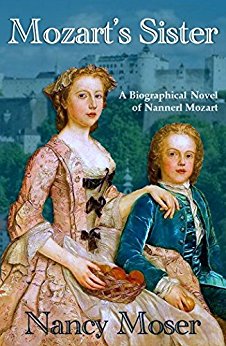
Book Review: Mozart’s Sister

Mozart's Sister Mozart’s Sister by Nancy Moser tells the story of Maria Anna Mozart, known as Nannerl, Mozart’s older sister by four and a half years. The two of them were the only surviving children of seven, the other five having died in infancy. When their father started giving Nannerl lessons on the harpsichord, Wolfgang, then three, wanted to learn, too, to be like his sister. He picked it up quickly, as well as other instruments, and was composing by age five, completing his first symphony by age eight. Their father took them on tours from their native Salzburg to various royal courts and other venues in European cities like Munich, Vienna, Paris, London, Zurich, and others as the Wunderkind – Miracle Children. Their father, Leopold, even lied about their ages, making them out to be even younger than they were so as to play up the “Wunder” even more. Nannerl received top billing at first and was well-known for her playing, but “Wolfie” seemed even more a prodigy, being so much younger, and eventually most of the attention went to him.

Leopold was a composer, violinist, teacher, and finally the assistant director of music (Kapellmeister) for the archbishop of Salzburg. He eventually laid aside his own composing and performing and poured himself into promoting the children’s talent, then just Wolfie’s, then seeking out a position for Wolfgang. They made money on the tours, but Leopold was only paid for his position when he was actually there is Salzberg, understandably, and he almost lost his position due to so much time away. Thus there was always a tension between what they wanted to do and the need for finances.

The story is told from Nannerl’s point of view and begins with the various experiences with travels and concerts, delighting to play, interactions with royalty, expectations to play dressed up as little adults with adult-looking clothing and massive powdered wigs. Both she and Wolfie became seriously ill with smallpox, and once he had rheumatic fever.

Their parents encouraged Wolfie’s composing but discouraged Nannerl’s on the grounds that it was hard enough for men to get music accepted and published; for women it was considered impossible. Wolfie was groomed for a musical career but Nannerl was expected to lay all of that aside to marry and bear children. When she was of marriageable age,  Leopold and Wolfgang went on tours together, leaving the women behind.

When Nannerl fell in love, she was not allowed to marry the man of her choosing, but there’s no evidence to explain why. Some sources, according to Wikipedia, think Leopold did not allow it. Nancy portrays it as the archbishop, who employed Nannerl’s intended and from whom they had to receive permission, denying it as part of his adversarial relationship with Leopold. Whatever the reason, the two remained close friends.

Wolfgang, though a genius musically, seemed egocentric, lacking in common sense, and unwise in money matters. The author played up the tension she thought Nannerl felt as the dutiful, obedient daughter whose life did not turn out as she wanted it to, even though she did everything “right,” as opposed to Wolfie, who was irresponsible and self-willed, yet seemed to get everything he wanted, including marrying the girl his father did not at first approve of. Yet, whereas a number of modern people seem to leave it as “poor, Nannerl, born in the wrong time period and kept down by the oppressive customs of the times,” from the brief bit of reading I have done online since finishing the book, Nancy portrays her as having to wrestle through all those disappointments while maintaining her love for family and coming to a place of acceptance and even finding her own place of worth, even though it was not what she originally planned.

A few quotes:

To Papa, getting Wolfie back in Salzburg, safely ensconced in a salaried position, would save our family’s finances. I couldn’t see that he was wrong in this, but I knew keeping Wolfie in such a position would be like trying to cage a hummingbird.

Having no musical challenge—as was the case in Salzburg—sapped his life breath and made him suffocate for lack of creative air.

If only Wolfie didn’t have to think about money but could concentrate on creating and performing for the sheer joy of it. If only we all could do what we wanted to do.

Wolfie had to adapt the music to the limitations and egos of the singers, which was both frustrating and time-consuming.

“Will that boy ever understand the world does not revolve around him?” I did not mention Papa’s part in creating that belief.

A few small criticisms:

At the end the author has an extended list of what was fact, based on historical records and family letters, and what was fiction based on the best information she had. A lot of Nannerl’s inward wrestlings were based on what the author would have felt in her position or what she “felt sure” Nannerl felt, but I think she may have overdone it a bit. Nannerl seemed a bit whiny at times in the first half of the book.

The use of modern phrases – like “hard for me to wrap my mind around” something, “It seemed that Wolfie was settling,” “purple prose” – seemed jarringly out of place in a historical context.

“All musicians feel this bond with the Divine.” I wasn’t sure how that was meant. Feeling God working in and through them – that’s fine and I can understand that. But if it’s meant to convey a “spark of Divinity” in the individual, I would disagree. I think from what I have read of the author that she would mean the former, but the statement was vague enough to make one wonder.

Otherwise, I very much enjoyed learning about the Mozarts and appreciated the author’s encouragement to “Take Nannerl’s story as an impetus to look at your own life and make it the most it can be. You too have a unique, God-given purpose. The trick is to find out what it is.”

(Sharing with Semicolon‘s Saturday Review of Books, Carol’s Books You Loved)