The Holy Spirit’s Activities

Some time ago I came across a post with a question something like, “Do you believe in the miraculous gifts of the Holy Spirit or do you believe He is inactive today?” I can’t remember exactly how it was worded, but I do remember it was presented as an either/or proposition: either you believe in what we call the “sign gifts” – speaking in tongues, miraculous healings, etc. – or you believe the Holy Spirit has been basically sitting on the sidelines since the first century.

But that’s an unfair proposition. The Bible presents a number of activities or ministries of the Holy Spirit.

He helps believers.

“And I will ask the Father, and he will give you another Helper, to be with you forever, even the Spirit of truth” (John 14:16-17a, ESV. KJV says “Comforter”).

“Nevertheless, I tell you the truth: it is to your advantage that I go away, for if I do not go away, the Helper will not come to you. But if I go, I will send him to you.” John 16:7.

He assures believers of their relationship with God.

For you did not receive the spirit of slavery to fall back into fear, but you have received the Spirit of adoption as sons, by whom we cry, “Abba! Father!” The Spirit himself bears witness with our spirit that we are children of God, and if children, then heirs—heirs of God and fellow heirs with Christ, provided we suffer with him in order that we may also be glorified with him. Romans 8:15-17.

By this we know that we abide in him and he in us, because he has given us of his Spirit. 1 John 4:13.

He helps us in prayer.

Likewise the Spirit helps us in our weakness. For we do not know what to pray for as we ought, but the Spirit himself intercedes for us with groanings too deep for words. And he who searches hearts knows what is the mind of the Spirit, because the Spirit intercedes for the saints according to the will of God. Romans 8:26-27.

He helps us to hope.

May the God of hope fill you with all joy and peace in believing, so that by the power of the Holy Spirit you may abound in hope.  Romans 15:13.

He pours God’s love into our hearts.

And hope does not put us to shame, because God’s love has been poured into our hearts through the Holy Spirit who has been given to us. Romans 5:5.

He teaches us.

But the Helper, the Holy Spirit, whom the Father will send in my name, he will teach you all things and bring to your remembrance all that I have said to you. John 14:26 (KJV says Comforter rather than Helper).

He guides us.

When the Spirit of truth comes, he will guide you into all the truth, for he will not speak on his own authority, but whatever he hears he will speak, and he will declare to you the things that are to come. John 16:13.

He glorifies Christ.

He will glorify me, for he will take what is mine and declare it to you. John 16:14.

He convicts.

Nevertheless, I tell you the truth: it is to your advantage that I go away, for if I do not go away, the Helper will not come to you. But if I go, I will send him to you. And when he comes, he will convict the world concerning sin and righteousness and judgment: concerning sin, because they do not believe in me; concerning righteousness, because I go to the Father, and you will see me no longer; concerning judgment, because the ruler of this world is judged. John 16:7-11.

He is involved in our salvation.

Jesus answered, “Truly, truly, I say to you, unless one is born of water and the Spirit, he cannot enter the kingdom of God. That which is born of the flesh is flesh, and that which is born of the Spirit is spirit.” John 3:5-6.

For we ourselves were once foolish, disobedient, led astray, slaves to various passions and pleasures, passing our days in malice and envy, hated by others and hating one another. But when the goodness and loving kindness of God our Savior appeared, he saved us, not because of works done by us in righteousness, but according to his own mercy, by the washing of regeneration and renewal of the Holy Spirit, whom he poured out on us richly through Jesus Christ our Savior, so that being justified by his grace we might become heirs according to the hope of eternal life. Titus 3:3-5.

You know that when you were pagans you were led astray to mute idols, however you were led. Therefore I want you to understand that no one speaking in the Spirit of God ever says “Jesus is accursed!” and no one can say “Jesus is Lord” except in the Holy Spirit. 1 Corinthians 12:2-3.

He baptizes us into the body of Christ.

For just as the body is one and has many members, and all the members of the body, though many, are one body, so it is with Christ. For in one Spirit we were all baptized into one body—Jews or Greeks, slaves or free—and all were made to drink of one Spirit. 1 Corinthians 12:12-13.

He gifts us for service.

Now there are varieties of gifts, but the same Spirit; and there are varieties of service, but the same Lord; and there are varieties of activities, but it is the same God who empowers them all in everyone. To each is given the manifestation of the Spirit for the common good. For to one is given through the Spirit the utterance of wisdom, and to another the utterance of knowledge according to the same Spirit, to another faith by the same Spirit, to another gifts of healing by the one Spirit, to another the working of miracles, to another prophecy, to another the ability to distinguish between spirits, to another various kinds of tongues, to another the interpretation of tongues. All these are empowered by one and the same Spirit, who apportions to each one individually as he wills. 1 Corinthians 12:4-11.

He dwells within us.

On the last day of the feast, the great day, Jesus stood up and cried out, “If anyone thirsts, let him come to me and drink. Whoever believes in me, as the Scripture has said, ‘Out of his heart will flow rivers of living water.’”  Now this he said about the Spirit, whom those who believed in him were to receive, for as yet the Spirit had not been given, because Jesus was not yet glorified. John 7:37-39.

And it is God who establishes us with you in Christ, and has anointed us, and who has also put his seal on us and given us his Spirit in our hearts as a guarantee. 2 Corinthians 1:21-22.

You, however, are not in the flesh but in the Spirit, if in fact the Spirit of God dwells in you. Anyone who does not have the Spirit of Christ does not belong to him. But if Christ is in you, although the body is dead because of sin, the Spirit is life because of righteousness. If the Spirit of him who raised Jesus from the dead dwells in you, he who raised Christ Jesus from the dead will also give life to your mortal bodies through his Spirit who dwells in you. Romans 8:9-11.

He seals us.

In him you also, when you heard the word of truth, the gospel of your salvation, and believed in him, were sealed with the promised Holy Spirit, who is the guarantee of our inheritance until we acquire possession of it, to the praise of his glory. Ephesians 1:13-14.

And do not grieve the Holy Spirit of God, by whom you were sealed for the day of redemption. Ephesians 4:30.

He fills us.

And do not get drunk with wine, for that is debauchery, but be filled with the Spirit. Ephesians 5:18.

He produces fruit in us.

But the fruit of the Spirit is love, joy, peace, patience, kindness, goodness, faithfulness, gentleness, self-control; against such things there is no law. Galatians 5:22-23.

And this isn’t even an exhaustive study! Some of these things take place once at salvation, some are continuing ministries until we get to heaven (I probably should have separated them into those categories, but this has already gotten much more involved than I planned. Perhaps I’ll come back and do that another time. I’ve come across several things I need to study more just in this brief study.)

My purpose here is not to go into which ministries or gifts of the Holy Spirit are still active today. The great majority of these are still active. The ones that are disputed (tongues, interpretations, healings, miracles. God does still heal and work miracles; the question is whether He uses healers or miracle-workers to do so) have been better handled by others elsewhere, and there is not time and space to deal with them right now anyway. I personally know dear people who love God with all their hearts on both sides of the issue.

My point, rather, is to call attention to all the other things the Holy Spirit does. He is quite active in our day. Why do we get so fixated on those few gifts? Are we just as happy to have the Holy Spirit guide us, teach us, work in us love and gentleness and self-control, glorify Christ in and through us? Or do we prefer the “flashier,” seemingly more exciting and unusual gifts?

Whatever you believe about the “sign gifts” of the Holy Spirit, don’t neglect to study and appreciate all of these other things He does in God’s children.

(Sharing with Inspire Me Monday, Literary Musing Monday, Wise Woman, Woman to Woman Word-filled Wednesday, Faith on Fire)

Lord of the Small Things

I have listened to the CD this song is on before, but heard it this morning for the first time in a long time, and it spoke to my heart:

Praise to the Lord of the small broken things,
who sees the poor sparrow that cannot take wing.
who loves the lame child and the wretch in the street
who comforts their sorrows and washes their feet.

Praise to the Lord of the faint and afraid
who girds them with courage and lends them His aid,
He pours out his spirit on vessels so weak,
that the timid can serve and the silent can speak.

Praise to the Lord of the frail and the ill
who heals their afflictions or carries them till,
they leave this tired frame and to paradise fly.
to never be sick and never to die.

Praise him, O praise Him all ye who live
who’ve been given so much and can so little give
our frail lisping praise God will never despise-
He sees His dear children through mercy-filled eyes.

Words: Johanna Anderson

Music: Dan Forrest

(Sharing with Literary Musing Monday)

Friday’s Fave Five

It’s Friday, time to look back over the blessings of the week with Susanne at Living to Tell the Story and other friends.

This has been a pretty eventful week, and I am so blessed to have seen God’s grace in it. Here are a few favorite things:

1. Sharing. This was actually a couple of weeks ago, I think. A lady in our church with Parkinson’s has been having trouble swallowing and needed to go to a pureed diet. Jim offered to go over and share with her husband what we do in preparing pureed food for his mom, and I think it was a big help, especially this temperature gun so you don’t have to keep sticking your finger in the food or tasting it.

2. Rediscovering unused gift cards. I was looking at the Galkin Evangelistic Team‘s new CDs, and since they’re on iTunes, I dug around in my desk for an iTunes gift card tucked back in there. I found two, and thought I had already used one, but I put it in just in case, and it hadn’t been used. So I found $75 worth of iTunes credit that I didn’t know I had! We occasionally rent movies through iTunes, so it’s nice to have some credit in place for that.

3. Hummingbirds. It seemed to take them longer than usual to find us this year, but now we see them regularly.

4. Surgery OVER. The surgery itself went well, and though we had a problem with bleeding afterward, everything seems to be ok and on the mend now. I got home yesterday afternoon. I’m still on anti-arrhythmia meds for a few weeks while everything heals and settles down, but I’m hoping that when I see the dr. next month, I can get off those.

5. Family and friends. My husband is an excellent caregiver and doesn’t mind anything from changing dressings to making breakfast and washing dishes. Jesse made Great-Grandma’s breakfast one morning we were gone and Mittu made it the next day. Jason and Mittu stayed overnight Wed., and Jason turned Great-Grandma over during the night. Mittu made three meals ahead of time for us. GG’s regular caregiver lives close by, so she popped in to feed her dinner and get her ready for bed in the evening. Jesse even fixed his shower handle that broke while we were away. I didn’t know he knew how to do that. 🙂 I so appreciate everyone pitching in. I also was blessed by cards, text messages, emails, Facebook comments, and phone calls from loved ones and friends, and especially everyone’s prayers.

I’m spending the weekend relaxing and recuperating. 🙂 Hope you have a great weekend as well!

Home From the Hospital!

I mentioned last week that I was going in for an atrial ablation to try to fix my atrial fibrillation. That was yesterday morning. Everything went well, and God helped me have peace beforehand.

I did have one setback in the hospital. They don’t stitch the little incisions they make when they thread their instruments from the groin area to the heart. You have to lie flat on your back for 6 hours so that they can heal. But when they had me stand up for the first time, one of the incisions started pouring blood – so I had to lay back down while they put pressure on it for several minutes and stay flat again for several more hours. So – that was no fun. But when they had me get up the second time, everything was fine.

Jim’s off the rest of the week, and he is a wonderful caregiver. Jason and Mittu brought over three meals, so we’re set for dinners for a few days. I am looking forward to reading and relaxing and maybe watching some TV along the way while I recuperate. 🙂

Thanks so much for your prayers and your notes!

Book Review: The Death of Ivan Ilyich

I’ve been wanting to read The Death of Ivan Ilyich by Leo Tolstoy ever since I saw it referred to in Being Mortal by Atul Gawande.

It begins with Ivan’s colleagues receiving news of his death. While some of express regret, most of them are glad that they weren’t the ones who died and concentrate on the opening of position to replace him and the “very tiresome demands of propriety by attending the funeral service and paying a visit of condolence to the widow.” Even at the funeral, they are more concerned with the propriety of what to say and do and escaping to a bridge game afterward than with expressing genuine sorrow to the widow. Even Ivan’s wife, Praskovya Fedorovna, seems primarily concerned with how Ivan’s last sufferings affected her and how she can get more money from the government. Only Ivan’s son seems genuinely sorrowful.

The next chapters detail Ivan’s life. He was the middle son, “neither as cold and formal as his elder brother nor as wild as the younger, but was a happy mean between them—an intelligent polished, lively and agreeable man.” He attended law school and rose up the ranks of a law career. “Neither as a boy nor as a man was he a toady, but from early youth was by nature attracted to people of high station as a fly is drawn to the light, assimilating their ways and views of life and establishing friendly relations with them.”

At school he had done things which had formerly seemed to him very horrid and made him feel disgusted with himself when he did them; but when later on he saw that such actions were done by people of good position and that they did not regard them as wrong, he was able not exactly to regard them as right, but to forget about them entirely or not be at all troubled at remembering them.

He had not planned to marry, but when he met Praskovya Fedorovna, she was reasonably attractive and had a little property, and a good marriage was part of a respectable lifestyle, so he married. He strove for a life that was “easy, agreeable, gay and always decorous.” That word decorous comes up often.

Things went well until his wife became pregnant and, evidently hormonal, she began demanding more of his time and became very jealous, introducing “something new, unpleasant, depressing, and unseemly, and from which there was no way of escape.” He handled it by ignoring it, spending more time with his friends or at work.

At one point, during a particularly happy phase of life, he had a fall and injured his side. It seemed minor at the time, but it did not heal. The pain increased, became more constant, he developed a bad taste in his mouth. He sought various doctors, but they all had different diagnoses.

As he gradually grew worse, he began to think he might die. At first he refused to believe it. But as his condition worsened, he cried out to God wondering why this was happening to him. Eventually he began to wonder if this was all because he had not lived a good life…but of course he had lived a good life, he thought, so that must not be it.

As he realizes that he is in fact dying, he simmers with rage over the reactions of everyone else.

[The doctor] comes in fresh, hearty, plump, and cheerful, with that look on his face that seems to say: “There now, you’re in a panic about something, but we’ll arrange it all for you directly!” The doctor knows this expression is out of place here, but he has put it on once for all and can’t take it off.

Just as the doctor had adopted a certain relation to his patient which he could not abandon, so had [his wife] formed one towards him—that he was not doing something he ought to do and was himself to blame, and that she reproached him lovingly for this—and she could not now change that attitude.

His daughter was “impatient with illness, suffering, and death, because they interfered with her happiness.”

Ivan just wants someone to be honest, to be real, to admit that he’s dying, and to empathize with him.

The awful, terrible act of his dying was, he could see, reduced by those about him to the level of a casual, unpleasant, and almost indecorous incident (as if someone entered a drawing room defusing an unpleasant odour) and this was done by that very decorum which he had served all his life long.

The only person who seems comfortable with Ivan and his condition is the butler’s assistant, Gerasim, “clean, fresh peasant lad, grown stout on town food and always cheerful and bright.” It was Gerasim’s job to take care of Ivan’s “excretions,” which terribly embarrassed Ivan, but Gerasim did his work in such a cheerful way that it comforted Ivan, and, when Ivan apologized, Gerasim continually said, “What’s a little trouble?”

Gerasim alone did not lie; everything showed that he alone understood the facts of the case and did not consider it necessary to disguise them, but simply felt sorry for his emaciated and enfeebled master. Once when Ivan Ilych was sending him away he even said straight out:”We shall all of us die, so why should I grudge a little trouble?” —expressing the fact that he did not think his work burdensome, because he was doing it for a dying man and hoped someone would do the same for him when his time came.

Ivan began relying on Gerasim more and more. His pain was most alleviated when Gerasim held Ivan’s legs on Gerasim’s shoulders, and he uncomplainingly supported him like that through the night.

As Ivan’s continues to deteriorate, he begins to question if perhaps he had not really lived a good life at all. The things which used to bring him happiness now seemed shallow and unimportant.

This might sound like a terribly depressing story. It’s sad, but it’s enlightening and moving at the same time. One of Atul Gawande’s points in his book was that we’ve become far removed from death. In former times, life spans were shorter, an agricultural society dealt with death of animals frequently, plagues happened more frequently, and people died at home rather than in hospitals. While we have much to be grateful for in the strides in health care that have been made throughout history, Gawande is right in that we have become so distanced from death that we don’t know how to handle it, are often surprised to face it, avoid dealing with it, and don’t know what to say to someone who is dying. Tolstoy’s book illustrates this abundantly.

I think Ivan’s progression of spirit was well told. I’m thankful to Sparknotes for pointing out that the time progression of the book slowed down from covering several years of Ivan’s life, then a few weeks, then days, then his final moments, and his world shrunk progressively as well from a “man about town” to the confines of his room and then his sofa.

I think in some cases God allows a slow progression of death like this because that’s the only time some people would stop long enough to consider their ways and think about death and whether they’re ready for it. Tolstoy wrote this after a crisis of faith in which he wrestled with what the meaning of life was, and that is reflected in Ivan’s wrestlings as well. From what I understand, Tolstoy ended up with kind of an amalgam of beliefs, but Christian principles undergird the narrative here.

In some ways Ivan reaped what he sowed. He didn’t take time to understand his wife’s concerns in their early marriage, and she responded in the same way when he was dying – not on purpose or for vengeance, but she was just as out of touch as he had been earlier. There are almost parallel sections in how he treated people ion his career and how doctors treated him. But he does come to realize and acknowledge this over time.

Gersasim is a breath of fresh air in the novel. His empathy, balance between cheerfulness and sympathy, willingness to do whatever needed to be done to help, all make the reader hope for a friend like him when our own time comes.

I appreciated Schmoop‘s conclusions in their “Why should I care?” section. They can be pretty irreverent at times, but I thought they were spot on here:

The Death of Ivan Ilych brings to our attention the unpleasant fact that we all have to die, and that we might have to suffer a whole lot first. Our medicines might be better than those of Ivan’s doctors, but we haven’t gotten any closer to escaping mortality, and many people still die only after a long and painful period of disease. Perhaps Ivan Ilych, which is famous for its psychological depth, will help you understand what many people go through when they’re dying.

Perhaps Ivan Ilych will also get you thinking about what mortality means for you. Like Ivan, you might start wondering how you should live your life, and how you can find meaning in it.

I listened to the audiobook marvelously read by Oliver Ford Davies. Not only was the narration done well, but particularly Ivan’s voice and the changes over the course of his illness were masterfully portrayed. The text of the novella is here.

(Sharing with Semicolon‘s Saturday Review of Books, Literary Musing Monday, Carole’s Books You Loved)

Save

What are you seeking?

That question was prompted by yesterday’s Daily Light reading. After my initial response of “Well…um…,” I concluded that I am seeking to know the Lord better each day, to love and serve my family, to attend to the various tasks and ministries that are under my care.

The word “seek” implies activity to me, even urgency. If someone leans back in his chair with feet on the desk and hands clasped behind his head saying, “I sure hope I find…” whatever, he doesn’t seem all that concerned at the moment.

One Greek word in Hebrews for “seek” means “to seek out, search for, investigate, scrutinise, to seek out for one’s self, beg, crave, require.” Another means “to seek [in order to find out] by thinking, meditating, reasoning, to enquire into; to seek after, seek for, aim at, strive after.”

Different passages started coming to mind about seeking, so I looked some up this morning:

But if from thence thou shalt seek the Lord thy God, thou shalt find him, if thou seek him with all thy heart and with all thy soul. Deuteronomy 4:29

 Glory ye in his holy name: let the heart of them rejoice that seek the Lord. Seek the Lord and his strength, seek his face continually. 1 Chronicles 16:10-11

And thou, Solomon my son, know thou the God of thy father, and serve him with a perfect heart and with a willing mind: for the Lord searcheth all hearts, and understandeth all the imaginations of the thoughts: if thou seek him, he will be found of thee; but if thou forsake him, he will cast thee off for ever. 1 Chronicles 28:9

If my people, which are called by my name, shall humble themselves, and pray, and seek my face, and turn from their wicked ways; then will I hear from heaven, and will forgive their sin, and will heal their land. 1 Chronicles 7:14

One thing have I desired of the Lord, that will I seek after; that I may dwell in the house of the Lord all the days of my life, to behold the beauty of the Lord, and to enquire in his temple. Psalm 27:4

Depart from evil, and do good; seek peace, and pursue it. Psalm 34:14

O God, thou art my God; early will I seek thee: my soul thirsteth for thee, my flesh longeth for thee in a dry and thirsty land, where no water is; To see thy power and thy glory, so as I have seen thee in the sanctuary. Psalm 63:1-2

Seek the Lord, and his strength: seek his face evermore. Psalm 105:4

Blessed are they that keep his testimonies, and that seek him with the whole heart...And I will walk at liberty: for I seek thy precepts. Psalm 119:2, 45

Yea, if thou criest after knowledge, and liftest up thy voice for understanding; If thou seekest her as silver, and searchest for her as for hid treasures; Then shalt thou understand the fear of the Lord, and find the knowledge of God. Proverbs 2:3-5.

He that covereth a transgression seeketh love; but he that repeateth a matter separateth very friends. Proverbs 17:9

 Seek ye out of the book of the Lord, and read. Isaiah 34:16a

 Seek ye the Lord while he may be found, call ye upon him while he is near: Let the wicked forsake his way, and the unrighteous man his thoughts: and let him return unto the Lord, and he will have mercy upon him; and to our God, for he will abundantly pardon. Isaiah 55:6-7

But seek ye first the kingdom of God, and his righteousness; and all these things shall be added unto you. Matthew 6:33

 Ask, and it shall be given you; seek, and ye shall find; knock, and it shall be opened unto you: For every one that asketh receiveth; and he that seeketh findeth; and to him that knocketh it shall be opened. Matthew 7:7-8

Charity [Love] suffereth long, and is kind; charity envieth not; charity vaunteth not itself, is not puffed up, Doth not behave itself unseemly, seeketh not her own, is not easily provoked, thinketh no evil; Rejoiceth not in iniquity, but rejoiceth in the truth. 1 Corinthians 13:4-6

If ye then be risen with Christ, seek those things which are above, where Christ sitteth on the right hand of God.Set your affection on things above, not on things on the earth. Colossians 3:1-2

But without faith it is impossible to please him: for he that cometh to God must believe that he is, and that he is a rewarder of them that diligently seek him. Hebrew 11:6

These all died in faith, not having received the promises, but having seen them afar off, and were persuaded of them, and embraced them, and confessed that they were strangers and pilgrims on the earth. For they that say such things declare plainly that they seek a countryFor here have we no continuing city, but we seek one to come. Hebrews 11:13-14;13:14

This is not an exhaustive study, but this topic is worthy of one! There is much more about what we’re to seek, when and how, what we’re not to seek, and especially about God’s seeking us: I will seek that which was lost, and bring again that which was driven away, and will bind up that which was broken, and will strengthen that which was sick” (Ezekiel 34:16a).

I know just stringing together a list of verses may not be the best way to convey what the Scripture says on this topic. But I hope it’s a catalyst for you to seek more about what God wants us to seek.

And God promises that “they that know thy name will put their trust in thee: for thou, Lord, hast not forsaken them that seek thee. Psalm 9:10.

(Sharing with Inspire Me Monday, Literary Musing Monday, Faith on Fire, Wise Woman)

Save

Laudable Linkage

img_0021

Once again, here are some of the reads I found thought-provoking this week:

How to Read the Bible For Yourself.

Walking in the Spirit. Probably the most helpful explanation I have seen of this. I had long ago noticed the similarities between being filled with the Spirit in Ephesians 5:18-33 and letting the Word of Christ dwell in us richly in Colossians 3, and wondered how that worked together. This is the first time I have seen it explained.

How Can I Forgive Myself, HT to Challies. “You do not need to supplement divine forgiveness with any self-forgiveness. Your forgiveness in Christ is complete. Receive it. Remember it. And rejoice in it. If your testimony is, ‘God has forgiven me,’ that is enough!”

For the mom who doesn’t have time to read her Bible. Love this. “Bible time is not only an hour at the crack of dawn, or an intense evening devotion, or a dedicated small group meeting.”

Michelangelo’s David and the Gift of Limitations, HT to The Story Warren.

Do Visitors From Your Church Really Feel Welcome? HT to Challies.

No Time For Widows, HT to Challies. The best part: “Every widow is an individual person. No one likes being lumped into a group and having assumptions made about them based on demographics. The only way to truly help a widow is to get to know her.”

Some questions I’m asking while off to my white evangelical church, HT to Challies.

An Open Letter to the Person Caring for a Loved One With Dementia, HT to True Woman. My own m-i-l was not one to “explode” in anger as is mentioned here, but I know some of you have dealt with that.

It’s Never a Good Time to Invite Kids In.

27 Things People Don’t Realize You’re Doing Because You’re a Highly Sensitive Person, HT to Lisa. I could easily identify with about half of these, and somewhat identify with more.

And a few words of wisdom from Pinterest:

Happy Saturday!

Save

Friday’s Fave Five

It’s Friday, time to look back over the blessings of the week with Susanne at Living to Tell the Story and other friends.

It has been a relatively quiet week, which is much appreciated! Here are the best parts of it:

1. A useful tip. I enjoy coming home to a crockpot meal on Sundays after church but I don’t like getting up half an hour early to prepare them. I thought if I could just get the potatoes peeled the night before, that would take care of the bulk of it. I discovered that you can indeed peel potatoes ahead of time and keep them in water in the refrigerator overnight to keep them from turning brown. That helped a lot!

2. Easy fixes – or my husband’s magic touch. I hate greeting him right after work with news that something has gone wrong with an appliance. On Tuesday, two of them acted up. We’ve been having some trouble with the washer’s spin cycle, and this time it just stopped with a tub full of clothes and water. It had been making noise but not spinning, but this time it didn’t respond to any setting on the dial and didn’t make any noise at all. I thought it had finally died. Then the sound went out on my mother-in-law’s TV. I turned it off and on, plugged and unplugged things, but nothing changed. So I broke the news after he got home, and while I was finishing making dinner, he turned on the washer – and voila, it worked fine. He said maybe it was just tired. 🙂 Then he unplugged his mother’s TV for ten minutes and then plugged it back in – and it worked fine as well. While that’s maddening on one hand, I really was glad they started working and that neither one was going to cost a lot of time, money, and headaches to deal with.

3. An evening with Timothy. His parents went out for a rare date night while he stayed with us – and they brought us pizza! Everything went fine — well, except for a little accident requiring the use of the wet vac and running his clothes through the washer. 🙂 But those things happen, and I am glad Jim was there when it did so we could deal with it together. I’m glad Timothy enjoys staying with us, and it’s fun to see his little imagination going all the time. He was pretty fascinated with the wet vac, too. 🙂

4. Barbecue and a movie. Jason and Mittu had rented a movie on their Apple TV and offered to bring it over so we could watch it before the rental expired, plus they brought take-out from a favorite barbecue place.

5. Encouraging comments and offers of prayer for my procedure next week to try to fix my atrial fibrillation. You all are the best. 🙂

Hope you have a great Friday!


Save

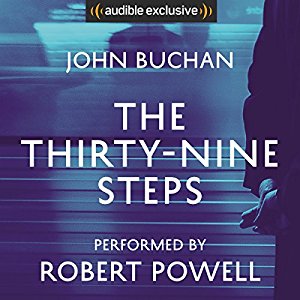
Book Review: The Thirty-Nine Steps

39 stepsThe Thirty-Nine Steps by John Buchan opens with thirty-seven-year-old Scotchman Richard Hannay bored with life in London in May of 1914. He had been a mining engineer in Rhodesia and came to England, but has no friends and nothing to do. He’s on the verge of finding something else to do with his life when he’s accosted at his door by an American from a neighboring flat pleading for his help.

He lets the man in, a Franklin Scudder, who tells him what seems a fantastic tale at first. Scudder has just faked his own death. He’s sort of a free-lance spy who had come upon a secret on international intrigue, a plot to kill the Greek premier, Karolides, when he comes to England, which will set off a series of negative political repercussions. When Hannay suggests Karolides can be warned not to come, Scudder objects that Karolides is needed for the meetings he is to attend. What Scudder wants to do is hide out in Hannay’s flat until June 15, when he can get to the appropriate authorities.

At first Hannay thinks Scudder must be insane, but the more he talks, especially when he brings up Karolides, whom Hannay had just been reading about, Hannay believes him and agrees to let him stay. Meanwhile Scudder changes disguises to look like a British officer.

Hannay enjoys having the company for several days and notices Scudder scribbling in a notebook from time to time. When Hannay has to go out for a meeting, he comes home to find Scudder stabbed to death in his flat.

And that’s just the first chapter.

Shocked and disconcerted, Hannay investigates his flat for clues and considers whether to call the police. No one knows him in London, and he knew little enough about Scudder to make the whole situation seem fishy, concluding that he would probably be suspected for the murder. It was three weeks until the June 15th meeting, and Hannay decides to take Scudder’s notebook and take on his task.When he leaves his flat he notices a face in a neighboring window watching him.

On the run both from the police and the men who were after Scudder, Hannay’s journey takes him into all sorts of places and situations.

I liked that Hannay is presented as a fairly ordinary man. He has a few talents that come in handy, but in general he’s just a “regular chap” trying to do what he thinks is the right thing. He says he is “no Sherlock Holmes,” but he uses his wits and powers of deduction a fair bit.

I am an ordinary sort of fellow, not braver than other people, but I hate to see a good man downed, and that long knife would not be the end of Scudder if I could play the game in his place.

All this was very loose guessing, and I don’t pretend it was ingenious or scientific. I wasn’t any kind of Sherlock Holmes. But I have always fancied I had a kind of instinct about questions like this. I don’t know if I can explain myself, but I used to use my brains as far as they went, and after they came to a blank wall I guessed, and I usually found my guesses pretty right.

The writing grabbed me early on and held me throughout the book. Hannay got into various scrapes, building up the suspense of how he would get himself out of them, whether he’d make it to the authorities he needed to in time, whether he’d get in to see them, whether they’d believe him. The suspense lasted right up to the last page. After I finished the book I went back over some of the political stuff to get a better grasp of it,  but even without that I had picked up enough to follow and enjoy the story. I also loved the Britishness of it and Hannay’s way of expressing himself.

Buchan wrote this while he was recovering from an ulcer. One day while visiting him where he was convalescing, his daughter counted 39 steps in the building, and Buchan decided to use that as a vital clue in the book. He wanted to write a “‘shocker’…where the incidents defy the probabilities, and march just inside the borders of the possible.” It’s one of the first “man on the run” type stories. He went on to write four more Hannay novels. This book was made into several films, one of them by Alfred Hitchcock, which I planned to look up until I read that all the films varied greatly from the book.

I listened to the audiobook wonderfully narrated by Robert Powell and read a number of sections in the Kindle version. I’d gotten the Kindle version on sale some time ago, but Hope’s review encouraged me to move this up on my TBR list. I quite enjoyed the story!

(Sharing with Semicolon‘s Saturday Review of Books, Literary Musing Monday, Carole’s Books You Loved)

Save

Save

Upcoming Procedure

Some of you who have read here for a long while may remember that I’ve had bouts with irregular rapid heartbeats for a number of years. At first I was diagnosed with SVTs, supraventricular tachycardia, with sudden jumps to 200 beats a minute that wouldn’t go back to normal without an ER visit. The last few years the symptoms have changed to smaller versions of palpitations with my heart feeling like it’s vibrating or quivering, usually for just a few seconds at a time, but sometimes longer. When I first shared this with my doctor, he said that it’s not unusual for “middle-aged” women to experience palpitations. But when they seemed to be increasing, I spoke to him again, and he sent me to a cardiologist. They had me wear a monitor for a couple of days and I was again diagnosed with SVTs.

From the beginning they mentioned a surgery called an ablation in with they go in through the blood vessels in the groin to the heart and “zap” the nerves causing the problem. I learned later that what they actually do is burn very, very small areas to create scar tissue to disrupt the nerve signals. I didn’t want to do anything invasive at first and tried to control it with medication, but it was getting so bothersome I finally decided to have it a couple of years ago. Some of you may remember my profound disappointment when, after putting off this surgery for years and looking forward to finally fixing the problem, they were not able to complete the procedure. With an SVT ablation they do an EP study of the heart first (for which I was awake – no fun), and that showed not SVTs but atrial problems, which required a different kind of procedure, which they evidently couldn’t do while they were in there. I distinctly remember being told that the other procedure was more risky and they only did it if the patient was at a higher risk by having diabetes and blood pressure problems, but I was later told that was a misunderstanding.

I was told that the atrial tachycardia carried a higher risk of blood clots, so I was put on a full dose of aspirin. I didn’t seriously consider an ablation for this because of my understanding that it would be riskier.

Then in June I had a bout of atrial fibrillation that lasted 13 hours and ended up spending the night in the ER. At the follow-up visit with my cardiologist, when he brought up the possibility of an ablation, I brought up what he had told me about it being riskier. He said that somehow we had miscommunicated on that and it’s actually better to do it without the risks of diabetes and high blood pressure. He said that one good thing about the ER visit was that it documented the afib: when the previous attempted ablation left me in afib, they weren’t sure it wasn’t triggered by something they did while they were in my heart. So the EKG readings they did while I was in the ER confirmed that this is what I have. He wants to do a cryoablation which uses cold rather than heat.

I wrestled a couple of days with whether to go through with this kind of ablation. They always have to tell you the worst possible scenarios (damaging the heart unintentionally, blood clots, even death. Yikes!) But that long afib event in the ER with its own possibility of causing blood clots scared me. I figured if there was a risk without having surgery and a risk with surgery, the better course would be to have the surgery and fix the problem.

So that is scheduled for next week. I’m purposefully not naming the date here because I don’t want it generally known when I won’t be home – even though it probably wouldn’t be a problem, you never know who is reading what’s online. 🙂 If you’re someone I have communicated with previously and you’d like to know, feel free to email me.

I was telling a friend on Sunday that there’s a song I hear on the radio sometimes that says something like, “If your heart keeps right, if your heart keeps right, there is joy and gladness in the darkest night.” My mind has been converting that to, “If your heart beats right…” 🙂 I am praying that this procedure will indeed help my heart “beat right.”

I you feel led to pray, I have some specific prayer requests:

  1. That this date will stick if it is God’s will. It was rescheduled by the doctor’s office once already, and that involves my husband having to rearrange his time off and rearranging care for his mom – besides prolonging everything.
  2. That this procedure will fix the problem this time.
  3. They said some people have to have the procedure done twice. Please pray that it will get taken care of with just the one.
  4. I have to go off the medications that we’re trying to keep this in control with five days ahead of the procedure, so please pray that I won’t have any serious afib (or blood clots!) during that time. One wrinkle here is that when I was in the ER, one of the medications they used was something that stays in your system for a couple of weeks, and my cardiologist said they couldn’t do the surgery while that was in my system. So not only do I really not want to go through another ER experience, I don’t want that to cause a push back for the surgery.
  5. That I won’t have any blood clots or negative side effects.
  6. That everything will go well with my husband’s mom at home. Though we have a hospital just minutes from us, the one we have to go to is 30 minutes away. At the closer hospital it’s easier for Jim to just run home for a few minutes and check on things or turn her or whatever. All of her needs should be covered and she’ll have someone with her at all times, but just pray that all goes well with her.
  7. That God will give me a calm and peaceful heart, mind, and spirit about it all.

So far I am approaching it much more calmly than I did the last procedure, though I do have moments of “nerves” about it all. It’s like when you have to give a speech, and you’re as prepared as you can be and have given it all over to the Lord, but you still have that butterflies in the stomach feeling. I just keep giving it back to the Lord and reminding myself that He is in control and reminding myself of several people who have told me their dad/uncle/grandfather/friend/etc. has had this with no problems.Last time I was greatly helped by reading Running Scared: Fear, Worry, and the God of Rest  by Ed Welch in the time leading up to the procedure – I may look back over my notes or over passages from that this time.

I’ll have to be in the hospital overnight and avoid lifting or anything “strenuous” for several days. Jim is taking off the day of the procedure and a few days following. I’m getting some housework done ahead of time, both to keep myself and my thoughts occupied and also so hopefully nothing will be needed besides the everyday meals and dishwashing.

That’s probably much more than you wanted to know. 🙂

I appreciate your concern and interest and especially your prayers. I’ll let you know when it’s over and how it went.