Friday’s Fave Five


FFF delicate leaves

It’s Friday, time to look back over the blessings of the week with Susanne at Living to Tell the Story and other friends.

I can’t believe we’re almost halfway through October already! We’ve had lovely fall weather this week: 40s or 50s at night, 70s during the day. I don’t think we got above 80 degrees all week. Here are some highlights of the last week or so:

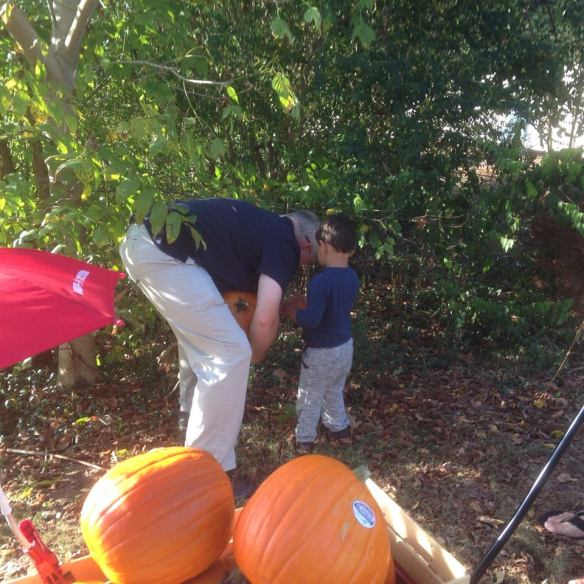
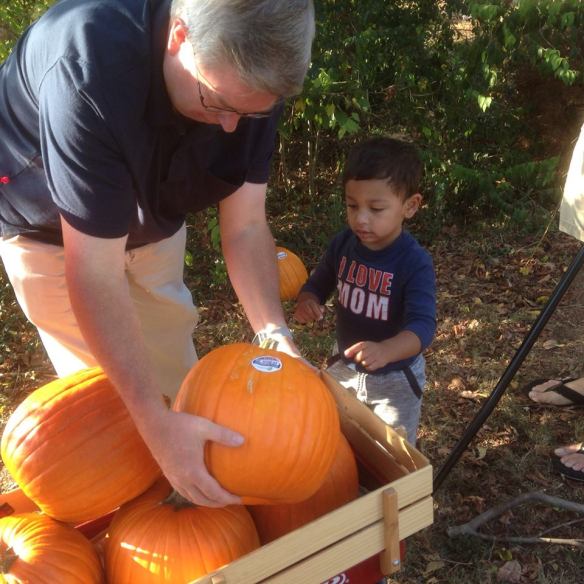
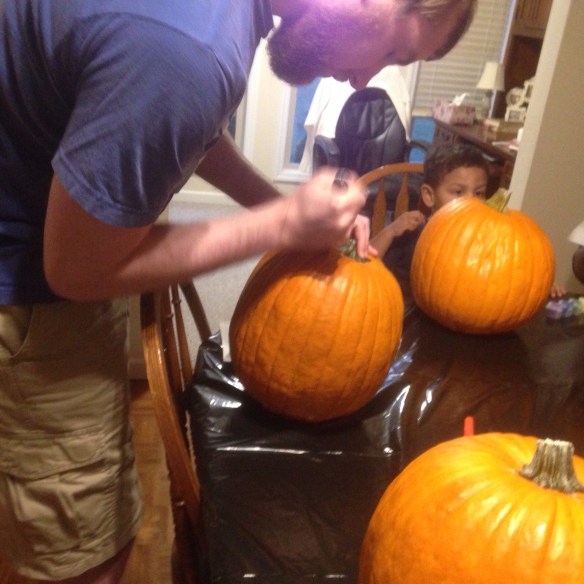
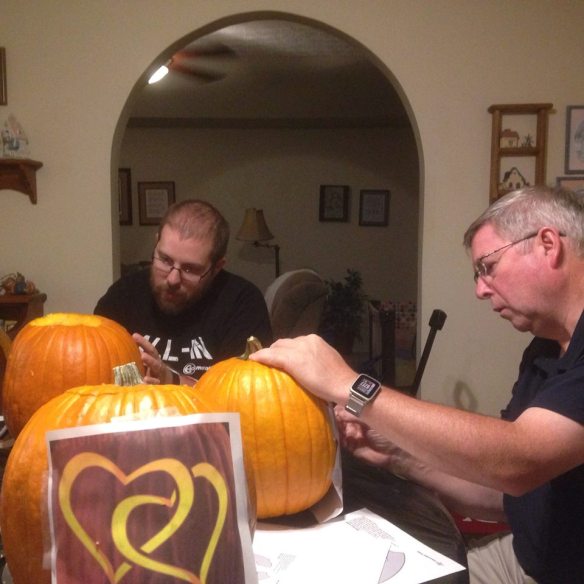
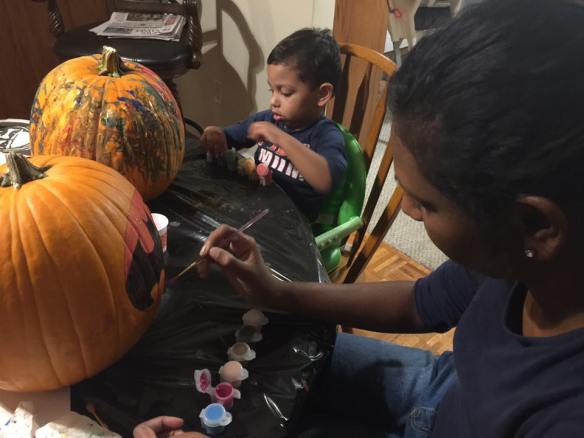
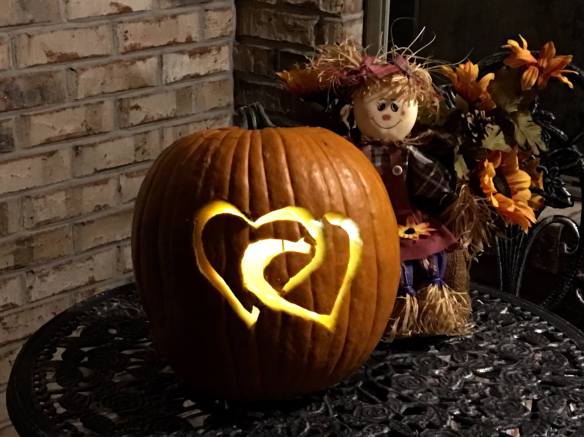
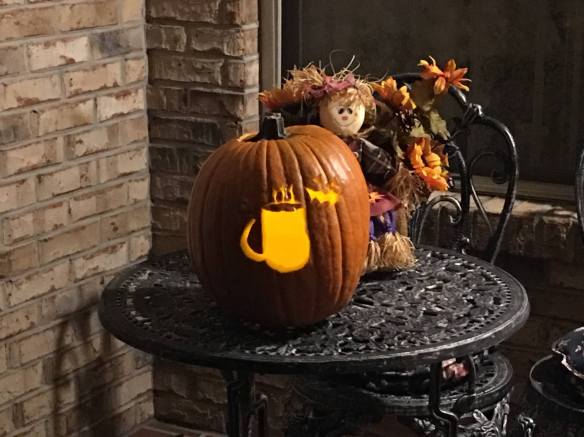
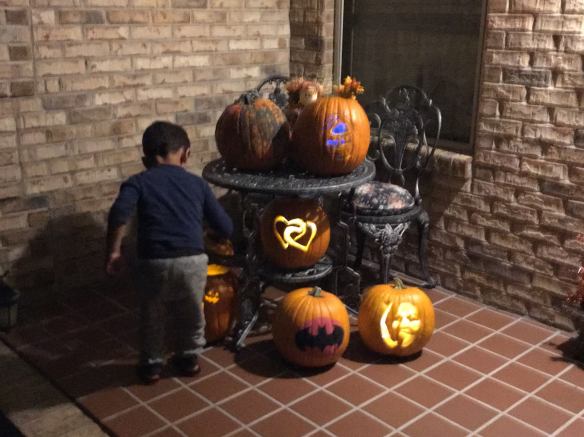
1. Pumpkin decorating night. I wrote more about it here, but we enjoyed having the family together to paint or carve pumpkins and eat goodies.

2. Ready-made slow cooker meals. I found at W-Mart some prepared, just dump in the crockpot meals in the freezer section. Great for when you know you have a busy day ahead.

3. Getting some mending done. Items needing mending tend to sit there for…much longer than I care to admit. I didn’t get as far as I wanted to, but getting started propels the momentum to get finished.

4. Fall decorations. I hadn’t been feeling very autumnal, but decided that preparation for our pumpkin decorating night should probably include some fall decorating. I’m glad I have them out now. I love my everyday “stuff,” but it’s nice to change things around for the season.

img_1888

img_1890

img_1887

img_1891

5. A rainbow. While bringing dishes to the counter after dinner one night, I noticed part of a rainbow through the kitchen window. My husband and I went outside to look and saw the rest of it arcing to the right. And it hadn’t even been raining!

Bonus: There was an Amber Alert in our area this week, but the child was recovered and the suspect arrested pretty quickly.

Happy Friday!

Save

Pumpkin Decorating 2016

We haven’t always carved/decorated pumpkins. When my kids were little I was overly concerned about the evil origins of everything. But when Mittu and Jason wanted to try it a few years ago, I decided that decorated pumpkins were far removed from any evil origins, and it has been an annual activity ever since. We got together to do so last Saturday.

Jim bought the pumpkins ahead of time and then arranged them in a little pumpkin patch at the back of the yard for Timothy to “find” and gather.

14681864_10210307052729720_8519211066517562174_n

14642217_10210307051649693_8795084892389324231_n

After Mittu made grilled cheese sandwiches and tomato soup, we got to work.

img_0003

img_0006

14708230_10210307052689719_3679369957269114540_n

Timothy, of course, can’t carve yet, so he painted his. Mittu joined him so he wouldn’t feel like the odd one out.

painting

I used a heart design, but it fell apart right at the end because I had gotten a couple of places a little too thin. But Jim mended my broken heart. With toothpicks. 😀

14691434_10210307051769696_4535970547873997535_o

Jim usually does a political design. Can you guess who this is?

img_00411

Most of us used designs we found online, but Jason created his own.

jasons-pumpkin

Mittu’s painted Batman pumpkin.

mittus-pumpkin

Jesse went a little more spooky that we usually do. One of the lights I picked up changed colors, making this seem even more ghoulish.

14692078_10210307053449738_636386651195192367_o

Timothy checking out the finished products. He was quite intrigued.

14682157_10210307053489739_6168178553342817012_o

14713033_10210307051729695_1144278487947890306_o

But of course the best thing to do with pumpkins is to eat them in a pie. 🙂

img_00131

Mittu had made a pumpkin pie with chocolate chips and I made gluten-free sugar cookies in leaf shapes and pumpkin spice cookies (both from mixes from Wal-mart) – forgot to take a picture, and they’re all gone now. We each didn’t know the other was making dessert, so we had kind of a sugar overload for a few days, but it was good!

It was a fun night!

A God We Don’t Understand

When Adoniram Judson first went to Burma, six long years passed before anyone fully received his message and was converted. A few years later he was arrested and accused of being a spy when his country was at war with Burma. His feet were tied to poles that were then raised so that only his shoulders rested on the ground. Prisoners were executed daily, and no one knew when their time would be next. They were taken on a death march to another prison. Finally he was released after two years. But his brave and faithful wife died from a fever, with their child soon following after – their third child to have died. For a while Adoniram built what he called a hermitage in the woods where he would go off to be alone. He dug an empty grave and spent time looking at it and contemplating death. On the third anniversary of his wife’s death, he wrote, “God is to me the Great Unknown. I believe in Him, but I find Him not.”

After C. S Lewis’s wife died, in his grief he wrote, “Not that I am (I think) in much danger of ceasing to believe in God. The real danger is of coming to believe such dreadful things about Him. The conclusion I dread is not ‘So there’s no God after all,’ but ‘So this is what God’s really like.'”

The book of Job is filled with his laments and questionings of God. Jeremiah accused God of deceiving him.

Our 52 year old pastor died of pancreatic cancer right in the middle of a fruitful ministry. A young mom in our church died suddenly and totally unexpectedly due to a reaction to a drug, leaving behind a grieving  husband and two children. The 3 year old grandson of friends has been diagnosed with leukemia; the 25 year old daughter of friends is fighting breast cancer, the 6 year old relative of a brother-in-law was shot in cold blood at his school. When I started writing this, a hurricane was barreling toward the east coast after having already passing over several islands.

In some ways man’s inhumanity to others is understandable in that God gives people free will, and many choose to exercise it away from Him rather than toward Him. It doesn’t explain why a teenager would shoot a child except that it’s an extreme example of exercising self-will to sin against another.

We can even come to terms with death in the big picture view of the result of living in a fallen world.

But a child getting leukemia, adults dying in their prime, death and destruction from storms — that’s a little harder to come to grips with.

He doesn’t always explain why He allows what He does. Sometimes He just wants us to trust Him. But sometimes I think He doesn’t explain because we just wouldn’t understand.

I always told myself that I would never be one of those parents who said something must be done “Because I said so!” But I learned early on that you can’t always explain something to a child. They don’t have the understanding, the context, or the experience to comprehend why certain things are required of them and why others things are denied them. At times they think that the parents who are trying to do what’s best for for the children they dearly love are horribly unfair. Sometimes they just want what they want when they want it and they don’t care about any reasons why they can’t have it.

It helps to remind ourselves there are Scriptural reasons for suffering. It helps even more to go back to what we know of the character of God. He is kind. He is good. He is love. He loves us. Nothing that happens to us negates any of those truths.

Amy Carmichael, when pondering some of the same questions, wrote:

Yet listen now,
Oh, listen with the wondering olive trees,
And the white moon that looked between the leaves,
And gentle earth that shuddered as she felt
Great drops of blood. All torturing questions find
Answer beneath those old grey olive trees.
There, only there, we can take heart to hope
For all lost lambs – Aye, even for ravening wolves.
Oh, there are things done in the world today
Would root up faith, but for Gethsemane,

For Calvary interprets human life;
No path of pain but there we meet our Lord;
And all the strain, the terror and the strife
Die down like waves before his peaceful word,
And nowhere but beside the awful Cross,
And where the olives grow along the hill,
Can we accept the unexplained, the loss,
The crushing agony – and hold us still.

Children who love their Father know that when He says, “All things work together for good to them that love God,” He must mean the best good, though how that can be they do not know….

What does a child do whose mother or father allows something to be done which it cannot understand? There is only one way of peace. It is the child’s way. The loving child trusts.

I believe that we who know our God, and have proved Him good past telling, will find rest there. The faith of the child rests on the character it knows. So may ours, so shall ours. Our Father does not explain, nor does He assure us as we long to be assured… But we know our Father. We know His character. Somehow, somewhere, the wrong must be put right; how we do not know, only we know that, because He is what He is, anything else is inconceivable. For the word sent to the man whose soul was among lions and who was soon to be done to death, unsuccored, though the Lord of Daniel was so near, is fathomless: “And blessed is he whosoever shall not be offended in me.”

There is only one place we can receive, not an answer to our questions, but peace — that place is Calvary. An hour at the foot of the Cross steadies the soul as nothing else can. “O Christ beloved, Thy Calvary stills all our questions.” Love that loves like that can be trusted about this.

And when Job, Adoniram Judson, and so many others mentioned come out on the other side of the trial, though they may not have answers to their “whys,” they often testify that they know God better, felt His goodness and grace like never before, found Him good and faithful and trustworthy, found themselves upheld in ways they could not have imagined. Adoniram Judson wrote in a letter, “The love of Christ! The breadth and length and depth and height of the love of Christ! If I had not felt certain that every additional trial was ordered by infinite love and mercy, I could not have survived my accumulated sufferings.”

As one whom his mother comforts, so I will comfort you…Isaiah 66:13a

I believe that I shall look upon the goodness of the Lord in the land of the living!
Wait for the Lord; be strong, and let your heart take courage; wait for the Lord! Psalm 27:13-14

For I consider that the sufferings of this present time are not worth comparing with the glory that is to be revealed to us. Romans 8:18

Surely he has borne our griefs and carried our sorrows. Isaiah 53:4a

img_1866

(Sharing With Inspire Me Monday, Testimony Tuesday, Tell His Story, Woman to Woman Word Filled Wednesday, Thought-provoking Thursday. Linking does not imply 100% endorsement.)

Save

Save

Save

Save

Save

Love Through Me, Love of God

Love through me, Love of God;
There is no love in me.
O Fire of love, light Thou the love
That burns perpetually.

Flow through me, Peace of God;
Calm River, flow until
No wind can blow, no current stir
A ripple of self-will.

Shine through me, Joy of God;
Make me like Thy clear air
That Thou dost pour Thy colors through,
As though it were not there

O blessed Love of God,
That all may taste and see
How good Thou art, once more I pray:
Love through me—even me.

~ Amy Carmichael

Laudable Linkage

Time again for another roundup of links I found noteworthy over the last couple of weeks:

What to Do When God Says No, Not Right Now.

The Instagram Bible. “Beware the Instagram Bible, my daughters – those filtered frames festooned with feathered verses, adorned in all manner of loops and tails, bedecked with blossoms, saturated with sunsets, culled and curated just for you. Beware lest it become for you your source of daily bread. It is telling a partial truth.”

3 Quick Questions Before Quitting Your Church.

What the Old Testament Prophets Say to Us During This Election Season. This is helpful if you, like me, are discouraged with our choices this election and the state of our nation in general.

Parenting 001. I linked to this on a recent book review, but for those who may not have seen it there, I wanted to share it again.

Third Culture Adult Identity Crisis by my friend Lou Ann, a missionary for 32 years. Helpful not only for missionaries but for those who minister to them.

And finally, an entertaining ballet number, even if ballet is not your thing. I was thinking that it is probably harder to do it this way that the “right” way.

Happy Saturday!

Friday’s Fave Five

FFF fall flowers

It’s Friday, time to look back over the blessings of the week with Susanne at Living to Tell the Story and other friends.

Here we are, a week into October already! Here are some highlights of the last week.

1. The ending of the UT/UGA football game. We’ve never been major football fans, but living in the midst of UT Vols fandom, we’ve watched a few games the last couple of years. Last Saturday we turned on the game in the third quarter, and UGA had led the whole game. But, man, the last minute was as exciting and dramatic as they come!

2. Offertories. A couple of years ago for various reasons our church went to singing a congregational hymn during the taking of the offering rather than having instrumentalists play an offertory. I always felt the offertories were one of the most worshipful times of the service that especially ministered to me, and I’ve missed them. Just this last Sunday offertories were played at both the morning and evenings services! Such a blessing. I hope they are back to stay.

3. Cookie sharing. This is not something new this week, but we keep a few “Lunchables” on hand for my youngest son and husband to snack on. I don’t know how it got started, but Jesse always shares one of the cookies in it with me, and sometimes Jim does as well.

4. Lunch with Jason, Mittu, and Timothy. I got a text this week that Timothy wanted to have me over for lunch the next day. I was happy to oblige.

5. Getting errands done on a tight schedule. I had a few things I needed to get done before a dental appointment this week and wasn’t sure if I’d have time, but figured I’d head out and get as far as I could. It would not have been the end of the world if they hadn’t been taken care of then, but it just would have been nice to get them all wiped out in that time period when I was in the area needed for them all, so it was a small but gratifying mercy that everything worked out.

Favorite photos of the week:

Timothy mowing with Granddad:

mowing

I saw this at a local grocery store and it cracked me up. I was trying to come up with a catchy caption, but all I could muster was something about children mourning everywhere.

img_1864

Happy Friday!

Save

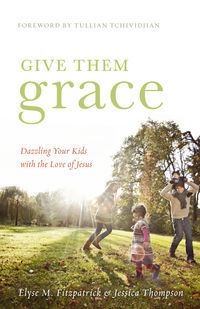
Book Review: Give Them Grace: Dazzling Your Kids with the Love of Jesus

give-them-graceYou might wonder why I would read a book on parenting when my children are all grown. I read Give Them Grace: Dazzling Your Kids with the Love of Jesus by mother-daughter team Elyse M. Fitzpatrick and Jessica Thompson partly to see where they were coming from and whether or not I could recommend it to young moms. I’d heard this book mentioned quite a lot a few years ago, and, in fact, where some people took the principles they said they got from the book raised an eyebrow for me, so I also wanted to see what they said vs. what people think they said.

Areas of agreement:

The basic premise is one I agree with: our children aren’t saved by keeping rules, and though there is a place for rules and law, they need the gospel, not more rules heaped on them. Kids (and adults) can keep all the rules perfectly and still be unsaved (and, in fact, can be blinded by their need of a Savior because they’re considered “good kids”). Only Jesus kept all the law perfectly, and once we believe on Him, His record is transferred to our account, so to speak. And no parenting method is an ironclad guarantee that our children will become Christians and live for God: only the grace of God working in their hearts and their response to it will accomplish that.

They illustrate this in the introduction with Jessica’s son, Wesley, fighting with his little brother. When she separated them and told Wesley, “You must love your brother!” he responded, “But he makes me so mad! I can’t love him!” Elyse says that when she was raising her own children, she would have responded, “Oh yes you can, and you will! God says that you must love your brother, and you better start – or else!” Years later she realized that the better response would have been to tell him that he is exactly right, that we can’t obey God’s laws on our own, that Jesus died because we can’t, and that when we believe on Him, His great love for us will enable us to love others.

They warn that it is dangerous to tell children they are good, because “there is none good but God” (Mark 10:18), plus it will confuse them about their need for a Savior if they think they are already good. I wrestled with this when my sons were small. It was so easy to say “Good boy!” to encourage them when they did something right, but I wasn’t entirely comfortable with that for those reasons. I started saying “Good job!” or something similar instead, or, as my sister-in-law suggested, commented on what “big boys” they were getting to be, as kids aspire to be more “grown up.” But I think these authors take that concept way too far (more on that in a moment).

They assert that the Bible is not just a book about moral stories, and I’d agree there. It’s about God. The main point of Jonah, for instance, isn’t that if we disobey, God will send a whale (or something comparatively awful) after us, so don’t be like Jonah. The point is God’s gracious provision both for the Ninevites plus his unloving, recalcitrant prophet.

But we are instructed to discipline, warn, correct, train, etc., our children. “Discipline proves relationship. Instruction demonstrates love. Grace is not averse to training. In fact, one of the functions of grace is training in righteousness (Titus 2:11-14)”. “Grace does not forbid us from correcting our children. But gospel correction reminds us to bring correction to them in the context of what Jesus has already done for them and his great love for them.” They make a distinction between management (basic instructions like “Don’t run in the street,” chore charts, etc., that aren’t necessarily meant to “get to the heart,” but are just a part of child training), nurturing (telling and demonstrating God’s love and care for them), [gospel] training (pointing them what Jesus has done to take care of their sin and enable them to live for Him), correction, and reminding him of God’s promises. They discuss ways to know what a situation calls for and how to apply gospel truth to their situation.

They have a fairly good section on striking a balance between interacting with other families and kids yet guarding against worldly practices influencing your children through others. I agree that we shouldn’t have homes that are monasteries or pack up the family to the prairie 50 miles from neighbors to keep them from “the world,” but sometimes those interactions can be tricky to navigate.

I thought these quotes were quite good:

The one encouragement we can always give our children (and one another) is that God is more powerful than our sin, and He’s strong enough to make us want to do the right thing. We can assure them that his help can reach everyone, even them. Our encouragement should always stimulate praise for God’s grace rather than our goodness.

We are always to do our best, striving to be obedient and to love, nurture, and discipline (our children). But we are to do it with faith in the Lord’s ability to transform hearts, not in our ability to be consistent or faithful. Seeking to be faithfully obedient parents is our responsibility; granting faith to our children is his.

The only power strong enough to transform the selfishly rebellious and the selfishly self-righteous heart is grace. The law doesn’t transform the heart of either…it only hardens them in pride and despair.

Grace teaches us to rest in what Christ has done for us and to live lives of godly gratitude.

The chief end of our parenting is not out own glorification as great parents but rather that we glorify God and enjoy him forever.

It is a kindness when [God] strips us of self-reliance, because it is there, in our emptiness and brokenness, that we experience the privilege of his sustaining grace.  It is only when we arrive at the dreaded place of weakness that we discover the surpassing power of Christ.

Areas of disagreement:

They give a plethora of examples of how to apply the gospel to our children’s everyday needs and issues, but most of their examples are impossibly long. They say that, of course, you wouldn’t say all of this every single time. Still, some real life examples of these truths in short bursts would have been better than lengthy paragraphs that no parent would probably ever say. (BTW, Kevin DeYoung’s example of trying to have such a conversation with his child is hilarious – and a lot more realistic).

One of their examples is how to talk to a child who made the last out in a ball game which caused his team to lose and is understandably unhappy. They list about 4 pages of what to say to him (at least it’s 4 pages in the Kindle app – I don’t know how many in the physical book). Some of it is good, like instructing that throwing his bat when angry is harmful and wrong, and that he can congratulate his teammates even though he doesn’t feel like it because Jesus set aside His desires for him. But then they go on to suggest saying things like, “Losing a baseball game is not the worst thing that could ever happen. Losing Jesus is” and “I  understand why you’re mad about not winning. It’s because winning is all you have.” They assert that the child “needs to repent not only of his anger and desire to approve of himself but also of desiring to be perfect on his own and of ignoring the perfection Jesus has provided for him in his justifying love.” Well, there’s truth there, but maybe he just needs to be encouraged to practice more or to be comforted with the reminder that even the pros strike out sometimes, that no one performs at 100% capacity all the time.

In a section on the grief of rebellious children, they make the point (rightly, I think) that God can be glorified just as much when everything seems to have gone wrong, because His grace shines through our fallenness and need for redemption. But I was astonished to read these two sentences:

Because the Lord always acts for his glory, and because he predestined the sin of the Romans and the Jews in his Son’s cruel execution, their sin glorified him. It was the means he used to demonstrate his mercy, justice, and love…”

Everything God does is for his glory, and he is completely sovereign over everything that occurs. He uses our sin and the sin of our children to glorify him. If he did not, we would not sin.

While I agree that God works “all things together for good” (Romans 8:28), and I agree that his mercy in the light of our sin glorifies him, I have a real problem saying that God predestines us to sin. I am not of the Reformed persuasion, and the authors are, so that may be where that difference comes from, but I have never heard anyone say something like this before.

I mentioned before that I felt that the authors took the point about not telling children they are “good” way too far. They say it is always wrong to tell a child that God is pleased with them, because “God’s smile,” as they call it, is only bestowed upon us because of Jesus’ record of righteousness in our place. While it is true that nothing we can do pleases God in the sense of counting towards earning points with Him, there are several verses that talk about God being pleased. Hebrews 11:6 says, “without faith it is impossible to please him,” so all of these must be considered within that context. 1 Thessalonians 4:1 says, “Furthermore then we beseech you, brethren, and exhort you by the Lord Jesus, that as ye have received of us how ye ought to walk and to please God, so ye would abound more and more.” Hebrews 13:6 says, “But to do good and to communicate forget not: for with such sacrifices God is well pleased.” Part of the prayer in Colossians 1:9-11 is that we might “walk worthy of the Lord unto all pleasing.” Even children obeying their parents is said to be “well pleasing unto the Lord” (Colossians 3:20). 1 John 3:22 says, “And whatsoever we ask, we receive of him, because we keep his commandments, and do those things that are pleasing in his sight.”  None of these is meant in a way to work up righteousness but to work out righteousness: to live out what God has done in our hearts. I pondered this point a lot while reading this book. Positionally, yes, when we’re saved, our sins are forgiven, and God sees us through the lens of Jesus’ righteousness and not our own. Our own doesn’t count for anything. But what we usually call our sanctification is a growth process. God is constantly convicting and directing us away from what displeases Him and towards what pleases Him. Just like earthly families, children don’t earn parents’  love or belonging by their behavior: the child will always be a part of that family by birth or adoption. So the parents’ guiding and disciplining a child isn’t a matter of making that child fit to become a part of the family or keep his place there: it’s a matter of helping him grow to maturity, and part of that is letting him know what is pleasing and what is displeasing. (I found this post right about the time I was thinking through these things. Though he is coming at the idea of pleasing God from a different angle, he brings out many good points and helped assure me that I was thinking along the right lines.)

I also disagreed with them in saying that “Every time someone was mean to [Jesus], he fought to love” and He had to “work every day at not giving in to sin.” It makes it sound like Jesus had a sin nature to grapple with. He had a human nature, but not a sin nature. He battled Satan, so perhaps they mean these things in that way.

I thought the authors’ tone was somewhat condescending sometimes.

I couldn’t recommend this book unreservedly, but someone with some discernment might be able to use the best parts and disregard the rest.

Genre: Nonfiction Christian parenting advice
Potential objectionable elements: Some areas of theological disagreement.
My rating: 5 out of 10

(Sharing at Semicolon‘s Saturday Review of Books and Literary Musing Monday)

literacy-musing-mondays-300x300


Save

Save

Save

Save

Save

Save

Book Review: The Prayer Box

prayer-boxIn The Prayer Box by Lisa Wingate, Tandi Jo Reese has just escaped from a manipulative, law-breaking husband and is trying to make a new life for herself on Hatteras Island in the North Carolina Outer Banks. She’s coming out of a fog in more ways that one: after a serious accident, her doctor-husband supplied her with pain-killers, and it’s not until she determined to get off of them that she realized she had left her 14 year old daughter Zoey and 8 year old son J. T. to largely fend for themselves, and now Zoey resents any of Tandi’s intrusion into her life. She tries to find a job but doesn’t want to use references because she doesn’t want her ex-husband to find them.

She’s rented a little cottage next to an old Victorian house, and after realizing she hasn’t seen her elderly neighbor for a while, she goes to investigate and finds that the 91 year old lady, Iola Anne Poole, has passed away. Iola has left her house to the church, and someone from there asks Tandi if she would be interested in earning a little money by cleaning the house, especially getting rid of old food, etc.

As Tandi goes through the house, she discovers in Iola’s closet 81 decorated boxes. She pulls one out to investigate and finds that they are prayer boxes, each representing a year, in which Iola wrote out her prayers to God. As Tandi starts reading, she gets caught up in Iola’s past and her faith. The island people knew little about Iola, some even resented her for various reasons, but few knew the real woman.

Tandi grew up with con artist parents who often neglected their kids but wouldn’t allow her grandparents to take them. She tends to be attracted to the wrong kind of man, mainly succumbing to their admiration of her, and is stunned to realize her daughter is about to follow in her footsteps.Though Iola’s situation was much different, in reading her letters to God, Tandi finds much that speaks to her own heart.

A number of themes run through the book: the need for a healthy sense of self-worth, the truth that though we have to accept our past as part of us, it doesn’t have to bind us, and that family sometimes transcends blood ties.

I loved the setting of the book. We lived in SC for most of our married lives, and I always thought the Outer Banks would be a nice place to visit. I grew up near the coast of TX with frequent visits to Padre Island, and one of my favorite vacations with our family was right on Folly Beach in Charleston, SC. I don’t think I’d want to live on a beach, but there’s something about it that draws me, and this little coastal community in the book sounded like such a lovely place.

In some places Lisa’s writing sings: in other places it drags. I know writers are advised to tuck descriptions throughout the narrative rather than having long paragraphs of it like writers used to do. But there were a couple of times when Tandi was going through Iola’s house, and the passage described details of what she saw and wondered about so much that It seemed to take an insufferably long time. Maybe that was supposed to heighten anticipation, especially the second time (when Tandi thinks someone is in the house), but it had the opposite effect on me. And sometimes in conversations the author has Tandi thinking about something else for several paragraphs until she answers, making it seem like she just left the other person hanging while she was lost in her thoughts for a while. It may have seemed a little more like that because I was listening to an audiobook: though I love them, one problem with them is that you can’t speed up or slow down as you could when reading.

My only other complaint is that though there are great spiritual truths in the book, faith in general seemed a vague and nebulous thing. I’ve written before that I don’t think every Christian fiction book has to have a conversion scene or the plan of salvation, I understand that novels aren’t sermons, that good fiction sometimes employs nuance and suggestion rather than spelling things out for the reader. As I said there, it’s not so much the amount the the gospel that is presented in a book, but rather the clarity of the gospel (or lack thereof) that I often have trouble with. I think an unbeliever reading this book might get that some of the characters have faith (of some kind) and help people, that some of the characters’ lives change, that God the Father loves us and we can talk to Him and ask Him for forgiveness….but I don’t remember any of that being based on Jesus and what He did to make it possible or the need to believe on and accept Him personally – unless I just overlooked it. Then again, perhaps the author intended this for a Christian audience who would already understand these things. I’ve been debating with myself about whether to elaborate more, but I think I’ll just leave it at that for now.

My favorite passage in the book is from one of Iola’s letters written when she was older:

What does a lighthouse do? I ask myself. It never moves. It cannot hike up its rocky skirt and dash into the ocean to rescue the foundering ship. It cannot calm the waters or clear the shoals. It can only cast light into the darkness. It can only point the way. Yet, through one lighthouse, you guide many ships. Show this old lighthouse the way.

Here are a few more favorite quotes:

We do not choose the vessel we’re given, Iola Anne, but we choose what we pour out and what we keep inside.

Fear builds walls instead of bridges. I want a life of bridges, not walls.

The trouble with drowning in the mess of your own life is that you’re not in any shape to save anyone else. You can’t be a lighthouse when you’re underwater yourself.

Maybe there came a point in life where you had to quit categorizing whole groups of people by a few bad experiences.

Help them to show the world that our greatness is not in things we do for ourselves, but in things we do for others. In power that channels itself into kindness, in a hand outstretched in love.

Some of the hardest things you go through will teach you the most.

Overall I did enjoy it and am looking forward to reading more in this series.

Genre: Inspirational fiction
Potential objectionable elements: Someone walks in on a couple undressing and obviously heading for sex, but nothing is explicit: the scene is more about betrayal. A few instances of drinking and drunkenness, not presented favorably.
My rating: 8 out of 10

(Sharing with Carol‘s Books You Loved and Semicolon‘s Saturday Review of Books.)

Books you loved 4

Save

Save

Mount TBR Reading Challenge Checkpoint #3

Mount TBR 2016

The Mount TBR Reading Challenge (to read books one already owned) has checkpoints every quarter where we can report how we’re doing. I read 9 books for this challenge during the first quarter of the year (listed at the first checkpoint here) and 12 more by checkpoint #2.

The books I’ve read for this challenge this quarter are:

  1. Pioneer Girl: The Annotated Autobiography by Laura Ingalls Wilder and Pamela Smith Hill
  2. Thin Places: A Memoir  by Mary E. De Muth
  3. The Methusaleh Project by Rick Barry
  4. C. S. Lewis’ Letters to Children edited by Lyle W. Dorsett and Marjorie Lamp Mead
  5. Ten Fingers For God about Dr. Paul Brand by Dorothy Clarke Wilson
  6. I’m No Angel: From Victoria’s Secret Model to Role Model by Kylie Bisutti
  7. Be Faithful (1 & 2 Timothy, Titus, Philemon): It’s Always Too Soon to Quit! by Warren Wiersbe
  8. Be Mature (James): Growing Up in Christ by Warren Wiersbe
  9. Be Hopeful (1 Peter): How to Make the Best Times Out of Your Worst Times by Warren Wiersbe
  10. Home to Chicory Lane by Deborah Raney

That brings me up to 31 books, halfway up Mt. Blanc, the second level of Bev’s challenge. I’m about 5 books short of the next level, Mt. Vancouver. But I think I’ll easily get there before the end of the year. Plus these selections complete my original list of goals for the challenge.

Bev always includes some fun questions for the checkpoints:

A. Who has been your favorite character so far? And tell us why, if you like. Out of all the books read for the challenge, not just this quarter, Emile de Bonnery from Searching for Eternity by Elizabeth Musser. The book follows him from the age of 14 through adulthood, with his having to find his way amidst confusing and conflicting issues and memories. I just found him a very sympathetic character.

B. Pair up two of your reads that are opposites. C. S. Lewis’ Letters to Children and The Methusaleh Project; also Pioneer Girl and I’m No Angel: From Victoria’s Secret Model to Role Model.

C. Which book (read so far) has been on your TBR mountain the longest? Was it worth the wait? That would be hard to say for sure without going back and checking the buy dates, but off the top of my head, I think The Reunion by Dan Walsh. I’ve had it on my Kindle app since 2012, and it has turned out to be my favorite Walsh book read so far.

On to the last legs of the challenge!

Save

It’s October!

img_1862

October’s Party
by George Cooper

October gave a party;
The leaves by hundreds came.
The Chestnuts, Oaks and Maples,
And leaves of every name.

The Sunshine spread a carpet,
And everything was grand,
Miss Weather led the dancing,
Professor Wind the band.

The Chestnuts came in yellow,
The Oaks in crimson dressed;
The lovely Misses maple
In scarlet looked their best.

All balanced to their partners,
And gaily fluttered by;
The sight was like a rainbow
New fallen from the sky.

autumn-light


October’s the month
When the smallest breeze
Gives us a shower
Of autumn leaves.
Bonfires and pumpkins,
Leaves sailing down –
October is red
And golden and brown.

—Author Unknown

391883_autumn_colors.jpg

October leaves are lovely
They rustle when I run
Sometimes I make a heap
And jump in them for fun.

— Author Unknown

(I usually try to give credit for where the pictures I use come from, and I try to limit them to free sites. Most of these have been in my files for a long time and I am not sure where they originated, except that the top one was made with the Word Swag app.)


Save