Book Review: Don’t Let the Goats Eat the Loquat Trees

LoquatI saw Don’t Let the Goats Eat the Loquat Trees: The Adventures of an American Surgeon in Nepal by Thomas Hale mentioned at Lou Ann‘s, put it on my TBR list, and just finished it recently.

Thomas open his story with the realization of his need for Christ, even though he would have said he was a Christian before that. After truly believing on Jesus for salvation, he spent much time in the Bible as it opened up to him. He “asked God what He would have me do. I was disturbed by Jesus’ statement to His disciples: ‘If anyone would come after me, he must deny himself and take up his cross and follow me.’ I didn’t seem to be able to tone down that passage. It meant to me that if I was going to be a disciple of Jesus Christ, I had to go all the way, to hold nothing back, to give my entire life to God. That was a tall order, as I’ve found every day since.”

God eventually led him to prepare to go to Nepal as a surgeon, and along the way, led him to his wife, Cynthia, who was training to become a a medical missionary as a pediatrician.

Just two months before heading to Asia, their mission informed them that they were being sent not to the large hospital in Kathmandu that they had been expecting, but rather to a “small fifteen-bed hospital located out in the hills, a day’s journey from Kathmandu…still under construction…” without “even a road to it.” The change in situation would mean a completely different atmosphere: rather than a large, well-equipped hospital with culture and entertaining nearby, they’d be going to a “tiny, ill-equipped rural outpost” and a “crude, mud-walled house, where our neighbors would be illiterate and unkempt hill people.” “Cynthia made her biggest adjustment to life in Nepal right then and there.”

We might have been tempted to think how lucky Nepal was that we had come. After all, there couldn’t have been many fully trained surgeons and pediatricians in that little kingdom of twelve million people. That attitude, however, would have been the worst we could have harbored. Indeed, we had been warned of the harmfulness of such an attitude, warned that even a trace of superiority would create a barrier that would repel the friendliness and goodwill of any Nepali we met. At the same time we found that rooting out our deep and often hidden feelings of superiority–feelings of importance, of being advantaged on background and education, of having so much to offer–was no easy task.

One problem this entailed before they even left was the supply of surgical equipment that would normally be supplied by a hospital, but of course would be impossible for the small hospital they were going to. Hale details the miraculous way God provided for a multitude of equipment.

It’s fascinating reading of their trials in just getting to their hospital and home, landing on an “airstrip” that was not much more than a field, the difficulty of getting carriers for all of their things (including a piano, which the natives were not impressed by), accidentally killing a cow, which was considered the same as killing a man “and drew the same penalty–eighteen years in prison–if the crowd didn’t get you first,” adjusting to insects (“if you think you can kill ants faster than they can be hatched…don’t count on it”), learning to love the people, dealing with mistrust of the “foreign doctors” at first to eventually have the opposite problem of being overrun with people and needs. He shares many case studies and lively stories along the way. He shares, as well, many things he learned about himself and about living for God:

It took a mild-mannered and uncritical animal to make me see in myself those negative attributes that I had always attributed to other American surgeons. Facing two hundred angry men proved to be effective therapy for removing most traces of condescension with which I previously might have regarded them. It also improved my relations with missionary colleagues and with Nepali brothers and sisters in the church. I guess God had no gentler way of removing some of my imperfections; I only wish I could say, for His trouble, that He finished the job. But it was a start.

Much time and energy can be wasted on matters that are, at best, trivial.

The key to successful ministry will lie in their ability to assimilate that culture and to free themselves from the attitudes and prejudices of their own. They have been warned about the inevitable feeling of superiority, paternalism, disdain, impatience, and frustration that they are sure to experience and to which they previously may have considered themselves immune. Finally they have been told that the course of their entire missionary career will ultimately depend on one thing: their day-by-day, step-by-step walk with God.

Many times a worker arrives in a foreign land only to discover he doesn’t love the people quite as much as he thought. They are different; their ways are different. And the new missionary quickly learns that survival depends on his ability to adjust to the new people among whom he plans to live; he adjusts to them, not vice versa.

To give unwisely demeans and creates dependence; to give wisely takes time, which is scarce, and wisdom, which is scarcer.

When medicine is given free, patients often sell it instead of taking it themselves; they’d rather have the cash.

We find it comfortable to sit back, fold our arms, and mutter to one another, “All they have to do is repent.” But is that what Christ did when He rose from where He was and, with unfolded arms, came into the world to minister to us? Taking Christ’s example, we need to minister to the world in every way we can. Each Christian, before God, must find out where his or her duty lies.

Love is the one quality the world can discern that sets Christians apart and makes Christianity distinct from every other religion. If we fail to act on this truth, we will lose our right to be heard and will enter the post-Christian era for good.

The only way we know to help our Nepali friends in a lasting way is to put them in touch with the God who is the source of love and who sent His son Jesus into the world to demonstrate it.

Those early disciples had only two fish and a few loaves, but they gave Him all they had. Is this not His word to us today—to give Him all our loaves and fishes, to give Him everything we have? Then, who can say what He would be able to accomplish in our time through us?

Some of the hardest parts to read are those where the hospital had to cut corners because of the overwhelming demand on their time and resources. I don’t know if I could have made some of the decisions they did, but then, I’ve never been in that situation. They did rescind some of them after a time.

Though I wouldn’t agree with just every little point in the book, overall I found it quite an interesting and eye-opening account and really enjoyed it.

(Sharing at Semicolon‘s Saturday Review of Books)

Save

Save

Save

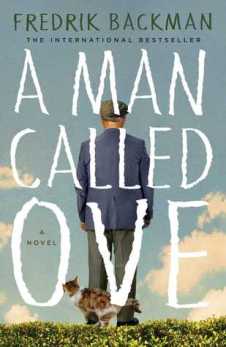
Book Review: A Man Called Ove

OveA Man Called Ove by Fredrik Backman first came to my attention, I believe, through Susanne’s review. When I first saw the name, I thought it was pronounced with a long O and A sound – Oh-vay. But the narrator of the audiobook I listened to pronounced it Oo-vuh. The book was written in Swedish and translated into several different languages.

Ove is only 59 years old, but seems older. He’s curmudgeonly, suspicious of anyone who drives anything other than a Saab and of salespeople trying to swindle him out of money. He is highly principled, performing daily inspections of the neighborhood to make sure no one is parked where they are not supposed to be (and taking down their license plates numbers if they are) and no one has violated any signs (which Ove himself put up).

Then his world is turned upside down when a new neighbor with a pregnant Iranian wife backs his trailer over Ove’s mailbox. He dubs them “the pregnant one” and “the lanky one,” and they continually and aggravatingly insert themselves into his life.

I mention this next part mainly because some might be sensitive to it: Ove is planning to take his life. His wife has died and he wants nothing more than to be with her again. He makes very detailed plans, and though he doesn’t believe in God, the universe, or destiny, every time he is about to end his life, something happens. Either someone needs his (unwilling) help, or something makes him angry enough that he has to deal with it first.

My favorite parts are the flashbacks describing how Ove went from the taciturn but dependable young man he was to the grumpy old man he became and detailing time with his father, his youth, his jobs, his hurts, but especially his wife.

People said Ove saw the world in black and white. But she was color. All the color he had.

But if anyone had asked, he would have told them that he never lived before he met her. And not after either.

She understood him as no one else had since his father. People questioned her choice when she married him, but no one else had ever looked at her like he had, “as though she were the only girl in the world.” And she understood when he did not share her love of Shakespeare but spent weeks making beautiful bookcases for her books. When he later meets a teenager who had been one of her pupils, and they talk of her,

And then they both stand there, the fifty-nine-year-old and the teenager, a few yards apart, kicking at the snow. As if they were kicking a memory back and forth, a memory of a woman who insisted on seeing more potential in certain men than they saw in themselves.

Overall the book is cleverly and wonderfully written, tender in some places, humorous in others, and the author has a nice way of setting seemingly opposite thoughts in juxtaposition (like Ove’s not believing in destiny when the way he met his future wife certainly seemed like Someone set up the situation).

The only major flaw is a smattering of bad language, including taking the Lord’s name in vain pretty badly and one incidence of the “F” word. Usually the latter is a deal-breaker for me, but as it happened towards the end of the book, I did finish it. I understand that a man like Ove who is not a Christian and is a curmudgeon is likely to talk like that. My own father talked like Ove, so it doesn’t shock me. But I don’t like to read books or watch movies with that kind of language because I don’t want those words floating around my head and possibly coming out accidentally. The F word, though, came from a different character who was particularly nasty. The thing is, I didn’t need that word to get that picture of her. The writing was clear enough that I got it without having to throw that word in there.

Sometimes I wonder if I need to give up on modern fiction all together, because it all seems to be spattered with bad language this way. I wish modern writers would get that they don’t need it.

I don’t know if it has been made into a movie, but it would be a good one – minus the bad language.

(Sharing at Semicolon‘s Saturday Review of Books)

Save

Save

Laudable Linkage

Here are some noteworthy reads discovered recently:

Antidote to False Teaching: Stability and Growth in The Knowledge of Christ. Quote: “The single most effective method for studying any book of the Bible is accessible to every believer.”

3 Truths to Speak to Your Temptation

Imagination and Evil. Quote: “Children’s books that scrub any evil from the story are burgeoning. The conflicts are based on misunderstandings or due to a different perspective. They are easily solved with a pleasant discussion. It’s very sanitary! But are we telling our children the truth by painting an evil-free, pain-free world? Stories are not innocuous; they convey a worldview just as powerfully, if not more so, than direct statements.”

Me Before You: Dear Hollywood, Why Do You Want Me Dead? “11-year-old wheelchair athlete tells the culture to get over itself”

Check Your Words at the Door

My Husband Doesn’t Put the Kids to Bed, and It’s Really Okay

I’m not sure why I keep reading Jess Connell. I enjoy her posts but she mainly writes about raising children, and I am past that stage. Maybe to recommend her to others? Anyway, here are three that struck a chord with me lately:

Motherhood 101: The Class We Never Got. Learning “on-the-job” while feeling overwhelmed.

How To Set Your Kids Up For Obedience.

Is Homeschooling a Safeguard Against Rebellion?

Praise Him in the Hallway.

More Weird Things Writers Say.

Imagine If Ebooks Came First.

And to end with a smile…

Cover squirrel

Husky
Happy Saturday!


Friday’s Fave Five

friday fave five spring

It’s Friday, time to look back over the blessings of the week with Susanne at Living to Tell the Story and other friends.

It’s been a rough week for my husband, who hasn’t been feeling well. But hopefully things have turned a corner. Here are some bright spots from the week:

1. Sunday dinner. Through a series of mishaps (involving a baby, a blow-out diaper, and a car seat that had to be taken out and cleaned up), my son and daughter-in-law weren’t able to go to church on Sunday morning (or at least would not have gotten there til it was more than half over). So they came to our house and started making lunch. That especially worked out well because dealing with an ant invasion in the kitchen that morning put me running behind and I wasn’t able to get the dinner that I was planning on into the crockpot. I had a Plan B in mind, but it was much nicer to come home and find a meal nearly ready.

2. Hubby helping with the ant invasion clean-up.

3. Air conditioning. I’ve come back from errand-running just dripping with sweat a couple of times – and it’s only June!

4. “More Manners of Downton Abbey.” The historical advisor for “Downton Abbey” discussed manners and mores of the time. It aired just before the series finale, and I had it in my Tivo recorded shows, but hadn’t seen it until this week. It was a pleasant hour’s viewing. I enjoy watching those times, but I am glad I don’t live in them!

5. This photo of my son and grandson playing in the fountains.

13305250_10154294753537193_7758543863048556428_o

Happy Friday!

Save

Bible Verses for Caregivers

IMG_0036

One of the first things I learned about caring for my mother-in-law was that I could not do it in my own strength. There are some Bible verses that I go to again and again. I thought I’d jot them down here both for my own remembrance and also for other caregivers. Of course, none of the lists is exhaustive, and I will probably add to them as I discover more.

The need to care for aging parents:

  • Honour thy father and thy mother: that thy days may be long upon the land which the LORD thy God giveth thee.  Exodus 20:12
  • And he said to them, “You have a fine way of rejecting the commandment of God in order to establish your tradition! For Moses said, ‘Honor your father and your mother’; and, ‘Whoever reviles father or mother must surely die.’ But you say, ‘If a man tells his father or his mother, “Whatever you would have gained from me is Corban”’ (that is, given to God)— then you no longer permit him to do anything for his father or mother, thus making void the word of God by your tradition that you have handed down. And many such things you do.” Mark 7:9-13, ESV
  • But if anyone does not provide for his relatives, and especially for members of his household, he has denied the faith and is worse than an unbeliever. 1 Timothy 5:8, ESV
  • If any man or woman that believeth have widows, let them relieve them, and let not the church be charged; that it may relieve them that are widows indeed. 1 Timothy 5:16
  • Therefore all things whatsoever ye would that men should do to you, do ye even so to them: for this is the law and the prophets. Matthew 7:12
  • As I have said before, this doesn’t mean that every Christian must care for elderly loved ones in their own homes, but they must see that they are well cared for.

The need to care for widows:

  • Pure religion and undefiled before God and the Father is this, To visit the fatherless and widows in their affliction, and to keep himself unspotted from the world. James 1:27

Serving:

  • Jesus knowing that the Father had given all things into his hands, and that he was come from God, and went to God; He riseth from supper, and laid aside his garments; and took a towel, and girded himself. After that he poureth water into a bason, and began to wash the disciples’ feet, and to wipe them with the towel wherewith he was girded…If I then, your Lord and Master, have washed your feet; ye also ought to wash one another’s feet. For I have given you an example, that ye should do as I have done to you. John 13:3-5, 14-15
  • Even as the Son of man came not to be ministered unto, but to minister, and to give his life a ransom for many.  Matthew 20:28
  • For I was an hungred, and ye gave me meat: I was thirsty, and ye gave me drink: I was a stranger, and ye took me in; naked, and ye clothed me: I was sick, and ye visited me: I was in prison, and ye came unto me. Inasmuch as ye have done it unto one of the least of these my brethren, ye have done it unto me. Matthew 25:35-36, 40
  • Whosoever will be great among you, let him be your minister; And whosoever will be chief among you, let him be your servant: Even as the Son of man came not to be ministered unto, but to minister, and to give his life a ransom for many. Matthew 20:26b-28
  • Now we exhort you, brethren…comfort the feebleminded, support the weak, be patient toward all. I Thessalonians 5:14
  • Whosoever shall give to drink unto one of these little ones a cup of cold water only in the name of a disciple, verily I say unto you, he shall in no wise lose his reward. Matthew. 10:42
  • To do good and to communicate forget not: for with such sacrifices God is well pleased. Hebrews. 13:16
  • God is not unrighteous to forget your work and labour of love, which ye have shewed toward his name, in that ye have ministered to the saints, and do minister. Hebrews. 6:10
  • With good will doing service, as to the Lord, and not to men. Ephesians 6:7
  • Well reported of for good works; if she have brought up children, if she have lodged strangers, if she have washed the saints’ feet, if she have relieved the afflicted, if she have diligently followed every good work. I Timothy 5:10
  • Bear ye one another’s burdens, and so fulfil the law of Christ. Galatians 6:2

Love:

  • A new commandment I give to you, that you love one another: just as I have loved you, you also are to love one another.  John 13:34
  • This is my commandment, That ye love one another, as I have loved you. Greater love hath no man than this, that a man lay down his life for his friends. John 15:12-13
  • And hope maketh not ashamed; because the love of God is shed abroad in our hearts by the Holy Ghost which is given unto us. Romans 5:5
  • For the love of Christ constraineth us; because we thus judge, that if one died for all, then were all dead: And that he died for all, that they which live should not henceforth live unto themselves, but unto him which died for them, and rose again. 2 Corinthians 5:14-15
  • And I will very gladly spend and be spent for you; though the more abundantly I love you, the less I be loved. 2 Corinthians 12:15
  • With all lowliness and meekness, with longsuffering, forbearing one another in love. Ephesians 4:2
  • In speech, conduct, love, faith and purity, show yourself an example of those who believe. 1 Timothy 4:12, NASB
  • And walk in love, as Christ also hath loved us, and hath given himself for us an offering and a sacrifice to God for a sweetsmelling savour. Ephesians 5:2
  • May the Lord direct your hearts to the love of God and to the steadfastness of Christ.
     2 Thessalonians 3:5, ESV
  • May the Lord make you increase and abound in love for one another and for all, as we do for you. 1 Thessalonians 3:12
  • Ye yourselves are taught of God to love one another.  1 Thessalonians 4:9
  • Seeing ye have purified your souls in obeying the truth through the Spirit unto unfeigned love of the brethren, see that ye love one another with a pure heart fervently. 1 Peter 1:22
  • Finally, be ye all of one mind, having compassion one of another, love as brethren, be pitiful, be courteous. 1 Peter 3:8
  • Above all, keep fervent in your love for one another, because love covers a multitude of sins.  1 Peter 4:8
  • If I speak in the tongues of men and of angels, but have not love, I am a noisy gong or a clanging cymbal. And if I have prophetic powers, and understand all mysteries and all knowledge, and if I have all faith, so as to remove mountains, but have not love, I am nothing. If I give away all I have, and if I deliver up my body to be burned, but have not love, I gain nothing.
    Love is patient and kind; love does not envy or boast; it is not arrogant or rude. It does not insist on its own way; it is not irritable or resentful; it does not rejoice at wrongdoing, but rejoices with the truth. Love bears all things, believes all things, hopes all things, endures all things. 1 Corinthians 13:1-7, ESV
  • Beloved, let us love one another: for love is of God; and every one that loveth is born of God, and knoweth God. He that loveth not knoweth not God; for God is love. In this was manifested the love of God toward us, because that God sent his only begotten Son into the world, that we might live through him. Herein is love, not that we loved God, but that he loved us, and sent his Son to be the propitiation for our sins. Beloved, if God so loved us, we ought also to love one another. No man hath seen God at any time. If we love one another, God dwelleth in us, and his love is perfected in us. 1 John 4:7-12
  • And we have known and believed the love that God hath to us. God is love; and he that dwelleth in love dwelleth in God, and God in him. 1 John 4:16

Encouragement:

  • Therefore, my beloved brethren, be ye stedfast, unmoveable, always abounding in the work of the Lord, forasmuch as ye know that your labour is not in vain in the Lord.  1 Corinthians 15:58
  • We glory in tribulations also: knowing that tribulation worketh patience; And patience, experience; and experience, hope: And hope maketh not ashamed; because the love of God is shed abroad in our hearts by the Holy Ghost which is given unto us. Romans 5:3b-5
  • And let us not be weary in well doing: for in due season we shall reap, if we faint not. Galatians 6:9
  • God is not unrighteous to forget your work and labour of love, which ye have shewed toward his name, in that ye have ministered to the saints, and do minister. Hebrews. 6:10

Source of Strength:

  • He giveth power to the faint; and to them that have no might he increaseth strength.  Even the youths shall faint and be weary, and the young men shall utterly fall: But they that wait upon the Lord shall renew their strength; they shall mount up with wings as eagles; they shall run, and not be weary; and they shall walk, and not faint. Isaiah 41:29-31
  • Fear thou not; for I am with thee: be not dismayed; for I am thy God: I will strengthen thee; yea, I will help thee; yea, I will uphold thee with the right hand of my righteousness. Isaiah 41:10
  • As thy days, so shall thy strength be. Deuteronomy 33:25
  • The joy of the LORD is your strength. Nehemiah 8:10b
  • But seek ye first the kingdom of God, and his righteousness; and all these things shall be added unto you. Matthew 6:33
  • The Lord is my strength and my shield; my heart trusted in him, and I am helped: therefore my heart greatly rejoiceth; and with my song will I praise him. Psalm 28:7
  • I can do all things through Christ which strengtheneth me. Philippians 4:13
  • Abide in me, and I in you. As the branch cannot bear fruit of itself, except it abide in the vine; no more can ye, except ye abide in me. I am the vine, ye are the branches: He that abideth in me, and I in him, the same bringeth forth much fruit: for without me ye can do nothing. John 15:4-5
  • He that spared not his own Son, but delivered him up for us all, how shall he not with him also freely give us all things? Romans 8:32
  • Therefore seeing we have this ministry, as we have received mercy, we faint not. 2 Corinthians 4:1
  • And God is able to make all grace abound toward you; that ye, always having all sufficiency in all things, may abound to every good work. 2 Corinthians 9:8
  • But the fruit of the Spirit is love, joy, peace, longsuffering, gentleness, goodness, faith, Meekness, temperance: against such there is no law. Galatians 5:22-23
  • But my God shall supply all your need according to his riches in glory by Christ Jesus.  Philippians 4:19
  • Strengthened with all might, according to his glorious power, unto all patience and longsuffering with joyfulness. Colossians 1:11
  • But we have this treasure in earthen vessels, that the excellency of the power may be of God, and not of us. 2 Corinthians 4:7
  • And he said unto me, My grace is sufficient for thee: for my strength is made perfect in weakness. Most gladly therefore will I rather glory in my infirmities, that the power of Christ may rest upon me. Therefore I take pleasure in infirmities, in reproaches, in necessities, in persecutions, in distresses for Christ’s sake: for when I am weak, then am I strong. 2 Corinthians 12:9-10

I probably should have a section about selfishness, because that is what I wrestle with the most. But a lot of verses under Service and Love deal with that.

Linda has a different list here. Our lists overlap a bit, but her situation is different in that her mother has Alzheimer’s and can be verbally abusive sometimes, and some of her verses deal with handling that.

I hope these are as helpful to you as they are to me. Do you have particular verses that help you in loving and ministering to others?

For more about caregiving, see:

Eldercare

(Sharing with Inspire Me Monday, Woman to Woman, Testimony Tuesdays, Tell His Story, Works For Me Wednesday, Thought-provoking Thursday)

Save

Save

Save

Save

Save

Book Review: The Wind in the Willows

I never read The Wind in the Willows by Kenneth Grahame as I was growing up: I don’t think I had even heard of it. I didn’t read it to my children, but we did watch a video of it which I thoroughly could not stand. It mainly focused on Toad’s misadventures with his car, and Toad just irritated me to no end.

But reading some of C. S. Lewis’s books over the last couple of years, particularly On Stories, I saw that he mentioned it quite a lot, and some of his comments spurred me to give it a try.

It begins with Mole getting exasperated by his spring cleaning and escaping out into the forest, running about to his heart’s content, until he comes to a river, which he has never seen before. Delighted by the sight, he notices the Water Rat, who invites him into his boat for a ride. Mole has never been in a boat and is thrilled. He ends up not only having a picnic with Rat, but going to stay at his house for a time and meeting Otter, Badger, and eventually Toad.

Otter is more of a secondary character, but Mole, Rat, Badger and Toad become fast friends. Badger is introverted and doesn’t come into society much, but is friendly when he does. He was an old friend of Toad’s father and is very wise. Rat loves his boat, believes “there is nothing – absolutely nothing – half so much worth doing as simply messing about in boats,” and likes to write poetry and songs. Mole is an all-around good fellow but gets into trouble by extending himself past his experience and ability a couple of times, until near the end, when his doing so saves the day. Toad is rich, pompous, conceited, undisciplined, and goes full-bore into whatever his current interests are (and I still don’t like him very much. 🙂 ) When he discovers motor cars, he’s almost a lost cause.

There are almost two stories intertwined in the book: the raucous Toad’s pursuit of cars, wrecks, theft of one, imprisonment, disguise, escape, wild journey back home, and defense of his home from the weasels and stoats who overtook it while he was away, and then the quieter, gentler, homier experiences of the other animals. I like the second much better, but I understand that a book especially for children needs some action.

If I had to try to sum up what the book was about overall, the theme that comes to me is friendship. Each of the friends extends himself for the others at various points (except Toad, unless you want to count his final trying to rein himself in after several false repentances as an effort for his friends’ sake). They often inconvenience themselves greatly for each other, are kind to his others’ foibles, encourage and look out for each other.

There is one odd little section where Mole and Rat are helping to search for Otter’s lost little one and come upon the god Pan playing his pipes and watching over the little Otter. There reaction personifies reverence:

Then suddenly the Mole felt a great Awe fall upon him, an awe that turned his muscles to water, bowed his head, and rooted his feet to the ground. It was no panic terror—indeed he felt wonderfully at peace and happy—but it was an awe that smote and held him and, without seeing, he knew it could only mean that some august Presence was very, very near. With difficulty he turned to look for his friend and saw him at his side cowed, stricken, and trembling violently…

Perhaps he would never have dared to raise his eyes, but that, though the piping was now hushed, the call and the summons seemed still dominant and imperious. He might not refuse, were Death himself waiting to strike him instantly, once he had looked with mortal eye on things rightly kept hidden. Trembling he obeyed, and raised his humble head; and then, in that utter clearness of the imminent dawn, while Nature, flushed with fullness of incredible colour, seemed to hold her breath for the event, he looked in the very eyes of the Friend and Helper; saw the backward sweep of the curved horns, gleaming in the growing daylight; saw the stern, hooked nose between the kindly eyes that were looking down on them humourously…

‘Rat!’ he found breath to whisper, shaking. ‘Are you afraid?’

‘Afraid?’ murmured the Rat, his eyes shining with unutterable love. ‘Afraid! Of HIM? O, never, never! And yet—and yet—O, Mole, I am afraid!’

Then the two animals, crouching to the earth, bowed their heads and did worship.

I was curious to know what Grahame might have meant by it, especially since one of his previous books is titled Pagan Papers. I found a variety of opinions about it: one professing pagan fully embraced it as pagan worship and called Pan his favorite god; one thought it was a representation of Christ, as Aslan was in the Narnia books (and was taken to task in the comments); one thought it was a personification of nature. I still don’t know Grahame’s intention, though. I know C. S. Lewis used the mythic gods as something almost like superheroes, maybe just above or below the angels but definitely above man, yet in service to the one true God. I did read that some newer editions leave out this section, and I wasn’t the only reader that thought it was anomalous. But one of the posts I read – I forget which one – pointed out that though Pan made an appearance in person, his influence was all throughout the book. And when I went back and reread the first few pages, I thought that might be true: the way nature is spoken of is the same there as it is in the section with Pan. So I am a little wary: if I was reading this to my children, we’d have to have a discussion about it.

I went back and skimmed through the couple of books by C. S. Lewis looking for one quote in particular that most influenced me to read the book, and, frustratingly, I could not find it. If my memory is correct, I thought it had to do with dealing with ridiculous people (Toad in this case), and it helped me in regarding a ridiculous person or two in my acquaintance. But here are a few other quotes from Lewis about Wind in the Willows:

Does anyone believe that Kenneth Grahame made an arbitrary choice when he gave his principal character the form of a toad, or that a stag, a pigeon, a lion would have done as well? The choice is based on the fact that the real toad’s face has a grotesque resemblance to a certain kind of human face–a rather apoplectic face with a fatuous grin on it. This is, no doubt, an accident in the sense that all the lines which suggest the resemblance are really there for quite different biological reasons. The ludicrous quasi-human expression is therefore changeless: the toad cannot stop grinning because its ‘grin’ is not really a grin at all. Looking at the creature we thus see, isolated and fixed, an aspect of human vanity in its funniest and most pardonable form; following that hint Grahame creates Mr. Toad–an ultra-Jonsonian ‘humour’ (On Stories, p. 13).

It might be expected that such a book would unfit us for the harshness of reality and send us back to our daily lives unsettled and discontented. I do not find that it does so. The happiness which it presents to us is in fact full of the simplest and most attainable things–food, sleep, exercise, friendship, the face of nature, even (in a sense) religion. That ‘simple but sustaining meal’ of ‘bacon and broad beans and a macaroni pudding’ which Rat gave to his friends has, I doubt not, helped down many a real nursery dinner. And in the same way the whole story, paradoxically enough, strengthens our relish for real life. This excursion into the preposterous sends us back with renewed pleasure to the actual (On Stories, p. 14. Incidentally, the paragraph just after this one contains the quote, “No book is really worth reading at the age of ten which is not equally (and often far more) worth reading at the age of fifty–except, of course, books of information.”)

The Hobbit escapes the danger of degenerating into mere plot and excitement by a very curious shift of tone. As the humour and homeliness of the early chapters, the sheer ‘Hobbitry’, dies away we pass insensibly into the world of epic. It is as if the battle of Toad Hall had become a serious heimsókn and Badger had begun to talk like Njal (On Stories, p. 18).

I never met The Wind in the Willows or the Bastable books till I was in my late twenties, and I do not think I have enjoyed them any the less on that account. I am almost inclined to set it up as a canon that a children’s story which is enjoyed only by children is a bad children’s story. The good ones last (On Stories, essay “On Three Ways of Writing For Children,” p. 33).

Consider Mr Badger… that extraordinary amalgam of high rank, coarse manners, gruffness, shyness and goodness. The child who has once met Mr Badger has ever afterwards, in its bones, a knowledge of humanity and of English social history which it could not get in any other way (On Stories, “On Three Ways of Writing For Children,” (p. 37).

If you subtract any one member, you have not simply reduced the family in number; you have inflicted an injury on its structure. Its unity is a unity of unlikes, almost of incommensurables…A dim perception of the richness inherent in this kind of unity is one reason why we enjoy a book like The Wind in the Willows; a trio such as Rat, Mole, and Badger symbolises the extreme differentiation of persons in harmonious union, which we know intuitively to be our true refuge both from solitude and from the collective (The Weight of Glory, essay “Membership,” p. 165).

That last one may have been the one I was searching for initially, because I remembered it had to do with unity among different kinds of people. But I had thought the quote I had in mind mentioned Toad specifically and had the word “ridiculous” in it, so maybe not.

I’ve been giving Toad a hard time, but some people do find him lovable and funny despite his foibles.

Now, for a few favorite quotes from the book itself:

He thought his happiness was complete when, as he meandered aimlessly along, suddenly he stood by the edge of a full-fed river. Never in his life had he seen a river before—this sleek, sinuous, full-bodied animal, chasing and chuckling, gripping things with a gurgle and leaving them with a laugh, to fling itself on fresh playmates that shook themselves free, and were caught and held again. All was a-shake and a-shiver—glints and gleams and sparkles, rustle and swirl, chatter and bubble.

They braced themselves for the last long stretch, the home stretch, the stretch that we know is bound to end, some time, in the rattle of the door-latch, the sudden firelight, and the sight of familiar things greeting us as long-absent travellers from far over-sea…

We others, who have long lost the more subtle of the physical senses, have not even proper terms to express an animal’s inter-communications with his surroundings, living or otherwise, and have only the word ‘smell,’ for instance, to include the whole range of delicate thrills which murmur in the nose of the animal night and day, summoning, warning, inciting, repelling. It was one of these mysterious fairy calls from out the void that suddenly reached Mole in the darkness, making him tingle through and through with its very familiar appeal, even while yet he could not clearly remember what it was. He stopped dead in his tracks, his nose searching hither and thither in its efforts to recapture the fine filament, the telegraphic current, that had so strongly moved him. A moment, and he had caught it again; and with it this time came recollection in fullest flood.

Home! That was what they meant, those caressing appeals, those soft touches wafted through the air, those invisible little hands pulling and tugging, all one way! Why, it must be quite close by him at that moment, his old home that he had hurriedly forsaken and never sought again, that day when he first found the river! And now it was sending out its scouts and its messengers to capture him and bring him in. Since his escape on that bright morning he had hardly given it a thought, so absorbed had he been in his new life, in all its pleasures, its surprises, its fresh and captivating experiences. Now, with a rush of old memories, how clearly it stood up before him, in the darkness! Shabby indeed, and small and poorly furnished, and yet his, the home he had made for himself, the home he had been so happy to get back to after his day’s work. And the home had been happy with him, too, evidently, and was missing him, and wanted him back, and was telling him so, through his nose, sorrowfully, reproachfully, but with no bitterness or anger; only with plaintive reminder that it was there, and wanted him.

The smell of that buttered toast simply spoke to Toad, and with no uncertain voice; talked of warm kitchens, of breakfasts on bright frosty mornings, of cozy parlour firesides on winter evenings, when one’s ramble was over and slippered feet were propped on the fender; of the purring of contented cats, and the twitter of sleepy canaries.

Take the Adventure, heed the call, now ere the irrevocable moment passes!’ ‘Tis but a banging of the door behind you, a blithesome step forward, and you are out of the old life and into the new! Then some day, some day long hence, jog home here if you will, when the cup has been drained and the play has been played, and sit down by your quiet river with a store of goodly memories for company.

Another theme in the book seems to be the contrast between going on adventures – usually fun and enlightening – and coming home, even more delightful.

I did not find a lot of biographical information about Grahame online or in the sketches in the books I looked at, but they all said this book grew out of stories he used to tell to his only son, Alastair. The son seemed to have a number of problems, and Toad was based on his personality. Sadly, Alastair took his own life as a young adult.

I listened to an audiobook version, and sampled several narrations before choosing the one I initially did. Unfortunately I had not listened far enough to catch the character voices, and that narrator’s voice for Mole was like fingernails on a chalkboard. Thankfully Audible allows returns, so I exchanged that one for this one narrated by Michael Hordern, and found it much more cozy and not at all grating.

WillowsAnd though I very much enjoyed the audiobook, I felt this book might best be enjoyed in a full-color illustrated version. I tried this Kindle one, but the pictures were very small. The only copy I could find in our nearby branch library just had line drawings by Ernest Shepard rather than color illustrations, but after I got over their not being in color, the drawings did enhance the story a lot. I had not thought of Toad as comical (though he is supposed to be) until seeing Shepherd’s illustrations, especially of Toad’s disguise as a washerwoman. Shepard includes a nice introduction about showing his drawings to Grahame.

IMG_1714

I hope you’ll forgive the length of this review. It’s more than a review, really: I like to try to note my thoughts and reactions for my own benefit and memory rather than just writing a shorter and more focused review like you’d find on Amazon or Goodreads, but that means some of it might be extraneous to my readers.

Except for the odd bit about Pan, I thoroughly enjoyed the book and understand why it is a classic. I am glad I finally read it and imagine I will turn to it again some time.

(Sharing at Semicolon‘s Saturday Review of Books)

Save

Friday’s Fave Five

 friday fave five spring

It’s Friday, time to look back over the blessings of the week with Susanne at Living to Tell the Story and other friends.

It’s been a great week! Here are the highlights:

1. A long weekend. My husband was off Monday and took Friday off as well.

2. Lunch at my son and daughter-in-law‘s on Saturday. With my m-i-l here, we don’t get out much together, and it was nice to do so.

3. Memorial Day was just a perfect day all the way around. The night before I watched a moving Memorial Day concert on the PBS station. Monday morning was a slow, peaceful start, then my husband grilled burgers, hot dogs, and sausage for lunch. He made a water slide that Timothy just loved and went up and down multiple times. We had a nap in the afternoon, leftovers for dinner, and a game of Settlers of Catan that evening.

4. Good eating! Jason grilled for the first time on Saturday, chicken marinated in a sweet onion and bacon marinade (I think they got it at Trader Joe’s). It was wonderful. Then we got take-out barbecue for dinner that evening, grilled ham on Sunday, and then had all the goodies on Memorial Day – and leftovers for several days afterward! Also had some good desserts: key lime pie (store bought and frozen. It’s not my favorite, but I enjoyed this one) and an angel food cake, cheery pie filling, cream cheese and Cool Whip dessert Mittu made.

5. A whole day at home is hard to come by any more. I go out to the gym as many mornings as I can, and the days that I don’t are usually days I have other appointments or errands. Thursday I didn’t go to the gym because I had a few errands to run, but decided instead to focus on something I was doing at home. Wow, I got so much done plus felt so much more rested! I still have to tuck the errands in somewhere, and I do value (and need) the gym, but I am thinking I might try to work more of these totally-at-home days in more often.

Happy Friday!

Save

What’s On Your Nightstand: May 2016

What's On Your NightstandThe folks at 5 Minutes For Books host What’s On Your Nightstand? the last Tuesday of each month in which we can share about the books we have been reading and/or plan to read.

This is my favorite time for a What’s On Your Nightstand post – when the last Tuesday of the month is the actual last day of the month! Since we have all 31 days of May plus a few more since April’s Nightstand, it will probably look like I got more reading in than usual.

Since last time I have completed:

Beyond Stateliest Marble: The Passionate Femininity of Anne Bradstreet by Douglas Wilson, reviewed here. Didn’t like it as much as I expected I would, but it is still valuable in many respects.

The Renewing of the Mind Project by Barb Raveling, reviewed here. Excellent!

The Hardest Peace: Expecting Grace in the Midst of Life’s Hard by Kara Tippetts, reviewed here. Hard (the subject matter, not the reading), but good.

Robinson Crusoe by Daniel Defoe, audiobook, reviewed here. Glad to have finally worked through this classic. Enjoyed it!

Pride, Prejudice, and Cheese Grits by Mary Jane Hathaway, reviewed here.

The Book Thief by Markus Zusak, audiobook, reviewed here. Too much bad language, but otherwise an excellent book.

One Perfect Spring by Irene Hannon, reviewed here. Overall a good story though with some odd tendencies in the writing.

Be Ready: Living in Light of Christ’s Return (NT Commentary: 1 & 2 Thessalonians) by Warren W. Wiersbe, not reviewed.

I had to lay aside one book of short stories by Ernest Hemingway. I had wanted to read more of his writings since I finished The Old Man and the Sea, but summaries of his other books either didn’t sound interesting to me or sounded like they’d have elements I object to. I thought I’d try a book of his short stories, but the language and blatant immorality got to me in the first couple of stories, and when he got graphic about a sexual encounter in the third, that was the last straw for me. Thankfully Audible allowed me to return it.

I’m currently reading:

Pioneer Girl: The Annotated Autobiography by Laura Ingalls Wilder and Pamela Smith Hill. I really am actually currently reading it this time. 🙂 I had started it a long time ago, but had not picked it up in a while.

The Wind in the Willows by Kenneth Grahame, audiobook.

Don’t Let the Goats Eat the Loquat Trees: The Adventures of an American Surgeon in Nepal by Thomas Hale

Be Faithful (1 & 2 Timothy, Titus, Philemon): It’s Always Too Soon to Quit! by Warren W. Wiersbe

Up Next:

Ten Fingers For God: The Life and Work of Dr. Paul Brand by Paul Brand. This will be a reread: I first read this in my 20s or early 30s.

Home to Chicory Lane by Deborah Raney

Are you looking forward to some summer reading?

Laudable Linkage

It’s been a few weeks since I’ve been able to share noteworthy reads recently found around the Web. Hope you’ll find some of them interesting as well.

How the Lonely, Invisible, and Unnoticed Can Glorify God.

Taking the Risk With Christian Community.

Ten Reasons Why the Church Gathers.

Don’t Always Follow Your Conscience.

The Bare Essentials: What I Tell My Daughters About Modesty.

The Story of a Male-identifying Little Girl Who Didn’t Transition. “When we begin to tell boys that they must act ‘this’ way, and that girls should act ‘that’ way, and that if they don’t, they are transgender;  we put children in these tiny boxes that create confusion, frustration, and sometimes, lifelong psychological and emotional damage.”

Me, the Lord, Pizza, and Celiac Disease.

A Call For Plodding Bloggers.

The Backside Blessings of Blogging.

Brown Sugar Toast, a new-to-me blog by Christa Threlfall, has been running a series titled Dwelling Richly: An Interview Series on Studying the Bible in which she interviews various women about their time with the Word of God. I’ve just come into it recently, but I have enjoyed catching up with a few from women I know (Claudia Barba) or know of (Mardi Collier, Pat Berg, Jen Wilkin) as well as others I don’t know.

Alicia Reagan, the friend of a friend, shared this video of the new movie “Me Before You,” the trailer of which looks pretty cute, but the ending is horrible and a step backwards for disabled people. Sherry discussed the book here.

And finally, I thought this was really cute: a day in the life of a panda zookeeper. I guess it doesn’t pay to rake leaves with pandas around. 🙂 Love how roly-poly they are.