Book Review: The Reunion

The ReunionI’ve had The Reunion by Dan Walsh in my Kindle app for months now (or years…yikes!), but Lou Ann’s review caused me to move it up to my next Kindle read.

Aaron Miller is a Viet Nam vet who works as a maintenance man in a trailer park. Serious injuries sustained in the war sent him home and caused him to become addicted to painkillers. He lost his family, his job, his home, and lived on the streets for a time. But he found the Lord and began the slow road to recovery.

Even though his job might not look prestigious to most, he does it well. And in the course of it, he seems often to be put in the way of people who need help. A teen-age girl with an abusive boyfriend. A legless veteran who is on the verge of ending it all. An elderly woman whose home is crushed by a tree.

Unbeknownst to Aaron, three men he knew back in Nam are looking for him. And when one of them hires journalist Dave Russo, who is writing a book about Viet Nam vets in honor of his later veteran father, they just might find him.

All of Dan’s books that I have read are heartwarming, but this one is probably the most so. I kept thinking it would make a great Hallmark Movie. 🙂 I loved the Amazon introduction to this book: “There are people in this world we pass right by without giving a second thought. They are almost invisible. Yet some of them have amazing stories to tell, if we’d only take the time to listen…” I loved Aaron’s character and could just picture him as one of those kinds of people most would tend to overlook but who faithfully does his work well and who has a great story behind him. I enjoyed Dave’s story as well. Dan did a wonderful job weaving all the different elements of the story together and pulling at the heartstrings.

Here are just a couple of quotes that stood out to me:

Of course, it was clear the thing Billy needed most was a friend. It didn’t help that Billy talked so much once he got going. One thing after another, like he’d been sitting on a mountain of words and Aaron had come in and set off a volcano.

Most of the people who blame God for everything never even try things his way, so how can they blame Him when it all goes wrong? But they do. I did. For years, til eating that meal. That day, the lights came on. And I saw that all I ever did was do things my way, my whole life. And all it ever did was get me in trouble and more trouble.

I also enjoyed the Author’s Note at the end where Dan says two stories about two different WWII Congressional Medal of Honor winners (Bobbie E. Brown and Bill Crawford) who came home, eventually became janitors, and had very different endings inspired him and caused him to think about people we overlook who might have amazing life stories or might have accomplished great things no one would ever guess. Plus he was inspired by Jesus’ example of speaking to out-of-the-way, overlooked people. And I join him in expressing gratitude for “the unsung warriors whose actions have made it possible for the rest of us to live free.”

(Sharing at Semicolon‘s Saturday Review of Books)

When the Cross Is Too Great

As I was compiling our church ladies’ booklet for this month, I came across the following in my files. It made me think of a couple of women in our  church whose husbands have passed away in the last few weeks as well as one couple whose wayward son has spent time in prison and is still unrepentant. I’m sure many others are carrying crosses that I am unaware of. I know some of you are weighed down with burdens or crosses of varying kinds as well: may you be blessed in knowing God’s presence and care.

“The road is too rough,” I said;
“It is uphill all the way;
No flowers, but thorns instead;
And the skies over head are grey.”
But One took my hand at the entrance dim,
And sweet is the road that I walk with Him.

“The cross is too great,” I cried–
“More than the back can bear,
So rough and heavy and wide,
And nobody by to care.”
And One stooped softly and touched my hand:
“I know. I care.  And I understand.”

Then why do we fret and sigh;
Cross-bearers all we go;
But the road ends by-and-by
In the dearest place we know,
And every step in the journey we
May take in the Lord’s own company.

 ~ Author unknown

 “And he said to all, “If anyone would come after me, let him deny himself and
take up his cross daily and follow me.”
Luke 9:23

Laudable Linkage

Here is a short but good list of reads discovered in the last week or so:

How We Read the Bible Matters, HT to True Woman.

5 Ways to Wound Immature Believers.

Love Ain’t Easy, Part One: Making Changes. I’ve been enjoying Melissa’s series this week on “Love Ain’t Easy,” particularly this first segment.

Bathsheba’s Legacy – The Woman Behind Proverbs 31. Loved this look into Bathsheba’s teaching to her son. I also liked the balanced way David and Bathsheba’s sin was discussed here. I’ve seen/heard the fault for it blamed primarily on one or the other, usually through speculation rather than Biblical revelation, but there was likely fault on both sides.

The Great Parental Freak Out. Loved this.

Let Them Wait: 5 phrases that are OK to use (and your child will survive!)

5 Pieces of Writing Advice from Some of The Most Influential Christian Writers Alive.

And don’t forget the giveaway for Adam Blumer’s great mystery, The Tenth Plague.

Happy Saturday!

Friday’s Fave Five

 friday fave five spring

It’s Friday, time to look back over the blessings of the week with Susanne at Living to Tell the Story and other friends.

Can you believe we’ve completed a week of April already? It seems like it just got here! Here are some highlights of the last several days:

1. Unexpected savings. I was buying some Ensure for my mother-in-law and had a coupon for $1 off. When I went to get the Ensure off the store shelf, I found someone had left a coupon there for $3 off that was expiring that day. How nice of them to leave it for someone instead of throwing it out!

2. Grandma shopping. A certain little someone has a birthday coming up, and it’s been fun shopping for him!

3. Dogwoods blooming. I haven’t gotten a photo of them, but I think they’re my favorite flowering trees.

4. Red Lobster take-out. My dear husband acquiesced to my pleas for it last Friday night.

5. Progress on two fronts: I had my best ever day at the gym with record times on the two machines I use regularly plus a few minutes each on two new machines. I can’t do that every day, but on days I don’t have any immediate obligations, I’m spending a bit more time. Plus I’ve been working on weeding things out of my closet and dresser that I no longer wear.

If you haven’t seen it yet, I wanted to let you know I am having a giveaway for Adam Blumer’s book The Tenth Plague. I’ll be drawing names Tuesday morning. It’s clean, well-written, and highly suspenseful with believable characters. If you’d like to enter, go over to the giveaway post to add a comment.

Happy Friday!

Book Review: A Slender Thread

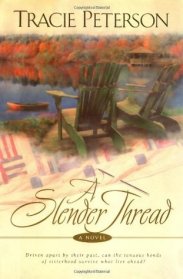
Slender ThreadIn A Slender Thread by Tracie Peterson, five sisters return home to Council Grove, Kansas, for the funeral of the mother who had abandoned them to pursue an acting career. They gather at the farmhouse of their grandmother, Mattie, who raised them and tried to instill in them a hope and faith in God. But each of the women has been affected in different ways by their mother’s desertion which causes conflict between them.

Ashley is married to a doctor, has two young boys, and is vying for Supermom status, trying to be everything her mother was not to her. Brook is a model who can’t let herself open her heart to the possibility of love. Connie feels alone because her two older and two younger sisters are close, and she has a different father, so she feels the odd woman out on many fronts. But she makes it worse by putting up walls that none of them can break through and making choices that she knows Mattie would be heartbroken over if she knew. Deirdre was the only planned child of her mother, conceived to try to heal her marriage. She’s the peacemaker but hides a secret obsession. Erica was the youngest, born barely 9 months after Deirdre, a gifted musician who puts her potential career above her love interest.

As the girls gather for the first time in years, tensions rise to the surface and harsh words break out on all sides. Mattie tries to point them to the love the have for each other, the “slender thread” that ties them together, and to God’s help and grace, but each one is too immersed in her own issues.

There’s a lot of bickering in this book. A lot. It’s meant to show that their issues go beyond the usual sibling rivalry, but they seem extraordinarily touchy and too willing to get offended by innocent remarks. Some of the same issues keep coming up over and over – which does happen when people are fixated on their past hurts without attempts to come to peace with them. But it did get old. The story seemed very slow in the first section when the girls were all together but the action picked up quite a bit when they all went back to their own lives and we saw them in their own setting. Their characters were developed quite a bit more then.

But I did appreciate the emphasis that we don’t have to be bound by a bad past or a parent who has failed us. We’ll forever be affected by them, but with grace and forgiveness and God’s help, we can put the past in perspective and forge new trails for ourselves and our families.

(Sharing at Semicolon‘s Saturday Review of Books)

Giveaway of Adam Blumer’s Book, The Tenth Plague

Tenth Plague

A few years ago I posted this review of Adam Blumer‘s The Tenth Plague along with an interview with him. At the time the book was only available in an e-book format, and it still is. But now — in fact, today — his publisher has released a paperback version. If you’d like to enter for a drawing to hold a real live copy of this book in your hands, leave a comment below (US addresses only, due to the expense of shipping). A week from today, April 12, I’ll draw from the names entered with random.org, and we’ll send one happy winner a copy!

Here’s a recap of the review and interview:

The-Tenth-PlagueIn The Tenth Plague by Adam Blumer, Marc and Jillian Thayer have just adopted a new baby boy, and a friend has invited them to  a Christian-themed resort for some rest and time together as a new family.

When they arrive, however, the retreat is in upheaval. A company planning a new Bible translation is having meetings at the resort, and a throng has arrived to protest. Someone rigged the water system to dispense what appears to be blood from the faucets. What seems an odd prank is soon discovered to be the first in a series of events based on the Biblical ten plagues of Egypt, some of them resulting in fatalities. Marc calls on a friend, a retired homicide detective, to help with the investigation as the plagues escalate.

Gillian, meanwhile, runs into someone who has hurt her deeply in the past. She thought she had put it all behind her, but the old anger and hurt rush back in like a flood,  and she wrestles with the need to extend forgiveness.

The Tenth Plague is a sequel to Fatal Illusions, Adam’s first book (which I reviewed here), but you don’t have to have read the first book to understand and enjoy the second. Both books are tremendously suspenseful and feature realistic, everyday Christian people trying to discern and apply God’s will in their circumstances. I enjoyed them both very much!

Here is an interview with Adam:

blumer_adam_portrait

What was your inspiration behind The Tenth Plague?

One day I was reading the book of Revelation and came across 22:18–19. “I warn everyone who hears the words of the prophecy of this book: if anyone adds to them, God will add to him the plagues described in this book, and if anyone takes away from the words of the book of this prophecy, God will take away his share in the tree of life and in the holy city, which are described in this book” (ESV). My mind began playing the “what if” game. Would God really bring a biblical plague on someone who tampered with His Word? I chatted with a few theologian friends, and the plot emerged from there.

How does this novel compare with your first novel, Fatal Illusions?

Though the plot, of course, is different, the two novels share a number of similarities. Both are set in Michigan’s Upper Peninsula, where I live. I like to write about average folks like Marc and Gillian Thayer, a pastor and his wife who face unexpected, even threatening, events. Of course, there’s another really bad killer who wants to do them harm, and their retired homicide detective friend, Chuck Riley, once again comes out of retirement to help them. I also like to weave in a historical event that somehow relates to the present day. In Fatal Illusions, it was the killer’s obsession with Houdini; in The Tenth Plague, an old mine disaster plays an important role. The past always plays an important role in the present—a running theme in my novels. Overall, I like to write about redemption: how biblical truth offers the answers to the complicated issues of life. Stories, like parables, present some of the best ways to illustrate biblical truths.

What was one of the most important lessons you learned during the writing of this novel?

The power of the collaborative process. I had a fairly strong first draft, but I was stuck. A novel editor provided a creative springboard and helped me see where my true story lay. Without her help, I doubt this story would have seen the light of day.

What part of writing this novel took the most work?

This novel required a ton of research. From an old mining tragedy to autism, from adoption law to anthrax, from pheromones to the Oklahoma City bombing, the research for this one required much more than I ever expected. I’m so thankful for technology and ease of access, thanks to the Internet. Without Google and so many resources at my fingertips, I’d probably still be researching this story.

So far, what has been your favorite work experience in life?

During one summer between years in high school, I worked at a library, a book lover’s paradise. Granted, a lot of the work involved stocking shelves, but being surrounded by so many fascinating books and interesting authors was pure heaven. I was born a die-hard book lover, and I’ll probably die one too.

Consider the qualities that make you unique. How do these qualities come out in your writing?

I love suspense fiction and history, so a blending of the two always seems to come out in my writing. In high school, I won awards in calligraphy; Gillian Thayer, my female lead, is into calligraphy in a big way (it’s her job). I’ve always been intrigued with how one’s past impacts his or her present and future. This is a recurring theme in my novels because it’s part of who I am. Now that I think about it, what I write is inseparable to some degree from who I am.

Introduce your plot summary and main characters. What is your favorite part of the story?

Water turns to blood. Flies and gnats attack the innocent. Marc and Gillian Thayer’s vacation resort becomes a grisly murder scene, with a killer using the ten plagues of Egypt as his playbook for revenge.

When their friend turns up dead, Marc and Gillian put their vacation on hold, enlist the help of a retired homicide detective, and take a closer look at the bizarre plagues as they escalate in intensity. Meanwhile, a stranger is after the Thayers’ newly adopted baby. Will they uncover the truth behind the bitter agenda before the tenth plague, the death of the firstborn son?

My favorite part is when the firstborn son is revealed and the novel culminates in the tenth plague. This is the most suspenseful and action-packed part of the story, with several key characters in jeopardy. I had a blast writing it.

One of the main themes of The Tenth Plague is confronting and dealing with your past. What can readers take away from this theme, especially in a novel that deals with religion and death?

Both the villain and my heroine, Gillian Thayer, grapple with heartbreaking real-life issues from their past. But how they respond shows two very different paths. My hope is that readers will see the stark contrast in the context of biblical truth presented in the story. The bottom line is that God is enough, and He offers the solution to every problem of life. This is another repeated theme in my stories. Thank you for the opportunity to talk about my latest project.

Some content used by permission of Kirkdale Press

Tenth Plague Forgiveness

(Sharing at Semicolon‘s Saturday Review of Books)

(Update: The giveaway is now closed. The winner is Faith! Congratulations!)

Laudable Linkage

Here are some noteworthy reads discovered in the last week or so:

The Christian Life Isn’t Meant to Be Effortless. Very helpful, especially dealing with a couple of ways of looking at Christian life that I thought were a little off but I couldn’t quite articulate why.

When God Gives Us Too Much to Handle.

Love and Entitlement. “But, you’re getting it all wrong, girls. Love isn’t a laundry list of behavior requirements.”

Member of the Family. Interesting thoughts about the difference between books where a child character feels like he is contributing to the family vs. the ones popular with the “misfit/outcast archetype in children’s literature. There is a strong trend in fiction for young people that consists of jettisoning of one’s God-given family and cobbling together a new one on a road trip.” I agree we need more of the former.

Expositional Imposters. Though this is written to preachers, I think the points he makes are good for general Bible study as well. We can pull the wrong lesson from a passage if we’re not reading it carefully.

I’m Done Making My Kid’s Childhood Magical, HT to Ann. Nothing wrong with a lot of what is mentioned, but I agree every day, every lunch, etc. doesn’t need to be Pinterest-worthy, and there’s a lot of magic for childhood in everyday life.

Your Middle-Aged Brain Is Not on the Decline, HT to Janet. That’s encouraging!

Bringing the Prairie to the Hood. “Black people (at least the ones I know) do not watch Little House on the Prairie.…So how did Little House on the Prairie mosey its way into my Southeast D.C. home?”

And to end with a smile:

Paper

spiderHappy Saturday!

Mount TBR Checkpoint

Mount TBR 2016

The Mount TBR Reading Challenge (to read books one already owned) has checkpoints every quarter where we can report how we’re doing. So far for this challenge I have read (each title links back to my review of it):

  1. What Are You Afraid Of? Facing Down Your Fears With Faith by David Jeremiah (Finished 2/22/16)
  2. The Bronte Plot by Katherine Reay (Finished 2/2/16)
  3. Searching for Eternity by Elizabeth Musser (Finished 1/16/16)
  4. Our Mutual Friend by Charles Dickens (Finished 2/22/16)
  5. A Connecticut Yankee in King Arthur’s Court by Mark Twain (Finished 3/8/16)
  6. Big Love: The Practice of Loving Beyond Your Limits by Kara Tippetts (Finished 2/14/16)
  7. Gilead by Marilynne Robinson (Finished 1/13/16)
  8. SEAL of God by Chad Williams and David Thomas (Finished 1/24/16)
  9. Not In the Heart by Chris Fabry (Finished 3/26/16)

The levels, or “peaks,” for this challenge are met with every 12 books read, so I am well on my way to the first one. I had only committed to the first one, but it looks like I may reach the second one by year’s end as well.

Only five of these were on my original list, but I don’t think that matters. I do still plan to read the rest of them plus others if I can. In fact, I am nearly done with one of them and partway into another one.

Bev (our hostess) also suggested some other things we could share about the books we’ve read, like a favorite book cover or character. I think for me the favorite book cover would go to Searching for Eternity by Elizabeth Musser.

Searching for Eternity

I like elements of the story that are there – Emile, the scene from the Varsity in Atlanta, and the passport from France. I tend to like drawn/painted rather than photographed covers for fiction.

Favorite characters….that’s a hard one. But I think it would be Truman Wiley from Not In the Heart by Chris Fabry, even though he’s not a good guy for most of the novel. I like his journey and how he is written.

Another question was whether any of the books surprised us. That would again go to Not In the Heart by Chris Fabry. The initial description of the story intrigued me, but there were so many more layers to it than I expected. It was my first of Fabry’s books, but I immediately bought another one after finishing this one.

One that surprised me negatively was Gilead by Marilynne Robinson. Perhaps that was due to having heard such wonderful things about the writing, so my expectations were built up overly high. I did come to agree about the writing by the time I finished, but it was awfully hard to get into.

Bev didn’t ask this question, but probably the most beneficial of these books would be What Are You Afraid Of? Facing Down Your Fears With Faith by David Jeremiah.

So that wraps up this checkpoint – looking forward to the next one!

Friday’s Fave Five

FFF birds on a wire

It’s Friday, time to look back over the blessings of the week with Susanne at Living to Tell the Story and other friends.

Many of us skipped the FFF last week, due to Good Friday and Easter preparations and also because our hostess, Susanne, was getting ready for her daughter’s wedding the next day and would need to take a week off from FFF, even though she graciously left it open for the rest of us. So we should have two weeks of blessings to catch up on…except that I didn’t make notes and can’t remember much past this week. (Blush!) But here are some of the highlights:

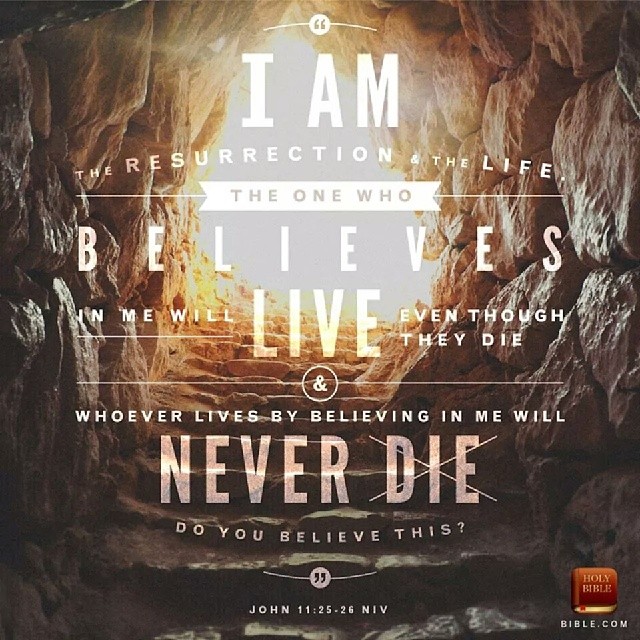
1. Easter isn’t the only time we think about the resurrection of Christ and all it means to us, but it is a time for special emphasis on it. What a cause for joy!

10299841_641701779216757_2112017931_n

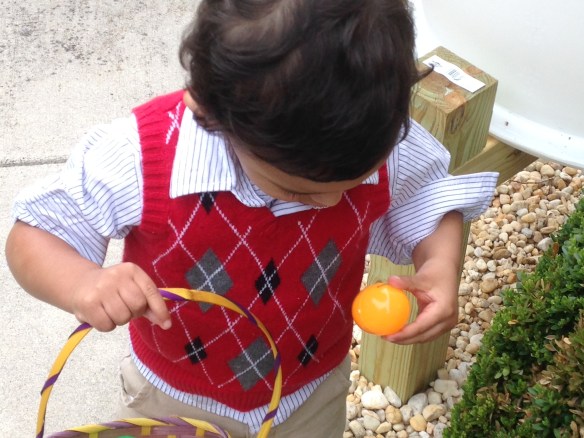
2. Celebrating with the family. We enjoyed a nice meal and then had a little Easter egg hunt, Timothy’s first. For years we’ve put coins in the little plastic eggs for the older kids, with an occasional bill of some kind. Timothy is not into money yet, and no one here likes hard-boiled eggs, so we put Goldfish crackers and M&Ms in his. He caught on right away to gathering the eggs but was more interested in gathering, opening, and closing them than on what was inside. Later we had an extended Facetime with my oldest son out of state.

01ac6c4eba90432b6d3beda209161e1e2c9f03e3dc

3. New spring dish towels. I found these at JoAnn’s and thought they were a little pricy, but they were on sale 40% off and I had a gift card. 🙂 Lately it’s been rare for me to find the fluffy type of dish towels in any kind of design I like, so I was thrilled with these.

IMG_1600

4. Safe travels. Jason, Mittu, and Timothy traveled several hundred miles for her mom’s birthday last week. They had a bit of an issue with their car that thankfully happened there and not on the road, but delayed them a bit getting back. Last time Timothy wasn’t too happy with all the time in the car seat, but this time he traveled well and wasn’t overwhelmed with being around unfamiliar people. All in all it was a good trip for them. Then Jim safely went to Atlanta for a day earlier this week.

5. Flowering trees around town are such beautiful harbingers of spring…even though they ramp up pollen production and allergy problems.

Hope you’re having a wonderful Friday free from “April fools.” 🙂

Book Review: Every Waking Moment

every-waking-momentIn Every Waking Moment by Chris Fabry, Devin Hillis is a filmmaker with vision but no cash. He wants to make a documentary of the stories of people in the Desert Gardens assisted-living facility. He tries to support himself in the meantime by making shorter memorials for funerals, but that’s not paying the bills, and both his partner and his landlord are on his case.

His time in Desert Gardens brings to his attention an employee there named Treha Langsam. At first she looks like perhaps she is developmentally delayed somehow, but she is very intelligent. She has nystagmus, a condition which causes her eyes to be almost constantly moving, and when she’s agitated she makes a typing motion with her hands, but otherwise she seems emotionless. She grew up in various foster homes and has little to no memory of her history. But she seems to have a gift: she is able to bring out residents who have been closed off and uncommunicative to where they are speaking clearly. She was hired for janitorial services, but when the facility supervisor, Miriam Howard, saw her work with the residents, she let her have free reign to interact with them. Devin thinks Treha may be the story he’s looking for.

But Miriam is about to retire, and the new supervisor is more concerned about her own rules and regulations than care of the residents. She has her eye on Treha, threatening to fire her if she does anything other than clean.

What will happen to Treha and the residents if she loses her job, and will Devin and Miriam be able to solve the mystery of Treha’s background, not just for the documentary, but for her future?

I got this book right on the heels of finishing Not in the Heart by Chris Fabry because I loved his writing so much and wanted to read more. I was looking at that book on Amazon when a link to this book with these words from Chris intrigued me:

What if this is as good as life gets? Are you okay with that?

This question has haunted me over the past few years. Several years ago we moved to the desert for health reasons. Looking for recovery in a dry and thirsty land. And I realized my soul was more thirsty than anything.

Every Waking Moment is my effort to take some of the pain and loss of life and sift it through the life of a young woman who’s been marginalized in society, working among people who are marginalized (the elderly). This character, Treha, has an extraordinary gift that few observe because she’s “different.”

Like most of my tales, it’s a love story, a mystery, part thriller–but mostly a character sketch of lonely people looking for hope. And it’s my intent that you find hope and meaning for your own life through Treha’s journey.

That theme of “What if this is as good as it gets” comes up for several characters throughout the book. Poking around Chris’s web site, I saw that this novel arose in part because of his family’s experience with toxic mold and the detrimental effects it has had on his family’s health. That is not what caused Treha’s problems, but he draws parallels from the experience.

Not in the Heart was fast-paced and suspenseful. Every Waking Moment is a different kind of book. It has moments of suspense, and of course there is the mystery of Treha’s history and what made her the way she is. But overall the book has a different pace and feel to it. But it is still quite good.

Some of the lines about or by the facility residents were especially poignant to me with the decline of my mother-in-law’s health and abilities over the last several years:

The daughter didn’t realize that this was part of the problem. The same tasks that wore her mother down were the tasks that gave her structure and stability. Worth. When she could no longer do them and others were paid to accomplish things she had done as long as she could remember, life became a calendar of guilt–every day lived as a spectator, watching others do what she couldn’t.

Deciding what Mother would like or wouldn’t like was a seesaw between two relatives who were guessing. Love looked like this and worse and was accompanied by a mute, white-haired shell.

“I want that person you knew to return. But the truth is, this may be the best we achieve. Today, having her here and comfortable and not agitated…that may be as good as we get. Are you okay with that?”

“Your love for your mother is not conditional on her response. You love her for who she is. You don’t love her because of the things she can do for you.”

“The medical community views individuals as patients to be cured. But when people age, they’re not looking for a cure as much as they are for encouragement to continue. Our work here is not about curing. It’s about the dignity of each person…”

“Value people not just for the income they provide us. Value them because of the lives they’ve lived. Value each person who pushes a broom or cleans a bedpan. And value the girl whose life is marred, yes, but who gives these people more than a doctor ever will.”

“Growing older is not much fun. It’s the slowing down that gets to you. Elsie calls it ‘vigor mortis.’ You just can’t do what you used to.”

“Old age teaches you in a very unkind way that things won’t necessarily get better. Not in this life. In fact, you can pretty much count on things degenerating. Being content is not a lack of ambition. It’s being able to rest and relax and know that your worth doesn’t come from what others think of you or even what you think of you.”

And one I loved just for the writing: “Retirement was bearing down on Miriam like a semitruck trying to make it through a yellow light.”

For those of you who like book trailers:

I enjoyed this book quite a lot and can heartily recommend it to you.

(Sharing at Semicolon‘s Saturday Review of Books)