Friday’s Fave Five

FFF spring2

It’s Friday, time to look back over the blessings of the week with Susanne at Living to Tell the Story and other friends.

Here are five favorite parts of the past week:

1. Flowers and bushes. This past Saturday my husband and I finally had time to go shopping for hanging baskets, flowers for the front planters, and a couple of bushes we needed to replace, then we got them planted that afternoon. They do brighten up the view. πŸ™‚ One bush was a camellia – I have always wanted one but haven’t seen them for sale before. Plus I noticed my hydrangea that we planted a few years ago is finally blooming well: last year it only had a couple of blossoms.

2. Ribs. My husband had to eat dinner with some people he works with one night, and ordered a whole rack of ribs so he would have some left over to bring to me. πŸ™‚

3. A good report at the eye doctor for Timothy. Preemies can develop certain eye problems, so his parents have to take him for occasional appointments to an eye doctor. His appointment this week showed no problems at all: the doctor said he wouldn’t have known he was a preemie except that it was in his chart.

4. Great-grandma feeling better. She was having some trouble last week – just seemed generally low, had some trouble eating, and her heart rate was higher than usual. We couldn’t get in to see the doctor til this week, and by then she was pretty much back to normal, but everything seems to be as ok as it can be for an 86 year old bedridden woman.

5. A sign on a tree. When we were plant shopping, we saw a sign on one little tree that it wasn’t for sale because a nest with baby birds was in it. I’m not one who feels people can’t build because of wildlife or birds in the area, but in this case, I thought it was sweet that the store would hold on to that tree until the babies are out.

Hope you have a great weekend!

“Not a long life, but a full one”

Recently I was reading a few paragraphs about the brief life of William Borden. Instead of going into the family business and leading the privileged life of a millionaire, he wanted to be a missionary. Not waiting until he got to the field to begin to minister, he was known for his walk with God and his efforts to reach people all through his college and graduate years. Then he died of spinal meningitis at the age of 25.

That brought to mind others whose walk with God and service for Him in their youth have been exemplary, yet they died relatively young: Jim Elliot, Nate Saint, Henry Martyn, Robert Murray McCheyne, David Brainerd, and others. The question comes unavoidably to mind: since they were so godly, so useful, so effective, why did God take them Home so young when they could have had decades of service in which to accomplish much for Him here?

I don’t know that we’ll ever have the answer to that: it’s wrapped in the mystery of God’s will and sovereignty. Somehow when someone like that dies, especially before their time, humanly speaking, somehow it does inspire others to try to become more like them, so that may be one purpose.

But I saw a new way to look at it this time. What if, instead of taking them home “early,” God had planned before they were even born that they would only live 25-30 years, and they just made the most of it?

Jim Elliot wrote in his journal, before he ever went to the mission field or heard of the people for whom he would give his life:

Seems impossible that I am so near my senior year at this place, and truthfully, it hasn’t the glow about it that I rather expected. There is no such thing as attainment in this life; as soon as one arrives at a long-coveted position he only jacks up his desire another notch or so and looks for higher achievement – a process which is ultimately suspended by the intervention of death. Life is truly likened to a rising vapor, coiling, evanescent, shifting. May the Lord teach us what it means to live in terms of the end.

He makes His ministers a flame of fire. Am I ignitable? God deliver me from the dread asbestos of β€˜other things.’ Saturate me with the oil of the Spirit that I may be a flame. But flame is transient, often short-lived. Canst thou bear this, my soul – short life? In me there dwells the Spirit of the Great Short-Lived, whose zeal for God’s house consumed Him. β€˜Make me Thy Fuel, Flame of God.’

God, I pray thee, light these idle sticks of my life and may I burn for Thee. Consume my life, my God, for it is Thine. I seek not a long life, but a full one, like you, Lord Jesus.

The ESV version of Psalm 139:16 says, “Your eyes saw my unformed substance; in your book were written, every one of them, the days that were formed for me, when as yet there was none of them.” Some might live only a few hours, a few years, or several decades. God knows our days. We don’t know how many of them we might have. It’s vital to live them all for Him.

That doesn’t necessarily mean becoming a missionary. Not everyone is called to that. It simply means living in close fellowship with Him and being a light for Him in whatever He calls us to: being a student, raising little ones for Him, caring for loved ones, showing forth His love in the home, workplace, and neighborhood.

So teach us to number our days, that we may apply our hearts unto wisdom. Psalm 90:12

For what is your life? It is even a vapour, that appeareth for a little time, and then vanisheth away. James 4:14b

Photo courtesy of morguefile.com

Photo courtesy of morguefile.com

Sharing at Thought-Provoking Thursday.

Book Revew: Growing Up Amish

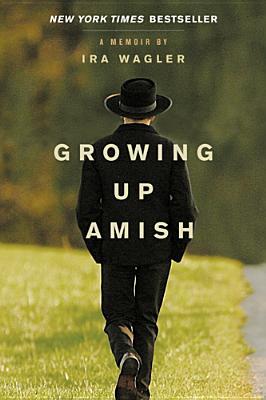
Growing Up AmishI had seen Growing Up Amish: A Memoir by Ira Wagler recommended by a number of people, so when it came through on sale for the Kindle app, I snagged it.

I’ve been somewhat dismayed at the rosy fascination in Christian circles for the Amish, resulting in a multitude of Amish fiction. I suppose there is an air of mystery about them that always piques curiosity. I understand admiration for their work ethic. I know some long for simpler times with less technology and wonder if the Amish might be on to something. I would have no qualms about someone living without electricity and modern conveniences because they felt it would benefit their family time or the ecology. But I do have a problem with deeming anything modern as “worldly” and condemning people to hell over such arbitrary practices as wearing a mustache, having rubber tires on a buggy, varying any degree on dress or hair styles, etc. “Legalism” is such an overused buzzword in Christendom today, but the extreme legalism of the Amish is seemingly overlooked.

Ira Wagler’s memoir strips away the romanticism and gives us a clearer view. He grew up in a prominent Amish family and community in Canada, the ninth of eleven children of a man well-known in Amish circles for his writing. As he grew into his teen years, he felt more and more constricted and constrained, “stuck in a stifling, hostile culture consisting of myriad complex rules and restrictions…arcane laws based on tradition…not to mention the drama, dictatorial decrees, the strife among so-called brothers, and the seemingly endless turmoil that resulted.” At age seventeen he left in the middle of the night and traveled by bus to work for a man who had once visited his father’s farm.

He enjoyed the freedom, but he missed his family and the stability of life at home, plus, after long days of hard work, he wasn’t really getting ahead financially. So he decided to move back home. His family and church accepted him, but the old conflicts rose to the surface again:

And therein lies the paradox that would haunt me for almost ten years: the tug-of-war between two worlds. A world of freedom versus a world of stability and family. A world of dreams versus a world of tradition. And wherever I resided at any given moment, trudging through the tough slog of daily life, the world I had left called me back from the one I inhabited. It was a brutal thing in so many ways, and I seemed helpless to combat it. Torn emotionally, moving back and forth, always following the siren’s call to lush and distant fields of peace that seemed so real but, like shimmering mirages in the desert, always faded away when I approachedΒ them.

He ended up leaving home five times altogether, always returning again until the last time, at age 26. People encouraged him to “decide to do what’s right, and then do it,” and assured him that once he just settled down, everything would be ok. He tried hard to make it work, even being baptized and joining the church. But “A mental choice, absent a real heart change, is no choice at all. We couldn’t force ourselves to be something we were not. That just couldn’t happen. And it didn’t.”

Believing that “The Amish way provided my only chance of salvation,” and that if he permanently left the fold, he would end up in hell, still couldn’t provide motive enough to stay, though it grieved him.

Personally, he “probably always believed there was a God, a sort of dark and frowning force. I just didn’t believe in him, to the extent that I thought he could or would make an actual difference in my life. I tried to believe, in my heart. But I couldn’t, in my head. I’d heard about him all my life. But if he was everything the preachers claimed he was, he sure had a strange way of hiding himself from people like me.”

Depressed and desperate, in a “mental trench of darkness from which I could see no way out,” he felt he had no choice but to finally leave the Amish for good. But then ” a sliver of light” came to him. Most of the praying he had ever seen in the Amish community was scripted, but he “decided he could simply talk to God. Ask for his help. Not by reading from a little black book, but by talking to him, man to man. Or man to God.” So he did, merely asking for the desire to do what was right.

Less than a month later, he met and almost instantly meshed with an English man who had joined the Amish, yet was a true believer.

He explained that there was no human penance for my sins. No way I could ever atone for all the things I had done. But…there was someone else who could atone. Who could wipe the past away and give new life. Heal all the wounds — my own and those I had inflicted on so many others through the years…

By quietly showing me Christ’s love, my friend had led me to the Source of that love. For the first time, I truly grasped that Christ had died for me — suffered, bled, and died–and that I could be his through faith. I was amazed at how simple it was. Why had it all seemed so hard, so impossible before?

The book ends with his final departure from the Amish at the age of 26. There’s a short epilogue at the end, but I would have liked to have learned more how about he finally adjusted to the outside world in the twenty years since he left, how his relationships with his family were since the final break, what kind of career he finally chose, etc.

I enjoyed this book quite a lot, not only for the view into what it was like to grow up Amish, but also to marvel again at how God draws people to Himself.

(This review will also be linked toΒ Semicolonβ€˜s Saturday Review of Books.)

Finding Time to Read the Bible

IMG_1218

In a recent blog post I read (I’ve forgotten where), the blogger mentioned that the book she was reading on Bible study didn’t discuss where to find the time. I had the same thought with a book I am reading on the subject. I guess the authors feel that once we are assured of the importance of Bible reading and study, we’ll make it a priority and make time. And I think that’s pretty much what it comes down to. If by finding time we mean we want a time that magically opens up with the solitude and inclination we need without a dozen other things crowding in…I just don’t think that’s going to happen, at least not regularly. Years ago our assistant pastor spoke of struggling to make time for Bible reading, and said to our senior pastor, an older, godly man, “I guess you don’t have trouble making time for Bible reading any more, do you?” He just laughed.

Finding the time is always going to be a struggle. There are always duties, distractions, and people clamoring for that time, and even an Enemy of our souls fighting against it. Instead of getting discouraged about it, we can just accept that it is a common problem andΒ  prayerfully seek ways to deal with it. Perhaps reminding ourselves of reasons to read the Bible will renew our motivation.

We need to remember, too, that making time to read the Bible isn’t just about ticking off another duty. Every relationship thrives on communication. If we went for days without talking with our husbands except in the briefest necessary exchanges, we’d feel the effects pretty soon and realize we need some time alone together. Though sometimes we need to set up routines to establish good habits, taking time to read the Bible shouldn’t be a matter of rigid schedules, but rather of taking time to meet with the One Who loves us best.

So with these things in mind, here are some suggestions for carving time out to meet with the Lord:

1. Get up earlier or stay up later. I can hear you groaning. But for many of us, that’s the only way to get some time alone.

2. Keep the Bible handy. One friend with three small children close in age kept her Bible out in her kitchen. She couldn’t set aside a longer period of solitude, but she could read in smaller snatches through the day.

3. Listen. Some people like to listen to recorded versions of the Bible while driving, exercising, making dinner, etc.

4. Plan for it after a natural break in the day. It’s hard for many of us to stop in the middle of a morning or afternoon and put everything aside to read, but a break in the routine, when we’re shifting gears anyway, can help us work in some time for reading, like after a meal, after taking the kids to school, etc.

5. Meal time, especially if you eat alone.

6. Waiting time. We usually pull out our phones or a book if we have to wait at a doctor’s office or in car line at school, but that can be a good time for some Bible reading.

7. Establish a routine. Once we get used to setting aside a certain time for Bible reading, it’s not such a scramble to look for that time every day.

8. Don’t wait for perfection. One problem with a routine is that we can’t always figure out how to function when the routine is disrupted, like when we’re traveling or someone is sick or we have small children at home. I wrote a post some time back called Encouragement for mothers of young children about the topic of trying to find time for devotions with little ones in the house. Though I normally like getting up early and having solitude and quietness for Bible reading, that just didn’t work with little ones. Yet God enabled me to read and profit from it while they kept me company or played near me, even though usually I couldn’t concentrate under those circumstances.

9. Anything is better than nothing. Normally I like a good amount of time for Bible reading or study, but when a few moments was all I truly had, God often gave me just what I needed in those few moments in just a verse or two.

10. Talk with your husband, roommates, siblings, whoever you live with. Years ago I caught part of a radio program where the preacher was scolding women who wanted to spend early morning time to have devotions, saying the husband as the leader should have that time, since the wife had “all day” in which she could have devotions. The man obviously had not spent a whole day at home alone with kids. That mentality is so wrong on many levels. Not long after that a missionary speaking at our church mentioned protecting that time for his wife, a much better example of servant leadership and love. If the only way either parent can have devotions is for one of them to watch the children, then they can do that for each other. If a particular time of day is the best time for two people in a house, they can work out different locations if they get too distracted in the same room. Whatever conflict there might be about time and place preferences, talk with each other to work out the best solution for both and be willing to compromise.

11. Pray. In the blog post I referred to earlier, I mentioned that sometimes I’d get to the end of the day and lament to the Lord that I had no idea when I could have read my Bible that day. I began instead to pray at the beginningΒ  of the day for wisdom and alertness for those moments when I could, and that made a profound difference.

12. Set something aside. If we have times to read other books, peruse Facebook, watch TV, or play games on our phones, we have time to read the Bible. I admit, if I sit down to relax for a few minutes with a book and realize I haven’t read my Bible yet that day, I don’t always have the best attitude about laying down my book and picking up my Bible. But when I confess that to the Lord and then go ahead, He graciously speaks to me through His Word. We do need time to relax as well, but that shouldn’t come at the expense of time in God’s Word. He knows our needs, and we can ask Him for both time to spend in His Word and for some down time.

What about you? What ways have you found to make time for Bible reading?

Sharing at Thought-Provoking Thursday and Works For Me Wednesday.

Friday’s Fave Five

FFF spring2

It’s Friday, time to look back over the blessings of the week with Susanne at Living to Tell the Story and other friends.

It’s been another week of simple blessings. Here are a few:

1. A three-day weekend. More time to get things done, spend with family, and eat grilled burgers. πŸ™‚ And to be thankful, in this case, for the men and women who sacrificed so the rest of us could have a “normal” life.

2. Getting home moments before a storm. Always nice to be inside when there is a storm out, but that “just made it” feeling is a nice one.

3. Baby laughs – his own and the ones he causes. There is just a special feeling of…accomplishment, I guess, when making a baby smile or laugh. And he’s always been cute (biased grandmother’s opinion, of course), but he’s full of such antics now. Lately when his parents give him a “pretend” drink of their coffee (just holding the cup to his lips – he wants that even though he’s not getting anything), when he’s done, he’ll say, “Ahh!”

4. A simple prescription refill. It would be too long and boring to go into details, but I needed a prescription refill that I thought either the doctor, pharmacy, or insurance company were going to give me problems about because I had finished it before the prescribed time (they have done so before. It’s an ointment, not a pill, so hard to make the dosage last the prescribed time). The doctor wanted me to come in rather than refilling it over the phone, but everything else went as smoothly as it possible could on all fronts. Sometimes we can build up potential problems in our minds before we even start.

5. A baby gorilla. On our zoo trip a few weeks ago, two of the gorillas were expecting. One just had her baby this week. Cute!

Happy Friday!

Book Review: Christy

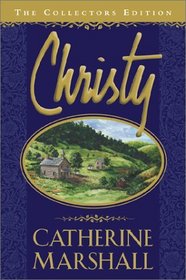
ChristyChristy by Catherine Marshall was the May selection for Carrieβ€˜s Reading to Know Classics Book Club. I had read it decades ago and looked forward to this opportunity to revisit it.

Christy is historical fiction based on the experiences of the author’s mother, who went as a single lady to teach school in an impoverished Appalachian town.

Christy responds to the appeal of the founder of a mission to Cutter Gap, TN. She’s 19 and has not finished college, but she believes she can be a help to the mission. When she gets there, she’s overwhelmed by the poverty, ignorance, and superstition. In her youthful zeal, she’s all fired up to do something and gets frustrated that others haven’t yet. She oversteps her bounds a couple of times, and Miss Alice, a Quaker lady who works at the mission (she seems to be the head under the founder) has to gently remind her that she needs to find out first how the founder wants things done, and she has to learn she can’t come barging in as an outsider telling people how they need to change. Christy clashes at first with Dr. MacNeil, who was actually raised in the area: she feels he needs to correct people’s superstitions, particularly those that are unsafe from a health and medical standpoint. But because he is from the area, he knows that would only alienate people: he feels he has to work within their system, showing better ways and giving advice gently, carefully, and only a bit at a time.

In one sense this is something of a coming-of-age novel as Christy develops from a zealous but immature teenager into a more mature young woman. One part of that coming of age is her faith journey. I don’t think this book was marketed as Christian fiction – I don’t think that was a genre at the time, at least not like it is now – but I believe it’s a natural part of the story that her beliefs would be challenged, matured, and solidified. When she first leaves home, she knows surprisingly little. These days candidates for any mission are examined about their beliefs: maybe that wasn’t done then. But she experiences a few crises of faith. One comes in the face of hardship and evil. the other comes about partly through Dr. MacNeil, an agnostic who looks at God as only something of a “starter-force,” and David Grantland, the minister, who is something of a liberal. One of the saddest scenes is when David and Christy visit a woman who is dying, and she asks him to read portions of the Bible about heaven, which he does, but when she tries to talk about it, it comes out that he doesn’t really believe it, at least not like it says.

In one of the best passages in the book, in which Christy has had a fairly wrenching experience and is wrestling with the evil she has seen, Miss Alice says:

You’re sensitive, Christy. So am I. You want to know why seeing stark evil hasn’t made me rough or bitter?…Remember, I said is was God who was prying the little girl’s hands off her eyes. As if He were saying, ‘I can’t use ivory tower followers. They’re plaster of Paris, they crumble and fall apart in life’s press. So you’ve got to see life the way it really is before you can do anything about evil. You cannot vanquish it. I can. But in My world the battle against evil has to be a joint endeavor. You and Me. I, God, in you, can have the victory every time.’ After that, He was always right there beside me, looking at the dreadful sights with compassion and love and heartbreak. His caring and His love were too real for bitterness to grow in me…

Perceptive people like you wound more easily than others. But if we’re going to work on God’s side, we have to decide to open our hearts to the griefs and pain all around us. It’s not an easy decision. A dangerous one too. And a tiny narrow door to enter into a whole new world.

But in that world a great experience waits for us: meeting the One who’s entered there before us. He suffers more than any of us could because His is the deepest emotion and the highest perception…He doesn’t just leave us and Himself in the anguish. At the point where His ultimate in love meets His total capacity to absorb and feel all our agony, there the miracle happens and the exterior situation changes. I’ve seen that miracle….

Love has mending power. All of us have watched it work in small situations. Well, what I am talking about is a vast multiplication of that power (pp. 94-96)

Later it is revealed that Miss Alice has very personal reasons for these conclusions, having wrestled with the hand of evil leveled against herself.

Besides these issues, feuding between families, battling the moonshine business, handling 67 students from allΒ  different grades and a shortage of supplies, and, later, a typhoid epidemic are all factors. Christy discovers that despite the ignorance and hardships in the mountains, there is also great beauty and dear people.

Quietly, Miss Alice was demonstrating this God of love and beauty too — in small ways and in large. For a few, the concept that life did not have to be all starkness and misery was slowly taking root. Tentatively, timidly – -constantly encouraged by Miss Alice — some of the women were at last reaching out for light and beauty and joy (p. 109).

For a few decades, the plot of a teacher coming from a more civilized area leaving home and going to work in a less civilized one got overworked (usually with a teacher from back East going to the untamed West), to the point that I got pretty tired of it and couldn’t read it any more. But this was one of the first, and the struggles are real.

What do you do when strength is called for and you have no strength? You evoke a power beyond your own and use stamina you did not know you had. You open your eyes in the morning grateful that you can see the sunlight of yet another day. You draw yourself to the edge of the bed and then put one foot in front of the other and keep going. You weep with those who gently close the eyes of the dead, and somehow, from the salt of your tears, comes endurance for them and for you. You pour out that resurgence to minister to the living (p. 471).

Somehow I did not see the TV show from the 90s based on the book, but I am tempted to look it up some time. Kellie Martin does seem well-cast as Christie.

While I would not agree with all the theology in the book (most of it coming from a Quaker perspective), it does contain a good deal of truth. I enjoyed visiting this book once again and retracing Christy’s journey.

(This review will also be linked toΒ Semicolonβ€˜s Saturday Review of Books.)

What’s On Your Nightstand: May 2015

Β What's On Your NightstandThe folks at 5 Minutes For Books host What’s On Your Nightstand? the fourth Tuesday of each month in which we can share about the books we have been reading and/or plan to read.

I know the months seem to fly by, but this one just zoomed somehow. But I was able to get in some good reading:

Since last time I have completed:

The Monday Morning Club: You’re Not Alone β€” Encouragement For Women in Ministry by Claudia Barba, reviewed here. Very helpful.

Feeding Your Appetites: Taking Control of What’s Controlling You by Stephen Arterburn, reviewed here. Good.

His Last Bow: Some Later Reminiscences of Sherlock Holmes,Β The Valley of Fear, and The Case-Book of Sherlock Holmes by Sir Arthur Conan Doyle, audiobooks, reviewed here, here, and here respectively, which finishes off the good detective’s stories. I think my favorite was The Valley of Fear. I enjoyed getting to know the original Holmes.

Taken, the latest by Dee Henderson, reviewed here. Christian fiction, a kidnap victim’s story from the time she escapes and seeks out a private detective in order to capture the ones responsible for taking her as well as others. Very good.

Gentle Savage Still Seeking the End of the Spear: The Autobiography of a Killer and the Oral History of the Waorani by Menkaye Aenkaedi with Kemo and Dyowe, reviewed here. The authors are Waorani, formerly known as Aucas, who speared to death Jim Elliot and four other missionaries who had tried to make contact to share the gospel, telling their story, what’s happened to their tribe since then, and proposing some excellent ways for the tribe to move ahead in the future.

I’m currently reading:

Walking With God in the Season of Motherhood by Melissa B. Kruger

Christy by Catherine Marshall for Carrieβ€˜s Reading to Know Classics Book Club for May. Almost done – should have a review up later this week.

The Incorrigible Children of Ashton Place, Book 5: The Unmapped Sea by Maryrose Wood, audiobook. A new little Ashton is on the way! Will he or she have the same…issues as its father?

Growing Up Amish: A Memoir by Ira Wagler, nonfiction. Just started this and am thoroughly drawn in.

Next Up:

Pioneer Girl: The Annotated Autobiography by Laura Ingalls Wilder, edited by Pamela Smith Hill.

The Little Prince by Antoine de Saint-ExupΓ©ry for Carrieβ€˜s Reading to Know Classics Book Club for June.

Little Dorrit by Charles Dickens

Strait of Hormuz by Davis Bunn

I’m coming along well with my reading plans for the year: I’ve read 5 out of 12 classics for the Back to the Classics Challenge and should finish two more in the next few weeks, and I’ve finished 8 out of 12 for the TBR Pile Challenge. If I finish what I have listed, I can choose from the remaining ones on my reading plan lists, plus I have several new books accumulated on my nightstand and Kindle app. Now I just need a week’s vacation to delve into them. πŸ™‚

Happy Reading!


Book Review: Gentle Savage Still Seeking the End of the Spear: The Autobiography of a Killer and the Oral History of the Waorani

Gentle SavageMenkaye was one of several Waorani (then known as Auca) men responsible for spearing to death Jim Elliot, Nate Saint, Roger Youderian, Pete Fleming, and Ed McCully, five missionaries who had come to try to reach them with the gospel, in what was known as Operation Auca. Gentle Savage Still Seeking the End of the Spear: The Autobiography of a Killer and the Oral History of the Waorani by Menkaye Aenkaedi with Kemo and Dyowe is Menkaye’s effort to tell his story in his own words – at least, as close to his own words as possible. He cannot write, so he shared his story verbally with someone who spoke his language as well as Spanish, and then it was translated from Spanish to English.

Menkaye begins with what could be called “the Moipa years.” Moipa was a highly skilled Waorani hunter who, out of fear of reprisals for the people he had killed, began killing almost everyone who crossed him or who might someday: men, women, children (who might grow up to take revenge), grandparents, anyone. The people lived in constant fear of him, and many attempts on his life did not succeed. When he finally did die, killing at the slightest provocation, for any real, perceived, or potential threat or wrong had become a way of life. That included any outsiders. Their encounters with non-Waorani had not gone well, and what could they want anyway except to encroach on their territory or to steal from them or hurt them? Better to kill them off before they struck first, they reasoned.

The missionaries had known that the Waorani, or Aucas, as they knew them, were violent, but they had learned some Waorani words from Dayuma, a woman who had escaped the tribe some years before, had flown Nate Saint’s plane over them a number of times, shouting out Auca/Waorani phrases, had dropped gifts to them and received some in return, so they thought the people were receptive to meeting them. They set up camp in their territory, and a man and two womenΒ  from the tribe came to visit them, the man even going up for a ride. Everything seemed to be going well. But then a group of Waorani came at them and speared them and tore the fabric off the plane.

Years later, when Elisabeth Elliot had come to know them and asked them why they had speared the men, they replied, “For no purpose.” In Olive Fleming Liefeld’s book, Unfolding Destinies, when she went back to visit and asked the same question, they told her they had not understood the photos the men had shown them. They thought the photos of Dayuma meant that she had died, supposedly at the men’s hands. Later still, Steve Saint related in End of the Spear that when he went back to live and work with the Waorani for a time, he was told there was a disagreement between them about one’s man’s wanting to marry one of the women. Some who were involved got angry, and to divert their turning on each other, someone turned their attention to the missionaries, starting a raid. Menkaye relates that all of these are true. One of the men involved in the argument they were having about marriage began to say that the photos meant that the men were cannibals, and they should spear them before the men killed and ate them.

This event that shook the world is given relatively few pages in Menkaye’s book. With all the people they had killed, these men were just a blip on their radar, another threat averted. But some time later, Dayuma came back to the tribe and told them they had made God angry and they needed to stop killing. Amazingly, they were willing to lay down their spears and hear more. Rachel Saint (Nate’s sister) and Elisabeth and Valerie Elliot (Jim’s wife and young daughter) were invited to come and teach them. Though I had read in Through Gates of Splendor and other books that over time several of the Waorani had come to believe on the Lord Jesus Christ as their Savior, it was touching and beautiful to hear this experience described in more detail by Menkaye and to hear him, Kemo, and Dyowe tell of the joy and freedom in their hearts. Dyowe told Rachel:

I want you to know…that I was one of the men…who killed your brother Nathanael when he was on the beach with the others. I know that God wants to forgive me. But I want to tell you too to forgive me for the things that I have done. I didn’t understand anything back then, and I didn’t know who they were. But I will say that I truly know God has forgiven me today. I want to give myself to Him. It was not only your brother who died. Many, many people died besides him at the point of my spear. But today is the last of my own spear for me. I have found a new spear to pierce the hearts of many people (p. 231).

Almost immediately they became concerned for other branches of the tribe that had broken off to live in new areas, and they tried to reach them with the gospel. Some were martyred in the attempt, and most of these other branches are still not believers, thus the second part of Menkaye’s rather bulky title about still seeking the end of the spear. In fact, one of the end notes relates that while the book was in progress, another raid had taken place against oil company employees.

The next part of Menkaye’s book tells of changes that have taken place in the Waoranis, and the last few chapters, some of the most valuable for anyone seeking to work with tribal people, are his vision for his people. He and other Waorani are not opposed to progress and to changes. They see them as inevitable. Menkaye’s own son attended aviation school in Michigan in the US. They don’t want their young people to lose their Waorani skills and heritage completely, though, and they want any future work within the tribe to be handled differently than it has been. In the past, people were sent in who pretty much took over instead of coming under the tribal leadership – even Rachel and Dayuma. Rachel wanted to set Dayuma in charge, but either Dayuma wasn’t quite cut out for it or the authority went to her head or she backslid or something – Menkaye details a number of problems with her leadership. To be generous, this was something Rachel and Dayuma had not been trained for, and mistakes were made. Menkaye and the others are not bitter and they appreciated everything done for them, especially helping them to understand the gospel, but they did want to point out some of the issues and correct them.

The ones who should be choosing the leaders are the Waorani themselves, based upon what we ourselves see in those candidates, young or old, who have demonstrated maturity from a Biblical perspective, and have carefully studied the Bible in order to know the principles in depth that will be taught and lived out. Never should it be a random choice based on a superficial view of any person., especially someone from the Outside (p. 323).

Reading this makes me appreciate even more the emphasis among missionaries our churches have supported in leading rather than driving the people and in training up leaders from within the people group they are ministering to rather than continuing to bring in leadership from the outside.

I’m sure another difficulty in working with tribal people is how to navigate changes. One doesn’t want to unduly influence their culture, but one doesn’t want to hold them back, either. That is all I can figure was going on when the people began to ask Rachel for clothes and boots, and she said they had done fine without them before and didn’t need them now, according to Menkaye. But they had always lived and worked in the jungle before, where it was shady, and Rachel had them out in the open under the hot sun clearing space for an airstrip and didn’t seem to understand they wanted protection from the sun beating on their backs. I think either she was trying not to change them in that way, or she was trying to squelch their looking for handouts, but evidently this is one area where she and Elisabeth disagreed: Elisabeth thought they should have clothes and arranged for them. (They kept wearing clothes but had mixed emotions about shoes. They found that boots protected them from “thorns, ants, and vipers,” but the weight of them felt odd to them, and “when we were climbing the steep mountain ridges, they made us slip in the mud and slide downward” [p. 227].)

I’ve mentioned before in other missionary book reviews (particularly here) that some people think of these primitive tribal communities as simple people frolicking in the sun who shouldn’t be disturbed by missionaries and businesses. Dr. Jim Yost says in the forward, “The tendency to idealize or romanticize ‘primitive’ culture falls to crushing blows here as the reality of life in the upper Amazon rainforest plays out in gruesome details often too explicit or vivid for the cushioned Western mind.” (p. v). How many of us would have wanted our culture to remain as it was hundreds of years ago just to preserve it? Progress has its problems but also its opportunities.

Menkaye and other Waorani are willing to embrace these opportunities while still maintaining the Waorani culture and autonomy. He has great ideas for them to integrate with the “World of the City,” to help his people explore endeavors in which they can make their own money, and to help their young people have the best opportunities for a changing future.

I do not intend to offend the churches of The Outside World who perceive their role as one of coming in to show us how to do things, but in reality, we can learn equally from each other. Is that not true? Do we not have many things to teach each other and to learn from each other? (p. 329).

If you bring us a new idea, we will welcome that, too. But we will always weigh and balance the influences and outcomes of every new component, and determine together what projects are useful and valuable, and which ones may be harmful in some way (p. 338).

The Waorani are storytellers, but their way of sharing stories is different from ours. There is much more detail than I would personally care to know about some issues, much less than I wanted to know about others, and the stories are laid out differently than we would be used to. There is an appendix of Waorani myths and legends at the end: some seem odd, some are gruesome. But then, they would probably think the same way about our fairly tales and Mother Goose rhymes.

I think this book is incredibly valuable to anyone interested in the heritage of the ministries of the Saints, Elliots, and others who initiated “Operation Auca,” and to anyone with an interest in missions, particularly in ministry to tribal peoples. I hope Menkaye lives a long time to carry out his vision and that others take it up as well.

(This review will also be linked toΒ Semicolonβ€˜s Saturday Review of Books.)

Laudable Linkage

Here are some noteworthy reads that caught my eye this week:

How to Prevent Brotherly Love.

Forgiveness: What If He Isn’t Sorry? Excellent, well thought-out, thorough article on this subject. Too many people have a glib answer to this which overlooks some Scriptural principles, so I am very happy to see some of this articulated.

Wedded Bliss: 10 Years Married to a Sports Addict. Good article about dealing with a husband’s hobbies. I don’t think a wife necessarily has to jump in and experience it with him – I think it’s ok to have some different tastes – but there are great thoughts here about how to “honor his appropriate pursuit of” his hobby rather than attempting to “manipulate, belittle, or guilt him away from the thing he loves.” And of course this works with the husband in regard to the wife’s interests as well.

Introverts in the Dearest Place on Earth, HT to Challies.

On Writing Well (5 Big Tips)

You Can Avoid This Rookie Writing Error.

My cousin shared this helpful graphic for which holiday honors which service people:

Honoring those in service

Of course, it’s good to honor those who protect and defend our country at every opportunity.

Happy Saturday!

Friday’s Fave Five

FFF spring2

It’s Friday, time to look back over the blessings of the week with Susanne at Living to Tell the Story and other friends.

I almost didn’t do a FFF today. It hasn’t been a bad week, but most the things I could think of to share are things I’ve already shared before, so I didn’t think it would be all that interesting to readers. But of course we’re to be thankful for all things, not just the first time we experience them. πŸ™‚ So here goes:

1. Icy Hot patches and spray. I’ve had some back issues this week, and the patches help immensely. The spray doesn’t work quite as well, but it does help those areas I can’t reach or coordinate getting a patch to.

2. Dinner prepared by my daughter-in-law. I not only enjoy being “off” from kitchen duty sometimes, but I also enjoy not having to think about what to make. I’ve been in a rut this week, tired of the “same old stuff” yet not inspired enough to look up something new. πŸ™‚

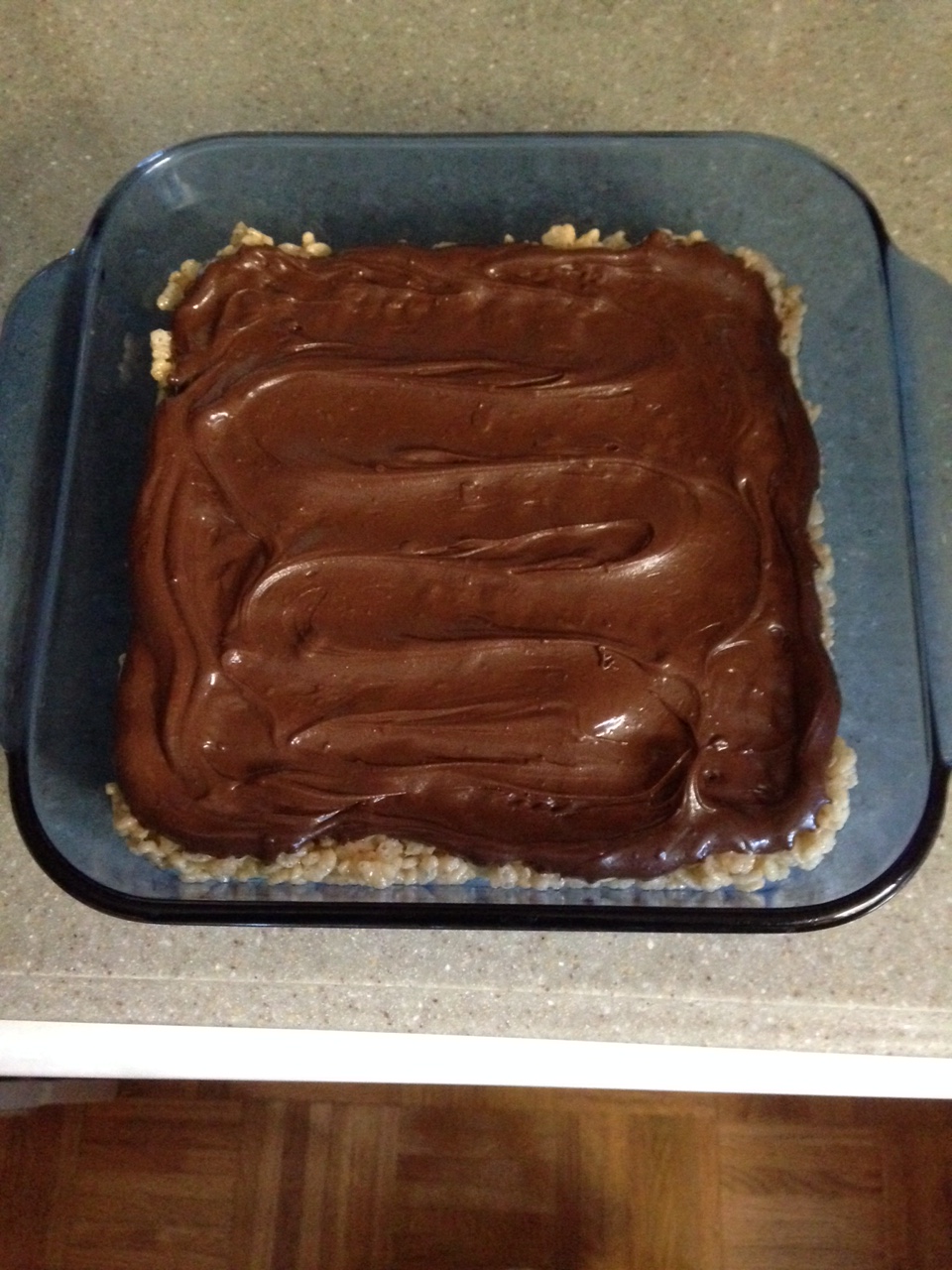
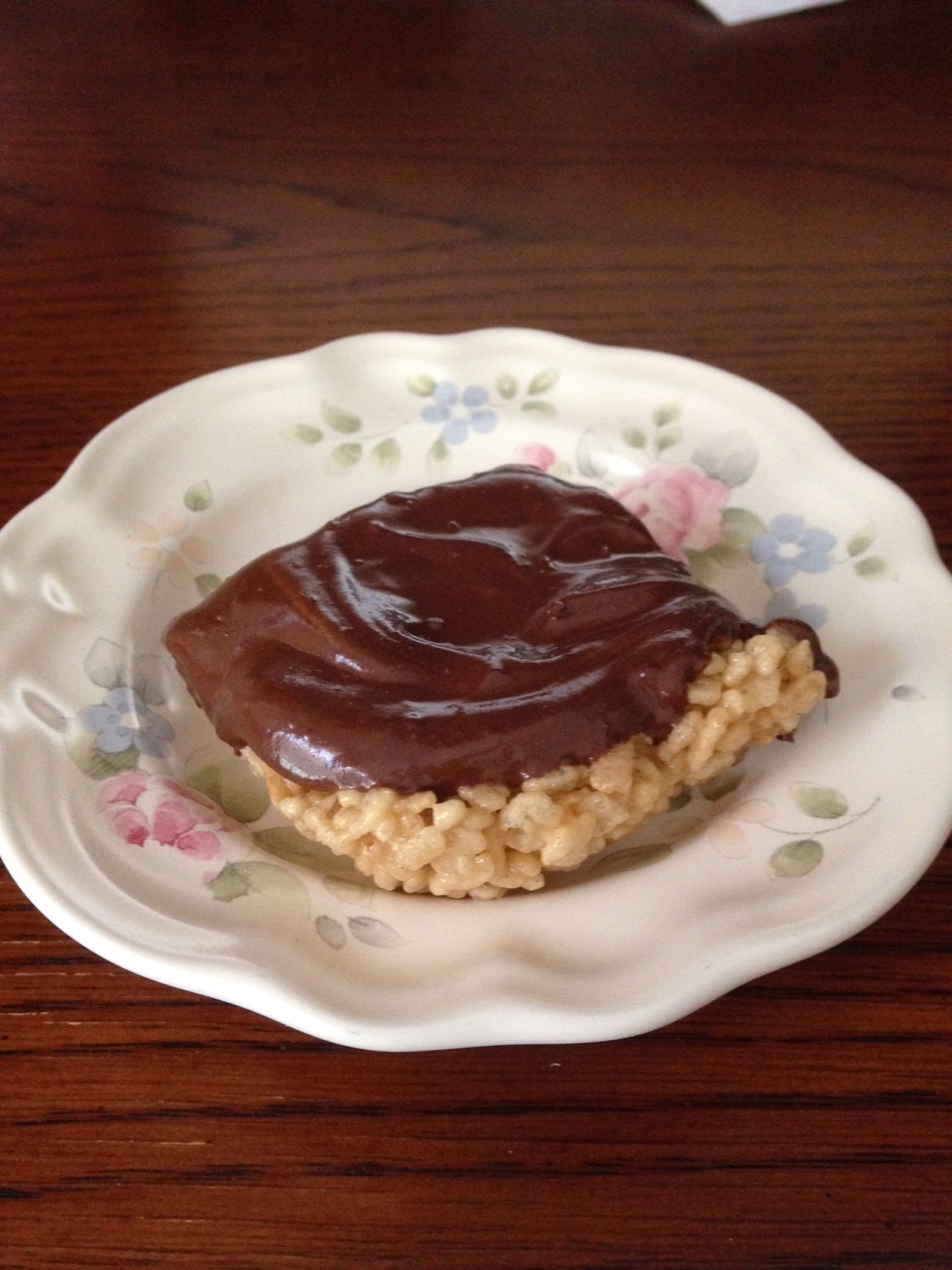
3. Peanut Butter Rice Krispie Treats with melted chocolate chips on top. It hit me today that I hadn’t had these in a while, and they sounded so good – thankfully I thought of them before a trip to the store, so I was able to get the ingredients! On a side note, this is the only thing I use Rice Krispies for – we’re not into cereal much. I wish they’d make a small box just big enough for a pan of these treats.

IMG_1212

I only made a half recipe so as to have not too much temptation on hand. πŸ™‚

IMG_1214

4. A desk chair I can nap in. When I chose this office chair, I specifically chose one that reclined and had a back tall enough to support my head so I could lean back and take a quick power nap sometimes. My sleep patterns have been wacky this week and those naps have been very needed.

5. Our first megawatt of power. My husband had solar panels installed on our house several weeks ago, and our power company adjusts our power bill according to how much we’ve used and how much we’ve generated. This month our power bill was $26 and change! Nice! Of course, the savings for now are going to pay for the system, but once that breaks even, it will be very nice indeed.

We haven’t reached summertime temperatures yet, but it has been warm enough to get hot and sweaty. Thursday was overcast and delightfully cool, especially when a breeze picked up. I know in a couple of weeks we’ll be out of cool days until fall, so I am treasuring them up.

Hope you’ve had a great week as well! Happy Friday!