Friday’s Fave Five

FFF delicate leaves

Welcome to Friday’s Fave Five, hosted by Susanne at Living to Tell the Story, in which we can share five of our favorite things from the last week, a wonderful exercise in looking for and appreciating the good things God blesses us with. Click on the button to learn more, then go to Susanne’s to read others’ faves and link up your own.

This feels like the first real week of fall to me, even though it has been officially fall for a few weeks now. Maybe because the leaves are finally starting to noticeably turn, maybe because I finally got my fall decorations up. Here are some of the high points of the past week:

1. A better knee. I had done something to it last week to cause it to hurt — I don’t know what —  and was loathe to go to the doctor and get sent off for x-rays and such, so I decided just to rest it as much as possible. It’s gradually been getting better to the point that it feels normal more often than it doesn’t, so hopefully it will be completely mended soon. Meanwhile I guess it is the appropriate time of year to walk like a zombie. 🙂

2. Oven meals. I think I list this every fall. There are some things that take an hour or so in the oven that I don’t dare make during the summer because it would make the house too hot and the AC wouldn’t catch up til the next day, so it is fun to get back to those when the weather cools a bit.

3. McAlister’s Deli. My husband indulged my request for a night off from the kitchen and brought a wrap and some soup from McAlister’s for me. I wish they sold their potato soups by the quart! That’s probably my favorite type of soup but I don’t make it from scratch very often.

4. A rainy day, not usually a favorite, but we hadn’t had one in a while, and I was able to take a cozy nap, which made it perfect.

5. A safe road trip as my son and daughter-in-law drove to OK to visit her mom.

Bonus: Books. I could list them every week. 🙂 I have to confess that sometimes I gravitate to games on my iPhone at times I would normally read, and I’ve tried to reverse that this week and get back into a book that I was lagging in. I did get over the hump and get back into it.

Hope you’re having a great week! Feel free to join in with us at Susanne‘s while we count our blessings.

31 Days of Missionary Stories: Spirit of the Rainforest: A Yanomamo Shaman’s Story

I reviewed this book a few years ago, but I felt that I must include it in this series. This is a current missionary story published in 2000.

rainforest.jpgJungle Mom (who now blogs at Livin’ la Rita Loca) is a missionary that our church in SC supported, and she recommended to me the book Spirit of the Rainforest: A Yanomamo Shaman’s Story by Mark Ritchie. If I understand correctly, the Yanomamo territory bordered the Yekwana Indians that the she and her husband worked with, and the they knew many Yanomamo and their ways and some of the people in this book.

This book is not for the faint of heart, however. It is not gratuitous, but it is graphic and very frank in its dealings with demonism, violence, and the treatment of women. It is told through the eyes of “Jungleman,” a powerful shaman. It is interesting to see things through his perspective (told by him to the author, who wrote them down and confirmed the incidents with others).

He tells first of all of the Yanomamo policy of revenge. Any incident calls for revenge from the family or village sinned against, which usually involves a raid on the offending village, clubbings, and capture and group rape of women. The extent of the raid can vary — in some cases two opposing warriors take turns clubbing each other over the head or across the chest. In more serious offenses every male is killed and the remaining women are assaulted multiple times and then carried off to become wives of the raiding village. If a captured woman tries to run away, she is beaten or killed. Children of the raided village are often brutally killed, occasionally captured.

Such raids did not satisfy the revenge, however: it sparked more revenge. Any remaining men or any relatives who lived in other villages were then expected to exact revenge on the raiding village. A war once begun never stopped. In between raids, villages were afraid to go out into their gardens or out to find food, always fearful of an ambush. Sometimes they broke up camp and wandered in the jungle looking for food. Sometimes mighty warriors woke up with nightmares, haunted by the cries of those that they killed. Yet they could never admit this: fierceness was the most valued characteristic in a Yanamamo male.

Gradually white nabas (their word for non-Yanomamo) began to appear in the jungle. They “talked like babies” but sometimes had useful things to trade. The Indians quickly learned, however, through hard trial and error, that all nabas were not the same. Some were interested in trading, some were interested in helping, but some were evil and interested in exploiting (they knew some earned money by taking and selling pictures of them [one even told them to take off their clothes so the pictures he took and sold would be more “authentic”] and stories about them, but there were others whose exploitation was much, much worse). There were a few, however, who said they were followers of the one the Yanomamo regarded as the great enemy spirit. They said the Indians misunderstood Him, that He loved them and had a better way to live. The Yanomamo were naturally suspicious, but they kept interacting with them because of the items they would trade or because of the medical help, and later because of the peace they exhibited. Jungleman and others’ spirits became troubled every time they were near the village where the nabas lived and begged the shamans not to ‘throw them away.”

To me there were several major benefits to this book. One was the fascinating look into Yanomamo culture. One was the immense power of the gospel to miraculously change lives in those who receive it. It was thrilling to read of those who came to believe and how they changed and grew and began to understand the ways in which they had been deceived.

Another major value of this book is the truth that these “primitive” peoples are not living happy lives frolicking in an idyllic Eden. I don’t know if you realize this, but there is a large and growing segment of the population who believes that such people should be left alone to Western influence all together and especially Christianity. As I said in another post months ago, these people deserve as much chance as anyone else has to hear the gospel and have the choice to change their ways.

The following is an interview between “Doesn’t Miss” (their name for the author), Keleewa, the missionary who interpreted, and a Yanomamo called Hairy on pages 180-183:

“The naba wants to know why you want to change the way you live out here in the jungle,” Keleewa said to Hairy after Doesn’tMiss talked.

Hairy was surprised at the question. “Because we’re miserable out here. We are miserable all the time. The people from Honey [predominantly Christian village] came here and made peace with us many seasons ago and their village keeps getting better. We want that for us. If it means throwing spirits away and getting new ones, we will do it. [This is not something said lightly. Many were under the impression that they would be killed if they tried to get rid of their spirits.] But we need someone to teach us these new ways.”

Hairy didn’t have spirits because he was not a shaman. But he followed everything the spirits told his shaman. I knew my spirits would be very irritated if Hairy quit following the spirits. No one who has killed as often and as long as Hairy could ever stop it…

Doesn’t Miss talked with Keleewa for a while. Keleewa paused and thought how to say what the naba said. Then he told Hairy, “He says there are many people in his land that don’t think that he, or any of us, should be here helping you at all. They say that you’re happy here and that we should leave you alone. He wants to know what an experienced killer like you would say to them.”

Hairy grew even more serious. “I say to you, please don’t listen to the people who say that. We need help so bad. We are so miserable here and our misery never stops. Night and day it goes on. Do those people think we don’t suffer when bugs bite us? If they think this is such a happy place out here in the jungle, why aren’t they moving here to enjoy this beautiful life with us?”

Doesn’t-Miss was quiet. Then he got out of his hammock and walked down the trail…When he was too far away to hear, Hairy said to Keleewa, “Is he stupid? Doesn’t he have eyes? Can’t he see these lean-tos we call houses? Can’t he see us roam the jungle every day, searching for food that isn’t here, so we can starve slower? Can’t he see that our village is almost gone, that this move we are making now is our last hope to stay alive?”

Keleewa was slow to answer. He knew Hairy wouldn’t understand what he was about to say. “Most nabas think just like him,” Keleewa told Hairy, and shook his head because he knew he couldn’t explain why.

“Nobody’s that stupid,” Hairy snapped. “They must hate us. They think we’re animals.”

Later Hairy asked Keleewa what they had to do to get a white naba to come to their village and live with them and teach them about Yai Pada (God), offering to clear an airstrip. Kelweewa promised that if they cleared an airstrip someone would come. That day Hairy and his people began clearing the jungle, and Hairy “remembered the wife he had killed. ‘I don’t want to treat women like that any more,’ he thought. ‘I don’t want my children to be killers like me. I want them to follow the spirit of this man of peace. I want us all to be free of our past. I want to sleep again’” (p. 230).

Another time (page 202) an antro (Yanomamo word for the kind of naba who took pictures of them and wrote about them) scolded an Indian named Shortman:

“Don’t you ever speak to me in Spanish! You are a Yanomamo and will always be a Yanomamo. You have no business throwing away your true ways and trying to copy nabas with their clothes, watches, motors, and now even changing to Spanish! Don’t ever speak to me in Spanish again! You want to talk to me? Use Yanomamo.”

“What’s that in your lower lip there?” Shortman asked…

“That’s my wad of tobacco,” the antro answered.

“Where did you learn to chew tobacco that way?” asked Shortman.

“I learned it from your people.”

“You saw us chew tobacco that way and you tried it and you liked it. So you copied us, didn’t you?”

“That’s right,” the antro said, with some pride in his Indian ways.

Shortman shrugged. “If you can copy us,” he paused with a puzzled look, ”then we can copy you.”

Somehow the shamans could “see” when another person had spirits, and they had identified some of the evil nabas as having spirits that the nabas themselves didn’t know about. At one point when Shoefoot, leader of Honey village, came to America with the author, he “identified the signs and symbols of many of the spirits right here in our ‘civilized’ culture. He has no problem understanding the Columbine High School massacre or any other killing spree. The spirits of anger and hatred that own and drive a person are spirits he has known personally. He knows what it means to kill under the influence of something or someone. So when a student asks…”Why can’t you get rid of your spirits without converting to Christianity?’ his answer is simple. ‘I don’t know any other way to get rid of the spirits that are destroying us. And no other shaman does, either’” (p. 251).

(You can see a list of other posts in the 31 Days of Missionary Stories here.)

(This will also be linked to Semicolon‘s Saturday Review of Books.)

31 Days of Missionary Stories: Mary Slessor and the Power of a Woman’s God

When I first started reading missionary biographies as a fairly young Christian, I think I had the impression that they all came from perfect Christian families. After a while I learned that there is no such thing. 🙂 But I also came across Mary Slessor’s biography. Her father was an alcoholic, like mine was, and it it encouraged me that someone with a similar background could go on and serve the Lord wholeheartedly.

SlessorMary Slessor was a girl in Aberdeen, Scotland in the 1800s. She had a godly mother and a drunken father. Her father could be violent, raging, throwing much-needed food into the fireplace, locking her out of the house to spend the night on the streets. Even after his death Mary carried the shame of his drunkenness on her shoulders.

She had been interested in missions for several years, particularly a country in west Africa called Calabar.

The great Scottish missionary David Livingstone was Mary’s hero. She’d read Missionary Travels, hardly stopping to breathe. A second time. A third time. He was a Scot, just like her. He was the second oldest of seven children, just like her. He had been poor, just like her. He had even worked in  textile mill many years, just like her! How many times had she told herself, Then cannot I be a missionary just like him? Yes, to Africa just like Livingstone.

But then how many times had her heart ached when she remembered what a godly father Livingstone sprang from? His father presented him from infancy with a “consistent example of piety” so priestly, Livingstone claimed, that his father could best be depicted only by the father Bobby Burns described poetically in “The Cotter’s Saturday Night.” Unfortunately, Mary remembered every stanza Burns composed about that Bible-living patriarch, including the conclusion: “From scenes like these, old Scotia’s grandeur springs.”

(From Mary Slessor, Queen of Calabar, by Sam Wellman.)

 Livingstone’s death had a profound impact on Mary’s life, convicting her that she had hesitated long enough. She sought much counsel about giving her life as a missionary, wrestled with whether her family could get by without her income, was convinced and encouraged by her mother that the family would be all right, and finally offered herself to the Foreign Mission Board. She didn’t specify that she was interested in Calabar, however, for she wanted to leave that as a final test to make sure she was following God’s leading and not her own. She wasn’t sure if she would be accepted as she had little education and no skill except as a mill worker. Yet the board called her and told her Calabar has asked for more teachers. She was brought to Edinburgh for training and sailed for Africa in 1876. She faced the unknown, jungle animals, jungle diseases, and abhorrent practices with faith and courage.

Soon after landing in Calabar she began to realize the difficulty and seeming impossibility of the work to which she had committed herself. She saw huge, hideous alligators sun ning on the mud banks and swimming in the streams… She saw the barracoons where the captured Negroes were penned until the slave-ships arrived. She found herself in a land where terrified prisoners dipped their hands in boiling oil to test their guilt under some accusation, where wives were strangled or buried alive to go with their dead chief into the spirit-world, where heartless chiefs could order a score of men and women  to be beheaded for a cannibal orgy and sell a hundred more into the horrors of slavery. What could one frail, timid woman do, confronted by such an appalling situation? Overwhelmed and depressed, she knelt and prayed, “Lord, the task is impossible for me but not for Thee. Lead the way and I will follow.” Rising, she said, “Why should I fear? I am on a Royal Mission. I am in the service of the King of kings.”

Mary rescued hundreds of twin babies thrown out into the forest, prevented many wars, stopped the practice of trying to determine guilt by the poison ordeal, healed the sick, and unweariedly told the people about the great God of love whose Son came to earth to die on the cross that poor sinful human beings might have eternal life. The Master she loved and served so ardently crowned her labors by permitting her to establish a number of churches and to see hundreds … [converted].

(From Blazing the Missionary Trail by Eugene Myers.)

 She didn’t go to just one African village. She continually felt called to go deeper into Africa despite warnings of dangers from headhunters and cannibals. A chief warned her, “You are going to a warlike people. You are likely to get killed on the way. Anyhow, they would not listen to what a woman says.” Mary answered, “When you think of the woman’s power, you forget the power of the woman’s God. I shall go on.”

I discovered yesterday a video called “One More River: The Mary Slessor Story” in two parts (here and here, each about a half hour long) that appears to be something of a documentary from Scottish TV about her life. I’ve only watched the first part so far, and there is a great deal of dead time, but it is still pretty interesting. I especially love how it starts out: “If you think all Victorian women were ladies in lavender crinolines swooning at the sight of a mouse, think again.”

(You can see a list of other posts in the 31 Days of Missionary Stories here.)

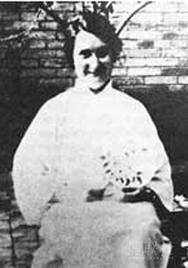
31 Days of Missionary Stories: Gladys Aylward: The Small Woman With Big Faith

AylwardGladys Aylward felt she was called to China as a missionary: yet, as she sat in an office of the China Inland Mission, the principal of the Women’s Training Center told her he felt she could not learn a difficult language like Chinese at her “advanced” age of almost 30. He did tell her there was an elderly couple just returned from China who needed assistance, and she agreed to go help them. Their talk of China continued to fan the flame of interest, and after hearing about many older single women missionaries in China, she decided to try to go to China on her own and be of help to one of them.

She went back to her former employment as a parlor maid to earn money to go. Her new employer had been an adventurer with a library full of books, many of them about China, some of which he had written himself. She was able to feast her soul on these and on study of God’s Word after her work was done. She was especially encouraged by the story of Nehemiah, wanting to go on a mission for God while he was the king’s cupbearer; she saw a parallel to her own situation. By making herself available to other manors to work during her time off, the Lord blessed with providing the finances to go; meanwhile, she had contacted a lady missionary and received word that she wanted her to come.

On October 15, 1932 (81 years ago today) She set off on a harrowing journey to China which included riding a train until it could go no farther due to fighting in Russia, having to walk back to the nearest station alone, spending the night huddled up under her luggage during a Siberian winter, having her passport stolen with the occupation changed from “Missionary” to “Machinist,”  with the help of kind strangers narrowly missing being sent to a work camp against her will. Finally arriving at her destination after several days and various means of travel, she found the lady she was to work with, Jeannie Lawson,  and the building she wanted to make into an inn badly in need of repair and cleaning. When they were finally ready, but with no customers after several days of advertising, Jeannie told Gladys to go out and grab the lead mule of the passing mule train and lead it into the inn, and the rest of the mule pack, with the muleteers, would follow. This Gladys did several times until the muleteers began coming out of their own preference. A Chinese cook, Yang, prepared meals and told rather mixed-up versions of Bible stories until  the muleteers were comfortable enough with Jeannie and Gladys for them to tell Bible stories.

After some months of this work, and many of the muleteers becoming Christians (even some who weren’t Christians passed the stories along to others), Jeannie suffered a severe fall from which she never recovered.

Shortly thereafter the local Mandarin told Gladys that the government had outlawed the long-held practice of foot-binding and asked her to go throughout his district to inform people of the new law and to inspect the women’s feet. After some consideration Gladys agreed to go, but warned him that she would speak of the Lord Jesus Christ to the people. He had no problem with that, and thus the Lord provided an unparalleled and unexpected way to evangelize the area with government escort.

At one time Gladys was officially summoned to a prison: the prisoners were rioting and killing each other, and the soldiers were too afraid to intervene. The warden wanted Gladys to go in and stop the fighting, because she spoke of a God Who was all-powerful and would protect her! Gladys realized the truth of what she proclaimed was on trial, so she agreed to go into the prison. By the grace of God, the prisoners listened to her. She saw that they were near-starving and had nothing to do with their time, and she was able to speak to the warden on their behalf and also to start visiting them with the gospel.

Once Gladys came face to face with a woman on the street trying to sell her ill, malnourished child. She tried to speak to the Mandarin about it, but he refused to interfere and told Gladys not to, either.  But she couldn’t leave the child in her plight, so Gladys “bought” her. That eventually led to her taking in a number of children through various means.

In 1936 Gladys became a Chinese citizen.

In 1938 the Japanese bombed and overtook the city, causing survivors  to flee. At this time the Mandarin became a Christian.  Eventually Gladys took over 100 orphans by foot over  mountains, then waited for miraculous provision of a boat to cross the Yellow River to an orphanage in Sian.

A film of her story was made during her lifetime, entitled The Inn of the Sixth Happiness, starring Ingrid Bergman as herself. Gladys called it “lie upon lie.” It upset her greatly that Hollywood changed details and names: there was a significant meaning to the inn’s real name, The Inn of Eight Happinesses.  Worst of all was the depiction that she had dumped the orphans in Sian to go live “happily ever after” with a Chinese colonel.

She passed away at the age of 67, a shining example of overcoming obstacles by God’s grace.

Sources: Gladys Aylward, Missionary to China by Sam Wellman and Gladys Aylward by Catherine Swift.

(You can see a list of other posts in the 31 Days of Missionary Stories here.)

31 Days of Missionary Stories: Amy Carmichael and Singleness

If you’ll indulge me one more anecdote from the life of Amy Carmichael, the following vignette is excerpted from a chapter entitled “Singleness Is a Gift” from the book On Asking God Why by Elisabeth Elliot.

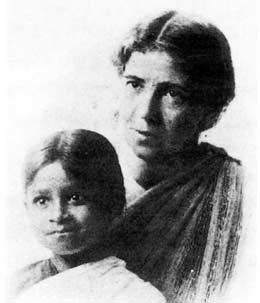
Amy CarmichaelWith all her heart she determined to please him who had chosen her to be his soldier. She was awed by the privilege. She accepted the disciplines.

Loneliness was one of those disciplines. How–the modern young person always wants to know–did she “handle” it? Amy Carmichael would not have had the slightest idea what the questioner was talking about. “Handle” loneliness? Why, it was part of the cost of obedience, of course. Everybody is lonely in some way, the single in one way, the married in another; the missionary in certain obvious ways, the schoolteacher, the mother, the bank teller in others.

Amy had a dear co-worker whom she nicknamed Twin. At a missions conference they found that in the posted dinner lists, Twin and a friend named Mina had been seated side by side.

“Well, I was very glad that dear Mina should have Twin,” Amy wrote to her family, “and I don’t think I grudged her to her one little bit, and yet at the bottom of my heart there was just a touch of disappointment, for I had almost fancied I had somebody of my very own again, and there was a little ache somewhere. I could not rejoice in it. . .I longed, yes longed, to be glad, to be filled with such a wealth of unselfish love that I should be far gladder to see those two together than I should have been to have had Twin to myself. And while I was asking for it, it came. For the very first time I felt a rush, a real joy in it, His joy, a thing one cannot pump up or imitate or force in any way. . .Half-unconsciously, perhaps, I had been saying, ‘Thou and Twin are enough for me’–one so soon clings to the gift instead of only to the Giver.”

Her letter then continued with a stanza from the Frances Ridley Havergal hymn:

Take my love, my Lord, I pour
At Thy feet its treasure-store.
Take myself and I will be
Ever, only, all for thee.

After writing this, Amy felt inclined to tear it out of the letter. It was too personal, too humiliating. But she decided the Lord wanted her to let it stand, to tell its tale of weakness and of God’s strength. She was finding firsthand that missionaries are not apart from the rest of the human race, not purer, nobler, higher.

“Wings are an illusive fallacy,” she wrote. “Some may possess them, but they are not very visible, and as for me, there isn’t the least sign of a feather. Don’t imagine that by crossing the sea and landing on a foreign shore and learning a foreign lingo you ‘burst the bonds of outer sin and hatch yourself a cherubim.’ “

Amy landed in India in 1897 and spent the first few years in itinerant evangelism. She began to uncover a secret traffic in little girls who were being sold or given for temple prostitution. She prayed that God would enable her find a way to rescue some of them, even though not one had ever been known to escape.

Several years later, God began to answer that prayer…and in a few years Amy Carmichael was Amma (“Mother”) to a rapidly growing Indian family that, by the late 1940s, numbered about 900. In a specially literal way the words of Jesus seemed to have been fulfilled: “Everyone who has left houses or brothers or sisters or father or mother or children or fields for my sake will receive a hundred times as much and will inherit eternal life” (Matthew 19:29).

In answer to a question from one of her children who years later had become a close fellow worker, Amy described a transaction in a cave. She had gone there to spend the day with God and face her feelings of fear about the future. Things were all right at the moment, but could she endure years of being alone?

The Devil painted pictures of loneliness that were vivid to her years later. She turned to the Lord in desperation. “What can I do, Lord? How can I go on to the end?”

His answer: ”None of them that trust in me shall be desolate” (from Psalms 34:22 KJV). So she did not “handle” loneliness–she handed it to her Lord and trusted his Word.

“There is a secret discipline appointed for every man and woman whose life is lived for others,” she wrote. “No one escapes that discipline, nor would wish to escape it; nor can any shelter another from it.”

Her commitment to obedience was unconditional. Finding that singleness was the condition her Master had appointed for her, she received it with both hands, willing to renounce all rights for his sake and, although she could not have imagined it at the time, for the sake of the children he would give her–a job she could not possibly have done if she had had a family of her own.

Many whose houses, for one reason or another, seem empty, and the lessons of solitude hard to learn, have found strength and comfort in the following Amy Carmichael poem:

O Prince of Glory, who dost bring
Thy sons to glory through Thy Cross,
Let me not shrink from suffering,
Reproach or loss .…

If Thy dear Home be fuller, Lord,
For that a little emptier
My house on earth, what rich reward
That guerdon* were.

 *recompense; something earned or gained

 (You can see a list of other posts in the 31 Days of Missionary Stories here.)

Other posts about Amy Carmichael:

Isn’t “No” an Answer?
What We Wanted All the Time.
Missionaries’ Letters to Mothers.
It’s the Little Things.
The Melting Point.
Thy Calvary Stills All Our Questions
From the worlding’s hollow gladness.
Make Me Thy Fuel.
Shadow and Coolness.
With All Our Feebleness.
Amy Learns to Die to Self.
A Book of Amy Carmichael Poems.


31 Days of Missionary Stories: Amy Carmichael Learns to Die to Self

I mentioned Amy Carmichael yesterday: she was one of the first missionaries I ever read  about, and her life has had a tremendous impact on me as well as on most who read about her. She would have been appalled at the thought of any attention directed toward her, but a look at her life is reveals what it is to walk closely in love and obedience to God. She was a missionary from Ireland who worked in India from 1895 to 1951 without a furlough.

One of the lessons from her life that has stayed with me over the years (in my mind, at least: it is still far from being worked out in practice as often as it should be) comes from her earliest days in India. In Amy Carmichael of Dohnavur, author Frank L. Houghton records that Amy wrote that one of the group of missionaries she first worked with was

unfair and curiously dominating in certain ways and words. One day I felt the “I” in me rising hotly, and quite clearly — so clearly that I could show you the place on the floor of the room where I was standing when I heard it — the word came, “See in it a chance to die.” To this day that word is life and release to me, and it has been to many others. See in this which seems to stir up all you most wish were not stirred up — see in it a chance to die to self in every form. Accept it as just that – a chance to die.

“And [Jesus] said to them all, If any man will come after me, let him deny himself, and take up his cross daily, and follow me” (Luke 9:23). Often we think of dying to self in the big, martyr-like ways. Yet it is in those everyday situations where, as Amy aptly put it, the “I” in us “rises hotly” that we need to deny self.

(You can see a list of other posts in the 31 Days of Missionary Stories here.)

31 Days of Missionary Stories: With All Our Feebleness

Hebrews 11 is sometimes called the hall of fame of faith or the Christian Hall of Fame, telling of the victories and triumphs of various people in the Bible. But verse 36 has a rather startling turn: “and others…” were tortured, tried, stoned, made to wander in deserts. That doesn’t sound very victorious. But they all “obtained a good report through faith,” though they  had “received not the promise” yet (verse 39).

amy-carmichael-2Probably many Christians are more familiar with the name of Amy Carmichael than of some of the other missionaries I’ve mentioned in this series. Most know that she was missionary to India. She began a rather robust itinerant evangelistic ministry with a group of other women, but when God began bringing children her way whose families were going to sell them to temples for illicit purposes, she gradually became convinced that He would have her care for these children, though it meant a drastic change in her ministry and lifestyle. Over time a whole compound known as Dohnavur was developed.

What some may not know is that she was an invalid for the last 20 years or so of her life. She remained in India, still in charge of Dohnavur, still encouraging, advising, praying, and writing, but she was in much pain and had limited mobility those years. In Amy Carmichael of Dohnavur by Frank Houghton, he includes this poem before telling of this part of her life:

Two glad services are ours,
Both the Master loves to bless.
First we serve with all our powers–
Then with all our feebleness.

Nothing else the soul uplifts,
Save to serve Him night and day,
Serve Him when He gives His gifts–
Serve Him when He takes away.

~ C. A. Fox

Elisabeth Elliot said of limitations, “For it is with the equipment that I have been given that I am to glorify God. It is this job, not that one, that He gave me.” The limitations that we think are hindering our ministry are often the very thing God uses to shape our ministry for Him.

One day Amy received a shipment of tracts for the ill. As she read them, they just did not do anything for her. As she pondered that, she realized it was because they were written from well people telling sick people how they ought to feel. Over many years she had written notes of encouragement to various ones in the Dohnavur Hospital (named, in the descriptive Indian way, Place of Heavenly Healing), and some of these were compiled in a book titled Rose From Brier. They are rich in their spiritual encouragement and insight, partly precisely because they were written by one who had shared in the fellowship of sufferings.

In another of Amy’s books, she wrote the following:

This prayer was written for the ill and for the very tired. It is so easy to fail when not feeling fit. As I thought of them, I also remembered those who, thank God, are not ill and yet can be hard-pressed. Sometimes in the midst of the rush of things it seems impossible always to be peaceful, always to be inwardly sweet. Is that not so? Yet that and nothing less is our high calling. So the prayer is really for us all.

Before the winds that blow do cease,
Teach me to dwell within Thy calm;
Before the pain has passed in peace,
Give me, my God, to sing a psalm,
Let me not lose the chance to prove
The fulness of enabling love,
O Love of God, do this for me;
Maintain a constant victory.

Before I leave the desert land
For meadows of immortal flowers,
Lead me where streams at Thy command
Flow by the borders of the hours,
That when the thirsty come, I may
Show them the fountains in the way.
O Love of God, do this for me;
Maintain a constant victory.

Blessed be God, even the Father of our Lord Jesus Christ, the Father of mercies, and the God of all comfort;Who comforteth us in all our tribulation, that we may be able to comfort them which are in any trouble, by the comfort wherewith we ourselves are comforted of God.
For as the sufferings of Christ abound in us, so our consolation also aboundeth by Christ.
II Corinthian 1:3-5

God hath caused me to be fruitful in the land of my affliction.
Genesis 41:52b

(You can see a list of other posts in the 31 Days of Missionary Stories here.)

Laudable Linkage

Here are a few noteworthy reads from the last week or two:

20 Tips for Personal devotions in the Digital Age, HT to Challies. I don’t agree entirely with #5 about not sharing what you’ve read on social media. Sometimes that’s a blessing to read, but I agree you shouldn’t have devotions with that in mind.

Do Not Depart has a series this month on Nameless Women in the Gospels. I especially enjoyed this one from Lisa: Gifts from a personal God.

Evangelism in the Workplace, especially as the culture becomes more hostile to Christianity, HT to Challies. A quote from it I especially liked: “While the Lord used Hunter to pursue me, I never felt like a project, just a friend.”

Jim Elliot’s Brother Bert: The Hero You Don’t Know, HT to Ann. Neat comparison of his being an everyday faithful star as opposed to Jim’s being a meteor. Neither is better or worse and God has places and purposes for both, and we can learn from and be inspired by both, but probably most Christians are more like Bert than Jim.

Flawed Heroes and Virtuous Villains. Even the best of men have flaws.

How the Christian Orphan Care Movement May Be Enabling Child Abandonment and alleviate both have some good thoughts about orphan care that may be more harmful than helpful.

National No Bra Day and Breast Cancer Awareness Month — OR — Please Put That Pink Can of Soup Down & Put Your Bra Back On. How breast cancer survivors really feel about some of the silly breast cancer “awareness” campaigns. (Warning: a little more explicit than what I usually post, but she makes excellent points.)

Julia is offering readers a cute free Thanksgiving Subway Art Printable.

And, though the government shutdown really is not funny – I know people personally who have been laid off or furloughed until the government gets its act together – I have to admit this did make me smile:

558376_314298748708294_1392577169_n

Hopefully something will work soon!

Happy Saturday!

31 Days of Missionary Stories: How to minister to a culture that values treachery?

peace childI first encountered Peace Child by Don Richardson several years ago in the Reader’s Digest Book Section. I cut it out and kept it, and some years later in college I also saw a film based on the book. I bought a new copy of the book after learning that these events took place in Indonesia, “next door” to where a missionary worked whom we knew and supported.This missionary knew Don and some of the people he ministered to.

In the early 1950s, many tribes in the jungles of Indonesia were totally unevangelized and virtually untouched by the modern world. Though “primitive,” they were not at all unintelligent: they had developed many skills for living in the jungle and had many legends and elaborate rituals ripe with meaning that had developed over the years. The Sawi, whom Don Richardson came to work with, were headhunters and cannibals, as were many of the other tribes. The Lord opened the doors for these people to accept the missionaries through their thinking at first that white people (whom they called Tuan) weren’t quite human, though they knew they were different from the spirits, through rumor that the Tuan could “shoot fire” (with guns), and through gifts the missionaries brought of such things as axes, which could fell a tree in four strokes, whereas the hand-made stone axes required about 40 strokes.

Three communities or villages settled around the new Tuan. Don spent hours listening to them, learning their language and their customs, and trying to tell them of God’s truth about creation, the entrance of sin, the promise of Deliverer, and the life of Christ. But the Sawi weren’t used to listening to tales about other cultures and grew bored…until Don’s narrative got to Judas. They listened intently to the story of Judas’s close relationship with Christ and his betrayal. They whistled with admiration. In their culture treachery and deception were virtues, the admirable stuff of legends. They valued not just cold murder, but the “fattening with friendship” of an unsuspecting victim, then delighted in telling about the look of astonishment on his face when he realized they were about to kill and eat him. They thought Judas was the hero of the story. Don was astonished and chilled and tried to explain that the betrayal was evil, that Jesus was the Son of God. But he couldn’t get through. Don and his wife Carol knew that God had some way to reach this culture and “set [themselves] to hope for some revelation.”

The next day fighting broke out between the different villages. That day and in the days to come, Don urged peace. Sawi villages usually kept some distance from each other, and Don realized that by having three villages come together to settle near him, the villagers were constantly being provoked to battle. Finally he felt that he should leave and settle somewhere else so that the Sawi would not end up destroying themselves. The Sawi protested they did not want Don to leave. Discussions began and leaders from both factions came to Don to assure him they would make peace.

The next day, the Sawi groups solemnly gathered. Don witnessed, to his amazement, a man from each of the warring groups bring one of his own children, with the mothers weeping, and exchange the children. Those in one group who would accept the child as a basis for peace were called to come and lay hands upon him, and the process was repeated in the other group. Then each child was taken to his new adoptive home. In a culture of violence and treachery, “at some point the Sawi had found a way to prove sincerity and establish peace…If a man would actually give his own son to his enemies, that man could be trusted.”

Don was horrified that his call for peace had caused this to happen, but soon began to see the parallels between the Sawi “peace child” and God’s sacrifice of His own Son. He began to tell them that Jesus was God’s own Peace Child to all men. Judas lost his status as hero because harming a peace child was one of the worst things someone could do. They began to see the inadequacy of their “best,” because peace in their culture only held as long as the peace child lived. When he died, old animosities could revive. But because Jesus rose again and was eternal, the peace He gave could never die.

It took many months for understanding and conviction to sink in, and even then they were afraid of angering the demons by departing from tradition. But when God enabled Don and Carol to revive a Sawi tribesman who was near death, the Sawi took this “as proof that the tuan’s God was powerful” and many began to believe.

Eventually more than half of the Sawi became believers, their language was reduced to writing, they were taught to read, the New Testament was translated, and some of the Sawi became teachers to their own people. Praise the Lord!!

As I have written before, some will criticize any attempt of other cultures to contact or influence primitive tribes. But, really, just as in the case of the Waodani (previously known as Aucas), if no one had stepped in, the Sawi would most likely have eventually ceased to exist, because each treacherous act of one group against another would set off a series of revenge battles with many more being killed. The Richardsons were careful not to try to impose a Western church upon the Sawi culture but to bring the gospel into theirs.

I would warn that the first several pages of the book describes a pretty ghastly deception and murder of one man to show by example what the Sawi culture was like. It is not gratuitous but it is graphic. I think this book would be perfectly suited for reading as a family or a class as well as for personal reading, but parents and teachers might want to preview that chapter to determine its appropriateness for the age level and personalities of their children. But I think anyone who reads it will get a glimpse into a missionary’s journey through adjustment to a different culture, perplexity in determining how best to share the gospel, the darkness of a culture without the Lord, and the amazing way God opens hearts and understanding to His truth. Stories like this are a part of the glorious fulfillment of the day John prophesied in Revelation 7:9-10: “After this I beheld, and, lo, a great multitude, which no man could number, of all nations, and kindreds, and people, and tongues, stood before the throne, and before the Lamb, clothed with white robes, and palms in their hands; And cried with a loud voice, saying, Salvation to our God which sitteth upon the throne, and unto the Lamb.”

A few years ago I searched for and found a copy of the film I had seen back in college, Peace Child, on DVD. I enjoyed watching it again. I am amazed at how much of the story they packed into a 30-minute film. I can’t express what it does to my heart to see former cannibals at the end of the film singing gospel songs. Then last year I came across this neat video of Don and his sons going back to visit the Sawi 50 years after that first visit.

(You can see a list of other posts in the 31 Days of Missionary Stories here.)

Friday’s Fave Five

FFF delicate leaves

Welcome to Friday’s Fave Five, hosted by Susanne at Living to Tell the Story, in which we can share five of our favorite things from the last week, a wonderful exercise in looking for and appreciating the good things God blesses us with. Click on the button to learn more, then go to Susanne’s to read others’ faves and link up your own.

That song “It’s the most wonderful time of the year” has been playing in my head – not because I am seeing Christmas decorations up (already!) But because it’s beginning to look and feel more like fall. Here are some favorites from this week:

1. Cool weather. It still gets pretty warm some afternoons, but it’s just lovely mornings and evenings.

2. Getting a few fall decorations up. I have to send my youngest up to the attic for the rest of them today or tomorrow.

3. A family outing. My husband, son, daughter-in-law, and I went to a car show this weekend. That’s not my thing generally, but it was fun to go together, and some of the older cars brought back some fun memories. Plus it was during a time when my mother-in-law’s  caregiver was here, so we didn’t have to make special arrangements.

4. A slotted spoon the right size in my pattern. That may not sound like a big deal, but it is something I have been longing for for years, even one that wasn’t in my pattern. All the ones I could find were 10″ or longer, and I wanted a simple smaller one to use with a small bowl of vegetables with dinner. This one is even a smidgen bigger than I wanted, but it is closer than anything else I have found. The site calls it a pierced spoon rather than a slotted one – maybe that’s why I couldn’t find it before. I was on the site to order some tea spoons (I don’t know where mine all went…) and saw the pierced one as well.

5. Caregiver situation. The caregiver we have with my m-i-l weekdays went on vacation this week, and we were a little nervous about having someone brand new while she was gone – it always takes a while to show someone new the ropes and for everyone to get used to each other, and some are better than others. But the girl whom we’ve had the last three weekends just lost her weekday job and was available to work all week. I’m so sorry she lost her other job, but I’m so glad she was the one to take over this week, and I’m glad we were able to help provide for at least another week of employment. It was a huge relief when we found out last weekend she was the one who would be here this week.

I’ve also enjoyed working on 31 Days of Missionary Stories: I’ve read some of these biographies many times, and they are so familiar to me now, but they still bless me. I invite you to enjoy them, too!