Reading Classics Together: The Disciplines of Grace

I’m joining in the “Reading Classics Together” at Challies‘ place for the first time. I’ve always liked the idea: a group of people reads a chapter of a book a week and discusses it. But this is the first time the title they are discussing appealed enough to me for me to jump in.

The Disciplines of Grace by Jerry Bridges attracted me for a couple of reasons. I’ve heard Bridges favorably mentioned and recommended for years but just have never gotten to one of his books. And the title of this one seemed to explore what I was pondering in a post a while back, Of grace, law, commandments, rules, and effort (who knew someone had already written a book about it? 🙂 ) As I said there, people often seem to go too far one way or the other, either emphasizing grace to the point of having a laid-back attitude toward sin and obedience and even accusing those who emphasize obedience of legalism (I’ve seen this so many times in online discussions), or emphasizing obedience so much that they get caught up in their own performance and think they have to earn favor with God.

The first chapter, “How Good Is Good Enough?” deals with those two sides and illustrates them by contrasting two days, a good one where we’ve done pretty well by our standards, and a bad one where we failed at the starting block and can’t seem to get back on track all day. Bridges emphasizes that we can never earn God’s grace — by its very nature grace is undeserved, and though God wants us to obey (by His grace), even if we do, it’s only by His grace. He also emphasizes that depending on God’s grace every day doesn’t negate the need for vigorous personal effort in the pursuit of holiness.

Here are just a few quotes from the chapter that stood out to me:

The pursuit of holiness requires sustained and vigorous effort. It allows for no indolence, no lethargy, no halfhearted commitment, and no laissez faire attitude toward even the smallest sins. In short, it demands the highest priority in the life of a Christian, because to be holy is to be like Christ — God’s goal for every Christian (p. 12).

When we pray to God for His blessing, He does not examine our performance to see if we are worthy. Rather, He looks to see if we are trusting in the merit of His Son as our only hope for securing His blessing (p. 19).

It is only the joy of hearing the gospel and being reminded that our sins are forgiven in Christ that will keep the demands of discipleship from becoming drudgery. It is only gratitude and love to God that comes from knowing that He no longer counts our sins against us (Romans 4:8) that provides the proper motive for responding to the claims of discipleship (p. 21).

And my favorite:

Your worst days are never so bad that you are beyond the reach of God’s grace. And your best days are never so good that you are beyond the need of God’s grace (p, 19).

More discussion on this chapter is here.

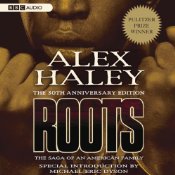
Book Review: Roots: The Saga of an American Family

I first became vaguely aware of the mini-series of Roots when it came on TV back in 1977. I didn’t watch it then. According to Wikipedia it came on in January of that year, so I was probably back in college by the time it aired, where we did not have TVs nor the time to invest in a mini-series. I knew it made a sensation, but I was never interested in pursuing it. Videos of commercial films and home video players were not quite so prevalent then. And the whole subject of slavery is awful and cruel and a blight on our national history, and I had no desire to spend several hours watching a film about it.

Some years later, our pastor happened to mention a scene from Uncle Tom’s Cabin in a message, and commented, “Uncle Tom is the kind of Christian you always wanted to be.” I had not read it for the same reasons I hadn’t watched Roots, but I hadn’t known it had a Christian perspective to it. Curiosity piqued, I picked it up one day, and after reading it agreed very much with my pastor’s assessment. Though some scenes were horrible, the way Uncle Tom met them was inspiring and admirable.

Fast forward a few years later: I was watching some black comedy from the 80s, and I heard someone derisively called an “Uncle Tom.” Derisively, I thought? They don’t like and admire him? Didn’t that book lay the groundwork for the Civil War? Didn’t it lend a voice to back people when they were not allowed to have one? Why wouldn’t anyone like Tom?

I didn’t know. But just a few weeks ago, as I was scrolling through the classics listing at Audible.com looking for a new book to listen to, I came across Roots. It wasn’t on my radar at all, but in October I’m hosting the reading of Uncle Tom’s Cabin at Carrie’s book club, and I began to think: “Kunta Kinte from Roots is held in high regard and Uncle Tom is not, at least from what little I have heard. I wonder why.” So I decided to listen to the book and find out. I’ll come back to that thought a little later.

The book opens with Kunta’s birth in the small village of Juffure in the Gambia in the 1700s. The description of family and village life as he grows up is fascinating. Everyone has a responsibility: the youngest boys greet visitors passing the traveler’s tree and invite them in; boys a little older herd goats;, after “manhood training” they go on to other responsibilities, until they’ve established a home, built up their flock of goats and land, and desire to marry. The religion is primarily Islamic but some superstition is mixed in. At first it seemed kind of idyllic, but gradually the problems and dangers of life crowded in (drought, near-starvation before harvest, people disappearing, captured by slavers.) And some of the customs themselves seemed cruel. Men were not to show emotion, and when a boy excitedly runs to greet his father during manhood training, he is beaten. Children and wives could be beaten for many reasons. Women were even lower in social standing than teen-age boys. So it wasn’t perfect, but it was home, and there was much admirable about it outside of those things.

Knowing that Kunta was eventually going to be captured, every time he went off by himself I was afraid for him, and one of the saddest parts of the book is when he is actually captured by slavers. He endures a grueling and horrid few months in the hold of a ship with scores of others, chained together, eating poor food, being beaten at a whim, having to sit in their own filth with festering wounds, being at the mercy of disease that spreads rapidly in the close conditions.

When he is sold to a Virginia plantation owner, he makes several attempts to run away, but is captured and cruelly treated each time. The last time was especially horrid, and he is taken, bleeding and broken, to a doctor’s home, where the doctor and his maid nurse him back to health. The doctor eventually buys him from his first owner, who happens to be the doctor’s brother. The doctor is not what I would call a kind man, but life on his place is a heap better than the first place Kunta had been.

But Kunta holds himself aloof from the other slaves. He comes across as proud, and indeed he does look down on them because they don’t do things in the “superior” way he is accustomed to, but especially because they seem to have forgotten their heritage. But he can no longer run, and eventually he marries and has a child.

The rest of the book traces the next couple of generations and what happens to them, each of them passing down the story of their ancestor, Kunta.

The book is aptly named for several reasons: Kunta’s trying to hang on to his own roots, his ancestors passing down his story, the other blacks having forgotten theirs, and the setting of new roots down in this country.

One caveat: the book is very….frank about Kunta’s awareness of his budding sexuality as he grows up, and in its description of a couple of rapes and of one master’s leeriness. But I didn’t think any of it was meant to be sensationalized or titillating. It was just matter-of-fact.

Overall the book was wonderfully told, though heartbreaking in places.

The book was inspired by Alex Haley’s grandmother telling stories of her ancestors. He began to research and believed Kunta was his ancestor. That research is disputed now, but Haley defended it.

A shadow is cast over the book with the accusation of plagiarism. Haley first denied it, then settled in court and released a statement that he did use material from Harold Courlander’s book, The African.

I must say that Avery Brooks’ rich timbre greatly enhanced the audiobook. During the African section of the book, I almost felt like I was sitting on a log at the evening fires listening to a master storyteller passing along the oral traditions and history of the village’s forefathers, and then when Kunta is taken to Virginia, Brooks ably displays an amazing variety of Southern accents.

I’ve watched the first hour or so of the mini-series on YouTube. I definitely prefer the book so far. But I do hope to see it all at some point.

Back to the question: why does Kunta Kinte seem to be held in high esteem and Uncle Tom does not? I’ll be better able to think about this after I refresh my memory by rereading Uncle Tom’s Cabin in a few months, but I think it has a lot to do with the fact that Kunta never did fully settle in to life here, and he continued to have a hatred of white people (understandably). Uncle Tom, by contrast, was a Christian and as such was governed by admonitions to love his enemies and overcome evil with good. That looks like “kowtowing” to those who don’t understand, but the meekness of Uncle Tom is the same meekness Christ showed, not the meekness of a sycophant or of the conquered. There is a difference.

Interestingly, Kunta’s grandson married a Christian girl, and late in the book the story of Joseph in the Bible is a comfort to her and to others when she shares it.

(This review will also be linked to Semicolon‘s Saturday Review of Books.)

My sixth blog anniversary…..

..flew by without me noticing it all. I can’t believe it has been six years since my first blog post on July 27, 2006.

In that time I’ve gone from “40-something” to “50-something,” one son has gotten married, two have left home, the last has graduated from high school and will start college in a few weeks, my mother passed away, my mother-in-law came to live near us, we’ve changed states…..it’s been a busy six years, full of changes, yet “through every change He faithful still remains.”

Blogging has been an outlet, a growing and stretching experience, and a lot of fun. I’ve been blessed to get to know many dear friends along the way, and I miss many who are no longer blogging.

I often like to do a little something special for my readers on my blogiversary, this year I’ve decided to give away a copy of the book I reviewed yesterday, Not By Chance: Learning to Trust a Sovereign God by Layton Talbert. I believe it will be a faith-strengthening blessing to anyone who reads it. I may tuck in an extra little something if I can come up with an idea. 🙂 To enter the drawing for the book, just leave a comment below and let me know how long you’ve been reading here and how you found me, if you can remember. The drawing is open to everyone: I don’t think it’s too very expensive to ship a book out of the country. I’ll draw a name using random.org a week from today.

Thank you for journeying along with me! Your comments have been encouraging, enlightening, and thought-provoking, and you’ve made blogging immensely more enjoyable.

Book Review: Not By Chance: Learning to Trust a Sovereign God

As I mentioned when I reviewed Beyond Suffering: Discovering the Message of Job by Layton Talbert, my husband and I have known Dr. Talbert for years, back before he was a PhD., before he was married….when he still had hair. 🙂 He was one of the adult Sunday School teachers at the church we attended when we were first married, and sitting under his teaching plus reading his columns in Frontline magazine, have caused me to trust his treatment of Scripture. But that trust did not come just from knowing him, but rather because of attitudes such as this:

The Holy Spirit is not capricious or careless in His use of words. It is incumbent upon us, therefore, to handle the text of Scripture attentively and accurately. If we are to form a correct understanding of the facts of the story (and, consequently, to arrive at sound theological conclusions), it is vital that we carefully observe the details — and confine our conclusions to the information explicitly communicated by those details (p. 87).

And:

We are not at liberty to draw inferences that contradict other explicit statements of Scripture. And we must be tentative about defending apparently logical inferences that carry us beyond explicit statements of Scripture (p. 252).

Though he would not claim infallibility, nor would I claim it for him, Dr. Talbert’s detailed study and respect for the Word of God and carefulness and balance in teaching it makes his books trustworthy.
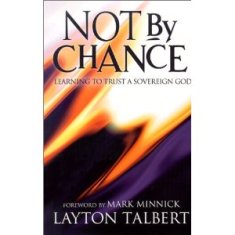
I first picked up Not By Chance: Learning to Trust a Sovereign God years ago mainly because it was his with the thought, “Yes, I should read that some time.” I believed in God’s sovereignty and providence and was often comforted by it, so I wasn’t quick to plunge into a book about it, even as much as I respected its author. But like I suspect is the case for many of us, it’s when something bad or seemingly incongruous happens to shake us up that we begin to wonder about God’s providence, not to question it per se, but to wonder how this or that fits into it.

Dr. Talbert begins by discussing what providence means and thoroughly examining Scripture concerning God’s providence over man, creation, weather, opportunities…and multitudes of other things. By the end there is no escaping the fact that God is in control. And while that’s a comfort on one hand, it’s a conundrum on the other: what about the bad things?

Dr. Talbert covers that well, too. Notice I didn’t say he explains it. There are some things about providence that we can’t understand or fully explain, just like we don’t thoroughly understand the Trinity, or the fact that Jesus is both fully God and fully man at the same time, and other mysteries. But he does shed as much light on it from Scripture as he can, and it does help. For instance, in dealing with a mistaken logical inference, he says:

We often assume that all good things come from God and all “bad” things come from Satan. That is a false and unbiblical assumption that gives Satan far too much credit and attributes to him far more power than he actually possesses. Contrary to popular misconception, Satan is not God’s evil counterpart, but Michael’s. Satan, like Michael, is “only” an angel; so he is an evil angel, not an evil God. Jehovah Himself claims that He is the only God and the ultimate ruler over all our circumstances, both the “good” and the “bad” (p. 12).

And here:

God guides and governs all events, including the free acts of men and their external circumstances, and directs all things to their appointed ends for His glory.

Notice that this definition does not say that God initiates or causes all events. If we are to maintain Biblical precision in our understanding and application of Scriptural truth, the terms we choose to state it are vital (p. 62).

And from a study of the life of Joseph:

God also providentially superintends and often uses the unfairnesses of life to accomplish His purposes in and for us and those around us (p. 66).

This is something many of us wrestle over:

Part of the mystery of providence resides in the fact that God rules and reigns over all things according to His will and pleasure (Ephesians 1:11), yet man is still fully responsible and accountable for his choices and actions. In other words, God exercises His providence and accomplishes His will through the free and voluntary choices and attitudes of men and women. Were this fact limited to God’s persuasive working in believers, that would be amazing enough. But it is equally true of the wicked. God never prompts evil men to sin, yet even their rebellion against Him and their hostility against His people is providentially governed and employed by God. (The clearest example of this…[is] found in the events surrounding the Crucifixion) (p. 86).

Sometimes pondering providence can lead us to think that it doesn’t matter what we do since God is in control anyway. But Dr. Talbert reminds us that God has assigned certain duties to us in Scripture and providentially works through them.

The providence of God is never intended to lull us into a lackadaisical attitude of fatalism, as if our actions don’t really matter because God rules and overrules however He wants anyway. It is revealed to maintain a glow of energizing trust that, despite all appearances to the contrary, God is governing for His glory and for my good — a trust that inspires me to stay faithful, obedient, loyal and devoted to Him, and confident in Him…God’s providence, then, encompasses and incorporates the faithfulness and obedience of His children (p. 70).

There are chapters on God’s preserving providence, governing providence, the mystery of providence, the means of providence, silent providence, the problems of providence, providence and prayer (why pray when God is in control? this is an excellent chapter) and case studies from Biblical characters illustrating the truths being taught. Plus there are chapters on God’s providence displayed in the incarnation and passion of Christ and the church. There is a wonderful section in the study of Joseph about why God sometimes allows delays and what He accomplishes through them. There are several appendices, one being the two sides salvation: God’s determination and man’s responsibility.

I marked over 60 quotes that especially stood out to me, so there’s no way I could share all of them here. But here are just a few more:

When we are willing to submit to and practice only what immediately makes sense to us, and ignore what doesn’t (even when it is clearly commanded), we have substituted ourselves — our finite mind — as the sovereign (p. 215).

[God] is the Maestro of providential orchestration, of split-second timing, of perfect point and counterpoint (p. 249).

We dare not construct a system of theology that helps the Holy Spirit by refining or redefining the words He selected or by interposing words He chose to omit so as to tweak out of it, ever so gently, a slightly modified meaning that better fits the system (p. 259)

One of the absolute best statements I’ve ever heard as to why God’s providence allows for hard or painful things was quoted from Steve Estes, in When God Weeps with Joni Eareckson Tada:

“God permits what He hates to achieve what He loves.”

In short (although I guess it is too late to say that, huh? 🙂 ) I do very highly recommend this book.

(This review will also be linked to Semicolon‘s Saturday Review of Books.)

Laudable Linkage

Here are a few noteworthy reads from the last week:

Truth, Grace, and My Father’s Conversion at age 84 by Randy Alcorn. Moving story and a reminder not to water down the truth.

Free to Live. What “living free” does and does not look like. Dr. Olson was my class chaplain four years in college.

To My Gay Angry Friend written by a former homosexual who became a believer in Christ and turned from the lifestyle.

Missionary Wives Furlough Q&A, HT to Kim. Missionary wives answers questions about what has helped and hurt while on furlough. Excellent reading if your church supports missionaries!

Spoiler Alert: What God Is Teaching Me Through the Olympics. It’s hard not to hear or see headlines about the Olympics when you’re trying to wait to see the broadcasts. Here’s what one woman learned as a result of knowing ahead of time what would happen.

Bully Is As Bully Does. One gay man’s perspective on the Chick-Fil-A controversy.

Two Persistent Lies About Chick-Fil-A in the Press.

Why I Read: An Explanation.

Janette Oke Canadian West #1 book When Calls The Heart free for Kindle apps for a limited time. Janette Oke started my love for Christian fiction.

Seen on Facebook:

A needed reminder when I want to stay safely in harbor.

Have a great weekend!

Friday’s Fave Five

Welcome to Friday’s Fave Five, hosted by Susanne at Living to Tell the Story, in which we can share five of our favorite things from the last week, a wonderful exercise in looking for and appreciating the good things God blesses us with. Click on the button to learn more, then go to Susanne’s to read others’ faves and link up your own.

It’s been a very full week. Here are a few highlights of the week:

1. The Olympics!

2. Jason’s birthday party. We’d had a family get-together earlier in the month, but he wanted to have a party inviting all his and Mittu’s friends from church and work. Mittu planned it, but they had it here because we had a little more space. It was fun working with Mittu to get ready for it, meeting Jason’s friends from work that I didn’t know, and learning a new party game.

3. Mini trifles. Mittu had me put these together as one of the party foods, and they were soooo good! And very nice for a get-together. It was just a piece of brownie in a small plastic cup, a dollop of vanilla pudding, another piece of brownie, whipped topping, and chocolate drizzle.  I thought I got a closer picture of them, but the only one I got was this one: they’re on the right.

4. Winning a free lunch…that I didn’t even know I was entering for! I “liked” a local restaurant on Facebook, then later in the day a friend alerted me that I had been their 1,000th “like” and therefore entitled to a free lunch there. Very nice!

5. A new pictorial church directory. They had published one just before we came almost two years ago, and many new people have joined since then. It’s nice to get updated addresses, phone numbers, and e-mails, plus to connect names and faces with the people we don’t know yet.

I’ve got a busy day in store, but I’ll be able to spend some time visiting with you all later on. Hope it’s a good day for you!

Stray thoughts about the Olympics

I don’t watch sports much on TV, but there is something about the Olympics that draws me! Here are a few thoughts from this year’s events so far.

  • My favorite part of the opening ceremonies was the Chariots of Fire segment. 🙂 The queen jumping out of the plane was a close second. I thought the giant blow-up villains and giant baby were pretty weird. The forged rings were pretty neat. The opening segment seemed too busy to me — too much going on and too small, then too much time spent dragging the plant stuff off the floor.
  • While the coverage has been on I’ve been using my iPhone, scrolling through Facebook or Google Reader, or one night clipping coupons and cleaning out my coupon file, so I’m doing something but I can stop and pay attention when I want to. I have a couple of stitching projects I want to get started on while watching.
  • It’s been nice to Tivo the evening coverage and start watching it about an hour into it so I can fast-forward through the parts I’m not so interested in.
  • The swimming races begin to look alike after a while. I fast-forwarded through one relay race that didn’t have anyone in it I was interested in, and it was kinda fun to watch it that way. 😀
  • I’m so glad Michael Phelps did make history by winning 19 medals total so far. It’d be nice to have at least one more and make it an even 20. 🙂
  • I don’t like the way reporters and commentators overly laud winners or have an almost scolding tone when athletes make mistakes, like you’re great and wonderful and worthy of adulation when you win and lower than dirt if you lose. I read one headline saying someone had received a “stunning loss” by winning a silver medal. That’s not what I would call a stunning loss even if one was expecting gold!
  • I can’t imagine having to do anything publicly with all those cameras and people. I think it’s perfectly understandable when people “mess up” under that kind of pressure and all the more amazing when they overcome all of that and excel.
  • I feel almost worse for the moms in the stands watching. The ones I’ve seen are visible bundles of nerves while their athlete offspring seem calm and cool at least outwardly.
  • I was watching one male gymnast an almost hoping he would mess up so our guys could advance, and then thought, no, I don’t want to think like that. I want them all to do well — I just want ours to do better. 🙂
  • I’m glad it was cool enough over there that the beach volleyball players had to cover up their bikinis with long sleeved shirts and pants while playing this year.
  • Seriously, what is up with bikinis being uniforms for beach volleyball or women divers’ uniforms having half their bottoms hanging out? That is so not necessary.

I’ve finished a couple of books I want to talk about and have some “deep thoughts” swirling about a topic or two, but will have to wait to get to them as I only have time for a quick post today. I might get to one of the books later today if the tasks for the day go well, but it will more likely be next week before I get to them.

Are you watching the Olympics? What’s your favorite event? Mine is gymnastics, followed by swimming.

House Tour

Annette at This Simple Home and Dorie at These Grace Filled Days have teamed up to create Together on Tuesdays as “a casual way to meet and connect with other women” over the summer. They’ve created a schedule of topics to discuss in order to get to know one another better, and the topic for this week is where we live, either our local area or our home.

We moved to the Knoxville, TN area almost two years ago, and I promised some blog friends last year I’d post some photos of the house when I got it all together. Well…it’s still not as together as I’d like it, but I decided to go ahead and show it.

First, though, I’ll share a little bit about the area. Eastern TN is a beautiful place. I love the hills and the fact that, though it’s a landlocked state, it has plenty of lakes, rivers, and streams. Knoxville is a manageable city: I’ve lived in both Houston and just outside Atlanta, and it can be such a headache getting around cities that size. Where we live, we’re just a few minutes from downtown in one direction, and a few minutes from rural countryside in the other direction. This is big University of TN country, and though we’re not sports fans, it’s fun to see the team spirit for the UT Vols and even the local high school.

Now for the house itself. I do love our home. I think it is a bit smaller than our old one, though I am not sure about square footage. But it is more compact, so it’s much easier to get around and to clean.

Here is the entryway:

This is the living room — though it’s not quite a full-sized room. But it’s nice if one of us wants to take a book or something when someone’s watching TV or playing video games in the family room.

This is the dining area:

Just off the dining area is this little alcove we’ve made into an office:

I’ve been trying to decide whether to make valances for those windows or just leave them be.

I love my kitchen. This was taken before we bought the house — it looks the same now except for stuff on the counters. 🙂 In fact, that’s why I didn’t take a picture of it as is now: we had a party for Jason last Saturday and a lot of their supplies from it are still there.

All the lights are great for working, but they do get hot on one’s head.

This is the family room:

And this is the other side of the family room, taken from in front of the fire place:

Here’s our bedroom:

And the master bathroom:

The sewing/craft room is the one that still needs some organization, as you can see:

This we call Jesse’s bathroom, though of course it’s not exclusively his. But since he’s the last son at home, he’s pretty much the only one who uses it unless we have company.

And we’re blessed with even a third bathroom, nice when we have company, not so much at cleaning time. 🙂 Sometimes it’s even nice when it’s just the three of us at home. 🙂

Some of you might remember that when we first moved here, our garage was listed as a three-car garage. It was an L shape, and we (I say we — Jim) walled off the “L” part and made another room. We call it the “prophet’s chamber” or Jim’s room. There is a futon in there for company and Jim’s desk, microscopes, telescope, etc., are in there. He put the closet in and sheet-rocked and painted the walls. Some time we need to put carpet in, but there’s an area rug for now.

And that’s about it.

Some of you may remember that our previous house was much more colorful (and girly) — most rooms were painted or had wallpaper on them. Some times these neutral walls seem plain, but most of the time they seem more restful. I don’t know if I’d ever do wallpaper again and since the paint is in good condition, we’re not thinking about painting any time soon.

So that’s our humble abode. 🙂 Thanks for stopping by!

Book Review: The Horse and His Boy

Chronicles of Narnia Reading Challenge

Reading to Know - Book Club

I read The Horse and His Boy by C. S. Lewis for the Chronicles of Narnia Reading Challenge and the book club choice for July sponsored by Carrie at Reading to Know.

The events in The Horse and His Boy take place during the latter time period in The Lion, the Witch, and the Wardrobe, when the four Pevensie children are kings and queens in Narnia.

But Shasta had never heard of Narnia. Shasta was a boy living in Calormen with a poor fisherman whom he called his father. When a stranger arrived to lodge with them, Shasta listened at the door while the stranger bargained with the fisherman about buying Shasta! Shasta was shocked, but relieved, for he had felt uneasy about not really loving the fisherman as a father.

Shasta strolled out to where the stranger’s horse was grazing to think over his predicament, only to discover that the horse is a talking horse from Narnia named Bree. Bree convinced Shasta that they must both escape to Narnia.

On their way they encountered another escapee, Aravis, on another talking horse, Hwin. Aravis was proud daughter of a lord of Calavar and is escaping an arranged marriage.

They had to go through a great city, but in the process Shasta was absconded by a group of Narnians who mistook him for someone else while Aravis recognized a friend and hid away with her. Through these situations they learned the best way to get across the desert, but they also learned of a planned attack on a neighboring city of Narnia. When they met up again, they hasten on to Narnia now not just for their own reasons, but to warn them of attack.

I had read the whole Chronicles of Narnia some time ago, but I didn’t remember much of anything about this story. And while I wouldn’t say it’s a favorite story of the series, I love the richness of the themes.

One obvious theme is identity. Shasta discovers he is not who he always thought he was and exclaims, “Why, I could be anybody!” He’s even more surprised when he does learn who he actually is. Bree and Hwin could not express their true and full identity while in captivity. Aravis has to hide her identity to escape, and when she meets up with her friend she sees her former lifestyle in a new light. Rabadash, the proud, jilted prince who leads the attack against Narnia’s neighbor as a foothold toward Narnia itself, becomes in form like the identity he’s portraying. And when Aslan identifies himself to Shasta, Shasta is “no longer afraid” that he would harm him, “but a new and different sort of trembling came over him. Yet he felt glad too.”

Another theme is finding one’s true homeland (Bekah develops this theme beautifully here in Groping for another land.)

A third theme echoes many Biblical admonitions that those who humble themselves will be exalted and those who exalt themselves will be humbled.  Shasta comes from a humble background yet Aravis later has to admit, “I’ve been snubbing him and looking down on him…and now he turns out to be the best of us all.” Aravis has to take responsibility for her actions and determines “I think it would be better to stay and say we’re sorry than to go back.” Bree realizes his proud folly as well, but at first holds back, being almost too proud in his abasement to go forward. The Hermit tells him. “But as long as you know you’re nobody special, you’ll be a very decent sort of Horse, on the whole.” Rabadash refuses to humble himself and faces the consequences.

Still another theme is Providence (which I didn’t know when I started the book, but it dovetails nicely with my concurrent reading of  Not By Chance: Learning to Trust a Sovereign God by Layton Talbert. I’ve just finished that except for one appendix and hope to review it later this week.) When Aravis remarks to the hermit she has taken refuge with that she’s had luck, he remarks, “I have now lived a hundred and nine winters in this world and have never yet met with any such thing as Luck.” When all the characters meet up with Aslan, they learn he had been with them, watching over them, guiding circumstances. Shasta’s situation, in fact, is reminiscent of Joseph’s in the Bible, being sent ahead to later save others. Related to Aslan’s providence towards individuals is his repeated admonition that he tells each one no story but their own when they ask about what’s going on in other people’s lives. And when Shasta is telling the story of how he came to be in Calormen, he remarks that Aslan “seems to be at the back of all the stories.”

This is one of those books that has me still thinking, making connections, realizing themes and truths long after the book is closed. And that’s one mark of a good book.

__________________

Instead of writing a separate wrap-up post for the end of the Narnia challenge tomorrow, I’ll just wrap it up here by saying I also read The Silver Chair (linked to my thoughts) for this year’s challenge. I always enjoy breathing Narnian air and look forward to finishing up the last two books of the series next year.

Previous Narnia-related posts are:

The Lion, the Witch, and the Wardrobe.

Prince Caspian.

Voyage of the Dawn-Treader.

The Lion, the Witch, and the Wardrobe Graphic Novel.

Narnian Magic (not a book, but a hammering out of my thoughts on the use of magic in the series.)

(This review will also be linked to Semicolon‘s Saturday Review of Books.)

Laudable Linkage

Here are some interesting reads from the last couple of weeks:

Ten Things to Teach Your Sons by real-life friend Lou Ann.

Does God Love Us By Sending Us Pain?

20 Things I Want To Tell Engaged And Newlywed Women {Really All Married Women}

I mentioned the following three earlier in the week here, but just in case you missed them:

So you STILL think God is a merciful God?

A Miracle Inside the Aurora Shooting: One Victim’s Story

Peace, if not safety

Here are just a few things seen around Pinterest:

Have a great weekend!