Japan

When I first heard of the earthquake and subsequent tsunamis that hit Japan, I prayed, but I could hardly watch any footage. It was just too much, too intense. And, I thought, if it is too intense to watch, how must it be to live through it. I just cannot imagine.

I have watched since then. It’s just so hard to fathom — it almost looks like CGI of some cataclysmic movie.

The two missionary families I know there were out of the country when it happened and are checking in as frequently as possible with those they are able to reach there. Besides the destruction, which is massive, now there are problems even in areas further away with lack of water, gasoline, dwindling food supplies at stores, etc., because supplies can’t get through.

My friend Kim, one of the missionaries to Japan on furlough in the States now, left a link to a blogger she reads who lives in the area and posts regular updates at Living and Learning.

A friend on Facebook shared this video today in reference to some personal suffering, but I thought of it in context of the suffering of the people of Japan. When things like this happen, sometimes people get bitter against God, wondering why it happened. I pray that instead, people would turn to Him in their great need.

As a footnote, Joni speaks of not wanting the intellectual reasons for suffering when in the thick of it. I don’t think she means she doesn’t want them ever. I know from her other writings that she has thought through and wrestled with some of those things. Personally I find great assurance in reading over them from time to time. But I do understand what she means that sometimes when suffering you just want the comfort of His presence rather than the reasons why.

The Week In Words

”"

Welcome to The Week In Words, where we share quotes from the last week’s reading. If something you read this past week  inspired you, caused you to laugh, cry, think, dream, or just resonated with you in some way, please share it with us, attributing it to its source, which can be a book, newspaper, blog, Facebook — anything that you read. More information is here.

Here are a few that spoke to me this week:

From a friend’s Facebook:

“Christ does not exist in order to make much of us. We exist in order to enjoy making much of him. Christ is not glorious so that we get wealthy or healthy. Christ is glorious, so that rich or poor, sick or sound, we might be satisfied in him.” ~ Piper

There is such an “It’s all about me” focus in Christianity today. It’s not. It’s all about Him. That He extends grace for us to participate at all in His plan is just amazing.

From Diane‘s Facebook:

Minister out of overflow of relationship with the Father, not out of undertow of the ministry (Mk 1:35). (Pastor Mark Smith via Nancy Leigh DeMoss)

This one has been coming back to mind often since I first read it. It’s a much needed emphasis — it’s so easy to get dragged down in the “undertow.” As Diane said, we usually have it backwards.

From the Livesay Blog:

Better to love God and die unknown than to love the world and be a hero; better to be content with poverty than to die a slave to wealth; better to have taken some risks and lost than to have done nothing and succeeded at it. -E. Lutzer

Much to ponder there.

Seen at Challies:

It is a dangerous crisis when a proud heart meets with flattering lips. —John Flavel

True — like a flame to kindling.

From Warren Wiersbe’s With the Word, p. 258:

The past can be a rudder that guides you or an anchor that hinders you.

That’s true. We can’t do anything about the sins of the past except confess them to God and learn from them. Nor should we rest on past victories and neglect going forward and seeking God’s grace for today. As the children of Israel needed to gather manna every day, so we need God’s strength and sustenance every day. “As thy days, so shall thy strength [be]” (Deuteronomy 33:25b).

If you’ve read anything that particularly spoke to you that you’d like to share, please either list it in the comments below or write a post on your blog and then put the link to that post (not your general blog link) in Mr. Linky below. I do ask that only family-friendly quotes be included. I hope you’ll visit some of the other participants as well and glean some great thoughts to ponder.

And please — feel free to comment even if you don’t have quotes to share!

More Love

O Lord, your love is so vast and so wide,
Freely given to all who believe.
It sores above the highest sky
And it floods the deepest sea.
It moved your heart to send your only Son
To die on Calvary’s tree.
And now your love has been poured in my soul
That its waters may flow through me.

O Lord, I come to you with great shame
For I fear that my work is in vain.
I am moved by the sound of man’s empty praise
When I serve others in your name.
If I give my wealth as a gift to the poor
Or my body to the flames of the fire,
Still all will be lost when I stand in your sight,
If my motives are not love-inspired.

O Lord, how I long to be filled with your love.
I lift up my dry thirsty soul.
Overcome this love I have for myself
As I yield to the Spirit’s control.
May the love of Christ increase in my heart
And my knowledge of Him ever grow
So my service I give to my King above
Will reflect the love that He’s shown.

~ Rima Hourani

From the CD Higher Ground by the Steve Pettit Evangelistic Team.

Friday’s Fave Five

Welcome to Friday’s Fave Five, hosted by Susanne at Living to Tell the Story, in which we can share five of our favorite things from the last week. This has been a wonderful exercise in looking for and appreciating the good things God blesses us with. Click on the button to learn more, then go to Susanne’s to read others’ faves and link up your own.

Here are some highlights of the last week:

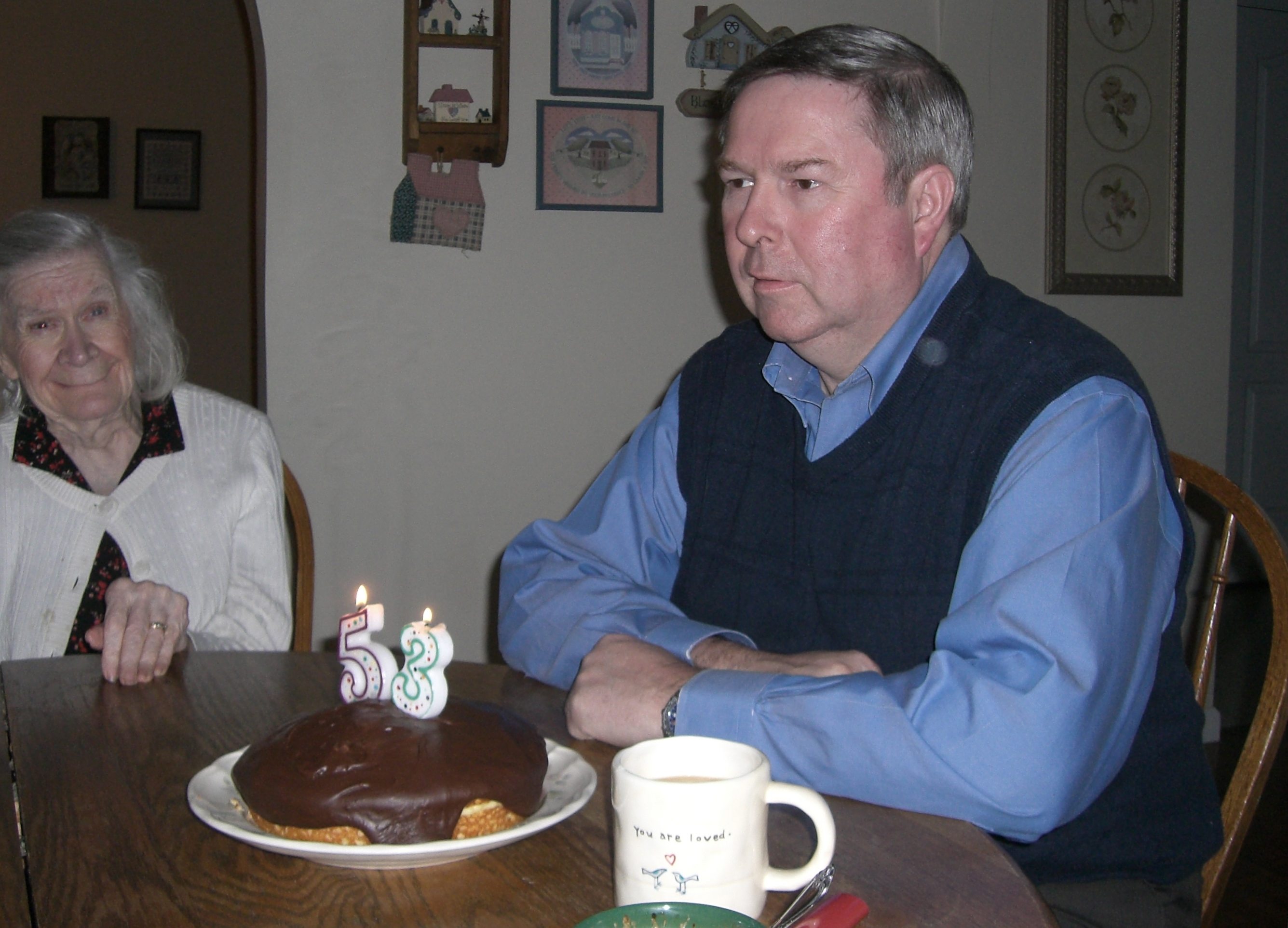
1. My dear hubby’s birthday.

2. Spring break! It’s a little earlier than we’re used to, but I enjoy it any time. 🙂 My favorite part of spring break: no alarm clocks! (Funny how 6 or 7 a.m. is “sleeping late” these days.)

3. Jesse’s visit. For months now Jesse had been wanting to go visit his old school in SC over spring break because theirs isn’t until later. Jim had some work he needed to do on our old house, so they went down for a couple of days this week. Jesse told one of his friends (both to arrange to spend some time with him at his house after school and to make sure the class wasn’t going to be away on a field trip or something), and we contacted the school office ahead of time, but otherwise he wanted to surprise the rest of his old class. What was really funny was that one girl wrote last week on his Facebook page that they all missed him and he should come down for lunch Monday — not knowing that he was planning to do just that! So that added some fun to it. A bunch of them even got together with him for dinner one night. He had a great time.

4. Daffodils. I mentioned before I had wanted to plant some daffodils last fall, but then thought maybe I should wait to see what might already be here — this is our first spring in this house and I don’t know what might already be planted. But so far I hadn’t seen any signs of them — until yesterday. As I pulled up into the driveway, I saw a whole patch of them — behind the shed, of all places. Would it be silly to say they almost brought tears to my eyes? They’re not my favorite flowers, but I love them because they’re a cheerful first sign of spring.

5. My blog host, WordPress, survived an attack with relatively little trouble. I was working on my Marriage Monday post when I noticed it wasn’t auto-saving like usual. I clicked on “Save Draft” — and poof, everything but the first paragraph disappeared. I was….upset, to put it mildly. But later I learned that WP was subject to a large attack of some kind. So losing one blog post and having some slower than usual loading times on other WP blogs were comparatively minor annoyances. Thanks to those at WP who worked so hard to keep it up and running. And I DID learn to copy my text first in case anything like that ever happens again.

I could also add I’m glad we did not have any serious flooding this week — we’ve had a bunch more rain, and the ground was still pretty saturated from last week’s flooding. There were roads where the water was almost to the edge of the road, but at least in out area, that was mostly it: only one road on my regular route had some standing water on one side. I am more than ready for a little sunshine!

Have a great weekend!

Finishing well

I just finished reading II Chronicles. Though it has a reputation for being pretty dry, it actually has many great truths in it. II Chronicles covers the history of the kings of Israel and Judah from the time of Solomon until the Babylonian captivity. Most of the kings were bad, in that they did not follow Jehovah God in the way He prescribed, and many followed idols and false gods instead. Most of the few who did start out well did not finish well. And though “finishing well” is not what “the” theme of the book probably is, it’s what stood out to me in this reading.

Solomon, for all his wisdom and all the blessings he experienced during his early reign, fell away when his many wives led him to other gods.

“Asa did that which was good and right in the eyes of the LORD his God” (II Chronicles 14:2), was marvelously helped in battle after prayer, took down idols, removed even his own mother from her position because of the image she made. But in later years he sought the help of a pagan king instead of God and even imprisoned the prophet who came to warn him (16:1-10). He ended up with diseased feet or which he did not seek the Lord at all.

“Joash did that which was right in the sight of the LORD all the days of Jehoiada the priest” (24:2), but after Jehoiada died, Joash fell away to the point of killing Jehoaida’s son (24:19-27).

Amaziah “did that which was right in the sight of the LORD, but not with a perfect heart” (25:2). He received great help from the Lord when he did things His way, yet instead of continuing to follow Him, he “he brought the gods of the children of Seir, and set them up to be his gods, and bowed down himself before them, and burned incense unto them.  Wherefore the anger of the LORD was kindled against Amaziah” (25:14-15).

Uzziah, “as long as he sought the LORD, God made him to prosper” (26:5), and “And God helped him against the Philistines” and other enemies, “and his name spread abroad even to the entering in of Egypt; for he strengthened himself exceedingly” (26:7-8). “And his name spread far abroad; for he was marvellously helped, till he was strong. But when he was strong, his heart was lifted up to his destruction: for he transgressed against the LORD his God, and went into the temple of the LORD to burn incense upon the altar of incense” (26:15-16). The NASB puts it this way: “But when he became strong, his heart was so proud that he acted corruptly, and he was unfaithful to the LORD his God.”

Josiah was one of Judah’s best kings, leading a revival after the book of the law was found during temple repairs, yet he went to battle and “hearkened not unto the words of Necho from the mouth of God” and ended up dying of wounds received in that battle.

Will I forget the things I knew, like Solomon did, and be led away by other loves, or will I keep my first love? Will I forget from whence my help comes, like Asa did, and look for help elsewhere? Will I fall away after my spitual mentors are gone, like Joash? Do I serve God with a perfect (complete) heart, or am I holding anything back, like Amaziah? Will I be lifted up with pride like Uzziah? Will I neglect to listen to wise counsel from God’s Word, like Josiah?

May I heed the warnings and lessons in these examples. May God save me from these and other failures and help me to keep my eyes on Him and to finish well.

Book Review: One Thousand Gifts

One Thousand Gifts: A Dare to Live Fully Right Where You Are by Ann Voskamp began as something of a teasing dare: a friend had named one hundred things she loved and asked Ann if she could name 1,000. Ann began keeping a notebook open in her kitchen to record things she was thankful for, little dreaming how it would impact her life.

But this is no Pollyanna-ish “glad game.” Ann discusses finding joy even through loss and pain and circumstance that don’t make sense and childish skirmishes. And giving thanks, she finds, does more than engender gratitude and praise to God, though that’s plenty: it also wards off things like anxiety, because when we’re in the habit of giving thanks, we’re in the habit of seeing evidence of God’s love and care all around us.

Ann’s writing style here is much the same as it is on her blog, and it is hard to know how to describe it: it has a poetic quality to it, somewhat ethereal, seemingly stream-of-consciousness, though it is not random: there is definite movement and flow toward a purpose and end. And it’s not fluff, for there is serious study underneath. My own writing style is more practical and straightforward: neither is right or wrong, better or worse, they’re just different, and my different way of thinking left me feeling a little lost sometimes, but other times I was moved to tears or touched to the core.

I wish I had jotted down notes from the main points in each chapter. Some of the main ones are repeated and easy to take with you from the book. But here are some quotes that I marked:

Daily discipline is the door to full freedom, and the discipline to count to one thousand gave way to the freedom of wonder…(p. 84)

Joy and pain, they are but two arteries of the one heart that pumps through all those who don’t numb themselves to really living. (p. 84).

Can it be that, that which seems to oppose the will of God actually is used of Him to accomplish the will of God? (p 88).

I am beset by chronic soul amnesia. I am empty of truth and need the refilling. I need come every day — bend, clutch, and remember — for who can gather the manna but once, hoarding, and store away sustenance in the mind for all of the living? (p. 106).

How do you open the eyes to see how to take the daily, domestic, workday vortex and invert it into the dome of an everyday cathedral? (p. 120-121).

Peace can shatter faster than glass (p. 174).

My own wild desire to protect my joy at all costs is the exact force that kills my joy (p. 178).

I wouldn’t agree with every little theological point, but that could probably be said of many books that I read, and I am not going to dissect the differences here. I will just mention a couple of things, though.

In the last chapter, titled “The Joy of Intimacy,” Ann uses what could be called sexually charged language to describe intimacy with God, such as, “I fly to Paris and discover how to make love to God” (p. 201) and “To know Him the way Adam knew Eve. Spirit skin to spirit skin” (p. 217)…and others I am not comfortable putting here. I know how she means it: she doesn’t mean anything physical or inappropriate: she’s merely discussing spiritually unfettered union and communion. There are Bible passages that speak of God as a husband, the church is called the Bride of Christ, and the last few verses of Ephesians 5 say that the marriage union is symbolic of that between Christ and the church. But still…it’s jarringly graphic, and sadly, I think a stumblingblock to many readers: some have only discussed that chapter on their blogs, and from comments there and on various book reviews, some people have laid aside the book after coming to or hearing about those passages. Personally I wouldn’t lay aside the whole book because of those references, but I would just say read cautiously and with discernment, as we should with any book. (Update: Ann comments on her use of language in this chapter in the second comment here.)

Another disturbing thing to me was a quote from Mother Teresa — not the quote itself but the regarding of her as a spiritual authority, which I don’t believe her to be for these reasons. I don’t want to offend my Catholic friends, but as I have said before, a person is not saved by or because of their denomination: we’re saved by grace through faith in Christ alone.

For these and other reasons, I couldn’t endorse the book 100%, but I did benefit from it in many ways.

There is a book club discussing this book at bloom (in) courage where two other ladies discuss the individual chapters with Ann. The videos are long, about 10-12 minutes for each chapter, and I’ve only watched five or six of them. Some of the discussions are more helpful than others, but they did help to relate to Ann better, hearing her talk in everyday language.

A little taste of the book and it’s style can be seen here in its trailer:

(See also Tim Challies’ review here.)

(This review will also be linked to Semicolon‘s Saturday Review of Books.)

Book Review: The Book Lover’s Devotional

The Book Lover’s Devotional: What We Learn About Life From 60 Great Works of Literature is compiled by various authors, one of whom is blog friend Laura Lee Groves of Outnumbered Mom.

As the title suggests, 60 different books, ranging from old classics like The Count of Monte Cristo and War and Punishment to modern works like The Boy in the Striped Pajamas and A Prayer For Owen Meany are discussed in light of their spiritual truths. Most of the books are not written from a Christian worldview, yet even secular books convey spiritual truth: as someone once said, “All truth is God’s truth.”

The format of the devotionals gives a bit of background information about the book and usually a plot summary and then something that the devotional writer gleaned spiritually from the book. Each devotional ends with a Bible verse and a couple of questions for further thought. In a few cases just a scene from the book is discussed. In many cases the spiritual viewpoint may not be the overriding theme of the book, but rather just an aspect. In many cases as well, what the devotional writer may have seen was not necessarily what the book author intended: for instance, the chapter discussing Anne of Green Gables is titled “A Father to the Fatherless” and discusses how we come to God as orphans, and as a loving Father, He takes us to Himself and adopts us as His own. From everything I have read about Montgomery’s writing of Anne, I don’t think she had that theme in mind as she wrote, but it is certainly a valid spiritual application. That’s one thing that makes discussing books enjoyable: hearing what others got from them. But overall, the spiritual take-away is more direct: Captain Ahab’s hatred for Moby Dick dragging him down, both literally and spiritually, for instance.

I was a little apprehensive of reading the devotionals for those books I had not read yet for fear of spoilers, but overall they only enhanced my desire to read the book. My to-be-read list has grown after reading this book.

This was a very pleasant read and I am glad to recommend it.

(This review will also be linked to Semicolon‘s Saturday Review of Books.)

The Week In Words

”"

Welcome to The Week In Words, where we share quotes from the last week’s reading. If something you read this past week  inspired you, caused you to laugh, cry, think, dream, or just resonated with you in some way, please share it with us, attributing it to its source, which can be a book, newspaper, blog, Facebook — anything that you read. More information is here.

Here are a few that spoke to me this week:

This is from an Elisabeth Elliot e-mail devotional taken from a a chapter called “God’s Hep For God’s Assignment” taken from the book A Lamp For My Feet:

Sometimes a task we have begun takes on seemingly crushing size, and we wonder what ever gave us the notion that we could accomplish it. There is no way out, no way around it, and yet we cannot contemplate actually carrying it through. The rearing of children or the writing of a book are illustrations that come to mind. Let us recall that the task is a divinely appointed one, and divine aid is therefore to be expected. Expect it! Ask for it, wait for it, believe that God gives it. Offer to Him the job itself, along with your fears and misgivings about it. He will not fail or be discouraged. Let his courage encourage you. The day will come when the task will be finished. Trust Him for it.

“For the Lord God will help me; therefore shall I not be confounded, therefore have I set my face like a flint, and I know that I shall not be ashamed” (Is 50:7 AV).

I’ve certainly been there; you?

This was seen at the M.O.B. (Mother of Boys) Society:

“Gratitude bestows reverence, allowing us to encounter everyday epiphanies, those transcendent moments of awe that change forever how we experience life and the world” – John Milton

This was from one of Claudia Barba’s “Monday Morning Club” newsletter:

Are you annoyed this morning by the wrench some monkey has thrown into your careful plan for today? Relax and remember: interruptions aren’t hindrances to ministry. They are ministry.

From Ann Voskamp, on being out of our comfort zones:

It’s only in the uncomfortable places that we can experience the tenderness of the Comforter.

This is from a devotional titled The Invitation by Derick Bingham. commenting on John 4:6:

Christ  experienced the limitations of human life. Here He is wearied with His journey. It is worth remembering that human life does have its limitations. We cannot, as human beings, be everywhere and do everything. Much better to understand that certain things in life are not for us and to concentrate on the things in life that are. Christ was weary in doing His Father’s will but He was not weary of it. In coming to fulfill His Father’s will He had put himself under its limitations. So must we if we would know contentment. In Christian service you can feel limited and weary in what you can do but you can also know deep contentment that nothing else can bring.

This reminded me of a post I wrote very early on my blog about Limitations and how they define rather than hinder our ministry.

If you’ve read anything that particularly spoke to you that you’d like to share, please either list it in the comments below or write a post on your blog and then put the link to that post (not your general blog link) in Mr. Linky below. I do ask that only family-friendly quotes be included. I hope you’ll visit some of the other participants as well and glean some great thoughts to ponder.

And please — feel free to comment even if you don’t have quotes to share!

Building Blocks of Trust in Marriage

E-Mom at Chrysalis hosts Marriage Monday bimonthly (click the button above for more information). I may have participated once or twice, but usually I look at the topic and can’t think of much to add. This time with the topic simply being “Trust,” at first I thought, “Well sure, we trust each other to be true to each other,” and that was about it, but then my mind started rolling — so I thought I’d jot down a few ideas.

What are some ways trust is built in marriage?

1. Commitment

We bought our first home from a young woman who lived with her boyfriend yet kept her own apartment as well. When I commented on the problems of maintaining two residences, she replied, “Well, you want to keep your options open because you never know what will happen.” That seemed so sad to me: I don’t see how there could be much stability in that kind of relationship.

On the other hand, we all have known people who have said the words, made the vows, yet did not uphold them. Commitment is more than a one time exchange of vows, though that does help to “cement” the commitment. But to maintain it you have to continually work at reminding yourselves and each other that, “You’re the only one for me.”

2. Love

It seems like that would go without saying, doesn’t it? But let’s think about love in marriage just a moment. In English we apply the word “love” to chocolate, football, cute shoes, and several human relationships. Most of the New Testament was written in the Greek language, which has three main words for love:

Eros is physical, erotic, sexual

Phileo and its derivatives indicate a tender, brotherly, affectionate love

Agape is a self-sacrificial love best described in I Corinthians 13, the kind of love that God shows us and wants us to show others, which we can only do with His help (see Vine’s Expository Dictionary for more explanation).

We all know that we need to be available to our husbands physically, and we know we need to show agape love to each other. But did you know that in Titus 2:3-5, where older women are instructed to teach younger women, among other things, to love their husbands, the word used for “love” there is Philandros, a derivative of Philos, the friendly kind of love? Our husbands should also be our friends, our best friends. And a friendship type of love is built by sharing time and experiences with each other.

3. Safety

We should feel utterly safe with each other: we should know that anything said will not be ridiculed or demeaned and will be kept in confidence. We should feel free to be completely ourselves with our husbands more than anyone else.

We should also feel safe in that we never give each other reasons to doubt each other’s love and faithfulness. Every dealing with the opposite sex should be above board. There should be no flirting with anyone other than our husbands.

The Bible mentions another kind of safety in Proverbs 31:11: “The heart of her husband doth safely trust in her, so that he shall have no need of spoil.” This seems to be a financial reference: the wife shouldn’t be a gold-digger, and should handle the family funds wisely and not deplete them for personal pleasure. Likewise the tenor of Scripture would indicate that the wife be able to trust her husband not to be a spendthrift or to jeopardize the family finances through gambling, etc.

4. Loyalty

This overlaps commitment a bit, but by loyalty I mean that we always stand up for each other. We shouldn’t put each other down to each other or to other people. What if your spouse has done something dumb? How would you want him to handle it when you do something dumb?

5. Honesty

When discussing the need for honesty, sometimes people take an extreme tack of saying every little negative thing they think: “Your hair looks awful today.” “You’re wearing that?” No, we need grace and tact and kindness with each other, but one of the quickest ways to destroy trust is by dishonesty. We need to always be truthful with each other.

6. Forgiveness

One time in our first year of marriage, I didn’t realize how much I had spent during a particular shopping expedition until I got home and added it all up. I was stunned and fearful. My father had had a bad temper which would burst forth like a sudden thunder storm, and now I feared the same reaction from my husband. This would be the first real problem in our marriage and I dreaded that my new husband was going to be really angry with me. I knew I needed to be honest: I couldn’t manipulate the facts or the situation to make my offense seem lighter or somehow not really my fault. When he came home and I told him what had happened, there were no fireworks or storms: he just quietly said, “Well, just learn from it for next time.

Elisbaeth Elliot said in her book On Asking God Why, “If a man who is a sinner chooses as a life partner a woman who is a sinner they will run into trouble of some sort, depend upon it.” Since we’re all sinners, we can expect that sometimes the other will do wrong. Knowing that the other will handle our wrongdoings large and small with grace and forgiveness goes a long way toward building trust and security with each other. That doesn’t mean these things don’t need to be discussed more thoroughly sometimes in order to learn from them and change: as one former Sunday School teacher used to say, “My wife and I don’t fight, but we do have tense discussions sometimes.” But if we handle the infractions of the other the same way we would want ours handled and forgive as we have been forgiven, that will help us handle them with grace.

7. Forbearance

Colossians 3: 12-14 speaks of “Forbearing one another, and forgiving one another.” One former pastor used to say forbearance was just “good old-fashioned putting up with one another.” You put any two people under the same roof for very long, and they’ll find irritating things about each other. Those things are fine to explain and discuss sometimes, but sometimes you just have to let them go and allow the other person to be human with his or her own foibles. Sometimes you have to allow that there is more than one way to do some things, even though you might feel your way is better. Sometimes you can have the exact opposite opinions on some things (the infamous over- or under- toilet paper roll controversy). But a constant nitpicking will erode those feelings of love, safety, and security. “And above all things have fervent charity among yourselves: for charity shall cover the multitude of sins” (I Peter 1:8).

What if you or your spouse has violated areas of trust? What if there is criticism and ridicule or a lack of commitment? None of us is perfect in all the areas and we need to be constantly growing, but if there has been a serious violation on your part, then, of course, seek to change by God’s grace and with his help, asking His forgiveness (and your husband’s, if necessary) for failure. If there is failure on your husband’s part, in some cases you might need to prayerfully, carefully, and graciously talk to him about it, but in other cases you might need to just pray and wait on the Lord to change him.

Many of the above traits feed on each other: commitment helps build trust, and trust reinforces commitment, etc. The more we work on these areas that build trust, the stronger our marriages will be.

Don’t forget to visit Chrysalis today for more thoughts about trust in marriage.

This post will also be linked to “Works For Me Wednesday,” where you can find a plethora of helpful hints each week at We Are THAT family on Wednesdays, as well as  Women Living Well.