Dracula

I’ve never been much into horror or “monster” stories, except for an afternoon TV program that was popular when I was a teenager (what is it with teens and vampires?)

But last spring, my oldest son told me about Dracula Daily. Dracula by Bram Stoker is epistolary novel, made up of dated notes, letters, telegrams, and journal entries. Dracula Daily sent out excerpts from the book on the dates of the letters, etc., so the reader got them in “real time.” There would be weeks with nothing, but then there would be several journal entries on one day when something major was happening.

I decided it might be fun to experience the novel that way, so I signed up. I didn’t think to mention it in my end-of-month posts where I listed my current reading, I guess because it wasn’t in my usual reading format.

The story begins with Jonathan Harker, a new solicitor, traveling from England to Transylvania with some paperwork for a Count Dracula, who has just bought property in England. After some weird and frightening occurrences, Jonathan finally makes it to Dracula’s castle. The Count seems nice enough, but the remoteness of the castle, the wildness of the land, the howling of wolves nearby, all seem spooky.

Over several days Jonathan notices weird things about the Count himself. He never eats. He sleeps during the day and is awake at night. He has very sharp, canine-like teeth.

Things just keep getting weirder and more horrible. And then Jonathan discovers he is imprisoned. When he finally escapes, he lands in a mental asylum for a time.

Meanwhile, back in England, Jonathan’s fiance, Mina, wonders why she has not heard from him. Mina travels to be with her lifelong friend, Lucy Westerna, whose mother is seriously ill. Lucy receives three proposals of marriage in one day, but she loves one man: Arthur Godalming.

But after a while, Lucy begins sleepwalking, and then exhibiting strange symptoms, and then becomes anemic.

Jonathan makes it home, and he and Mina get married. He doesn’t tell her all that has happened to him, but he writes it down. He tells Mina where it is and invites her to read if it she wants, but she decides not to—yet. And then one day while Jonathan and Mina are in town, Jonathan sees Dracula.

Meanwhile, Dr. John Seward, one of Lucy’s rejected suitors, is called to check on her. He calls in his friend, Van Helsing, who suspects he knows what Lucy’s problem is. He orders a blood transfusion and other measures, but doesn’t say why or what he’s thinking. Things might have gone better if he had, because people who didn’t understand accidentally sabotaged his efforts. But then, he probably would not have been believed.

Finally Van Helsing does tell the others about the Count, and they all team up together to find and destroy him.

As it happens, the Literary Life Podcast started doing a series on Dracula on Oct. 31 (appropriately). I’ve only listened to the introductory episode so far, but it was pretty fascinating and enlightening. According to those doing this podcast, in Victorian times (when Stoker wrote Dracula), monsters in stories represented the devil. (Dracula, The Strange Case of Dr. Jekyll and Mr. Hyde, and The Picture of Dorian Gray were all written within ten years of each other). Stoker even chose the name Dracula because he thought it meant devil. These were classic good vs. evil stories in which evil must be defeated.

The podcasters say it wasn’t until after Freud that people began to sympathize with the monster, wondering what in his background made him like he was, seeing him as the victim instead of the victimizer. And in our day, people try to infuse modern sensibilities into old stories. But I agree with the podcasters that to truly understand what writer meant, we have to understand the context and times in which he or she wrote.

They also share some interesting tidbits that I would never have picked up on my own. For instance, Jonathan is traveling into Transylvania on the eve of St. George Day. That evening was something like our Halloween, and in those times, superstitious folks thought evil creatures were free to roam the earth that one night.

Then the meticulous record keeping later on is supposedly a nod to the Enlightenment–that even though this is a fantastic tale, they’re going to handle it in a very scientific manner. Yet there’s also a nod to Shakespeare’s quote in Hamlet: “There are more things in heaven and earth, Horatio, Than are dreamt of in your philosophy”–there are things that enlightened science and technology can’t explain or handle.

The podcasters (one of whom is a literature teacher) also said that Stoker was not the first to write a vampire story, but he established some of the tropes of vampire lore that still hold today. Yet the modern vampire story is very different from his. They said the idea of the mysterious sensual stranger vampire came from a story written by Lord Byron, which he wrote when he hosted a party in which the participants were challenged to write a scary story. Mary Shelley wrote Frankenstein then. Byron left his story unfinished, but his friend and doctor, John Polidori, wrote a similar one based on Byron. Byron was angry with him and terminated him, and then Polidori published his novel in revenge (You can read more about that here).

I thought Dracula was very well-written. It was both suspenseful and scary, yet with a thread of hope throughout.

Some of my favorite quotes from the book:

We learn from failure, not from success!

How good and thoughtful he is; the world seems full of good men—even if there are monsters in it.

Loneliness will sit over our roofs with brooding wings.

Though sympathy alone can’t alter facts, it can help to make them more bearable.

She is one of God’s women, fashioned by His own hand to show us men and other women that there is a heaven where we can enter, and that its light can be here on earth. So true, so sweet, so noble, so little an egoist—and that, let me tell you, is much in this age, so sceptical and selfish.

It is in trouble and trial that our faith is tested—that we must keep on trusting; and that God will aid us up to the end.

We believe that God is with us through all this blackness, and these many dark hours. We shall follow him; and we shall not flinch.

I’m looking forward to learning more from the Literary Life Podcast.

The text of Dracula is available at Project Gutenberg. Dracula Daily also has their missives in the archives.

I’m counting this book for the Mystery/Crime/Detective category of the Back to the Classics Challenge. Even though it’s both a horror and a Gothic novel, I think it fits as a mystery because who the Count is and what’s going on with him and then with Lucy, are all mysteries to the other characters. The Count does commit crimes. And then the measures to find him all fit with a detective story.
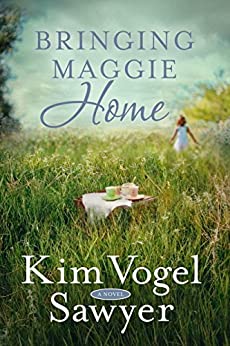

Bringing Maggie Home

In Bringing Maggie Home by Kim Vogel Sawyer, Hazel DeFord was ten years old when her mother asked her to take her three-year-old sister, Maggie, to the blackberry thicket to pick berries for a cobbler. Hazel set Maggie down for just a moment while she chased a snake away from a baby bunnies’ nest. When Hazel came back, Maggie was gone. None of the volunteers could find a trace of Maggie besides her hair ribbon, shoe, and favorite doll.

Hazel felt incredibly guilty for leaving Maggie unguarded, especially while witnessing the downward spiral Maggie’s disappearance caused in her family. She resolved to be as good as possible so as not to cause them any more trouble.

When Hazel grew up and had her own family, she never told her daughter, Diane, about Maggie. She felt Diane would never be secure with her if she felt she couldn’t trust Hazel to take care of her.

But Diane resented and rebelled against Hazel’s perfectionism and over-protectiveness. Hazel’s concerns came across as controlling to Diane.

But Diane’s daughter, Meghan, loves her grandmother and spends several weeks with her every summer. Now grown and a cold-case detective, Meghan has survived a car crash with a severely broken ankle. She decides to go to her grandmother’s to recuperate and work on some photo albums for Hazel’s upcoming 80th birthday.

Jealous, Diane, decides to come, too, without being invited or letting anyone know. Meghan is wearied playing peacemaker between the two women.

Then an accidental discovery of a shoe box of old photos leads Hazel to tell her daughter and granddaughter the truth.

Meghan and her partner at work, Sean, decide to see if they can uncover any information about Maggie’s disappearance. With the case being 70 years older, older than any case cracked by their agency, solving it is a long shot. But they resolve to try.

I loved this book. I wasn’t sure I would at first, because Hazel’s and Diane’s bickering made me tense. Then I realized the problem was mainly Diane. Hazel’s issues were easier to understand and sympathize with. And Diane’s responses were understandable to an extent. But her bitterness and selfishness got to be a bit much. Still, I felt things would turn a corner at some point, so I persevered. I’m glad I did.

The point of view shifts from each of the women at different times in their lives, and occasionally to Sean’s viewpoint as well. I didn’t feel that the changing viewpoints, timelines, or locations were hard to keep up with at all.

I’ve often said that I appreciate Christian fiction that is unapologetically Christian. I know sometimes the message needs to be subtle, but sometimes subtlety turns into vagueness. It’s good to see an author getting down to the spiritual needs in a story without becoming preachy or beating people over the head with truth. I thought Kim did a great job both with the story and the spiritual issues underneath them.

I didn’t know, when I started this book, that it had a sequel: Unveiling the Past. I will probably be reading or listening to that some time soon.

I listened to the audiobook, nicely read by Barbara McCulloh. Unfortunately, the audiobook didn’t contain any back matter, so I am not sure whether any of the story was based on anything in real life.

You Don’t Have to Choose a Word for the Year

We’re almost at the time of year when bloggers start considering their word for the next year.

For many, choosing a word for the year replaces a list of resolutions. That one word gives them focus for the year. Christians who do this usually pray about it leading up to the new year and feel this word has been given to them or impressed on them by God. They often plan activities, reading, or Bible study around their word.

I’ve read wonderful testimonies about how God has worked in someone’s heart through meditating on their word for the year.

It’s a fine practice.

I’ve never felt particularly led to do it myself. I’ve studied or focused on one topic for a while, but not necessarily from Jan. 1 to Dec. 31.

Perhaps you’ve never felt led to choose a word for the year and you wonder if you’re missing out. Or perhaps you’ve chosen one in the past but, like a forgotten New Year’s resolution, it soon faded out of memory.

I just want to emphasize a few truths:

God never tells anyone in the Bible to choose a word, a theme, or a verse for the year. He never tells anyone not to do any of those things, either. It’s just one method of studying and applying God’s Word.

God may lay on your heart to study a certain topic, truth, characteristic, etc. from the Bible, and that may or may not coincide with January 1 and may or may not last a year.

Psalm 119:105 says “Your word is a lamp to my feet and a light to my path.” Commentary I’ve read for that verse said that the lighting they had in Bible times only shone a step or two ahead. God often guides that way–day by day, just enough for the next step. Of course, He knows what is ahead and may well prepare people for it through a word for the year. But I have found that to happen through my daily Bible reading or sermons or Sunday School lessons I hear. It’s amazing how often God’s truth intersects my experience through a book I picked up seemingly randomly.

What’s more vital than a word for the year is daily seeking God in His Word.

Whether or not one chooses a word for a year, it’s good to read the Word of God every day. God can teach us through an extended focus on one word or concept. But He promises to give us guidance, hope, encouragement, and so much more as we meet with Him daily.

Granted, most people who choose a word for the year don’t do so at the exclusion of other Bible reading. Their main focus might be that one word, but they probably also follow a Bible reading plan and attend a Bible study group or church where they hear other parts of the Bible taught.

There’s value in reading large chunks of the Bible to keep the big picture in mind, and there’s value in camping out in a smaller section for a while. We need the panoramic lens to take in the beauty and wonder of the big picture of God’s Word and to place everything in context. We also need the macro lens for close-ups, for camping out with a verse at a time and mining its truths. I wrote about reasons and ways to do both here. For many, their one word is that close scrutiny.

While many people find great value in choosing a word for the year, those who don’t use that method shouldn’t feel they’re missing out or somehow not as spiritual. People have gotten by for millennia without a word for the year. On the other hand, just because this practice is relatively new doesn’t mean there is anything wrong with it. If choosing a word for the year has been a great blessing for you, or you think it might be, or you think it’s something God wants you to do, go for it, and may God bless you in it.

Jesus said, “Man shall not live by bread alone, but by every word that comes from the mouth of God” (Matthew 4:4). Let’s be faithful to partake of that bread in some way every day.

(Revised from the archives)

(I often link up with some of these bloggers.)

Laudable Linkage

Here are a few good reads found this week:

Ordinary Chores, Extraordinary Love: Imaging God’s Care for Us, HT the Story Warren. “If God himself works every single day in billions of small, repetitive ways to care for his creation and his children, then maybe our mundane to-do lists are more important than we realize.”

There Are No Insignificant Christians, HT to Challies. “The person sitting in the other pew at church is more glorious than you realize. It is easy for us to look at some of the other people in our church and think, ‘I am glad they are part of this church, but they are not that significant.’ If we feel like that, it exposes a biblical blindness on our part that we need to correct as soon as possible.”

Top 10 Things I wish Worship Leaders would Stop Saying. Yes! I don’t hear all of these, but the ones I do hear bug me. I wrote a post on #3 a while back: God does so much more than show up.

The Body Is Bigger Than You Think, HT to Challies. “One of the best things that could happen to the rank-and-file churchgoing Christian is to get a better sense of the bigness of the Body of Christ. The Church is bigger than your church. The kingdom is bigger than your denomination. God’s people are all over the world, united by a shared love for Jesus and confession of his lordship.”

Four Ways to Help Your Children Love the Church More, HT to Challies. “It pays to ask the question, before our children drift away, how we can help them love the local church. Here are a bunch of ways we might do that.”

The Scariest Story and the Greatest Hero. I haven’t read the book or seen the movie mentioned, but I appreciated these thoughts on helping kids navigate and learn from scary things.

Friday’s Fave Five

Here we are at the first Friday of November. Our trees are past peak color, but there are still plenty of beautiful autumn leaves outside. Nights were in the 50s, and days got up to mid-70s this week. I’m thankful for this weekly opportunity to pause and reflect with Susanne and friends at Living to Tell the Story.

1. A joint church service. The church we have been visiting prays faithfully for their “sister church,” a Black church about twenty minutes away. Last Sunday, they held a joint service with the theme of Psalm 133:1: “Behold, how good and pleasant it is when brothers dwell in unity!” Different people from both churches sang, testified, read Scripture, and spoke. The styles of singing and preaching were different, but it’s good to experiences those differences. It was such a wonderful day.

2. A neighborhood get-together. One of our neighbors used to organize a big neighborhood cook-out on July 4th each year. The practice kind of fell off for several reasons, and then the pandemic hit. Last Sunday afternoon, we had the first big get-together in a long time. I met some new neighbors and touched base with some old ones. An added blessing: intermittent rain had been predicted, so one lady opened her garage for the get-together. But, though it rained that morning, the afternoon was dry. Plus the temperatures were comfortable. We were able to set up lawn chairs in the driveway while keeping the food and drinks in the garage.

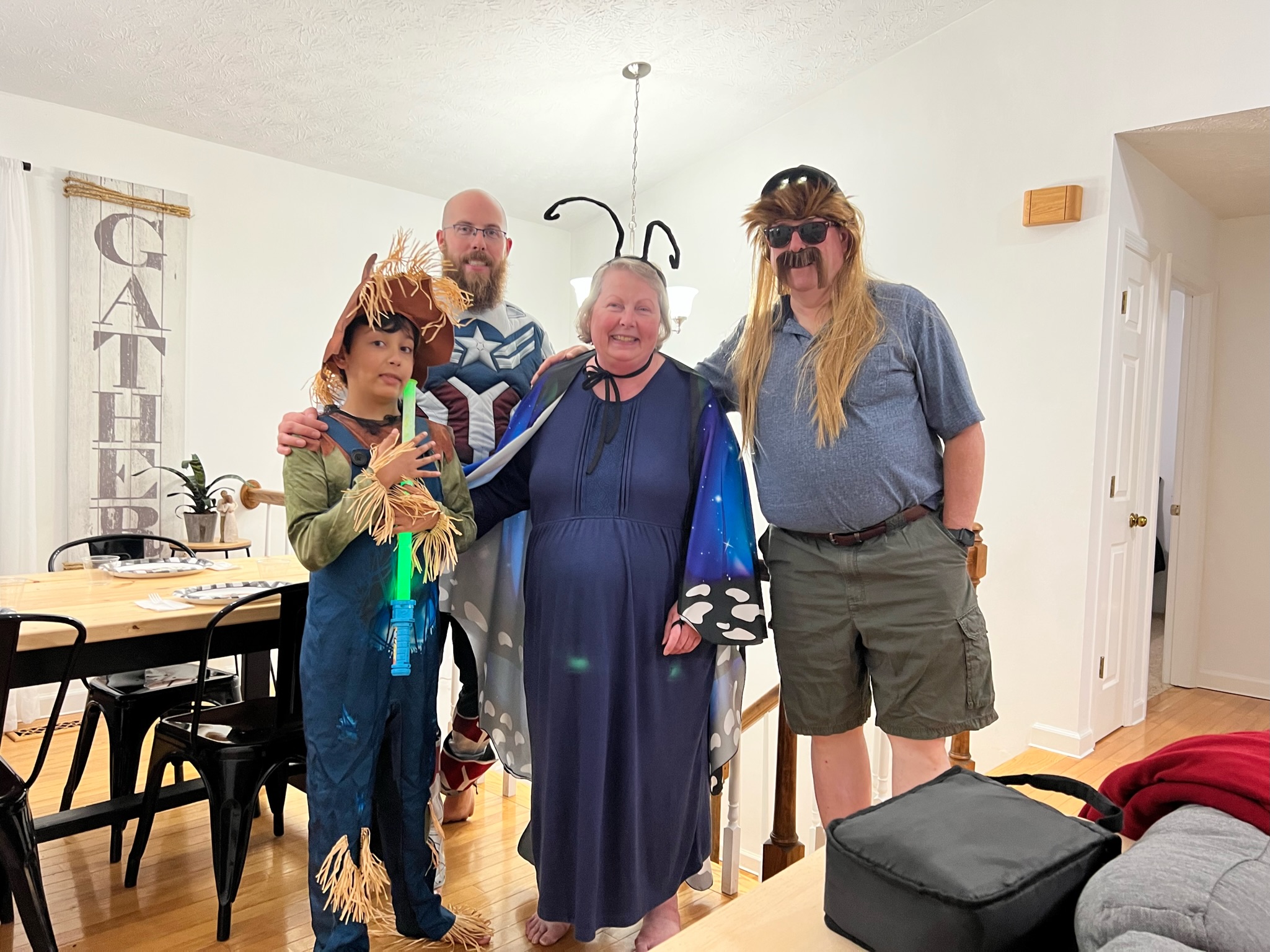
3. Family dress-up party. When the pandemic closed down the usual places my son and daughter-in-law used to take my grandson trick-or-treating, they asked if we could have a family party on Halloween night. We’ve done that ever since. Here are our costumes for this year:

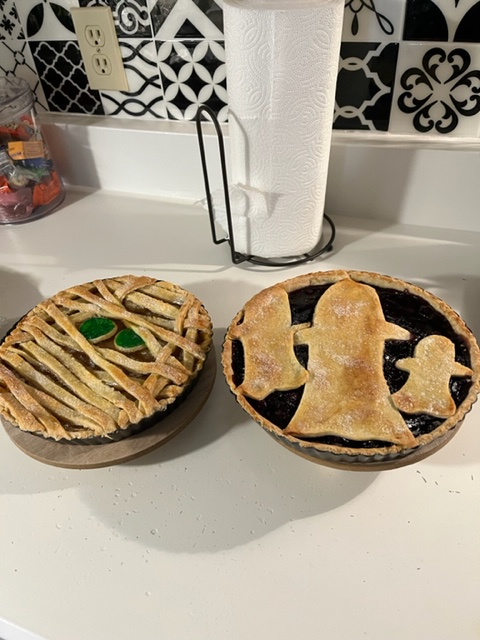
Mittu made some yummy chicken sandwiches and these two cute pies, one apple and one blueberry.

4. Mammogram done. Nice to have it behind me for another year. I don’t have the results yet, but the first look didn’t seem show anything alarming.

5 Operation Christmas Child. After my mammogram appointment, I stopped by two different dollar stores and then packed my OCC box last night. I love participating in this.

Bonus. The Jeopardy! Tournament of Champions started this week. Host Ken Jennings said it was their “Academy Awards, World Series, PhD Defense, and Homecoming Week all rolled into one.” This has been a season of super-champions. It’s fun to see some of my favorite players again, and it will be exciting to see which of them comes out on top.

How was your week?

Christmas Reading Challenges

I always enjoy reading books about or set during Christmas in December. There are a couple of reading challenges where we can share about the Christmas books we’ve read.

I’ve participated in the Literary Christmas Challenge hosted by Tarissa at In the Bookcase for a number of years. Details about this year’s challenge, which runs from now til Dec. 31, are here.

A new challenge to me is the Ho-Ho-Ho Readathon hosted by Caffeinated Reviewer. The challenge details are here. There will be prizes! 🙂 This one runs just from November 18-30—maybe to get us in the right spirit for Christmas?

I usually try to wait til Thanksgiving to read Christmas books, but I may start earlier this year.

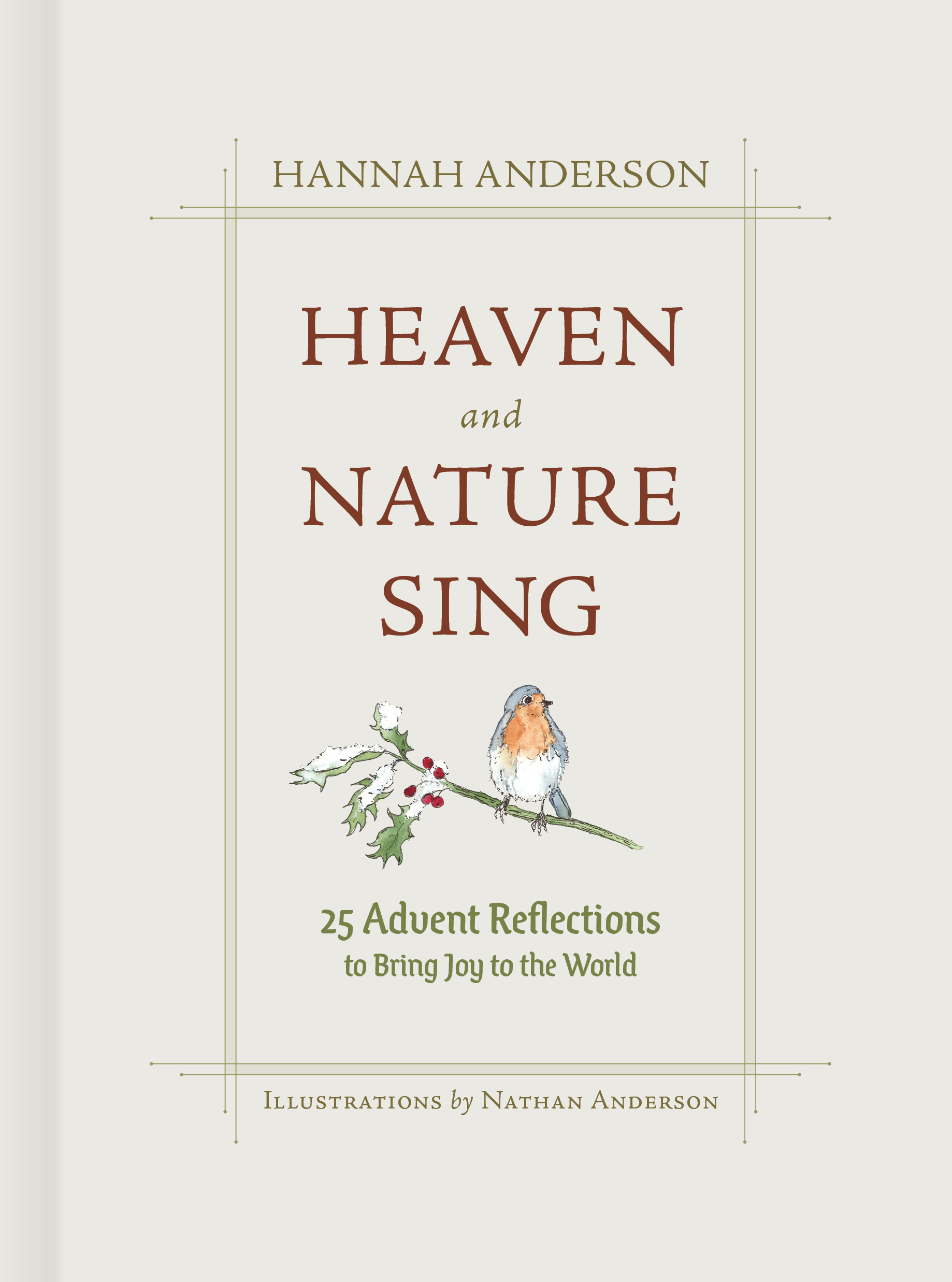
I like to read some kind of Christmas or Advent devotional book in December, and Tim Challies shared a good list of some I don’t have. But I decided to try Hannah Anderson’s Heaven and Nature Sings: 25 Advent Reflections to Bring Joy to the World.

I’ve collected most of these on Kindle sales over the last few years. I don’t know how many I’ll get to, but some are novellas or novella collections.

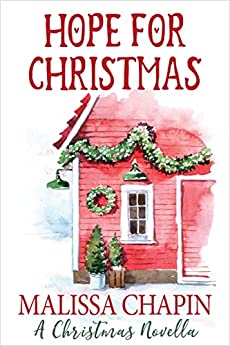
Hope for Christmas: A Small Town Christmas Romance Novella by Malissa Chapin

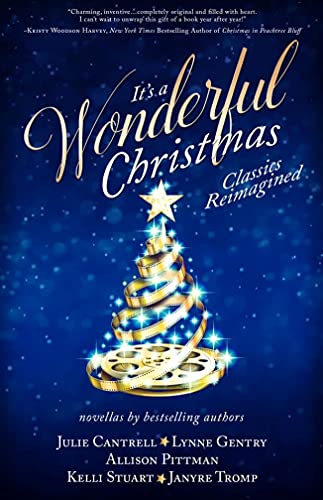
It’s a Wonderful Christmas: Classics Reimagined by Julie Cantrell, Lynne Gentry, Allison Pittman, Kelli Stuart, Janyre Tromp

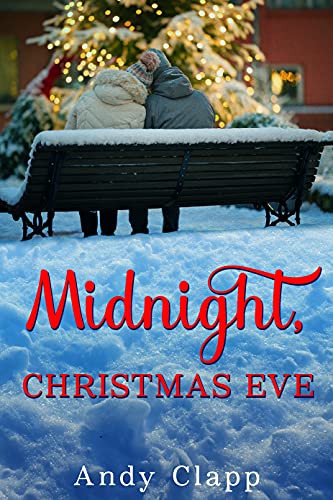
Midnight, Christmas Eve by Andy Clapp

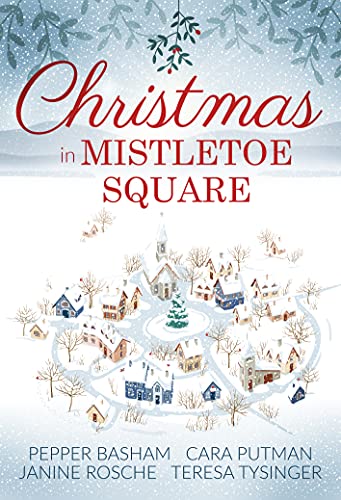
Christmas in Mistletoe Square
by Cara Putman, Teresa Tysinger, Pepper Basham, Janine Rosche

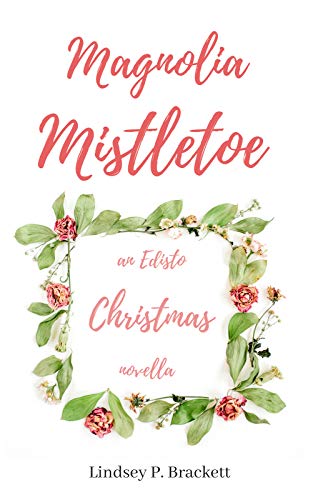
Magnolia Mistletoe: An Edisto Christmas Novella by Lindsey P. Brackett

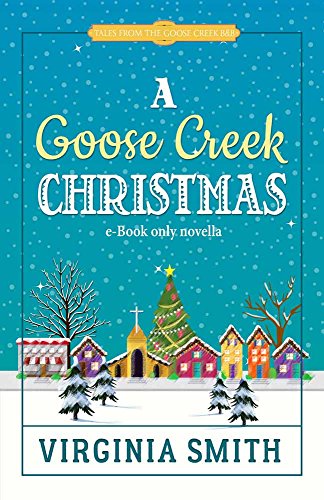
A Goose Creek Christmas by Virginia Smith

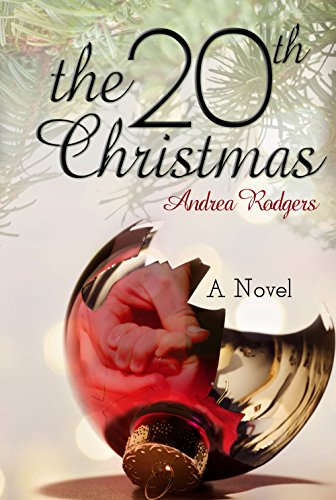
The 20th Christmas by Andrea Rodgers

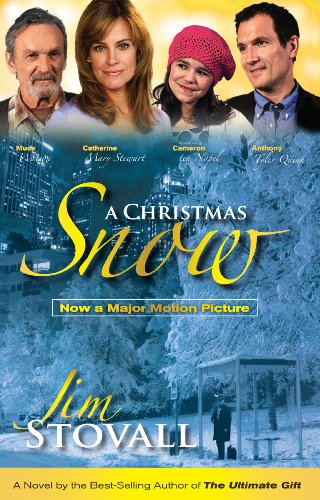
A Christmas Snow by Jim Stovall

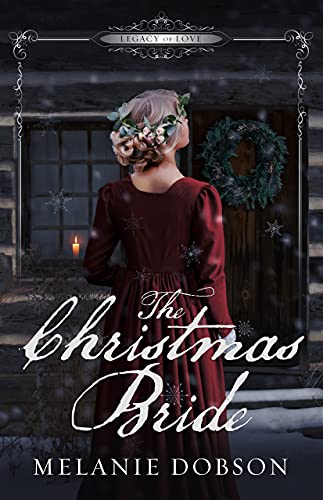
A Christmas Bride by Melanie Dobson

This one is a free audiobook for Audible subscribers. I’ve not heard of the author, but the reviewers say it’s sweet and clean.

Snowed In for Christmas by Cami Checketts

I might also listen again to The Christmas Hirelings by Mary Elizabeth Braddon. I really enjoyed this audiobook a few years ago, plus I like Victorian-ish stories at Christmas, too.

I have a couple of Christmas story collections in print books: The Best of Christmas in My Heart by Joe Wheeler and Stories to Read at Christmas by Elsie Singmaster. I might try to read one or both of those.

Three Fifty-Seven

I had never heard of Hank Stewart or Kendra Norman-Bellamy, but their book, Three Fifty-Seven: Timing Is Everything was free for Audible subscribers.I really liked the premise, so I decided to give it a try.

Ms. Essie is an elderly lady who lives alone. Her husband died very young, but she never wanted to remarry. The family for whom she acted as caregiver in their last days left her their home and enough income to be comfortable.

As Ms. Essie sits on her porch and knits, she can’t help but be aware of some of her neighbors’ problems. The single mother yells a lot, and her teenage son shows disrespect and stays out past curfew. A regular jogger from down the street seems to be running from something rather than just running for her health. Angel, her best friend’s granddaughter, is married and expecting her first child. All is well with Angel and her husband until an accident seems to have harmed the baby.

Ms. Essie decides to be as helpful and available as possible. When her neighbors are outside, she invites them in for lemonade and peach cobbler. She offers a listening ear, prayer, and a bit of advice. As their problems intensify, so do her prayers.

As the subtitle indicates, time is a factor in the book. Each chapter starts with the time of day.

We all need a Ms. Essie in our lives. Though I didn’t like the ending, I loved the story and the truth that God can work through us if we’re available to Him.

My only minor complaint about Essie is that the authors may have made her a little too special in the sense of knowing just what to say or how to get people to share their troubles. One character says Essie “had a direct line to heaven, and God told her things He told no one else.” I wish that had been dialed back a bit and she were more ordinary–that would be more encouragement to those who don’t reach out because they don’t know what to do or say.

Unfortunately, for me a major flaw was bedroom scenes or descriptions that went too far. I don’t want or need to know the details. For that reason, I probably wouldn’t look into a book by these authors again. And that’s really a shame, because otherwise this was a great book.

Careful of Our Strengths as Well as Our Weaknesses

A recent Sunday School class focused on Samson, the biblical long-haired “strong man” in Judges 13-16. One man in class described Samson as cocky.

I hadn’t really thought of Samson in those terms, so I had to ponder for a while. I suppose you could describe Samson that way. Some of his challenges seemed to be motivated by the fact that he knew he would win. It’s possible to be cocky even while thinking one is doing the Lord’s will. Cockiness seems to come from being self-assured rather than confident in God’s gifting and calling.

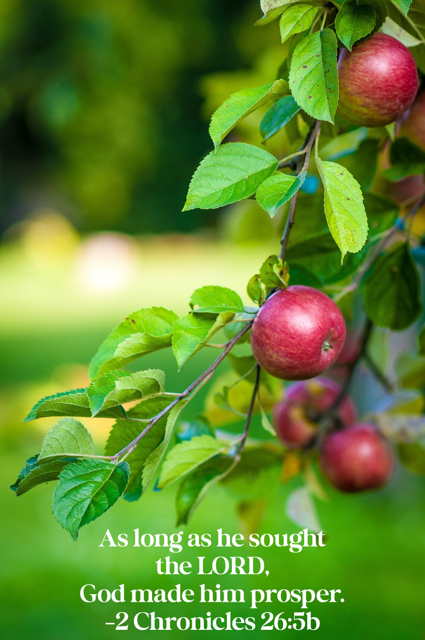
The discussion reminded me of something I had recently read in 2 Chronicles 26 about King Uzziah. Verses 4-5 say, “And he did what was right in the eyes of the Lord, according to all that his father Amaziah had done. He set himself to seek God in the days of Zechariah, who instructed him in the fear of God, and as long as he sought the Lord, God made him prosper.”

But just a few verses later, we’re told, “And his fame spread far, for he was marvelously helped, till he was strong. But when he was strong, he grew proud, to his destruction. For he was unfaithful to the Lord his God and entered the temple of the Lord to burn incense on the altar of incense” (verses 15-16).

Only the priests were supposed to burn incense in the temple. But in Uzziah’s pride, he presumptuously stepped beyond his authority. Then when he was confronted, he became angry. God made him a leper the rest of his life.

He was marvelously helped, till he was strong. But when he was strong, he grew proud.” That statement stops me in my tracks. It’s possible to seek God and depend on Him for help, and then turn right around and become proud as if we answered our prayer instead of God.

When we fear falling or failing, we usually worry about the areas where we’re weak.

But we should also be concerned about the areas where we’re strong. “Therefore let anyone who thinks that he stands take heed lest he fall” (1 Corinthians 10:12). We can too easily become confident in ourselves instead of leaning on God.

We need to remind ourselves that any strength we have comes from God. We all have besetting sins and tendencies. If we don’t have problems in a given area, it’s not because we’re just that good. And if we have good traits and seem “naturally” strong in some areas, that comes from God, too. Paul reminds us, “What do you have that you did not receive? If then you received it, why do you boast as if you did not receive it?” (1 Corinthians 4:7).

Pride is one danger of strength. Another is what one of our former pastor used to say, “With every strength is an off-setting weakness.”

Say, for instance, that one had natural leadership skills. Those come in handy when a leader is needed. But they might be resented when the leader oversteps, doesn’t listen to anyone else, and starts taking over decisions and tasks unasked.

Peter was a natural spokesman. He was loyal and ready to jump into the fray. But he sometimes spoke when he should have been silent or acted when he should have been patient.

We love David’s passionate emotion in the psalms because they mirror ours. But that passionate nature got David in trouble in other areas.

Some of us are naturally quiet, which keeps us out of trouble from speaking up at the wrong time. But then we also avoid speaking when we should.

Another potential problem with our strengths is that, like the folks Paul addressed in Romans 14 and 15:1-7, we don’t give due consideration to those who are weaker. Our insistence on our own freedoms can even cause them to sin against their conscience. Then we have the audacity to look down on them. “We who are strong have an obligation to bear with the failings of the weak, and not to please ourselves. Let each of us please his neighbor for his good, to build him up. For Christ did not please himself” (15:1-3a).

As long Uzziah sought the Lord, God made him prosper. When Uzziah stopped seeking the Lord and relied on what he thought was best, he fell into pride and error.

In Samson’s final days, he was humbled and sought the Lord. He didn’t depend on his own strength, but he asked God to strengthen him. God restored Samson, and he’s mentioned in the “hall of faith” in Hebrews 11 as one “who through faith conquered kingdoms, enforced justice, obtained promises . . . were made strong out of weakness” (Hebrews 11:33-34).

“Thus says the Lord:
‘Let not the wise man boast in his wisdom,
let not the mighty man boast in his might,
let not the rich man boast in his riches,
but let him who boasts boast in this,
that he understands and knows me,
that I am the Lord who practices steadfast love, justice, and righteousness in the earth.
For in these things I delight, declares the Lord’”
(Jeremiah 9:23-24).

May we remember that in Him we live and move and have our being (Acts 17:28). May we set our hearts to seek Him and rely on Him for wisdom, guidance, and strength.

(I often link up with some of these bloggers.)

Laudable Linkage

Here are some of the good reads found this week:

5 Effects of Expository Preaching, HT to Challies. “To publicly herald God’s Word is an act of worship (2 Tim. 2:15), and a stewardship for which we’ll give an account. Here are five ways expository preaching beautifies Christ’s bride.”

Growth: Potential vs. Actual. A tale of two fig trees, one flourishing and one not, and what we can learn from them.

3 Ways to Turn Against Your Pastor, HT to Challies. “How do otherwise good Christians turn against otherwise good pastors? Here are three very common ways it happens.”

Not as the World: Finding Peace in Motherhood, HT to The Story Warren. “The sun dips and light filters through the back window, washing my kitchen in a warm shade of orange. It would be peaceful, except for the teething baby screeching in his highchair. The sizzling of a half-cooked dinner on the stove. The drumming in my head from sleeplessness. Fading light reminds me that the day is closing, but my responsibilities are endless.”

Why We Must Teach Our Kids Safety Skills, HT to Challies. “Young people are growing up in an increasing godless world, while also in deep need for wisdom and discernment to navigate it. More than ever, they need to know how to traverse the dangers around them.”

Truth and Story, HT to The Story Warren. “‘The earth is the Lord’s and the fullness thereof, the world and those who dwell therein…’ Psalm 24:1 (ESV). This verse applies to books and readers, too. This is the foundation of why we read to the glory of God, because we have Him to thank for excellent literature.”

I’ve read parts of The Valley of Vision: A Collection of Puritan Poems and Devotions, but not the whole book. Hope’s review mentions an interesting article about who collected and edited the prayers in the book.

I heard a great message from Adrian Rogers on the radio yesterday while working in the kitchen. The overall message was about burdens, but the section on today’s broadcast was about restoration after one has fallen. The audio is here and an outline and transcript are here.

Friday’s Fave Five

It’s hard to believe we’re nearing the end of October already. I’m grateful Susanne at Living to Tell the Story started this tradition of stopping for a few minutes to recap the best parts of the week. Maree’s blog today shares how gratefulness makes us happy.

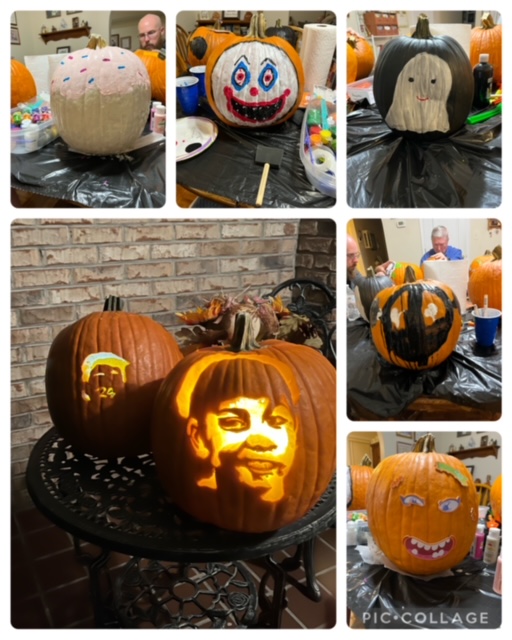
1. Pumpkin decorating/carving. Mittu made chili and cornbread. Jim and Jason were the only ones to carve their pumpkins this year. They’re the most proficient at it. Jason created his from a photo of Timothy.

The rest of us painted ours. Mine is *supposed* to look like a cupcake. 🙂 Jesse did the clown face, Mittu the cute little ghost, and I think Timothy’s is a bat. I found some face stickers that some of us used on the back of our pumpkins.

2. Caramel popcorn and apple cider is what I traditionally make for pumpkin decorating night. the caramel popcorn is one of my husband’s favorite things. It’s a bit of work to make, but it’s so addictive (and it makes the house smell so good).

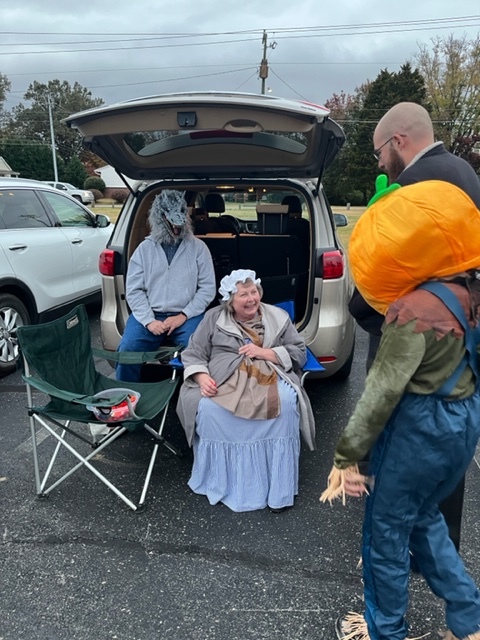
3. Trunk or Treat. We’ve never been in a church that did this. but the church we are visiting did this week both as a community outreach and to provide a safe place for kids to dress up and get candy. Most of the adults giving out candy dressed up, too. Jim and I resurrected our Red Riding Hood’s Grandmother and the Big Bad Wolf outfits from a couple of years ago. I thought some of the kids would be afraid of Jim’s mask, but they mostly just laughed or growled when they saw him. One little one kept his distance, though, and stared. Jason, Mittu, and Timothy came out for it, and it was a lot of fun.

4. Getting a physical is not fun, but getting it over with is nice. Plus I had a fairly good visit this time. I am not always happy in trying to discuss things with this doctor—he tends to brush off my concerns. But we had a good discussion this time.

5. Tidying the blog and around the house. Nothing major, but I deleted a few defunct things from my sidebar got some things put away at home. It’s always nice to neaten and restore order.

Finally, I wanted to share this quote from a book I am reading, Joy: A Godly Woman’s Adornment by Lydia Brownback. This seems to encapsulate Friday’s Fave Five:

“If we are not looking for the good things, we may fail to see them when they come. That’s part of why thankfulness is so important. Offering thanks to God, no matter what is going on in our lives, is a way of acknowledging that he knows exactly what he is doing and that we can trust him” (p. 28, Kindle version).

I liked this one as well:

“Sometimes thankfulness is a choice we make rather than a feeling we have” (p. 28).