Review: The Secret Keepers of Old Depot Grocery

The Secret Keepers of Old Depot Grocery by Amanda Cox

In The Secret Keepers of Old Depot Grocery, a novel by by Amanda Cox, Sarah Ashby’s husband has just died. She returns to Brighton, TN, where she grew up and where her mother and grandmother still run the Old Depot Grocery Store which her grandfather began. All she wants to do is settle back in Brighton and help run the store she loves so much.

But her mother, Rosemary, doesn’t want Sarah to feel stuck in Brighton like she did. She keeps pushing her to move on and see the world.

And even if Sarah stayed, the old grocery isn’t doing well since the big new chain store opened nearby. Rosemary is pushing her mother, Glory Ann, to sell while they have interested buyers. Besides, Rosemary has urgent reasons to sell, reasons Sarah and Glory Ann know nothing about.

But the Old Depot was Glory Ann’s husband’s legacy, his way of ministering to the community. He never gave up. How can she?

The novel is told with a dual timeline, the second one in 1965 detailing Glory Ann’s life from her teen years. She was engaged to her blue-eyed farmer boy, Jimmy. But he was called up to fight in Viet Nam and was killed not long after. She didn’t have a chance to tell him that she carried the baby conceived from their one night of indiscretion.

Glory Ann’s father was a preacher who arranged for Glory Ann to marry Clarence, the son of an old-time friend. Clarence has been told the situation and is willing to marry Glory Ann. She resists, but her father says her sin will destroy his reputation and ministry as well as hers if it becomes known.

Glory Ann, Rosemary, and Sarah each have secrets that they think are protecting the others. Instead, misunderstandings and assumptions strain their relationships.

I love the way Amanda wove the different threads of this novel. As with her first novel, which I loved, The Edge of Belonging, the story has multiple layers: unplanned pregnancies, the nature of true love, the nature of everyday ministry, the damage secrets can cause and the freedom truth brings, PTSD. (Her first novel had a character with PTSD, too, making me wonder f someone in her family did.)

I listened to the audiobook, which was free from Audible’s Plus Catalog and read by Stephanie Cozart. The narration was well-done except the fake Southern accents were a little overwrought and grating to me. I think I would have liked this better in print.

But I did love the story and highly recommend it.

Review: Write a Must-Read

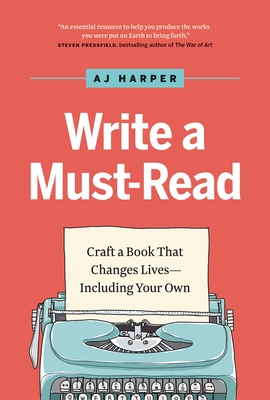
Write a Must-Read by A. J. Harper

A. J. Harper (no relation) has had a varied career as a ghostwriter on multiple books, publisher, editor, coach, co-writer, teacher, and more. Clients urged her to teach other writers how to write transformational nonfiction books. A nudge from a co-writer and an author retreat helping writers caused her to realize maybe she could write such a book. The result is Write a Must-Read: Craft a Book That Changes Lives—Including Your Own.

Harper’s main theme is “Reader first.” Often writers get started because they feel they have something to say. But writing to impact others isn’t just focused on imparting the writer’s story or information. Even a memoir or biography needs to have a take-away for the reader; otherwise, unless the author is famous, a reader won’t be interested in reading it.

First Harper helps writers identify their ideal reader and what their need is. I appreciated the distinction that the ideal reader is not an avatar, with multiple specific characteristics down to the cereal the reader eats (I’ve seen some writing advice that seems to lead this way). Rather, “Ideal Readers may come from different backgrounds and circumstances (demographics), but their problems, desires, and challenges in pursuit of their desire (psychographics) are the common denominator” (p. 46).

Then she helps writers craft their Core Message: what’s the “foundational truth that your entire book is built on” (p. 65). From there, writers craft the promise they make their readers.

Harper talks about teaching points,stories, anecdotes, case studies, outlines, sequencing, and much more, all under the umbrella of what would best serve the reader.

She includes a multitude of helpful questions to ask while editing and ends with a crash course in the process of publishing and need for marketing.

All her points are illustrated with stories and anecdotes from the authors she has worked with.

Many of the chapters end with exercises to work through and links to her web site for more information or to download worksheets or lists.

Some of the quotes that most stood out to me:

Writing a book is not about organizing content. It’s about creating an experience for the reader (p. 119).

The best outline for your book is the one that meets your reader where they are and takes them on a journey that leads to your Promise, delivered (p. 119).

You are not the hero of this book. They are. You are not the focus of this book. They are. And they need you to help them get where they want to go (p. 121).

Your book is not a collection of stories and knowledge. It is a journey—a quest (p. 130).

With nonfiction, specifically personal and professional development books, the aim is transformation. My singular goal is to help the reader change their life (p. 138).

A book is not about something. A book is for someone (p. 200).

I first read this in the evenings, a chapter or less at a time, before closing out the night with fiction before bedtime. That wasn’t the time I wanted to work through exercises and such. So I am going back through the book now at my desk, making notes, printing out worksheets and filling them out.

Some of my readers would want to know that there’s a smattering of profanity through the book, and the author comes from a completely different worldview than mine.

But the writing advice is excellent all throughout.

Review: Mrs. Tim Carries On

Mrs. Tim Carries On by D. E. Stevenson

Mrs. Tim Carries On is a sequel to Mrs. Tim of the Regiment. Like the first book, this is written in a diary format and based on author D. E. Stevenson’s own experiences.

Major Tim left for France during early 1940, leaving Mrs. Tim—Hester—home in a small English village with their daughter, Betty. Their son, Bryan, is away at preparatory school but comes home on holidays.

Hester writes that she decided to use her diary as an escape from war news and not mention it unless it affects her directly. So, at first she writes of old friends mentioned in the first book, amusing anecdotes of Betty, squabbles among servants, and such. She heads up the “Comfort Depot,” which involves collecting things for the soldiers and setting them out for the men to choose from.

The only mention of the war in the first part of the book has to do with shortages and an increasing number of Polish soldiers who have escaped from Hitler’s advances there. The community seems to receive them generously. Some of them can speak English or French, so they can usually find someone to communicate with.

The daughter of a friend, Pinkie, comes to stay with Hester indefinitely. Pinkie was a little girl the last time she was seen, but now is a beautiful seventeen-year-old, and several of the men fall in love with her. But she sees them only as friends.

Things turn a little somber in Part 3 when several more countries have fallen to Hitler and Hester has not heard from Tim for several months. Then in Part 4, she visits her brother in London and experiences bombs dropping in the streets and constant airplanes buzzing overhead.

There’s one odd new character, a Miss Brown Winters, who thinks she has lived several other lifetimes, mainly in ancient Egypt. Hester doesn’t believe her but finds her “interesting.”

Once again, there’s not much of an overall plot arc–the story is more just reflecting everyday life during that time.

Some of my favorite quotes:

[I] repair to the kitchen in a cheerful frame of mind. Cheerful feelings are soon dissipated. The kitchen is extremely warm, but the moral atmosphere is at zero. Mrs. Fraser, my large and terrifying cook, is waiting for me with a grim smile. I enquire in trembling tones whether anything has gone wrong. Mrs. Fraser replies that that depends. Having long and bitter experience of domestic catastrophes I am prepared for the worst (p. 5, Kindle version).

Her eyes are full of tears and I realise that she must be comforted, so I proceed to explain my own particular method of “carrying on”. None of us could bear the war if we allowed ourselves to brood upon the wickedness of it and the misery it has entailed, so the only thing to do is not to allow oneself to think about it seriously, but just to skitter about on the surface of life like a water beetle. In this way one can carry on and do one’s bit and remain moderately cheerful (p. 12).

“All war is awful,” says Guthrie. “It’s a wrong and horrible thing, war is, but we don’t need to worry about the rights and wrongs of war. We tried our best for peace. We tried for peace to the absolute limit of honour . . . but you can’t have peace when a pack of ravening wolves gets loose” (p. 37).

A day like this is a gift from God—or so it seems to me—and it seems all the more precious when it comes at the end of a long dark dreary winter (p. 52).

The daffodils have come in and are blowing like the bugles of Spring in the flower-shop window (p. 58).

I have the feeling that everyone in the world is asleep—but I know that it is not so. All over Europe there are people—men and women—keeping watch. There are aeroplanes, laden with death, speeding across the sky; there are sailors on the lookout; there are thousands of women like me who cannot sleep because their hearts are torn with anxiety . . . all over Europe the shadow of suffering lies. I sit and think about it, and in some strange way it is a relief to give way to misery. It does nobody any harm, for there is nobody to see. Just for a few moments I can take off the mask of cheerfulness. Just for a few moments I can allow myself to think (pp. 113-114).

I sit down on the window seat and prepare to listen, for if there is one thing I enjoy more than another it is a heart-to-heart talk with my son (p. 140).

[On visiting her childhood home] The dressing-table mirror is spotted with damp, and I am not sorry to see its degeneration, for it was never a kindly friend. It was like the friend who is in the habit of saying, “I feel it is my duty to tell you . . .” and it did its duty well. It was always candid about spots or blemishes or untidy hair. I glance into it as I pass to the window and find that its nature is not ameliorated by the passing years (pp. 215-216).

There’s a lovely poem called “Dunkirk 1940” which Stevenson shows as coming from one of the men. It’s too long to include (but I found a copy here). It tells of the Israelites’ miracle of the Red Sea parting, and the men at Dunkirk wishing for a similar miracle, to escape on dry land. But God provided a different miracle for them: “A double miracle to set us free –
Lion-hearted men, calm sea,” and hundreds of boats of all sizes.

I enjoyed this book much more than the first one. I can’t put my finger on why. Maybe because the characters were familiar to me, or maybe because the story had more touching moments mixed in with the lighter fare..

Review: The Edge of Belonging

The Edge of Belonging by Amanda Cox opens with a homeless man, Harvey James, finding a newborn baby abandoned near his camp. He cleans her up and decides to look for a nice house with toys in the yard. A family with children would know what she needed. But none of the places he sees seem suitable.

He names her Ivy for the way she wound her way around his heart so quickly.

When he stumbles upon a pantry at a church with baby supplies, he begins to wonder if he could take care of her after all. At least for a while.

Twenty-four years later, Ivy is engaged and working her dream job as a counselor in a school when she learns that her grandmother has passed away. None of her family is related by blood, but their bond is strong as if they were. She goes home for the funeral, but her fiance’s selfishness in not wanting her to go makes her realize how controlling and emotionally abusive he has been.

She receives a letter her grandmother sent before her death, asking Ivy to take care of some of her things and telling her about a journal detailing her origin.

Ivy had always been told she had been left on her adopted parents’ doorstep as a baby, and they took her in. But her grandmother indicates there was more to the story.

After breaking up with her fiance and losing her job, Ivy travels back to her grandmother’s house. But the journal is missing. Her parents and uncle won’t answer any questions about her birth, saying the past is better left behind. But Ivy feels she needs to know where she came from to determine where she should go next. She begins to piece together clues found in her grandmother’s belongings.

The story switches back and forth from the events after her birth in 1994 and the present day, with the people and circumstances in Ivy’s and Harvey’s lives slowly revealed.

I loved this book. Some of the themes involve the nature of family, healing of wounded souls, the nature of sacrificial love, reaching out to help others even when they might reject it. The book also touches on homelessness, PTSD, depression, infertility, the foster care system, sex trafficking, and more. Everyone has a story, and that’s true of all of the main characters here.

Although I enjoyed Ivy’s journey, Harvey is my favorite character. At the beginning, he’s so skittish he can barely hold a conversation. He’s been shuffled aside so many times, he’s closed off to everyone. But his love for Ivy pushes him to extend himself far beyond his comfort zone.

Ivy’s Grandma Pearl is another favorite, but I can’t tell you too much about her without spoiling the story. Though both sides of the dual timeline focus on Ivy, Pearl is in many ways the hub of the wheel that connects all the characters. She says of herself, “If the story of my life could say one thing, I’d hope it would show the importance of venturing into the highways and the hedges to let invisible people know they’re seen and loved. To invite them in.”

A couple of other sentences that stood out to me:

I’m starting to see that when I let go of my grip on my pain, I make space for new things. Things that bless me in a way I never would have imagined. I’m getting there little by little—learning how to release my disappointments and embrace the gifts I have (pp. 295-296).

It’s not about my pain versus your pain. It’s about sharing in the human experience and knowing what it is to hurt. It takes courage—stepping forward and healing when it’s so tempting, so safe, to stay and worship the altars we’ve built to our pain (p. 297).

I started out listening to the audiobook, nicely read by Leah Horowitz, which was free from Audible’s Plus Catalog. But Audible rotates titles in and out of their free offerings, and this book rotated out about a day before I could finish it, so I lost the quotes I had marked in the early part of the book. Thankfully, our library had a copy, so I could finish the book.

This book was Amanda’s debut novel in 2020. I’m looking forward to reading the books she has written since then.

Review: Mrs. Tim of the Regiment

Mrs. Tim of the Regiment by D. E. Stevenson

In the foreword of the reprinting of Mrs. Tim of the Regiment, author D. E. Stevenson says the book came about in the 1930s when a friend’s daughter was about to marry an officer in the Highland Regiment. The family wondered what military life would be like. Stevenson lent them her diary from her days as a young military wife. The friend returned it, saying her family had laughed heartily over it, and if she “pepped it up a bit,” she could publish it as a novel.

So Stevenson did expand and “pep up” the story. Two volumes that were originally published were combined as one in Mrs. Tim of the Regiment. Three more volumes followed over the next few years.

The book is written in a journal format, Mrs. Tim, or Hester, having received a new diary for Christmas. Her husband is an officer and they have two children, Brian and Betty. Although they have a cook, a governess, and a few servants, they talk all the time about how financially strapped they are.

The first part of the book doesn’t actually have a plot per se. It’s more a recording of Hester’s encounters with friends, run-ins with servants, and happenings with her children. In the second half (which was originally a separate book), Hester and her daughter, Betty, spend two weeks with a friend on holiday in Scotland.

At the center of it all is Hester’s wry observations and likeable personality. As a senior officer’s wife, she visits the other wives and children to encourage them. She’s not timid, but has a hard time standing up to her cook and others.

On interviewing a headmistress of a school for her daughter, and saying that Betty’s governess found her very quick, Hester is told, “Quickness is more often than not a sign of of a superficial brain.” Hester writes, “I relapse into a species of jelly but still have sufficient strength to say that I think she will find Betty is a good child and very reasonable.”

One of my favorite sentences in the book: “The oldest antiquity whose beard is quite white–or was, previous to the tomato soup–pricks up his ears.”

Sometimes Stevenson waxes poetic, especially when describing scenery:

The rolling hills give place to mountains which stand back in sullen splendor and allow us pass. The cattle become sheep, snowy lambs with black wobbly legs and cheeky little  black faces interrupt their breakfast to stare at the train. Streams leap down the hillsides among the rocks and dive beneath the wheels to emerge on the other side in beds of gravel and yellow stones.

Of course, I don’t expect secular authors to have Christian values, but I still like to see how they think and write about spiritual things. There’s mention of an occasional prayer and going to church, with comments like, “The singing was good but the sermon was dull.” One “hellfire” type of sermon seems to have shaken Hester, but is brushed off by the other church members.

There are a few “damns” and occasionally a gossipy, negative attitude towards some people. One family friend seems to fall in love with Hester, though she is too “hedged with innocence” to realize it. (One thing I found odd about those times was that it was thought wrong for a woman to go around by herself, but no one had a problem with a married woman and single man going off to have picnics or visits sites alone together.) 

I found the book mildly amusing. I didn’t like it quite as well as I did the Barbara Buncle books and Amberwell and it sequel, Summerhills. Those earlier books had a homey feel about them, somewhat in tone like Little Women or Anne of Green Gables (though written in a different style and era). I didn’t get quite that same feeling until near the end of this book.

I listened to the audiobook narrated by Christine Rendel. I’ll listen to the next book in the series, since I have it free via Audible‘s “Plus catalog,” then decide whether to read the other Mrs. Tim books.

Review: Stop Asking Jesus Into Your Heart

Stop Asking Jesus Into Your Heart

Perhaps you know someone who can’t seem to come to assurance that they are Christians.They’ve asked Him to save them several times, and feel content each time, but sooner or later, they question whether they really believed or repented, or did so the right way or “enough.”

Perhaps that person is you.

It was me for a couple of decades. I shared my struggle with assurance and how God helped me with it here.

Satan can trip people up over assurance because if we’re insecure about our salvation, we come to a standstill in our Christian growth. We don’t have the confidence to serve the Lord in any way. Instead of going forward in our Christian lives, we’re spinning our wheels over the same issues.

On the other hand, there is such a thing as false assurance. Jesus said there would be people who stand before Him some day, fully assured that they are all right spiritually. They’ll be shocked to hear Him say, “I never knew you; depart from me, you workers of lawlessness.”

So the stakes are high.

In Stop Asking Jesus Into Your Heart: How to Know For Sure You Are Saved, J. D. Greear says he might hold the “Guinness Book of World Records entry for ‘amount of times having prayed the sinner’s prayer.'” He shares his own testimony of struggles with assurance.

Then he explains that God truly wants us to have assurance. He shares what it means that Jesus died in our place and why we can trust Him, along with separate chapters on the nature of true faith and repentance. Another chapter discusses the seeming contradiction between Bible verses that say we will never lose our salvation with other verses that appear to indicate we can. The last two chapters cover evidences of salvation in 1 John and what to do with continued doubts. One appendix deals with whether one needs to be baptized again if they’ve made subsequent professions of faith after baptism. The second deals with the “indispensable link between assurance and the doctrine of justification by faith alone.”

At first glance, I thought this book was about reasons not to use the terminology of “asking Jesus into your heart” as a way of telling people how to be saved. Greear discusses this briefly, saying he thinks it can be used as long as the gospel has been fully understood.

Some of the quotes that stood out to me:

Salvation comes not because you prayed a prayer correctly, but because you have leaned the hopes of your soul on the finished work of Christ (Location 269, Kindle).

I can say with certainty that God wants you to have certainty about your salvation. He changes, encourages, and motivates us not by the uncertainty of fear, but by the security of love. That is one of the things that makes the gospel absolutely distinct from all other religious messages in the world (Location 295).

We don’t hope we are forgiven, we know it, because our standing before God has nothing to do with our worthiness, but the worthiness of the Advocate who now stands in our place (Location 551).

If you base your assurance on what you do or how well you do it, you’ll never find assurance. You’ll always be wondering if you are doing enough. If your assurance is based on what Christ has done, however, you can rest in His performance. Your salvation is as secure as His finished work (Location 654).

When we come to Jesus nothing can be off-limits. We cannot come with preconditions or limitations. To possess eternal life, we must be willing to let everything else go. We don’t approach Jesus to negotiate eternal life; we approach Him in total surrender. As C. S. Lewis famously said, “We don’t come to Him as bad people trying to become good people; we come as rebels to lay down our arms” (Location 887).

You don’t follow Jesus like you follow someone on Twitter, where you are free to take or leave their thoughts at your leisure. Following Jesus is not letting Him come into your life to be an influence, even if it’s a significant influence. Following Jesus means submitting to Him in all areas at all times regardless of whether you agree with what He says or not (Location 979).

If repentance were perfection, none of these people repented. Repentance, however, means recognizing Jesus’ authority and submitting to it, even though you know your heart is weak, divided, and pulled in conflicting directions. Repentance includes a plea for God to change your inconsistent, divided heart (Ps. 86: 11; Mark 9: 24) (Location 1019).

Greear writes pastorally, basing his answers firmly in Scripture but with everyday rather than academic language. I’ve not read him before, and I might disagree with a couple of his minor points. But overall I think this book was tremendously helpful both for those who have made a false profession and those who fear they might have.

Review: Be Alert: (2 Peter, 2 & 3 John, Jude); Beware of Religious Imposters

Be Alert: Beware of Religious Imposters

At first glance, it might seem like Warren Wiersbe collected leftover short epistles to review in Be Alert: (2 Peter, 2 & 3 John, Jude); Beware of Religious Imposters. However, as his subtitle indicates, these four books near of the end of the New Testament have a common theme.

Often we go to the Bible for comfort, affirmation, assurance that God loves us and will take care of us. Those motives aren’t wrong: we find all those things in the Bible.

But the Bible’s purpose isn’t just to make us feel warm and cozy. God is truth, and anything that isn’t in line with His Word is falsehood. Satan, as God’s enemy, works seemingly tirelessly to question and pervert what God said. Indeed, his first recorded temptation was to question Eve in the garden of Eden about what God said and then to twist it. Often Satan includes enough truth to hook unsuspecting individuals.

That’s one reason to know God’s truth well (the first being that we learn to know God by learning His truth). Paul warned that “Men will rise up even from your own number and distort the truth to lure the disciples into following them” (Acts 20:30). Peter shared that false teachers will “twist” the Scriptures (“wrest” in the KJV). “The Greek word translated ‘wrest’ means ‘to torture on the rack, to distort and pervert’” (p. 113).

2 Peter, 2 and 3 John, and Jude all share what false teachers do, what motivates them, and what judgement is coming to them.

We’re not to support false teachers in any way, not even allowing them into our homes (2 John 10-11), but we’re to help those who have been influenced by them. “And on some have compassion, making a distinction; but others save with fear, pulling them out of the fire, hating even the garment defiled by the flesh” (Jude 22-23).

While the call to beware of false teachers is meant to help us to be alert and careful, we don’t need to panic or live in fear. 2 Peter opens with the reminder that “His divine power has granted to us all things that pertain to life and godliness, through the knowledge of him who called us to his own glory and excellence, by which he has granted to us his precious and very great promises, so that through them you may become partakers of the divine nature, having escaped from the corruption that is in the world because of sinful desire” (2 Peter 1:3-4) and closes with “You therefore, beloved, knowing this beforehand, take care that you are not carried away with the error of lawless people and lose your own stability. But grow in the grace and knowledge of our Lord and Savior Jesus Christ. To him be the glory both now and to the day of eternity. Amen” (2 Peter 3:17-18).

Likewise, Jude ends his warnings with “But you, beloved, building yourselves up on your most holy faith, praying in the Holy Spirit, keep yourselves in the love of God, looking for the mercy of our Lord Jesus Christ unto eternal life” (verses 20-21). Wiersbe comments, “He did not write, ‘Keep yourselves saved!’ because he had already assured them that they were ‘preserved in Jesus Christ’ (Jude 1). He wrote, ‘Keep yourselves in the love of God.’ Our Lord made a similar statement recounted in John 15: 9: ‘Continue ye in my love’” (p. 191). After several paragraphs on Christian love, he concludes, “We grow in our love for God as we listen to His Word, obey it, and delight in doing what pleases Him. That is how we keep ourselves in God’s love” (p. 192).

Finally, Jude concludes with this wonderful benediction: “Now to Him who is able to keep you from stumbling, And to present you faultless Before the presence of His glory with exceeding joy, To ]God our Savior, Who alone is wise, Be glory and majesty, Dominion and power, Both now and forever. Amen” (verses 24-25).

Here are a few more thoughts Wiersbe shared:

In his first epistle, Peter emphasized the grace of God (1 Peter 5: 12), but in this second letter, his emphasis is on the knowledge of God. The word know or knowledge is used at least thirteen times in this short epistle. The word does not mean a mere intellectual understanding of some truth, though that is included. It means a living participation in the truth in the sense that our Lord used it in John 17: 3: “This is life eternal, that they might know thee the only true God, and Jesus Christ, whom thou hast sent” (italics Wiersbe’s) (p. 19, Kindle version).

God has not only given us all that we need for life and godliness, but He has also given us His Word to enable us to develop this life and godliness. These promises are great because they come from a great God and they lead to a great life. They are precious because their value is beyond calculation. If we lost the Word of God, there would be no way to replace it. Peter must have liked the word precious, for he wrote about the “precious faith” (2 Peter 1: 1; cf. 1 Peter 1: 7), the “precious promises” (2 Peter 1: 4), the “precious blood” (1 Peter 1: 19), the precious stone (1 Peter 2: 4, 6), and the precious Savior (1 Peter 2: 7) (p. 22).

God gives His children all that they need to live godly lives, but His children must apply themselves and be diligent to use the “means of grace” He has provided. Spiritual growth is not automatic. It requires cooperation with God and the application of spiritual diligence and discipline. “Work out your own salvation.… For it is God which worketh in you” (Phil. 2: 12–13) (pp. 22-23).

It is a frightening fact that many people who are now zealous members of cults were at one time attending churches that at least professed to believe the Christian gospel (p. 79).

And with that, I have finished all 50 of Warren Wiersbe’s “Be” commentaries!

Review: Tending Roses

In Tending Roses by Lisa Wingate, Kate Bowman drives with her husband and baby son to her grandmother’s Missouri farm a few weeks before Christmas. But this will be no idyllic holiday season.

Kate’s grandmother “had a talent for stirring up unpleasantness, she was an expert on every subject, and she felt the need to control everyone” (p. 16). She acted like a martyr when she didn’t get her way. She was so fussy about her house, Kate often felt she loved it more than her.

Kate’s grandmother has become forgetful and nearly burned the farmhouse down. Kate’s father and aunt are coming for Christmas and planning to move Grandma Rose into a nursing home.

All the family has not been together and has rarely spoken to each other since Kate’s mother died.

So this holiday family reunion has all the makings of a potential war.

Kate and her husband have been elected to go to the farm early, under the guise of an extended visit, to help keep an eye on Grandma and prevent any other fires or disasters til the rest of the family comes. Kare is still on maternity leave due to her son’s heart condition, and her husband works remotely, so they are the perfect candidates.

But worries over the baby’s health, the piles of medical bills, and her assistant taking over her job have Kare distracted.

At first the visit goes about as well as Kate expected. But one day she finds her grandmother’s journal and discovers the hopes, dreams, and trials she experienced as a younger woman. That and getting to know her on an everyday level have Kate questioning her own future as well as the family’s decision about Grandma’s.

There’s naturally a lot of tension at first in the book with all the personality clashes and problems. But I loved the story arc and the slow understanding that developed between Kate and her grandmother.

A secondary story line involves Dell, an impoverished child living nearby in a shack with her ailing grandmother. “Poverty and ignorance were characters we saw on TV, or sometimes passed on the highway while traveling to some vacation hideaway. They were not our neighbors. They did not have faces with soft brown eyes and down-turned mouths that never smiled” (p. 83).

A few sentences that stood out to me:

I felt a little like a wishbone in a tug-of-war (p. 146).

Grandma sensed World War III coming on and stepped in like Switzerland (p. 175).

That’s the problem with people. We’ll starve to death looking over the fence when we’re knee-deep in grass where we are (p. 206).

Years have mellowed my joy in Christmas, as in all things. The packages, the tree, the fire, all carry memories to me—reminders that I am the last. Looking at them, I relive, remember, and regret. And an ache blossoms in my breast that I am no longer young (p. 232).

This had been the hardest year of my life, when all the colors ran outside the lines I had drawn, but also the year when I finally discovered myself (pp. 272-273).

This story is more than a reminder to “stop and smell the roses.” It weaves together themes of family, forgiveness, faith, materialism versus contentment, aging, caring for each other, especially the elderly.

This book is the first in a series of five. I’m looking forward to the rest of the series.

Review: Written on the Wind

Written on the Wind by Elizabeth Camden

In Written on the Wind by Elizabeth Camden, Natalia Blackstone has an unusual position for a woman in 1900. Her father owns a major bank in New York. Natalia rose through the ranks until she became one of his main analysts. Because her mother was Russian and Natalia speaks Russian fluently, she heads the analysis and funding for the Trans-Siberian Railway project.

She has communicated so often with the man in charge of the project, Count Dimitri Sokolov, that the two have become friends. Their correspondence veers into music, literature, and a number of other interests.

Lately, however, Natalia hasn’t heard from Dimitri. When she inquires about him, she is only told that he is no longer on the project.

Unknown to Natalia, Dimitri had been ordered to take part in an appalling crime. When he refused, he was arrested, stripped of his title and lands, and exiled to a Siberian penal colony. His only hope is to escape and tell the truth about what happened. But the incident will reflect poorly on the czar, so Dimitri must tread carefully. Without cash and contacts, he plans an impossible journey to get to Natalia, the only trustworthy person able to help him.

I very much enjoyed that the plot, setting, and characters were all much different than anything I have read before.

The only other book I have read from this author, The Rose of Winslow Street, had characters from Romania. With that and this book having Russian characters, I wondered if the author had a Russian heritage or a special interest in that region. The audiobook had an end note with details about the Trans-Siberian Railway, but nothing about the author personally.

Unfortunately, the narrator of the audiobook had an annoying way of over-enunciating. Plus she emphasized minor words in sentences, like propositions. (“He navigated THROUGH mirrored hallways”; “AFTER arriving IN New York . . .,” etc.). She made a faint attempt at the accent of an Irish character but none with any of the Russians. I am going to avoid this narrator in the future.

I didn’t realize, when I started the book, that it was the middle volume in a series. But it read well as a stand-alone. I looked through my Kindle library and saw I had the first book in the series on hand, so I’ll look into that one some time.

Review: Hillbilly Elegy

Hillbilly Elegy

I saw Hillbilly Elegy making the rounds a few years ago and almost read it then, but kept deciding on something else instead. The title stuck with me, the author’s name did not, so it was only recently that I realized the author, J. D. Vance, is the current Republican Vice-Presidential nominee. I decided to finally read this book to learn more about him.

I almost gave up reading it a number of times due to the language. At first, it was easy to compartmentalize that most of vulgarities came from Vance’s grandmother. But later in the book, Vance himself used these same words.

About halfway through, I had just about decided to abandon this book when I read Rebekah Matt’s testimony of how much this book helped her as she grew up in similar circumstances to Vance’s. I decided to keep reading because this story is a real account of what many go through. I’m sure the language goes with the other characteristics Vance described, but I think he could have demonstrated that factor without .giving so many examples.

Vance’s grandparents moved from the Appalachia region of Kentucky to Ohio to try to escape the poverty they grew up with. Vance didn’t think his tumultuous family situations were anything but normal, because everyone he knew had the same kinds of experiences: poverty, drug addiction, violent arguments, an absent father, and a mom cycling through one boyfriend after another.

Vance says in his introduction that he wasn’t extraordinary by escaping his roots, joining the Marines, going to college, then Yale, eventually becoming a Senator (and, after this book was written, the vice-presidential nominee). “I didn’t write this book because I’ve accomplished something extraordinary. I wrote this book because I’ve achieved something quite ordinary, which doesn’t happen to most kids who grew up like me” (p. 1, Kindle version).

I want people to know what it feels like to nearly give up on yourself and why you might do it. I want people to understand what happens in the lives of the poor and the psychological impact that spiritual and material poverty has on their children. I want people to understand the American Dream as my family and I encountered it. I want people to understand how upward mobility really feels. And I want people to understand something I learned only recently: that for those of us lucky enough to live the American Dream, the demons of the life we left behind continue to chase us (pp. 1-2).

Nobel-winning economists worry about the decline of the industrial Midwest and the hollowing out of the economic core of working whites. What they mean is that manufacturing jobs have gone overseas and middle-class jobs are harder to come by for people without college degrees. Fair enough—I worry about those things, too. But this book is about something else: what goes on in the lives of real people when the industrial economy goes south. It’s about reacting to bad circumstances in the worst way possible. It’s about a culture that increasingly encourages social decay instead of counteracting it (pp. 6-7).

One stabilizing influence in Vance’s life was his grandmother. Although she had what he called a quirky faith, she didn’t go to church, had a foul mouth, and was as likely as anyone else to get physically violent in an argument.

Another big factor in Vance’s journey were teachers, one in particular.

Vance doesn’t think the answer to the problems of people in the area he grew up in are political.

Public policy can help, but there is no government that can fix these problems for us. . . .I don’t know what the answer is, precisely, but I know it starts when we stop blaming Obama or Bush or faceless companies and ask ourselves what we can do to make things better (p. 255-256).

Powerful people sometimes do things to help people like me without really understanding people like me (p. 186).

To me, the fundamental question of our domestic politics over the next generation is how to continue to protect our society’s less fortunate while simultaneously enabling advancement and mobility for everyone. We can easily create a welfare state that accepts the fact of a permanent American underclass, one where family dysfunction, childhood trauma, cultural segregation, and hopelessness coexist with some basic measure of subsistence. Or we can do something considerably more difficult: reject the notion of a permanent American underclass. Yet . . . doing better requires that we acknowledged the role of culture (p. 261).

A couple of odd things in the book were his assertions that the nicknames “Mamaw: and “Papaw” were only used for hillbilly grandparents, and the phrase “too big for your britches” was a hillbilly saying. I grew up in southern Texas, and my grandparents on my mother’s side were Mamaw and Papaw. I’ve heard “too big for your britches” all my life.

Another oddity is that many referred to this as the “book that got Trump elected.” But there are only a couple of paragraphs that mention Trump, and Vance disagreed with him at the time.

Vance writes that he told his story the way he did because he thought “if people experienced these problems through the perspectives of real people, they might appreciate their complexity” (p. 269).

I think he succeeded in that goal. Although the family I grew up in was poor and dysfunctional to some degree until my teen years, when my parents divorced, I didn’t face all that Vance did. He helped me understand that poverty and dysfunction become mindsets that are hard to escape from. As he “made it” in terms of upward mobility, he called himself a “cultural emigrant” in trying to understand and adjust to people and institutions who were so fundamentally different from himself. Though he didn’t put it quite this way, he showed that just improving circumstances and economic well-being in themselves were not all that was needed.

Note: This post is about Vance’s book and not Vance as a political candidate. I will not approve comments that are personal or political rants.