Who Was Isobel Kuhn?

Who was Isobel Kuhn?

Several weeks ago, the chapter I submitted to my critique group mentioned Isobel Kuhn a couple of times. I was surprised that several of the women in the group weren’t familiar with her.

In my early married life, the ladies’ group of the church we attended had a lending library. Isobel’s books were among the most often checked-out. She was as well known in that time and place as Elisabeth Elliot or Amy Carmichael. I believe that’s where I first heard of Isobel: I know that’s when I started reading her books.

Isobel was a Canadian missionary with China Inland Mission (founded by Hudson Taylor) to the Lisu tribe in China from 1928 to 1950, when forced out by the Communists. She and her husband, John, ministered in Thailand for just a few years until she was diagnosed with cancer. She died in 1957 at the age of 55.

She had grown up in a Christian home in Vancouver. In her book, By Searching: My Journey Through Doubt Into Faith, she writes that when she left for a secular college, her parents armed her with all kinds of arguments against modernism.

In one of her first classes, her professor asked if anyone still believed in heaven and hell, in Genesis, etc. Only Isobel and one other student raised their hands. The professor didn’t present arguments against the Bible: he only said, “Oh, you just believe that because your papa and mama told you so.”

On the way home from class, Isobel examined why she believed what she believed in light of what she was learning in her classes and concluded the professor was right: she only believed because of what her parents said. She determined to “accept no theories of life which [she] had not proved personally” (p. 7). She wouldn’t say there was no God, but rather that she didn’t know whether there was or not. Instead of seeking out the answer to such an important question, she determined that, since one can’t know, then it really didn’t matter what one did. She gave up going to church so she could sleep in on Sunday to rest up after parties and dances through the week. She set aside Bible reading, and she gave herself to the activities she had always been taught were “worldly.”

At first everything was pleasant and fun, but she discovered before long that nothing satisfied. One night she was so low that she even contemplated taking her own life. A groan from her father in his sleep in another room reminded her of the devastating effect suicide would have on her family. She prayed, “God, if there be a God, If You will prove to me that You are, and if You will give me peace, I will give you my whole life.”

The rest of the book tells how He answered that prayer. “To find that He is, this is the mere starting-point of our search. We are lured on to explore what He is, and that search is never finished, for it grows more thrilling the further one proceeds” (p. 94).

God led her to a few summer missions conference at The Firs. During one conference, she heard J. O. Frasier speak about the Lisu tribe he ministered to. Her heart was stirred, and eventually she felt led to go to China herself. Frasier became a mentor to Isobel and later to John.

The problem was Isobel’s mother. For all of her missionary work in the church, Isobel’s mother declared that her daughter would go to the mission field only over her dead body. Her mother wanted her to marry well and move in “good society.” The thought of her daughter depending on the charity of others was more than she could bear. Isobel consulted with Frasier, who gave her some sound advice.

Isobel’s second book, In the Arena, tells how God turned her mother’s heart, provided for Isobel to go to Moody Bible College, led her to her husband, John, and then led them both to China. She tells of different events in their family and ministry, then her cancer diagnosis.

Some incidents in Isobel’s life were highly influential to my own. Here are a few of them:

She had covenanted with a group of friends to read the Bible an hour a day for a year. She divided up her hour into two thirty-minute sessions. One day she got back to her room right before dinner. She hadn’t had her second session with the Bible that day and only had the next thirty minutes in which to do so. She had a program to participate in that night and a devotional she was supposed to give which she had not even started to prepare for. She knew she’d be dead tired when she got home: her class was supposed to clean up after the event as well. She debated whether to have her devotional time, go to dinner, or prepare for her talk. Finally she said, “Lord, I choose you.” And in the time with Him, she felt He gave her what to say for her talk.

When she was a little older and living in a noisy boarding house, she couldn’t find a quiet time to read her Bible. She asked God to wake her up at 2 a.m., when the house was quiet.

In her early married life, she joyfully set up her home with weddings gifts. She was excited to receive her first women guests. As she began to talk with them, one blew her nose and wiped the stuff on a her new rug. The other’s baby was allowed to wet all over another rug. Isobel knew that they were not being deliberately offensive: those were just the customs of the country people in that time and place. Yet, naturally, resentment welled up and she had a battle in her heart. She wrote, “If possessions would in any way interfere with our hospitality, it would be better to consign them to the river. In other words, if your finery hinders your testimony, throw it out. In our Lord’s own words, if thine hand offend thee, cut it off. He was not against our possessing hands, but against our using them to hold on to sinful or hindering things.”

Whom God Has Joined is a collection of essays about marriage. It was originally titled One Vision Only and published with biographical remarks by a Carolyn Canfield. I think later versions were published without Canfield’s remarks.

When John proposed, Isobel wrote, “John and I are of very opposite dispositions, each rather strong minded. Science has never discovered what happens when the irresistible force collides with the immovable object. Whatever would happen if they married one another?”

One incident she writes of here occurred when she was telling a story to friends. She was artistic and exuberant and commented that it was “pouring rain.” John corrected her, saying it was “merely raining.” She was indignant that her story was being interrupted by such a minor detail and said, “I didn’t stop to count the raindrops.” He replied that that was just what she should do. He felt she exaggerated and wanted to break her of it. He began “correcting” her prayer letters and stories and began to use the catch-phrase, “Did you count the raindrops?” It was discouraging and distressing to her and she felt it had a stilted effect on her writing. She tells how over time the Lord used this to help her husband appreciate his wife’s gift of imagination and expression and helped her to be more accurate. She commented on the need for prayer, bearing with one another, and forgiveness. “The passion for accuracy plus a sympathetic imagination which relives another’s joys and sorrows—that is double effectiveness. Either quality working unrestrained by itself would never have been so effective. But it cost mutual forgiveness and endurance to weld these two opposites into one!”

Another time, she and her husband had a sharp disagreement. Angry and resentful, she walked out of the house, not caring where she went, just to get away from it all. Gradually she came to herself and realized she was in a little Chinese village as darkness was nearing. In that time and culture that was not done: “good women were in their homes at such an hour.” She felt as if the Lord were saying to her, “You have not considered Me and My honor in all this, have you?” She felt convicted her that she had not even invited Him into the situation. She confessed that was true, asked Him to work it out, and went home. And He did.

One of my favorite pieces of Isobel’s writings was a chapter titled “A Sense of Him” in her book, Second-Mile People. I wrote more about it here. She tells of one particular friend who carried a sense of God’s presence and peace through everything she did, even laughing and chatting.

Her book Green Leaf in Drought is not about her at all, but rather about Arthur and Wilda Mathews, who were the last CIM missionaries to leave China after it fell under Communist rule. Even though they were not welcome, they were not allowed to leave for some time. I was moved by the hardships they endured, what they learned, and how God provided for them (my review is here).

Most of her other books are about their work in China and Thailand. Some of the people they ministered to became dear to me as well. I anticipate meeting them in heaven some day!

Through her mentions of J. O. Fraser, I read two good biographies of him: Behind the Ranges by Geraldine Taylor and a later one, Mountain Rain, by his daughter, Eileen Crossman.

Isobel’s writing style was engaging and relatable. She was transparent about her faults and foibles and the hard lessons she had to learn.

As I suppose could be said about anyone, I wouldn’t agree with every little thing Isobel said and did. But overall, she sought to follow, serve, love, and obey God. Her life inspired me many times over. If you’ve never read her books, I hope you will.

(Note: some portions of this post were taken from previous posts about Isobel.)

(I often link up with some of these bloggers.)
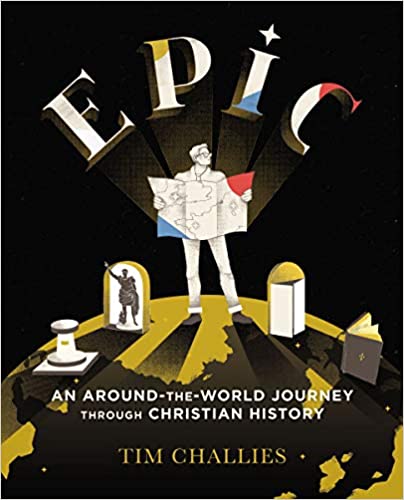
EPIC: An Around-the-World Journey Through Christian History

When Tim Challies first mentioned traveling all over the world looking for objects connected with Christianity for a book he wanted to write, I was puzzled. Our faith rests on the unseen—so why all that trouble for objects?

But then I remembered God used physical things all through the Bible. Stones piled up for a memorial. A brass serpent. A tabernacle and temple. A stone to kill a giant. Even His Son took on a physical body in which to die, be buried, and be resurrected to accomplish the means of our salvation.

Plus, Tim was not looking for these items to revere them, but to learn from them.

Tim’s travels culminated in EPIC: An Around-the-World Journey Through Christian History. Tim takes a close look at 33 objects and the stories behind them. They cross the centuries from the oldest known fragment of Scripture to the YouVersion app, from the statue of the Augustus who ushered in the Pax Romana, to the traveling pulpit someone made Billy Graham after observing him struggle in a small one.

Each chapter gives a brief background of the person or situation the object represents, then shares what that object tells us about God’s movement through the ages. None of the chapters are very long, and they include a few pictures each. It’s easy to pick up the book here and there and read a chapter or two at a time.

The most meaningful chapter to me focused on Amy Carmichael. Frank Houghton’s biography, Amy Carmichael of Dohnavur, was one of the first missionary biographies I read. That book and Amy’s own writings had a deep influence on me since my early adulthood. And Amy had a profound influence on Elisabeth Elliot, who impacted my life even more. So when Tim had a post about visiting not only Dohnavur, but also the room where Amy spent the last 20 years of her life as an invalid—that was when I began to get really excited about his book! Here is his video of that visit.

Another chapter that meant a lot to me was the one showing Nate Saint’s airplane. The story of the five missionaries killed in 1956 by the savage Indian tribe they were trying to reach has had a far-reaching impact ever since. I had not known that parts of Saint’s aircraft, which had been stripped at the time, had been recovered and reassembled.

I knew of most of the people mentioned in the book: William Carey, Hudson Taylor, David Livingstone, and others. Even Selina Hastings, or Lady Huntingdon, as she was known, one of my favorite people in Christian history. I enjoyed revisiting their stories and even learning a thing or two I hadn’t known.

Some of the folks mentioned were new to me: Marie Durand, Lemuel Haynes, and the folks who built the Papallacta Dam just so they could reach people in the area via radio.

Most of the objects discussed have positive stories and repercussions. A couple do not. One is known as the Slave Bible. Some missionaries wanted to reach slaves for the Lord, but “How could these missionaries teach the Bible to slaves without condemning slavery and therefore angering the slave owners?” Appallingly, they cut out “any passages or verses that condemned slavery or condoned racial equality. So pervasive is the message of freedom in the Word of God that only 232 of the Bible’s 1,189 chapters made the final cut” (p. 119).

One thing that becomes clear in a view over large swaths of Christian history is the realization of how God brought so many things together to accomplish His purposes. The Pax Romana and the system of roads created by the Romans allowed for the rapid spread of Christianity in the years after Jesus died and rose again. The invention of the printing press changed the world in many ways, but perhaps none more so than making the Bible available to the common man.

In one chapter, Tim said, “If I learned anything from my journey around the world, it’s the simple truth that the Lord is always at work” (p. 94). It was enjoyable and encouraging to see some of the Lord’s works in Tim’s book.

A DVD series was also made of Tim’s travels here. And here’s a trailer that gives an overview of the book:

I’m counting this book for the travel category for the Nonfiction Reading Challenge.

(I often link up with some of these bloggers)

Laudable Linkage

IMG_0195

Here are some thought-provoking reads discovered this week.

Now Ravi, Too? “Sin on the level that Christianity Today describes does not happen all at once. It grows gradually over a long period of time as sinful behavior builds layer upon layer. It starts by justifying small indiscretions and then multiplies until we find ourselves surrounded by a wall of hypocrisy. As I read the Zacharias story it prompts me to examine my own life for the ‘little’ sins that I am excusing.”

The Best and Worst of Bible Reading Plans. “In my commitment to continue to read through God’s Word, I’ve borrowed and developed various Bible reading methods and tips. Some worked well and others . . . flopped. In this article, I’ll share my greatest successes and biggest flops along with the single best advice I’ve discovered for faithfully reading and enjoying the Bible.”

You Are Going to Hate It, HT to Challies. “You know that country you’ve been dreaming about? The one that you have been praying over and researching? You’ve been talking about it endlessly these days, building a team who will support you when you move there. You are ready to uproot your family, your job, your entire life to pour your soul into the place you love so much. Call me a party pooper, but today I’m here to tell you something important: Shortly after you finally arrive in that country, you are going to hate it.” True for missionaries, but I think also for almost any calling. It’s not all sweetness and light. There will be times when “Perseverance is the whole battle.”

There’s Something About Your Faithfulness, Sister, HT to Challies. A word of encouragement for everyday faithful believers.

Why Read Full-Length Historic Christian Biographies? HT to Challies. Yes! My thoughts on this as well in a past post: Why Read Biographies? Christian biographies have helped my Christian walk immensely.

Have a great Saturday!

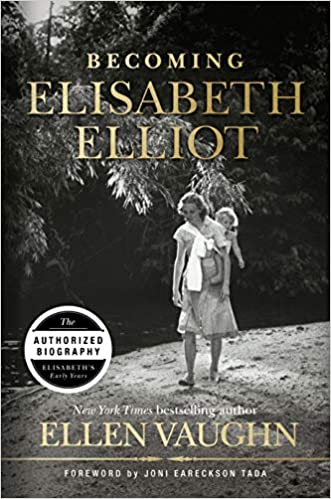
Book Review: Becoming Elisabeth Elliot

Elisabeth Elliot has been one of my heroes for decades. I first discovered her in college when I read Through Gates of Splendor, her book about the ministries and deaths of her husband and four friends. Then I read nearly everything she had written, received her newsletter and a Back to the Bible devotional mailing of her writings for years, and got to hear her speak in person twice.

The Elliots and their friends had wanted to reach out to a seemingly unreachable tribe in Ecuador. Though the beginning seemed promising, all five men were speared to death by the tribe, known then as Aucas (later by their own name for themselves, Waodani). A few years later, Elisabeth and her young daughter, Valerie, and Rachel Saint, sister to one of the other men, went to live among the Waodani. Some became believers, with a testimony that still stands to this day.

Elisabeth eventually came back to America. She authored 30 books and spoke to women, eventually hosting a radio program, Gateway to Joy, and sending out a monthly newsletter.

She surprised herself by remarrying a college theology professor, Addison Leitch. He succumbed to cancer four years later. She was an adjunct professor for a while. A few years later, she married Lars Gren. She had dementia the last several years of her life, lost the ability to speak, and died at age 88 on June 15, 2015.

Those are the spare details of her life. But they don’t capture her personality, her character. Why did so many women love to read her words and hear her speak and write her letters asking her advice about their problems?

Ellen Vaughn has attempted to answer those questions in her authorized biography, Becoming Elisabeth Elliot. I admit I had mixed emotions when I first heard of this project. Vaughn was well aware that she was going to be up against a number of expectations. She had access to Elisabeth’s multiple journals as well as many friends and relatives.

Of course, Elisabeth didn’t start out as the Elisabeth Elliot of such wisdom and depth. She began life as Betty Howard. Her early journals reflect a normal girlhood and a fair amount of teenage angst over boys and disagreements with her mother. Yet even as young as eleven, she showed a depth of thought and desire to follow and obey God. Betty Stam, who was killed by the Chinese along with her husband, John, had been a guest in the Howard home and made a great impression on young Betty. As a child, Betty Howard wrote and took Betty Stam’s prayer for her own.

Vaughn goes on to follow Betty’s education, meeting of Jim Elliot, and the long wrestling over whether they should marry. Jim had thought God wanted him to be a single missionary. When he became attracted to Betty, he wasn’t sure whether that was a result of God’s leading or his own desires. It took a few years to figure out. Finally he and Elisabeth married and worked among the Quichua Indians in Ecudaor. Then there are the details leading up to the Waodani outreach, the men’s deaths, Elisabeth’s wrenching grief, working with Rachel Saint, and return to the US.

The biography stops there, with a second volume in the works. I hadn’t realized that this was only part one until I started reading it. I wish that had been made more plain, but it wouldn’t have affected my desire to own and read the book.

Elisabeth was a critical thinker and wrestled with the ways of God, pat, churchy answers, what worldliness and being a missionary even meant, and so much more. She was strongly introverted and could come across as distant and aloof (when she first met Jim’s parents, he told her she had “made a universally horrible impression.”) She could seem unemotional, but she poured out her emotions in her journals.

One thing that Elisabeth discovered in her walk of faith was that God’s ways are inscrutable. She was a gifted linguist, and her first mission was an effort to reduce the Colorado language to writing. But the one man who knew both Spanish and Colorado well and who was willing to help her was senselessly murdered. Her careful work and notes were stolen. Her husband died. Her time of living with the Waodani bore some fruit but was fraught with frustrations. She felt all her work to that point was in ashes.

But she knew God was good and trustworthy, and the best thing, the only thing she could do was obey him, even when she didn’t understand. Her experiences and wrestling over issues of faith and practice made her who she was and gave her a depth and realism that struck chords with other women.

I felt overall that the biography did a good job. Ellen didn’t put Elisabeth on a pedestal, nor did she present her as unworthy of esteem. My one criticism is that, perhaps in an effort to show that Elisabeth was an ordinary woman and not a super-saint, some excerpts from her journals were shared that I can’t imagine Elisabeth would have wanted public. I understand why some people destroy their journals and letters before they die. I’m thankful Elisabeth didn’t, and I appreciate the insight they gave into her thinking. Still, some of it was probably not meant for public consumption.

Also, an index would have been helpful.

I’m looking forward to the next volume. I knew much about Elisabeth’s early life from her writings, but I’m not as familiar with the second half. I did learn several new things, however. For instance, I didn’t know (or forgot, if I had known) that Elisabeth was told about and wanted to go to the Waodani long before she and Jim married, and that part of the groups urgency to reach them was “rumors that the Ecuadorian government and the oil companies might well solve the ‘Waodani problem’ by using the military” (p. 139). Also, Through Gates of Splendor was written in a six-week period while she was in a hotel and her folks took care of her daughter. The publishers urgently wanted the story to be available. In her previous writings, I had sensed some tension between her and Rachel. The problems there are detailed here, and understandable. They were two very different personalities with completely different methods and training. I appreciate Elisabeth’s discretion in not dragging all of it out into the public eye.

I appreciate this summation of the Elliots near the end of the book:

Whether you agree or disagree with their choices, whether you resonate or not with their particular personalities, the takeaway from their lives is a reckless abandon for God. A willingness to cast off any illusions of self-protection, in order to burn for Christ. An absolutely liberating, astonishing radical freedom that comes only when you have, in fact, spiritually died to your own wants, ambitions, will, desires, reputation, and everything else (p. 274).

A couple of my friends reviewed this book as well:

Michele: A Life of Reckless Abandon for God
Ann: Becoming Elisabeth Elliot

(Sharing with Tell His Story, InstaEncouragements, Carole’s Books You Loved, Booknificent)

(I’m counting this book for the Biography category of the Nonfiction Reading Challenge.)

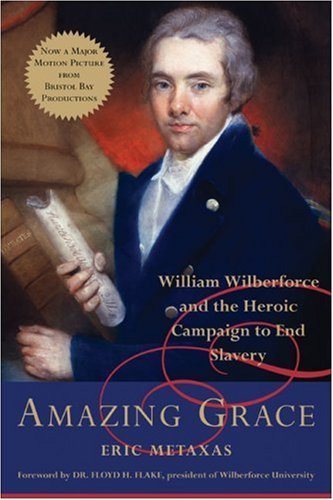
Book Review: Amazing Grace: William Wilberforce and the Heroic Campaign to End Slavery

WilberforceA few years ago a video titled Amazing Grace and a companion book, Amazing Grace: William Wilberforce and the Heroic Campaign to End Slavery by Eric Metaxas, were published to commemorate the 200th anniversary of the abolition of the slave trade in Great Britain.  I saw and enjoyed the film, but somehow was not aware of the book until this year.

Wilberforce did not accomplish abolition single-handedly, of course, but he was the driving force behind abolition and a host of other social causes.

William was born into a well-to-do family. He was always small, with poor eyesight and stomach issues (modern historians think he suffered from ulcerative colitis all his life). But he had a sparkling wit, an entertaining personality, and loads of ambition.

As a boy he stayed for two tears with an aunt and uncle to attend school nearby. Unbeknownst to William’s parents, these folks were Methodists whose frequent guest was John Newton. Methodists were thought at the very least to carry religion too far, as evidenced by the nickname used for them, Enthusiasts. Others thought they were radicals. Newton and Wilberforce seemed quite fond of each other, but William’s mother whisked him away as soon as she became aware of the religious climate of her relatives’ home.

Before long William forgot his early religious leanings and became the life of many parties. If he wasn’t hosting, he was a frequent guest. Deaths of his grandfather and uncle had left him wealthy. His friend William Pitt, who was planning to enter into politics (and eventually became Prime Minister), urged William to enter politics as well. William became a Member of Parliament (MP) as an independent at the age of 21. Then he set his sights on “the most coveted seat in all of Parliament” (p. 42), Yorkshire, and was elected to it at the age of 24.

That same year, William was on a holiday with friends and spent most of the journey with the brilliant Isaac Milner. As they traveled, they read and discussed The Rise and Progress of Religion in the Soul by Phillip Doddridge. William had a tendency to think through every aspect of a decision before making it. He came to an intellectual agreement of Christianity’s doctrines first, then heart and will yielded to what he thereafter called “the Great Change.”

At first he thought such a change would necessitate his leaving government. John Newton encouraged him to “stay his post” and assured him God could use him where he was. Newton wrote to his friend, William Cowper, of Wilberforce: “I hope the Lord will make him a blessing both as a Christian and a statesman. How seldom do these characters coincide!! But they are not incompatible” (p. 61).

As William began to be convicted with how he used his resources and time, his attention was drawn to those in need. Slavery was just a given fact in Britain then. The entire economy was built upon it. Because most of the slaves were in the West Indies, they were hardly thought of. But as word began to get out of their harsh and inhumane treatment, various individuals began to call for action on their behalf. Writers and poets like Hannah More and William Cowper used their pens. Artist and industrialist Josiah Wedgwood, of Wedgwood pottery fame, produced medallions with a cameo of a slave kneeling and asking, “Am I not a man and a brother?” People who had been aboard slave ships reported their findings. Others circulated and signed petitions. They thought Wilberforce should be their voice in Parliament, and after giving the matter his characteristic thorough consideration, he agreed.

They thought it would be an easy victory. Who, after all, would disagree with their cause? The ones who benefited from the slave trade, first of all, not only opposed any reforms but used lies and other tactics to sway public opinion. Then when the French Revolution broke out, anything smacking of liberty and equality was decidedly unpopular.

It was twenty long years before legislation passed to outlaw the slave trade. But even then there was still work to be done in enforcing it, dealing with smugglers who would fly other countries’ flags so as not to be stopped, etc. Those fighting for abolition realized they could not stop there: they needed to fight for emancipation.

Abolition of slavery was one of two main objectives in Wiliiam’s life: the other was the “reformation of manners.” By “manners” he did not mean etiquette and politeness. The Clapham Sect or society was a group of people who want to change some of the cruelties common in society then, like hangings for small offenses, public dissection of criminals’ bodies, and even bull-baiting and bear-baiting. Wilberforce financed schools for the poor run by Hannah More and her sisters even though society at large thought their education would either be fruitless or would upset “the order of things.” He was involved in penal reform, improving conditions for laborers, and a host of other causes. Yet he felt he had not done enough. He wrote to a friend:

I am filled with the deepest compunction from the consciousness of my having made so poor a use of the talents committed to my stewardship. The heart knows its own bitterness. We alone know ourselves the opportunities we have enjoyed, and the comparative use we have made of them…. To your friendly ear… I breathe out my secret sorrows. I might be supposed by others to be fishing for a compliment. Well, it is an unspeakable consolation that we serve a gracious Master, who giveth liberally and upbraideth not…. I always spoke and voted according to the dictates of my conscience, for the public and not for my own private interest…. Yet I am but too conscious of numerous and great sins of omission, many opportunities of doing good whether not at all or very inadequately improved.

In his later years he turned his attention to India and the East India Company’s abominable practices like keeping underage mistresses (what we would call a child sex trade today, only it was legal at the time) and the country’s inhumane practices like burning widows at their husband’s funeral pyres.

By the end of his life, most of his wealth was gone. He had heavily invested in his oldest’s son’s business venture, which failed. But before that he had given much to various causes and needs. He had to sell his home and take turns living with his two other sons.

Though most of the book focuses on Wilberforce’s public life, the author gives us glimpses into his private life as well. William married later in life, but was absolutely smitten once he found his wife. Visitors to the Wilberforce home would find the family in the midst of mild but happy bedlam with children and animals running around indoors and out.

Wilberforce was sometimes called the moral conscience of the nation. He did not ask for that position nor think of himself that way, but his character was such that, when he saw a wrong he could help to right, he felt obligated to do so.

My only complaints with the book were with some aspects of the author. Though Wilberforce is an admirable man, and even Lincoln and Frederick Douglass cited him as inspiration, Metaxas laid the praise on a little thick at times. Plus I felt too conscious of Metaxas as the author: usually in a biography the author does not insert himself into the subject’s story so much. Part of that insertion was evidenced in seeming attempts to be witty and clever. Plus, everything I have ever read about writing encourages using recognizable words, not in an attempt to “dumb down” the text, but to make it more accessible to the average reader. But this author sprinkled his narrative with words like uxoriousness that did increase my vocabulary but interrupted the text while I looked them up.

Oddly, Metaxas does not have a list of footnotes or endnotes with citing the sources he used, though he does close with a list of other worthy Wilberforce biographies.

However, overall I thought this was a very good book. I knew a bit about Wilberforce from the Amazing Grace film, Hannah More‘s biography, and assorted other references, but I was glad to hear about the rest of his life and to have a fuller picture of the character of the man himself. He is an example for all of us to use our resources and influences to help others.

(Sharing with Semicolon‘s Saturday Review of Books, Literary Musing Monday, Carole’s Books You Loved)

Laudable Linkage

I have just a short list today, but I thought it best to go ahead and share it rather than have an overly lengthy one next time.

The Greatest Thing You Can Do With Your Life.

Know the Neighborhood, HT to True Woman. “Because many Christians have not ‘walked the streets’ of our Bibles, we are overly susceptible to the views of others, right or wrong. Like would-be travelers or gullible sightseers we take as fact the opinions of the ‘experts’ about the 66 cities we have rarely or never been to visit.”

Why Women Should Be Readers of Good Books, HT to Out of the Ordinary.

The “At Least” Among Us, HT to True Woman. “The thing about saying ‘At least’ to someone—particularly someone who’s confessing their own anger, fear, grief, or sadness at the circumstances of their life, is it negates their wrestle and it naturally elevates our own.”

Five Dangers of Reading Christian Biographies, HT to True Woman. You know I love Christian biographies, but there are some potential stumbling blocks in reading them.

And finally, HT to Laura, this fun real estate listing showed a guest using the various facilities on the property.

Happy Friday!

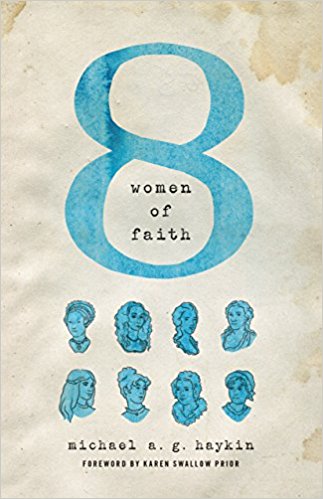
Book Review: Eight Women of Faith

8 Women of FaithEight Women of Faith by Michael A. G. Haykin is a series of essays about different women of faith between 1537 and 1826 and how they ministered to the church in their time. Karen Swallow Prior asserts in her forward to the book that we tend to focus on the one thing that women cannot do* and even use that to suppress them in other ways, instead of celebrating and encouraging the many things they can do, and this book is an attempt to highlight a few of the many ways women can be used by God.

After a brief introduction of an abbreviated history of thought on what women were and were not allowed to do in the church and a bit of background into how the book came about, Haykin proceeds with his essays. The eight women he discusses are:

Lady Jane Grey (1537-1554). The author details how Jane came to saving faith in Christ and the series of events in which Jane became queen for nine days (at her family and others’ direction, not her own ambition) until her disinherited cousin, Mary (of Bloody Mary fame) “marched on London with an army” (p. 26) and almost everyone turned to her, even those who had previously supported Jane. Jane was arrested and imprisoned, and Mary, a “die-hard Catholic,” sent one of her “most able chaplains” seasoned in debate (p. 21) to convert Jane to Catholicism. There are several pages of Jane’s record of the conversation, and it’s amazing that a teenager could be so firm in her faith and so ably answer this man from Scripture. My favorite part from this chapter is from a note Jane wrote shortly before she died to her sister:

I have here sent you, good sister Katherine, a book, which, although it be not outwardly trimmed with gold, yet inwardly it is more worth than precious stones. It is the book, dear sister, of the Law of the Lord. It is his testament and last will, which he bequeathed to us wretches, which shall lead you to the path of eternal joy. And if you with a good mind read it, and with an earnest desire follow it, it shall bring you to an immortal and everlasting life. It will teach you to live and learn you to die (p. 33).

Margaret Baxter (1636-1681) was the wife of esteemed Puritan pastor and writer Richard Baxter. In this chapter the author gives a brief history of opinions on marriage from early Christians through the Puritans. He gives some background information on both Richard and Margaret and how they came to trust in Christ and to marry. They were vastly different, in age, finances, and personality, and she struggled with anxiety after almost having died four times and witnessed a number of atrocities. But they appreciated each other’s gifts. He “freely admitted that Margaret was better than he at solving problems relating to financial and civil affairs” and “practical issues of the Christian life” (p. 48). A couple of favorite quotes of Baxter’s:

My dear wife did look for more good in me than she found, especially lately in my weakness and decay. We are all like pictures that must not be looked at too near. They that come near us find more faults and badness in us than others at a distance know.

When husband and wife take pleasure in each other, it uniteth them in duty, it helpeth them with ease to do their work, and bear their burdens; and it is not the least part of the comfort of the married state (p. 51).

Anne Dutton (1692-1765) was a Calvinistic Baptist writer even though that profession was not encouraged for women at the time. She wrote “tracts and treatises,…sacred correspondence, and poems” and corresponded regularly with George Whitfield and Selina Hastings, the Countess of Huntingdon, and others (p. 57). The Puritans “splintered into three major groups: the Presbyterians, the Congregationalists, and the Particular or Calvinistic Baptists” (p. 57), and Anne spent a lot of writing defending her beliefs, critiquing others’ teaching, and weighing in on controversies of the day.

Sarah Edwards (1710-1758) was the wife of Jonathan Edwards, leading figure in the “Great Awakening.” After very little biographical information, the author spends much of the chapter on Edwards’ writing about his wife “as a model of a Spirit-filled person” as opposed to some of the fanaticism and excesses of the day (p. 68).

Anne Steele (1717-1778) also came from a Calvinistic Baptist family, remained single on purpose, and wrote several hymns, and was known as “the Baptist equivalent of Isaac Watts” (p. 81).

Esther Edwards Burr (1732-1758) was the third daughter of Jonathan and Sarah Edwards, and the author concentrates her chapter on her writings about friendship.

Ann Judson (1789-1826) and her husband Adoniram were America’s first missionaries. The author tells of her own conversion, Adoniram’s proposal, which not only included marriage but also life as missionaries in Asia, the voyage there, the struggles learning the language, and their first few years.

Jane Austen (1775-1817) is, as I’m sure everyone knows, one of England’s most famous and most beloved novelists. A line in the notes and references at the end of the book says that “Religion to her was a private matter: to discuss it in a novel would have been a breach of good taste” (p. 148). But from her letters and what she does say in her novels, and especially a prayer she wrote, the author brings out strands of her beliefs.

My thoughts:

I was actually fairly frustrated with this book, but the primary reason for that was my own fault. I was expecting it to be more biographical, like When Others Shuddered: Eight Women Who Refused to Give Up, which I read recently. So I was dismayed to find out that the chapters were essays. They did, however, contain a good bit of biographical information.

My secondary frustration had to do with Haykin’s choices of what he put in and left out. Granted, when you’re writing just a few pages of a life about which books have been written, you can’t include everything, and different authors would make different decisions about what to emphasize. Ann Judson and Sarah Edwards were the two with whom I was most familiar, having read a number of biographies of Ann in particular (I wrote about Ann here and Sarah here and here). The great bulk of the most interesting part of Ann’s life was summarized in the last paragraph of the chapter. The author spent a great deal of time on Adoniram and Ann’s study concerning infant baptism (paedobaptism). They came from a tradition of infant baptism, and as they studied, they began to question it, studied some more, and eventually came out on the side of believer’s baptism, being baptized after one has made a profession of faith. This incident is important for a number of reasons. It shows their character and concern for truth and fidelity to Scripture (which was the main theme of the chapter). They had not wanted to make this change: Ann “felt afraid [Adoniram] would become a Baptist, and frequently urged the unhappy consequences if he should. But he said his duty compelled him to satisfy his own mind, and embrace those sentiments which appeared most concordant with Scripture” (p. 108). Once it became clear to both of them, they felt they had no choice but to make it known and deal with the consequences, which included leaving the mission board that had just formed in order to send them out, seeking Baptist support, facing the dismay and even anger of their friends and colleagues. So, yes, for all those reasons this was important. But if you’re writing 14 pages of a person’s life, do you want to spend 5 pages on this? A good page and a half or so was spent on listing the books the Judsons studied on this issue and telling us about the authors: in my mind, these books and authors could have been a footnote or end note with much less detail.

But aside from that, the book does share a lot of good information about these women and does meet its purpose in showing a variety of ways in which women have used their gifts to minister to others. I especially enjoyed the chapter on Lady Jane Grey. I knew her basic story and had read a fictional account of her life, but I appreciated learning more about her. I felt this chapter was the best written in the book, with a good blend of historical and biographical detail. I had read a magazine article on Margaret Baxter which made me want to read more about her, so I as glad to find more here. I had not heard on Anne Steele or Anne Dutton before. One of the main reasons I got this book, besides liking biographies and seeing it recommended by other bloggers I respect, was to find out more about Jane Austen’s faith. I had deduced that she was God-fearing in the sense that most of society in England was in those days, but I had wondered about her personal faith. I was a little disappointed in that there is just not much information available, especially with her feeling it was a private matter, and it’s not entirely certain that the lengthy prayer that was shared was hers. But I enjoyed the author’s tracing the way she dealt with preachers in her books.

So…mixed emotions about this book. There were parts I did enjoy and learned from, but I don’t think I will be seeking out any more books by Haykin any time soon.

____
* I know that there are a variety of opinions among my readers concerning what women can and can’t do in the church, but I would ask that you not make this post a place for that debate. I shared my own views here.

(Sharing with Semicolon‘s Saturday Review of Books, Literary Musing Monday and Carole’s Books You Loved)

Save

Save

Save

Save

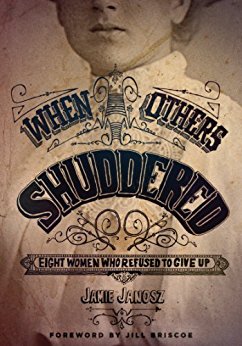
Book Review: When Others Shuddered

When Others ShudderedWhen Others Shuddered: Eight Women Who Refused to Give Up by Jamie Janosz contains eight short biographies of women who lived between 1820 and 1955 who influenced their world for God. They came from different walks of life: some single, some married, some wealthy, some former slaves. They were ordinary women except, as the title indicates, they didn’t “shudder,” they didn’t turn away from circumstances or tasks that many of us would have, and thus they can inspire us.

They are:

Fanny Crosby, who was blinded due a mistreatment to her eyes when she was six weeks old. Yet she later thanked God for this “gift,” feeling that it set the course of her life and made her more attuned to God working in and through her. Fanny determined to be optimistic, and her mother and grandmother tried to give her as normal a childhood as possible and teach her about God. She went to a blind school, taught there, married, was active in Christian work. She had always loved music and reading and composed poems since her girlhood, and that grew into hymn writing, many of her hymns well-known ones that we still sing today. The book shares her manner of hymn-writing and many of the incidences that led to hymns.

Emma Dryer was “a thinker, a dreamer, a girl who wanted more out of life” (p. 37). She loved and excelled at school and eventually became a teacher even though extra schooling was thought to “make women unfit for marriage and motherhood” (p. 37). She loved teaching and the orderliness of her life, but wondered if there was something more. A bout of severe typhoid fever hanged her life and made her want to give herself to Christian work. Visiting the growing city of Chicago, she was burdened with the needs of people, particularly women, there who came to the city to work but were often led astray. She felt “the Bible was the solution to the social problems” she saw there (p. 42). A meeting with D. L. Moody and the Great Chicago Fire of 1871 convinced her that she was needed in Chicago. Eventually Moody talked with her about a training school he wanted to establish, something right up Emma’s alley. Emma worked and planned toward that end, but Moody, distracted with his travels, meetings, and other work, didn’t get around the the school for some time. When Emma, who could be outspoken and confrontational at times, wrote strongly to him about it, he was offended and decided to leave Chicago and start a school in NY. But another letter and the urging of his wife and others led him to Chicago and the founding of the Moody Bible Institute.

Nettie McCormick was the wife of Cyrus McCormick, wealthy from his invention of a reaper. A number of her children died, she suffered several miscarriages, two of her children developed mental illnesses, and Nettie herself went deaf at age 34. She “struggled to see God’s hand” (p. 66) but wrestled in prayer and rested in Him. The McCormicks were always generous, giving to many good causes and works, and after Cyrus died, Nettie continued to give wherever she could, even to missionary schools in other countries. She wasn’t self-promotional and did much behind the scenes, but she didn’t stay behind her four walls: she traveled and even planted trees herself in front of a building she had funded. She was close friends with Emma Dryer and a major supporter of Moody and the Institute.

Sarah Dunn Clark grew up wealthy and privileged, but in her mid-twenties felt God’s urging to work in that which will last for eternity. She moved to Chicago and helped in many ways by visiting needy families and establishing a mission Sunday School. She met her husband there: they moved in the same social circles and had similar burdens. They visited slums and jails and opened a small rescue mission “in the heart of what people called ‘the devil’s territory'” (p. 80), which eventually eventually became the Pacific Garden Mission (which you may know of from the radio program Unshackled). George was called by some “the poorest preacher who ever tried to expound God’s Word,” but he was “deeply convicted and spoke emotionally about the condition of the lost” (p. 81). Sarah became the “mother of the mission,” ministering to people on a personal level. “In her quiet way, she extended respect and dignity to people regardless of their condition. It was this steadfast love that broke through many hardened hearts” (p. 87). The Clarks invested all of their money in the mission and lived simply and frugally.

Amanda Smith grew up the child of parents who were slaves at two different farms. Her father purchased his freedom, and the rest of the family was set free as the dying wish of the family’s daughter they tended. Her parents “believed in God,” “demonstrated a calm and steady faith” (p. 92) and were active helpers for the Underground Railroad. Amanda was only able to attend a short time of school and then began domestic work. Lonely one day, she decided to attend church, where the preaching and singing reminded her of home, and she felt God “wanted her, a poor, simple black girl, to serve Him” (p. 93). She wanted to be a “consistent, downright, outright Christian” (p. 99). Her first husband was a drunkard and died; only one of her children lived to adulthood; her second husband deceived her as to what kind of a man he was so she would marry him, deserted his family, and later died. She was invited to camp meetings, began to sing and testify at them, and soon people were paying her expenses to do so at other camp meetings. She had opportunity to travel to England, India, and Africa. She never asked for money, but prayed, and God sent her money that she then used to meet needs she saw in other places. She became active in the Christian temperance union, established an orphanage, and wrote a book about her life.

Virginia Asher became active in Christian work after her salvation, in time particularly drawn to “‘fallen women’ and the madams who ran houses of prostitution. She was often called in to read and pray with the sick, write letters to parents, dress wounds, and whisper words of peace to the dying” (p. 119). She helped care for their children: though she was unable to have her own, she “took in the world of lost souls and mothered them with divine love” (p. 122). She and her husband sometimes entered saloons and ask if they could put on a brief service for their customers – and they were allowed to. She established Business Women’s Councils.

Evangeline Booth was the daughter of William and Catherine Booth, founders of the Salvation Army in London, who “believed in the three ‘S’s while reaching those the rest of society rejected: soup, soap, and salvation” (p. 148). Evangeline remained single and eventually became the head of the Salvation Army in the US, and eventually led it internationally.

Mary Mcleod Bethune was born after the Emancipation Proclamation to parents who had been slaves. She thirsted for education and prayed earnestly for it. God answered through a local mission school and later through scholarships to other schools, eventually to Moody Bible Institute. She had a beautiful singing voice and toured with the choir. She wanted to be a  missionary in Africa, but God closed the door. She eventually established a school in Florida with the meagerest of supplies, in opposition to the white community and the KKK, which eventually joined with another college to become Bethune Cookman. She became an advisor to presidents, eventually taking the newly created position of administration of the Office of Minority Affairs for FDR and then other government posts, and established the National Council of Negro Women. She realized her dream of going to Africa when as a US representative she went to Liberia for the inauguration of their new president when she was in her seventies.

Along with more detail about the life and faith of these women, there are three chapters on “Woman and Education,” “Women in Missions,” and “Women in Politics,” detailing a bit of the history of the times in each of those areas. A final chapter wraps up “Being That Kind of Woman,” discussing some of the key features they had in common. None had a trouble-free life: some dealt with poverty, health issues, marital problems, deaths of children, opposition. None were faultless or flawless. But each sought to follow God in the way that He led them and relied on Him for what they needed to do so.

You may have noticed that most of them had some connection with D. L. Moody and/or the Moody Bible Institute. That’s because the author is a professor at Moody and her initial research into Emma Dryer’s life led her to a study of all these women.

If you like biographies, you will probably like this book. If you don’t like biographies but feel you might be able to take them in smaller doses, this book is worth a try. If you like hearing how God has worked in people’s lives and get inspired by them in your own – which is why I like biographies – you will glean a lot from this book.

(Sharing with Semicolon‘s Saturday Review of Books, Literary Musing Monday, and Carole’s Books You Loved)

Save

Save

Book Review: I’m No Angel

im-no-angelI’m No Angel: From Victoria’s Secret Model to Role Model by Kylie Bisutti tells the story of her successful rise through the modeling world only to abandon it at the height of her success.

As a young girl Kylie was thin and pretty with “freakishy long legs,” and constantly people would tell her she looked just like a model or should be a model some day. Kylie makes an important point when she says:

Adults don’t always realize the profound effect their words can have on young kids—girls in particular. These people mean well, of course. What harm could possibly come from telling a little girl she’s pretty? Technically, none—unless that’s the only affirmation she ever hears…

It wasn’t as though I didn’t have anything else going for me…but whenever anyone looked at me, all they seemed to see was model.

As my identity became wrapped up in being pretty, it also became the primary attribute I used to define my value. If people weren’t praising me for my looks, I started feeling like I was lacking somehow, and I would go out of my way to make them like me. This would turn into a cycle that would haunt me for years to come.

In her junior high years, she felt a growing disconnect with her father, who had taken a new job and was working all the time so that she could “have what [he] didn’t have growing up.” She “missed their old life…when we had less money but more time together.” Then her height and thinness started getting her teased at school, with girls saying she was anorexic and boys calling her a giraffe.

So when opportunities for modeling did come her way, the positive attention and affirmation soothed. her. She hoped to “prove something to all the people who had teased me at school” and even to “regain [her] dad’s attention.”

From the very start, at just 14, she was made up and dressed to look older than she was and to appear sultry and sexy and pose provocatively. Being expected to change clothes in a room with models of both sexes made her uncomfortable, but she figured it was part of the job and she needed to get used to it. In addition:

That’s one of the harsh realities I learned early on about the modeling industry: ultimately, your body doesn’t really belong to you.  It belongs to the client.  Since they’re paying, they figure they can do pretty much whatever they want to you.  They can curl your hair, straighten it, dye it, cut it –even shave it.  I’ve seen hair extensions being pulled out by the roots and smoke billowing out of flat irons while the hair inside gets singed and fried.  I’ve watched models squeeze their feet into shoes so small their feet literally bled, and I’ve seen false eyelashes torn off so quickly that the natural lashes came off with them.  Modeling may look glamorous on the outside, but believe me, beauty can be an ugly business.

Some girls even had surgery to remove ribs to look thinner, Kylie herself, at a size 2 and 115 lbs., was referred to as “the big model,” and her agent called her a “fat pig” and a “cow” and told her she needed to lose weight.

After a devastating heartbreak in high school, Kylie was open when a friend invited her to her church’s youth group. She began going to her church and learning about God, Jesus, and salvation for the first time. At a youth camp some time later, she finally put her faith in the Lord Jesus as her Savior. After she came home, her mom saw such a difference that she was open to what Kylie shared about what she was learning.

It still took years, though, for Kylie to come to a realization that there might be a problem with her modeling, especially modeling lingerie. We are saved in a moment, but growth and sanctification are processes that come with time in God’s Word and in His church. Kylie tells how her modeling career continued until she reached what she considered the pinnacle: winning a Victoria’s Secret Runway Angel competition. Aspects of modeling continued to bother her, but at first she just thought it was part of the job, then didn’t want to displease her agent or company or jeopardize her job or risk rejection. Finally she was convicted, but continued to compromise. She “wasn’t mature enough to understand this at the time, but it wasn’t simply a question of what you can or can’t see in those types of photos. My sinful choice was rooted in something deeper: what the photos represented. I can only imagine how sad it made God to see my complete lack of honor and purity and respect, not only for myself, but also for my parents, for my future spouse, and most of all, for Him.”

Had I been further along in my Christian walk and more focused on serving God rather than myself, I might have seen that. But I still had a long way to go in my faith. In my mind, being a Christian meant that God loved me and that He wanted me to be happy, healthy, and successful. I’d been listening to CDs that taught me how to transform my mind, when I should have been immersing myself in the Bible so God could transform my heart through His Word. Up to that point, I’d been treating God like a genie in a lamp, making childish wishes and then waiting for Him to deliver.

But God didn’t send His Son to die on the cross so that one day I could become a famous fashion model. He doesn’t exist to serve me; I exist to serve Him.

When she married, her husband at first didn’t realize all that was involved in her modeling, and once he did, instead of “making” her quit, he just quietly prayed for God to convict her. And He did. “God was opening my eyes to the fact that I couldn’t glorify Him in my life while at the same time taking modeling jobs that compromised His values. The disconnect was too great, and if I kept trying to do both, I would end up despising one. I had to choose. Would I serve the world, or would I serve God?”

When she repented and chose to serve God, at first she thought she would continue t model but avoid jobs that were immodest.

But as I continued to grow in my relationship with the Lord, I started to lose the desire to model at all. Regardless of the type of clothing, I knew that modeling promotes the world’s sense of beauty. This wasn’t the type of beauty I wanted to endorse for girls and women. Not only that, but the temptation would always be there to be thinner, prettier, and more in demand. I’d seen how addictive those desires can become, and I didn’t want any part of it anymore.

Unfortunately a sad consequence of modeling is that the photos that were taken of her will forever be available on the Internet, even some by a unscrupulous photographer who sold some to a porn site. There’s no way to get them back or have them erased. “I could make godly decisions related to my future, but I couldn’t control how others chose to exploit my past.” She chooses to think of them as “a powerful reminder of the consequences of sin and the depths of God’s redemptive grace.”

Now she is married with two children and a ministry encouraging women in their walk with the Lord. She blogs at I’m No Angel.

A few years ago during Victoria’s Secret show on TV, Kylie was watching Twitter and finding mostly negative comments about it, some from women who felt that it was a negative not only because of the immodesty, but because of making “everyday” women feel inadequate. One man tweeted, “I’d rather have a Proverbs 31 woman than a VS model.” Kylie responded, “I quit being a VS model to become a Proverbs 31 wife.” Within minutes she was contacted and asked to do a guest blog post which went viral and led to interviews on a number of news sites. There were some verbal attacks as a result, but there were also words of encouragement in unlikely places in the industry.

At the end of the book is a 30-day devotional section titled “The Master’s Makeover,” with Scripture and words of wisdom about beauty from God’s point of view.

I found this quite an eye-opening book and was blessed by Kylie’s growth. As far as I can tell no one sat her down and had “a talk” about modesty with her, but God dealt with her heart and brought her to conviction Himself. In the few pictures shared in the book, she looks so much healthier and happier, in addition to being more modest, in her more recent photos.

Genre: Autobiography
My rating: 9 out of 10
Objectionable elements: I think Kylie does a good job showing the seamy side of the industry without getting unnecessarily explicit, but there are scenes that might bother some. In addition, a lady preacher is mentioned with whose teaching I would disagree, but I think that was who Kylie was talking about when she referenced listening to CDs teaching that God wanted her to be positive, happy, and successful rather than teaching the whole counsel of God.
Recommendation: Yes.

(Sharing at Semicolon‘s Saturday Review of Books, Literary Musing Mondays, and Carol‘s Books You Loved)

Books you loved 4

Save

Save

Save

Save

Laudable Linkage

Here are some good reads discovered recently – perhaps you’ll find something of interest here as well:

I Can’t Be Good Much Longer, HT to Challies. Loved this.

A Simple Way to Spend 45 Minutes a Day With the Lord.

A Post Mortem on A Year of Biblical Womanhood. I still haven’t gotten to this book yet, but Wendy brings up a serious issue with how the author handles the Word of God.

How Should I Handle Anger When Disciplining? I always appreciate Jen’s thoughtful and careful approach to topics.

I Won’t Force My Kids to Go to Church. Reasons to rather than not to, as I originally thought by the title.

Let Heroes of the Faith Teach You Today. Regular readers know I advocate reading biographies of Christians who have gone before us. Here is another reason to: “A diet consisting largely of blogs and books written by modern-day men and women who have lived a mere three, four, or five decades in affluent America is a recipe for spiritual malnutrition.”

Little House on the Prairie to Get a New Film Adaptation. I’m not sure how I feel about that. It will depend on how it is handled. I also enjoyed the links here to a segment with 8 of the TV show cast members together after some 20 years or so. Fun to see what they look like now!

Finally, I saw this video at The Story Warren and found more information on the typewriter artist, Paul Smith, here. He was born with cerebral palsy and not expected to live long, but he lived to be 85. He began using a neighbor’s discarded typewriter when he was about 11 and eventually began creating amazing works of art using only about 10 keys. What a reminder not to judge someone’s abilities and soul by outward appearances. And to concentrate not on what you can’t do but on what you can.

Happy Saturday!