Book Review: Women of the Word

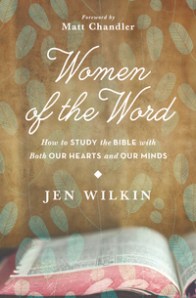
WOTWI have to confess that my first thought when I saw Women of the Word by Jen Wilkin mentioned favorably around the blogosphere was, “Hey! She took my title!” That’s not a very spiritual reaction, I know. 🙂 I’ve been blessed to have been able to compile a ladies’ newsletter for our current church for a couple of years and for a former church for about 9 years, and one column I’ve had in it  for a long time has gone by that same title, “Women of the Word.” It began after a discussion about devotions during one of our ladies’ meetings and the realization that no matter how long one has been a believer, there are always going to be struggles either maintaining a devotional time or making it what it ought to be. So I began the column to encourage ladies along that line and have begun to wonder lately if perhaps I might put them all together and see if they might possibly form a book.

My second thought, after reading a little bit about this book, was that I must get it. Everything I’d heard about it indicated that the author had the same passion as I do for getting women into the Word of God.

And the book definitely did not disappoint in any way.

Jen is not content to just get you into the Bible, however. She wants to equip women to dig for the true meaning of the Bible rather than using the Xanax approach (just seeking something to get through the day) or any number of other faulty approaches. She reminds us that God wants us to love Him not just with our hearts and souls, but also with our minds. She says that when she first began to read her Bible, she approached it with questions like, “Who am I?” and “What should I do?” Though the Bible did give her some insight for those questions, she eventually realized that “I held a subtle misunderstanding about the very nature of the Bible. I believed that the Bible was a book about me…I believed the purpose of the Bible was to help me” (p. 24). She learned that “We must read and study the Bible with our ears trained on hearing God’s declaration of Himself” (p. 26).

When I read that God is slow to anger, I realize that I am quick to anger. When I realize that God is just, I realize that I am unjust. Seeing who He is shows me who I am in a true light. A vision of God high and lifted up reveals to me my sin and increases my love for Him. Grief and love lead to genuine repentance, and I begin to be conformed to the image of the One I behold.

If I read the Bible looking for myself in the text before I look for God there, I may indeed learn that I should not be selfish. I may even try harder not to be selfish. But until I see my selfishness through the lens of the utter unselfishness of God, I have not properly understood its sinfulness (pp. 26-27).

“It’s possible to know Bible stories, yet miss the Bible story” (p. 11). In our quest for Biblical literacy, “we may develop habits of engaging the text that at best do nothing to increase literacy and at worst actually work against it” (p. 37). “We must be those who build on the rock-solid foundation of mind-engaging process, rather than on the shifting sands of ‘what this verse means to me’ subjectivity” (p. 87).

The author then shares ways to read the text within the context and to read it for comprehension, interpretation, and application. There is  an excellent chapter as well for teachers, one section of which makes an excellent case for women Bible teachers. She appears to believe, as I do, that women should teach women rather than men, but she gives some excellent reasons why women should teach other women.

I also appreciated how she dealt with an issue in the conclusion that I have seen some up in just the last couple of years. These days, when you try to encourage Bible reading and study or try to bring to bear what the Bible says on a conversation, you can sometimes be accused of “worshiping the Bible.” Jen answers:

I want to be conformed to the image of God. How can I become conformed to an image I never behold? I am not a Bible-worshiper, but I cannot truly be a God-worshiper without loving the Bible deeply and reverently. Otherwise, I worship an unknown God. A Bible-worshiper loves an object. A God-worshiper loves a person (p. 147).

In short, I love this book and highly recommend it. I do more than recommend it: I don’t often do this, but I encourage you to get it. I’m more than happy that the title I was considering using for a book has been attached to such a one as this.

I’ll close with one last quote:

We must make a study of our God: what He loves, what He hates, how He speaks and acts. We cannot imitate a God whose features and habits we have never learned. We must make a study of Him if we want to be like Him. We must seek His face…

We see Him for who He is, which is certainly a reward in itself, but it is a reward with the secondary benefit of being forever altered by the vision (p. 150).

(This will also be linked to Semicolon‘s Saturday Review of Books.)

Laudable Linkage

Here is a collection of some thought-provoking posts discovered in the last couple of weeks:

You Are What – And How – You Read from Rosaria Champagne Butterfield. About more than reading.

When Sin Looks Delicious.

The Inner Life — Four Reasons to Have a Quiet Time.

The ladies of Out of the Ordinary have been blogging about middle age this month, a topic you don’t often see on blogs. My two favorite posts so far have been Things to Guard Against in the Middle Years and The Middle Years: There’s Good News, Too!

On Daughters and Dating: How to Intimidate Suitors. Loved this: “Instead of intimidating all your daughter’s potential suitors, raise a daughter who intimidates them just fine on her own. Because, you know what’s intimidating? Strength and dignity. Deep faith. Self-assuredness. Wisdom. Kindness. Humility. Industriousness.”

What do those with disabilities owe those without?

An Outburst Is An Opportunity.

When It’s Time to Leave a Church.

Five Helps for Memorizing Bible Verses.

Three Reasons to Diversify Your Reading. Why Christians should read non-Christian books.

Hope you have a great weekend!

Laudable Linkage

Here are a few interesting reads found this week:

Head Knowledge = Good. Heart Knowledge = Good. We need both.

Reading the Bible Like Jesus: Matt. 22:31 and Reading the Bible Like Jesus: Luke 24. I would just caution, with the first one, that though we do need to read the Bible as written directly to us, we need to remember that not every instruction or promise is for us to follow. Some things were given specifically to Israel or to an individual. But, yes, even that is written to us for a purpose.

Don’t Pray in Circles!

Coming Home: When Missionaries Come Off the Field. Ways to be helpful rather than hurtful.

Rescued. Beautiful.

How Do Birds Keep Warm in Winter? HT to FFF friend Kathie (who always has gorgeous photos!) I thought our resident cardinals were just getting fat, and though they do eat more to stay warm, they also fluff layers of air amidst their wings as insulation. Very interesting article.

Saw this at Bobbi‘s. Very sweet. I don’t know if falling makes you stronger, as it says at the end, but I do hope I’ve taught my kids that falling isn’t the end. This is a good reminder, too, that though Olympic athletes are talented, they also have years of hard word leading up to their feats.

Have a good weekend!

Laudable Linkage

If you’re like me, there hasn’t been a lot of time for Internet reading the past week, but here are some things I found interesting over the last couple.

5 Things Christians Should Stop Saying.

My Preferred Way to Read the Bible. I tend to go back and forth – more general reading some times and then camping out in one book some times.

Dear Kids: What You Need to Know About Duck Dynasty, Justine Sacco, and Christmas.

Is a Simple Christmas a More Godly Christmas? While the message to simplify is a good and needed one, and we could all probably simplify in some ways (in life as well as at Christmas), there are some times that we can’t, and there are some times that what we call simplifying = selfishness and unwillingness to sacrifice and serve. This is one of those areas that will look different for different people and requires discernment and wisdom.

Aren’t There Enough Christian Books Already?

My Take on “The Hobbit” 2. Pretty much my take as well.

This is the US Air Force Band staging a flash mob at the National Air and Space Museum. I was amused that at the end they were all organized in neat rows, unlike most flash mobs. 🙂 I always wonder what it is like for the very first person to step out into a crowd and start singing or playing.

Hope you have a great weekend! I’ll have some exciting news next week. 🙂

Laudable Linkage and Videos

Here are some good reads from the last couple of weeks:

Christmas Is For Those Who Hate It Most.

God May Not Have a Wonderful Plan for Your Life. He does, in the sense that He made it possible for us to go to heaven when we repent and believe He sent His Son to take our sins on the cross, and He has promised to be with us in this life, but some things in life are hard. The Bible said they would be, and we can give people the wrong picture of Christianity and rub salt in an open wound sometimes by spouting phrases like this.

God’s Heavenly, Glorious Melting Power. Ways to keep devotions from becoming mechanical.

Scowling at the Angel. “There in my brokenness I had so little to give. But grace, she never left. She met me in all my frailty, raw and wrathful, as exposed and defenseless as the day I was born.”

The Needs of Three Women. Being ministered to while ministering to the homeless.

3 Marks of Righteous Anger.

Daily Scriptures to Help Tame the Tongue.

The Story of Gwen and Marlene. This is a theme I have mentioned often, that women’s ministry is not always in specific programs. It’s mostly a matter of being available and interested in others.

Inhospitable Hospitality.

Our Love-Hate Relationship With Christian Art. “Christian art? Are you kidding me? Christianity has produced the greatest art of all time.”

A Letter to an “Expectant” Adoptive Mom. Great advice from one who has gone through the process not only of adopting, but adopting internationally.

How to Get People to Read the Bible Without Making Them Feel Dumb.

Union With Christ in Marriage. “Paul doesn’t give us commands to extract from the other spouse. Instead, Paul instructs us in the graces to give!”

What Foster Parents Wish Other People Knew.

It Takes a Pirate to Raise a Child, HT to Bobbi. Loved this – about how children’s stories shape their ideas of right and wrong, e.g., telling the author’s son that he was acting like Edmund in The Lion, the Witch, and the Wardrobe  helped him understand his behavior towards his siblings was wrong when explaining and exhorting wasn’t getting through.

Merry Literary Christmas. 🙂

A couple of fun videos:

An two year old with amazing basketball skills:

Captain Picard and crew sing a Christmas song:

And a nice summary of The Paradox of Christmas:

Happy Saturday!

Laudable Linkage

Here are some noteworthy reads from the last week:

How Not to View Your Devotions, HT to Kim. Excellent.

The Value of a Long-Term Struggle.

A Slave in My Own Kingdom, something learned from a C. S. Lewis’s The Silver Chair.

5 Things to Do Before Leaving Your Church.

Gospel-Centered Sex?

Half a Century Since C. S. Lewis. I mentioned this yesterday but wanted to note it here as well.

Narnia Through the Ages, a photo essay of covers of C. S. Lewis’s The Lion, the Witch, and the Wardrobe over the years, HT to Janet.

Blessing Mix, a neat idea to give out at Thanksgiving along with a little printable tag, HT to Julia.

Hope you have a great weekend!

Laudable Linkage

Here are a few noteworthy reads from the last week or two:

20 Tips for Personal devotions in the Digital Age, HT to Challies. I don’t agree entirely with #5 about not sharing what you’ve read on social media. Sometimes that’s a blessing to read, but I agree you shouldn’t have devotions with that in mind.

Do Not Depart has a series this month on Nameless Women in the Gospels. I especially enjoyed this one from Lisa: Gifts from a personal God.

Evangelism in the Workplace, especially as the culture becomes more hostile to Christianity, HT to Challies. A quote from it I especially liked: “While the Lord used Hunter to pursue me, I never felt like a project, just a friend.”

Jim Elliot’s Brother Bert: The Hero You Don’t Know, HT to Ann. Neat comparison of his being an everyday faithful star as opposed to Jim’s being a meteor. Neither is better or worse and God has places and purposes for both, and we can learn from and be inspired by both, but probably most Christians are more like Bert than Jim.

Flawed Heroes and Virtuous Villains. Even the best of men have flaws.

How the Christian Orphan Care Movement May Be Enabling Child Abandonment and alleviate both have some good thoughts about orphan care that may be more harmful than helpful.

National No Bra Day and Breast Cancer Awareness Month — OR — Please Put That Pink Can of Soup Down & Put Your Bra Back On. How breast cancer survivors really feel about some of the silly breast cancer “awareness” campaigns. (Warning: a little more explicit than what I usually post, but she makes excellent points.)

Julia is offering readers a cute free Thanksgiving Subway Art Printable.

And, though the government shutdown really is not funny – I know people personally who have been laid off or furloughed until the government gets its act together – I have to admit this did make me smile:

558376_314298748708294_1392577169_n

Hopefully something will work soon!

Happy Saturday!

31 Days of Missionary Stories: Isobel Kuhn Learns to Put God First

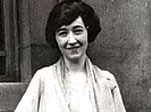
isobelkuhnIsobel Kuhn was a missionary to China in the early to mid- 1900s, alongside her husband, John. She has written a number of books about the Lord’s working in their lives and ministry, all very readable and enjoyable. She has a very readable style and is quite honest and open about her faults and foibles, but her books are also laced with humor. By Searching was subtitled My Journey Through Doubt Into Faith and describes just that. She had grown up in a Christian family yet wasn’t truly saved. When a professor at college condescendingly told her she only believed because that was what her parents told her, she realized he was right, and thoroughly let herself go into the “worldly” activities she hadn’t been allowed to pursue. This book traces her journey to true faith in Christ and her first steps in her walk with Him. In the Arena is not exactly a sequel, but it highlights many decisions, experiences, and trials in which God manifested Himself. I reviewed both books together here.

One incident that had lasting effects occurred during Isobel’s training at Bible college. Many students did not have a quiet time or devotional time with the Lord, because they spent so much time studying the Bible. “But,” Isobel wrote in In The Arena, “reading the Scriptures for a technical grasp of the general argument in a book, and reading it as in the Lord’s presence, asking Him to speak a word on which to lean that day — those were two very different things. One was no substitute for the other. Yet I knew also that some students were trying to let classwork reading do for personal quiet time. Deadness of souls was inevitable.”

As she prayed about it, she felt led to form a habit of spending one hour a day, sometimes in two half-hour segments twice a day, “in the Lord’s presence, in prayer or reading the Word. The purpose was to form the habit of putting God in the centre of our day and fitting the work of life around Him rather than letting the day’s business occupy the central place and trying to fix a quiet time with the Lord somewhere shoved into the odd corner or leisure moment.”

She and nine others covenanted to do this for about a year and meet together monthly to worship together, confess failure, and encourage each other. She wrote, “It was never my thought that this covenant should become law. My thought was merely deliberately to form a habit which would allow the Lord to speak personally to us all the days of our lives….somehow news of [this covenant] spread, and others began to join. Then—it seems as if some human beings always have to go to extremes—some signed a covenant binding them to this hour a day for life. I did not sign it. What about days of illness or emergency, when it might be impossible to keep an hour quietly? There was no need to vow; there was only need to form a habit of putting God first.”

The following is from In the Arena and tells of how this decision was tested.

This is the background of my platform of secret choices. It was the evening of the Junior-Senior party. I was a junior and had been asked to lead the devotional with which all such parties closed. I was also on the programme as Grandma in a Dutch scene, off and on all through the banquet. The week before had been so full of work and study that I had not had one moment to sit down and prepare a devotional.  Work…had delayed me, and I arrived at the supper half-hour, hungry,  exhausted, and without any devotion prepared. Besides this, I still had half an hour due on my quiet time! After the party we juniors had to clean up and I would not get to my room til midnight — the day would be gone.

Here was my platform of secret choices. That supper half-hour. (1) Should I go down and eat my supper? (2) Should I skip supper and try to prepare the devotional message? (3) Should I put God first and give that half-hour to him? The supper bell rang, and my roommate left for the dining room. I stood for a moment irresolute; then, throwing myself on my knees by my bedside I sobbed out in a whisper, “Oh, Lord, I choose you!” As I just lay in His presence too weary to form words, the sense of His presence filled the room. The weariness and faintness all left me. I felt relaxed, refreshed, bathed in His love. And as I half knelt, half lay there, saying nothing, but just loving Him, drinking in His tenderness, He spoke to me. Quietly, but point by point, He outlined for me the devotional  message I needed to close that evening’s programme. It was an unforgettable experience and an unforgettable lesson. Putting Him first always pays.

In the exhilaration of that wonder I ran down to the banquet hall, slipped into my costume, and went through the programme. At the end, when the devotional message was needed, I gave very simply what He had told me during the supper hour. Such a quiet hush came over that festive scene, I knew He had spoken, and I was content.

More than twenty years passed. I was home on furlough and visiting the Institute. It was the day of the Junior-Senior party and a group of us were reminiscing. “One Junior-Senior party a always stands out in my memory,” said one. “I forget who led it but it was a Dutch scene and the devotional blessed my soul. I’ve never forgotten it.” She had indicated the date, so I knew. I was thrilled through and through. Of course I did not spoil it by telling  her who led that devotional. In God’s perfect workings, the instrument is [often] forgotten. It is the blessing of Himself that is remembered.

 (You can see other posts in the 31 Days of Missionary Stories here.)

Devotional Tips

Bible

One of my passions is to get women into the Word of God for themselves. Since this is the time of year many renew their efforts to have read their Bibles, I thought some might find this post from the archives (2006) helpful.

For those who might be unfamiliar with the term, “devotions” or “having devotions” is the time spent in the Bible and prayer. Others call it their quiet time or their “God and I” time or other terms.

Hopefully if you are considering devotions, you already feel it is important to read the Bible, but if you need to be encouraged along those lines, some reason to read the Bible are here.

When I first became a Christian as a teen-ager, the church I was in then had a strong emphasis on reading the Bible through in a year. I am so glad, because I think that, more than anything else, got me grounded spiritually. There are many advantages to reading the Bible through in a year: it kept me focused; I knew where to read next instead of wandering around aimlessly; I discovered choice nuggets in places like II Chronicles and Zephaniah that I probably would never have discovered otherwise; it kept me balanced; it helped me understand passages in their context; and each time through I would understand the passage more. There are, however, a few disadvantages: I felt like I couldn’t stop and ponder anything because I had to keep going in order to finish the day’s reading in the time frame I had, and if I fell behind it would get awfully discouraging trying to catch up. So after some time I continued to read the Bible through, but not necessarily in a year. I feel free to stop and meditate on a particular truth I found or to study it out further. I usually read a couple of chapters a day, but I sometimes stop after a few verses or sometimes go on and read more. Then sometimes between books, I take a break and work through a Bible study book or do a word study or topical study.

Most “reading the Bible through” plans encourage reading from both the Old Testament and the New, or reading a passage from Psalms or Proverbs along with the day’s scheduled reading. I think that is probably to help you through some of those “drier” books like Leviticus.

I think this is one of those areas where anything is better than nothing, though, so if someone says, “I’m sorry, I just can’t get into Leviticus,” I would say that’s fine. Maybe some day you’ll get back to that, but reading somewhere in the Bible is better than reading nothing.

Probably for most people the first big battle is getting regular about it. It does help to make a regular time and place for it. I like to have devotions in the mornings because my mind isn’t as cluttered as it is later on. I get up a little earlier than everyone else so it is quiet, and I have my shower first so I am awake. There were some years during the getting-kids-off-to-school morning rush when the best time was after everyone left for the day. The best time for some people is in the evenings.

There are some seasons of life, like when there is a new baby in the house, or vacation times, or when company is there, when it’s hard to maintain that regular time. It’s easier to let that time slip then, but if we go back to the “anything is better than nothing” principle, we can grab a few quiet moments here and there.

Once some semblance of regularity is maintained, the next big battleground is keeping our minds on what we’re doing. There is a quote from John Donne which expresses it well: “I throw myself down in my chamber, and I call in and invite God and His Angels thither; and when they are there, I neglect God and His Angels for the noise of a fly, for the rattling of a coach, for the whining of a door.”

I think the biggest help in avoiding distractions is to be actively looking for something rather than passively reading (more on that later). Another help is to keep a notepad nearby so that when something else comes to mind, as it so often does, like an item I need to get at the store or someone I need to call today, I can jot it down so I don’t forget it later and so my mind can acknowledge that it will be taken care of and not keeping going back to that thought.

It helps to “get in gear” as we begin. I often pray, “Open thou mine eyes, that I may behold wondrous things out of thy law” (Psalm 119:18), or asking the Lord to make my heart “good ground” that the seed of His Word can fall upon. It can help, also, to ask Him for something from His Word to carry with you through the day. Some people like to begin listening to, singing, or reading through a hymn. I like to start off with the reading from Daily Light on the Daily Path for the day.

Ps. 66:18 says, “If I regard iniquity in my heart, the Lord will not hear me.” We need to ask Him to search us, show us anything wrong, and enable us to get it right so we don’t block the channels of communication.

On to some general tips:

  • I was advised early on to look for a command to follow, a warning to heed, a promise to rely on, and even to underline (this was before highlighters were invented ) those things with different colors (red for warnings, blue for promises, black for commandments, yellow for verses about salvation. etc.) or marking beside the verse with different symbols for each category. The point isn’t “coding” your Bible, but to use that as a method to think through what the passage is saying and how to apply it.
  • Ask the old journalism questions: who, what, why, when, and how. What is being said to whom by whom? Is the promise there to all people or only to a specific person or group?
  • Notice recurring words or phrases, like the phrase “let us” which occurs three times in Hebrews 10:22-24, or the recurrence of the words “know” or “knowledge” in II Peter 1:2-8.
  • Underline verbs in passages like I Cor. 13 (the love chapter) or Proverbs 2:1-5 (about the search for wisdom).
  • In some of those long sentences of Paul’s, going back to basic English can help us understand them better: find the subject and verb to learn what the sentence is actually about, and then see how the phrases fit around it.
  • When reading the epistles, it can be helpful to write them out as they were originally written: as a letter without the chapter and verse markings.
  • Use a basic dictionary. One exercise in Changed Into His Image by Dr. Jim Berg instructed the reader to go through I Corinthians 13: 4-8 and write the definitions of the major words on a separate piece of paper, then write the verses out using those definitions. That was one of the most rewarding studies I have ever done. Even though that passage isn’t hard to understand, going through that exercise opened it up in a fuller way.
  • Some passages lend themselves to charts and diagrams, like the letters to the seven churches in Revelation 2-3 or the different sacrifices in Leviticus. That kind of thing really appeals to some people, and it’s easy to compare the similarities and differences that way.
  • Sometimes it is edifying to have some type of Bible project to study out. For instance, you might look up all the references to “the fear of the Lord” to see exactly what it is and how it manifests itself, or the references to “the fool” in Proverbs so you know what kind of behavior to avoid. Matthew 4 tells us Jesus countered Satan’s temptations with the Word of God, and it’s strengthening to look up verses on the specific temptations we face. Once when I had a fleeting thought doubting God’s goodness in a certain situation, instead of just telling myself, “Don’t be silly; you know God is good,” I began to search out verses that spoke of God’s goodness. Not only did that result in knowing my God better, but it fortified my soul against that doubt. Using a concordance or computer Bible program or even Bible Gateway helps with those kinds of studies, and we can supplement those studies later as we come across verses in other reading. Once I heard someone say that Jesus never claimed to be God, and I knew that Jesus did in fact proclaim His deity. So as I read through the Gospels, I put a “C” (for “claims”) beside each verse where Jesus said something about Himself that indicated His Deity. He may have never climbed on a mountaintop and said the phrase, “I am God,” but His deity is all throughout the gospels (the results of that study are here in The Claims of Christ). When I do a study like that, I usually write all the verses out in one place (I used to do it on index cards, but now I keep it on the computer) so I can refer back to it or add to it later on.
  • Sometimes we divide our devotional time into separate prayer and Bible reading times, but we can combine the two. When we read a verse that convicts about a particular sin, we can confess it immediately. When we read something that tells us about God, we can thank and praise Him immediately. When we read a character trait that we need to incorporate in our lives, we can acknowledge that need and ask for help and grace.
  • On very familiar passages, try to imagine you are reading it for the very first time, that you are there watching the events occur, or that you are reading and trying to convey it’s truth to someone who has never heard it before.
  • Something else that Jim Berg advocates in his book it to look for the Person, the Lord, in our reading, not just the principles.
  • Remember that “all scripture is given by inspiration of God, and is profitable for doctrine, for reproof, for correction, for instruction in righteousness” (II Timothy 3:16) – even the genealogies and Leviticus. We can ask the Lord for help in some of those drier passages to see His purpose for them. For instance, from the genealogies we learn that: God keeps records; God keeps detailed records; God knew all of those people whose names we can’t pronounce and cared about them; He knows and cares for us the same way.
  • Much has been written in recent years about journaling. I stopped doing so some time ago because, for me, it was too easy to spend most of the time and thought during devotions on “what I thought” rather than what God had to say to me. But journaling can be a good way to process what you’ve read and help make it more permanent in your own mind.

There are many good books on this subject. One is Tim LaHaye’s How To Study the Bible For Yourself. One I just read recently was Jason Janz’s Alone With God: A Practical Plan for Dynamic Devotions. His plan might seem a little regimented to some, but he invites the reader to adapt it. The basic idea is that if you don’t have some type of plan for your devotional time, you’ll drift and not benefit from it: having a basic format helps keep you on track just like writing things down on a prayer list helps keep you focused and helps you remember what to pray for. He has a lot of good tips and practical advice as well. Another good book is What Do I Know About My God? by Mardi Collier. I have heard her speak on this topic of how she wanted to get to know God better, and, at her husband’s suggestion, read through the Psalms, making notes of everything that was said about God. That led to a study of several years throughout the Bible. She tells about that study and how it has impacted her life in her book.

There is much more that could be said (and if I don’t stop soon, I’ll almost have a book, myself! 🙂 ). There are days and seasons of life when we might only have one verse to carry us through the day – and it is better to read one verse and truly get something from it than to read 10 chapters inattentively. But there will be some times we’ll be able to read and study a little more extensively than others. However we “do devotions,” we can ask God to show us Himself, that we may know Him, love Him, and serve Him better.

Here are some additional previous posts about devotions:

The blessing of hymns.
I have a preposition for you.
Meet my Bible.
Reasons to read the Bible.
God’s Word...
What do you say about this book?
Having devotions when you’re not feeling very devoted.
When there is no hunger for God’s Word .
Encouragement for mothers of young children .

This post will be also linked to “Works For Me Wednesday,” where you can find an abundance of helpful hints each week at We Are THAT family on Wednesdays.

Plan to read the Bible more this year?

Many people begin with new year with a goal to read the Bible through, or at least to read it more. And that is a worthy goal. There are many good reasons to read the Bible.

I’d like to suggest, though, that if you don’t have some kind of plan of action, this goal, like many others, will likely fizzle out and you’ll get discouraged: likely either making the time will fall to the wayside, or you’ll hit or miss in favorite passages and not venture out into others.

So I would like to suggest that you make some kind of plan. Let me say up front, though, that not every day will go according to plan, and that’s ok. Don’t let it discourage you that you can’t do the exact same thing every day, when someone is sick, when on vacation, when something unexpected comes up. On “those days” just do what you can and then get back into routine as soon as you are able.

That’s one reason I like the Daily Light devotional book. I like to use it to begin my devotions and get my mind in gear, but there are some days that that may be all I can do, and on those days I know I’ve had a good “bite” into God’s Word — kind of like those days that you don’t have time for a proper breakfast but you grab a multi-grain nutrition bar rather than a donut.

I’ll confess that on Sundays I only read Daily Light (and sometimes other devotional books I am going through). Our routine is different on Sunday and everyone is home, making it a little harder to find a quiet time to concentrate, plus we’re at church 3+ hours with Sunday School and the morning and evening services. I look at it like going to Grandma’s house for a big Sunday dinner rather than eating at home: I am going to church for the “family meal” my pastor and teachers have prepared that day.

There are a number of plans online for reading the Bible through. One here is based, I believe, on the One Year Bible plan. BibleGateway.com has a few different ones: a comprehensive one for reading the Bible through in a year, a 121-day biographical one covering some of the major people in the Bible, a 61-day survey schedule, and a 61-day chronological reading plan.

There is a plan developed by Robert Murray McCheyne (or M’cheyne) here that will take you though the Old Testament once and the New Testament and Psalm twice in a year’s time.

Susan at By Grace posted links to some other Bible reading plans that I’m going to “borrow” and share with you here. One she saw at Mountain Musings is here with five different plans for many different versions (even foreign language ones). Another one has you reading from different parts of the Bible (Epistles, Law, History, Psalms, Poetry, Prophecy, Gospels) each day. Susan also shared a link to a free online version of Alexander Scourby’s audio reading of the KJV for those who learn better by listening than by reading (or who sometimes like to listen while reading).

There is a list of thirteen other Bible reading plans here.

Surely with all of those plans there is one to strike everyone’s fancy. 🙂

I’ve mentioned many times that I love reading the Bible through, and when I first started a plan kept me at it and on track. Over the past several years I have continued to read the Bible through, but not in a year. I usually read a couple of chapters a day, but in some of the narrative passages or some of the shorter epistles I’ll read more at a time. There are some places in the Bible that, if I try reading more, I am not comprehending it, and that’s the goal — understanding and meditating on what you read, not just getting through a list. Plus I want to be free to study out something that strikes me in my reading or look up cross references, etc., without feeling like I don’t have time to because I need to keep with the plan.

Sometimes I take a break in my regular reading to do a particular study or to go through a Christian book, like Changed Into His Image.

A few other posts I have written on this topic are Devotional tips, Having devotions when you’re not feeling very devoted, God’s Word, When there is no hunger for God’s Word, and What do you say about this book? One of my passions is getting people into the Word of God for themselves. It’s such a treasure.

In closing, here are some quotes from other well-known voices of the past about reading the Word of God:

“Above all theologies, and creeds, and catechisms, and books, and hymns, must the Word be meditated on, that we may grow in the knowledge of all its parts and in assimilation to its models. Our souls must be steeped in it; not in certain favorite parts of it, but the whole. We must know it, not from the report of others but from our own experience and vision,…Another cannot breathe the air for us, nor eat for us, nor drink for us.”
–Horatius Bonar from They Walked With God

“It will greatly help you to understand scripture if you note – not only what is spoken and written, but of whom and to whom, with what words, at what time, where, to what intent, with what circumstances, considering what goes before and what follows. “
–Miles Coverdale

“Some people like to read so many [Bible] chapters every day. I would not dissuade them from the practice, but I would rather lay my soul asoak in half a dozen verses all day than rinse my hand in several chapters. Oh, to be bathed in a text of Scripture, and to let it be sucked up in your very soul, till it saturates your heart! “
–Charles Haddon Spurgeon

“The Word of God well understood and religiously obeyed is the shortest route to spiritual perfection. And we must not select a few favorite passages to the exclusion of others. Nothing less than a whole Bible can make a whole Christian.” –AW. Tozer

“When you are reading a book in a dark room, and come to a difficult part, you take it to a window to get more light. So take your Bibles to Christ.” –Robert Murray M’Cheyne

“If there is anything in my thoughts or style to commend, the credit is due to my parents for instilling in me an early love of the Scriptures. If we abide by the principles taught in the Bible, our country will go on prospering and to prosper; but if we and our posterity neglect its instructions and authority, no man can tell how sudden a catastrophe may overwhelm us and bury all our glory in profound obscurity.” — Daniel Webster