Why Keep Reading the Bible?

Do you reread books?

Little Women is one I’ve read several times. As a child, I identified with Jo. Even though we’re different personalities, I could relate to getting into “scrapes” despite one’s best intentions, the angst of growing up and learning self-control, the desire to write. But in some ways, I felt more closely aligned with Beth, the shy, quiet sister.

In early married days, I could empathize with Meg, especially her kitchen disaster on the day her husband brought home unexpected company.

After I had children, I could see myself in Marmee.

I’ve read Mere Christianity three times, I think, and I still haven’t mined its depth. I get a little more from it each time. But I could probably benefit from rereading it once every few years.

I’ve read some of my favorite biographies three or four times: Isobel Kuhn, Amy Carmichael, Rosalind Goforth, Through Gates of Splendor, and others. Each time, I am inspired by people’s life stories.

I don’t think I’ve read any book more than five times, though.

Except the Bible.

Someone asked me recently why I keep reading the Bible. He suggested that since I have read it through several times over, I must be pretty familiar with it by now.

Some years ago, I posted 13 Reasons to Read the Bible. Since then, I’ve added to that list as I have found more reasons within God’s Word that encourage me to read it. In fact, I have about fourteen typed pages of reasons in a Word document. I am trying to wrestle them into one chapter for the book I am working on. But suffice it to say, the reasons I have for reading the Bible in the first place are also reasons to continue reading it. It provides light, joy, comfort, encouragement, encourages my faith, helps me fight sin, tells me more about God.

But for this post, rather than going into general reasons to read Scripture, I’m just going to list reasons to keep reading it once we’re fairly familiar with it.

There’s always more to learn. I’m sometimes surprised at things I seem to have overlooked in previous readings. For instance, Michele recently wrote about Paul’s admonition to “come together for the better.” How had I never noticed that phrase, “for the better” before?

I notice different things each time. As with Little Women or Mere Christianity, each time I read through the Bible, I build on previous readings and have weathered different life experiences to perceive things I didn’t before.

I need to keep eating. The Bible is often compared to food. Physically, if I didn’t eat, I might last for a while on the strength of what I have eaten in the past. But at some point I am going to weaken severely if I don’t take in new food. I need to keep partaking spiritually as well. Hebrews 5:12-15 and 1 Corinthians 3:1-2 talk about progressing from “milk” to “meat” spiritually as we mature.

I need to be reminded. God often told His people to remember what He had told them—and they all too often forgot. As the old song says, we’re “prone to wander.” Peter says in his writing “I am stirring up your sincere mind by way of reminder” (2 Peter 3:1).

God says to meditate on His Word day and night in Psalm 1, Joshua 1, and many other places. To meditate on it—to keep turning it over in my mind—I need to keep reading it because (see above) I forget.

Anticipation. When we reread a favorite book or rewatch a favorite movie, we look forward to our favorite parts all over again, even though we know what’s coming.

Relationships thrive on communication. We are often told that Christianity is not just a list of rules, but it’s a relationship with God. “And this is eternal life, that they know you, the only true God, and Jesus Christ whom you have sent” (John 17:3). My husband and I have been married for 42 years. We know each other’s opinions on many things, and we know what the other will say in some circumstances. But we’re not bored with each other, and we haven’t run out of things to talk about. Similarly, I don’t get tired of hearing what my heavenly Father has to say.

Recalibration. My husband uses microscopes both in his work and as a hobby. Every now and then, his microscope has to be readjusted. It hasn’t gotten totally out of whack, but continued use, gravity, dust and other things affect its function. It has to be fine-tuned in order to work correctly. The same could be said for cars, pianos, guitars, and other things. As I wrestle with the flesh and am exposed to a range of ideas in the world, I need to fine-tune my thinking regularly and line it up with God’s.

The Bible meets my needs. The Bible says it gives enlightenment, joy, comfort, guidance, and so much more. I don’t know how many times I’ve been thinking or praying about something just before I open my Bible to read, and then I find the very thing I was thinking about in my scheduled reading for the day.

I need to be filled up in order to pour out. “All Scripture is breathed out by God and profitable for teaching, for reproof, for correction, and for training in righteousness, that the man of God may be complete, equipped for every good work” (2 Timothy 3:16-17). If we compare the passage about being filled with the Holy Spirit and letting the word of Christ dwell in us richly, we find many parallels. The Holy Spirit works through the Word of God to enable us to minister to others.

God’s Word enables me to do His will. “His divine power has granted to us all things that pertain to life and godliness, through the knowledge of him who called us to his own glory and excellence, by which he has granted to us his precious and very great promises, so that through them you may become partakers of the divine nature, having escaped from the corruption that is in the world because of sinful desire” (2 Peter 1:3-4). I remember marveling the first time I “discovered” this verse. All things that pertain to life and godliness–through the knowledge of Him–by His great and precious promises.

I still need to change. I haven’t “arrived.” 2 Corinthians 3:18 says we’re changed to be more like Christ as we behold Him. “And we all, with unveiled face, beholding the glory of the Lord, are being transformed into the same image from one degree of glory to another. For this comes from the Lord who is the Spirit.” I still need to behold Him every day. Jesus said, “Sanctify them in the truth; your word is truth” (John 17:17). I still need to hear truth to be sanctified. I still need to “grow in the grace and knowledge of our Lord and Savior Jesus Christ” (2 Peter 3:18).

Reading the Bible is still necessary. In the famous Mary and Martha story, Jesus said, “Martha, Martha, you are anxious and troubled about many things, but one thing is necessary. Mary has chosen the good portion [sitting at Jesus’ feet to hear and learn from Him], which will not be taken away from her” (Luke 10:38-42). “One thing have I asked of the LORD, that will I seek after: that I may dwell in the house of the LORD all the days of my life, to gaze upon the beauty of the LORD and to inquire in his temple” (Psalm 27:4). Jesus said, “It is written, ‘Man shall not live by bread alone, but by every word that comes from the mouth of God'” (Matthew 4:4).

God wants me to continue in it. Paul told Timothy: “But as for you, continue in what you have learned and have firmly believed, knowing from whom you learned it and how from childhood you have been acquainted with the sacred writings, which are able to make you wise for salvation through faith in Christ Jesus. All Scripture is breathed out by God and profitable for teaching, for reproof, for correction, and for training in righteousness, that the man of God may be complete, equipped for every good work” (2 Timothy 3:14-17). I still need all those things the Bible is profitable for.

I need God’s Word to flourish. Psalm 1 says the person who meditates on God’s Word day and night is like a tree planted right by the water, a continual source of nourishment and refreshment. That tree “yields its fruit in its season, and its leaf does not wither” (verse 3). I want to be like that.

I love God’s Word. “I find my delight in your commandments, which I love. I will lift up my hands toward your commandments, which I love, and I will meditate on your statutes” Psalm 119:47-48).

I’ll admit, every day’s reading isn’t thrilling (I’m in Chronicles right now). But even though every “meal” in the Bible isn’t a Thanksgiving feast, it all nourishes me. Most days, God gives me something to take with me through the day.

If I do find myself feeling like I’m in a rut, reading from a different translation helps jolt me out of familiar wording. I had not used a study Bible until the last few years, and the notes and observations helped me glean more from a passage than I did on my own.

When I first started reading the Bible as a teenager, I felt it was my lifeline. I still do. I can’t imagine not reading it regularly any more, it has become so much a part of my life.

How about you? Do any of these reasons resonate with you? Do you have other reasons I didn’t mention?

(I often link up with some of these bloggers.)
Laudable Linkage

Though I’m a little behind on blog reading due to the online conference I’m attending, I still found lots of great stuff to share.

My Biggest Struggle with Daily Devotions, HT to Challies. “My biggest struggle with daily devotions is not carving out the 20 to 30 minutes needed to read the word and spend time with God. The most difficult part is slowing down my heart and mind enough to get anything from it.”

How Should We Apply Biblical Narratives, HT to Knowable Word. “A biblical narrative’s presence doesn’t necessarily imply approval of its contents. Description is not the same as recommendation. But in the absence of explicit commentary from the biblical author, how can we sort out what to apply from each story?”

From Rage to Repentance, HT to Challies. “Hamid* unexpectedly walked in just as the service was beginning. At once I felt anxious chills in the back of my head and neck, my body’s way of telling me that it feels threatened. The last time I had seen this man had been five years previous – and he had been screaming at me in the middle of the street . . .” Wonderful and encouraging story of God’s grace.

Why It’s Right for God to Seek and Demand Glory, HT to Challies. Way back in college, one of my Bible professors brought up the question of why it’s ok for God to seek to be glorified, but it would be selfish on anyone else’s part. Unfortunately, he didn’t answer the question, and it has troubled me from time to time over the years. I knew God deserved glory, and because He is inherently good, it’s not wrong for Him to seek it. But the thought that helped me most was that we’re changed by beholding His glory (2 Corinthians 3:18)–one reason He wants us to see His glory is so we might become more like Him. There’s a quote I can’t find right now, I think from John Piper, that says God doesn’t “need” glory, but we need to glorify Him. This post brings up another couple of reasons.

The Value of Knowing Both Sides, HT to Challies. “This skill—the skill of articulating both sides of an issue—is one that is in short supply in American culture. Most debates that we observe on television consist of two people trying to outshout and demonize each other. This is because it is much easier to dismiss opposing arguments than it is to understand them.”

When the Same Sin Comes ‘Round Again. This post brings out some good conclusions concerning Abraham’s repeated sin of lying about his relationship with his wife. But it’s also a good example of using observation and considering context when studying the Bible.

Entrusting My Treasure. “I wanted to require God to insulate my family from hurts in exchange for our sacrifice and service. This would not do.”

Be Careful About the Multiplying Attacks on Christian Nationalism. “There are those that are conflating conservative politics and Christianity, but the political left is conflating all conservatives into one category in order to dismiss them all.”

Be Responsible (1 Kings)

Warren Wiersbe helps us glean understanding in Be Responsible (1 Kings): Being Good Stewards of God’s Gifts.

The book of 1 Kings begins with the death of David, Israel’s greatest king, and ends with the death of Ahab, one of Israel’s worst kings.

In-between those two kings, the temple was built, but then the kingdom of Israel split in two. The southern kingdom, Judah, was ruled by David’s line. The northern kingdom with the rest of the tribes was ruled by various people.

A few of the kings were good to some degree, but most were bad and led Israel in their besetting sin, idolatry.

God raised up prophets to warn the kings and the people about the danger they were in due to their disobedience. This book had Elijah’s famous showdown with the prophets of Baal and Elisha taking up Elijah’s mantle. But there were many unnamed prophets faithfully doing God’s will.

Here are some of the quotes that stood out to me from Wiersbe’s writing:

The two books of Kings record about four hundred years of the history of Israel and Judah, while the two books of Chronicles see the history of the united kingdom and then the kingdom of Judah from the priestly point of view. Besides recording history, these books teach theology, especially the faithfulness of God in keeping His covenant, the sovereignty of God in directing the destinies of all nations, and the holiness of God in opposing idolatry (p. 13).

Integrity is one of the vital foundations of society, but integrity involves taking responsibility and facing accountability. This includes leadership in the home and church as well as in the halls of academe and the political chambers. It’s one thing to make promises at the church altar or to take an oath of office, but it’s quite another to assume responsibility and act with courage and honesty and seek to please God (p. 11).

God took the consequences of David’s two worst sins—a piece of property and a son—and built a temple! “But where sin abounded, grace abounded much more” (Rom. 5: 20 NKJV). This isn’t an encouragement for us to sin, because David paid dearly for both of those transgressions, but it is an encouragement to us to go on serving God after we’ve repented and confessed our sins. Satan wants us to think that all is lost, but the God of all grace is still at work (1 Peter 5: 10) (p. 53).

“Because of our proneness to look at the bucket and forget the fountain,” wrote Watchman Nee, “God has frequently to change His means of supply to keep our eyes fixed on the source” (p. 160).

Responsibility means our response to His ability (p. 214).

I appreciate Dr. Wiersbe’s help in getting more from 1 Kings.

Laudable Linkage

Here’s another collection of reads that especially caught my eye this week.

Meat From the Sky and the Resurrection’s Plausibility, HT to Challies. “No one knows for certain how a half-bushel of raw meat fell from the heavens. The very idea of a meat shower seems absurd. And yet there are good reasons to think it really happened. Two of them can also help us trust the veracity of Jesus’s resurrection.”

One of the Most Overlooked Arguments for the Resurrection, HT toChallies. “It is an often overlooked fact that provides the necessary context for the discussion. That fact is simply this: the earliest Christians came to believe, against all odds and against all expectations, that Jesus of Nazareth had been raised from the dead.”

More Than Doing: Categories for Applying God’s Word. “But how do we do Bible texts like those found in the book of Judges? How do we do narratives, historical accounts, chronologies, prophetic literature, or Old Testament laws written for the people of Israel? How do we apply God’s Word when there’s nothing in the passage for us to do?”

Was Jesus Punctual? HT to Challies. “The English phrase ‘don’t waste your time’ has an equivalent in Spanish: ‘no pierdas el tiempo’, which strictly translated means ‘don’t lose [the] time’. There is, nonetheless, a subtle difference between the English and the Spanish. Whereas a Westerner feels they can control time (by deciding whether to waste it or not), a Latin American feels they cannot control time (it gets lost).”

Seedlings Need the Weather, HT to Challies. “When we asked a gardener friend, he told us that the absence of difficulty was not the solution to their problem. It was the problem. The trouble for our seedlings—the trouble that made them weak—was that they had no trouble. Without at least some exposure to the elements, they would never grow strong.”

Who Will Speak Up for the Transgender Kid? HT to Challies. “This is the brutal reality of ‘gender affirming care.’ It’s not really gender affirming. It’s body destroying. And yet, our culture appears to be so under the spell of transgender propaganda that even some parents are going along with barbaric medical experiments performed on their own children. Some parents are manipulated into it against their better judgment after gender counselors put before them an ultimatum.”

Mother Yourself Out of a Job: Nurturing Children Toward Independence. “The journey from dependent child to independent adult is never without its pulling and stretching on both sides. As young adult children relinquish their need for hands-on parenting and take up responsibility for their own lives, there is a mirrored relinquishment for which we, as their loving parents, usually need plenty of grace.”

Finally, I don’t know who originally said this quote, but it’s one of my favorites this time of year:

Laudable Linkage

IMG_0195

Welcome to my almost weekly list of good reads found around the Web.

This Dying Young Woman Has a Message for Us, HT to Challies. “Brooklyn may face dark moments, but they are never so dark that the light of Christ does not breakthrough. Along with telling her story, she wants to speak directly to us, and even when she wants to tell us hard truths, her sense of humor steps in to help us swallow the medicine. ‘I’m sick. Soon to die. But so are you. I’m just doing it faster.'” Brooklyn did pass away March 1.

Truth in Small Bites Is Truth Nonetheless. “When life takes a turn, most of us tend to push Bible reading aside until our circumstances return to normal. If you’re not able to sit down at your kitchen table for a quiet hour of in-depth study, you don’t even crack open God’s Word. Somewhere along the way, you’ve told yourself that if you’re not able to feast, you shouldn’t eat at all, not realizing that a handful of almonds in the middle of the night is far better than allowing your soul to starve.

Sexual Sin Is Not Inevitable, HT to Challies. “God never commands us to do anything without providing the resources to obey by the power of the Holy Spirit.”

Death, Miracles, and Tears from a missionary in Cameroon, HT to Challies. “About three years ago I took a girl in our village named Mami to get an ultrasound. At the clinic I met her boyfriend named Koo who was visibly concerned about her pregnancy. So much so that he made a deal with God: if his baby survived, he would dedicate his life to the Lord.”

The Friend Who Sharpens Me, HT to Challies. “While it’s great to have friends we agree with theologically and mentors who can teach us more about the historical faith we hold to, I’m learning that it’s important to make friends with those I disagree with. It’s important to learn from those with a different viewpoint than me.”

Tell Me a Story? “There are many nights when both Dan and I draw a complete blank. Four sets of eyes stare at us longingly as we frantically rake our minds for something to say, only to come up as empty as one of Pooh’s honey jars. Over the years we have developed a strategy for handling situations like this. It’s easy to implement, and it has never failed.”

This is a good reason to get those dust bunnies when they’re small and few. 🙂

Happy Saturday!

Books Shape Our Thinking

A couple of times in our lives, my husband and I attended churches where we didn’t quite agree with everything, but we felt these churches were the closest we could find to our own understanding of Scripture. The differences weren’t a matter of false teaching or heresy: they were areas where good people could differ and should be able to give each other grace. We felt as long as the Bible was preached and taught rather than a particular system, then everything would be okay.

In one church, over time, we began to notice that everyone from the pastor to Sunday School teachers to lay leaders began quoting the same authors. Then their vocabulary began changing to match the authors they revered. Concepts that used to be alluded to were now main points. Sermons and lessons changed emphasis to feature points from these authors, and Bible passages were viewed through their lens. When one man spoke about this belief system as being “in the club,” it almost seemed a little cultish.

In another church, the issue wasn’t a particular belief system. But every Christian bestseller that came along was eventually taught in our church. When we moved, I found sermon notes from our first year there which were rich and meaty and directly from the Bible. Later sermons were second- or third-hand thoughts from popular books.

One of my favorite writers reads and quotes authors that I am uncomfortable with because their view of Scriptural truth seems a little skewed to me. Instead of following standard hermeneutics, principles for interpreting Scripture, they twist things a little to get a different outcome more in line with popular culture. They are not quite heretical yet, but this subtle shift will lead that way if continued. This lovely author, with so much talent and potential, is getting more entrenched in this kind of thinking every year. It grieves me to see it.

We’ve seen a couple of young men we’ve known get caught up in belief systems that, again, I don’t think are heretical, but I don’t agree with. It wouldn’t be a problem except that these belief systems now dominate their conversation and online presence. They like to bait and argue over their points of belief. Even though they are not being heretical, their ministry and outreach has been hijacked into debating rather than gently persuading people of God’s truth.

We observed over the course of years a definite shift in thinking and beliefs in each of these cases. The speaker or writer didn’t come to their new views from their Bible reading, but from the books they read. Those books then colored their view of Scripture.

One of our former pastors used to frequently quote Charlie “Tremendous” Jones as saying, “You will be the same person in five years as you are today except for the people you meet and the books you read.

If that’s true, and I think it may be, we need to be watchful about what we read. Of course, these days many people read online articles and listen to podcasts as well.

Does this mean we should only read books where we know we’ll agree with everything? Not necessarily. It’s good to exercise discernment. Sometimes when we are entrenched in our own tenets and lingo, we can get a little myopic.

But we should filter everything we read through the Scriptures. The Bible tells us to “test everything; hold fast what is good” (1 Thessalonians 5:21). Early Christians were called noble because they checked everything even the apostle Paul said against the Scriptures.

We need to be careful not to swallow everything an author says just because they use Scripture or religious talk. The devil does that. “Satan disguises himself as an angel of light. So it is no surprise if his servants, also, disguise themselves as servants of righteousness. Their end will correspond to their deeds” (2 Corinthians 11:14-15). With Eve, Satan questioned what God said and then skewed His meaning. He quoted and misapplied Scripture when tempting Jesus. Peter said of Paul’s writing:

There are some things in them that are hard to understand, which the ignorant and unstable twist to their own destruction, as they do the other Scriptures. You therefore, beloved, knowing this beforehand, take care that you are not carried away with the error of lawless people and lose your own stability. But grow in the grace and knowledge of our Lord and Savior Jesus Christ.(2 Peter 3:16-18).

Some writers don’t go that far–they are not exactly heretical. But a subtle shift in emphasis can skew their teaching, and therefore our thinking. Then a particular facet of their understanding becomes a hobbyhorse. So we need to be discerning not just with writing we might be prepared to be on guard with, but also with popular writing.

We need to make sure we are spending more time with the Bible itself than even books about the Bible. If we’re spending thirty minutes a day in a theological book and ten minutes in the Bible, we’re off balance. One former pastor used to say that bank tellers were instructed in discerning counterfeit money not by studying counterfeits, but by studying the real thing. The more familiar they were with legal money, the more easily they could tell when something was a little off with money they were handling. “Do your best to present yourself to God as one approved, a worker who has no need to be ashamed, rightly handling the word of truth” (2 Timothy 2:15). As we read and study, we need to pray with the psalmist, “I am your servant; give me understanding, that I may know your testimonies!” (Psalm 119:125). Then our “powers of discernment” will be “trained by constant practice to distinguish good from evil” (Hebrews 5:14).

We need to ask God to search our hearts, show us our blind spots, and “Open my eyes, that I may behold wondrous things out of your law” (Psalm 119:18).

I love good books. I’ve had my thinking shaped in good ways by authors who faithfully studied and represented God’s truth shared in His Word. I especially love writers and teachers who, like the Levites in Nehemiah’s time, “read from the book, from the Law of God, clearly, and they gave the sense, so that the people understood the reading” (Nehemiah 8:8).

But we need discernment to know when a teacher is giving the sense of the Word itself or twisting it a bit for their own purposes or from their own mistaken understanding.

And we need to be careful that our thoughts, understanding, and resulting actions are shaped by the Bible itself.

(I often link up with some of these bloggers.)

Three Christmas Reads

I thought I’d group together short reviews of three books I enjoyed this December.

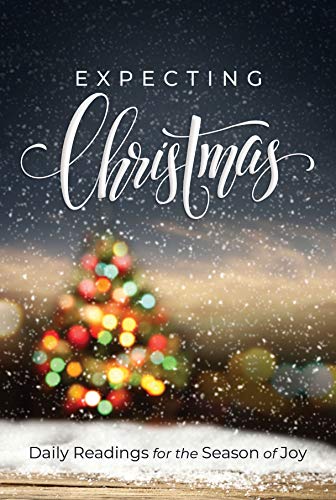
Expecting Christmas is a 40-day devotional book by multiple authors. I didn’t know any of the author names except one (Jennifer Dukes Lee). It’s put out by New Hope Publishers.

The selections are short, which is appreciated in a month like December. Each began with a verse or two of Scripture, a page and a half to two pages (at least in the Kindle version) of text, then three questions for refection.

The readings cover a variety of Christmas topics, though several deal with light.

A couple of samples: Day 15 talks about how horses in past years were seen as “labor animals, forms of transportation, and even weapons of war” (p. 44). After describing war horses, the writer points out Zechariah 9:9-10: Jesus did not come as an overthrowing conqueror, at least as the kind of conqueror society expected. His second coming will be more like that. But this time, He came humbly on a donkey. The author concludes, “Take time now to thank the Lord for being both just and humble, for bringing salvation instead of condemnation, for riding peacefully on a colt rather than on a warhorse. Ask Him to help you trust Him, especially when you don’t understand His ways. When you find yourself confused by His methods, remember the salvation He brought and the joys of that great gift” (p. 46).

In mediating on Jesus being given “the tongue of the learned” (Isaiah 40:4-5), another writer says, “Jesus didn’t use His deep knowledge and gift for oratory to make a name for Himself or climb social ladders. Rather, as seen in the Gospel accounts of His ministry, Jesus used His words to unburden people, free minds from the lies they had learned from false religions, and draw weary hearts closer to the Living God” (p. 54).

Another points out that people responded differently in praise and worship of the Savior, and that’s okay. “Mary’s response was one of quiet introspection as she treasured the good news of the gospel in her heart. The shepherds, on the other hand, left young Jesus, glorifying God and praising Him with outward enthusiasm and passion. People celebrate the gospel in different ways” (p. 77).

I only wish this book was 25 or 31 days so it would fit within the month of December. I didn’t get started 40 days ahead, so I have a bit yet to finish up. But I wanted to mention it before the month was over. Overall, I enjoyed it.

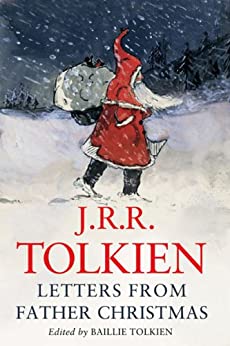
The second book I mentioned in my top twelve post yesterday. I had never heard of Letters From Father Christmas by J. R. R. Tolkien. I discovered it while looking for a short Christmas audiobook to finish out the year. This fit the bill nicely.

Tolkien sent letters and drawings as if from Father Christmas to his children from 1920 to 1943. He wrote with a shaky script because he was so old, he said (probably also to disguise his handwriting). The letters would comment on happenings in the children’s lives as well as at the North Pole. The North Polar Bear was Father Christmas’s helper and companion, a cheerful but bumbling fellow who unwittingly caused a lot of accidents. Polar Bear adds his own commentaries with a thick script because of his paws. Later an elf named Ilbereth acts as Father Christmas’s secretary. The last few letters mention “this horrible war” (WWII) and the people displaced, the shortage of supplies even at the North Pole, etc.

I got the audiobook superbly narrated by Derek Jacobi as Father Christmas and a couple of others for the infrequent voices of the bear and elf. But when I realized the book had photos of the letters and drawings, I had to get the Kindle version, too.

I thought in passing of Tolkien’s penchant for languages but figured that wouldn’t have a place in this book. But he did come up with a made-up language called Arktic that is spoken at the North Pole, and Polar Bear shares a few lines of it.

He also included some battles with goblins, who at times liked to raid Father Christmas’s supplies.

These letters are wonderfully imaginative. I especially loved the banter between Father Christmas, Polar Bear, and Ilbereth.

My last Christmas book this year is The Ornament Keeper, a contemporary fiction novella by Eva Marie Everson.

It’s Felicia Morgan’s custom to begin decorating the Christmas tree with the special, customized ornaments her husband has given her, one each year except for the last year. Each represented something special about their year: their first Christmas together, their children, her job advancement, etc.

This year, though, Felicia is dragging her feet. She and Jackson have separated after twenty years of marriage. Her daughter convinces Felicia to put up decorations as usual, but the memories are painful.

As Felicia hangs each ornament, we see a flashback to the circumstances surrounding each of them. Felicia’s marriage began with a mistake which has haunted the couple’s twenty years. Though God has redeemed and worked together for good their indiscretion, seeds of resentment and unforgiveness threaten to destroy what they have. Can they find their way back to each other before it’s too late?

I enjoyed the story and the truths brought out. I appreciated that the book wasn’t superficial or treacly.

Have you read any of these? Did you read any Christmas books this year?

15 Favorite Posts from 15 Years of Blogging

I mentioned in my end-of-July post that I forgot my blogging anniversary until WordPress sent me a reminder. It’s been fifteen years!

Often in the past I’ve done something special to observe my blogiversary. Since it caught me off guard this year, I didn’t have anything prepared.

I had been pondering ways to bring some of old posts back to the forefront, since they were published before I knew some of you. Then, voila! The idea came to list fifteen of my favorite blog posts to commemorate my fifteenth year of blogging. There won’t be one from each year—that would have taken too much time to search out. But these were either fun to write or were special to me in some way.

So here we go, in no particular order:

  1. Coping when a husband is away. This is my top-viewed post of all time. I had no idea it would touch such a chord. My husband had to travel heavily for at least half, maybe as much as two-thirds of our 41-year marriage. Though I didn’t like it, I am thankful God used what He taught me to help others.

2. How Not to Become an Old Biddie. After seeing examples of different kinds of older ladies, I realized I needed to start working on what kind of older lady I want to be now. (Related: Why Older Women Don’t Serve and Ways Older Women Can Serve.)

3. With All Our Feebleness. Reflections on serving God with physical and other limitations.

4. My Ebenezers. In 1 Samuel 7:12: “Samuel took a stone . . . and called its name Ebenezer; for he said, ‘Till now the Lord has helped us.’” “Ebenezer” means “stone of help.” In this post, I listed some of my verbal “Ebenzers,” commemorations of the Lord’s special help in my life.

5. Having Devotions When You’re not Feeling Very Devoted. We’ve all been there, I’m sure. (Related: When There Is No Hunger for God’s Word.)

6. Strong Women. What feminine strength means and doesn’t mean, with literary and Biblical examples.

7. Encouragement for Mothers of Small Children in the area of trying to find quiet time with the Lord.

8. The Back Burner. The stuff on the back burner is all the more flavorful for its time sitting and simmering. So with the things in our lives we have to set on the back burner: they’ll be all the better for the wait.

9. Why Read? Why Read Fiction? Why Read Christian Fiction? Every reason I could think of for reading all of them.

10. Can Frugality Go Too Far? Even good traits can be carried too far.

11. It’s Not For Nothing. Caregiving can seem monotonous and futile when the patient sleeps most of the time, can’t speak, and isn’t interested in food, as was the case for my mother-in-law her last two years in our home. These were truths that encouraged me. (Related: Remembering the Loved One Who Has Forgotten You.)

12. Manufactured Spirituality. Routines and programs can help us spirituality, but sometimes we focus on them to the detriment of real spirituality.

13. The Quiet Person in the Small Group. How not to torture your introverts.

14 Going to a Church with Problems. They all have them, even the ones in the Bible. (Related: What You Miss When You Turn Your Back on Church.)

15. Myths and Maxims of Ministry gleaned over many years. Myth #1: “Since this is being done for the Lord, everything should go smoothly.” Nope!

These are the posts that floated to mind. If I had actually searched every year’s posts, I might have had a different list. But there’s probably a reason these are the ones that came to mind.

As you’ve noticed, I cheated stretched my numbers a bit. Sometimes I couldn’t decide between a couple of posts on a similar topic, so I included one as “related.”

I’ve noticed that I should probably go back and edit some of the older posts. One of the tendencies my first critiquer at a writer’s conference pointed out was “long, convoluted sentences” that should be broken into two sentences (or three or four). Hopefully some day I can correct those in my older posts.

Thank you so much to all of you who read and comment. Without you, this would just be an online journal. Nothing makes me day like hearing that something here has blessed and helped someone.

(I often link up with some of these bloggers)

14 Reasons to Read the Old Testament

It’s safe to say most of us gravitate to the New Testament of the Bible. We enjoy the Old Testament stories, the practical wisdom of Proverbs, the emotional depth of the Psalms.

But Jesus fulfilled all the OT ceremonial law and the sacrificial requirements, so we’re not under obligation to practice those any more. And all that past history is . . .well. . . .past. The NT seems more practical.

So why bother to read the OT?

Well, there are several good reasons.

1. The whole Bible is inspired by God (2 Timothy 3:16). One of our former pastors used to say the Bible is divinely brief. Think of all the things an eternal God knows and could tell us. He chose the particular words in the Bible for specific reasons.

2. The whole Bible is beneficial. 2 Timothy goes on to say all Scripture is “beneficial for teaching, for rebuke, for correction, for training in righteousness; so that the man or woman of God may be fully capable, equipped for every good work” (3:16b-17, NASB).

3. The OT provides examples for us. “Now these things happened to them as an example, and they were written for our instruction, upon whom the ends of the ages have come” (1 Corinthians 10:11, NASB). The context of these verses talks about various things OT Israel did wrong. Then the passage warns the reader, “Therefore let the one who thinks he stands watch out that he does not fall” (verse 12).

4. The OT helps us appreciate what we have in Christ. Our  church recently studied Leviticus.

The tabernacle and temple system emphasized the distance between us and God. Only the priests could enter and only with the right sacrifices conducted the right way. When Jesus died, the veil of the temple was supernaturally torn in two, indicating the way to God was now open.

Hebrews 10:19-20 tells us, “We have confidence to enter the holy place by the blood of Jesus, by a new and living way which He inaugurated for us through the veil, that is, through His flesh.” Because He made a way for us and is our high priest, we’re encouraged to

  • approach God with a sincere heart in full assurance of faith
  • hold firmly to the confession of our hope without wavering
  • consider how to encourage one another in love and good deeds (verses 21-25).

5. The OT emphasizes holiness. A seminary professor taught a class on Leviticus. He asked his students to try to keep the regulations in Leviticus for a week and journal about the experience. One replied that the assignment had him evaluating everything in his life related to holiness all the time. The NT requires holiness, too. But we don’t often examine every area of our lives to see whether we measure up to God’s holy standards as they were required to in the OT. We’re free from the strictures of the OT ceremonial law, but we still need to submit our conscience and practice to God’s Holy Spirit.

6. The NT quotes or alludes to the OT over 880 times. The NT would not make sense without the OT foundation. [1]

7. Jesus quoted and believed in the Old Testament. Jesus told the Jews who opposed Him, “You search the Scriptures because you think that in them you have eternal life; and it is they that bear witness about me” (John 5:39, ESV). The Scriptures He referred to were the Old Testament writings. Many times He said, “Have you not read…?” and quoted something from the Old Testament, meaning that He expected them to know what it taught.

After His resurrection, when He walked along with two disciples on the road to Emmaus, “beginning with Moses and all the Prophets, he interpreted to them in all the Scriptures the things concerning himself” (Luke 24:27, ESV).

8. The OT instructs us and gives us hope. Paul tells us in Romans 15:4: “For whatever was written in earlier times was written for our instruction, so that through perseverance and the encouragement of the Scriptures we might have hope.” When we realize we are not that different from the complaining, disbelieving Israelites in the wilderness, we have hope that God will be faithful and longsuffering with us as He was with them. When we read of God helping His people through various trials and troubles in the Bible, we’re encouraged that He will take care of us as well.

9. The OT and NT tell us about the same God. Some have felt that the OT presents an angry, vengeful God while the NT shows us a merciful, loving God. But they are one and the same. God shows His grace and mercy and love to His people many times in the OT, even when they behaved the worst. And many places in the NT warn of God’s wrath against sin.

10. The Old Testament shows us our need and prepares us for the only One who can meet it. The laws and sacrificial system showed Israel the impossibility of keeping God’s law and the need for a Savior. The law was our “schoolmaster” to bring us to Christ (Galatians 3:24, KJV). The sinless lamb of the sacrifices points to the Lamb of God, the ultimate sacrifice for our sins. The OT sacrifices had to be repeated, but Jesus’s offering took care of our sins forever (Hebrews 10:14).

11. The Old Testament points to Christ, from the representation of the scapegoat, to the atonement, to Messianic prophecies. A former pastor, Dr. Mark Minnick, used to say that the Old Testament showed Israel’s need for a judge, a prophet, and a king. But even the best judges, prophets, and kings fell short. Jesus fulfills all those offices perfectly.

12. The Old Testament is part of our spiritual heritage. Romans 11:11-31 tells us we were grafted into the olive tree of the Jews.  The true Israel is by faith, not just lineage. Galatians 3:29 and Romans 9:6-8 say that those in Christ are children of Abraham:

Abraham “believed God, and it was accounted to him for righteousness.” Therefore know that only those who are of faith are sons of Abraham. And the Scripture, foreseeing that God would justify the Gentiles by faith, preached the gospel to Abraham beforehand, saying, “In you all the nations shall be blessed.” So then those who are of faith are blessed with believing Abraham (Galatians 3:6-9, NKJV).

13. The Old and New Testaments form a whole, with each part of the same overarching story. L. E. Maxwell, cofounder and eventual president of the Prairie Bible Institute, said in his book Crowded to Christ, “The New Testament is enfolded in the Old, and the Old Testament is unfolded in the New.” [2]

14. There are treasures in the OT. If you skipped the OT, you’d miss some of the greatest treasures of the Bible, like these:

Zephaniah 3:17: The Lord your God is in your midst, a mighty one who will save;
he will rejoice over you with gladness; he will quiet you by his love; he will exult over you with loud singing.

Isaiah 30:15a: For thus said the Lord God, the Holy One of Israel, “In returning and rest you shall be saved; in quietness and in trust shall be your strength.”

If the OT seemed dry or hard to understand in the past, a good study Bible helps. You can find a variety of sizes and types of commentaries and other study aids. This past year I have used Warren Wiersbe’s “Be” commentaries on different books of the Bible. They often show up on Kindle sales. They’re detailed enough to give insights, yet simple enough to understand.

If you’ve been avoiding the OT, I encourage you to read and study  it. You’ll find rich, meaningful treasure there.


[1] “O.T. Quotations Found in the N.T. – Study Resources.” Blue Letter Bible. Web. 15 Jun, 2021. <https://www.blueletterbible.org/study/pnt/pnt08.cfm&gt;.

[2] L. E. Maxwell, Crowded to Christ (Grand Rapids, MI: Eerdmans, 1950), p. 272.

Unless otherwise stated, all Bible verses are from the ESV.

(I often link up with some of these bloggers)

Do You Want a Fresh Word from the Lord?

I know what it’s like to wish I could look up and see God’s will sky written in the blue expanse. Or to wish I had I could hear from God personally and specifically. Or, I am sorry to say, to feel bored with a seemingly dry or familiar part of Scripture.

But we don’t need to long for something more or something different.

Peter tells us, “His divine power has granted to us all things that pertain to life and godliness, through the knowledge of him who called us to his own glory and excellence, by which he has granted to us his precious and very great promises, so that through them you may become partakers of the divine nature, having escaped from the corruption that is in the world because of sinful desire” (2 Peter 1:3-4).

We have “all things that pertain to life and godliness” “through the knowledge of him who called us” by “his precious and very great promises.” As we get to know Him more and more through His Word, we have everything we need to live for Him.

One former pastor used to say that the Bible is “divinely brief.” Of the multitude of things God could have told us, the sixty-six books contained in the Bible are what He chose to convey to us.

What are we doing with that special, God-given book?

No, God won’t tell us which job to take, which city to live in, or which person to marry in the Bible. But the Bible will teach us principles of walking with God and developing wisdom, and God promises to guide us in the way we should go.

Some times in the Bible are intensely personal. I don’t know how many times my scheduled reading for the day directly answered something I had been praying about or pondering.

When I was in the hospital before being diagnosed with transverse myelitis, I was scheduled for an MRI. The night before, nearly every nurse or aide who came in asked me if I was claustrophobic. I wasn’t sure. I was told the MRI sometimes made people feel uncomfortable because they slide you into this close-fitting tube and you have to be very still. They said they could give me a sedative if I thought I would need it. I wanted to avoid unnecessary medication if I could, so I declined the sedative.

The next morning, the Daily Light on the Daily Path reading, which is made up of just Scripture verses with no commentary, was about being still, being quiet, or resting in the Lord:

  • “Sit still, my daughter” (Ruth 3:18)
  • “Be still, and know that I am God” (Psalm 46:10)
  • “Take heed, and be quiet; fear not, neither be fainthearted” (Isaiah 7:4)
  • “In returning and rest shall ye be saved; in quietness and in confidence shall be your strength” (Isaiah 30:15)
  • “Commune with your own heart upon your bed, and be still” (Psalm 4:4)
  • “Rest in the LORD, and wait patiently for him” (Psalm 37:7)
  • “He shall not be afraid of evil tidings: his heart is fixed, trusting in the LORD. His heart is established” (Psalm 112:7-8)

Many of those verses were familiar to me, and throughout the MRI, I repeatedly went over them in my mind. They washed over my soul and quieted me.

Every meal we eat can’t be a Thanksgiving or an anniversary dinner at the steak house. But even the peanut butter sandwiches and tuna casseroles nourish us.

Every conversation with our spouse won’t be thrillingly romantic. The everyday “Can you pick up the dry cleaning?” and “Good dinner, thanks” weave together with the highlights to form the fabric of a strong relationship.

Every day isn’t fireworks and feasting. Most are quietly spent at home.

Every time in the Bible won’t be a mountaintop experience or warm and cozy.

But all our times in the Word help us get to know God better and strengthen us to live for Him.

We’ll never exhaust the Bible. There will always be something new to learn, no matter how many times we read it. But we also need the repetition of old truths so we don’t forget them.

If the Bible seems “old” or stale to us, maybe reading Psalm 119 will help the psalmist’s enthusiasm infuse our souls. Asking God to speak to us and give us understanding and a new appreciation for His Word helps as well. Aids like a good study Bible or commentary or study book can help open passages up to us.

Jesus said, “It is the Spirit who gives life; the flesh is no help at all. The words that I have spoken to you are spirit and life” (John 6:63). Psalm 119:24-25 says, “Your testimonies are indeed my delight; they are my counselors. My soul clings to the dust; give me life according to your word!”

Do you need a fresh word from the Lord? Pick up the old faithful Bible. Let God’s Word revive you.

(Sharing with Sunday Scripture Blessings, Scripture and a Snapshot, Hearth and Soul, Senior Salon, Inspire Me Monday, Tell His Story, InstaEncouragements, Recharge Wednesday, Let’s Have Coffee, Heart Encouragement, Grace at Home, Grace and Truth, Faith on Fire, Blogger Voices Network).