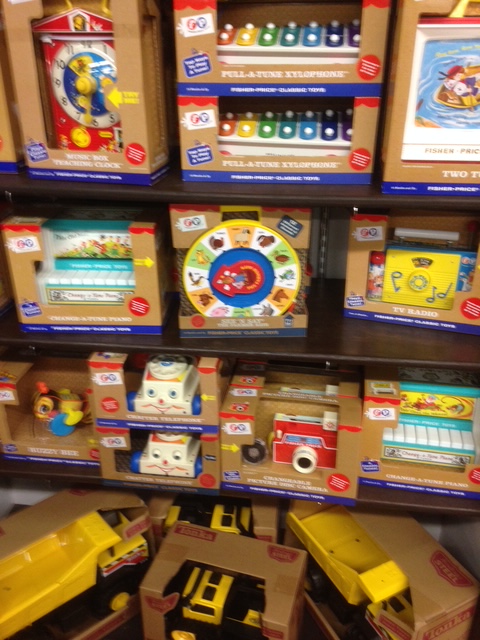
A few years ago, we visited the Mast General Store downtown. I was hit with a wave of nostalgia as I came to a section of toys from not only my children’s childhoods, but from mine as well. I didn’t know some of those toys were still made.
Little Golden Books have a warm place in my heart because I read many of them to my kids, and I remember some from my childhood.
Going through boxes in our shed, My husband and I discovered high school and college notebooks as well as letters from our parents and cards our children had made for us when they were small.
When we talk about the price that things used to be, I’m reminded that the half-pint milk cartons served at our school cafeteria used to be five cents. I remember when McDonald’s first became a company, their commercials said that you could get a hamburger, fries, and a soft drink and still get change back from a dollar.
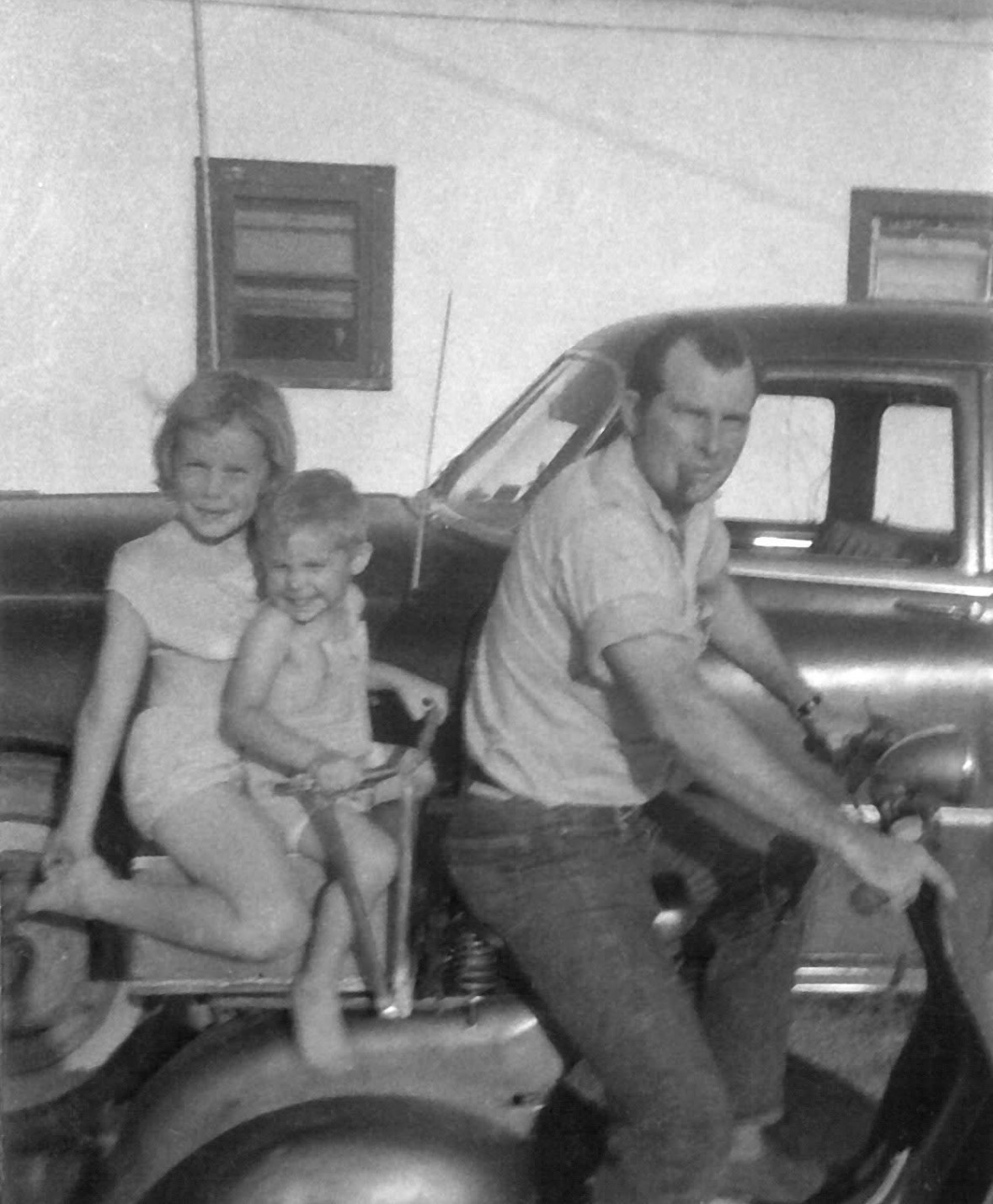
I remember as a child in southeast Texas, hardly anyone had central air conditioning. After dinner in the evenings, people would bring lawn chairs out in the front yard and visit with neighbors while kids rode their bicycles up and down the street or ran through sprinklers. My dad took kids for rides on his little motor scooter.
We often look back on the past through a rosy glow. The “good old days” seem simple and idyllic.
But were they?
I see acquaintances my age on Facebook posting memes saying we need to get back to the way things were years ago. Our childhoods would have been in the 60s: the era of the Viet Nam war, civil unrest, the emergence of “free love” and the drug culture, the assassinations of John F. Kennedy, Robert Kennedy, and Martin Luther King, Jr., the Cold War. Though our own neighborhoods seemed peaceful, the world at large was not. And who knows what we’re forgetting from our own childhoods: fights with siblings, school cliques, feeling left out.
It’s not wrong to ooh and aah over our old baby pictures or talk fondly about how things used to be. But the wrong kind of nostalgia errs in a few ways.
One error is a condescending attitude that everything was better back in our day, and everything should be done the way we did it. I’ve seen snarky memes that say things like:
- “We didn’t need to take water bottles with us everywhere we went. We drank from a hose and lived to tell about it.”
- “We didn’t have coping skills. We had chores and a ‘You’ll live.'”
- We didn’t wear helmets on our Schwinns. A fall and a few scrapes, and we were back to riding our bikes again.”
- “The world wasn’t wrapped in bubble wrap. We slid down hot metal slides and got splinters from wooden swings. That made us tougher.”
- “We didn’t go to Urgent Care for every splinter. Mom got out her tweezers.”
Some changes are good. Not everyone was so fortunate as to survive a bike wreck without a helmet on. Honestly, I cringe a little at the photo of us on the scooter without helmets. Urgent cares have been a great option when the doctor’s office isn’t open and one wants to avoid emergency room costs. People probably did have coping skills of some kind. These sayings mix truth with error, but they also seek to look down on everyone younger. How are we supposed to mentor or model Christlikeness to them or encourage them with attitudes like that?
Another nostalgic error is discontent when we long so much for past days that we can’t enjoy the present. Jen Wilkin writes in None Like Him: “There is a difference between missing the past and coveting the past. The antidote for covetousness is always gratitude: We can combat a sinful love of the past by counting the gifts we have been given in the present” (p. 75).
We fail to appreciate what we have and what we’re to do in the present if we are preoccupied with the past or think it’s all-around better.
Sure, young people do things differently than we did. But we did things differently than our parents did, too, didn’t we? If we’re always talking down to them about how our ways are better than theirs, we’ll just widen the generation gap. Where there are legitimate causes for concern, we do better to approach people where they are in love and speak from Scriptural truths, not cultural contexts.
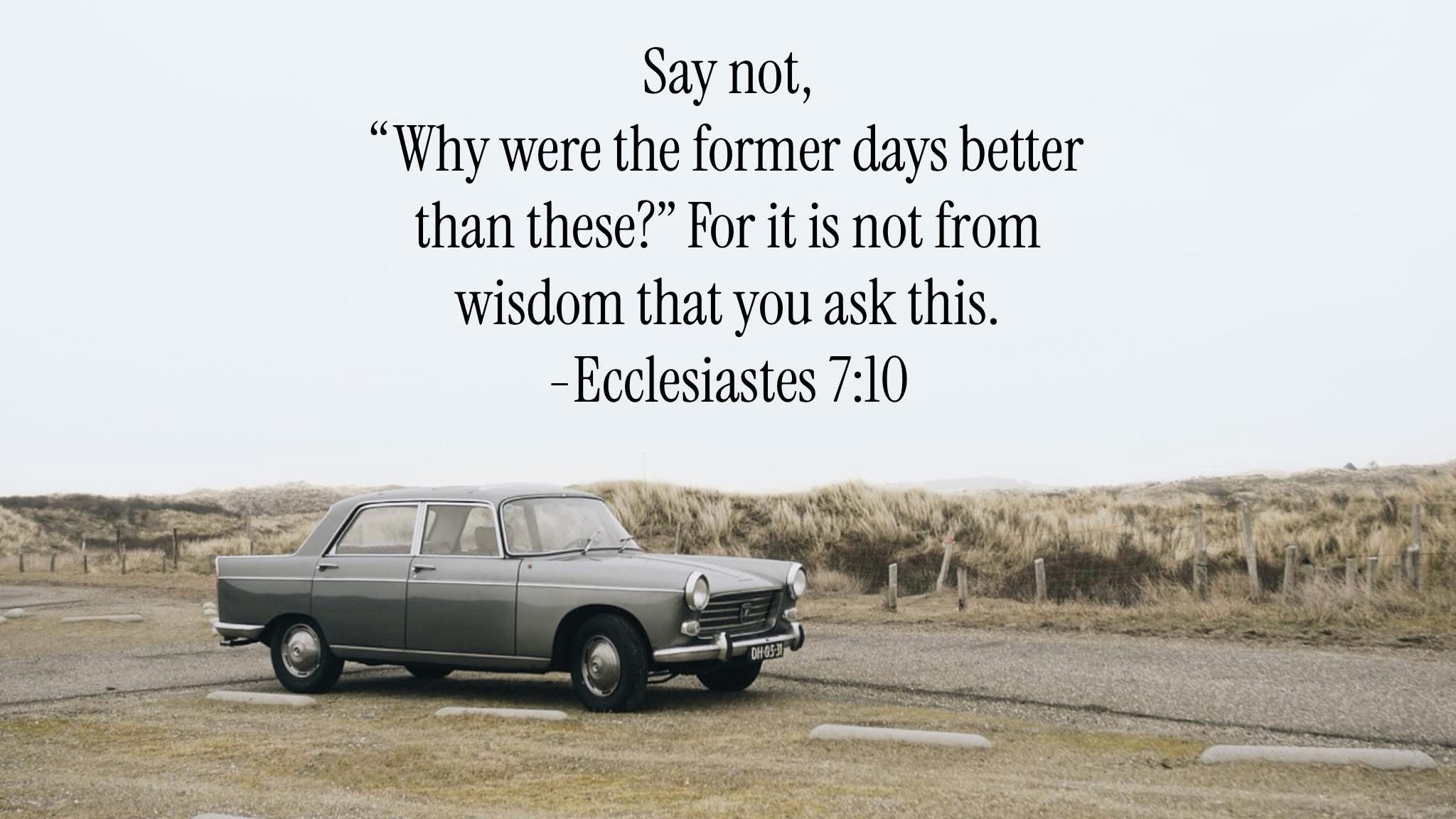
Ecclesiastes 7:10 tells us “Say not, ‘Why were the former days better than these?’ For it is not from wisdom that you ask this.”
There are things God wants us to remember and learn from the past and to anticipate and plan for in the future. But He has given us this present moment to live and serve in, to love Him and others.
Ephesians 5:15-16 tells us, “Look carefully then how you walk, not as unwise but as wise, making the best use of the time, because the days are evil.” The KJV phrases it “redeeming the time.” To quote Jen Wilkin again, “Redeeming the time requires being fully present in the present” (p. 76).
May God give us grace to enjoy His blessings and lessons from the past, but to be content with where He has us now and about His business ministering to others.
(I often link up with some of these bloggers.)
(Special note: I don’t usually post on Mondays, but I’ll be celebrating my 20th blog birthday with a giveaway tomorrow.)