TBR Challenge

I appreciated my friend Lisa‘s comment on my post about book challenges last week about the struggle with balance between wanting to be intentional in reading yet not wanting to feel hemmed in. I struggle with that, too. There are some books I’d never get around to reading without some of these challenges and lists, but I don’t want to have so many lists that I’m feeling overly pressured. I know sometimes God has directed me to a book I needed right at the moment that wasn’t on my radar, and I want to leave room for that and for the just-for-fun books (because I read both to learn and to relax.)

2014tbrbuttonI’ve been pondering for a few days what to list for the 2014 TBR Pile Challenge hosted by Roof Beam Reader. The challenge is to read 12 books in a year that have been on your shelves unread with a publication date before 2013. I chafe a little bit at that because I have books on my shelves published last year that I want to get to, and books I just got for Christmas that have pre-2013 publication dates but are new to me. But I do understand the need for guidelines of some kind, or else this would be just a general reading list. So I am trying to keep within the spirit of the post and choose books that I’ve had on my shelves or in my Kindle app for a while now. I came up with a list of 25, and that’s not including a box of books in my closet that I had forgotten about. 😳 So from those I’m narrowing it down to this list of 12, with two allowable alternate titles in case I decide against any of the others during the year (as per instructions, as I finish each book and review it, I’m adding the link to that review to the titles below):

1. Made to CraveSatisfying Your Deepest Desire with God, Not Food by Lisa TerKeurst (pub. 2010). Proverbs 31 Ministries is hosting a study of this book beginning Jan. 19, so I’ll be joining in that. (Finished March 1, 2014)

2. Crowded to Christ by L. E. Maxwell (pub. 1952), recommended by a former pastor. (Finished April 7)

3. Ida Scudder: Healing Bodies, Touching Hearts by Janet and Geoff Benge (pub. 2012). I had read a biography of hers (though not this one) some 25-30 years ago and wanted to refresh myself on her story. (Finished Feb. 3)

4. The House Is Quiet, Now What? by Janice Hanna and Kathleen Y’Barbo (pub. 2009). The subtitle is Rediscovering Life and Adventure As a Empty Nester. My nest isn’t totally empty yet, and I don’t see a shortage of things to do for a long time to come, but figured this would be helpful with perspective. One sentence I saw while flipping through it really spoke to me (about the “sandwich generation”), so I am looking forward to this. I had thought Lisa recommended this one, but maybe that was a different book. (Finished March 10)

5. How to Read Slowly by James W. Sire (pub. 1978). Even with making notes and marking with sticky tabs. I have a hard time feeling like I’ve really grasped everything I need to from nonfiction, so I am hoping this will help in that regard. (Finished July 20)

6. How to Be a Writer by Barbara Baig (pub. 2010). I like to read a book about writing every now and then to keep those embers stirred.

7. Walking From East to West: God in the Shadows by Ravi Zacharias (pub. 2009), because Sherry recommended it to me and because I like hearing how people came to the Lord, among other reasons. (Finished March 16)

8. The Great Divorce by C. S. Lewis (pub. 1946). I’ve read Narnia, the Space Trilogy, and Mere Christianity and now want to read some other Lewis books. (Finished May 6)

9. Loving the Church by John Crotts (pub. 2010), sent to me by Carrie a long time ago. 😳 (Finished June 17)

10. The Book of Three by Alexander Lloyd (pub. 2006), first book in the Prydain Chronicles, recommended by Janet. (Finished June 30)

11. Wednesdays Were Pretty Normal: A Boy, Cancer, and God by Michael Kelley (pub 2012). (Finished May 21)

12. Why We Are Not Emergent: By Two Guys Who Should Be by Kevin DeYoung and Ted Kluck (pub. 2008), partly because I have never heard anybody adequately explain what the emergent movement is, and I’ve heard this is a good critique. (Finished October 15)

Alternates: Girl in the Gatehouse by Julie Klassen (Finished Aug. 31) and Just Jane: A Novel of Jane Austen’s Life by Nancy Moser (Finished Aug. 4). (My wrap-up post for this challenge is here: https://barbarah.wordpress.com/2014/12/15/reading-challenge-wrap-up/)

You notice how many of these are nonfiction. That’s probably why they have been languishing on my shelves. 😳 I gravitate to fiction and biographies: I like nonfiction when I read it, but I usually have to “make” myself read it. So this list will be a challenge in more ways than one!

As per Roof Beam Reader’s instructions, when I finish and review each book, I’ll make its title above into a link to the review.

Nonfiction Challenge hosted at The Introverted ReaderLisa mentioned on her reading challenges post this morning a Nonfiction Reading Challenge which I hadn’t seen but given all the nonfiction  have listed here, I figured I may as well join up. 🙂

The Challenge:  Read any non-fiction book(s), adult or young adult. That’s it. You can choose anything. Memoirs? Yes. History? Yes. Travel? Yes. You get the idea? Absolutely anything that is classified as non-fiction counts for this challenge.

I always like levels in my challenges, so here are mine:

Dilettante–Read 1-5 non-fiction books

Explorer–Read 6-10

Seeker–Read 11-15

Master–Read 16-20

This challenge will last from January 1 to December 31, 2014. You can sign up anytime throughout the year.

With the books listed about plus a couple of others I want to read this year, I am aiming for the Seeker level.

Do you have books that have been on your “To Be Read” shelves for a while? Maybe you’ll consider joining in with challenge with us, and we can encourage each other along the way.

Upcoming Reading Challenges

I hope you’ll forgive so many bookish posts this week: it’s been a catch-up time for finishing some and writing about others.

There are a few reading challenges I’m planning to participate in this year.

Reading to Know - Book ClubCarrie is hosting a Reading to Know Classics Book Club alternating between children’s and adult classics and asked 12 blog friends to chose a book and lead a discussion of it. You can see a list of the books for this year here. There are no requirements about how much one must participate (which I appreciate very much!) We can just chose to participate whichever months we’re interested. I’m honored to be leading the discussion for To the Golden Shore about Adoniram Judson by Courtney Anderson in October. Several of the titles listed there look interesting: I’m planning to participate several months (probably most of the adult classics and maybe a few of the children’s).

L. M. Montgomery Reading ChallengeEvery January Carrie also hosts a L. M. Montgomery Reading Challenge. Nice way to start the year, don’t you think? I’ve reread all the Anne of Green Gables books for this challenge the last few years and last year read the first Emily book. But this year I’m reading The Blue Castle, one of LMM’s few adult books, which dovetails with the Classic Book Club above, and if I have time I’ll read the second Emily book.

Laura Ingalls Wilder Reading ChallengeIn February I’m hosting the third annual Laura Ingalls Wilder Reading Challenge: more info. on that is here, and I’ll share what I am reading for that on Feb. 1.

There are a couple of other through-the-year challenges that are new to me this year that I am going to try. I believe all of these came to my attention via Joyful Reader.

bible-verse-christian-hebrews-12-1-2The Cloud of Witnesses Challenge is sponsored by Becky at Operation Actually Read Bible, and the idea is to read nonfiction books by godly authors who have gone on to be with Jesus. They don’t have to be full books: they could be sermons or articles. A list of suggested authors is here, but Becky is open to others. I am going to commit to reading four. One is Crowded to Christ by L. E. Maxwell, highly recommended by a beloved and highly respected former pastor (though I started it this morning and it looks a little daunting, but we’ll see how it goes!) and Traveling Toward Sunrise by Mrs. Charles E. Cowman (of Streams in the Desert fame). I also have a couple of C. S. Lewis books on hand that I’ll probably include.

2014tbrbuttonI’m considering the 2014 TBR Pile Challenge hosted by Roof Beam Reader. The challenge is to read 12 books in a year that have been on your shelves unread with a publication date before 2013. I’m sure I have 12 books that qualify: I’m just not sure I want to commit to 12, especially as we have to provide a list beforehand, and I don’t want to be hemmed in by reading commitments. But some of these would crossover with some of the other challenges, so I might be able to do it. Everyone who conquest their TBR list before the end of the year is entered in a drawing for a $50 gift card to Amazon, so that’s motivation, too! 🙂 The list of what we plan to read for that needs to be up by the 15th, so I have a few days yet to work on it. (I did decide to do this: my list is here.)

classics2014And finally, Karen at Books and Chocolate is hosting a Back to the Classics Challenge (guidelines and explanations here) where we can choose classics that fit in certain categories, and there are drawings for prizes at the end of it! 🙂 There are some required categories and some optional categories. My list will overlap a bit with Carrie’s Book Club mentioned above (otherwise I’d never be able to do this!)

Required:

  1. A 20th Century Classic: My Man Jeeves by P. D. Wodehouse
  2. A 19th Century Classic: Bleak House by Charles Dickens
  3. A Classic by a Woman Author: The Blue Castle by L. M. Montgomery
  4. A Classic in Translation  (A book originally written in a different language from your own.) The Brothers Karamazov by Dostoyevsky.
  5. A Classic About War  The Scarlet Pimpernel by Baroness Orczy.
  6. A Classic by an Author Who Is New To You: The Woman in White by Wilkie Collins
Optional Categories:
  1. An American Classic: Farmer Boy by Laura Ingalls Wilder
  2. A Classic Mystery, Suspense or Thriller:  A Study in Scarlet by Arthur Conan Doyle, the first Sherlock Holmes book
  3. A Historical Fiction Classic: I will Repay by Baroness Orzcy, part of The Scarlet Pimpernel series. I hadn’t known there was more than one book with him!
  4. A Classic That’s Been Adapted Into a Movie or TV Series: To Kill a Mockingbird by Harper Lee.
  5. Extra Fun Category:  Write a Review of the Movie or TV Series adapted from Optional Category #4

Let me know if you’re planning to join in on any of these, and we can keep up with each other’s progress.

I’m giving some thought to hosting a challenge to read a certain number of missionary books throughout the year. Let me know if you’d be interested in that and how many books you think would be reasonable.

Laudable Linkage and Videos

Here are some good reads from the last couple of weeks:

Christmas Is For Those Who Hate It Most.

God May Not Have a Wonderful Plan for Your Life. He does, in the sense that He made it possible for us to go to heaven when we repent and believe He sent His Son to take our sins on the cross, and He has promised to be with us in this life, but some things in life are hard. The Bible said they would be, and we can give people the wrong picture of Christianity and rub salt in an open wound sometimes by spouting phrases like this.

God’s Heavenly, Glorious Melting Power. Ways to keep devotions from becoming mechanical.

Scowling at the Angel. “There in my brokenness I had so little to give. But grace, she never left. She met me in all my frailty, raw and wrathful, as exposed and defenseless as the day I was born.”

The Needs of Three Women. Being ministered to while ministering to the homeless.

3 Marks of Righteous Anger.

Daily Scriptures to Help Tame the Tongue.

The Story of Gwen and Marlene. This is a theme I have mentioned often, that women’s ministry is not always in specific programs. It’s mostly a matter of being available and interested in others.

Inhospitable Hospitality.

Our Love-Hate Relationship With Christian Art. “Christian art? Are you kidding me? Christianity has produced the greatest art of all time.”

A Letter to an “Expectant” Adoptive Mom. Great advice from one who has gone through the process not only of adopting, but adopting internationally.

How to Get People to Read the Bible Without Making Them Feel Dumb.

Union With Christ in Marriage. “Paul doesn’t give us commands to extract from the other spouse. Instead, Paul instructs us in the graces to give!”

What Foster Parents Wish Other People Knew.

It Takes a Pirate to Raise a Child, HT to Bobbi. Loved this – about how children’s stories shape their ideas of right and wrong, e.g., telling the author’s son that he was acting like Edmund in The Lion, the Witch, and the Wardrobe  helped him understand his behavior towards his siblings was wrong when explaining and exhorting wasn’t getting through.

Merry Literary Christmas. 🙂

A couple of fun videos:

An two year old with amazing basketball skills:

Captain Picard and crew sing a Christmas song:

And a nice summary of The Paradox of Christmas:

Happy Saturday!

Book Review: Fahrenheit 451

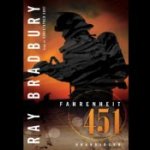
F451Fahrenheit 451 is, as far as I can remember, the first book I have read by Ray Bradbury. It has the same feel as the old Twilight Zone series, but it was published a few years before.

The story takes place in a future version of America where most books are illegal. Fireman, instead of putting fires out, now start them by burning books and the houses of those caught with books. Society had lost its taste for deep thinking, preferring instead sporting events, fast driving, endless entertainment via earpieces they listen to and parlour walls that act as an expanded TV and directly involve the viewer. Concurrently, books were shortened, and then books that made people think fell out of favor and then were deemed upsetting to the peace and happiness of society, as different groups would protest what different books said, so they were banned. As a fire captain later explained, “We must all be alike. Not everyone born free and equal, as the constitution says, but everyone made equal . . . A book is a loaded gun in the house next door. Burn it. Take the shot from the weapon. Breach man’s mind.” It is interesting, and scary, that what passes for tolerance today is this idea of making everyone equal and unobjectionable to each other rather than a willingness to let others have their differences.

Guy Montag is a fireman who likes his job, until he meets a different, free-spirited teen-age neighbor named Clarisse. Though I don’t think they ever talk about books specifically, her unconventional approach to life and way of thinking spark something in him, a questioning, a wondering if there is more to life. Several things fan this spark into flame: his vapid wife overdoses on sleeping pills and has to have her stomach pumped, but remembers nothing about it the next day; Clarisse and her family disappear; and a woman whose house Guy and his crew are supposed to torch chooses to die with her books. What can there be in books that someone would die for them? Guy has secretly taken a few of them and intends to find out. But he can’t make sense of them himself, so he goes to an old professor named Faber for help.

I’ll leave the plot there so as not to spoil it for those who haven’t read it. Though it was written during the McCarthy era, when there was an increased sensitivity to anyone having the remotest possibility of a tie to Communism, and Bradbury was concerned about censorship, he  “usually claimed that the real messages of Fahrenheit 451 were about the dangers of an illiterate society infatuated with mass media and the threat of minority and special interest groups to books,” according to Wikipedia. He has an interesting afterward that tells how he came to write the book and something of the history of it. He also tells of one publisher wanting to publish one of his stories in an anthology with 450 others, including some from Twain and Shakespeare, all shortened, seeming a fulfilling of his predictions in the book. The book itself has been banned at times in the past due to language (many “damns,” “hells,” and taking of the Lord’s name in vain), its mention of one woman’s abortion, and its depiction of firemen. There were valid reasons for the mention of abortion and the firemen. The language I could have done without. I am not shocked by it: my father spoke that way, and I know people do, but I don’t want to fill my brain with it, so I usually avoid books with much of it. I have mixed emotions about censorship. I don’t think I believe in it at the government level, but I have no problem with reserving certain books from student’s required reading. There are some books and magazines that are just pure filthiness and at least shouldn’t be right out there next to Good Housekeeping and such. I would have no problem with censoring those, personally, but then other people would have no problem censoring some books I like: some parents protest their children having to read anything religious. Thus we have the problem Bradbury depicted: if everything can be banned that anyone would have some objection to, we’re left with nothing. As Christians, the best way to deal with the situation, I think, is not to necessarily to seek to ban everything objectionable, though there are times to protest certain actions (like one library I heard of that had the “adult” section next to the children’s section, or a required book for a student that a parent objects to, or unnecessary foul language and sex scenes in books I review): rather, if we concentrate on doing what Jesus told us to do – share the gospel and make disciples – people’s hearts will be changed and they won’t want the bad stuff. That’s not the main reason to share the gospel, but it is one side effect.

The book has a great many more layers to it than there would appear to be at first glance. SparkNotes helped me catch some of that that I missed at first and caused me to appreciate Bradbury’s skill as a writer. The book is one of those classics I had heard of for years and always wanted to get to someday: I am glad that now I have.

(This will also be linked to Semicolon‘s Saturday Review of Books.)

Bookish fun

813359_book_stack_4.jpgI saw this over at Joyful Reader, who found it at Two weeks from everywhere, and it looked like a fun thing to do. I haven’t done this kind of thing in a while. All links are to my thoughts or reviews.

1. Favorite childhood book?  Little Women by Louisa May Alcott

2. What are you reading right now?  The Fruitful Wife by Hayley DiMarco (actually for the second time in a row. I finished it, but it was so full and I didn’t feel I had really grasped a fraction of it, so I am going back and outlining the chapters), Daniel Deronda by George Elliot, and Overcoming Overeating by Lisa Morrone.

3. What books do you have on request at the library?  None at the moment

4. Bad book habit?  Probably buying too many. 🙂

5. What do you currently have checked out at the libraryGulp! by Mary Roach

6. Do you have an e-reader?  I have a Kindle app on my HP tablet and iPhone. It took some getting used to, and I still prefer an actual paper book, but I have enjoyed some electronically. I especially enjoy finding free or very inexpressive e-books!

7. Do you prefer to read one book at a time or several at once?  I usually have 2, sometimes 3 going at once.

8. Have your reading habits changed since starting a blog?  My To Be Read list has grown quite a bit longer! And I probably read things I might not have otherwise because I saw them recommended.

9. Least favorite book you read this year (so far)?  Probably The Duet by Robert Elmer. It was not a bad book at all – I just couldn’t engage with the characters. I loved his Wildflowers of Terezin, though.

10. Favorite book you’ve read this year?  The Secret Thoughts of an Unlikely Convert by Rosaria Champagne Butterfield.

11. How often do you read out of your comfort zone?  Occasionally, usually if a book is highly recommended by someone whose judgement I trust or if the subject matter is really interesting to me.

12. What is your reading comfort zone?  Christian fiction, biographies, classics.

13. Can you read on the bus?  I haven’t had occasion to in many years, but the last time I tried it I could. I can read in the car as well, thankfully. I am not a good traveler and reading is the only thing that makes it endurable.

14. Favorite place to read? Curled up on the couch with a throw blanket and something to drink.

15. What is your policy on book lending?  I don’t mind lending books out generally, but you have to be prepared that something might happen to it or you might not get it back. For that reason I might not lend one that wasn’t easily replaceable or had sentimental value or that I had a lot of notes in that I wanted to keep.

16. Do you ever dog-ear books?  Rarely.

17. Do you ever write in the margins of your books?  Sometimes.

18. Not even with text books?  Textbooks were my most marked-up books.

19. What is your favorite language to read in?  English – I can’t read any other language.

20. What makes you love a book?  That would take a while to answer…but I guess I’d say I have to really connect with it in some way. Sometimes it is the plot, sometimes one of the characters, sometimes beautiful writing, with the best  books connecting all of those.

21. What will inspire you to recommend a book? Probably any of the elements mentioned above, or if it is non-fiction, if I found it helpful and truthful.

22. Favorite genre?  Christian fiction when it is good.

23. Genre you rarely read (but wish you did)?  I can’t think of any I wish I did read more of. There are some I don’t read and have no intention of ever reading.

24. Favorite Biography?  That’s a hard one – I have several favorites. But the top ones would be Amy Carmichael of Dohnavur by Frank Houghton, By Searching and In the Arena by Isobel Kuhn, and Climbing by Rosalind Goforth.

25. Have you ever ready a self help book?  Oh, sure.

26. Favorite cookbook?  My old faithful falling-apart Betty Crocker cookbook that I have used for 30+ years and the church cookbook put together at our last church.

27. Most inspirational book you’ve read this year (fiction or non-fiction)? Through Gates of Splendor by Elisabeth Elliot.

28. Favorite reading snack?  I don’t usually snack while reading, because I don’t want to get food stains on my books, but I usually do have either a cup of decaf coffee or a decaf Diet Coke nearby.

29. Name a case in which hype ruined your reading experience.  I know I have had that experience, but at the moment I can’t think of any particulars.

30. How often do you agree with critics on a book?  I don’t usually read the critics, but I do peruse Amazon.com reviews as well as that of several bloggers I follow.

31. How do you feel about giving bad/negative reviews?  I feel it is important to give an honest review, whether it is good or bad, both as a matter of character and because people have told me they have bought a book on my recommendation, so I feel a heavy responsibility in what I say about a book. I don’t usually read books that I am expecting to review negatively, but if I find something that troubles me, I feel compelled to mention it, and my readers can take that information and make their own decisions.

32. If you could read in a foreign language, which language would you choose?  I don’t know – I really have no desire to learn a foreign language, despite all the reasons I have heard for doing so. Probably Greek, as I’d love to read the New Testament in its original language.

33. Most intimidating book you’ve ever read? The unabridged Les Miserables just because of its size, but I loved it.

34. Most intimidating book you’re too nervous to beginWar and Peace or Crime and Punishment. I have heard both are good and not as hard to read as one might think.

35. Favorite poet?  Hmmm…probably Robert Frost or Edgar Allen Poe.

36. How many books do you usually have check out of the library at any given time?  1

37. How often have you returned a book to the library unread?  Not often.

38. Favorite fictional character?  Oh wow. That is a hard one. Maybe Aslan. Or Jean ValJean in Les Miserables. Or Mr. Peggoty, the old fisherman in David Copperfield. Or…

39. Favorite fictional villain?  Javert in Les Miserables.

40. Books I’m most likely to bring on vacation?  Just whatever I am reading at the time, but probably Christian fiction or biographies rather than non-fiction or older classics with older language styles that require more concentration.

41. The longest I’ve gone without reading. I’ve not gone more than a few hours without having read something, but I’ve gone a day or so without dipping into whatever book I am currently in.

42. Name a book that you could/would not finish. The Shop on Blossom Street by Debbie Macomber. I’ve seen bloggers mention this name for years and I finally decided to check out one of her books. I had to put this one aside due to quite explicit sexual content. I had no idea that would be in a story about ladies coming together over knitting! Very disappointing as I have seen a lot of bloggers favorably mention her books and they look so good.

43. What distracts you easily when you’re reading?  Other people talking or playing videos on their electronic devices.

44. Favorite film adaptation of a novelAnne of Green Gables and The Lion, the Witch, and the Wardrobe.

45. Most disappointing film adaptation? Anne of Green Gables: The Continuing Story.

46. The most money I’ve spent in the bookstore at one time?  Several hundred dollars – but that was not for myself. 🙂 That was when I was in charge of buying items for our church’s mission closet. For myself – I don’t really know. Maybe upwards of $75…or more….on occasion…

47. How often do you skim a book before reading it?  I will usually skim the table of contents and occasionally look at a page or two ahead of time with non-fiction, but I don’t want to ruin the surprise of fiction.

48. What would cause you to stop reading a book half-way through?  Bad language or illicit sexual scenes. Otherwise, if the writing is poor or the characters uninteresting, I keep hoping it will get better and usually persevere til the end.

49. Do you like to keep your books organized?  Yes, they are organized by genre and some genres are organized by author name or subject.

50. Do you prefer to keep books or give them away once you’ve read them? I prefer to keep them, but one only has so much room, so I have to be discriminating about what I keep.

51. Are there any books you’ve been avoiding?  I don’t know if I’d use the word avoiding. I haven’t gotten into the Harry Potter books because I just have no interest in them and have stacks of books I do want to read. If my kids had been interested in them I probably would have read them.

52. Name a book that made you angry. There was a book we checked out from the library when my kids were younger that was like a New Age allegory complete with a personal note from the “spirit guide” in the back. Much of it was subversive, and I wanted to destroy it.

53. A book you didn’t expect to like but did? I can’t say I liked The Picture of Dorian Gray per se, but it was fascinating in some respects, and though it wasn’t meant as a book to draw lessons from, I did glean many pertinent observations.

54. A book that you expected to like but didn’tIntroverts in the Church by Adam McHugh. I did glean many good things from it, but I expected to thoroughly love it, and instead I found many things that troubled me or that I could not endorse.

55. Favorite guilt free, pleasure reading?  I think about all of my reading could be described that way.

Wow….that was a long meme and took a lot longer to do that I thought it would. But if you decide to do it, too, let me know and I’ll come read your answers.

(Graphic courtesy of the stock.xchng)

Laudable Linkage

Here are some thought-provoking reads from the last couple of weeks:

Just Obey. Why grace-focused, gospel-centered churches and individuals don’t need to shy away from the word or the concept.

On Loneliness: A Letter to My Children. Poignant.

Ordinary Christians and a Great Commission. “So many of today’s bestselling Christian books…tell us we ought to live extraordinary lives, crazy and above-and-beyond lives. Some of these authors tacitly (or even blatantly) suggest that ordinary must be synonymous with apathetic and that all these comparative and superlative terms–this-er, that-er–are synonymous with godly. But when I look to the Bible I just don’t see it.”

Embrace Sufferer’s For the Things They Offer You rather than avoiding them in fear.

Faith in Fiction – the need for it, and for current examples of it.

Why Story Warren. “This feeling of –incredibly, out of nowhere– finding an ally in the struggle of our lives, is unforgettable. Even in a tale…How sweet it is when we discover a story, a record, a movie, or a play where our kids are seeing the very best of truth, beauty, and goodness. We see the truth we are longing for them to latch on to neither subverted, nor sanitized to death, but upheld. We feel there is someone on our side. It’s not a minefield; it’s the cavalry!” Just discovered this site yesterday and have had fun poking around. Janet, I think you’d like it.

Why I Don’t Drink.

Fruit of the Spirit Resources for Children’s Ministry, HT to Annette, who created a resource of her own as well. I’ve started studying the fruit of the Spirit in Galatians and want to look into some of these for my own information.

Looking Forward to the Reward. We can feel it is not quite right to serve God with thought of reward, but God tells us about rewards for a reason.

8 Ways to Just Keep Writing.

A Daily Dose of Faith for Writers. Love the opening quote about Jan Karon’s portrayal of Father Tim’s “everyday faith.”

And my book-loving friends will agree with this, HT to Carrie:

Books

Hope you have a great weekend!

What’s on Your Nightstand: June 2013

What's On Your NightstandThe folks at 5 Minutes For Books host What’s On Your Nightstand? the fourth Tuesday of each month in which we can share about the books we have been reading and/or plan to read.

It’s months like these when the fourth Tuesday occurs when there are several days of the month left that tend to throw me, but thankfully I did remember. It’s been a busy month (seems like I always say that…) with two sets of company, but I did get some reading in.

Since last time I finished:

Island of the Blue Dolphins, by Scott O’Dell for Carrie’s Reading to Know Book Club for May, reviewed here.

The Greatest Thing in the World by Henry Drummond, a closer look at I Corinthians 13. It’s a very short book: I should try to read it once a month or so for a while.

Bonhoeffer: Pastor, Martyr, Prophet, Spy by Eric Metaxas. I finished listening to the audiobook but I was going through the Kindle version as well (both were on sale around the same time) to highlight some things, and have not finished that yet. Hope to get my thoughts together for a review soon.

The Merchant’s Daughter by Melanie Dickerson, based loosely on Beauty and the Beast, reviewed here. Liked this one very much.

The Duet by Robert Elmer, about two older people who are complete opposites in many ways but are attracted to each other, reviewed here. Not wowed by it, but it was pleasant.

The Incorrigible Children of Ashton Place, Book 1: The Mysterious Howling by Maryrose Wood, reviewed here. This was quite fun, especially the audiobook version read by Katherine Kellgren.

I’m currently reading:

Through Gates of Splendor, by Elizabeth Elliot, a missionary classic, for Carrie’s Reading to Know Book Club for June, selected by myself.

Light From Heaven by Jan Karon, last of the Mitford series, via audiobook.

The Hidden Art of Homemaking by Edith Schaeffer along with Cindy at Ordo Amoris who is hosting a read-along book club where we discuss a chapter at a time. My discussions are here.

Next up:

Invisible by Ginny Yttrup. Her first novel Words was one of my favorites of 2011, so I have have high hopes for this one.

The Incorrigible Children of Ashton Place, Book II: The Hidden Gallery by Maryrose Wood.

The Magician’s Nephew and The Last Battle by C. S. Lewis for Carrie‘s Chronicles of Narnia Reading Challenge

Possibly The Wind in the Willows for Carrie’s Reading to Know Book Club for July. I saw a video of it some time ago that I didn’t really care for, but that may not be the story’s fault. I might give it a try.

After that, I’m not sure, but I have a few books stacked on my Nightstand and scores downloaded into my Kindle app to choose from.

What’s On Your Nightstand: May 2013

What's On Your NightstandThe folks at 5 Minutes For Books host What’s On Your Nightstand? the fourth Tuesday of each month in which we can share about the books we have been reading and/or plan to read.

May has seemed like an awfully long month! Here’s what has been passing over my nightstand since last time:

Completed:

The New American Standard Bible. No, not the whole Bible in a month. I like reading the Bible through, for various reasons, but on my own timetable as I feel led rather than in a year. I don’t remember when I started this time around, but I just finished reading through the NASB.

With the Word by Warren Wiersbe, again, not just since last month. I used it as my companion through the Bible this last time: it contains a few paragraphs of commentary on every chapter in the Bible. I have not reviewed it, but I quoted from it extensively when I was hosting The Week in Words.

Betrayal by Robin Lee Hatcher, second in the Where the Heart Lives series, reviewed here.

His Ways, Your Walk, focusing on Bible passages written specifically to women, newly published by my friend Lou Ann Keiser, reviewed here.

Comforts From Romans: Celebrating the Gospel One Day at a Time by Elyse Fitzpatrick, reviewed here. Mixed emotions on this one.

The Freedom of Self-Forgetfulness by Tim Keller, more of a booklet, really, at 46 pages. Very good.

My Heart Christ’s Home by Robert Boyd Munger, another small booklet, also good.

Introverts in the Church: Finding Our Place in an Extroverted Culture by Adam S. McHugh. Just finished it Sunday, hope to have a review up in the next day or two. Review is up here. Mixed emotions with this one, too.

Pride and Prejudice by Jane Austen, audiobook. I enjoyed it much more than I did my first time reading the book a few years ago.

Shepherds Abiding, Jan Karon, audiobook.

Currently Reading:

Island of the Blue Dolphins, by Scott O’Dell, selected by Amy at Hope is the Word for Carrie’s Reading to Know Book Club for May. First I forgot about this, then the library didn’t have it, so I’ll be pushing to get this one done.

Bonhoeffer: Pastor, Martyr, Prophet, Spy by Eric Metaxas.

The Hidden Art of Homemaking by Edith Schaeffer along with Cindy at Ordo Amoris who is hosting a read-along book club.

The Greatest Thing in the World by Henry Drummond, a closer look at I Corinthians 13.

Those who know me well know that’s an awful lot of non-fiction for me! I’m aching to get back to stories!

Coming up next:

The English Standard Version of the Bible. I probably won’t mention this month to month.

Through Gates of Splendor, by Elizabeth Elliot, a missionary classic, for Carrie’s Reading to Know Book Club for June, selected by myself.

The Merchant’s Daughter by Melanie Dickerson.

The Duet by Robert Elmer.

Light From Heaven by Jan Karon, last of the Mitford series, via audiobook.

What are you reading?

What’s On Your Nightstand: November 2012

What's On Your NightstandThe folks at 5 Minutes For Books host What’s On Your Nightstand? the fourth Tuesday of each month in which we can share about the books we have been reading and/or plan to read.

It seems so long since the last Nightstand, though it has only been the usual time frame. It’s been a busy month.

Here’s what I finished since last time:

The Discipline of Grace by Jerry Bridges with Challies‘ “Reading Classics Together” group. I didn’t review the book as a whole since I discussed it chapter by chapter (you can find those discussions here if you like.) Overall a great book. I appreciated the balance.

Uncle Tom’s Cabin for Carrie‘s Book Club October pick, reviewed here. A thought-provoking classic.

Wildflowers of Terezin by Robert Elmer, reviewed here. Loved this one. A WWII story set in Denmark, involving a secular Jewish nurse and a Lutheran priest reluctant to fight against oppression until he sees its human face.

Allerednic: A Regency Cinderella Tale–In Reverse by Chautona Havig, not reviewed. I had great expectations for this one, but I found it a little boring.

The Hobbit (audiobook), reviewed here. Loved the story and the audiobook.

C. S. Lewis’s Space Trilogy: Out of the Silent Planet, Perelandra, and That Hideous Strength, reviewed all together here. I listened to these via audiobook but had to get the books from the library and go over certain sections again. Maybe not quite as loveable a series as Narnia, but it makes some excellent points.

Thriving at College: Make Great Friends, Keep Your Faith, and Get Ready for the Real World! by Alex Chediak. Just finished last night; review is hot off the press here.

I’m currently reading/listening to:

Unless It Moves the Human Heart: The Craft and Art of Writing by Roger Rosenblatt. Twenty pages last night went by in a flash: looking forward to reading more.

At Home in Mitford by Jan Karon (audiobook). I read this years ago and I am enjoying going over it again via audiobook. A very cozy book.

Next up:

The Bridge by Karen Kingsbury

The Christmas Dog by Melody Carlson

A Christmas Carol by Charles Dickens for Carrie‘s Book Club December pick. I have a whole book of Dickens’ Christmas stories…I may or may not peruse more of them if I have time.

I also have my last Fall Into Reading book,  The Christian Imagination by Leland Ryken. I’m not sure I will get to it between Christmas activities and wanting to get a couple of Christmas reads in. I should know better than to leave nonfiction last. I want to — I like to complete my lists! — but if I don’t read it this month it will still be there in January. It’s not something I want to rush through just to complete by a deadline.

What are you reading? Got any special books lined up for December?

Book Review: In Trouble and In Joy

In trouble and in joy_dpThe first part of the title of In Trouble and In Joy: Four Women Who Lived for God by Sharon James comes from a line in a hymn by Nahum Tate and Nicholas Brady:

Through all the changing scenes of life,
In trouble and in joy,
The praises of my God shall still
My heart and tongue employ.

The four women Sharon James writes about in this book exemplify that truth: in varying degrees of trouble and joy, they lived for God.

Margaret Baxter was a rebellious, glamorous, well-to-do teen-ager who became a Christian under the preaching of her Puritan pastor, Richard Baxter. Though he was twice her age, Margaret fell in love with him, and in time her feelings were reciprocated, and they married. The union was a step down for Margaret financially (Richard took care to arrange their finances in such a way that he did not have access to her money so it would not be thought he married her for her money) and socially, but  she had found her purpose in life and blossomed. This was a time when “Non-conformists” were persecuted, and when Richard was imprisoned for a while, Margaret voluntarily joined him. Both were, like all the rest of us, very human. Margaret was known for being generous, cheerful (Mrs. James notes, “It is simply not true that the Puritans went around looking miserable. Indeed, Richard Baxter wrote, “Keep company with the more cheerful sort of the godly; there is no mirth like the mirth of believers'” [p. 49]), industrious, competent, capable, patient, supportive — and anxious, fearful, perfectionist, and over-zealous. Yet she was aware of and grieved by her faults, and it was her desire to live a holy life for God.

Sarah Edwards had eleven children as the wife of Jonathan Edwards in the early 1700s. The Edwards were known for their “uncommon union,” their great love and respect for each other, and Sarah’s hospitality. Sarah thrived as a wife and mother, but the Edwards’ faced their share of difficulty as well when Jonathan was dismissed from the church where he pastored and some of their children died.

Anne Steele lived in a small English village in the 1700s, never married, suffered from poor health most of her life (with what is thought now to have been malaria), published two volumes of hymns and poems, and was known for her cheerfulness and faith. It was expected at that time that young women would marry and have a family, and there is some correspondence of teasing between Anne and her sister about Anne’s unmarried state even though the sister admitted her life was not all rosy.

Frances Ridley Havergal lived in the Victorian 1800s and is best known as the writer of hymns such as “Take My Life and Let It Be” and “Like a River Glorious.” Her father was a pastor and she was very active in the ministry of the church, thriving in personal work, one-on-one discussions with others about the gospel and spiritual truth. When her father died, her step-mother made unusual demands and seemed to even be mentally unstable, but Frances did her best to honor her. She did travel a lot and kept running, amusing accounts of her experiences: letters from her travels to Switzerland were gathered together in a book titled Swiss Letters.  She turned down several proposals of marriage, though she “once wrote of the sense of ‘general heart-loneliness and need of a one and special love…and the belief that my life is to be a lonely one in that respect…I do so long for the love of Jesus to be poured in, as a real and satisfying compensation'” (pp. 193-194). She was a prolific writer of hymns and books. She “loved life, enjoyed people, revelled in nature, and laughed a lot” (p. 200).

The book deals with each woman individually, detailing her historical setting, the story of her life, her character and significance, and excerpts from her writing. Mrs. James’ style of writing is somewhat academic, more like teaching a class than telling a story: that’s not a bad thing, but I had picked up this book because I had read and enjoyed her earlier one, My Heart In His Hands about Ann Judson, and I don’t remember it being quite that way, though it has been years since I read it.

I didn’t agree with all of Mrs. James’ conclusions about why the women did what they did or the few things for which she criticized them: for example, she faults some of the women for not being more socially active. She wrote of Frances: “Although she was always ready to give benevolent help on an individual level, there is little evidence that Frances had strong feelings about the blatant social and political inequalities of that time” (p. 201). Some of us feel that dealing with individual hearts, resulting in a true heart change, will take care of the larger issues, and that Christians are called to share the gospel and make disciples, not necessarily battle the culture itself (though it’s not wrong to fight social ills). Mrs. James does go on to say of Frances, “And yet the ‘limiting’ of her vision to gospel issues meant that she was extraordinarily focused. Her mental and spiritual energies were not diffused into many different areas,” allowing a greater concentration on vital issues of “salvation, consecration, and worship” (p. 201). These women had their hands full enough with what they did do to warrant criticism for what they didn’t do.

I did appreciate Mrs. James research, insight, and masterful compilation of the details of these women’s lives. There is much about each woman’s  life to instruct Christian women. To give just one example, one of Frances’s letters tells of the hostility and “appalling service” she received at an inn in Switzerland. Where most of us would be fuming and calling for the manager, Frances reacted patiently and finally said to the angry, spiteful woman, “You are not happy. I know that you’re not.” the woman was startled, “tamed…made a desperate effort not to cry” and listened while Frances spoke to her “quite plainly and solemnly about Jesus.” She received a tract, promised to read it, and thanked Frances over and over. Frances concluded, “Was it not worth getting out of the groove of one’s usual comforts and civilities?” (pp. 250-251). I have to confess that was a rebuke to me: I rarely think of such situations as a means of service to others.

Mrs. James concludes:

They had different personalities and varied situations, but each of these four women lived focused lives, wanting to praise God through days of trouble as well as joy. As is true of many women, they had to juggle all sorts of responsibilities. Pursuing holiness did not mean running away from these responsibilities: it involved living every day wholeheartedly for God (p. 253).

(This review will be linked to Semicolon’s Saturday Review of books and Callapidder Days’ Spring Reading Thing Reviews.)