Book Review: Take Four

Take Four by Karen Kingsbury is the fourth and last in her Above the Line series primarily about Christian filmmakers. I think I enjoyed this one the most of the four, though there was one sentence that was more explicit than was needed.

In this book, Christian filmmakers Keith Ellison and Dayne Matthews have to decide what to do about the mega-star who agreed to act in their film but whose wild lifestyle has been making news. Keith’s daughter Andi has come back to her faith but has to deal with her pregnancy. Having had one sister who placed a baby for adoption and another who kept the baby she had as a teen-ager, I could identify with the poignancy of Andi’s struggles: either option is a million times better than abortion, but neither option is easy. Then the Cody/Bailey storyline continues. After they finally came to an understanding in the last book, it was frustrating to see them start having some of the same problems and issues in just a short time, yet within the context of the story it did make sense.

The most disappointing part of the book was a major story line left hanging until the next series. It would have been fine from one book to another within a series, but in my opinion it was too significant to leave for another whole series. But since I am sure I will be reading the next series, I don’t suppose it matters in the long run.

I’ve debated about whether to say this here or whether to write to the publisher, but I have been noticing an increasing amount of editorial oversights in Karen’s last few books. I think about mentioning them to the publisher each time, but then figure someone else already has. I know the fans clamor for the next book as soon as possible, and I know Karen is a prolific author, but I would urge the editors to take the needed time to go over things with a finer comb, because it does interrupt the flow of the story when a reader has a “Wait….what?!?” moment while reading. And I would urge the fans to be patient and wait for the best quality. I know we need to overlook the occasional typo, but, as I mentioned, there are more of these kinds of things than there used to be in Karen’s books.

I need to come up with some kind of rating system and graphic, but if I had a five-star system, this would be a definite 4.5.

(This review is linked to Semicolon‘s Saturday Review of Books.)

Book Review: God Wears His Own Watch

When my ever-practical husband first saw the title of God Wears His Own Watch by Reid Lehman, he commented, “God doesn’t wear a watch.” True, but Mr, Lehman explains that what he means is that God operates on His own time table, not ours. Sometimes He seems to act in ways that seem late, even past our human deadlines, but He never fails.

At 144 pages, this book is a brief but compelling history of Miracle Hill Ministries and how God has provided for it and worked in the lives of both the workers and the clients.

If you’ve ever tried to work with homeless or addicted, you know it can be discouraging and frustrating, yet God does still patiently change lives. Sanctification is a long process, and when we struggle with our own besetting sins we shouldn’t be surprised that others with perhaps more visible sins do as well. It was a thrill to read of those whose lives the Lord saved and changed, and it encouraged hope for some of my own lost loved ones. One particular lady in one pastor’s neighborhood was in “a drunken haze” for fifteen years before she finally responded to his invitation to trust Christ. How few people are that patient and persistent in working with people! This lady was one of the very few who never relapsed once she was saved and later on became a faithful worker at Miracle Hill. Her own children had been taken from her by DSS, but she became a baby-sitter to Mr. Lehman’s children, which helped heal that wound in her heart, and she was later able to reestablish a relationship with her own children. Sometimes we can harshly judge that some of the painful consequences people encounter are “only what they deserve,” forgetting the depth of pain of those consequences and the mercy we have received in not getting everything we “deserve” for our sins.

Mr. Lehman is also very transparent about his own struggles with feeling inadequate to take over the leadership and how God used different situations in the ministry to reveal to him his own sins and needs in order to change him. He says on page 129:

The people we serve at Miracle Hill have real problems — massive, unsolvable problems. Pious platitudes just won’t do. Quoting Scripture at them, even though it’s the tool God uses to change lives, isn’t enough, either. When we want to see the lives of others transformed, we cannot hold anything back in our own lives — secret sins, past hurts, or running from an issue we have never been willing to face. Some counselors have left our ministry defeated because they were unable, or unwilling, to allow God to change [them].

All of us are broken in some way. If we’re allowing God to continue His painful work of change within us, if we are willing to admit we’re struggling, we can still help others change. If we deny we have problems, or hide our struggles, how can we tell others God can transform and change their lives? And so we have persevered in prayer until God showed Himself.

There are many accounts of God’s provision for the many needs of the ministry. I enjoyed hearing how it got its name: when they were pouring concrete for the children’s home, rain threatened, and volunteers who had come from out of state were limited in the time they could spend before having to return home, so they really needed to finish what they were doing. They stopped “to pray that God would not allow the rain to hinder pouring of the concrete. Soon after that prayer, the workers could see a solid sheet of heavy rain moving toward them, but they watched in astonishment as the thunderclouds parted right at the construction site at the top of the hill. The rain fell all around them, on both sides of the hill, then joined again at the base in force. The bottom of the hill was soaked, but there was only a light sprinkle at the top!” So the volunteers were able to keep working. When secretary Vera Wright heard of this answer to prayer, she said, “This is just like a miracle, isn’t it?” The “miracle on the hill” led to the entire ministry being named “Miracle Hill,” looking forward, I am sure, to the greater miracles they were trusting God to accomplish in lives.

I enjoyed this closer look into this ministry, and I hope many will read it and be stirred anew for what God can accomplish in and through people.

(This review will be linked to Semicolon’s Saturday Review of Books)

Booking Through Thursday: Reviewed

btt  button The Booking Through Thursday question for this week is:

Do you read book reviews? Do you let them change your mind about reading/not reading a particular book?

I read some book reviews. If an author I like and have read before has a new book coming out, I am not likely to read a review of it until after I read it to see if others thought and felt the same way I did or not. But many bloggers I read post book reviews, and the great majority of them are positive and have added greatly to my “To Be Read” list. I will occasionally check the reviews at Amazon.com or Christianbook.com as well. There may have been a few times a review inclined me away from a book, but if the book was something I had a strong desire to read, I wouldn’t let that deter me. We do have to account for different tastes and personalities and the fact that not even the closest friends will like all the same things. But if there is a book I have some doubt about, there are people whose judgment I trust whose opinion I would seek before investing my time and money in a book.

Spring Reading Thing Wrap-Up

Today is the first day of summer, though it has been feeling like summer for a while now. But one thing the first day of summer marks is the end of the Spring Reading Thing sponsored by Katrina at Callapidder Days. 🙂

The books I completed this spring are:

Non-Fiction:

Beyond Prison Walls by Marian Bomm, about her interment in a Japanese prison camp in WWII.
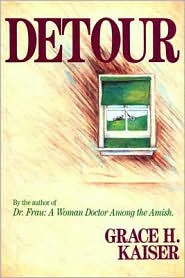
Detour
, sequel to Dr. Frau: A Woman Doctor Among the Amish by Grace H. Kaiser about an accident that left her disabled, reviewed here.
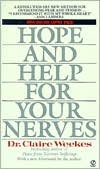
Hope and Help For Your Nerves by Dr. Claire Weekes, reviewed here.
.Jesus, Keep Me Near the Cross: Experiencing the Passion and Power of Easter compiled by Nancy Guthrie from excerpts from the writings and sermons of godly Christians through the ages, reviewed here.
My Heart Restored, a devotional by June Kimmel.
Port of Two Brothers
by Paul Schlener about two missionary brothers and their work along the Amazon River, reviewed here.

Christian Fiction:

The Hidden Flame by Janette Oke and Davis Bunn is the second in the Acts of Faith, reviewed here.
Take Three,
the third in the Above the Line series by Karen Kingsbury about Christian filmmakers, their families, and the problems they run into.
The Telling, the last  in the Seasons of Grace series by Beverly Lewis about an Amish wife and mother who suddenly and inexplicably leaves her family, reviewed here.
This Fine Life by Eva Marie Everson, reviewed here.
A Touch of Grace by Lauraine Snelling, the third in her Daughters of Blessing series about a Norwegian farming family in North Dakota in the 1900s, reviewed here.
Traveler’s Rest by Sue Carter Stout, reviewed here.
Where My Heart Belongs by Tracie Peterson about a prodigal daughter coming home, reviewed here.

Classics or Other Fiction:

Carry On, Jeeves by P. D. Wodehouse, reviewed here.

Katrina asks:

Did you finish reading all the books on your spring reading list? If not, why not?

The two books on my list that I didn’t finish are Emma by Jane Austen and Hoping for Something Better: Refusing to Settle for Life as Usual, a Bible study by Nancy Guthrie. I’m reading them both now. I just got to reading other books and forgot Emma was one on my list to complete before the challenge was over. I probably should have planned on just one Bible study book for the season.

Did you stick to your original goals or did you change your list as you went along?

I added a few to my original goals: Hope and Help For Your Nerves, This Fine Life, and Traveler’s Rest.

What was your favorite book that you read this spring? Least favorite? Why?

The favorite Christian Fiction was This Fine Life. I just loved the story-telling and the love story that took place after marriage. Favorite Non -fiction: Jesus, Keep Me Near the Cross and Hoping for Something Better. They are both very meaty and very well-written. Traveler’s Rest was my least favorite because I felt it needed some editorial help.

Did you learn something new because of Spring Reading Thing 2010 — something about reading, or yourself, or a topic you read about?

I learned something from each book, but the one about help for nerves was particularly helpful. Sometimes just a seemingly minor change in thinking can make a great difference.

What was your favorite thing about the challenge?

Being more purposeful than random in my reading choices and adding to my TBR list by visiting some of the other participants.

Book Review: Hope and Help For Your Nerves

It’s not unusual to have some physical symptom of stress, nervousness or anxiety. Even world class athletes have reported throwing up before a big match, and many seasoned performers and public speakers battle “stage fright” with sweaty, shaky hands. Nausea, vomiting, headaches, multiple trips to the bathroom are just a few physical manifestations.

In some people, though, those reactions appear in excess, or at the slightest trigger. Sometimes this overreaction or over-sensitization to stimuli occurs after a prolonged problem or illness when the sufferer is depleted or exhausted. Sometimes it occurs as what Dr. Claire Weekes in her book Hope and Help For Your Nerves calls “second fear” — fear of the symptoms themselves, fear that they might crop up at just the wrong moment (which they then do), anxiety that they crop up with so little provocation.

The first instinct or first advice, if you talk to someone else about it, is to fight against it. But fighting releases adrenalin, which heightens all those symptoms. And you can’t reason it away as an irrational fear of something that will likely not happen, because it has happened before, and at the worst times. As this over-sensitization continues, it sometimes grows and produces other problems.

A summary of Dr. Weekes advice would be to face and accept the fears, anxieties, and their physical symptoms rather than run from them, “float” past them rather than fight them, and be patient, letting enough time pass to change the conditioned responses of your mind and body to new ones. She explains all of these to greater degrees in her book and applies them to various scenarios.

If you’re prone to feel symptoms that you read about, you may want to skip parts of the book that deal with the escalation of symptoms and problems that a person experiences when these reactions go unchecked, lest you add fears of that happening to your other fears.

Though the book is not written from a Christian vantage point, it is not anti-Christian: Dr. Weekes acknowledges that “religion is a good friend” to those trying to recover from nervous illness. She doesn’t say this, but in my opinion Christians have an additional layer to deal with because they feel guilty: we think Christians shouldn’t have panic attacks, anxiety, or fear. In fact, I wrestled for a time with guilt over any kind of physical response to nervousness or fear, thinking I wasn’t exercising faith, until my pastor said something in a message to the effect that, if you are taking a walk and a dog starts chasing you, as you run to find a tree to climb with an angry dog nipping at your heels, you may fully trust that the Lord is with you and will help you deal with whatever happens, but your heart will still be racing. An over-reaction to the normal fears of life is a product of faulty thinking, and Christians are as prone to that as anyone else and in need to changing their thinking to right patterns. And sometimes the practical considerations need to be dealt with alongside or even before dealing with the spiritual issues. When Elijah fled, fearful and discouraged, from Jezebel in I Kings 19, the first thing the Lord did was to let him sleep, then send an angel to give him food and drink before dealing with the issue at hand. In Dr. Jim Berg’s Quieting a Noisy Soul series, he has a quick start section for those dealing with debilitating symptoms and who need immediate help. Of course, he deals with all of the things that disquiet the soul from a Biblical stance and in much more depth, and I hope that some day he will subdivide the series so that people can purchase the book, DVDs, etc. individually and more affordably rather than having to buy the whole kit when there will be parts of it they don’t use. But in the meantime he has a lot of excellent resources and helps on his site. I found Dr. Weekes’ book a helpful companion to Dr. Berg’s series. She does not advocate the Eastern religious types of meditation or other practices that would be cause for concern for the Christian.

I would not agree with every single point. For example, she advises that someone suffering extremely from these responses have companionship and not be left alone. But I have found that sometimes having to keep up with conversations and even someone else’s presence adds to the over-sensitization, and I can relax more fully when alone. I think one’s personality determines whether or not solitude is helpful or harmful. Overall, though, I found the book very helpful and practical.

(This review will be linked to Semicolon‘s Saturday Review of Books).

Book Review: Detour

While reading Grace H. Kaiser’s Dr. Frau: A Woman Doctor Among the Amish (reviewed briefly here), I learned that she had written a second book titled Detour, about suffering an accident which left her disabled.

Grace was an active family practice physician in a primarily Amish area when a freak accident resulting from getting her foot tangled in an electric cord left her a quadriplegic. Her doctor told her she should be able to return to her practice within a year, so she pushed herself hard to achieve that goal only to find it was not a reality. He had only told her that to motivate her to work hard, feeling she would be depressed and discouraged if she knew the truth from the outset. Thus the discouragement and depression hit about a year later when reality sank in.

Throughout the book there are glimpses into incidents that occurred during her practice, her former patients coming to visit her, her husband’s perspective during both her active practice and her injury, her life and adjustments, spinal cord injury, her point of view as a doctor-turned-patient, and her struggle to find something useful and meaningful to do in the state she found herself after a year of intensive therapy.

I continued to enjoy her apt, concise but colorful sentences that she employed here as well as in her first book: “empty as Monday morning church, ” “I feel like dice shaking in a cup,” “That applejack wore fingers of golden satin as it slid across my tongue.”

The book is not a Christan book per se, though it is not an anti-Christian book: the doctor has some kind of belief in God but does not really write from that perspective. I only mention that because I review many Christian books and don’t want readers to mistakenly think they’ll find issues of faith dealt with in connection with the other subjects.

It is a good, fascinating and honest book, and I enjoyed reading it.

(This review will be linked to Semicolon‘s Saturday Review of Books).

Book Review: This Fine Life

In some ways it is hard to pin down what This Fine Life by Eva Marie Everson is about, for it had many layers, and each one is rich and deep.

It’s about Mariette Putnam, who has just graduated from boarding school in 1959 and returned to her privileged home in a small Georgia town, where her parents each have different plans for her. Her mother wants her to meet and marry the right man (with the right family, right job, right bank account, right connections, etc.). Her father wants her to take advantage of the new possibilities open for women and go to college. Mariette doesn’t know what she wants…until she runs into Thayne Scott, the mail clerk at her father’s factory. Not only is Thayne not the right man her mother has planned for Mariette, but he has a shady past, which he says he has put behind him now.

Thus begins  an unlikely romance, and I love that the author did not stop at the culmination of the romance with marriage as too many novels do, but rather had the characters marry early on and then deal with genuine adjustment and communication issues and a major unforeseen change.

So on one level, the book is about the developing relationship between Mariette and Thayne. But other levels involve forgiveness, perseverance, and friendship. One of the most poignant levels involves Mariette’s feeling of being “outside looking in” in matters of faith, first at the boarding school she attended which was a different denomination than her family’s, and then as her husband and best friend seem to have something she doesn’t have and doesn’t understand in their faith.

And though I would love to give this book a 100% enthusiastic endorsement, because I loved every other part of it, I do have a quibble with that last area, and it is too important an area to overlook. I’ve mentioned this before with other Christian fictions books, but I don’t necessarily believe every one of them needs to lay out the complete plan of salvation with the Romans Road and a printed Sinner’s Prayer to repeat. How an author handles that is between him or herself and the Lord, because He knows who will be reading the book and what they need to hear and how it all fits best within the context of the story (and it does need to do that — an extended tract with a story thinly wrapped around it will satisfy no one, but most Christian fiction novels do not err in that direction.) So I don’t mind if the way of salvation is subtle or only alluded to rather than explained, but whatever there is of it in a story needs to be clear and not misleading.

In my reading of the book, it seems Mariette’s “outside looking in” feelings in regard to faith indicate that she doesn’t really know the Lord. That can certainly happen with people who have grown up in a Christian environment: I’ve known of such people who just go along because it is the lifestyle they’ve always known until at some point it dawns on them that they have never really repented of their own sins and trusted in Christ as their own Lord and Savior. I’ve heard testimonies by people who did just that. But in this book it seems the message given to Mariette is, “You are a child of God: you just need to realize it,” and she doesn’t seem to “get it” until she experiences a serious personal answer to prayer. Now, if the author meant instead that Mariette did have some kind of commitment or faith but had not fully realized its potential and wasn’t walking and living like a child of God, rather than she wasn’t yet a believer at all, then this would make sense. But it was a little confusing when the message I seemed to be picking up was that Mariette wasn’t a genuine believer, to then see her being told she was a child of God. I wrote extensively once before that not everyone is a child of God, so I’ll just refer you to that post rather then repeating it here.

Other than the confusion on that one issue, I loved this book. I love the author’s characterizations and the way I was drawn in to Mariette’s outlook and feelings. I used the word “genuine” many times already in this review, but it is perhaps the best word I can apply: every character and every situation was real, genuine, true to life, and I look forward to reading more of Eva Marie Everson’s books.

Thanks to Revell Books and the author for the complimentary copy of this book.

Book Review: Traveler’s Rest

I picked up Traveler’s Rest by Sue Carter Stout because I have always loved the name of the town. I’ve been through it a couple of times, not enough to really know anything about it, but I thought it would be neat to read a book set in a real town in my state.

The story sounded like it could be compelling: Abby, a recent widow, finds that financial losses in her husband’s company are going to force her to sell her home and move to the family house she inherited. The house is in dire need of repair, she has limited funds, and her daughter is not dealing with her grief or the change in circumstances well. Abby wrestles with her own grief and faith and struggles to face and forgive the woman who caused the accident that killed Abby’s husband by texting while driving.

The back of the book tells us that Mrs. Stout “writes what she knows,” that she was widowed herself and “faced many of the situation her characters do,” which I thought would add a realism and a depth that others authors might not have.

But it all fell a little flat to me. I just didn’t sense that depth. The characters seemed to need a little more rounding out, and the plot seemed choppy to me. In fact, after the first several pages I thought I was reading a self-published book that could have used the eyes of a good editor, but I noted that the book was published by CrossBooks.

Here are just a couple of editorial problems:

On page 133, Abby is having trouble sleeping, then “At seven, I heard Carter [her son] in the kitchen. With plenty of caffeine flowing through my veins, I faced the day.” It’s assumed that between hearing her son in the kitchen and getting caffeine into her veins, she got up and went to the kitchen. There were many places like that where a transitional phrase would have helped.

On page 162, a friend gives Abby’s number to a man, suggesting that he call Abby. But that man has been helping to remodel Abby’s house and his father has been seeing Abby’s mother-in-law. Wouldn’t he have her number already?

On pages 168-69, it is mentioned twice in the same paragraph that Abby and her mother-in-law called a meeting at the shop where they work.

Those aren’t major issues, but they do distract the reader (at least, this reader) and interrupt the flow of the story. In fact, that’s why I mention them. Those of you who know me know that, though I try to be honest in my reviews, I’m not trying to be unduly critical or negative. I hope any writer who sees this sees it as constructive criticism and uses it as a way to make their writing even better.

The book did have some nice moments, and I did like the journey of the characters. I checked Amazon to see if any other readers shared my concerns, but there were no reviews yet. If you read the book, I’d love to hear what you thought. If you’re opinion is vastly different, maybe I’m just being too grumpy. 🙂

What’s On Your Nightstand: May

What's On Your NightstandThe folks at 5 Minutes For Books host What’s On Your Nightstand? the fourth Tuesday of each month in which we can share about the books we have been reading and/or plan to read. You can learn more about it by clicking the link or the button.

I am also using this post for  Booking Through Thursday since the question for this week is: What books do you have next to your bed right now? How about other places in the house? What are you reading?
btt button
The one book that is actually physically on my nightstand it Daily Light on the Daily Path, a devotional book of Scripture verses compiled by Samuel Bagster. I read the evening selection right before bedtime.

The books I have finished since last month are:

The Telling, next in the Seasons of Grace series by Beverly Lewis about an Amish mother who left her family without explanation in order to try to make something right from her past, then came home to seek her family’s forgiveness. My review is here.

Port of Two Brothers by Paul Schlener, a village along the Amazon River in Brazil named for two brother missionaries and their families who worked there, reviewed here.

My Heart Restored, a devotional by June Kimmel, not reviewed.

I am currently reading:

This Fine Life by Eva Marie Everson.

Traveler’s Rest by Sue Carter Stout.

Hope and Help For Your Nerves by Dr. Claire Weekes.

Hoping for Something Better: Refusing to Settle for Life as Usual, a Bible study by Nancy Guthrie. I’ve only read the introduction and part of the first chapter so far, but it is excellent. I don’t normally go straight from one Bible study into another — I like to primarily just read the Bible in my devotional time, this time with Warren Wiersbe’s With the Word as a companion. But I had so enjoyed Nancy’s anthologies for Easter and Christmas that when I saw she had written a Bible study, I knew right away I wanted to go through it.

Next up is Detour, a non-fiction sequel to Dr. Frau: A Woman Doctor Among the Amish by Grace H. Kaiser. That’s the last book on my Spring Reading Thing list besides a classic — I’ve been thinking about Emma by Jane Austen or an Agatha Christie novel. I know — I’ve been saying that for ages. I need to get get one of them and actually put it on my shelf.

And I don’t mean to be so repetitive for regular readers, but since this is a meme for readers, I wanted to mention one more time that I  have begun hosting a meme on Mondays where we can share interesting quotes we’ve read from books, blogs, etc. It’s called The Week In Words: you can read more about it here, and I hope you’ll join us.

Happy reading!

Port of Two Brothers

Port of Two Brothers by Paul Schlener is the story of two brothers and their families who went out as pioneer missionaries under ABWE on the Amazon River in Brazil in the 1950s. They had to name the piece of land when they bought it, and “Port of Two Brothers” seemed the most natural name. Paul spent all of his missionary career in Brazil,. John had to leave earlier due to health.

I am grateful for the publisher who tapped Paul on the shoulder after church one day to tell him that his experiences should be in print. Though I love the “classic” missionary books, I’ve long been an advocate of modern-day missionaries writing their stories as well, to show that God still does work through willing vessels to accomplish His will, and His power and grace are the same as they have ever been.

Paul writes about the details of establishing a pioneer work in a primitive area realistically though uncomplainingly. He and John found themselves many times facing experiences outside the primary missionary tasks of preaching, teaching, and discipling that they were not prepared for, from boat repairs to building to establishing a school to providing medical aid, but in each situation they sought the Lord, got the best information they could, and plunged ahead.

Humor is sprinkled liberally throughout.  His account of his first experience pulling teeth is hilarious to read, though I am sure it was not so funny at the time. He had wanted to avoid dentistry, but when a dentist gave him unsought books and equipment, and he saw the people in such dire need, he felt he really had no choice but to do what he could.

But more important than the needed physical help the brothers were enabled to provide was the light of the gospel they brought. What a thrill and a blessing to read of those who believed and whose lives were changed. In one instance, two visiting preachers wanted to observe a Brazilian festa. Neither the missionaries nor the national Christians thought this was a good idea, but the visitors pressed, so they worked out the details to go. The ritual “celebrating” a young girl’s coming to the full responsibilities of womanhood at puberty was macabre and ghastly, and the Christians could not even stay for the worst of it. Yet within twenty years some of those involved in that ritual had become believers. As Paul visited the same village, he wrote:

I saw again the transforming power of God in the lives of these people. I could never refer to them as uncivilized, for their lives were on a far higher spiritual and moral plane than many people educated and steeped in an industrial society.

My thoughts went back to the drunken orgy held in this place 20 years ago. No one could read. There were no Bibles, no Christians, no knowledge of God and His plan of salvation; there existed only fear, superstition, witchcraft, knife fights, and drunkenness. I lamented that Jessie (his wife) wasn’t with me to see this; John would have appreciated it as well.

I approached the little table and asked Franciso to lead in another hymn while I gathered my thoughts. I still have the little index card with my few notes on the first sentence of Psalm 23: “The Lord is my shepherd, I shall not want.” They listened as I made it through the short message without choking up.

That’s what it’s all about.

(This review will be linked to Semicolon’s Saturday Review of Books.)