Another Gospel? A Lifelong Christian Seeks Truth in Response to Progressive Christianity

Alisa Childers’ faith wasn’t shaken by an atheist professor or a New Age neighbor.

Her beliefs were dismantled by her pastor.

She knew and trusted him. He had invited a select group of “out of the box thinkers” to a special class, a “safe zone to process our doubts and questions.” Alisa was surprised when he began to question and then to take apart the doctrines she had always believed.

“I wouldn’t hear the term progressive Christianity until years later. But it was clear that this group of people wanted to ‘progress’ beyond the Christianity they had known. They were going through what would practically become a rite of passage in this new and flourishing movement: deconstruction. In the context of faith, deconstruction is the process of systematically dissecting and often rejecting the beliefs you grew up with” (p. 24).

There were things that bothered Alisa about Christianity as it had always been presented, things like massive altar calls where people streamed forward. Did those people know what they were doing? Did their decision “stick?”

But those things didn’t cause her to question her foundational beliefs. Her pastor’s class did. She realized she knew what she believed, but not why. She had grown up in a Christian family who actively ministered to others. But her faith was “intellectually weak and untested” (p. 5).

“When progressive Christianity first entered the scene, its proponents raised some valid critiques of evangelical culture that the church needed to examine and reevaluate. But those progressives who reject essential teachings—like the physical resurrection of Jesus—can confuse unsuspecting Christians and kick the foundation out from under them” (p. 8).

This class led her into a dark pit, “a spiritual blackout—a foray into darkness like I’d never known” (p. 8). What if everything she had ever believed was false? Another girl in the class stood next to her in choir practice one day and said, “It’s funny that we’re all singing these songs and none of us have any idea what we believe!” (p. 28).

That wasn’t good enough for Alisa. “When I have doubts about my faith, or deep nagging questions that keep me up at night, I don’t have the luxury of finding ‘my truth’ because I am committed to the truth. I want to know what is real. I want my worldview (the lens through which I see the world) to line up with reality. God either exists, or he doesn’t. The Bible is his Word, or it’s not. Jesus was raised from the dead, or he wasn’t. Christianity is true, or it isn’t. There is no ‘my truth’ when it comes to God” (p. 10).

“I wanted to progress in my faith . . . in my understanding of God’s Word, my ability to live it out, and m relationship with Jesus. But I didn’t want to progress beyond truth” (p. 25).

Alisa prayed for God to send her a lifeboat. And He did, sending more than one. Alisa took time to study in detail the claims of the foundational doctrines of Christianity. It was a long process. Sometimes her study brought up more questions.

“Slowly and steadily, God began to rebuild my faith. The questions that had knocked the foundation out from under my beliefs—the ones I had never thought to ask, the ones I didn’t know existed—were not simply being answered. They were being dwarfed by substantial evidence and impenetrable logic so robust that I felt like a kid in a candy store—who had just found out that candy exists” (p. 227).

Her faith didn’t look exactly as it had before. She corrected some beliefs and determined some, while important, weren’t essential. But her beliefs in the fundamental truths of historic Christianity were now on a firm foundation.

Another Gospel: A Lifelong Christian Seeks Truth in Response to Progressive Christianity is Alisa’s testimony and the result of her study. She takes a great deal of information and distills it to its essentials in an understandable way.

She quotes from progressive Christianity’s authors to show what they believe and how it differs from historic Christianity. Then she draws from her extensive research to share why she believes the evidence supports historic Christianity.

There’s so much I wish I could tell you and quote from this book. But I’ll touch on just a few issues.

One big difference between historic and progressive Christianity is their views of Scripture. Alisa spends three chapters on the different threads of thought in regard to the Bible and the abundant proof that it is accurate and reliable and authoritative.

Other major differences involve who Jesus is and why He came. Some call the idea of Jesus dying for our sins “cosmic child abuse.” But Jesus said He willingly gave His life. Atonement wasn’t an idea borrowed from primitive religions. It was worked into the fabric of the OT sacrifices and symbols and came into fruition in Jesus’ death for our sins. Many NT books expound on it.

If more churches would welcome the honest questions of doubters and engage with the intellectual side of their faith, they would become safe places for those who experience doubt. If people don’t feel understood, they are likely to find sympathy from those in the progressive camp who thrive on reveling in doubt. In progressive Christianity, doubt has become a badge of honor to bask in, rather than an obstacle to face and overcome (pp. 51-52).

As I navigated through my faith crisis, I realized that it’s not enough to simply know the facts anymore . . . we have to learn how to think them through—to assess information and come to reasonable conclusions after engaging religious ideas logically and intellectually. We can’t allow truth to be sacrificed on the altar of our feelings. We can’t allow our fear of offending others to prevent us from warning them that they’re about to step in front of a bus (p. 11).

The progressive wave that slammed me against the Rock of Ages had broken apart my deeply ingrained assumptions about Jesus, God, and the Bible. But that same Rock of Ages slowly but surely began to rearrange the pieces, discarding a few and putting the right ones back where they belonged (p. 9).

Those of you who have read here for a while know that I am not given to gushy superlative statements. But this is one of the most important books I have ever read. I had seen some of the things Alisa described mentioned here and there, and her book helped those pieces click into the bigger picture.

These doctrines matter. There are many areas where we can differ from other Christians and give each other grace. But it’s not enough to have a nebulous belief in a generic Jesus. It’s vital that we know Who and what we believe in and why.

I strongly encourage you to read this book. It will help you discern the threads of progressive Christianity. It will strengthen your own faith and its foundations. It will help you minister to others.

(I often link up with some of these bloggers.)

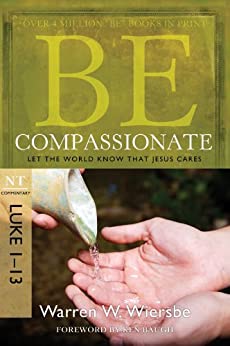
Be Restored

The second book of Samuel covers King David’s reign in Israel. Warren Wiersbe offers insights and helps for our reading 2 Samuel in his commentary Be Restored (2 Samuel & 1 Chronicles): Trusting God to See Us Through.

David first shows up in 1 Samuel, where Samuel finds him as a young shepherd and anoints him king after Saul fails. Then David has his encounter with Goliath, becomes a seasoned warrior, and flees from Saul’s murderous jealousy for many years.

David appears in the beginning of 1 Kings, where he sets up Solomon to take over after he dies.

1 Chronicles documents David’s reign as well, including his preparations for the temple that he was not allowed to build, but that Solomon would.

But 2 Samuel begins with David’s finally coming into his full kingship and ends with his final battles, a list of his “mighty men,” and his “last words.”

Within the overarching progression of God’s Word and purposes, most notable in this book is the covenant God made with David that He would establish David’s line as an everlasting kingdom and that David’s son would build a house for His name: the temple which would be the centerpiece of Israel’s worship system for years to come. Ultimately David’s descendants would culminate in the Messiah, Jesus Christ, the everlasting King. Jesus is sometimes called “the Son of David.”

David is a favorite character of many, with his rags-to-riches story of the shepherd boy who became a king, his unabashed faith that God would use him to take care of Goliath, his earnestness in following the Lord, his outpouring of his heart in so many psalms that we can identify with.

David was never perfect, but he was teachable and usually readily admitted when he was mistaken.

Then came his fall with Bathsheba. Instead of turning away, as Joseph did when tempted, David continued to entertain the thought of the beautiful woman he had seen, until he called for her and lay with her. Then when she became pregnant, David tried to manipulate her husband, Uriah, one of his mighty men, to go home so the baby would be thought to be his. But Uriah was honorable and would not partake of the pleasures of home while his brothers were on the battlefield. So David arranged to have Uriah put in the hottest part of the battle, where he was killed.

When David laid aside his armor, he took the first step toward moral defeat, and the same principle applies to believers today (Eph. 6: 10–18). Without the helmet of salvation, we don’t think like saved people, and without the breastplate of righteousness, we have nothing to protect the heart. Lacking the girdle of truth, we easily believe lies (“We can get away with this!”), and without the sword of the Word and the shield of faith, we are helpless before the enemy. Without prayer we have no power. As for the shoes of peace, David walked in the midst of battles for the rest of his life. He was safer on the battlefield than on the battlement of his house (p. 83).

David’s house was in turmoil for many years after that. God forgave him when he repented (Psalm 51), but there are consequences even for forgiven sin.

All during David’s months of silence, he had suffered intensely, as you can detect when you read his two prayers of confession (Ps. 32 and 51). Psalm 32 pictures a sick old man instead of a virile warrior, and Psalm 51 describes a believer who had lost almost everything—his purity, joy, witness, wisdom, and peace—a man who was afraid God would take the Holy Spirit from him as He had done to Saul. David went through intense emotional and physical pain, but he left behind two prayers that are precious to all believers who have sinned (p. 91).

Chastening is not punishment meted out by an angry judge who wants to uphold the law; rather, it’s difficulty permitted by a loving Father who wants His children to submit to His will and develop godly character. Chastening is an expression of God’s love (Prov. 3: 11–12), and the Greek word used in Hebrews 12: 5–13 means “child training, instruction, discipline” (p. 92).

The next-to-last chapter of 2 Samuel contains David’s “last words”—not the last words of his that we see in Scripture, but probably a psalm written near the end of his life. Wiersbe suggests that since the psalm’s subject is godly leadership, it may have been written for Solomon, who would succeed David as king. In verses 3-4, David writes: “The God of Israel has spoken; the Rock of Israel has said to me: When one rules justly over men, ruling in the fear of God, he dawns on them like the morning light, like the sun shining forth on a cloudless morning, like rain that makes grass to sprout from the earth.” Wiersbe comments that godly leadership “is an awesome responsibility. It demands character and integrity (‘just’ = righteous) and a submissive attitude toward the Lord (‘the fear of God’). Without righteousness and the fear of God, a leader becomes a dictator and abuses God’s people, driving them like cattle instead of leading them like sheep” (p. 183). Wiersbe expands:

David used a beautiful metaphor to picture the work of the leader: rain and sunshine that together produce useful fruit instead of painful thorns (23: 4–7) (p. 183).

With God’s help, leaders must create such a creative atmosphere that their colaborers will be able to grow and produce fruit. Ministry involves both sunshine and rain, bright days and cloudy days; but a godly leader’s ministry will produce gentle rain that brings life and not storms that destroy. What a delight it is to follow a spiritual leader who brings out the best in us and helps us produce fruit for the glory of God! Unspiritual leaders produce thorns that irritate people and make progress very difficult (2 Sam. 23: 6–7) (pp 183-184).

With all his faults and failures, David was, for the most part, such a leader. How we need such leaders today.

The Small House at Allington

The Small House at Allington by Anthony Trollope houses three occupants in the 1860s. Mrs. Dale is a widow with two teenage daughters, Lily and Bell. Lily is lively and outgoing, almost a little saucy, and rash sometimes. Bell is quieter and more mature.

The “small house” belongs to the manor house owned by Squire Dale, Mrs. Dale’s brother-in-law. The squire had not cared for his brother’s wife, but he wants to care for her girls since his brother died by giving them a place to stay and introducing them to society they otherwise would not have encountered. Mrs. Dale and the squire maintain a polite atmosphere but avoid each other as much as possible.

Bernard Dale, the squire’s nephew by another brother, stays with the squire several months out of the year and is in line to be the squire’s heir. Lily and Bell don’t mind the squire’s preference for Bernard: they’re simply grateful for the squire’s beneficence toward them.

On one of Bernard’s lengthy visits, he brings a friend, Adolphus Crosbie. Crobie falls in love with Lily “with all his heart,—with all the heart that he had for such purposes.” And though he thinks she is a dear, sweet girl, he has high ambitions. Crosbie knows Lily has no money or rank and therefore would not be welcome in the circles he aspires to. They become engaged, and Lily gives her whole heart to Crosbie. However, inwardly he wonders about an earl’s daughter he met from de Courcy castle.

Johnnie Eames is a neighbor of the Dales’ and has loved Lily since childhood. But he dares not speak to her of his feelings. He knows he has nothing to offer. Lily senses his regard and is kind to him, but does not encourage him. John is now a clerk living in a boarding house in London. His landlady’s daughter sets her cap toward him, not out of love, but to entrap him into a commitment. It seems if a girl had written proof of a man’s matrimonial intentions towards her, and then he backs out, she could sue him.

Doctor Crofts is a dear friend of the family and loves Bell, but he is early in his practice and does not have much money.

Meanwhile, Squire Dale wants Bernard and Bell to marry (I guess cousins could wed in those days). Bernard doesn’t love Bell, but he’s amenable to the arrangements. Bell, however, only thinks of Bernard as a brother and does not want to hear about marriage. It’s not until Bell refuses, multiple times, that Bernard begins to be in earnest about wanting to marry her,

Whew. Though much of the book traces this romantic heptagon, there are other strands of plot as well. There are a couple of other romances—or at least flirtations—not involving these characters.One young man helps an earl out in a crisis, and the earl becomes a patron and mentor of sorts. One young man rises in others’ regard while another sinks, though they make similar mistakes. Some of the office politics of both are seen.

I especially enjoyed the growth in Mrs. Dale’s and the squire’s relationship. He is described as one of those men who comes across as gruff, but really does have a tender heart.

All of these happenings are couched within the times. Trollope makes wry observations regarding class consciousness, gossip, hypocrisies, city vs. town life, etc. A couple of examples: when two of the young men come to blows over the wrongs of one of them, an older lady who is a righteous, upstanding woman and the moral center of her set expresses “by the light of her eyes anything but Christian horror at the wickedness of the deed.” When the police are called over the incident: “‘What’s all this?’ said the superintendent, still keeping on his hat, for he was aware how much of the excellence of his personal dignity was owing to the arrangement of that article.”

The ending was disappointing to me. One character got his comeuppance in a away. But one couple I was rooting for didn’t come to the end I had hoped. I saw one character’s name in some chapter titles of the next book, so perhaps their happy ending comes later.

Still, I enjoyed the book as a whole.

This book is the fifth and next to last in Trollope’s Chronicles of Barsetshire series. Though several of the characters are new, it was fun to see several old friends from earlier books. When I read the fourth, Framley Parsonage, I decided maybe I’d better go ahead and read the rest of the series in succession so I didn’t have to remind myself of who the characters were and their relationship with each other with each book.

The Kindle edition of this book is free at this time, and the audiobook was included as part of my Audible subscription. They were synced so that I could pick up where I left off in either one, which worked out nicely. Simon Vance was the excellent narrator for this, and I think for all the Barsetshire series I’ve listened to.

I’m counting this for the “Classic set in a place you’d like to visit” for the Back to the Classics Reading Challenge.

Just 18 Summers

Just 18 Summers by Michelle Cox and Rene Gutteridge is a novel that tells the story of four families.

Butch Browning’s wife, Jenny, has recently passed away, and Butch is in a fog. Jenny had taken care of so many things, especially their young daughter, Ava. Butch owns a construction company and feels the weight of responsibility much more than when he was just another worker. But at home, the most he can manage is pizza every night.

Beth is Butch’s sister, married with three children. Her oldest daughter is in college and her oldest son is heading there next fall. In the midst of distress over her emptying nest, her daughter throws the family a curve ball: she wants to quit college and get married . . . to the pizza delivery guy.

Tippy is Butch’s foreman, and he and his wife, Daphne, are expecting their first child. But Daphne has gone off the deep end in trying to do everything possible to protect their child: reading every book she can find, covering every corner with pool noodles, forbidding certain foods from their home, etc., etc. etc.Her obsession is affecting their marriage, and Tippy can’t fathom how they’ll cope when the baby actually comes.

Helen and Charles Buckley are Beth’s neighbors, and the wives of all these families attend the scrapbooking get-together that Jenny started and which currently meets at Helen’s home. Charles has an excellent job, and Helen is determined to provide their children the very best opportunities so they’ll never be deprived or embarrassed like she was growing up. But Charles’ business responsibilities keep him from being an active part of his children’s lives, and Helen’s driven and regimented schedule for her children misses their deepest needs.

One theme in this book is that parents have a relatively short time—just 18 summers–to form relationships with their children, make lasting memories, and be the primary influence to their children. It goes so fast. Though, of course, we still have a relationship and make memories even after our children leave home, we have the biggest hand in their training when they are young.

Another theme is that there is only so much parents can control. As children become old enough to make their own decisions, those decisions may not be in keeping with what the parents think best. As Daphne discovers, we can’t protect our children from every little thing. Though we seek God’s will and do our best, ultimately our children’s lives are in God’s hands.

The book illustrates both points with humor and poignancy.

Though Jenny seems to have been almost too good to be true, and though Ava seems more capable than a child her age would normally be, all the characters are realistic and enjoyable.

I don’t think I’ve ever read Rene before. And though this is my first book of Michelle’s as well, I enjoyed attending one of her workshops at a writer’s conference. That conference also held a “Lightning Learning” session–kind of like speed dating–where three or four attendees would go in groups to an author’s table, hear their words of wisdom for 5 minutes, then go on to another table when a bell rang. I remember Michelle’s table being particularly merry.

Michelle explains in notes at the back of the book that Just 18 Summers was originally a screen play written by herself, Marshall Younger, and Torry Martin, and they were seeking funding to make the movie. I don’t know if it was ever made—I couldn’t find any videos of it.

As I searched for Michelle’s web site, I discovered there is another Michelle Cox, also an author, who writes in a different genre. The Michelle Cox who co-wrote 18 Summers also writes devotional books based on the When Calls the Heart TV series.

Overall I thought this was a great, enjoyable book. Though it has a point to make, it’s not didactic or heavy-handed. Since my own children are “out of the nest,” I can “amen” the truths in this book.

Christopher Robin Milne

As you’re probably aware, A. A. Milne’s children’s books about Pooh and Christopher Robin and the Enchanted Forest were based on his son, his son’s toys, and the family farm, Cotchford, which edged the Five Hundred Acre Wood (which became the Hundred Acre Wood in the Pooh stories).

Though Christopher Robin was Milne’s son’s name, young Christopher wasn’t called that. He went by Billy Moon, or just Moon (which came from his early attempts to say “Milne”).

A. A. Milne was known for plays and other works when he wrote a few poems and then a couple of books based on Christopher and his real childhood toys. He was dismayed that those books overshadowed all else he wrote. He stopped writing related children’s books because he didn’t feel the extensive fame was good for Christopher.

A few months ago, my husband and I watched Goodbye Christopher Robin, about the Milnes and the fame of Pooh and Christopher Robin. My children had grown up with Pooh (mostly the Disney version) and the Milne characters will always have a soft spot in my heart.

I wanted to learn more about how Christopher (as he was known as an adult) really felt, so I decided to read his book, The Enchanted Places: A Childhood Memoir. I learned shortly thereafter that Christopher had written a sequel titled The Path Through the Trees, so I read that as well, and decided to review them together.

Though there’s a bit of overlap, the first book covers Christopher’s life until he went into the army, and the second covers that time forward. (For convenience sake, I am going to refer to the first as EP and the second as PTT.)

In The Enchanted Places, Christopher tells about his family, his nanny, and growing-up years.

Though the Pooh books were inspired by Christopher Robin’s toys, they also contained his father’s nostalgia about his own childhood.

The Christopher Robin who appears in so many of the poems is not always me. For this was where my name, so totally useless to me personally, came into its own: it was a wonderful name for writing poetry round. So sometimes my father is using it to describe something I did, and sometimes he is borrowing it to describe something he did as a child, and sometimes he is using it to describe something that any child might have done (EP, p. 19).

In the second book, Christopher says that part of his writing the first book had to do with his feelings upon his father’s death. He learned that his mother had destroyed almost everything of his father’s, and at first he was quite angry. Later he came to believe she was right to do so. But he knew that at some point someone would come around wanting to write a biography of A. A., and EP was a place to sort through his remembrances and present “not a full-length study, but just a collection of snapshots” of his father (EP, p. 91). His father “doesn’t wear his heart on his sleeve as [his brothers] do. Alan’s heart is firmly buttoned up inside his jacket and only the merriest hint of it can be seen dancing in is eyes, flickering in the corners of his mouth” (EP, p. 91).

Christopher “quite liked being Christopher Robin and being famous” (EP, p. 81). But in boarding school, “it was now that began the love-hate relationship with my fictional namesake that has continued to this day” (EP, p. 86). The Goodbye Christopher Robin film shows his being bullied at this point, as do a couple of articles I read. He doesn’t specifically say he was in either of these books, but he said the poem “Vespers” “brought me over the years more toe-curling, fist-clenching, lip-biting embarrassment than any other” (p. 23).

Christopher’s lowest point seemed to come after the war when he was looking for a job. He didn’t seem to have any qualifications for anything, a least none that anyone needed. He was a little jealous of his father’s success at his expense then:

But were they entirely his own efforts? Hadn’t I come into it somewhere? In pessimistic moments, when I was trudging London in search of an employer wanting to make use of such talents as I could offer, it seemed to me, almost, that my father had got to where he was by climbing upon my infant shoulders, that he had filched from me my good name and had left me with nothing but the empty fame of being his son.

This was the worst period for me. It was a period when, suitably encouraged, my bitterness would overflow. On one or two occasions it overflowed more publicly that it should have done, so that there seemed to be only one thing to do: to escape from it all, to keep out of the limelight. Sorry, I don’t give interviews. Sorry, I don’t answer letters. It is better to say nothing than to say something I might regret (EP, p. 146).

Christopher says in both books that he was fiercely independent.

However much I wanted to succeed as a bookseller on my own merits, people would inevitably conclude that I was succeeding partly at least on my father’s reputation. They might even think (wrongly) that my father’s money was subsidizing the venture and that–unlike other less fortunate booksellers–I did not really need to make ends meet (EP, p. 148).

In The Path Through the Trees, (sometimes this title is prefaced with Beyond the World of Pooh, Part 2), Christopher tells of his life from the time he began to make his own choices: his five-year stent in the Army, his finishing college, search for a job, marriage, life as a book-seller.

He’s oddly selective about what he writes, which, of course, he has every right to be. He does say this book is “a personal memoir, not a biography” (PTT, Location 3889) and presents “a disjointed story—but a happy life” (Location 31).

In this second book, he tells a great deal about his first love, a woman named Hedda whom he met in Italy. But he tells us very little about his wife, Lesley, except things they did together. She was his cousin, so he had known her for years. But he doesn’t describe her as a person or how they went from cousins to romance. Likewise, he tells us his daughter, Clare, was born with cerebral palsy, couldn’t walk, had limited use of her arms. But he doesn’t describe her personality or appearance. I don’t know if this quietness was for their protection, a result of his own struggles with fame and too much of his life made public, or what.

He spends a lot of time on how they came to be booksellers, how things progressed with the shop, choices they made, things that affected the market, etc. He defends book-selling as a profession—there appears to have been some who regarded book-selling as a “trade” (which was somehow lower in rank than other professions) or as somewhat mercenary.

He has a chapter on animals they took care of (including a vole and owl in their home). In other circumstances, he might have been a naturalist.

He talks a great deal about Dartmouth, the town where he and Lesley settled and had their bookshop.

When Clare was done going to school and came home to stay, she needed full-time care. Christopher stayed home with her while Lesley continued part-time at the bookshop. This seems to have been one of the happiest times of his life, taking Clare out into nature and devising and making various helps for her needs. He had often said that he had inherited his mother’s hands and his father’s brains, and these devices for Clare employed both. His thoughts about equipment for the disabled was interesting:

It is a sad fact that much of the equipment designed for the disabled is inefficient and nearly all of it is ugly. To some extent the one follows from the other. An efficient design has a natural elegance which needs little embellishment to make it attractive. Whereas the wheel chair issued to Clare was such a mechanical disaster that nothing could have redeemed it. How unfair it is that a person who most needs a chair should so often have just the one–and one so very far from beautiful–while the rest of us, who need chairs only now and again, possess so many (PTT, Location 3233).

But of course the greatest pleasure of all was to see Clare sitting comfortably where before she had been uncomfortable, doing something she had not previously been able to do. And it was a pleasant thought that this was, in a sense, a legacy from her grandparents whom she had never known–a product of the fusion of my father’s fondness for mathematics with my mother’s competent hands. If she had inherited neither, she could at least benefit from the fact that I had inherited both (PTT, Location 3243).

Christopher’s independence caused him to refuse accepting money from the Pooh book sales until Clare came home.

Christopher seems to have been a kind and gentle man, though fiercely opinionated on some topics. He was a classic introvert, a thinker. He describes one scene in the second book where he’s walking home and comes upon a couple searching for elephant hawk caterpillars, which they hoped to take back to their area so the bugs would hatch and breed there. Christopher got home and told Lesley about the encounter. Lesley left a few minutes later and came across the same couple. She commented that her husband had just spoken with them. The man replied, shyly, “I thought he looked like the sort of person who would be interested in my caterpillar,” which Christopher took as “a nice compliment” (PTT, Location 3721). I can somewhat picture him ambling around Dartmouth, as he describes it, enjoying his bookshop, stopping to observe and contemplate nature, willing to talk about moths with strangers.

Though Christopher had some rough spots with both parents, and didn’t see his mother the last fifteen years of her life, he loved them and spoke fondly of them in these books.

Sadly, to me, Christopher “converted to humanism” when he was 24, believing that man invented God rather than the other way around. He states this in the first book, but apparently felt he came across a little too strongly. So in the second book he says that though he does not believe in God, someone else can, and they can both be right (which does not make sense, but apparently he means something like “believe whatever works for you and helps you through life”). A. A. was also an atheist but did not push his beliefs on his son until he shared an atheistic book with Christopher in his twenties.

This article tells some of the differences between the film and reality. There are some things in the films that were not in these books but may have come from other sources (A. A. also wrote a biography, It’s Too Late Now, and both Milnes wrote other books as well). Or, as always happens in movies, the makers may have taken a bit of license. One difference this article doesn’t mention is that though A.A. Milne wrote an anti-war book after WWI, he felt war was justified against Hitler and wrote another book telling why. “Hitler was different: different from anything he had imagined possible; that, terrible though war was, peace under Hitler would have been even more terrible” (PTT, Location 140). The film shows A. A.’s battle with PTSD (though it was not called that then). Christopher doesn’t mention his dad having flashbacks or problems adjusting, but he knew he’d had “sad times” in his life and felt they came out through Eeyore.

Another scene in the film comes when young Christopher asks his father, “Are you writing a book? I thought we were just having fun.” Alan responds that he’s writing book and having fun. I think that was accurate: I don’t think A. A. observed his child’s activities with a mercenary air, pulling from them what he thought would “sell.” Perhaps as happens with many parents, having children brings up memories of one’s own childhood, and A. A. recognized what would resonate not only with other children, but other parents.

I read the Kindle version of both books, but then discovered the second was included in my Audible subscription. So the audio and ebook were synced to where I could go back and forth between them. One advantage to listening was hearing the words in an English accent. I knew, of course, Christopher was English, but I don’t think in accents when reading. The audiobook has a lovely postscript not in the books by Peter Dennis, the narrator of this and the Pooh books and a personal friend of the family. I also checked both books out of the library to see if there were any pictures or other material in them. The first book had pictures of Christopher as a child as well as pictures of some of the places in the books side-by-side with the book’s illustrations of those places.

There’s a scene at the end of the film where Christopher tells his father he had more or less made peace with his childhood namesake. In the army, especially, he came across people whose fond childhood memories included Pooh and were a comfort to them. I didn’t read any sentiments like that in these books, but I hope Christopher did come to something like that realization in real life. Though he didn’t want to be mistaken for his fictional namesake, and though he understandably wanted to be permitted to grow up and away from him, the fictional boy and his toys and their innocence and imagination have touched the hearts of children and parents for decades.

(These books fit within the Nonfiction Reading Challenge celebrity category).

100 Best Bible Verses to Overcome Worry and Anxiety

100 Best Bible Verses to Overcome Worry and Anxiety is compiled from writings of several authors and published with Bethany House.

Each two- to three-page spread begins with a Bible verse. The author then adds a brief paragraph about the context the verse was set in. Then several paragraphs about the meaning of the verse and one or two of application are included. Then a few references are listed for additional reading.

When I first saw this book reviewed at Joanne’s, I thought it was a great idea. I’ve mentioned before that anxiety is probably not something that can be conquered by answering an altar call or sitting down for one massive Bible study. Rather, battling anxiety is a matter of continually feeding our souls truth. This book is a wonderful way to keep God’s provision, protection, and promises continually before us in small but substantial doses.

I very much appreciated that the writers delved into the context of the verses before explaining the meaning and applying them. The context enriches our understanding of the passage and keeps us from spinning our own take on a single sentence.

I’ve repeatedly heard that there are 365 Bible verses that say, “Fear not.” That declaration is often followed by the quip, “One for every day of the year.” I had thought this would be a collection of those verses. It’s not (though such a collection would be a great idea for a devotional book). I was surprised at some of the verses used, as they didn’t seem to directly relate to anxiety or worry. But I came to understand they were foundational verses about God’s character or promises. The more we know Him, the less reason we have to be anxious about anything.

Here are just a few of the quotes I marked in this book:

[On John 16:33] It’s a strange way to promise peace—Jesus starts by telling his disciples that they are about to go through a time of sorrow and fear. How is that peaceful? they might have wondered, especially after Good Friday, when their teacher was killed, and it seemed like the world had won.

Still, Jesus’ words, “Take heart!” are a command in the original language, not just an inspirational phrase but something God wanted them—and us—to actively do. It could be phrased “Choose hope!” or “Be encouraged!” (p. 39).

Some seasons, taking heart might be among the hardest of God’s commands to follow. Until we remember the rest of the verse: “I have overcome the world” (p. 40).

[On 2 Timothy 1:7] Fear is a tool of the enemy that exists to keep us from advancing the kingdom of God. It distracts us from trusting him, and instead tempts us to protect ourselves and rely on our own abilities” (p. 51).

In verses 7 and 8 [of Joshua 1], God connects being strong and courageous to faithfully following his Word. Not believing in God’s Word nor taking it seriously had been the sin that forced the Israelites to wander in the wilderness for forty years (p. 62).

[On Lamentations 3:57] His response will always be, “Do not fear.” Not condemnation for being afraid, but telling us there is no need for it. He is holding on to us tightly, a good Father whose perfect love casts out fear . . . if we just ask (p. 65).

[On Genesis 50:20] [Joseph] endured some of the most difficult circumstances and betrayals and still honored the Lord in the midst of them. He refused to see his journey as one setback after another, but instead chose to believe that God was writing a much bigger story (p. 78).

Allow your confidence to be informed by your faith, not your circumstance (p. 79).

[On Psalm 61:2] We don’t need to strive so hard to be self-sufficient when the chaos threatens to overwhelm us, but we can rest in the truth that God is infinitely more capable than we are (p. 121).

[On Psalm 23:4] Dark valleys don’t stay dark. The beauty of a valley is that it dips down but then rises back up. Valleys aren’t endless stretches of defeat, but stretches we walk through and rise from. What a beautiful promise. We are not alone in our valleys. Even as we “walk through,” we don’t need to sprint through in a panic; we will walk through our valley with Jesus by our side and emerge safely, made stronger by the experience (p. 125).

This book doesn’t just try to make readers feel better. It continually points the reader back to God’s character and His Word. Thus, it is an excellent resource when worries or fears try to pull our gaze away from Him.

Be Successful: 1 Samuel

The book of 1 Samuel in the Bible is something of a bridge between eras in Israel’s history. Samuel himself is something of a bridge. He’s the last of the judges. He’s a prophet. He anoints two different kings. He oversaw the transition between Israel as a group of tribes in which everyone “did that which was right in his own eyes” (the theme of Judges) to Israel as a unified nation under a king.

But the transition was not a smooth one. In desiring a king, Israel had rejected the Lord’s leadership. The first king, Saul, had much to recommend him, but he failed spectacularly. David was anointed king, but didn’t come to the throne for several years, and he was on the run from Saul much of that time.

Perhaps the contrast between David and Saul is why Warren W. Wiersbe titled his commentary on 1 Samuel Be Successful: Attaining the Wealth that Money Can’t Buy. But other characters in 1 Samuel have varying degrees of success in following and serving the Lord as well.

The book begins with a childless woman with a longing. Hannah had no children, and she pleaded with the Lord to grant her a son. She promised that she would give the child back to the Lord.

There’s so much treachery, bloodshed, and confusion recorded in 1 Samuel that it’s refreshing to meet at the very beginning of the book a woman who represents the very best that God has to give. The leaders of Israel had failed, so God sought out a woman He could use to help bring truth, peace, and order to His people. She served God simply by being a woman and doing what only a woman could do—give birth to a baby and dedicate that child to the Lord (p. 194).

It’s an awesome fact that, humanly speaking, the future of the nation rested with this godly woman’s prayers, and yet, how much in history has depended on the prayers of suffering and sacrificing people, especially mothers (p. 20).

Eli was a priest whose sons committed awful atrocities in their offices as priests. Eli knew what they were doing and rebuked them, but didn’t restrain them. When Hannah weaned Samuel, the child the Lord had given her, she brought him to Eli’s care in the tabernacle.Somehow Eli protected Samuel from the corruption of Eli’s sons.

The Bible says that during this time, “the word of the Lord was rare in those days” (1 Samuel 3:1). Wiersbe comments, “It was a tragic day in the nation of Israel when the living God no longer sent His people signs and prophetic messages (Ps. 74: 9; Ezek. 7: 26; Amos 8: 11–12; Mic. 3: 6). The silence of God was the judgment of God” (p. 32).

Yet at this time, God spoke to Samuel, and Eli taught Samuel to listen and respond, “Speak, Lord, for your servant hears” (1 Samuel 3:4-18). And “the Lord revealed himself to Samuel at Shiloh by the word of the Lord” (1 Samuel 3:21).

Blessed are those older saints who help the new generation know God and live for Him! However Eli may have failed with his own sons, he helped to point Samuel in the right direction, and the whole nation benefited from it. . . . Eli hadn’t been a great spiritual leader, but he was one small link in the chain that led to the anointing of David and eventually the birth of the Redeemer (pp. 195-196).

Samuel became a godly man who followed the Lord all his life and led the people faithfully. The one spot on his record is that his sons also abused their ministry. We don’t know the circumstances, but Samuel isn’t blamed for his sons’ behavior as Eli had been. Wiersbe offers some possibilities as to what could have gone wrong with Samuel’s sons, but ultimately we just don’t know. Samuel repeatedly pointed the people to the Lord.

Samuel is an example to all older believers who are prone to glorify the past, resist change in the present, and lose hope in the future. Without abandoning the past, Samuel accepted change, did all he could to make things work, and when they didn’t work, trusted God for a brighter future. God didn’t abandon the kingdom; He just chose a better man to be in charge, and Samuel helped to mentor that man. Every leader needs a Samuel, a person in touch with God, appreciative of the past (p. 197).

Saul started out well. He seemed humble in the beginning. But there doesn’t seem to have been much of a personal relationship between him and the Lord. Wiesrbe says, “His was the shallow heart of our Lord’s parable of the sower. There was no depth, the tears were temporary, and no lasting fruit ever appeared” (p. 195). Saul began taking matters into his own hands instead of waiting on God and following His directions. “Serving God acceptably involves doing the will of God in the right way, at the right time, and for the right motive” (p. 92). “To know God’s will and deliberately disobey it is to put ourselves above God and therefore become our own god. This is the vilest form of idolatry” (p. 95). Then Saul began to be jealous of David’s fame, then became murderous and unstable. His decline is one of the saddest parts of Scripture.

When Saul was chosen king, he was given authority from God and from the nation, but when he won this great victory, he gained stature before the people. It takes both to be an effective leader. The difficulties began later when Saul’s pride inflated his authority and began to destroy his character and his stature. David was humbled by his success, but Saul became more and more proud and abusive (p. 65).

Jonathan was Saul’s son and heir to the throne, yet Jonathan recognized his own father’s instability and David’s call. He was a true friend to David.

Jonathan leaves behind a beautiful example of what true friendship should be: honest, loving, sacrificing, seeking the welfare of others, and always bringing hope and encouragement when the situation is difficult. Jonathan never achieved a crown on earth, but he certainly received one in heaven. “Be thou faithful unto death, and I will give thee the crown of life” (Rev. 2: 10) (p. 200).

David was a “man after God’s own heart.” As I mentioned in an earlier post, pastor Stephen Davey says this doesn’t mean David was perfect, but his priority was God and His will and his relationship with God. Much could be said about David. He’s one of my favorite Bible characters, though I’ve grieved over the fall to come in the next book.

David was a unique blending of soldier and shepherd, musician and military tactician, commander and commoner. In spite of his sins and failures—and we all have them—he was Israel’s greatest king, and always will be until King Jesus reigns on David’s throne as Prince of Peace. The next time we’re tempted to emphasize the negative things in David’s life, let’s remember that Jesus wasn’t ashamed to be called “the son of David” (p. 200).

Finally, 1 Samuel isn’t just a book of exciting stories, downfalls and successes, battles and failures. “The Lord is mentioned over sixty times in 1 Samuel 1—3, for He is the chief actor in this drama” (p. 17). Throughout the book, God orchestrated His will to be done and His coming Messiah’s preparation.

The Middle Matters

I’ve often thought that the “middle-aged spread” refers not to an expanding waistline, but to the number of years we claim middle age. Because what’s next after middle age? Old? Elderly? We need some designation between the middle and the end.

At any rate, even though I’m on the far side of middle age, Lisa -Jo Baker’s book caught my eye when it was on sale for the KIndle app: The Middle Matters: Why That (Extra)Ordinary Life Looks Really Good on You. I had heard Lisa Jo’s name but never read her, and I’ve not often seen books for this stage of life.

Lisa-Jo discusses the impact of our middle years in eight areas: our bodies, marriage, parenting (which gets two chapters), our homes, failures, friendship, and faith. “Discusses” is probably too formal a word. Each topic is addressed in three to seven essays. Lisa-Jo writes in a breezy chatting-with-girlfriends style.

It’s hard to summarize a series of essays, so I’ll just give you some samples.

One of my favorite chapters is “When You Think Your Love Story Is Boring.” The epigraph of this chapter comes from a teenager quoted in Huffington Post who feels her love life will never be adequate “until someone runs through an airport to stop me from getting on a flight.” Lisa-Jo shares many examples of love demonstrated in the everyday rather than the once-in-a-lifetime grand gesture.

He lays down his life, and it looks like so many ordinary moments stitched together into the testimony of a good man who comes home to his family driving the old minivan, the one with the broken air-conditioning (p. 40).

And this is a love life: to live each small, sometimes unbearably tedious moment… together. To trip over old jokes and misunderstandings. To catch our runaway tongues and tempers and tenderly trust them to the person who now knows firsthand our better and our much worse (p. 41).

He’s never run through an airport for me. But he goes to Walmart at 9: 30 p.m. for back-to-school supplies that we’ve had all summer to get and of course have left till the last minute. When he walks into the living room at 11: 00 p.m. with bags full of the obligatory red, green, yellow, and blue folders and all the million pre-sharpened number-two pencils, it’s the sexiest thing I’ve seen all week (p. 41).

Another chapter that I loved told of a joyous night with Lisa-Jo’s daughter’s triumph in a school program. When Lisa-Jo looked at the photos taken that evening, first she saw the joy. Then, looking more closely, she noticed a picture of her “generous muffin top bulging over her jeans as she presses up next to her daughter” (p. 26). Instead of being embarrassed or deleting the photo, she decided “There was too much happiness to ever diminish it by worrying about waistlines” (p. 26).

In “What You Don’t Know About Parenting,” Lisa-Jo tells of a time her daughter was in another program, where she struggled with what Lisa-Jo thought was pre-program jitters which would be fine once the performance started. But her daughter had full-blown stage fright, tears streaming as she danced her part. Lisa-Jo struggled with indecision as to the best course of action—sweeping her daughter off the stage or letting her finish. “I don’t know if we can ever actually protect our kids from their own fears. Maybe all we can do is show them how brave they are to face them” (p. 90). After the program was over and everything settled down, Lisa-Jo called her mother-in-law to pour out her heart.

And as mothers have always done, she listened and loved me and then encouraged me with the deep understanding born of her own lifetime of learning what you don’t know by simply walking through it. This is what we mothers do for each other—we offer our own failures as proof that our sisters and daughters, our nieces and grands, will make it through the perilous journey of mothering too. Because no matter how many books you read or podcasts you listen to, nothing can prepare you for the fall you weren’t expecting (p. 91).

When heroes fall, Lisa-Jo wants her children to know, “fame is not where we go when we’re looking for something to believe in. Neither is the pulpit nor the soccer field, nor the stage nor the movie studios, for that matter. . . . power and influence and fame can be a slippery, lying slope” (p. 95).

When her son wants to race in the Olympics:

When they ask you if you believe that they’ll make their way to the Olympics someday, what do you—that mother behind the steering wheel who can’t see the future—tell your son?

Do I really want to be the anchor here holding him back? How do I cheer for him while also being a plumb line for truth? (p. 163).

Concerning a twice-monthly potluck hosted at her home: “Some weeks I look forward to it. Some weeks I’m exhausted at the thought of it. But we just keep opening the door no matter how we feel” (p. 136).

A couple more quotes:

Sometimes friendship is a deep conversation. Sometimes it’s a shared ugly cry. But sometimes friendship is the gift of not being afraid of silence (p. 204).

I don’t have easy answers to the hard questions, whether they’re on the news or coming from your doctor or your kid’s teacher or your coworker or a dear friend. I have only the hope of a hand in mine. The hand of this man, Jesus, who isn’t afraid and who builds things that don’t sink (p. 242).

I enjoyed this book and found it very easy to read. Lisa-Jo definitely has a way with words and weaves them with humor and poignancy. Some reviewers felt the book was more of a memoir or only appealed to women in the exact same stage of life–forty-something, married with kids. But I benefited from it even though I am an older empty-nester. Even though Lisa-Jo’s style is not didactic, readers can learn much from what she shares.

(This book will count for the Nonfiction Reader Challenge, where I am doing the Nonfiction Grazer track of basically doing my own thing. 🙂 But this would also fit in the “Linked to a Podcast” category a of the challenge since Lisa-Jo has a podcast [which I have not yet listened to] with Christie Purifoy called Out of the Ordinary.)

Framley Parsonage

Framley Parsonage is the fourth of Anthony Trollope’s Barsetshire Chronicles.

The story opens with Mark Robarts, boyhood friend of Ludovic Lufton. Lady Lufton, Ludovic’s mother, thinks Mark would make a fine vicar. So she pays for his training, gives him the living connected with Framley, and even finds a wife for him.

Mark is grateful for Lady Lufton’s graciousness to him, but he wants his own way occasionally. The one area he steps outside of Lady Lufton’s preference is in his friendships. He feels that to move up in the world, he needs to seek our relationships with some from higher society, introduced to him by Ludovic. Lady Lufton feels that these associates are not of high moral character, beside their being opposite from her politically. Nevertheless, Mark feels, and convinces his wife, that he needs to move in the circles of the elites.

It’s not long before Mark gets into trouble. He realizes that these people do not have the same values he has. But then he gets himself entangled in a mess when a Mr. Sowerby urges him to sign a bill for him (essentially to cosign a loan). Mark knows he doesn’t have the money to pay the bill if it should come to him, and he knows Sowerby has an awful reputation for running up debts. Yet Mark lets himself get talked into signing the bill.

Another plot line involves Mark’s sister, Lucy. When their father dies, Mark and his wife, Fanny, take Lucy into their home. Ludovic tries to draw out the quiet young women and soon becomes attracted to her. But his mother has another bride in mind for him—the statuesque beauty, Griselda Grantly, daughter of the archdeacon. Ludovic accommodates his mother by dancing with Griselda, but he finds her cold.

As these two plot lines develop and intersect, a few subplots wind in and out as well: a political falling out, a severe parson “proud of his poverty” whose family needs help that he won’t accept, two mothers trying to one-up each other in the choice of their daughters’ suitors, and even a visit from Dr. Thorne, the main character from the previous book in the Barsetshire Chronicles which bears his name.

It took me a little while to get into this story. I was not much interested in the political aspect and got irritated by Mark’s lack of backbone. But when his circumstances began to catch up with him and affect him, I began to sympathize with him more. Lucy was my favorite character, and I loved her story. The book has a heart-warming ending, with even Lady Lufton seeming more human and less severe.

Trollope continues to have his narrator speak as one of the community, though he never inserts himself into any of the scenes. The narrator also often breaks the “fourth wall” to speak directly to the reader.

Some of my favorite quotes:

It includes two populous villages, abounding in brickmakers, a race of men very troublesome to a zealous parson who won’t let men go rollicking to the devil without interference (p. 93).

I know it will be said of Lord Lufton himself that, putting aside his peerage and broad acres, and handsome, sonsy face, he was not worth a girl’s care and love. That will be said because people think that heroes in books should be so much better than heroes got up for the world’s common wear and tear. I may as well confess that of absolute, true heroism there was only a moderate admixture in Lord Lufton’s composition; but what would the world come to if none but absolute true heroes were to be thought worthy of women’s love? What would the men do? and what—oh! what would become of the women? (p. 136).

She confessed to herself that Griselda’s chance of a first-rate establishment would be better if she were a little more impulsive. A man does not wish to marry a statue, let the statue be ever so statuesque (p. 164).

She was so glad she knew it, that she might comfort him. And she did comfort him, making the weight seem lighter and lighter on his shoulders as he talked of it. And such weights do thus become lighter. A burden that will crush a single pair of shoulders will, when equally divided—when shared by two, each of whom is willing to take the heavier part—become light as a feather. Is not that sharing of the mind’s burdens one of the chief purposes for which a man wants a wife? For there is no folly so great as keeping one’s sorrows hidden (p. 218).

To endure with her lord all her lord’s troubles was easy to her; it was the work to which she had pledged herself. But to have thought that her lord had troubles not communicated to her,—that would have been to her the one thing not to be borne (p. 218)

So he went his way . . . thinking as he went which was most unreasonable in her wretchedness, his friend Lady Arabella or his friend Lady Scatcherd. The former was always complaining of an existing husband who never refused her any moderate request; and the other passed her days in murmuring at the loss of a dead husband, who in his life had ever been to her imperious and harsh, and had sometimes been cruel and unjust. (p. 254).

Wounds cannot be cured as easily as they may be inflicted (p. 271).

At the time of this writing, the Kindle edition of this book was free and the Audiobook was included as part of my Audible subscription. I mostly listened to the audiobook wonderfully read by Simon Vance, but I read a few parts in the Kindle edition.

I’m counting this book for the Classic from the 19th century category for the Back to the Classics Reading Challenge.

Book Review: The Road Home

In Malissa Chapin’s debut novel, The Road Home, Cadence Audley has started a new life with a new name—for the second time. Her past has dogged her steps, but she’s determined to lead a quiet, peaceful life in Deercrest, Wisconsin. She’s found a good job as a barista with a great boss. Antique stores in the area fulfill her taste for vintage purchases.

On one such shopping trip, Cadence finds an old recipe box filled with hand-written recipes. Her coworker Googles the name written inside the box and found that the owner had lived in town. Thinking to return a valued heirloom, Cadence finds Fredonia, the middle-aged daughter of the recipe box owner. Fredonia had donated the recipe box in the first place and is not thrilled to see it again—or Cadence, for that matter. But, upon learning that Cadence likes antiques, Fredonia invites the younger woman to drive with her to Kentucky to help clean out her mother’s home.

Fredonia’s offer comes just in time, because Cadence’s past has caught up with her—again.

This is a split-time novel. The second timeline belongs to Ida Beale Evans, owner of the recipe box. She had been a banker’s daughter in Indiana when she married her sweetheart, Bud, and moved with him to his new pastorate in Kentucky. Though she enjoys life as a country preacher’s wife, she has one sorrow. Suddenly one night, her deepest desire is unexpectedly fulfilled—but to keep it will call for a lifetime of secrecy.

Though Ida is a Christian and Cadence is not, both women struggle with trusting that the truth will set them free. The truth seems like it will destroy them. But Cadence has come to the end of her road. Can she escape and start over yet again? Or must she face her past and its consequences, even though doing so means losing everything she holds dear? Can she trust the young preacher who tells her, “Your sin caused problems everywhere, but God is bigger than this. He’s big enough to help you live a new life” (Location 3415, Kindle version).

I enjoyed following the journey of both women and the truths they learned. I also enjoyed the sense of place in the book, especially the Kentucky sections. There was a nice mix of both funny and poignant moments in the story. Sprinkled throughout the book are recipes from Ida Beale’s box. It was fun to learn on Malissa’s blog what inspired the pink Cadillac road trip in the book and to peruse her Pinterest board for the people and items that inspired or contributed to the story.

As of this writing, the Kindle edition is $2.99, but a paperback version is also available.