What’s On Your Nightstand: October 2017

Nightstand82The folks at 5 Minutes For Books host What’s On Your Nightstand? the last Tuesday of each month in which we can share about the books we have been reading and/or plan to read.
I love when the last Tuesday of the month is the actual last day of the month! And I love talking about books, so I’ll get to it!

Since last time I have completed:

God Is Just Not Fair: Finding Hope When Life Doesn’t Make Sense by Jennifer Rothschild, reviewed here. The author lost her sight as a young women and shares wrestling with doubting God’s goodness, wondering why He didn’t heal her when He did heal others, etc. Very good.

Jane Austen: Christian Encounter Series by Peter Leithart, reviewed here. I’m sorry to say that I did not enjoy this book, but I did gain a few insights into Austen’s faith, which was my main reason for reading the book.

Me, Myself, and Bob: A True Story About Dreams, God, and Talking Vegetables by Phil Vischer, reviewed here. The creator of Veggie Tales shares how they came about, the rise and fall of his company, and what he learned from the death of a seemingly God-given dream. Excellent.

The Sandcastle Sister by Lisa Wingate, a novella sequel to The Story Keeper, reviewed here.

The Sea Keeper’s Daughters by Lisa Wingate, the end (I think) of the Carolina Heirlooms series, reviewed here. A woman sorting through the things left in a historic hotel handed down through her family finds an unusual necklace and a collection of torn-up letters from a great-aunt she never knew she had who had been part of FDR’s Federal Writer’s Project. Very good!

Jayber Crow by Wendell Berry along with a group led by Michele on Thursdays. I haven’t quite decided whether to go ahead and review it or wait for the online discussions to conclude in a few weeks. I am enjoying and gaining from those discussions so much. I will have a review up at some point in the next few weeks.

I mentioned last time finishing the ESV MacArthur Study Bible and shared some thoughts about it here.

I’m currently reading:

Love in Hard Places by D. A. Carson

To Be Where You Are, Jan Karon’s newest!

A Little Salty to Cut the Sweet: Southern Stories of Faith, Family, and Fifteen Pounds of Bacon by Sophie Hudson

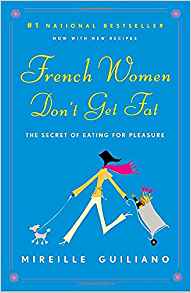
French Women Don’t Get Fat: The Secret of Eating for Pleasure by Mireille Guiliano

Up Next:

A Bell for Adano by John Hersey to finish out my Back to the Classics challenge

The Illusionist’s Apprentice by Kristy Cambron

My Father’s House by Rose Chandler Johnson

Drawing Near to the Heart of God: Encouragement For Your Lifetime Journey by Cynthia Heald

Going Like Sixty: A Lighthearted Look at the Later Years by Richard Armour. I’ve been telling myself for some time that I would read this book after this year’s birthday. I was just reminded of it lately.

And that’s it for this month! What are you reading?

Save

Book Review: The Sea Keeper’s Daughters

Sea Keeper DaughterIn The Sea Keeper’s Daughters by Lisa Wingate, Whitney Monroe has successfully opened, run, and sold several restaurants, but now she’s run into big trouble. She has one successful restaurant in Michigan, but their second location is near failure due to a constant “war against crooked county commissioners, building inspectors taking backroom payoffs, deceptive construction contractors, and a fire marshal who was a notorious good ol’ boy,” all in “cahoots” with a local business enemy who wants their location and doesn’t want their competition.

Right in the middle of this crisis, Whitney learns that her estranged step-father has fallen ill. They’ve not spoken since he raved at her after her mother’s funeral years earlier. He lives in an old historic hotel on the North Carolina coast that had been passed down from her formidable grandmother. She doesn’t want to go to him, but his sons won’t go, so she decides to make the trip and see if she can gather up some family mementos to keep as well as anything of value to sell to help out her restaurant.

The first floor of the hotel is occupied by a variety of businesses, and one of the business owners in particular gets off on the wrong foot with Whitney, thinking she has come to sell the building and boot them all out. Her reunion with her step-father doesn’t fare any better.

As Whitney starts to sort through items that have been collecting dust on the second floor, she makes a couple of interesting discoveries: an unusual necklace, and a number of letters torn in pieces from her grandmother’s twin sister, which Whitney never knew existed. Piecing the letters together, Whitney discovers that her grandmother’s sister, Alice, was a widow with a young child who started working as a writer for FDR’s Federal Writer’s Project, which sent people through the US to write about different areas and the people who lived in them. Among the people Alice discovered was a young pregnant mixed-race Melungeon girl who needed a safe place to stay, and though they encounter racial opposition along the way, Alice determines to see the girl to safety. But Whitney was mystified as to why the letters were in pieces, and why had Whitney never heard of Alice.

The unique necklace and Melungeons appeared in the previous novels in Lisa’s Carolina Heirloom series, and I enjoyed seeing how the story all came together and how it impacted Whitney’s own story. It was also quite interesting to learn about the Federal Writer’s Project.

There seems to be a theme of sisterhood as well throughout the series: several of the major characters have one or more sisters who play pivotal roles, and Sandy (based on Lisa’s real Aunt Sandy) of Sandy’s Seashell Shop (which shows up in several of the books) forms a “sisterhood” of friends.

The series has novels and novellas, but each of the novels involves a woman with problems of some kind coming back to a place from her childhood and finding writings of someone from the past which impact her present life in some way. At first I was confused about which story came when. Lisa has them in order now on her web site, but I don’t know if they were configured that way when I was first trying to figure it out – when I first looked, some of them were in a Carolina Chronicles series but it looks like they’ve all been compiled in the Carolina Heirlooms one (much less confusing now!) I think the fact that some were novellas, sequels, and prequels confused me further, so early on I made a list of the publication date of each so I could read them in order (and even then I mixed up the last two, but it all worked out in the end). I’ve linked the titles to my reviews.

Sea Glass Sisters (novella prequel to The Prayer Box): July 2013
The Prayer Box: August 2013
Tidewater Sisters (novella sequel to The Prayer Box): June 2014
The Story Keeper: Aug. 2014
Sandy’s Sea Shell Shop Christmas (novella): Dec. 2014
The Sandcastle Sister (novella sequel to The Story Keeper): May 2015
The Sea Keeper’s Daughters (September 2015)

I read the first two out of order as well, and read the Christmas one during the Christmas season, but none of that hindered my understanding of the story line. I think any of the books could be read as a stand-alone novel, but the unfolding of the overarching story line makes the most sense if at least the three novels are read in order.

Overall I thought the series was very good and enjoyed it quite a lot.

(Sharing with Semicolon‘s Saturday Review of Books,
Literary Musing Monday, Carole’s Books You Loved)

Save

Save

Book Review: The Sandcastle Sister

Sandcastle SisterThe Sandcastle Sister by Lisa Wingate is a novella sequel to The Story Keeper, and both are part of the Carolina Chronicles series.

In The Story Keeper, Jen Gibbs had escaped an almost cultish group in the Appalachian hills of NC to go to college and then work in publishing. An old unsigned manuscript led her back to her roots, to a reclusive author, and to a discovery of a people called the Melungeons.

In this book. the reclusive author, Evan Hall, writes a bestseller about the Melungeons and Jen serves as his editor. They develop a relationship, and when the book comes out, Evan insists that Jen accompany him on the book tour, which takes them across Europe. When he wants to tie the knot in Paris, Jen pulls away. An urgent situation with her sister brings her back to the States.

Her youngest sister, Lily, had come out from the same group that Jen had, but without burning her bridges. She wants to become a pharmacist and go back to man the only pharmacy in the area she comes from. But along the way she researches her family history, trying to find out whatever became of the mother who left the family years ago, and discovers a half-sister that no one in the family knew of. Lily is determined to look up this sister, and Jen decides to accompany Lily for her safety and protection. They end up in the Outer Banks of NC (the setting for the first book in the series, The Prayer Box), and come across some of its characters. While searching, Jen wrestles with her reasons for hesitating to marry Evan and wonders if she can overcome them. But what they find in the Outer Banks changes their lives in many ways.

I enjoyed this little book. It was fun to see what became of the characters from The Story Keeper and to see the tie-ins with the other books. The faith element is not quite as obvious in this one, but it’s there. I actually ended up reading the last book in the series out of order before this one, so I’ll discuss it tomorrow.

(Sharing with Semicolon‘s Saturday Review of Books, Literary Musing Monday, Carole’s Books You Loved)

Save

Book Review: Me, Myself, and Bob

Our family was never hugely into Veggie Tales, but we saw and enjoyed enough of them to be able to sing along with the theme song, “Where Is My Hairbrush,” “Barbara Manatee,” and others. I wasn’t too crazy about their adaptations of Bible stories: I didn’t think building a silly plot around them served them well. But I enjoyed the stories that dealt with life issues that kids face, like being afraid of the dark. I was sad to see the decline of the company, Big Idea. Some years ago I read an interview with Veggie Tales creator, Phil Vischer, about what had happened, which motivated me to get his book, Me, Myself, and Bob: A True Story About Dreams, God, and Talking Vegetables,when I saw it on sale for the Kindle.

Me Myself and BobPhil goes into his background as a shy, nerdy kid with a quirky sense of humor and interests in filming and computers which dovetailed when computer animation began to be possible. Watching MTV videos, he was enthralled with the filming but appalled at the morals (or lack of them) in many of the videos. Years later in a media conference he heard a Viacom chairman share “how he intended to hook kids with Blue’s Clues, then lead them through Nickelodeon straight to MTV.” Phil wanted to make films that God could use. “I knew God wanted me to tell stories that promoted biblical values, and I wanted to do that through any available means.”

He dropped out of college, married, worked for a computer animation company, and experimented in his spare time. I didn’t always quite follow some of the few technical parts, but I got enough to know that, with the animation equipment and software at the time, he needed characters without arms, legs, or hair. He started with a candy bar until his wife commented that moms probably wouldn’t appreciate a candy bar being the hero of the stories, so he switched to vegetables. His wife (the voice of Junior Asparagus!) and a few friends joined him in working on the idea, and eventually Veggie Tales was born. The whole process of how it came to be and then grew is pretty fascinating. Fun fact: they were aiming for moms who bought videos for their kids, but the only marketing that was done was a cardboard cutout in bookstores, which didn’t seem to draw much interest. Veggie Tales was launched into the public eye by young adults and college students working in Christian bookstores who got bored with the same videos playing on display, popped Veggie Tales in, loved it, and recommended it.

Once Veggie Tales caught on, they experienced a meteoric rise in popularity and the company grew exponentially (becoming at one point “the best-selling Christian videos series in history, and the number two kids’ videos series in the world at that time, trailing only Pokemon”), but that turned out to be its downfall. Enthusiastic hiring, too much and too quickly, drove expenses up far beyond income. A lack of vetting allowed new employees who weren’t on the same page, even among the upper management, creating dissension within. Some of the experts they brought in specialized in packaged goods, which seemed plausible since Veggie Tales was sold as videos, but no one had experience in the entertainment industry. The company landed in bankruptcy, the final nail in the coffin being a lawsuit involving an unsigned contract (unsigned yet precisely because they had not yet come to mutually agreeable terms), which, inexplicably, was ruled in favor of the other company. The ruling was eventually overturned, but by that time the company had been sold. I had been dismayed to see Veggie Tales on network TV without its Biblical underpinning, but Phil explains that by that time, the company was in other hands. He was asked to stay on to provide voices and some help with animation, and was led to believe that the program would be the same, minus a specific Bible verse, but eventually learned that no religious content would be allowed.

As Bob the tomato so often wrapped up a Veggie Tales video discussing what we’ve learned today, Phil’s last few chapters discuss handling the crushing death of a dream, a dream that seemed to have been given by God and was being used by Him. Why didn’t He “rescue” Veggie Tales? While we don’t know the exact answer to that, one thing Phil learned was the difference between driving oneself for God and being led by Him. Though the whole book is fascinating, this is where the gold is.

Rather than asking God directly, I spent a lot of time thinking about what my work for Christ might be. Missionary conferences pitched mission fields at us kids like travel agents pitching vacation packages. Watch the slides—make a commitment. But overseas missions didn’t seem right for me, so I kept looking. Eventually, I found a place where my storytelling gifts seemed to line up with a need that was tugging at my heart–a need to express God’s Word through popular media. And that would be my work for Christ!

“If God gives you a dream, and the dream comes to life and God shows up in it, and then the dream dies, it may be that God wants to see what is more important to you–the dream or him.”

Rather than finding my identity in my relationship with God, I was finding it in my drive to do “good work.” The more I dove into Scripture, the more I realized that I had been deluded. I had grown up drinking a dangerous cocktail–a mix of the gospel, the Protestant work ethic, and the American dream.

I started to get it. The Christian life wasn’t about running like a maniac; it was about walking with God. It wasn’t about impact; it was about obedience.

What is “walking with God?” Simple. Doing what he asks you to do each and every day. Living in active relationship with him. Filling your mind with his Word, and letting that Word penetrate every waking moment.

The God who created the universe is enough for us–even without our dreams…God was enough for the martyrs facing lions and fire–even when the lions and the fire won. And God is enough for you.

The impact God has planned for us doesn’t occur when we’re pursuing impact. It occurs when we’re pursuing God.

I very much enjoyed Phil’s story, the behind-the-scenes look into how Veggie Tales came to be, learning what happened to it and to Phil, and what God taught him through the whole process.

(Sharing with Semicolon‘s Saturday Review of Books, Literary Musing Monday, Carole’s Books You Loved)

Save

Thoughts on the MacArthur ESV Study Bible

MacArthur ESVI mentioned in my last Nightstand post that I had finished reading the ESV version of the MacArthur Study Bible but wasn’t planning to review it. How do you review a Bible, after all? But one friend said she’d like to hear my thoughts about it. So here goes.

I’d like to discuss it in two parts: the ESV version and then MacArthur’s notes.

The subject of Bible versions can be touchy and whole books have been written on them – I can’t possibly go into everything concerning them here. The best book I know of on the subject is From the Mind of God to the Mind of Man: A Layman’s Guide to How We Got Our Bible. A former pastor, someone whose exposition I trust more than anyone else I’ve heard or read, is one of the contributors, I knew one of the others in college, and I have heard a couple of others speak. That doesn’t mean these men are infallible, of course, but I have heard and read enough of them to generally trust them, and I have read enough elsewhere that supports what they say. Probably the biggest issue for those who are “King James Only” is the manuscripts that the different version or translated from. I think this book handles that ably, and I have read and heard enough to feel assured about reading version like the NASB (New American Standard Bible) and ESV (English Standard Version), as well, as, of course, the KJV and NKJV. (If you differ with me on this, that’s your prerogative, but I really don’t want to get into any arguments about it here. I have known some KJO people to think less of other Christians who use different versions, or even to break fellowship with people who don’t use the KJV. I think that is definitely going way too far.)

If you’ve read much about Bible translations, you’ve probably come across different theories or processes. No translation of anything from one language to another is going to be word for word exactly, literally, like the original. There are differences in syntax: for instance, Spanish puts the adjective after the noun while English usually puts it before: Casa Blanca for White House. One language may not have the exact word equivalent for every word in another language, and so on. If you’ve ever looked at a Greek interlinear New Testament, which has the Greek words and then the corresponding English above or below them, you’ll get some idea of the difficulty. (Take a look at Luke 2, for example.) Translators fall into two camps: those who try to translate word for word, staying as close as possible to the original while making ti understandable in another language, and those who translate thought for thought. The thought-for-thought translations are usually the most readable, but the least accurate.

Forgive the excess background material, but I felt I needed to go into that to explain that I think the ESV is probably my favorite translation. The KJV will always hold a special place in my heart, and I tend to think in King James, after having used it and read it for over 40 years now. But the ESV seems to me to best combine accuracy and readability.

Now on to MacArthur’s notes. I think this is the first time I have ever read through a study Bible, and I found the bulk of the notes very helpful. At the beginning are sections called Introduction to the Bible (kind of an overview), How We Got the Bible, How to Study the Bible, a preface to the ESV explaining the philosophy and style that went into this transition, an explanation of the features, especially the cross references and footnotes. Before each of the Testaments are introductions, chronologies, overviews, etc., and even the intertestamental period gets a few pages. Each book is introduced with a few pages discussing authorship, date, background and setting, historical and theological themes, interpretive challenges, and an outline. I found this especially very helpful to read before beginning a particular book. Throughout the book are applicable maps, charts, and diagrams and footnotes on most of the verses. At the end are appendices on The Character of Genuine Saving Faith, an Overview of Theology, a plan to read through the Bible in a year, an index to key Bible doctrines, Monies, Weights, and Measures, and a concordance.

The book is too bulky to carry to church, almost a little hard to handle while sitting on the couch, where I usually do my Bible reading. The print in the notes especially is very small, but if it was any larger, more pages and therefore more bulk would be required. So the size of both the print and the book itself are probably the best compromise.

I did not know much about MacArthur before reading this. I had found him to be a little terse in what things of his I had read, and that seems to come through here, but then again, that’s the nature of the verse-by-verse notes. Sometimes something I had a question about wasn’t addressed, or at least not to the extent I’d like, but I had to remind myself that this wasn’t a commentary, and the notes needed to be limited to a degree.

At first it was a little distracting to read a verse and then read the corresponding notes, but after a while it didn’t seem to be. It did help to reread or at least skim through the chapter again after reading it verse then note then verse, to put it all together.

I have multitudes of places marked, much more than I can share here, but here are a couple:

It helped to realize that Chronicles was not just a repeat of Kings, but was written when the Jews were returning to Israel after 70 years of exile to a land far different from their “glory years” of David and Solomon.

The chronicler’s selective genealogy and history of Israel…was intended to remind the Jews of God’s promises and intentions about: 1) the land; 2) the nation; 3) the Davidic king; 4) the Levitical priests; 5) the temple; and 6) true worship, none of which had been abrogated because of the Babylonian captivity. All of this was to remind them of their spiritual heritage during the difficult times they faced, and to encourage them to be faithful to God (p. 557).

Of Exodus 20:5-6, which speaks of God “visiting the iniquity of the fathers on the children to the third and the fourth generation of those who hate me,” MacArthur says:

Moses had made it clear that children were not punished for the sins of their parents (Deut. 24:16; see Ezek. 18:19-32), but children would feel the impact of breaches of God’s law by their parents’ generation as a natural consequence of its disobedience, its hatred of God. Children reared in such an environment would imbibe and then practice similar idolatry, thus themselves expressing hateful disobedience. The difference in consequence served as both a warning and a motivation. The effect of a disobedient generation was to plant wickedness so deeply that it took several generations to reverse (p. 123).

Re the imprecatory prayers in the psalms: “As God’s mediatorial representative on earth, David prayed for judgement on his enemies, since these enemies were not only hurting him, but were primarily hurting God’s people. Ultimately, they challenged the King of kings, the God of Israel” (p. 734).

There were a few places I disagree with him, some minor, such as whether David was wrong to mourn Absalom in the way he did (MacArthur thought it was “melancholy,” “weak, ” and “unwarranted zeal for such a worthless son”; I thought it was perfectly natural to deeply grieve not only his loss of life but his state at the end of it). Some differences were major, particularity a Calvinistic bent which I had not known he possessed.

Calvinism is another issue too large for one blog post. I agree with parts of it but seriously disagree with other parts. But for just one example, one of the ares where I most disagree with it is with the “I” in the TULIP” acronym: Irresistible Grace, the idea that if God calls you to salvation, you can’t say no. One passage that particularly counteracts that idea, in my opinion, is where Jesus laments, ““O Jerusalem, Jerusalem, the city that kills the prophets and stones those who are sent to it! How often would I have gathered your children together as a hen gathers her brood under her wings, and you were not willing!” (Matthew 23:37 and Luke 13:34). That sounds pretty much like they resisted His overtures and attempts to gather them to Himself. Here’s what MacArthur says of the Matthew passage:

God is utterly sovereign and therefore fully capable of bringing to pass whatever he desires (cf. Isa.46:10)–including the salvation of whomever he chooses (Eph. 1:4-5). Yet, he sometimes expresses a wish for that which he does not sovereignly bring to pass (cf. Gen. 6:6; Deut. 5:29; Ps. 81:13; Isa. 48:18). Such expressions in no way suggest a limitation on the sovereignty of God or imply any actual change in him (Num. 23:19). But these statements do reveal essential aspects of the divine character: he is full of compassion, sincerely good to all,  desirous of good, not evil–and therefore not delighting in the destruction of the wicked… (p. 1403).

This passage makes sense to me if Christ is lamenting that people turned away from His attempts to draw them, because He knows what it will ultimately mean for them (if you turn away from Him, there is nowhere else to go. If you won’t accept his grace, there’s nothing left but wrath). But it doesn’t make sense if He is saying, “I didn’t elect you, and you don’t have any chance, but I feel bad about that.”

The Bible itself is inspired by God: no man’s notes and commentaries are. But someone else’s intense study of the Word of God can be greatly beneficial to us in our own study, and, though I disagreed with MacArthur in a few places here and there, I was greatly helped by the majority of his notes.

(Sharing with Literary Musing Monday,
Semicolon‘s Saturday Review of Books,
Carole’s Books You Loved)


Save

Book Review: Jane Austen: Christian Encounter Series

Jane AustenBiographers of Jane Austen have a difficult task because Jane’s sister, Cassandra, destroyed much of her correspondence. But Peter Leithart endeavors to give us a sense of her in Jane Austen, part of publisher Thomas Nelson’s Christian Encounter series. He draws from what letters we do have from her as well as others’ writings and remembrances of her. In his introduction he writes:

In the brief compass of this biography, I have tried to capture the varied sides of Austen’s character. Early biographers often turned her into a model of Victorian Christian domestic femininity, and emphasized her Christian faith in an evangelical idiom she never used. In reaction, many more recent biographers all but ignore her faith. Both of those extremes distort Austen’s life and personality. I have tried to depict accurately the depth and sincerity of her Christianity, as well as her Anglican discomfort with religious emotion, but without losing sight of the other sides of her complex character –her playfulness, her satiric gift for ridicule, her ‘waspishness,’ her rigid morality. I have attempted to capture Jane Austen in full.

I particularly enjoyed these observations:

The best marriages in Austen’s novels are marriages of minds and temperament, marriages that make both husband and wife more fully themselves.

Austen believed there was a moral dimension to social behavior. Manners and morals do not exist in separate realms of life. Manners are a moral concern, and morals take specific shape in the gestures of manners.

Jane…was satirizing Romanticism before Romanticism existed.

Sir Walter Scott wrote of Austen’s “exquisite touch which renders ordinary common-place things and characters interesting from the truth of the description and the sentiment.”

This being part of a Christian Encounter Series, part of it focuses on her faith. This was what particularly drew me to this book, because some kind of faith is evident in her books, but I wasn’t sure if it was a general, surface faith or a heartfelt personal one.

In his biographical sketch of his sister, Henry described her piety: “Jane Austen’s hopes of immortality were built upon the Rock of ages. That she deeply felt, and devoutly acknowledged, the insignificance of all worldly attainments, and the worthlessness of all human services, in the eyes of her heavenly Father. That she had no other hope of mercy, pardon, and peace, but through the merits and suffers of her Redeemer.” Jane never used such Evangelical language, preferring the more formal cadences of prayer-book Anglicanism, but that doesn’t falsify the substance of Henry’s characterization.

The Austens’ Christianity was not the excitable Christianity of Bunyan or John Newton, but a cooler, more rational and more ethically focused Christianity, which expressed itself chiefly in acts of charity.

Despite her comparative reticence and her careful avoidance of moralizing, Austen’s faith was sincere and deep.

Biographers minimize Austen’s Christianity mainly because they cannot believe that her acerbic, sometimes childishly cruel wit, her satires of the clerical imbecilities of Mr. Collins and Mr. Elton, and her playful silliness are compatible with deep Christian faith…the assumption that Christian faith is incompatible with a satirical spirit is entirely wrongheaded.

Long-time readers here know that I generally love biographies, but, although I hate to do so, I must admit this is not a favorite. First of all, Leithart begins by going into great detail about a plethora of Jane’s relatives. That section got quite confusing and, though some of that information was necessary to understand Jane in context, to me the bulk of it detracted from rather than enhanced focus on her. Secondly, Leithart insists on calling her “Jenny” at least half the time, if not more, without documenting that she was ever called that. In my search to discover whether she was actually ever called Jenny, I came across this review of this book which mentions that her father spoke of her as “Jenny” to his sister shortly after Jane was born. But that hardly qualifies it as a permanent nickname, especially since none of the other correspondence or memorials of her call her Jenny. To make it worse, Leithart speaks of “Jenny” as if she were the “real” Austen. He evidently used the name to emphasize her child-likeness.

Childlikeness might not strike us an apt description of a “serious” novelist like Austen, but this only highlights how pretentious we are about art and artists. Anyone who spends her life making up stories has got to have more than her fair share of whimsy, and nearly all Austen’s virtues, personal and artistic, as well as nearly all of her vices, are those of a woman who, at the center of her soul, remained “Jenny Austen” all her life.

She recognized her own smallness, and she achieved artistic greatness because she recognized her limitations and joyfully worked within them, because she refused to outgrow being Jenny.

Quotes like these samples seem to imply that she was conscious of “being Jenny” when her “being Jenny” seems to me to be an implication only of Leithart.

Leithart comes across to me as pretentious in other ways as well: in his coining of his own word for Jane Austen mania (“Janeia”), in his criticism of other Austen biographers, and in what seems to me to be his mischaracterizations of her (“In another age, Austen might have written for Saturday Night Live.”)

There is an odd mix-up of characters from different books when Leithart says “Fanny Price is ignored and lost within the constant din of domestic life. She feels liberated when Frank Churchill shows up to take her into the open air.” Fanny is from Mansfield Park and Frank is from Emma.

While I don’t know that Leithart accurately “captured” Austen, this book does present a compact overview of her life, times, and career.

(Sharing with Semicolon‘s Saturday Review of Books, Literary Musing Monday)

Save

Save

Book Review: God Is Just Not Fair

Not FairWhen Jennifer Rothschild was 15 years old, she was blinded by Retinitis Pigmentosa, effectively killing her dreams of becoming an artist and cartoonist. Then, several years later, she experienced a time of deep depression which, as she put it, tore holes in her blanket of faith.

In God Is Just Not Fair: Finding Hope When Life Doesn’t Make Sense, Jennifer Rothschild explores from her Bible study and personal experiences the questions that often come up when experiencing some sort of trial or trauma: Does God care? Why did He allow this? Why did this person experience healing but I didn’t?

That last question, not only of unanswered prayer on my part, but of the very same prayer being answered in someone’s else’s life, can bring up questions of God’s fairness. Fairness doesn’t mean He does the exact same thing in every person’s life. We’re not robots or cookie cutter Christians: God works in our lives individually according to what He wants to do in us and how He wants to grow us and show Him forth in our own circumstances and sphere of influence. And Jennifer turns this around to ask if it’s fair that we receive mercy and blessings instead of wrath for our sin. If we got what we truly deserved, we’d all be in trouble.

But Jennifer doesn’t tell us to therefore stifle our questions. She encourages us to bring them to light. We might not find answers to all of them, but we will for a few, and for the rest we can trust Him. Where He doesn’t give answers, He gives Himself.

There is so much good teaching here, it’s hard to sum it up. But I’ll give you a few examples:

If God allows you to wrestle with him, it is not so there will be a winner and a loser. He doesn’t need to prove he is stronger and you are weaker. No. The point of wrestling with God is to give you an opportunity to cling to him. God wants you to hang on to him no matter what — and the result will be blessing. You are blessed when you bring your hurts and questions to God and struggle with them in his presence. In that divine wrestling match, you may feel wounded, but you will also receive a blessing you couldn’t have received any other way.

He sometimes allows something bad in our lives to prevent something far worse in our lives. That is a wondrous work of God I cannot even see, because sometimes I have no idea how God is working on my behalf.

Being willing to thank God doesn’t mean you ignore what bothers you. It just means you are willing to look beyond what bothers you and see the good in a situation also.

Paul positioned gratitude as a choice, not a feeling. My friend, even when we don’t feel grateful, we can still be grateful.

Your difficulty can be hard enough, but the resentment or anger you drag along with it can be even more debilitating than the difficulty itself.

When we are enduring hardship, perhaps the better questions to focus on are not about the whom of suffering but about the how: • How will God use this redemptively in my life? • How will he use this loss for my gain? • How can I cooperate with my loving God’s master plan through this current suffering? • How can this possibly help me grow or change? The why of suffering is sometimes never answered. But to ask the how of suffering allows us to begin to see the beautiful redemption of what God can do in and through our suffering.

God’s ways may seem strange to us, but his ways do not have to live up to our standards or our analysis. He is who he is, and we are who we are. He is beyond error, perfect in all his ways. If his ways confuse or disappoint you, guard against the temptation to re-create him into a god you like better. You and I are to humble ourselves before him and seek to conform to his standard, not the other way around. He is sovereign and good, compassionate and merciful. If we do not accept God in his wholeness, we will never experience our own.

Ultimately, I trust God’s will to be best. He knows more, sees more, and loves more than I do.

Faith is the evidence of things unseen; instant response is not the evidence.

Unanswered prayers and prayers with disappointing answers can be greater gifts that getting what we thought we wanted.

He may allow your suffering to remain because he is using that hard thing to protect you from something far worse, preserve you for something far better, or provide for you what you don’t even realize you need. His apparent inactivity is not a sign that he is forgetful or lacks compassion, but rather an indication of his deep compassion and higher purpose for you.

God allows you to struggle, even though his power could prevent it, because his wise and compassionate authority knows that the benefit of your struggle far outweighs the comfort you may experience from his rescue.

God delivers us in different ways. Sometimes he protects us from awful things so we never have to endure them. Other times God delivers us by rescuing us or healing us. Sometimes God brings us through hard things —that’s also a form of God’s deliverance. But then there are the times that God, out of his great care for his children, delivers us out of the horror and into glory.

Thomas’s questions and doubts could have led him away from the Christ he loved and away from his friends who followed the Christ. But what a loss that would have been. Your questions and doubt can take you many places if you let them. They can take you down a road of cynicism, despair, or loneliness. But, my friend, what a waste of your doubts and questions! When you are full of questions and doubt, might you respond like Thomas? Might you stay connected with your friends who follow Christ? Will you take whatever faith or curiosity you have and channel it toward Christ himself? He welcomes questions, and he welcomes the questioner. He already knows your questions, but ask him anyway. Jesus won’t just give you the lesser gift of an answer; Jesus will give you himself because he is the answer…It was in the midst of Thomas’s honest struggles that Jesus revealed himself to Thomas. He will do that for you, too.

Being too self-focused makes every sorrow deeper, every problem bigger, and every slight more personal. It harms us and makes us forget God and others.

Never stop seeking; never stop walking with and toward him. Jesus invites us to keep taking steps toward him, even if every stepping-stone is in the shape of a question mark. As you continue to seek, don’t let theological information become a substitute for faith. Don’t let knowledge become a substitute for wisdom. And don’t seek God only for the answers he gives —seek God himself. Pursue an encounter with the God who loves you. Don’t settle for mere answers, my friend. Be satisfied with nothing less than God himself.

Every difficult, confusing season in life offers a choice. You can either surrender your questions and sorrow to God so he can use them, or you can surrender to bitterness and the enemy of your soul, who will use them against you. Don’t give him the weapons to hurt you.

The only quibble I noted or can remember is one phrase near the end of the book about “forgiving God if you need to.” God does no wrong, so He has no need of our forgiveness, and whenever I see that thought, it strikes me as a little pretentious. But what I think Jennifer is getting at is, don’t hold whatever God has permitted in our lives against Him. She speaks in the rest of this paragraph of trusting Him, being patient, and humbling ourselves before Him. As Jesus said, “And blessed is he, whosoever shall not be offended in me” (Matthew 11:6).

Because Jennifer has gone to the mat with these questions and wrestlings in her own life, her words are authentic rather than empty platitudes. And because she has sought the Scriptures and bases what she shares there, she can offer the only real hope we have: that God loves us, has a reason for everything He allows, will use it to develop us, and will give us the grace to go through it.

(Sharing with Semicolon‘s Saturday Review of Books, Faith on Fire, Literary Musing Monday, Carole’s Books You Loved), Wise Woman, Tell His Story, Woman to Woman Word-filled Wednesday)

What’s On Your Nightstand: September 2017

Nightstand82The folks at 5 Minutes For Books host What’s On Your Nightstand? the last Tuesday of each month in which we can share about the books we have been reading and/or plan to read.
It seems like the last Nightstand was so long ago, yet September seems to have flown by. I don’t know how such opposite sensations can coexist. But let’s get to this month’s reading:

Since last time I have completed:

Resurrection by Leo Tolstoy, audiobook, reviewed here. A young man finds himself on jury duty for a prostitute accused of murdering a client and realizes she was a girl he loved and took advantage of in her youth and innocence. Realizing he set her on this path, he aims to help her, and in doing so is transformed himself. Didn’t enjoy this as much as I thought I would, but enjoyed Tolstoy’s storytelling more than his pontificating.

Taking God At His Word: Why the Bible Is Knowable, Necessary, and Enough, and What That Means for You and Me by Kevin DeYoung, reviewed here. Excellent.

The Story Keeper by Lisa Wingate, reviewed here. A woman moving up in her publishing career finds a mysterious old manuscript on her desk, and its story captures her. But unraveling the mystery of it may lead her to a past she wants to keep buried. Excellent!

The ESV MacArthur Study Bible. I don’t usually include my Bible reading here, but since I did finish this as a book, both my first time through the ESV and through MacArthur’s notes, I thought I’d mention it. I might share some of my thoughts on it at some point. I didn’t end in Revelation, by the way – I was in the Psalms when I received it as a gift so I picked up there and just finished there.

I’m currently reading:

God Is Just Not Fair: Finding Hope When Life Doesn’t Make Sense by Jennifer Rothschild

Jayber Crow by Wendell Berry along with a group led my Michele, which is greatly enhancing my reading.

Jane Austen: Christian Encounter Series by Peter Leithart

The Sea Keeper’s Daughters by Lisa Wingate

Up Next:

Love in Hard Places by D. A. Carson

The Illusionist’s Apprentice by Kristy Cambron

To Be Where You Are, Jan Karon’s newest!

I’m looking forward to some good reading next month. How about you?

Save

Book Review: The Story Keeper

Story KeeperIn The Story Keeper by Lisa Wingate, Jen Gibbs has just moved up in her publishing career to work with the prestigious Vida House Publishing in New York. A competitive former coworker is there as well. The head, George Vida, has what’s called Slush Mountain in the conference room – a pile of manuscripts that for various reasons were not able to be returned to the owners. A cardinal rule at Vida House is that no one touches Slush Mountain.

So when Jen discovers an old manila envelope on her desk with a manuscript containing a hand-drawn cover, she can’t help but wonder if someone, perhaps her old coworker, is setting her up for a fall, making it look like she took one of Slush Mountain’s old manuscripts to peruse. But curiosity gets the better of her, and as she starts reading it, she’s drawn into the story of Sarra, a teenage Melungeon girl in Appalachia in the late 1800s. The Melungeons were a mixture of three races, European, African, and Native American, often with dark hair and skin and blue eyes. Unfortunately, they were also the subject of racism and suspicion. Sarra escapes a dangerous situation and ends up with an unlikely protector, Rand Champlain, a man from one of Charleston’s oldest families who is in the area to study the native flora and fauna.

Jen is thoroughly drawn in to the story, and she recognizes similarities in style and vocabulary to a famous author who is now a bit of a recluse. Should she risk her reputation at Vida House to follow this trail? Could she even get through to the suspected author to talk? He now lives in the Blue Ridge Mountains from which Jen herself escaped poverty, ignorance, and an almost cult-like authoritarian religious group. She had planned never to return there: can she face her past for the sake of this story?

Quotes:

All breath in evr’thing been given by Father God, Granddaughter…Not a one he ain’t mindful a. All lives be mattersome to him. Not a one oughtn’t be mattersome to us, same way.

Just a building, created by men, filled with bits of God’s Word torn from context and recombined like the pieces of a ransom note.

The truth was, I yearned, in a soul-deep way, to be Sarra. To ‘feel’ that God was so very close, so very concerned with my particular life, so very ready to protect and to love. Always nearby. Always listening. Always leading.

No matter how many wrong choices we’ve made in the past, we can always decide to make the right ones today. The past need not determine one moment of the future.

My thoughts:

I loved this book: Jen’s progression, the search for the mysteries involving the manuscript, the story within the story of Rand and Sarra, the setting of both a busy NY publishing house and then the Blue Ridge mountain area. Sarra and Rand’s story alternates between the two of them, and I thought Lisa showed great skill writing in their different voices as well as Jen’s – a modern city girl, a backwoods mixed race mountain girl, and a turn-of-the-century Southern aristocrat.

My only very small complaints are, 1), that a lot got wrapped up super-quickly at the end. I had thought, starting into the epilogue, that the story was heading toward a sequel since there was no way everything could be tied up in the last few pages, but it was. And, 2), one of the biggest mysteries was left a mystery, and that was something of a let-down. But those are small enough as to be almost inconsequential.

Otherwise, I enjoyed it immensely. A 9 out of 10.

(Sharing with Literary Musing Monday, Semicolon‘s Saturday Review of Books, and Carole’s Books You Loved)

Save

Save

Book Review: Tolstoy’s Resurrection

The Story.

In Resurrection by Leo Tolstoy, Prince Dmitri Nekhludov starts off as a sweet, thoughtful young man. On a visit to his two aunts, he meets a girl named Katerina Maslova (also called Katusha), whom they had taken in from a neglectful mother. She’s often referred to as their half-ward, half servant. They fall in love with all the sweetness of a teenage romance.

Nekhludov goes on to join the military, which changes him for the worse. He becomes more self-indulgent and picks up bad habits, which his companions and even his mother see as normal and encourage. The next time he goes to visit his aunts, his sweet, innocent love for Katusha has become lust, and he takes advantage of her. He gives her money and leaves for his military career with not much thought.

Years later, Nekhludov is engaged to one woman while secretly having an affair with a married woman. He’s called for jury duty and is stunned to find that the defendant is Katusha, now a prostitute who is accused of poisoning a client. His conscience is awakened to the truth he began her downfall, and he vows to help her all he can. The more he becomes acquainted with the prison system, the more injustices he learns of, the more dissatisfied he becomes with his own life. Yet finding the answers, not only for his own heart but for the wrongs of society, is not an easy feat.

Tolstoy’s beliefs

In talking with one of my sons once about a particular social/political issue, I commented that everyone agreed it was a serious problem, but no one agreed about the best solution for it. Tolstoy does a masterful job of calling attention to some of society’s worst problems, but his philosophies, to me, were a little off, especially in light of having heard he was a Christian. Here I am going beyond reviewing to processing some of these things for my own thinking.

This was Tolstoy’s last book. He had renounced novel-writing but wrote this last story to raise money for a religious sect wanting to immigrate to Canada. Some years earlier he had a crisis of faith, wrestling with the meaning of life. Many sources call this his conversion, but I am uncertain exactly what he converted to. Some of his beliefs seem to be moral and Biblically based. But in a scene where Nekhludov is listening to a preacher talk about salvation through Christ’s blood, Nekhludov leaves, “disgusted.” Tolstoy seems to take the passage “The kingdom of God is within you” to mean that, rather than a person needing to be born again, rather than being dead in trespasses and sins, he just needs the spiritual part of himself to be awakened or fanned into flame to have victory over the “animal” part of him (he has written other books about his beliefs in more detail, which I have not read: I’m just going by what he has Nekhludov undergoing here).

There were many Christian truths and principles in the book that I agreed with, but I found other beliefs in the book a little wonky:

  • He felt that public praying was a sin, but the passage about praying in secret in one’s closet was not an indication that one should never pray in front of other people or lead a group in prayer. Jesus did, Stephen did, others did in the gospels and Acts. The context of praying in secret has to do with praying for “show” so others will see and hear count us as spiritual, and that’s what was declared wrong.
  • He posits that no one has a right to judge (in a legal sense) or punish anyone. But Romans 13 tells us:

Let every person be subject to the governing authorities. For there is no authority except from God, and those that exist have been instituted by God. Therefore whoever resists the authorities resists what God has appointed, and those who resist will incur judgment. For rulers are not a terror to good conduct, but to bad. Would you have no fear of the one who is in authority? Then do what is good, and you will receive his approval, for he is God’s servant for your good. But if you do wrong, be afraid, for he does not bear the sword in vain. For he is the servant of God, an avenger who carries out God’s wrath on the wrongdoer. Therefore one must be in subjection, not only to avoid God’s wrath but also for the sake of conscience.

  • He felt it was wrong to be a landowner because no one can own the earth. True, “The earth is the Lord‘s, and the fulness thereof; the world, and they that dwell therein” (Psalm 24:1). But owning land and leaving it as an inheritance for one’s children is not condemned in the Bible. In fact, one of God’s big promises to Israel was a tract of land, and they went through a detailed process of dividing it up between the tribes. The Biblical concept is that of stewardship, recognizing that God is the actual owner of all we have and we’re accountable to Him with whatever we “own” in a legal sense.
  • He indicated the kingdom of God can be established on Earth by obeying the teachings in the Sermon on the Mount. Well, life would certainly be better and a lot more like heaven if people did, but we won’t establish the Kingdom of heaven here that way: Jesus will establish His own kingdom when He returns.
  • When Nekhludov classifies in his own mind five different types of prisoners, he seems to believe they are all there because of bad or misunderstood circumstances. While that’s certainly true in some cases, he doesn’t seem to acknowledge that any of them are there because they had a sin nature and chose wrong just because they wanted to or took pleasure in it.
  • He doesn’t go so far as to say it is a sin to be rich, but he does blame class differences for many of society’s ills. It’s true that class differences do cause many problems. But the answer isn’t to even everyone out into the same circumstances. Only one person in the Bible was told to sell all he had and follow Christ. Timothy as a pastor is instructed to teach the rich, in 1 Timothy 6:

17 As for the rich in this present age, charge them not to be haughty, nor to set their hopes on the uncertainty of riches, but on God, who richly provides us with everything to enjoy. 18 They are to do good, to be rich in good works, to be generous and ready to share, 19 thus storing up treasure for themselves as a good foundation for the future, so that they may take hold of that which is truly life.

But the rich are not the only ones called to be generous. The Macedonians gave out of their poverty. The widow gave two mites. We all have something to give; we’re all better off than someone.

Plus even in this story, Nekhludov is able to go places, do things for people, see prisoners, etc., sometimes because of his stature as an aristocrat, sometimes because of bribes. The rich have not only wealth, but position and influence that they can use to help people.

My thoughts.

Tolstoy’s best writing in this book comes when he’s telling how Nekhludov and Maslova each arrived at their current position, and in his “showing, not telling” how so many authorities, especially the day of Maslova’s trial, were thinking about everything but being agents of justice and the lives they were affecting (the judge hoping things went fast so he could keep a tryst with a woman, the lawyer polishing what he planned to say so as to look and sound at his best advantage, etc.) If The Death of Ivan Ilyich was the anatomy of dying, this book is the anatomy of either a conversion (of sorts – I think that’s what Tolstoy meant it to be, as well as a diatribe of what was wrong in society), or at least an awakened conscience. And just as with Ivan Ilyich, there are perfect little true-to-life nuances, such as Nekhludov at first “with a sense of self-admiration…admiring his own remorse” until he eventually was “filled with horror” over what he had done. There are piquant bits of irony in places, such as one prison office being decorated with “a large image of Christ, as is usual in places where they torture people.”

In this day when people abhor “preachiness,” I would have thought that few people would like this book, but the vast majority of articles and reviews I have scanned regard it favorably. Maybe that’s because many of the issues Tolstoy brings up we still deal with today.

I thought the story itself started out wonderfully but got bogged down in the latter chapters. Part of that was probably on purpose, as Katusha’s case goes through appeals, roadblocks, and setbacks. I’m sure people in such a situation feel bogged down during the process. But part of it was Nekhludov’s conversations with people, especially the political prisoners, and internal musings. I’m all for internal musings and a certain amount of philosophizing in a book, and it’s natural that in a story of this type, the main character is going to be wrestling within himself a lot. And I think the philosophizing was Tolstoy’s main point of the book rather than the story itself, but the story didn’t flow as well in the second half. I felt the ending of the story itself wasn’t adequately resolved, and felt that Nekhludov’s conclusions were right in some places but off in others.

But I do very much agree with Tolstoy that we’re responsible for how we treat people and that much in society is still flawed. I didn’t always agree with the actions and philosophies he espoused, but this book did get me thinking about some of these issues more than I had before, and that’s a good thing.

I listened to the audiobook wonderfully narrated by Neville Jason and read the introductory material and several passages in this Kindle version.

(Sharing with Semicolon‘s Saturday Review of Books)

Save