31 Days of Inspirational Biography: Young Mother Trying to Find Time For Bible Reading

The following is another excerpt from Climbing by Rosalind Goforth, which I have mentioned the last couple of days and  many times before. This book shares a very human view of a woman after God’s own heart who also was “of like passions” as we are.

A devoted Christian missionary, Mrs. S, was holding a series of special meetings for our Christian women at Changte. On one occasion, this dear woman, who had no children, told me that I could never have the peace and joy I longed for unless I rose early and spent from one to two hours with the Lord in prayer and Bible study.

I longed intensely for God’s best — for all He could give me, not only to help me live the true Christian life but also for peace and rest of soul. So I determined to do what Mrs. S. had advised.

The following morning, about half-past five o’clock, I slipped as noiselessly as possible out of bed. (My husband had already gone to his study.) I had taken only a step or two when first one and then another little head bobbed up; then came calls of, “Mother is it time to get up?”

“Hush, hush, no, no,” I whispered as I went back, but too late; the baby had wakened! So, of course, the morning circus began an hour too soon.

But I did not give up easily. Morning after morning I tried rising early for the morning watch, but always with the same result. So I went back to the old way of just praying quietly — too often just sleeping! Oh, how I envied my husband, who could have an hour or more of uninterrupted Bible study while I could not. This led me to form the habit of memorizing Scripture, which became an untold blessing to me. I took advantage of odd opportunities on cart, train, or when dressing, always to have a Bible or Testament at hand so that in the early mornings I could recall precious promises and passages of Scripture.

In another place she writes of finding at the last minute that the woman who was supposed to speak at a certain function couldn’t, and she was asked to. She nursed the baby with one arm while looking through her Bible and jotting notes as she could with the other. When Jonathan came through and saw her, he wondered how she could possible get ready for a meeting under such conditions in so short a time. She replied that if she’d had hours to work on it, she would have taken it, but she trusted God would give her just what she needed in the time available.

A few pages later she writes that sometimes she got out a concordance and her Bible to study out something which she needed help on at the time. She ended up with forty outlines resulting from her studies which the Lord used first in her own life, and then in talks to other ladies.

I expanded on this theme of trying to have devotions with young children in the house in an earlier post titled Encouragement For Mothers of Young Children. I went through quite a spiritual slump at one point due to a lack of spending time with God, and He showed me some ways to do so at that super-busy time of having little ones that wasn’t my usual routine, wasn’t even a setting where I would normally “get anything” from his Word, but He enabled me in those times. I hope perhaps it will be an encouragement to some of you in that stage of life – or any stage.
photo 3(2)

For the 31 Days writing challenge, I am sharing 31 Days of Inspirational Biography. You can find others in the series here.
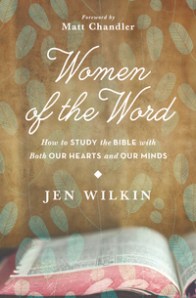

Book Review: Women of the Word

WOTWI have to confess that my first thought when I saw Women of the Word by Jen Wilkin mentioned favorably around the blogosphere was, “Hey! She took my title!” That’s not a very spiritual reaction, I know. 🙂 I’ve been blessed to have been able to compile a ladies’ newsletter for our current church for a couple of years and for a former church for about 9 years, and one column I’ve had in it  for a long time has gone by that same title, “Women of the Word.” It began after a discussion about devotions during one of our ladies’ meetings and the realization that no matter how long one has been a believer, there are always going to be struggles either maintaining a devotional time or making it what it ought to be. So I began the column to encourage ladies along that line and have begun to wonder lately if perhaps I might put them all together and see if they might possibly form a book.

My second thought, after reading a little bit about this book, was that I must get it. Everything I’d heard about it indicated that the author had the same passion as I do for getting women into the Word of God.

And the book definitely did not disappoint in any way.

Jen is not content to just get you into the Bible, however. She wants to equip women to dig for the true meaning of the Bible rather than using the Xanax approach (just seeking something to get through the day) or any number of other faulty approaches. She reminds us that God wants us to love Him not just with our hearts and souls, but also with our minds. She says that when she first began to read her Bible, she approached it with questions like, “Who am I?” and “What should I do?” Though the Bible did give her some insight for those questions, she eventually realized that “I held a subtle misunderstanding about the very nature of the Bible. I believed that the Bible was a book about me…I believed the purpose of the Bible was to help me” (p. 24). She learned that “We must read and study the Bible with our ears trained on hearing God’s declaration of Himself” (p. 26).

When I read that God is slow to anger, I realize that I am quick to anger. When I realize that God is just, I realize that I am unjust. Seeing who He is shows me who I am in a true light. A vision of God high and lifted up reveals to me my sin and increases my love for Him. Grief and love lead to genuine repentance, and I begin to be conformed to the image of the One I behold.

If I read the Bible looking for myself in the text before I look for God there, I may indeed learn that I should not be selfish. I may even try harder not to be selfish. But until I see my selfishness through the lens of the utter unselfishness of God, I have not properly understood its sinfulness (pp. 26-27).

“It’s possible to know Bible stories, yet miss the Bible story” (p. 11). In our quest for Biblical literacy, “we may develop habits of engaging the text that at best do nothing to increase literacy and at worst actually work against it” (p. 37). “We must be those who build on the rock-solid foundation of mind-engaging process, rather than on the shifting sands of ‘what this verse means to me’ subjectivity” (p. 87).

The author then shares ways to read the text within the context and to read it for comprehension, interpretation, and application. There is  an excellent chapter as well for teachers, one section of which makes an excellent case for women Bible teachers. She appears to believe, as I do, that women should teach women rather than men, but she gives some excellent reasons why women should teach other women.

I also appreciated how she dealt with an issue in the conclusion that I have seen some up in just the last couple of years. These days, when you try to encourage Bible reading and study or try to bring to bear what the Bible says on a conversation, you can sometimes be accused of “worshiping the Bible.” Jen answers:

I want to be conformed to the image of God. How can I become conformed to an image I never behold? I am not a Bible-worshiper, but I cannot truly be a God-worshiper without loving the Bible deeply and reverently. Otherwise, I worship an unknown God. A Bible-worshiper loves an object. A God-worshiper loves a person (p. 147).

In short, I love this book and highly recommend it. I do more than recommend it: I don’t often do this, but I encourage you to get it. I’m more than happy that the title I was considering using for a book has been attached to such a one as this.

I’ll close with one last quote:

We must make a study of our God: what He loves, what He hates, how He speaks and acts. We cannot imitate a God whose features and habits we have never learned. We must make a study of Him if we want to be like Him. We must seek His face…

We see Him for who He is, which is certainly a reward in itself, but it is a reward with the secondary benefit of being forever altered by the vision (p. 150).

(This will also be linked to Semicolon‘s Saturday Review of Books.)

31 Days of Missionary Stories: Isobel Kuhn Learns to Put God First

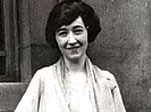
isobelkuhnIsobel Kuhn was a missionary to China in the early to mid- 1900s, alongside her husband, John. She has written a number of books about the Lord’s working in their lives and ministry, all very readable and enjoyable. She has a very readable style and is quite honest and open about her faults and foibles, but her books are also laced with humor. By Searching was subtitled My Journey Through Doubt Into Faith and describes just that. She had grown up in a Christian family yet wasn’t truly saved. When a professor at college condescendingly told her she only believed because that was what her parents told her, she realized he was right, and thoroughly let herself go into the “worldly” activities she hadn’t been allowed to pursue. This book traces her journey to true faith in Christ and her first steps in her walk with Him. In the Arena is not exactly a sequel, but it highlights many decisions, experiences, and trials in which God manifested Himself. I reviewed both books together here.

One incident that had lasting effects occurred during Isobel’s training at Bible college. Many students did not have a quiet time or devotional time with the Lord, because they spent so much time studying the Bible. “But,” Isobel wrote in In The Arena, “reading the Scriptures for a technical grasp of the general argument in a book, and reading it as in the Lord’s presence, asking Him to speak a word on which to lean that day — those were two very different things. One was no substitute for the other. Yet I knew also that some students were trying to let classwork reading do for personal quiet time. Deadness of souls was inevitable.”

As she prayed about it, she felt led to form a habit of spending one hour a day, sometimes in two half-hour segments twice a day, “in the Lord’s presence, in prayer or reading the Word. The purpose was to form the habit of putting God in the centre of our day and fitting the work of life around Him rather than letting the day’s business occupy the central place and trying to fix a quiet time with the Lord somewhere shoved into the odd corner or leisure moment.”

She and nine others covenanted to do this for about a year and meet together monthly to worship together, confess failure, and encourage each other. She wrote, “It was never my thought that this covenant should become law. My thought was merely deliberately to form a habit which would allow the Lord to speak personally to us all the days of our lives….somehow news of [this covenant] spread, and others began to join. Then—it seems as if some human beings always have to go to extremes—some signed a covenant binding them to this hour a day for life. I did not sign it. What about days of illness or emergency, when it might be impossible to keep an hour quietly? There was no need to vow; there was only need to form a habit of putting God first.”

The following is from In the Arena and tells of how this decision was tested.

This is the background of my platform of secret choices. It was the evening of the Junior-Senior party. I was a junior and had been asked to lead the devotional with which all such parties closed. I was also on the programme as Grandma in a Dutch scene, off and on all through the banquet. The week before had been so full of work and study that I had not had one moment to sit down and prepare a devotional.  Work…had delayed me, and I arrived at the supper half-hour, hungry,  exhausted, and without any devotion prepared. Besides this, I still had half an hour due on my quiet time! After the party we juniors had to clean up and I would not get to my room til midnight — the day would be gone.

Here was my platform of secret choices. That supper half-hour. (1) Should I go down and eat my supper? (2) Should I skip supper and try to prepare the devotional message? (3) Should I put God first and give that half-hour to him? The supper bell rang, and my roommate left for the dining room. I stood for a moment irresolute; then, throwing myself on my knees by my bedside I sobbed out in a whisper, “Oh, Lord, I choose you!” As I just lay in His presence too weary to form words, the sense of His presence filled the room. The weariness and faintness all left me. I felt relaxed, refreshed, bathed in His love. And as I half knelt, half lay there, saying nothing, but just loving Him, drinking in His tenderness, He spoke to me. Quietly, but point by point, He outlined for me the devotional  message I needed to close that evening’s programme. It was an unforgettable experience and an unforgettable lesson. Putting Him first always pays.

In the exhilaration of that wonder I ran down to the banquet hall, slipped into my costume, and went through the programme. At the end, when the devotional message was needed, I gave very simply what He had told me during the supper hour. Such a quiet hush came over that festive scene, I knew He had spoken, and I was content.

More than twenty years passed. I was home on furlough and visiting the Institute. It was the day of the Junior-Senior party and a group of us were reminiscing. “One Junior-Senior party a always stands out in my memory,” said one. “I forget who led it but it was a Dutch scene and the devotional blessed my soul. I’ve never forgotten it.” She had indicated the date, so I knew. I was thrilled through and through. Of course I did not spoil it by telling  her who led that devotional. In God’s perfect workings, the instrument is [often] forgotten. It is the blessing of Himself that is remembered.

 (You can see other posts in the 31 Days of Missionary Stories here.)

Devotional Tips

Bible

One of my passions is to get women into the Word of God for themselves. Since this is the time of year many renew their efforts to have read their Bibles, I thought some might find this post from the archives (2006) helpful.

For those who might be unfamiliar with the term, “devotions” or “having devotions” is the time spent in the Bible and prayer. Others call it their quiet time or their “God and I” time or other terms.

Hopefully if you are considering devotions, you already feel it is important to read the Bible, but if you need to be encouraged along those lines, some reason to read the Bible are here.

When I first became a Christian as a teen-ager, the church I was in then had a strong emphasis on reading the Bible through in a year. I am so glad, because I think that, more than anything else, got me grounded spiritually. There are many advantages to reading the Bible through in a year: it kept me focused; I knew where to read next instead of wandering around aimlessly; I discovered choice nuggets in places like II Chronicles and Zephaniah that I probably would never have discovered otherwise; it kept me balanced; it helped me understand passages in their context; and each time through I would understand the passage more. There are, however, a few disadvantages: I felt like I couldn’t stop and ponder anything because I had to keep going in order to finish the day’s reading in the time frame I had, and if I fell behind it would get awfully discouraging trying to catch up. So after some time I continued to read the Bible through, but not necessarily in a year. I feel free to stop and meditate on a particular truth I found or to study it out further. I usually read a couple of chapters a day, but I sometimes stop after a few verses or sometimes go on and read more. Then sometimes between books, I take a break and work through a Bible study book or do a word study or topical study.

Most “reading the Bible through” plans encourage reading from both the Old Testament and the New, or reading a passage from Psalms or Proverbs along with the day’s scheduled reading. I think that is probably to help you through some of those “drier” books like Leviticus.

I think this is one of those areas where anything is better than nothing, though, so if someone says, “I’m sorry, I just can’t get into Leviticus,” I would say that’s fine. Maybe some day you’ll get back to that, but reading somewhere in the Bible is better than reading nothing.

Probably for most people the first big battle is getting regular about it. It does help to make a regular time and place for it. I like to have devotions in the mornings because my mind isn’t as cluttered as it is later on. I get up a little earlier than everyone else so it is quiet, and I have my shower first so I am awake. There were some years during the getting-kids-off-to-school morning rush when the best time was after everyone left for the day. The best time for some people is in the evenings.

There are some seasons of life, like when there is a new baby in the house, or vacation times, or when company is there, when it’s hard to maintain that regular time. It’s easier to let that time slip then, but if we go back to the “anything is better than nothing” principle, we can grab a few quiet moments here and there.

Once some semblance of regularity is maintained, the next big battleground is keeping our minds on what we’re doing. There is a quote from John Donne which expresses it well: “I throw myself down in my chamber, and I call in and invite God and His Angels thither; and when they are there, I neglect God and His Angels for the noise of a fly, for the rattling of a coach, for the whining of a door.”

I think the biggest help in avoiding distractions is to be actively looking for something rather than passively reading (more on that later). Another help is to keep a notepad nearby so that when something else comes to mind, as it so often does, like an item I need to get at the store or someone I need to call today, I can jot it down so I don’t forget it later and so my mind can acknowledge that it will be taken care of and not keeping going back to that thought.

It helps to “get in gear” as we begin. I often pray, “Open thou mine eyes, that I may behold wondrous things out of thy law” (Psalm 119:18), or asking the Lord to make my heart “good ground” that the seed of His Word can fall upon. It can help, also, to ask Him for something from His Word to carry with you through the day. Some people like to begin listening to, singing, or reading through a hymn. I like to start off with the reading from Daily Light on the Daily Path for the day.

Ps. 66:18 says, “If I regard iniquity in my heart, the Lord will not hear me.” We need to ask Him to search us, show us anything wrong, and enable us to get it right so we don’t block the channels of communication.

On to some general tips:

  • I was advised early on to look for a command to follow, a warning to heed, a promise to rely on, and even to underline (this was before highlighters were invented ) those things with different colors (red for warnings, blue for promises, black for commandments, yellow for verses about salvation. etc.) or marking beside the verse with different symbols for each category. The point isn’t “coding” your Bible, but to use that as a method to think through what the passage is saying and how to apply it.
  • Ask the old journalism questions: who, what, why, when, and how. What is being said to whom by whom? Is the promise there to all people or only to a specific person or group?
  • Notice recurring words or phrases, like the phrase “let us” which occurs three times in Hebrews 10:22-24, or the recurrence of the words “know” or “knowledge” in II Peter 1:2-8.
  • Underline verbs in passages like I Cor. 13 (the love chapter) or Proverbs 2:1-5 (about the search for wisdom).
  • In some of those long sentences of Paul’s, going back to basic English can help us understand them better: find the subject and verb to learn what the sentence is actually about, and then see how the phrases fit around it.
  • When reading the epistles, it can be helpful to write them out as they were originally written: as a letter without the chapter and verse markings.
  • Use a basic dictionary. One exercise in Changed Into His Image by Dr. Jim Berg instructed the reader to go through I Corinthians 13: 4-8 and write the definitions of the major words on a separate piece of paper, then write the verses out using those definitions. That was one of the most rewarding studies I have ever done. Even though that passage isn’t hard to understand, going through that exercise opened it up in a fuller way.
  • Some passages lend themselves to charts and diagrams, like the letters to the seven churches in Revelation 2-3 or the different sacrifices in Leviticus. That kind of thing really appeals to some people, and it’s easy to compare the similarities and differences that way.
  • Sometimes it is edifying to have some type of Bible project to study out. For instance, you might look up all the references to “the fear of the Lord” to see exactly what it is and how it manifests itself, or the references to “the fool” in Proverbs so you know what kind of behavior to avoid. Matthew 4 tells us Jesus countered Satan’s temptations with the Word of God, and it’s strengthening to look up verses on the specific temptations we face. Once when I had a fleeting thought doubting God’s goodness in a certain situation, instead of just telling myself, “Don’t be silly; you know God is good,” I began to search out verses that spoke of God’s goodness. Not only did that result in knowing my God better, but it fortified my soul against that doubt. Using a concordance or computer Bible program or even Bible Gateway helps with those kinds of studies, and we can supplement those studies later as we come across verses in other reading. Once I heard someone say that Jesus never claimed to be God, and I knew that Jesus did in fact proclaim His deity. So as I read through the Gospels, I put a “C” (for “claims”) beside each verse where Jesus said something about Himself that indicated His Deity. He may have never climbed on a mountaintop and said the phrase, “I am God,” but His deity is all throughout the gospels (the results of that study are here in The Claims of Christ). When I do a study like that, I usually write all the verses out in one place (I used to do it on index cards, but now I keep it on the computer) so I can refer back to it or add to it later on.
  • Sometimes we divide our devotional time into separate prayer and Bible reading times, but we can combine the two. When we read a verse that convicts about a particular sin, we can confess it immediately. When we read something that tells us about God, we can thank and praise Him immediately. When we read a character trait that we need to incorporate in our lives, we can acknowledge that need and ask for help and grace.
  • On very familiar passages, try to imagine you are reading it for the very first time, that you are there watching the events occur, or that you are reading and trying to convey it’s truth to someone who has never heard it before.
  • Something else that Jim Berg advocates in his book it to look for the Person, the Lord, in our reading, not just the principles.
  • Remember that “all scripture is given by inspiration of God, and is profitable for doctrine, for reproof, for correction, for instruction in righteousness” (II Timothy 3:16) – even the genealogies and Leviticus. We can ask the Lord for help in some of those drier passages to see His purpose for them. For instance, from the genealogies we learn that: God keeps records; God keeps detailed records; God knew all of those people whose names we can’t pronounce and cared about them; He knows and cares for us the same way.
  • Much has been written in recent years about journaling. I stopped doing so some time ago because, for me, it was too easy to spend most of the time and thought during devotions on “what I thought” rather than what God had to say to me. But journaling can be a good way to process what you’ve read and help make it more permanent in your own mind.

There are many good books on this subject. One is Tim LaHaye’s How To Study the Bible For Yourself. One I just read recently was Jason Janz’s Alone With God: A Practical Plan for Dynamic Devotions. His plan might seem a little regimented to some, but he invites the reader to adapt it. The basic idea is that if you don’t have some type of plan for your devotional time, you’ll drift and not benefit from it: having a basic format helps keep you on track just like writing things down on a prayer list helps keep you focused and helps you remember what to pray for. He has a lot of good tips and practical advice as well. Another good book is What Do I Know About My God? by Mardi Collier. I have heard her speak on this topic of how she wanted to get to know God better, and, at her husband’s suggestion, read through the Psalms, making notes of everything that was said about God. That led to a study of several years throughout the Bible. She tells about that study and how it has impacted her life in her book.

There is much more that could be said (and if I don’t stop soon, I’ll almost have a book, myself! 🙂 ). There are days and seasons of life when we might only have one verse to carry us through the day – and it is better to read one verse and truly get something from it than to read 10 chapters inattentively. But there will be some times we’ll be able to read and study a little more extensively than others. However we “do devotions,” we can ask God to show us Himself, that we may know Him, love Him, and serve Him better.

Here are some additional previous posts about devotions:

The blessing of hymns.
I have a preposition for you.
Meet my Bible.
Reasons to read the Bible.
God’s Word...
What do you say about this book?
Having devotions when you’re not feeling very devoted.
When there is no hunger for God’s Word .
Encouragement for mothers of young children .

This post will be also linked to “Works For Me Wednesday,” where you can find an abundance of helpful hints each week at We Are THAT family on Wednesdays.

Laudable Linkage & Videos

Oddly, after a couple of weeks of not sharing interesting links I’ve seen, I only have a few. You’d think I’d have multitudes, but much of the blogosphere was fairly quiet over the holidays, and perhaps my reading was distracted enough that I didn’t think to save many. But here are a few:

8 Amazing Blogging Lessons from Albert Einstein, HT to Lisa Notes. The author takes quotes from Einstein and cleverly applies them to blogging.

52 Ways to Read and Study the Bible compiled by Semicolon. So many ways, and with all our electronic devices so many venues — it should be easier than ever.

A couple of years ago I compiled a list of resources and reasons for reading the Bible in Planning to read the Bible more this year?

Katrina at Callapiddar Days told of her first successful attempt at reading the Bible through in Part 1 dealing why she wanted to do so and finding a plan and Part 2 concerning how she succeeded this time, what she learned, and a few resources.

Lisa shares Why I am NOT reading the Bible through in a year, though she is still reading and shares tips for making it more effective.

One area where I’ve fallen short is memorizing. I did a lot in college and then in a children’s ministry we worked with, and those verses have pretty much stayed with me all these years (except I have trouble remembering the references) but not much at all since then. I’ve never memorized a whole book of the Bible. Some ladies at church are memorizing Ephesians, but they meet at a time that isn’t best for me and they are already a good ways into it. Lisa Notes shared a plan for memorizing Philippians by Easter: Partnering to Remember The 2011 Philippians Memory Moleskin.  Ann shares a plan for memorizing Colossians with 2 verses a week for a year with some more details and updates here. I am leaning toward the Colossians plan — 2 verses a week sounds very doable, and I have to admit the little booklet really appeals to me. They’ve set up a Facebook page as well.

Well, I guess I only thought I had just a few!

Just a couple more:

The worst gifts ever, HT to Challies. Though, I don’t know, that office chair looks good for a power nap. 🙂

How Critical Thinking Saves Faith HT again to Challies, on the need to talk with young people and wrestle through their questions with them rather than cutting them off for even asking.

I’ve shared this before, but here is some fun you can have with your Christmas tree when you’re done with it. My guys used to love shooting off model rockets, so this really appealed to them.

And I can’t remember if I shared this here or not, but it just makes me happy:

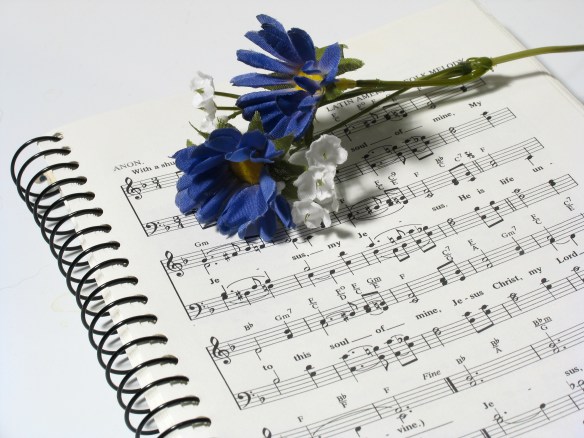
The blessing of hymns

(Photo courtesy of the morgueFile.)

A couple of weeks ago, Diane at Strength For Today posted this text from the flyleaf of a hymnbook titled Tabernacle Hymns No. 5, printed in 1959:

I AM YOUR HYMN BOOK

Next to the Bible, I should be your most
treasured book.

Hold me in your hand on Sunday when you
prepare to sing.

Let your heart listen to what has been
enshrined within me.

Hear the songs and the triumphant words
of the martyrs dying for a faith the same as yours.

Give heed to the prayers of devout men who
have found the heart of God.

Follow the missionaries of the Cross on their
way to the ends of the earth.

Listen to the great minds of the Church as
they share with you the deep mysteries
of the plan and purpose of the eternal God.

Sit at the feet of the musicians and poets, of
the saints and the redeemed in all lands
and times, of all those who have seen the
hunger in the heart unsatisfied except through song.

All these I have treasured…for you.

I am your hymn book.

I love that. Though I have to admit there are times when I’m singing the familiar words while my mind is elsewhere, overall hymns have been a great blessing in my life.

My former pastor, now with the Lord, Jesse Boyd, used to say that hymns can be even more instructive than sermons because we read, sing, and hear them at the same time, providing a triple reinforcement (and that was one reason why he corrected hymns that were doctrinally askew: he didn’t want the wrong message being reinforced as we sang.) In Jim Berg’s book Changed Into His Image, he advocates using a hymnbook as part of your devotional time, to read or sing through the words. Elisabeth Elliot shared in “The Song of the Animals” from her book On Asking God Why:

When I stumble out of bed in the morning, put on a robe, and go into my study, words do not spring spontaneously to my lips–other than words like, “Lord, here I am again to talk to you. It’s cold. I’m not feeling terribly spiritual….” Who can go on and on like that morning after morning, and who can bear to listen to it day after day?

I need help in order to worship God. Nothing helps me more than the Psalms. Here we find human cries–of praise, adoration, anguish, complaint, petition. There is an immediacy, an authenticity, about those cries. They speak for me to God–that is, they say what I often want to say, but for which I cannot find words…

[The Psalmist] found expression for praise far beyond my poor powers, so I use his and am lifted out of myself, up into heights of adoration, even though I’m still the same ordinary woman alone in the same little room.

Another source of assistance for me has been the great hymns of the Church, such as “Praise, My Soul, the King of Heaven,” “New Every Morning Is the Love,” “Great Is Thy Faithfulness,” “Glorious Things of Thee Are Spoken,” and ”O Worship the King.” The third stanza of that last one delights me. It must delight God when I sing it to him:

Thy bountiful care, what tongue can recite?
It breathes in the air, it shines in the light;
It streams from the hills, it descends to the plain,
And sweetly distills in the dew and the rain.

That’s praise. By putting into words things on earth for which we thank him, we are training ourselves to be ever more aware of such things as we live our lives. It is easy otherwise to be oblivious of the thousand evidences of his care. Have you thought of thanking God for light and air, because in them his care breathes and shines?

Hymns often combine praise and petition, which are appropriate for that time alone with God. The beautiful morning hymn “Awake, My Soul, and With the Sun” has these stanzas:

All praise to Thee, who safe hast kept,
And hast refreshed me while I slept.
Grant, Lord, when I from death shall wake,
I may of endless light partake.
Direct, control, suggest, this day,
All I design, or do, or say;
That all my powers, with all their might,
In Thy sole glory may unite.

Hymns that express Scriptural doctrine and both the cries and praises of the heart have ministered to me greatly, next to Scripture itself, and not only in church but on the radio at home or in the car or even the ones that comes to mind as I go about my daily duties. In times of nervousness or distress, it has calmed me to think through the words of a hymn. And some hymns full of praise to God instruct me and inspire me as well in my praise to Him. “None Like You,” for instance, is one that almost instantly stops my in my tracks and melts my heart in praise.

So today, I am thankful for the gift of hymns.

And be not drunk with wine, wherein is excess; but be filled with the Spirit; Speaking to yourselves in psalms and hymns and spiritual songs, singing and making melody in your heart to the Lord. Ephesians 5:18-19.

Let the word of Christ dwell in you richly in all wisdom; teaching and admonishing one another in psalms and hymns and spiritual songs, singing with grace in your hearts to the Lord. Colossians 3:16.

Life’s Balance Sheet

Today’s reading from Our Daily Walk devotional by F. B. Meyer really spoke to me, especially the second paragraph. “To save ourselves, to build warm nests, to avoid every discomfort and annoyance, … to invent schemes for our own pleasure” — that has too often been my focus. But that’s not how Christ lived, and it is not how He called us to live.

LIFE’S BALANCE SHEET

“What shall it profit a man, if he shall gain the whole world, and lose his own soul?”– Mar 8:36.

SIMON PETER had been urging our Lord to spare Himself the suffering to which He had referred, but He answered that this could not be for Himself, or for any other who would follow in His footsteps. Proceeding from His own deep experience, He went on to show that in the same measure every one must deny his own choice and will and pleasure, in order that he may reach the highest life for himself and others.

It is not necessary for any man to make a cross; it is our part simply to take up that which God has laid down for us. The cross is no exceptional piece of asceticism, but it is the constant refusal to gratify our self-life; the perpetual dying to pride and serf-indulgence, in order to follow Christ in His redemptive mission for the salvation of men. And it is in proportion as men live like this that they realize the deepest and truest and highest meaning of life. When we live only to save ourselves, to build warm nests, to avoid every discomfort and annoyance, to make money entirely for our own use and enjoyment, to invent schemes for our own pleasure, we become the most discontented and miserable of mankind. How many there are who have given themselves up to a life of selfishness and pleasure-seeking, only to find their capacity for joy has shrivelled, and their lives plunged into gloom and despair. They have lost their souls!

If a fire is raging, and a millionaire saves his palace from destruction, but in so doing loses his own life, does it pay? And are there not many who are building for themselves palaces of wealth and pleasure, but are losing the power of enjoyment because they are destroying all the finest sensibilities of their nature. Our Lord asks, what does it profit to gain the whole world, and forfeit one’s own soul?

But not to adopt the policy of the world is certain to bring upon us dislike and hatred, before which many have been daunted; and yet to refuse Christ’s policy of life, and to be ashamed of acknowledging that we are His followers, will mean ultimately our rejection. For how can our Lord use us in any great schemes of the future, if we have failed Him in the limited sphere of our human life?

PRAYER

O God, we have been disappointed because the cisterns that we have hewn out for ourselves have not given the water needed to quench our thirst. Fountain of Living Water, of Thee may we drink! Bread of Life, of Thee may we eat! Light of Life, shine upon our hearts, that we may walk in Thy light. AMEN.

~ F. B. Meyer

I have a preposition for you…

I have always loved the study of English, but some people have a mental block of sorts when grammar is mentioned. I have a similar block with math beyond the basics.

But grammar is one of the best tools for basic Bible study. For instance, those lengthy sentences of Paul’s are a little more understandable when you find the subject and verb of a given sentence and then see how everything else fits around them.

Prepositions (by, beside, under) generally show the relationship of one thing to another. Before your eyes start glazing over, see if these prepositional phrases don’t bless your heart:

Deuteronomy 33:27b: The eternal God is thy refuge, and underneath are the everlasting arms.

Psalm 16:8: I have set the LORD always before me: because he is at my right hand, I shall not be moved.

Isaiah 38:17: Behold, for peace I had great bitterness: but thou hast in love to my soul delivered it from the pit of corruption: for thou hast cast all my sins behind thy back.

Isaiah 41:10: Fear thou not; for I am with thee: be not dismayed; for I am thy God: I will strengthen thee; yea, I will help thee; yea, I will uphold thee with the right hand of my righteousness.

Isaiah 43:2 ; When thou passest through the waters, I will be with thee; and through the rivers, they shall not overflow thee: when thou walkest through the fire, thou shalt not be burned; neither shall the flame kindle upon thee.

John 17:24: Father, I will that they also, whom thou hast given me, be with me where I am; that they may behold my glory, which thou hast given me: for thou lovedst me before the foundation of the world.

II Timothy 4:17: Notwithstanding the Lord stood with me, and strengthened me; that by me the preaching might be fully known, and that all the Gentiles might hear: and I was delivered out of the mouth of the lion.

Psalm 5:12: For thou, LORD, wilt bless the righteous; with favour wilt thou compass him as with a shield.

Psalm 32:7: Thou art my hiding place; thou shalt preserve me from trouble; thou shalt compass me about with songs of deliverance.

Colossians 1:27: Christ in you, the hope of glory.

Some of these came to mind as I was listening to “O the Deep Deep Love of Jesus” by S. Trevor Francis on a CD. One stanza says:

O the deep, deep love of Jesus, vast, unmeasured, boundless, free!
Rolling as a mighty ocean in its fullness over me!
Underneath me, all around me, is the current of Thy love
Leading onward, leading homeward to Thy glorious rest above!

Meet My Bible

I saw last week that my good bloggy friend Susan at By Grace participated in a meme called “Meet my Bible.” I thought it looked like an interesting one to do. Please feel free to join in! Let me know if you do, and I’ll be glad to come and read about your Bible.

My Bible

1) How old is your Bible?

I’m not quite sure. This one doesn’t have a presentation page to record who it was from and when it was received. I would guess about twelve years, judging from some of the notes in it — some seem to be sermon notes from the pastor of the church we were in about 11 years ago, before moving to GA and back to SC, but there aren’t many like that, so I am thinking we got it towards the end of our time there.

2) Why did you choose this Bible?

I wanted a wide margin Bible for taking notes, and this Cambridge Bible was recommended to me.

3) Do you highlight/mark passages?

I don’t highlight any more, but I do mark passages, draw arrows, etc.

Bible notes

4) If so what is your system?

I used to have an elaborate system: I underlined promises in blue, warnings in red, commands in black, and highlighted salvation verses in yellow. That was at the beginning of my first attempts to read and study my Bible regularly, and I probably needed to do that then, but sometimes your system can get in the way of your actual reading. Now I mainly just underline verses that stand out to me, but I will also draw an arrow to a cross reference or another verse that this verse is referring to, or I’ll underline repeated words.

Bible notes

Bible notes

5) Do you have notebooks to record things?

No, not at this time.

6) If so how many and what do you record?

I used to just use a simple small spiral notebook that I jotted down thoughts, impressions, reactions, applications, etc., from what I was reading. I eventually stopped because I was piling up these little notebooks but never really referring to them again. Even so, it was a good exercise and a way to keep from just glazing over the passage, so I should probably resume it.

7) Where is your favorite spot to read your Bible?

Living room, left side

At the end of the couch, under the lamp, often with the throw blanket over me. I usually sit with my back against the armrest and my legs stretched out on the couch. If I am doing something more studious, I’m usually at the kitchen table or at the computer, but for everyday reading, I am here.

8) Any thing special about your Bible you want to share?

Though I love any Bible as the Word of God, I don’t have quite as much of an attachment to this particular edition as I do the first one my husband gave me after we were married. There is that sentimental value, but also our first 14 years we were under two pastors with definite gifts of teaching, and some of my sermon notes in that Bible are precious to me. That’s also the Bible where the flyleaf favorites I mentioned once are recorded. I still have it close by and refer to it sometimes, but it is falling apart.

During the past read-through of the Bible, I’ve been using the New American Standard — all of the above are KJV. It’s funny, but when a pastor explains what a passage in the KJV means, often the definition or wording he uses are exactly what the NAS records. So it has been interesting to read it through, and though I love my notes and markings, it has been nice in a way to have everything uncluttered and fresh.

I learned long ago that different methods are fine for different seasons in life: sometimes I read more at a time; sometimes I read a smaller section more slowly; sometimes I want helps; sometimes I want just the Word. We’re so fortunate in this country to have helps and multiple copies of the Bible.  I can remember in college praying for those under persecution for their faith behind the Iron Curtain and being able to only imagine what they’d give for their own copy of the Bible.

There is one story from that time (the late 70s) that sticks out to me. A pastor spoke in chapel who made period trips into the Soviet Union, helping as he could. He heard a story one time of a Christian woman who wanted to attend a secret gathering of believers. Her husband was not a believer, but went with her — I don’t remember if he wanted to be with her to protect her, or what, but I do remember he was nervous about the whole encounter. At the meeting, they only had one Bible, so they tore off different parts of it to give to the people who came to keep for themselves. The portion this man received only said, “And the Lord said to Jeremiah.” At first he was disappointed, thinking, “Jeremiah? Who is this Jeremiah? Who has ever heard of him?” But later he thought, “If the Lord deigned to speak to this insignificant Jeremiah, who no one has ever heard of, then He must see me and know of me, too,” and he was eventually saved. I was amazed at the power of the Word of God — even a simple phrase of it!

Related posts:

Reasons to read the Bible
God’s Word...
What do you say about this book?
Devotional tips
Having devotions when you’re not feeling very devoted
When there is no hunger for God’s Word
Encouragement for mothers of young children

Stray thoughts here and there

Here are some other people’s thoughts that have blessed, encouraged, instructed me, and made me think recently:

Why we need the arts.

Herb Cookery: Vintage Tip Sheet.

Being vs. doing.

Mothering, chores, and consequences. Favorite quote: “…one theme that seems to keep coming up in some of the episodes we watch, and that’s women feeling as if they’re hopeless about getting their children to do chores. ‘They never clean up! They see me cleaning, but they never help, and finally I give up because it’s not worth the hassle and arguments they give me!’  Where did women ever get the idea that they were this hopeless? They are the MOTHERS. They can make their children clean up.”

10 good reasons to exercise hospitality. The posts linked to there are good reading as well. This is an area where I fall short consistently.

Valentine’s Day Single.

Reassurance for parents of young ones. Quote: “…the first few years are the hardest, if you do them right. Picture discipline like a pyramid: you discipline a lot in the first few years, and then when they’re older you don’t have to do very much. What’s required gets smaller and smaller because they internalize good morals (and hopefully a relationship with God).”

Raising sons, raising heroes. Quote: “I’ve been wondering lately,though, about the wisdom of always counseling my guys to avoid risks. Truth is, there are plenty of times in life that you need a guy around who is bold enough to take a risk. To do something.”

20 tips for living on one income.

Write as you read — different approaches to Bible study and getting more out of devotions.

A vision for women’s ministry. Quote: “Women’s ministry is not about women’s rights or about women’s feats, it’s about expressing our love for Jesus and His church – his body.” — Mrs. Susan Hunt

What we call “traditional” gender roles. Quote: “Far too often a couple who claims to be following the Scriptural model for gender roles are actually following a cultural tradition without any foundation.”

Collected thoughts for the new mom.

Fabric boxes.

My son pointed me to the This is why you’re fat blog (that sounds funny…he shared it because he thought it was interesting, not because he was hinting that I was fat…), a site showing “deliciously gross food,” like this Deep fried cupcake with chocolate syrup and sprinkles, the Bacon Cheese Pizza Burger, which uses pizzas as the top and bottom of a burger, or this  Bacon-wrapped meatloaf with a layer of macaroni and cheese.

bacon-wrapped-meatloaf

Some of it is pretty gross — some of it actually looks good — but only in small portions!!

Have a great weekend!