Friday’s Fave Five

It’s Friday, time to look back over the blessings of the week
with Susanne at Living to Tell the Story and other friends.

It’s the first week of June! Here are some of the best parts of the week:

1. A productive Saturday. We had talked about going all together to a park on a lake with a roped-off area for swimming. But rain was in the forecast, so we moved those plans to Monday. Instead, Jim and I spent Saturday afternoon moving all the wall decorations and shelves from the old sewing room to the new one. Then he began to tape off the old room to ready it for painting, and I planted some new flowers in the front planters. We ended the day with Dominoes pizza.

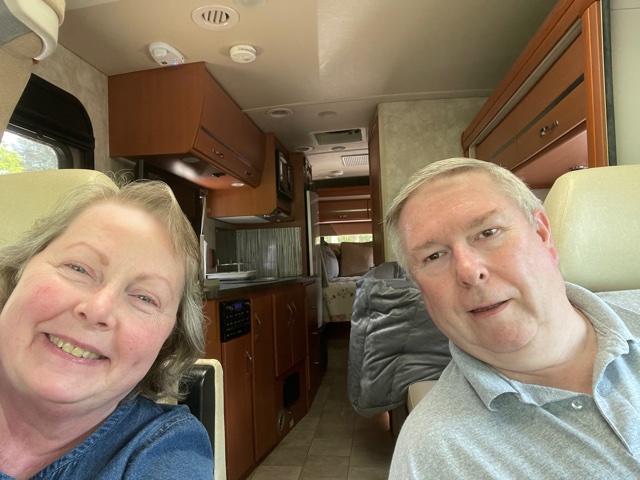
2. A long weekend. Jason, Mittu, and Timothy came over Sunday night to camp out in the back yard. Jason and Mittu tried out the RV, and Timothy and Granddad were out in the tent–at least until about 2 a.m. 🙂 Jim made a big “camp breakfast” on the grill. Then Jesse met us at the park mentioned above for a cookout. Unfortunately, the park was so crowded, we couldn’t find a parking space. But Jason had noticed a sign for a picnic pavilion, so we backtracked there. We weren’t near the water, but we had the area mostly to ourselves until the last half hour or so.

3. A radio interview. I mentioned last week that I had an opportunity for a radio interview to discuss one of my blog posts. It went very well. God gave great grace, and the hosts were very gracious and easy to talk to. Unfortunately, my segment was not in the excerpt link on their web site. But thankfully a good friend thought to record it for me, and I was able to send it in an audio file to Jim and the kids, who were working during the time I was on live. That was so thoughtful of her!

4. Cracker Barrel take-out. I forgot to mention this one from the week before last. Jim had to go out of town one day and didn’t expect to be home until late. So I splurged and got Cracker Barrel take-out. That’s one of my favorite restaurants, but no one else in the family likes it much. Takeout meals often contain enough for dinner and leftovers for lunch the next day. But this had the biggest portions I had seen for takeout, and I got an additional lunch out of them. And the best was their double chocolate Coca-Cola cake.

5. Grocery store pick-up. Unfortunately, Jim has been sick since the weekend with a really bad cold. He went for a COVID test just to be sure, but it was negative. Then I woke up Thursday morning with a sore throat and sinus pressure. 😦 I spent much of Thursday sleeping, so I hope I’m heading off the worst of it. We needed some things at the store, but I really didn’t feel like going, and I didn’t think he would, either. The main store we use doesn’t have online ordering, but one near us does. I remembered it just in time to get an order in for that evening’s pick-up.

This weekend, we’re planning to celebrate Timothy’s completing first grade. Hopefully we’ll both be over whatever we have by then. What are your plans for the weekend?

Two Short Fiction Reviews

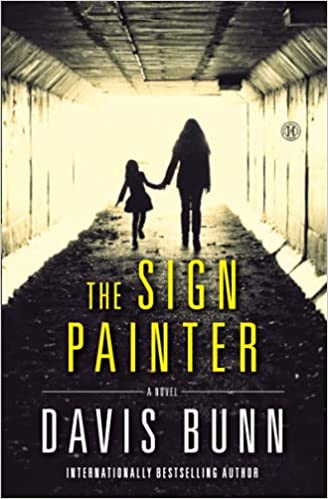
In The Sign Painter by Davis Bunn, Amy Dowell has fallen on hard times. Her husband died and she lost her home. Now she travels in a camper with her young daughter. After charges of vagrancy and the threat of having her daughter taken away, she has a lead on a job painting signs for a car dealership. She comes across a church with an extensive ministry to the homeless, including temporary housing.

Just as things are looking up, she faces a dilemma. While working after closing hours one night, she discovers a salesman has left a significant amount of cash on his desk. If she leaves it, someone could steal it. But if she takes it to keep it safe, would she be accused of stealing? Would her record make her seem all the more guilty?

Meanwhile, ex-policeman Paul Travers has been hired to help the church find the best way to deal with a nearby house overtaken by drug dealers. Some of the church folks are already wary of the kinds of people the homeless ministry brings in. Having drug dealers in the neighborhood might push them into closing down the whole ministry.

I’m used to a more exotic locale in Bunn’s books, so it was interesting to read a novel of his set in the US. I appreciated what he said in a interview at the end of the book. The story was inspired by a news item he saw about homelessness in Orlando. He wanted to show the hardships, but not stop there. “I wanted to focus on the rebuilding. To my mind, too much attention is given to the falling down, and not enough to the getting back up again. So The Sign Painter aims toward hope and healing—a new future for homeless families, but also a reminder about the help our communities may be able to offer.”

The story took a little different turn from what I expected. I enjoyed getting to know Amy and Paul. I appreciated the glimpse into the challenges of those who are homeless and those who want to help.

In Saving Alice by David Lewis, Stephen Whittaker had been in love with Alice in high school. When a car accident takes Alice’s life, Stephen and Alice’s best friend, Donna, comfort each other and eventually marry. They have a daughter named after Alice, Alycia, with whom Stephen has a special bond. But all these years later, Stephen still has nightmares about Alice’s accident.

Stephen is a stockbroker who nearly drove his company bankrupt with a bad deal. They avoided bankruptcy and are slowly making their way back.

But when Alycia turns twelve she wants to know more about her parents’ friend, Alice. When her relentless questions finally bring out the truth that her father loved Alice first, Alycia loses respect for him.

Stephen’s bad decisions and cluelessness lead to Donna’s leaving him. But just as things begin to look up in his job and his relationship with Alycia, everything comes crashing down.

I enjoyed the father-daughter banter, and some of the scenes were very well-done and drew out my emotions. However, a plot device in the latter part of the book fell flat to me. I can’t go into it without spoiling the story. But it didn’t seem to mesh with the rest of the book and seemed too convenient. I liked the rest of David’s writing well enough that I’d try his other books.

David is the husband of Beverly Lewis, one of the first Amish fiction writers.

Though I reviewed these books together mainly because I read them one after the other, they do have similar themes getting back up and rebuilding after crises.

On the Radio

I’ve mentioned an invitation for a radio interview to discuss my blog post Faithful in Obscurity. I wanted to let you know how to listen to it if you’re interested.

The interview is scheduled for Wednesday, June 2, from 8:20-8:40 a.m.EDT, but it won’t cover all that time. They’ll break away for news, weather, a song, etc.

The radio program is Kurt and Kate Mornings on Moody Radio Florida. The top of their program page has a “Click to Listen Live” button.

They do have some of their past programs available to listen to. If the segment I’m on shows up in their recorded segments, I’ll post the link here afterward.

I’d appreciate your prayers that God would help me say what He wants me to, in the way He wants me to, that the program would minister to hearers, that I won’t blank out, that all the logistics and connections will work out, that I won’t have to go to the bathroom during that time. 🙂

Update: Everything went really well. God gave grace and calmed nerves. The hosts were very gracious and made it easy to converse. It looks like it takes them a couple of days to post their recordings on their site, but I’ll post the link here if they include the segment I was on. Thanks for praying!

Update: Unfortunately, my segment wasn’t on the link link for yesterday’s program. Out of a three-hour program, their link for the day is a fifteen-minute or so excerpt. Thankfully, a good friend recorded the interview for me, so I was able to listen to it and send it to family who had to work while it was on.

Is It Wrong to Be Right?

One memorable time, as I was making teriyaki, I browned the strips of beef and added all the spices and ingredients called for. The last step was adding cornstarch to thicken the sauce.

However, I accidentally grabbed baking soda instead of cornstarch. My sauce erupted like a science fair volcano.

I poured out the sauce, rinsed out the pan, and added new ingredients to the beef. But enough baking soda had seeped into the meat that the whole dish was too tainted to eat. We drank water for hours trying to wash the taste out of our mouths.

What’s worse, the memory of that sauce was so strong that my husband couldn’t eat teriyaki any more. Even if everything came out right, teriyaki triggered the bad taste of the ruined version.

***

Recently I’ve see a lot of memes or quotes about how much better it is be to nice than to be right.

I think I know what some mean by this. Some people are passionate about every little thing; others insist that everything be done exactly their way. But there are issues in life not worth arguing over: which way the toilet paper goes on the roll, how to squeeze the toothpaste tube, etc. It’s better to overlook some things than to constantly fuss about them. The relationship is more important than one or the other being “right.”

But in some cases, being right is essential. The wrong ingredient can ruin dinner but make for a funny story later. But some wrongs are more painful. Saying the wrong thing at the wrong time can severely damage a relationship. Playing the wrong note will jar rather than please one’s listeners.

And sometimes being wrong can be deadly: the wrong medicine, the wrong diagnosis, the wrong step.

No amount of being nice can make up for being wrong in some instances.

Lately I have even seen this sentiment in regard to the Bible. True, many Christians take Judes’ admonition to contend for the faith to mean being contentious about everything. We’ve seen awful displays this last year of assigning wrong motives and vitriolic name-calling over issues where Christians should have been forbearing and given each other grace over differing opinions. Some wield truth like a club and forget the admonition that “the Lord’s servant must not be quarrelsome but kind to everyone, able to teach, patiently enduring evil, correcting his opponents with gentleness. God may perhaps grant them repentance leading to a knowledge of the truth, and they may come to their senses and escape from the snare of the devil, after being captured by him to do his will” (2 Timothy 2:24-26). It’s God who grants repentance through His Word and His Spirit, not our hammering.

Notice that Paul doesn’t tell Timothy to be nice instead of being right. He tells him to teach, be patient, correct, yes, but with gentleness. Both epistles from Paul to Timothy are full of instructions about right doctrine and conduct.

In fact, almost every book of the Bible warns against false doctrine or shows examples of people following the wrong way.

Yes, there are issues in the Bible good people can differ over. But there are other issues where we can seriously go astray and lead others with us if we’re wrong. If we don’t know God as He truly is, we create a false god in our image.

I saw an article recently where someone spoke of not worrying about getting everything right in their Bible reading, but instead looking for meaning for one’s personal life.

But how can we find meaning if we’re off on what we think the Bible says? Jesus said “true worshipers will worship the Father in spirit and truth” (John 4:23-24, emphasis mine).

Isaiah spoke of those “who swear by the name of the Lord and confess the God of Israel, but not in truth or right” (48:1).

True, the Pharisees spent a lot of time studying the scriptures and dotting their i’s and crossing their t’s just right. But for all their study, they missed the truth. Their error wasn’t in studying the Scripture but in adding to the word of God and teaching their own doctrines rather than His.

We do have to be careful not to fall into a merely academic approach to the Bible. But we don’t have to set up a false dichotomy between right study and meaning and application. Or between being nice versus being right. Paul urges Timothy to be an unashamed worker “rightly handling the word of truth” (2 Timothy 2:15).

Sometimes the call for truth can be stern in the Bible. Sometimes you can’t warn people of danger in a quiet voice. When one of my sons was little and toddled toward a busy street, I didn’t say, “Honey, please come back. The street is too dangerous.” I yelled and ran and snatched him up just before he stepped onto the road. I probably scared him to death. I was pretty shaken, myself.

Paul told the Galatians, “If we or an angel from heaven should preach to you a gospel contrary to the one we preached to you, let him be accursed” (Galatians 1:8). Did Paul say that because he was opinionated and intolerant in his religious views? No, he knew the truth and he knew the danger of a false gospel.

May God give us grace to know Him for who He is, to know His Word, to continue to study it depending on the Holy Spirit for guidance, to grow in knowing Him, to know where to draw lines and where to show forbearance, to speak boldly and truthfully but as kindly as possible.

. (I often link up with some of these bloggers)

Laudable Linkage

Here are a number of thought-provoking reads discovered the last few weeks. Perhaps one or two will be of interest to you.

On the Longing to Be Seen, Heard, and Known, HT to The Story Warren. “Wanting to be seen, heard, and known isn’t sinful in itself (it’s part of our human nature, given to us by God), but as with everything in life, sin has tainted it in a big way.”

Disturb us, Lord. Ouch.

The Ministry of Sorrow. “By facing trials in a distinctly Christian way, by ministering to others through their sorrows, by testifying to God’s light even in the deepest darkness, each of them has provided a testimony to God’s grace that has lifted many tired hands and strengthened many weakened knees.”

Grace as Deep as the Sea. “I want to scold the dad with his back to the son, ‘You can replace the net—you can replace a thousand nets!‘ But I know, deep inside, this has nothing to do with a broken net and everything to do with a broken life, a broken dream, a broken son, and a broken heart.”

Headlines. “Do you see how your perspective or focus can change the headline? Which view will you take in your particular trial?”

How Not to Debate Ideas in the Public Square, HT to Challies. “There will always be people who disagree with each other. That’s not necessarily a problem. And there will always be people who make bad arguments. That’s inevitable. But if we are interested in debating ideas (not just destroying people) and interested in persuading (not just performing), we will try our imperfect best to speak and write in a way that aims to be clear, measured, and open to reason.”

What If I’m Not the Best at Anything? HT to Challies. I think many of us can identify with this. I love his conclusion.

A Lesson to Learn as we emerge from the restrictions of the past year. HT to Challies. “Who do you instantly dismiss as being too gung-ho or too cautious? That is the danger for us in church over the next few months. The danger is a loveless fracturing of church unity. A dismissal of one another, a failure to love and bear with one another.”

“Putdownable” Books. Though this post is a review of Dickens’ Great Expectations, I love what the author said after seeing ads for books “you won’t be able to put down”: “But I want to take a moment and consider the books that are so good we have to put them down. I don’t mean books we put down and lose interest in—no. I mean books so beautiful we must linger over them, savor them, pause from time to time to reflect on a beautiful passage or perhaps write it down somewhere. These are the books we read more and more slowly toward the end, because we do not want to finish the last page and be left outside the world of the story. We do not want these books to end.”

I just discovered from Ancient Mariners, Psalms, and Prayers this article telling about a project to have different people read The Rime of the Ancient Mariner by Coleridge. I’ve always thought that was one of the most dramatic poems ever. I’ve only listened to a few minutes of it, but it’s good! Here’s the first section:

The whole thing is put together here. On this list of the readers here, you can click on each name to hear that section.

Happy Saturday!

Friday’s Fave Five

It’s Friday, time to look back over the blessings of the week
with Susanne at Living to Tell the Story and other friends.

It’s been another good week. Here are some of the best parts:

1. Family dinner and games. With my youngest moved out now, sometimes it takes a little coordination to get everyone together. He asked to come over for dinner and a haircut (his dad has cut his hair all his life). We asked Jason and Mittu if they were available to come, too. We had spaghetti and flourless applesauce cake and played Jackbox games. Fun!

2. Monthly Ladies Bible study. We met in person, but seated at a distance from each other. Thankfully the place where we meet has a conference room that works nicely for this.

3. Retirement home ministry. Our church has just started a retirement home ministry one Sunday afternoon a month. Last month was the first one, and we chatted with a sweet lady from Germany named Esla. We hoped to see her again this time. But when we got there, only a few people were gathered. One of them said the folks at the home hadn’t announced that we’d be there. But as we got started, a few more people trickled in—and Esla was one of them. So we got to talk for a good while afterward. And as we left, she called to us from her balcony to say goodbye.

4. Hot dogs and s’mores at my son and daughter-in-law’s house. Jason and Mittu invited us over Sunday evening. They are blessed with both a deck upstairs and a patio downstairs under the deck. So we had hot dogs on the deck and roasted marshmallows for s’mores on the patio.

5. The Picture This app. My oldest son had told me about this once when he was here and I wondered what a certain flower in an arrangement was. Then, at Jason and Mittu’s, we used it to identify some of the trees and plants in their new back yard. It was helpful not just for identifying, but we found that one plant that seemed not to be doing anything was a plant that didn’t tolerate the heat we get here in TN. That helped them in the decision about whether to keep it.

Bonus: An unexpected opportunity. I mentioned this in my end-of-month post yesterday, but I know some of you are only here for the FFF post. So I wanted to mention here, as well, that I was asked to do a radio interview about my Faithful in Obscurity blog post. It’s set for Wednesday morning at 8:10 a.m. EDT. On Tuesday I’ll post a link to the radio program’s site. It has a “Listen Live” button if you’re interested. It also has some recordings of previous programs, but I don’t know if my segment will be recorded since it’s just a small portion of their program. I am excited but also nervous as I have not done anything like this before. I’d appreciate your prayers!

I hope you have a great weekend. Here in the US we have a long weekend to celebrate Memorial Day. I am so thankful for those who gave their lives for our freedom.

May Reflections

Even though we have a few days left before the end of May, I have other posts scheduled until next week. So I figured I’d share my end-of-May wrap-up now.

May feels so different now that we don’t live by school rhythms any more, since all of our kids are grown. May used to be one of the busiest months of our year with end-of-year programs, recitals, etc. I enjoyed all of that at the time, but also felt pressured. I like the quieter pace now.

May is also our transition between spring and summer. Though summer doesn’t officially start until June, we start getting summer temperatures and humidity in May. We’re looking forward to some outings over the long weekend ahead.

Family

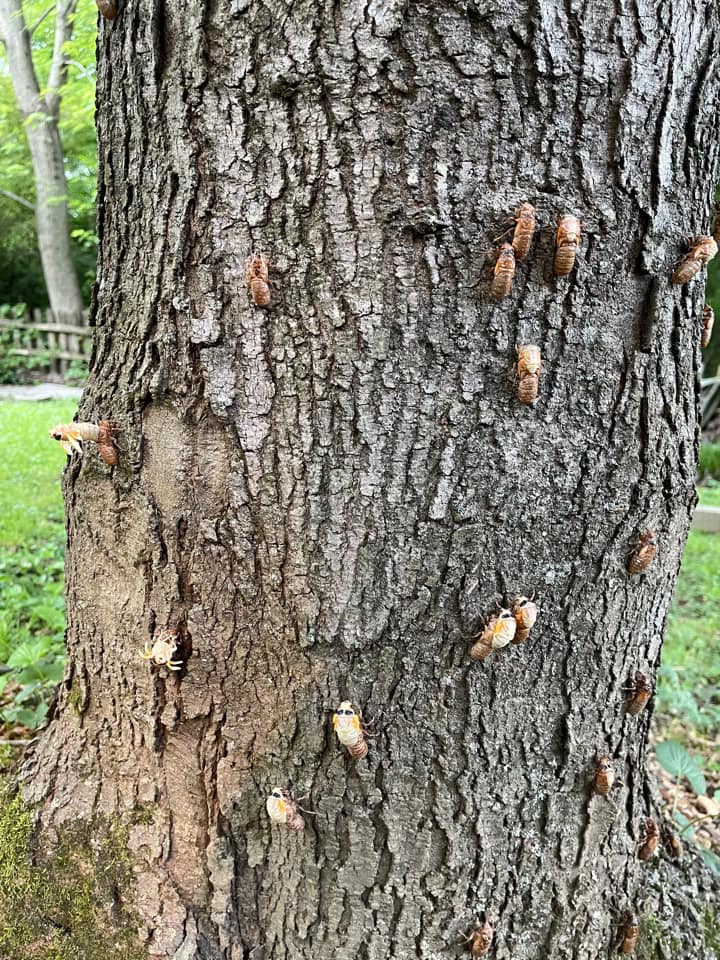
Not much going on besides some get-togethers at either our house or Jason and Mittu’s. We enjoyed Mother’s Day together, and Jim and I took the RV for a test drive. I mentioned in a recent Friday’s Fave Five that the Brood X cicadas, the ones with the 17-year life cycle, emerged over at Jason and Mittu’s house. They sounded like Rice Krispies as they molted. They’re in mating season now, so they’re really loud with making noise to attract a mate (though I don’t know how the females can distinguish them from each other with all that noise going on).

We haven’t done much with the sewing room or spare room as we’ve had other things going on the weekends. Jim did put together a couple of over-the-door storage units I had wanted for Mother’s Day. I’m hoping we can get the spare room done before Jeremy, my oldest son, comes to visit in August.

Timothyisms

While at my grandson’s house, he was “playing school” with his Granddad. At one point my husband asked Timothy, “What’s 7 + 7?” Timothy said, “I’m the teacher. You have to guess.”

Creating

I’ve made a few more cards than usual this month.

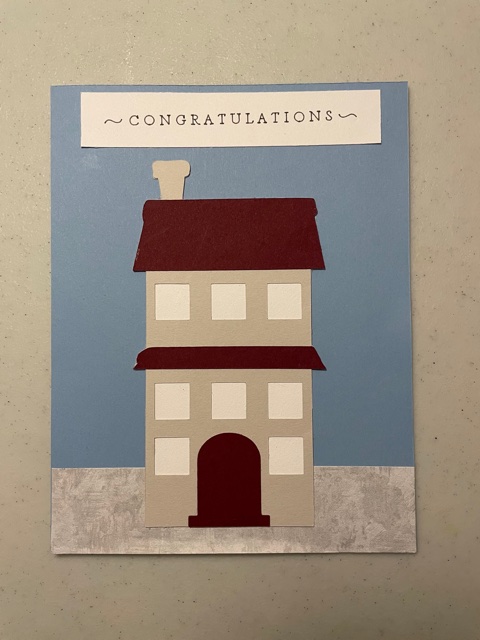
This was for Jesse’s apartment-warming party.

The building and “Congratulations” were done with the Cricut.

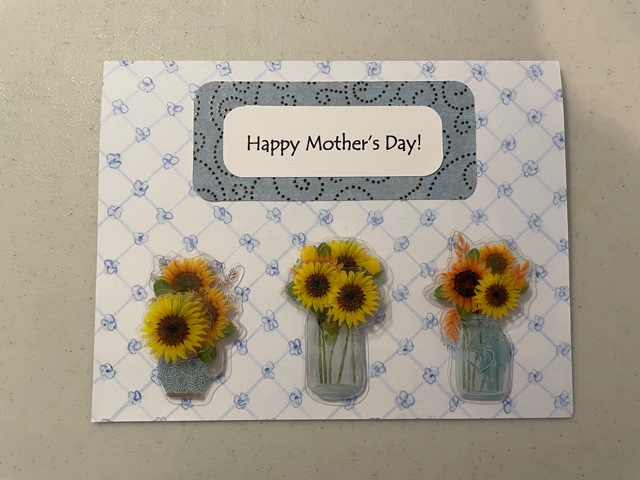
This was for Mittu for Mother’s Day:

I did the wording on the computer, and the flowers are multi-layer stickers.

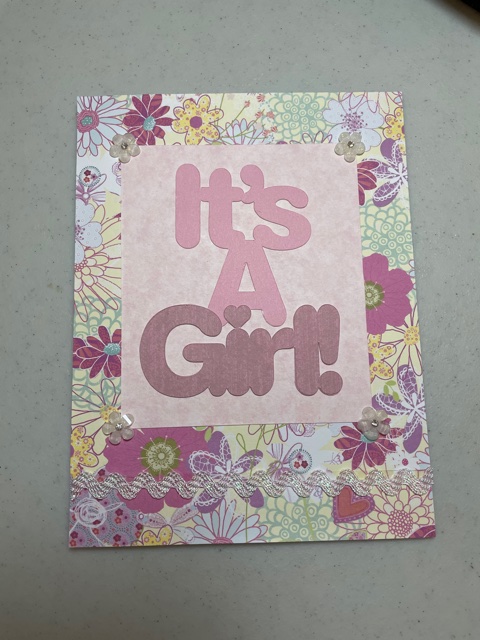
This was for a baby shower:

The “It’s a Girl” was done on the Cricut.

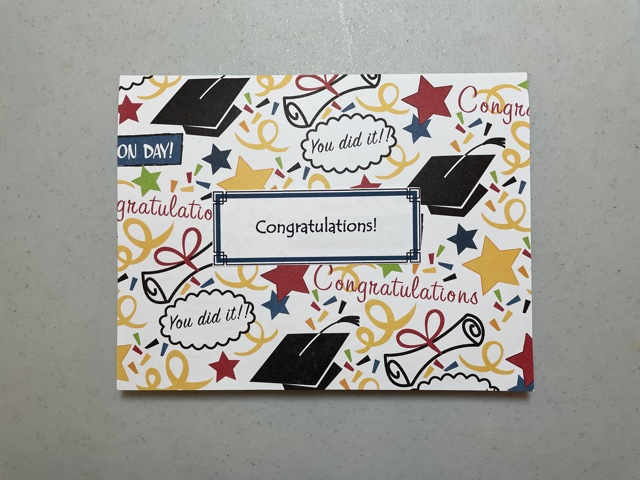
This was for a young man at church for his high school graduation:

I did the “Congratulations” on the computer.

Reading

Since last month I finished:

  • Daughters of Northern Shores by Joanne Bischof, (audiobook) sequel to Sons of Blackbird Mountain that I liked so well a few months ago. Three Norwegian brothers live in Virginia, one of whom is deaf. The youngest one wrongs someone and flees the country to go to sea. He feels he should go back and try to make things right, but he doesn’t know how he’ll be received
  • Hungry for God, Starving for Time by Lori Hatcher. Five-minute devotionals for when you need a spiritual protein bar. Very good.
  • The Laura Ingalls Wilder Companion by Annette Whipple. A great companion to the Little House books, with lots of interesting background information and related activities to try.
  • Peter Pan by J. M. Barrie. Classic tale about the boy who wouldn’t grow up. A bit darker than film versions, but fun.
  • Brave New World by Aldous Huxley (audiobook). Classic dystopian novel in which babies are designed in test tubes and everyone is supposed to live for pleasure. But if you’re not happy, then what?
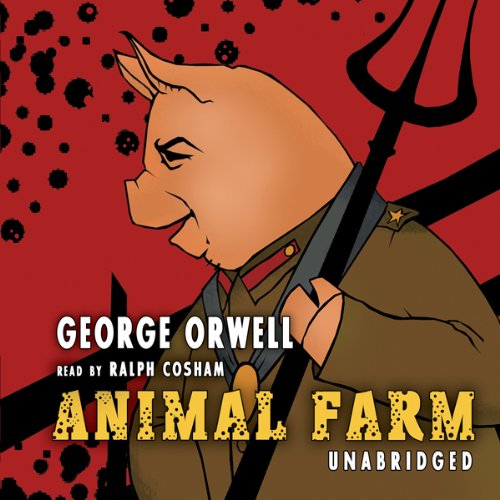
  • Animal Farm by George Orwell (audiobook). Classic allegory about the Russian revolution and Stalin’s takeover, but also a fable about throwing off oppression and then becoming oppressors.

I’m currently reading:

  • Be Counted (Numbers): Living a Life that Counts for God by Warren Wiersbe
  • Ten Words to Live By: Delighting in and Doing What God Commands by Jen Wilkin
  • How to Read a Book: The Classic Guide to Intelligent Reading by Mortimer J. Adler and Charles Van Doren (almost done!)
  • The Sign Painter by David Bunn
  • A Room With a View by E. M. Forster (audiobook)
  • Pinocchio by Carlo Collodi (audiobook)

Blogging

Besides the weekly Friday’s Fave Fives and almost weekly Laudable Linkages and book reviews, I’ve shared these posts:

  • Have Mercy on Your Pastor This Mother’s Day. “There are different needs among the congregation. No one sermon will meet them all except as it points us back to the only Savior who can help and heal and provide grace.”
  • Faithful in Obscurity. “You may be a busy mom of little ones, a secretary stationed at her desk, a cashier at a counter, a caregiver tucked away in a lonely room, or in any number of occupations where you feel unnoticed. Don’t be concerned if you don’t get as much attention or response as other people. Don’t fret over whether your work seems ‘important.’ Faithfully do what God has called you to do, for His honor and glory.”
  • Trusting God for Our Children’s Safety. “It’s one thing to trust God for my needs—it’s another thing to trust Him for my children’s.”
  • Faith—not Genes—Determines Our Standing Before God. Korah was killed in one of God’s most severe judgments against rebellion. But his sons went on to serve God in the temple and write psalms.

I also had a guest post at Almost an Author: Sculpting a Masterpiece. Like Michelangelo carved “everything that wasn’t David” to create his famous statue, so we need to chisel anything that would detract and confuse in our writing.

Writing

I’ve just in the last couple of weeks gotten back into working on my book. I keep thinking I need a whole afternoon free to work on it. But I find that my brain feels fried after a couple of hours, at least in this revision stage. So hopefully that will inspire me to work when time is more limited. And the more I work on it, the less time it will take each session to figure out where I am and what I need to do next.

I want to give you a heads-up that I was asked to do a radio interview about my Faithful in Obscurity blog post on Wednesday morning, June 2. I was totally shocked! If all goes as planned, I’ll share the details Tuesday, June 1. The site does have a button to listen live. They have some recordings of past episodes, but I don’t know if my segment will be on the recording. I have not heard back from them since I sent an email accepting the invitation, but maybe that’s normal until the day of the interview. I keep thinking maybe I misunderstood, or they accidentally asked the wrong person, or this isn’t really legit. 🙂 But I clicked on the link to their program and listened to a couple of past episodes to see how the program went, so it’s a legitimate program. I’d appreciate your prayers that I would be calm and say what God wants me to, that I won’t blank out when asked something, that all the connections and logistics will work like they are supposed to.

How was your May? What are you looking forward to in June?

(I often link up with some of these bloggers)

Animal Farm

My youngest son and I were discussing communism and capitalism not long ago. I don’t know if you realize it, but there is a lot of anti-capitalism sentiment out there. Young people are frustrated with the greed of capitalism. But, as I told my son, no economic system is going to be perfect, because no individual or group of people is perfect. Those at the top in communism are just as oppressive (more so, in my opinion). Nothing illustrates this better than Animal Farm by George Orwell, a combination fable, allegory, and satire about the Russian revolution of 1917 and Stalin’s takeover.

But even if you’re not familiar with the details of the Russian revolution, Animal Farm is a good illustration of what often happens when oppressors are overthrown: the formerly oppressed become the new oppressors.

In the book, Manor Farm is owned by a careless man who likes to drink a lot: Mr. Jones. One night the old boar, Old Major (Marx/Lenin), calls all the animals of the farm to a meeting. He encourages them to overthrow Jones and adopt animalism (communism), where they work for themselves.

Old Major passes away, and soon the animals’ opportunity comes. Jones forgets to feed them for several days. The animals don’t really plan an organized revolt, but they are so hungry and fed up, they drive Jones and his men off the property with great rejoicing (the revolution).

Two pigs, Napoleon (Stalin) and Snowball (Trotsky) become the leaders. The farm’s name is changed to Animal Farm. Seven commandments of Animalism are adopted, like “No animal shall sleep in a bed,” “No animal shall kill another animal,”etc. But the most important is “All animals are equal.”

The pigs teach themselves to read from a child’s primer in the house. Snowball tries to teach the other animals to read. They adopt a green flag with a horn and hoof emblem. Napoleon takes the newborn litter of puppies to train them. Snowball and Napoleon clash sometimes, but things come to a head when Snowball proposes that they build a windmill and outlines all the improvements it will bring. Napoleon disagrees and downplays the idea. But then Napoleon brings out the dogs he has been training into his own personal guard. They turn on Snowball and chase him off. Then Napoleon declares the windmill was his idea, which Snowball had stolen. Snowball is conveniently blamed for everything that goes wrong.

Since the pigs are the smartest an therefore the leaders, they take up residence in the house. They take the best food and all the milk, because of course they need to be in top form for all the decisions they have to make.

One by one, the promises made to the animals in the early days are broken. The pigs’ spokesman, Squealer, comes out and explains away anything that looks untoward. When the animals object to anything, they’re reminded, “We’re better off than when Jones was here” and “You don’t want Jones to come back, do you?” If any animal object too much, some reason is found for those animals to be executed. When the rest think they remember something about animals not killing each other, some who remember how to read go to check the seven commandments that had been painted on the barn wall. Now the sixth commandment reads, “No animal shall kill another animal without cause.”

When the pigs are discovered to be sleeping in beds in the farmhouse, the barn wall reads “No animal shall sleep in a bed with sheets.”

And as the pigs become more and more like the human oppressors, the barn is found to say, “All animals are equal, but some animals are more equal than others.”

Wikipedia says that Orwell wrote in an essay “Why I Write” “that Animal Farm was the first book in which he tried, with full consciousness of what he was doing, ‘to fuse political purpose and artistic purpose into one whole.'”

I hadn’t realized until now that this book first came out in 1940s, when the UK and the Soviet Union were allied against Germany. Publication was delayed, and the book “became a great commercial success when it did appear partly because international relations were transformed as the wartime alliance gave way to the Cold War” (Wikipedia).

The Wikipedia article details many more of the symbolic details and allegoric references.

Some of the most noteworthy quotes from the story:

Do not imagine, comrades, that leadership is a pleasure! On the contrary, it is a deep and heavy responsibility. No one believes more firmly than Comrade Napoleon that all animals are equal. He would be only too happy to let you make your decisions for yourselves. But sometimes you might make the wrong decisions, comrades, and then where should we be?

The needs of the windmill must override everything else, he said. He was therefore making arrangements to sell a stack of hay and part of the current year’s wheat crop, and later on, if more money were needed, it would have to be made up by the sale of eggs, for which there was always a market in Willingdon. The hens, said Napoleon, should welcome this sacrifice as their own special contribution towards the building of the windmill.

But the luxuries of which Snowball had once taught the animals to dream, the stalls with electric light and hot and cold water, and the three-day week, were no longer talked about. Napoleon had denounced such ideas as contrary to the spirit of Animalism. The truest happiness, he said, lay in working hard and living frugally.

Somehow it seemed as though the farm had grown richer without making the animals themselves any richer–except, of course, for the pigs and the dogs.

I had read this book back in high school and remembered the overall story, but had forgotten a few particulars. Orwell did a masterful job. Reading the book as an adult, it’s easy to recognize the “spin” that leaders and their influencers can put on events. I don’t advocate mistrusting all political leadership, but it’s wise to be aware and wary.

I listened to the audiobook nicely read by Ralph Cosham. This will count for a classic about animals for the Back to the Classics Reading Challenge.

(I often link up with some of these bloggers)

Faith, not Genes, Determines our Standing Before God

If you’ve ever read the books of Numbers, you might remember one of the most dramatic sections occurs with the rebellion of Korah.

The congregation had just received the devastating news that, in response to their failure to believe God and enter the promised land, all the rebellious adults (who had been rebelling and complaining since they left Egypt) were going to die in the wilderness over the next forty years (Numbers 13-14). God was going to give the land to their children instead of them.

After this, God gave them instructions about sacrifices that they were to implement, not in the wilderness, but when they came into the promised land. Why would God give them such instructions now, when they just found out they weren’t going to get to the land for forty years? The ESV Study Bible notes point out that some of the materials mentioned wouldn’t be available in the wilderness. But, more importantly, the notes say this instruction about future temple worship coming on the heels of such severe judgement was a reassurance that yes, the children of Israel were still God’s people and would eventually get to the promised land.

But Korah and Dathan and Abiram, along with the other challengers, had this complaint against Moses and Aaron:

You have gone too far! For all in the congregation are holy, every one of them, and the Lord is among them. Why then do you exalt yourselves above the assembly of the Lord? (Numbers 16:3b).

The ESV Study Bible notes say that Korah “[emphasized] one truth to the exclusion of others (which is what heretics and founders of cults commonly do).” In Exodus 19:4-6b, God had told the people if they obeyed Him and kept His covenant, they would be His “treasured possession among all peoples, for all the earth is mine; and you shall be to me a kingdom of priests and a holy nation.”

But, though they were a kingdom of priests and a holy nation, God had set apart certain people to minister specifically in the tabernacle. Korah was a Levite who had certain duties that he should have considered a privilege.

Is it too small a thing for you that the God of Israel has separated you from the congregation of Israel, to bring you near to himself, to do service in the tabernacle of the Lord and to stand before the congregation to minister to them, and that he has brought you near him, and all your brothers the sons of Levi with you? And would you seek the priesthood also? (Numbers 16:9-10)

This time, “You have gone too far, sons of Levi!” Moses said Korah’s argument was against the Lord (Numbers 16:7, 11).

After a demonstration to illustrate God’s choice of leadership, He caused the earth to “open its mouth and swallow them up” (verses 28-35). Thus the first wave of deaths of the rebellious, unbelieving adults were swept into eternity.

I had always thought that Korah’s wife and children had died in this judgment, too, since verse 32 says, “their households and all the people who belonged to Korah and all their goods” were swallowed up. That always bothered me. But I trust “the Judge of all the earth” to “do right” (Genesis 18:25). I figured either He knew they were rebellious, too, or else He felt it best to take them on to heaven instead of having to live with the aftermath of Korah’s judgement.

But Warren Wiersbe pointed out in his book, Be Counted (Numbers): Living a Life That Counts for God, that Numbers 26:9-11 mentions this incident and says in verse 11 “But the sons of Korah did not die.”

Korah’s descendants ministered in the tabernacle in the time of Chronicles.

Some “were in charge of the work of the service, keepers of the thresholds of the tent, as their fathers had been in charge of the camp of the Lord, keepers of the entrance” (1 Chronicles 9:19; 26:19).

Some made cakes and the showbread for the temple (1 Chronicles 9:31-32).

Some were among David’s mighty men (1 Chronicles 12:11-6).

Some of them “stood up to praise the Lord, the God of Israel, with a very loud voice” when God answered Jehoshaphat’s prayer (2 Chronicles 20:18-19).

And some of them wrote psalms. Eleven of them: Psalms 42; 44—49; 84—85; 87—88.

The people whose ancestors weren’t content with their Levitical role and coveted the priesthood could now say, “I would rather be a doorkeeper in the house of my God than dwell in the tents of wickedness” (Psalm 84:10b).

I had noticed the sons of Korah listed with the psalms, but for some reason never connected them with that Korah. That’s one good reason to keep reading the Bible no matter how often you’ve read it or how familiar it is. You keep finding truths and connections you missed before.

In Keep a Quiet Heart, Elisabeth Elliot shares an excerpt from a book titled Fathers and Sons written by Phillip Howard, her grandfather:

Do you remember that encouraging word of Thomas Fuller’s, a chaplain of Oliver Cromwell’s time? It’s a good passage for a father in all humility and gratitude to tuck away in his memory treasures:

“’Lord, I find the genealogy of my Savior strangely checkered with four remarkable changes in four immediate generations.

Rehoboam begat Abijah; that is, a bad father begat a bad son.
Abijah begat Asa; that is, a bad father begat a good son.
Asa begat Jehoshaphat; that is, a good father begat a good son.
Jehoshaphat begat Joram; that is, a good father begat a bad son.

I see, Lord, from hence that my father’s piety cannot be entailed; that is bad news for me. But I see also that actual impiety is not always hereditary; that is good news for my son.”

It’s such a blessing to know that our genetics don’t have any influence in our standing before God. If we’re privileged to come from a long line of faithful believers, their righteousness doesn’t count for us. We have to believe on the Lord and repent of our sins personally to become part of the family of God. And if we come from people who didn’t know God or who were outright rebels, by God’s grace, we can change courses. We can say with the sons of Korah, “O Lord of hosts, blessed is the one who trusts in you!” (Psalm 84:12).

(I often link up with some of these bloggers)

Friday’s Fave Five

It’s Friday, time to look back over the blessings of the week
with Susanne at Living to Tell the Story and other friends.

I’ve had a great week! Here are some of the best parts:

1. Lunch with a friend at a restaurant. I haven’t eaten inside a restaurant since the pandemic started, though we’ve gotten lots of takeout. But last Friday a friend and I arranged to go to lunch at a restaurant on a lake that has a patio. A rowboat regatta was scheduled on the lake for the next day, and we watched people setting up for it and teams practicing. The setting, the food, the fellowship were all just wonderful.

2. Dinner and cicada sightings. My grandson sent me a voice text asking if I wanted to come over and hang out with him. Well, of course! 🙂 My son and daughter-in-law got take-out Mexican food for us all. Then we went outside while they planted some newly acquired flowers. Jason kept hearing something that sounded like Rice Krispies popping. Then he noticed scores—maybe hundreds—of Brood X cicadas (the ones that hatch every 17 years) molting in their yard. They’d crawl around, find a place to molt, and then squirm out of their old bodies (looking a bit like shrimp at that point). It was interesting and cool and creepy all at the same time.

3. Our first excursion in the RV. Jim wanted to take the RV for a test drive, so we packed stuff for hot dogs and drove about an hour away to scout out an RV park for possible future camping.

We had a lovely view of the lake, which included a roped-off area for swimming.

4. Combination church lunch, baby shower, and graduation celebration. We had bring-your-own lunch at the pavilion next to where our church meets and used the occasion for a couple of celebrations as well. Someone brought cupcakes for the honorees.

5. Mammogram over with. I was scheduled for a mammogram somewhere during the beginning of the pandemic, but put it off as unessential until we saw how things were going to go. It was rescheduled for this week, along with a bone density scan at the same facility. I’ve already heard back that everything looked fine with both scans. That’s always a relief, and it’s nice to have those things done with for now.

Although I enjoyed the outings (well, except for the last one . . . ), I luxuriated in having the rest of the week at home with nothing on the calendar.

That wraps up my week. How was yours?