Laudable Linkage

IMG_0195

Here’s a short but profitable list of reads discovered this week:

Can We Really Be Free From Fear? HT to nikkipolani. “The secret to our emancipation from enslavement to our excessive fears is a fear transfer. We need to stop fearing other things more than Jesus.” “For the Christian, every storm serves the Lord Jesus and demonstrates some aspect of his sovereign power.”

Domestic Abuse: A Victim’s Story. This is far more common than realized, in homes where you’d least expect it. If you need help or know someone who does, or suspect someone does, please read this.

Seven Lies We Tell Unmarried Women, HT to True Woman.

Speak Life: How to Deal When Your Children Fight.

Royalty-free images and copyright violations. This was from a Facebook post about a blogger who had gotten in trouble for using a photo she found on the Internet without permission. This article was linked and gives clear definitions about the different kinds of licenses, sources for free photos, etc.

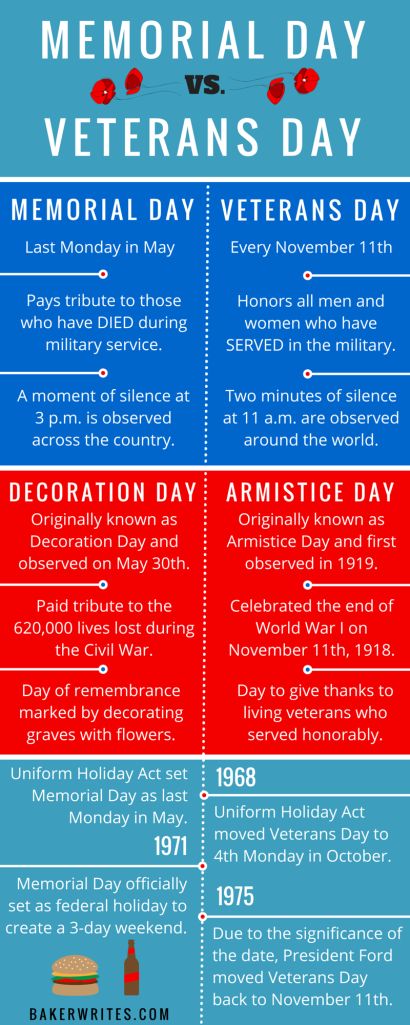
5 Kid-friendly Ways to Celebrate Memorial Day, HT to The Story Warren.

Speaking of Memorial Day, Laura shared some great ways to celebrate as well and included this helpful graphic:

Happy Saturday!


Save

Friday’s Fave Five

It’s Friday, time to look back over the blessings of the week with Susanne at Living to Tell the Story and other friends.

This week, thankfully, had no major off days or bad days as the last couple of weeks have had. In fact, all around it has been a pretty good week. Here are the best parts:

1. Lunch with Melanie, my blog friend who moved to TN and became a real-life friend. 🙂  We met at Cracker Barrel this time. The food was wonderful and the fellowship even better. Before we moved here, I used to get together with friends for lunch pretty often, and haven’t really done that here. I didn’t realize how much I missed and needed it until these last couple of lunches with Melanie. We’re already planning our next excursion. 🙂

2. Ladies Brunch at our church. The theme was “Oaks of Righteousness” from Isaiah 61:3: “To grant those who mourn in Zion, giving them a garland instead of ashes,
The oil of gladness instead of mourning, the mantle of praise instead of a spirit of fainting. So they will be called oaks of righteousness, the planting of the Lord, that He may be glorified” (NASB). The decorations, speaker, food, and fellowship were all a blessing. I’m borrowing a couple of photos from their Facebook page since I didn’t think to take any.

18620002_10158710952550506_1611488598220403271_n

18556160_10158710952545506_493943197065415711_n

I thought the centerpieces were especially pretty. The wood came from the church property and the flowers were donated by a local florist.

For our activity/favor, we got to choose three different herbs to plant in little containers painted in chalk paint so we could write the name of the plant on them. I’ve got mine on the windowsill right now until I decide where to put them: basil, chives, and rosemary. I have never worked with fresh herbs before, so this will be a learning experience.

IMG_0231

3. A surprise lunch visit. Mittu texted me Wednesday to ask if she, Jason, and Timothy could bring Chick-Fil-A over for lunch and visit for a while. Sure!

4. Days at home. I consider running errands a ministry to my family, or part of my job in the distribution of necessary tasks involved in having a home and family. If I can get things done in the day time, then my husband doesn’t have to spend time doing them after long days at work, and I’m available if we do anything on the weekend instead of having to run around. And it’s nice to get out of the house some. 🙂 But some weeks, it seems like I am out almost every morning, and then I feel overloaded and don’t get things done at home. Except for a quick run to the drugstore one day, somehow this week I made it to Thursday before needing to make a major grocery expedition. It felt marvelous! And I don’t think I’ll need to run any other errands this week.

5. A mini closet project. Part of that time at home allowed for something I had been itching to do for a while now. My whole closet didn’t need cleaning or organizing, but I had some clutter in there to take care of. When I buy something online or in town, I keep the packaging for a while in case I need to return anything, so I had that kind of stuff accumulating for months, plus a wedding present to package. I had taken the heaviest of my winter things out earlier, but took the rest out at this time and got rid of one dress that was in no condition to wear again. I often vacuum the walk-in part of the closet, but this time I vacuumed under all the clothes, straightened the shoes, dusted the ones I hadn’t worn in a while. It felt good to get all that done.

Bonus: We had thunderstorms in the forecast for much of this week, but thankfully didn’t get any. We had some heavy rain one day and a bit more scattered throughout the week, with some overcast skies, but that was it. Thunderstorms always make me a little nervous about falling trees and power outages, so I was very happy not to have any. 🙂 We have more in the forecast for next week, so we’ll see how it goes.

Have a great Friday!

Save

Save

Book Review: Eight Women of Faith

8 Women of FaithEight Women of Faith by Michael A. G. Haykin is a series of essays about different women of faith between 1537 and 1826 and how they ministered to the church in their time. Karen Swallow Prior asserts in her forward to the book that we tend to focus on the one thing that women cannot do* and even use that to suppress them in other ways, instead of celebrating and encouraging the many things they can do, and this book is an attempt to highlight a few of the many ways women can be used by God.

After a brief introduction of an abbreviated history of thought on what women were and were not allowed to do in the church and a bit of background into how the book came about, Haykin proceeds with his essays. The eight women he discusses are:

Lady Jane Grey (1537-1554). The author details how Jane came to saving faith in Christ and the series of events in which Jane became queen for nine days (at her family and others’ direction, not her own ambition) until her disinherited cousin, Mary (of Bloody Mary fame) “marched on London with an army” (p. 26) and almost everyone turned to her, even those who had previously supported Jane. Jane was arrested and imprisoned, and Mary, a “die-hard Catholic,” sent one of her “most able chaplains” seasoned in debate (p. 21) to convert Jane to Catholicism. There are several pages of Jane’s record of the conversation, and it’s amazing that a teenager could be so firm in her faith and so ably answer this man from Scripture. My favorite part from this chapter is from a note Jane wrote shortly before she died to her sister:

I have here sent you, good sister Katherine, a book, which, although it be not outwardly trimmed with gold, yet inwardly it is more worth than precious stones. It is the book, dear sister, of the Law of the Lord. It is his testament and last will, which he bequeathed to us wretches, which shall lead you to the path of eternal joy. And if you with a good mind read it, and with an earnest desire follow it, it shall bring you to an immortal and everlasting life. It will teach you to live and learn you to die (p. 33).

Margaret Baxter (1636-1681) was the wife of esteemed Puritan pastor and writer Richard Baxter. In this chapter the author gives a brief history of opinions on marriage from early Christians through the Puritans. He gives some background information on both Richard and Margaret and how they came to trust in Christ and to marry. They were vastly different, in age, finances, and personality, and she struggled with anxiety after almost having died four times and witnessed a number of atrocities. But they appreciated each other’s gifts. He “freely admitted that Margaret was better than he at solving problems relating to financial and civil affairs” and “practical issues of the Christian life” (p. 48). A couple of favorite quotes of Baxter’s:

My dear wife did look for more good in me than she found, especially lately in my weakness and decay. We are all like pictures that must not be looked at too near. They that come near us find more faults and badness in us than others at a distance know.

When husband and wife take pleasure in each other, it uniteth them in duty, it helpeth them with ease to do their work, and bear their burdens; and it is not the least part of the comfort of the married state (p. 51).

Anne Dutton (1692-1765) was a Calvinistic Baptist writer even though that profession was not encouraged for women at the time. She wrote “tracts and treatises,…sacred correspondence, and poems” and corresponded regularly with George Whitfield and Selina Hastings, the Countess of Huntingdon, and others (p. 57). The Puritans “splintered into three major groups: the Presbyterians, the Congregationalists, and the Particular or Calvinistic Baptists” (p. 57), and Anne spent a lot of writing defending her beliefs, critiquing others’ teaching, and weighing in on controversies of the day.

Sarah Edwards (1710-1758) was the wife of Jonathan Edwards, leading figure in the “Great Awakening.” After very little biographical information, the author spends much of the chapter on Edwards’ writing about his wife “as a model of a Spirit-filled person” as opposed to some of the fanaticism and excesses of the day (p. 68).

Anne Steele (1717-1778) also came from a Calvinistic Baptist family, remained single on purpose, and wrote several hymns, and was known as “the Baptist equivalent of Isaac Watts” (p. 81).

Esther Edwards Burr (1732-1758) was the third daughter of Jonathan and Sarah Edwards, and the author concentrates her chapter on her writings about friendship.

Ann Judson (1789-1826) and her husband Adoniram were America’s first missionaries. The author tells of her own conversion, Adoniram’s proposal, which not only included marriage but also life as missionaries in Asia, the voyage there, the struggles learning the language, and their first few years.

Jane Austen (1775-1817) is, as I’m sure everyone knows, one of England’s most famous and most beloved novelists. A line in the notes and references at the end of the book says that “Religion to her was a private matter: to discuss it in a novel would have been a breach of good taste” (p. 148). But from her letters and what she does say in her novels, and especially a prayer she wrote, the author brings out strands of her beliefs.

My thoughts:

I was actually fairly frustrated with this book, but the primary reason for that was my own fault. I was expecting it to be more biographical, like When Others Shuddered: Eight Women Who Refused to Give Up, which I read recently. So I was dismayed to find out that the chapters were essays. They did, however, contain a good bit of biographical information.

My secondary frustration had to do with Haykin’s choices of what he put in and left out. Granted, when you’re writing just a few pages of a life about which books have been written, you can’t include everything, and different authors would make different decisions about what to emphasize. Ann Judson and Sarah Edwards were the two with whom I was most familiar, having read a number of biographies of Ann in particular (I wrote about Ann here and Sarah here and here). The great bulk of the most interesting part of Ann’s life was summarized in the last paragraph of the chapter. The author spent a great deal of time on Adoniram and Ann’s study concerning infant baptism (paedobaptism). They came from a tradition of infant baptism, and as they studied, they began to question it, studied some more, and eventually came out on the side of believer’s baptism, being baptized after one has made a profession of faith. This incident is important for a number of reasons. It shows their character and concern for truth and fidelity to Scripture (which was the main theme of the chapter). They had not wanted to make this change: Ann “felt afraid [Adoniram] would become a Baptist, and frequently urged the unhappy consequences if he should. But he said his duty compelled him to satisfy his own mind, and embrace those sentiments which appeared most concordant with Scripture” (p. 108). Once it became clear to both of them, they felt they had no choice but to make it known and deal with the consequences, which included leaving the mission board that had just formed in order to send them out, seeking Baptist support, facing the dismay and even anger of their friends and colleagues. So, yes, for all those reasons this was important. But if you’re writing 14 pages of a person’s life, do you want to spend 5 pages on this? A good page and a half or so was spent on listing the books the Judsons studied on this issue and telling us about the authors: in my mind, these books and authors could have been a footnote or end note with much less detail.

But aside from that, the book does share a lot of good information about these women and does meet its purpose in showing a variety of ways in which women have used their gifts to minister to others. I especially enjoyed the chapter on Lady Jane Grey. I knew her basic story and had read a fictional account of her life, but I appreciated learning more about her. I felt this chapter was the best written in the book, with a good blend of historical and biographical detail. I had read a magazine article on Margaret Baxter which made me want to read more about her, so I as glad to find more here. I had not heard on Anne Steele or Anne Dutton before. One of the main reasons I got this book, besides liking biographies and seeing it recommended by other bloggers I respect, was to find out more about Jane Austen’s faith. I had deduced that she was God-fearing in the sense that most of society in England was in those days, but I had wondered about her personal faith. I was a little disappointed in that there is just not much information available, especially with her feeling it was a private matter, and it’s not entirely certain that the lengthy prayer that was shared was hers. But I enjoyed the author’s tracing the way she dealt with preachers in her books.

So…mixed emotions about this book. There were parts I did enjoy and learned from, but I don’t think I will be seeking out any more books by Haykin any time soon.

____
* I know that there are a variety of opinions among my readers concerning what women can and can’t do in the church, but I would ask that you not make this post a place for that debate. I shared my own views here.

(Sharing with Semicolon‘s Saturday Review of Books, Literary Musing Monday and Carole’s Books You Loved)

Save

Save

Save

Save

The Bible and Slavery

Perhaps you’ve been troubled, as I have, by wondering why the Bible doesn’t condemn slavery outright. Over the years I’ve come across several thoughts and quotes that have helped me in my own understanding of it.

I found that the Bible actually does condemn kidnapping and selling people: “Whoever steals a man and sells him, and anyone found in possession of him, shall be put to death,” Exodus 21:16. “Enslavers” (in the ESV, “menstealers” in the KJV), defined by BibleGateway.com as “those who take someone captive in order to sell him into slavery,” were listed alongside liars and immoral people as sinners in 1 Timothy 1:8-11.

The main type of slavery mentioned in the Old Testament came about because of a debt that could not be paid in any other way, something like an indentured servant (which makes more sense than a debtor’s prison, where there is no hope of paying off the debt). In the MacArthur Study Bible notes for 1 Kings 9:21-22, John MacArthur says “The law did not allow Israelites to make fellow-Israelites slaves against their will (Ex. 21:2-11; Lev. 25:44-46; Deut. 15:12-18.)” But people could offer themselves as slaves to pay a debt. Slaves were to be released after 7 years (Deuteronomy 15:12): they weren’t ruined for life. They were not to be sent away empty-handed when they were released: they were to be supplied “liberally out of your flock, out of your threshing floor, and out of your winepress. As the Lord your God has blessed you, you shall give to him” (verses 13-14). Masters were told, ‘You shall remember that you were a slave in the land of Egypt, and the Lord your God redeemed you; therefore I command you this today” (verse 15).

There were also cases of slavery by one nation conquering another, and there were differences in dealing with slaves from other cultures. One source I read said that when one nation conquered another in those times, the conquered citizens were either killed or enslaved. Thankfully that is no longer the case for the most part, although there are areas of the world where it still is.

Slavery in the NT is usually this latter type. In Be Complete (Colossians): Become the Whole Person God Intends You to Be, Wiersbe says:

Slavery was an established institution in Paul’s day. There were sixty million people in the Roman Empire, and many of them were well-educated people who carried great responsibilities in the homes of the wealthy. In many homes, the slaves helped to educate and discipline the children.

Why didn’t the church of that day openly oppose slavery and seek to destroy it? For one thing, the church was a minority group that had no political power to change an institution that was built into the social order. Paul was careful to instruct Christian slaves to secure their freedom if they could (1 Cor. 7: 21), but he did not advocate rebellion or the overthrow of the existing order.

Something should be noted: The purpose of the early church was to spread the gospel and win souls, not to get involved in social action. Had the first Christians been branded as an anti-government sect, they would have been greatly hindered in their soul winning and their church expansion. While it is good and right for Christians to get involved in the promotion of honesty and morality in government and society, this concern must never replace the mandate to go into all the world and preach the gospel (Mark 16: 15).

He shares how Christian masters and slaves were being instructed to treat each other in the epistles was a radical departure from the way things were in the Roman world at that time. He goes on to say:

The gospel did not immediately destroy slavery, but it did gradually change the relationship between slave and master. Social standards and pressures disagreed with Christian ideals, but the Christian master was to practice those ideals just the same. He was to treat his slave like a person and like a brother in Christ (Gal. 3: 28). He was not to mistreat him; he was to deal with his slave justly and fairly. After all, the Christian slave was a free man in the Lord, and the master was a slave to Christ (1 Cor. 7: 22). In the same way, our social and physical relationships must always be governed by our spiritual relationships.

Similarly, in the introductory notes for Philemon in the MacArthur Study Bible, John MacArthur says:

The NT nowhere directly attacks slavery; had it done so, the resulting slave insurrection would have been brutally suppressed and the message of the gospel hopelessly confused with that of social reform. Instead, Christianity undermined the evils of slavery by changing the hearts of slaves and masters. By stressing the spiritual equality of master and slave (v. 16; Gal. 3:28; Eph. 6:9; Col. 4:1; 1 Tim. 6:1-2), the Bible did away with slavery’s abuses.

At least, it did away with them in instruction: it condemned mistreatment of other people in general with specific instruction on how slaves and masters were to treat each other, which rose above the standard of the times. But it took many years for the system to change. Some thoughts in regard to that:

1. God does not generally deal with everyone’s sins all at once, individually or as a people. I remember a few years after I became a Christian feeling convicted over something that I would not have thought twice about in my earlier life and being glad that God didn’t show me everything that was wrong right off the bat. That would have been so overwhelming. But as I read more of the Bible and sat under good teaching, I grew in Him, and then became more aware of things that didn’t please Him that I needed to confess and forsake. In the Bible there are things pointed out as sin in Exodus that aren’t mentioned in Genesis. Polygamy was tolerated for a time, though it was not how God designed marriage, and specific instruction was given later. In the gospels, Jesus goes beyond the mere letter of the law (thou shalt nor commit adultery) to the inner workings of the heart (if you look lustfully, you’re guilty. Matthew 5:27-28). As people have had more history and received more light, they’re more responsible.

2. God redeems people, not institutions. A former pastor said this about a different modern-day situation, but it applies here as well. As Warren Wiersbe put it in Be Faithful  (1 & 2 Timothy, Titus, Philemon): It’s Always Too Soon to Quit!:

Was Paul hinting in Philemon 21 that Philemon should do even more and free Onesimus? For that matter, why did he not come right out and condemn slavery? This letter certainly would have been the ideal place to do it. Paul did not “condemn” slavery in this letter or in any of his letters, though he often had a word of admonition for slaves and their masters (Eph. 6:5–9; Col. 3:22—4:1; 1 Tim. 6:1–2; Titus 2:9–10). In fact, he encouraged Christian slaves to obtain their freedom if they could (1 Cor. 7:21–24).

During the American Civil War, both sides used the same Bible to “prove” their cases for or against slavery. One of the popular arguments was, “If slavery is so wrong, why did Jesus and the apostles say nothing against it? Paul gave instructions to regulate slavery, but he did not condemn it.” One of the best explanations was given by Alexander Maclaren in his commentary on Colossians in The Expositor’s Bible (Eerdmans, 1940; vol. VI, 301):

First, the message of Christianity is primarily to individuals, and only secondarily to society. It leaves the units whom it has influenced to influence the mass. Second, it acts on spiritual and moral sentiment, and only afterwards and consequently on deeds or institutions. Third, it hates violence, and trusts wholly to enlightened conscience. So it meddles directly with no political or social arrangements, but lays down principles which will profoundly affect these, and leaves them to soak into the general mind.

Had the early Christians begun an open crusade against slavery, they would have been crushed by the opposition, and the message of the gospel would have become confused with a social and political program. Think of how difficult it was for people to overcome slavery in England and America, and those two nations had general education and the Christian religion to help prepare the way. Think also of the struggles in the modern Civil Rights movement even within the church. If the battle for freedom was difficult to win in the nineteenth and twentieth centuries, what would the struggle have been like back in the first century?

3. God often works from the inside out. Some of the quotes above touch on this concept, but in addition, in Be Faithful, Wiersbe says, “Christians in the Roman Empire could not work through local democratic political structures as we can today, so they really had no political power to bring about change. The change had to come from within, even though it took centuries for slavery to end.”

It does seem that, long before the Civil War, people in general and Christians in particular should have realized the problems with slavery and certainly should have realized that just because slavery was in the Bible doesn’t mean it was an example we should follow. There are examples not to follow in the Bible as well as examples to follow. Someone once said that the “Golden Rule” alone, “And as ye would that men should do to you, do ye also to them likewise” (Luke 6:31), should have been enough to stop people from having slaves.

In the Civil War era, and likely before, some people used passages in the Bible about slaves being beaten as justification for their mistreatment of slaves (Solomon Northup tells of a situation like this in Twelve Years a Slave). But I think by and large those passages are just expressing what would happen in those days to disobedient slaves rather than justifying slavery and beatings. To pick out isolated verses to justify slavery as it was before the Civil War is to misuse the Bible: reading the whole Bible and reading in context within the big picture would avoid that problem.

Northup also said of one kind, Christian master, whom some might wonder at having had slaves, “The influences and associations that had always surrounded him, blinded him to the inherent wrong at the bottom of the system of slavery. He never doubted the moral right of one man holding another in subjection. Looking through the same medium with his fathers before him, he saw things in the same light. Brought up under other circumstances and other influences, his notions would undoubtedly have been different.” Booker T. Washington said something similar in Up From Slavery, not excusing slavery, but understanding that the economic system and years of history had masters firmly enmeshed in the system.

Thankfully God raised up people like William Wilberforce and Abraham Lincoln and others who worked against slavery until it was finally broken, at least in England and America. Unfortunately it still goes on in other areas, and even in our country people enslave others in other forms, like the horrible sex trafficking trade. I have no idea how to help, but Scripture encourages us to:

Defend the poor and fatherless: do justice to the afflicted and needy. Deliver the poor and needy: rid them out of the hand of the wicked. Psalm 82:3-4

Is not this the fast that I have chosen? to loose the bands of wickedness, to undo the heavy burdens, and to let the oppressed go free, and that ye break every yoke? Is it not to deal thy bread to the hungry, and that thou bring the poor that are cast out to thy house? when thou seest the naked, that thou cover him; and that thou hide not thyself from thine own flesh? Isaiah 58:6-7

Before I leave this subject, there is one more aspect I must consider. Throughout the Bible, our relationship with God is described in various aspects: father/child; shepherd/sheep; groom/bride; king/subjects, and others. I wrote more on this here. One of those aspects is a master and slave or bondservant. Some have said that because we’re God’s children, we’re no longer slaves, and there is a sense in which that is true. But all through the New Testament, Paul, Peter, James, and Jude, who very much preached our sonship in Christ, also called themselves servants. Jesus Himself was called a servant and took on a servant’s duty when he washed the disciples’ feet, even though He was the Son of God (Philippians 2:5-8).

In the Old Testament, there was provision for a situation in which a servant who was due for his freedom but wanted to stay with his master because he loved him could be bound to his master forever. I think this is one picture of our relationship with Christ. He doesn’t forcefully snatch us up or forcibly make us obey Him. He wants us willingly to yield ourselves to Him out of love for Him and acknowledgement of Who He is. It is an atrocity for any man to think he has a right to own anyone else, but God does “own” us, because He created us and because He paid the price for our sin. But He wants us to yield ourselves in complete trust and obedience to Him. And He wants us to serve others in love (Galatians 5:13). We were “servants of sin” before believing in Christ; now He wants us to become “servants of righteousness” (Romans 6:17-18).

Studying out what the Bible says about our servanthood would probably take another blog post, but it involves realizing that He is Lord, that He takes care of all our needs, that we owe all to Him, that we really have no rights apart from Him, that He deserves our all.

For even the Son of Man came not to be served but to serve, and to give his life as a ransom for many. Mark 10:45

And he sat down and called the twelve. And he said to them, “If anyone would be first, he must be last of all and servant of all.” Mark 9:35

If anyone serves me, he must follow me; and where I am, there will my servant be also. If anyone serves me, the Father will honor him.John 12:26

And the Lord’s servant must not be quarrelsome but kind to everyone, able to teach, patiently enduring evil, correcting his opponents with gentleness. God may perhaps grant them repentance leading to a knowledge of the truth. 2 Timothy 2:24-25.

For this is the will of God, that by doing good you should put to silence the ignorance of foolish people. Live as people who are free, not using your freedom as a cover-up for evil, but living as servants of God. 1 Peter 2:15-16.

For you were called to freedom, brothers. Only do not use your freedom as an opportunity for the flesh, but through love serve one another. Galatians 5:13.

As each has received a gift, use it to serve one another, as good stewards of God’s varied grace: whoever speaks, as one who speaks oracles of God; whoever serves, as one who serves by the strength that God supplies—in order that in everything God may be glorified through Jesus Christ. To him belong glory and dominion forever and ever. Amen. 1 Peter 4:10-11.

Have this mind among yourselves, which is yours in Christ Jesus, who, though he was in the form of God, did not count equality with God a thing to be grasped, but emptied himself, by taking the form of a servant, being born in the likeness of men.  And being found in human form, he humbled himself by becoming obedient to the point of death, even death on a cross. Philippians 2:5-8

Some other good sources on this issue:

Does the Bible Allow For Slavery?
Why Was Slavery Allowed in the Old Testament?
Why Was Slavery Allowed in the New Testament?
A Bondservant of Jesus from My Utmost For His Highest

(Sharing with Inspire me Monday, Literary Musing Monday, Testimony Tuesday, Tell His Story), Woman to Woman Word-Filled Wednesday, Faith on Fire)

Save

Save

Save

Save

Laudable Linkage

IMG_0195

I don’t usually do these two Saturdays in a row, but I came across a lot of good reading this week.

When Control-Craving Hearts Get Angry.

Why We Don’t Need to Fear the Moment of Our Death, HT to Challies.

Embrace the Life You Have.

In Defense of the Unspoken Prayer Request.

Which Bible Woman Are You Like?

Advance in Favor. Sometimes an “I don’t care what people think” attitude helps when standing for right and truth when others are not. But the Bible says Jesus increased in favor with God and man. I appreciated this article on what that means.

Don’t Hide Those Grey Hairs.

Infuse Your In-law Relationships With Grace and Love. I am happy to have good relationships with both my mother-in-law and daughter-in-law.

If I have Enough Faith, Will God Heal Me?

At the bottom of the above link is this video, worth the 12+ minutes to listen:

Save

Friday’s Fave Five

It’s Friday, time to look back over the blessings of the week with Susanne at Living to Tell the Story and other friends.

This week didn’t start off so well, with me forgetting that my mother-in-law’s caregiver had an appointment, and I scheduled  a lunch with a friend for then and had to reschedule it; forgetting that we’d scheduled the hairdresser to come for my m-i-l on Monday; forgetting that the nurse was coming on Tuesday, even though she’s been coming on Tuesdays regularly for months now; forgetting to take care of the bathroom after my m-i-l’s shower (I usually put the ramp back against the wall, mop up the floor, and replace the bath mats while our caregiver and the bath aide take her back to her room and get her dressed) so that our caregiver had to do it; putting my container of ramen soup on the end table and spilling it all over, dousing a remote control (I put it in a bag of rice just to be safe, but it ended up ok), and dropping a dozen eggs on the grocery store floor after paying for them (thankfully only two broke, but I had to rinse off all the rest). I don’t know why I was so “off” for a couple of days! But thankfully the rest of the week went much better. Here are the best parts of it:

1. Mother’s Day. I took some time to think about special moms in my own life, and my family always does a great job making it a special day for me. Jim grilled his wonderful teriyaki chicken and Jason and Mittu made salad, potatoes, corn on the cob, rolls, and  chocolate pretzel pie and banana cream pie.

Everything wasn’t on the table yet in this photo, but I love that cute little guy at the end helping himself to a roll. 🙂

IMG_0004(2)

My daughter-in-law picked out pretty plates for the meal and dessert, all disposable for easy cleanup:

img_0225.jpg

IMG_0226

Wishing Jim’s Mom Happy Mother’s Day:

18446888_10212418938285539_5112671406938444479_n

I received some lovely gifts and cards as well. I am blessed. 🙂

2. Timothy shucking corn for the first time was absolutely adorable. He was so excited to help, and when he pulled the leaves back, he exclaimed, “There’s CORN in there!”

18519946_10212415345795729_1361334329552804265_n

When he tried to eat corn on the cob for the first time, he noted, “It’s stuck.” He gave up after a bit, but made a good try.

IMG_0013

3. Movie night with my husband. After everyone left on Mother’s Day and Jesse went back to his room, Jim and I relaxed for the rest of the afternoon, and later that evening rented and watched the movie Hidden Figures. It was SO good! (Warning: there’s just a bit of bad language, most near the beginning). It’s the true story of three African-American women who worked with calculations involved in the first manned space flights (a good article on them is here).

4. A new desk chair. Last week my desk chair suddenly broke. It had probably been on the verge, unnoticed, for a long time. My new one is even more comfortable.

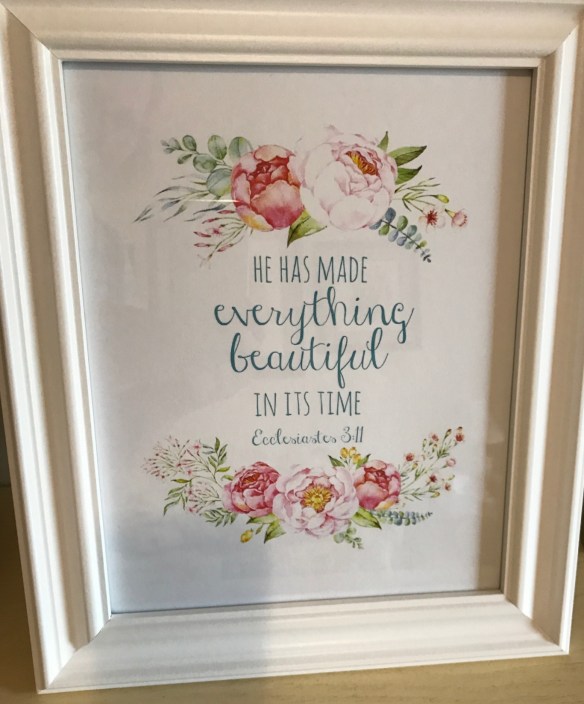
5. Printable art. A lot of places online offer free frameable printable decorated Scripture verses, and for a Mother’s Day gift for the ladies at our church, our pastor’s wife printed out several she had found. This was the one I chose. It fits perfectly on my little entry table.

Happy Friday!

Save

Save

Save

Book Review: Love of the Summerfields

Summerfields

Love of the Summerfields by Nancy Moser takes place in England in the 1880s and touches on lives in the manor house, both family and servants, and in the village as well. Some of the characters and their situations are:

Adelaide Weston, the dowager countess of the manor. A strong-willed, take-charge woman, her life turns upside down when an old love comes back into her life.

Frederick and Ruth Weston are the current earl and countess. Frederick is a decent man, but the manor is coming into hard times with more outgo than income. Ruth has become a recluse, both because of feeling intimidated by her mother-in-law and guilt over some of her actions in the past.

Clarissa Weston is their spoiled daughter who has not made a “match” yet, so her father and grandmother make one for her, partly to relieve the financial affairs of the manor.

Jack and Fidelia Hayward are shopkeepers. Jack is a fine, decent, patient man, but Fidelia is a bitter, controlling, unkind gossip. Lila is their daughter, a sweet girl in love with a man out of her reach. To make matters worse, she is pressed into acting as the go-between with this man and his fiancee. The Hayward’s son, Morgan, is in love with Ruth’s maid, Molly, but they have to keep it quiet because a lady’s maid is not supposed to have suitors. When Jack’s father dies, the family takes in his mother.

When a secret threatens to upend the lives of several in both village and manor, good for some but seemingly bad for others, the first instinct of those who uncover it is to keep it concealed. Will they let truth prevail even though it will cost them, or will hiding it bring greater repercussions?

This book is marketed as “If you like Downton Abbey, you’ll enjoy” this book. I don’t know if that’s the best way to present it. It is from the same era with the same strict class rules, and it even has a feisty dowager countess. But all the other characters and storylines are vastly different. So those who don’t want it to be too much like DA might avoid it, and those who want it to be just like DA will be disappointed. But if you like stories like from this time and place and type of people (which is what I think the slogan is actually going for), then you’d probably like this book. From the author’s notes after the book, the story was inspired by her own reading interests and her family history, not DA.

This book is the first in a series of three, and although I enjoyed it, I wasn’t planning on reading the sequels – until I got to the end and then read an except from the next book. Now I want to find out what happens!

(Sharing with Semicolon‘s Saturday Review of Books, Literary Musing Monday and Carole’s Books You Loved)

Save

Save

Recent Cards

It has been a while since I’ve shared with you some cards I have made, so I thought I’d catch up. 🙂

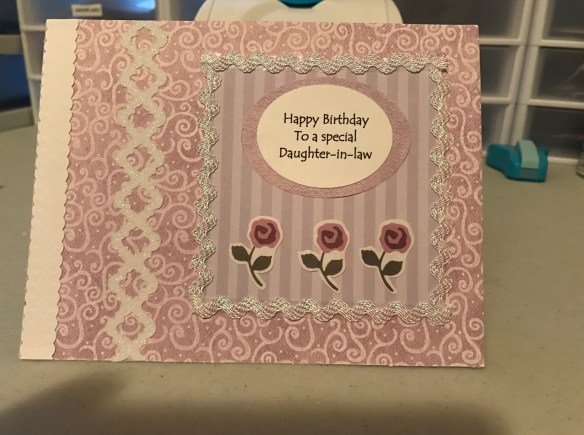
This was for Mittu’s birthday. She likes purple and lavender, so I tried to incorporate those.

IMG_0087

This was for Timothy’s birthday. He is very much into anything on wheels right now, especially construction vehicles.

IMG_0140

Though I have been driving for decades, somehow I got the traffic light upside down…but when I noticed it, I didn’t want to try to peel it off and tear the paper underneath. I don’t think he noticed. 🙂

This card is the only one I have made on more than one occasion (only with different colors of paper), the occasion being a bridal shower. Since the recipients were in different states and didn’t know each other, I didn’t have to worry about them comparing notes. 🙂

IMG_0123

I got the idea from Pinterest, and the dress part of the card there took up more space and the top and bottom of the dress flared out more. But both the girls I was making this for are very slim, so I slimmed down the dress here. I ran white card stock through my Cuttlebug to get the embossed pattern on the dress. I printed off the label on the computer and used two different sized punches for it. If you turn the punch upside-down, you can position a phrase in the opening, though it is a little tricky to get it to stay centered and still while you punch the design.

Paper punch

I don’t have a steady hand for cutting, so punches help a lot. (Punches can be expensive, but craft stores often have them on sale 40-50% off, and with gift cards I’ve collected a good many.)

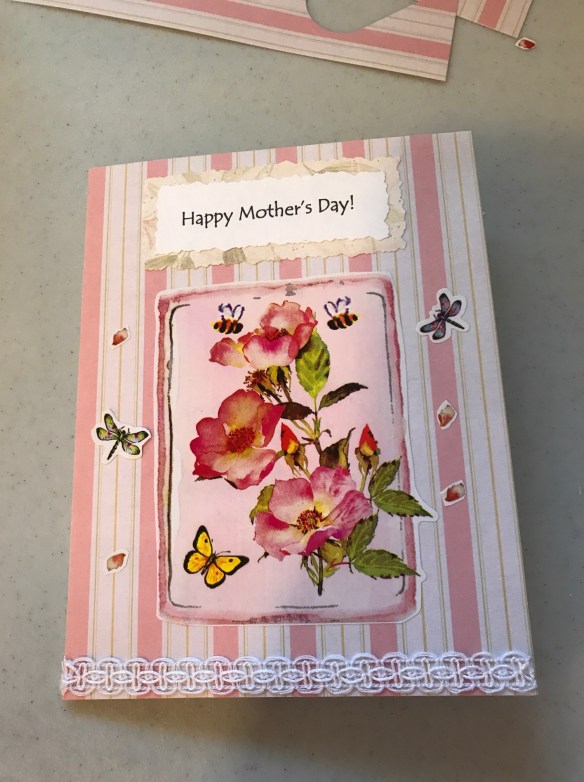
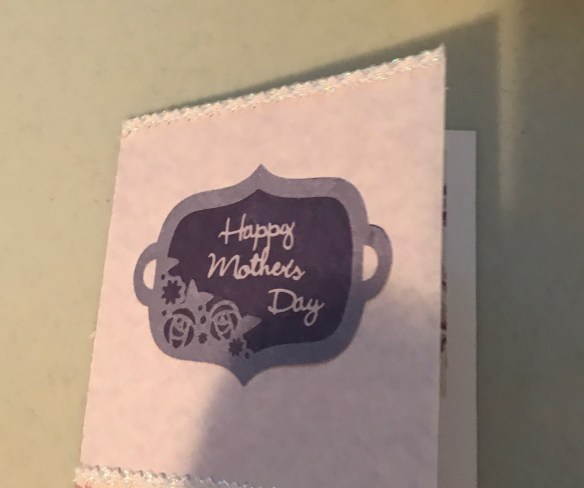
The next three were for Mother’s Day.

This one was for a friend, someone I consider a second mother:

IMG_0209

This was for Jim’s mom, who likes yellow:

IMG_0212

Even though I don’t care for yellow myself, this ended up being one of my favorite cards I’ve made.

Up til now, I’ve made the inside sentiment of the cards on the computer, printed them out, and cut them out, and glued them in, but I felt that came across a little tacky and made it look home-made in a negative rather than positive sense. I don’t do lettering or even write well, so I didn’t want to do anything by hand. I could run cards through the computer. But for now I decided to try embellishing the inside as well as the outside.

IMG_0213

This was for Mittu’s Mother’s Day.

IMG_0219

Sorry about the shadows! This was the only one I’ve used the Cricut on lately. If I had it to do over, I’d use the lighter color as the floral frame and the medium color as the background. But I didn’t think of that til a few hours after it was done. 🙂 I didn’t realize at first that the little flowers look like little faces:

IMG_0218

I have a Cards and Paper-crafts board on Pinterest where I go for ideas and inspiration. Sometimes, as with the bridal shower card, I’ll have a specific idea in mind before I start. Other times, like with the rest of these, I’ll look through the papers and embellishments I have in the colors or theme I want to use, and then ideas of how to put them together will arise. Sometimes I’ll scroll through the Cricut Design Space online either at their ready-to-make cards, or, as with the last card, I’ll search there for specific items, like flowers or sayings, and then put them together.

At any rate, this is a creative outlet I enjoy, and I wanted to share it with you.

Finishing Well

I am reading in Chronicles just now. Though it has a reputation for being pretty dry, it actually has many great truths in it. Chronicles covers the history of the kings of Israel and Judah from the time of Solomon until the Babylonian captivity. Most of the kings were bad, in that they did not follow Jehovah God in the way He prescribed, and many followed idols and false gods instead. Most of the few who did start out well did not finish well. And though “finishing well” is probably not what “the” theme of the book is, it stands out for consideration.

Solomon, for all his wisdom and all the blessings he experienced during his early reign, fell away when his many wives led him to other gods.

“Asa did that which was good and right in the eyes of the LORD his God” (II Chronicles 14:2), was marvelously helped in battle after prayer, took down idols, removed even his own mother from her position because of the image she made. But in later years he sought the help of a pagan king instead of God and even imprisoned the prophet who came to warn him (16:1-10). He ended up with diseased feet for which he did not seek the Lord at all.

“Joash did that which was right in the sight of the LORD all the days of Jehoiada the priest” (24:2), but after Jehoiada died, Joash fell away to the point of killing Jehoaida’s son (24:19-27).

Amaziah “did that which was right in the sight of the LORD, but not with a perfect heart” (25:2). He received great help from the Lord when he did things His way, yet instead of continuing to follow Him, he “he brought the gods of the children of Seir, and set them up to be his gods, and bowed down himself before them, and burned incense unto them.  Wherefore the anger of the LORD was kindled against Amaziah” (25:14-15).

Uzziah, “as long as he sought the LORD, God made him to prosper” (26:5), and “And God helped him against the Philistines” and other enemies, “and his name spread abroad even to the entering in of Egypt; for he strengthened himself exceedingly” (26:7-8). “And his name spread far abroad; for he was marvellously helped, till he was strong. But when he was strong, his heart was lifted up to his destruction: for he transgressed against the LORD his God, and went into the temple of the LORD to burn incense upon the altar of incense” (26:15-16). The NASB puts it this way: “But when he became strong, his heart was so proud that he acted corruptly, and he was unfaithful to the LORD his God.”

Josiah was one of Judah’s best kings, leading a revival after the book of the law was found during temple repairs, yet he went to battle and “hearkened not unto the words of Necho from the mouth of God” and ended up dying of wounds received in that battle.

Will I forget the things I knew, like Solomon did, and be led away by other loves, or will I keep my first love? Will I forget from whence my help comes, like Asa did, and look for help elsewhere? Will I fall away after my spiritual mentors are gone, like Joash? Do I serve God with a perfect (complete) heart, or am I holding anything back, like Amaziah? Will I be lifted up with pride like Uzziah? Will I neglect to listen to wise counsel from God’s Word, like Josiah?

May I heed the warnings and lessons in these examples. May God save me from these and other failures and help me to keep my eyes on Him and to finish well.

(Adapted from the archives)

(Sharing with Inspire Me Mondays, Literary Musing Monday, Testimony Tuesday, Tell His Story, Wise Woman, Woman to Woman Word-filled Wednesday, Faith on Fire)

Save

Save

Save

Save

Honoring the moms in my life

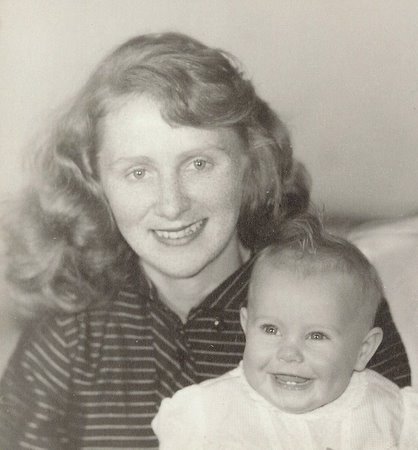
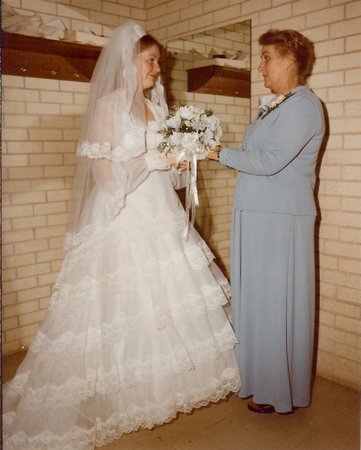
May always makes me think of my mom, because Mother’s Day and her birthday are both this month. She passed away eleven years ago at the age of 68, much sooner than either of us wanted to say good-bye. That first spring I couldn’t go near a card shop because all of the items out for Mother’s Day were just too painful. Now, though the grief of missing her is still there, it is tempered with good memories.

One of the things I most appreciated about my mom was that she could be a friend to us without sacrificing her authority. I could talk to her about anything.

image03.jpg

My mom and I when I was a baby.

My mom and I before my wedding.

In my college years God brought a new family to our church. They noticed that I came to church alone and invited me home with them often. Mrs. C. became like a second mother to me. I’ve often referred to her as my spiritual mom. Her gentle example as a wife, mother, and homemaker taught me much, though I don’t think she was deliberately trying to teach me anything. We’ve corresponded for years, though her notes have become less frequent as she has gotten older and developed several health issues. I’ll always be thankful for her influence on me.

My third mom came into my life when I got married. My mother-in-law and I have had a very amiable relationship with no in-law horror stories. She had several problems in her life that would have made some people angry and bitter, but instead she sought God’s grace to surround the irritants like an oyster making a pearl. It has been sad to see her decline over the last few years, but we’ve been blessed to move her near us and to be able to include her in our family life.

2009

2015

The newest mom in my life is my sweet daughter-in-law, who is a loving wife to my son and mother to the cutest grandson in the world. 🙂

IMG_0044

There have been other women as well who had a word of encouragement for me along the way.

I am thankful for “Aunt Sylvia,” my mom’s best friend, who never married or had children of her own but brought us Christmas presents, was always kind to us, and who bravely battled cancer. She once stepped in to pick me up from camp to explain that my parents were with my sister who had been hurt in an accident while I was away, and I am sure her calmness affected me.

I remember spending many nights with my grandmother when she lived near us and accompanying her on road trips in the summer. She was always crocheting any time she was sitting down and her hands were free.

I remember working on a church bulletin board with a lady whose oldest was a teenager while mine was still a toddler. She encouraged me not to dread either the “terrible twos” or the teen years or any stage in between but to believe that even those stages can be good, and I am happy to report they were.

I am thankful for Aunt Bobbye, my mother’s sister, for her being available to us any time we needed her, for her zany sense of humor, her care and support at my mom’s viewing and funeral, and for her love and care and continued interest throughout my life.

I remember and am thankful for walks and breakfasts and lunches and “play dates” with friends in the same season of life as we encouraged each other in our mothering.

I am thankful for godly pastor’s wives I’ve had and their sweet spirit and godly counsel.

In every season of life there have been a few ladies just ahead of me that I could watch and learn from, though they may not have known they were being observed. Even now, on the cusp of an empty nest, I’m inspired by a couple of older ladies who have been shining and cheerful examples in their “upper middle age” years.

I am thankful for so many women who were examples to me and made me a better woman, wife, and mother. I hope I can encourage others as these ladies did me.

I hope you have a wonderful Mother’s Day and feel renewed in your roles this morning.

mothers-day-flowers-13

Save