Book Review: The Valley of Fear

Valley_of_fearThe Valley of Fear is the fourth of Sir Arthur Conan Doyle’s full-length Sherlock Holmes novels. Like most of his other stories, it first appeared serialized in a magazine, this time in The Strand.

The book opens with Holmes and Watson trying to decipher a message from an informant concerning Professor Moriarty. The only other time Moriarty has been mentioned was in the last chapter of The Memoirs of Sherlock Holmes, in which he died. So this story predates that one, but there is a bit of a disconnect in that Watson didn’t know who Moriarty was in Memoirs, and if the events in The Valley of Fear occurred in the timeline before that book, Watson would surely have known the name. But as far as I know that’s the only major slip up in Doyle’s narratives, so we can forgive him: he may have even been aware of the problem and decided to write this story as is anyway.

At any rate, Holmes and Watson are interrupted by the arrival of a Scotland Yard Inspector MacDonald asking Holmes to assist on a case and then being stunned to learn that the message Holmes had just deciphered concerned the very man who had been killed. The victim had been shot in the face with an American sawed-off shotgun. There are a number of odd incidents and clues that do not add up. Holmes fixates on one that the others do not think is important, and, of course, solves the mystery.

The second part of the book is the back-story of what happened leading up to these events and is written in a completely different style, much like the story within a story in A Study in Scarlet. At first nothing seems related at all, but the reader assumes that some of the characters are going by different names than what they’re known as in the first part. In this story, a young John McMurdo is fleeing from the law in Chicago and comes to a Vermissa Valley to start anew. He’s part of an organization called The Eminent Order of Freemen, which primarily engages in charitable works in Chicago. But in Vermissa Valley, it’s a tightly run gang of thieves, murderers, and extortioners called the Scowrers who have the area under their thumb so much that it is nicknamed the Valley of Fear. McMurdo has no choice but to become involved with the gang, even though his landlord kicks him out over it and refuses to let him see his daughter any more.

Events unfold with the Scowrers for several chapters until they learn that a Pinkerton detective is undercover in the area, and their focus turns to finding and dealing with him.

An epilogue ties up the loose ends of the story and brings it back to Moriarty’s involvement.

Though I eventually guessed who McMurdo was (and rereading the first few pages, I saw several clues which caused me to realize I should have guessed it much sooner), I was totally surprised by the twist in the second story. Though some of the first story gets a little boring with the deciphering and then the arguing over which clues mean what, the last couple of chapters were the most exciting of any of Doyle’s work that I have read so far.

After looking around Wikipedia a bit, I saw that the story was based on the real life Molly Maguires in PA and their encounter with Pinkerton Agency detective James McParland. I had heard the term Molly Maguires before but had no recollection of what it meant until reading about it just now.

I listened to the audiobook read by Simon Vance, who did a wonderful job not only with the various English accents and voices in the story, but also with American, Scottish, and Irish accents as well. I also read parts of the story online at Project Gutenberg.

(This review will also be linked to Semicolon‘s Saturday Review of Books.)

A Belated Happy Mother’s Day!

I was beginning a Mother’s Day post yesterday morning when my son and daughter-in-law unexpectedly came in to surprise me by coming to prepare breakfast. A welcome interruption! I had a wonderful day, which I’ll say more about Friday. There wasn’t time during the day to come back to the computer, so I started to just skip a Mother’s Day post. But it was on my heart to do this morning, so I thought I’d go ahead. We can honor our mothers beyond Mother’s Day, right? 🙂

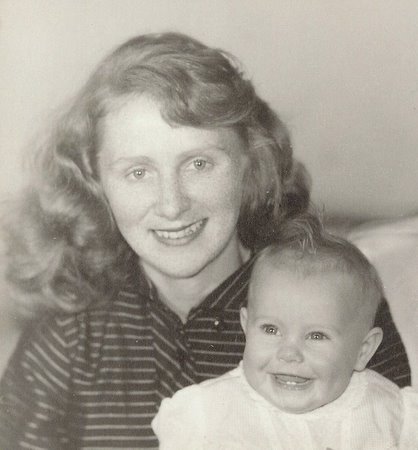
I want to honor the memory of my mom. I miss her deeply.

image03.jpg

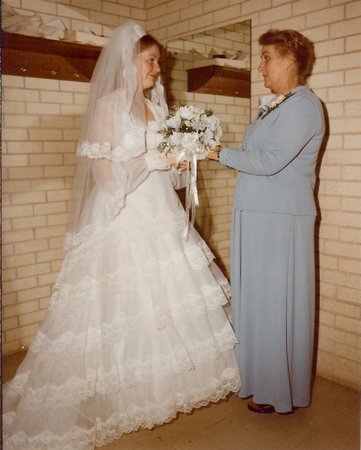
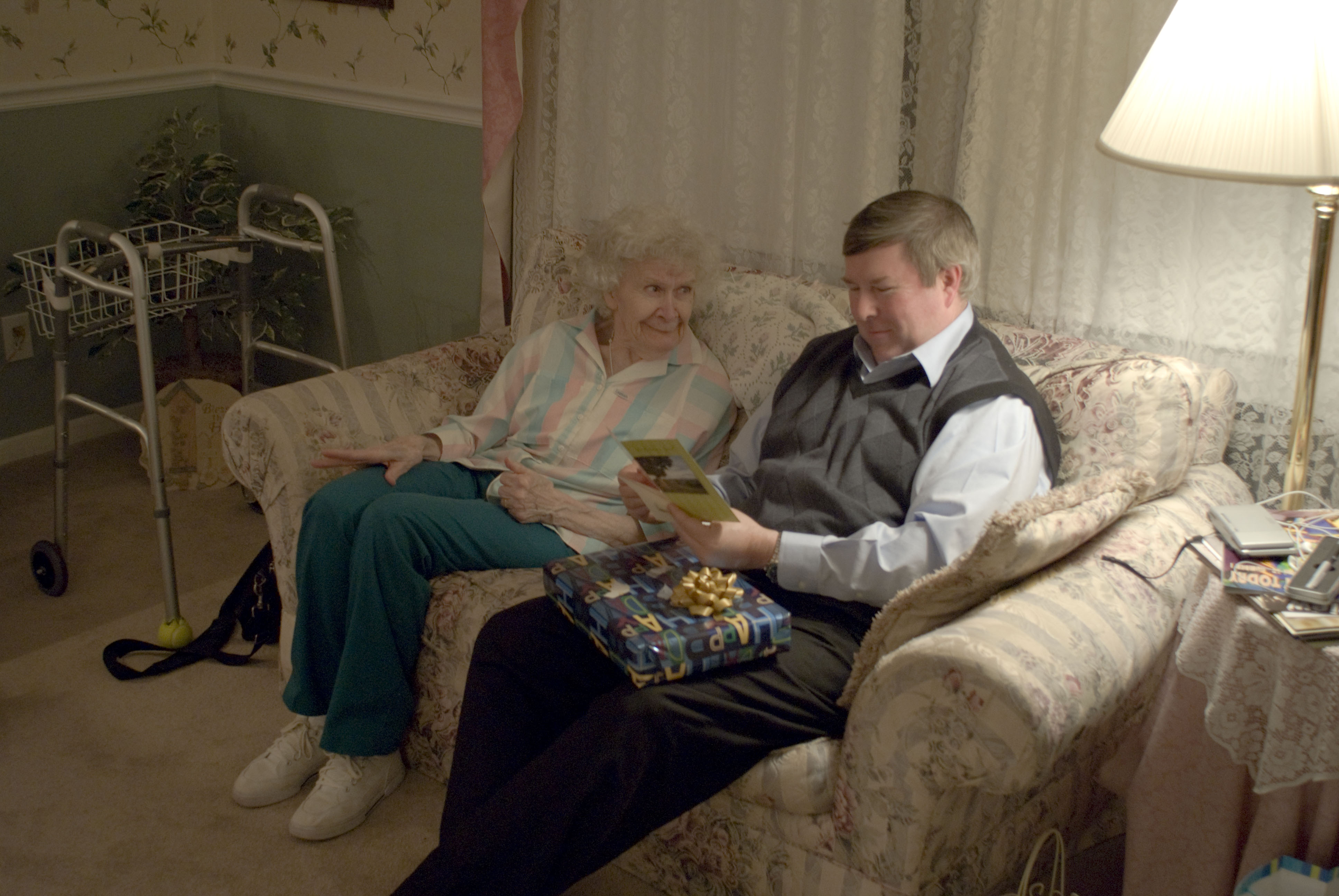
I want to honor my mother-in-law, who raised four children, one of whom became my wonderful husband, and who maintained a sweet spirit throughout her life in the face of serious trials:

2009

Barbara's Cell phone pics 233

2013

I want to honor my daughter-in-law, who is a loving wife to my son and mother to the cutest grandson in the world:

01dc9269e86cfa0f61905861ceb4270c6fe0121bf2I want to honor my daughter-in-law’s mother, who raised such a sweet girl:

133And I want to remember and honor my sisters, nieces, sisters-in-law, and friends with mothering and nurturing hearts.

I hope you had a wonderful Mother’s Day and feel renewed in your roles this morning.

mothers-day-flowers-13

Friday’s Fave Five

FFF spring2

It’s Friday, time to look back over the blessings of the week with Susanne at Living to Tell the Story and other friends.

It’s been a pretty nice week. Cool mornings, a little hot in the afternoons, but not like it will be later in the summer. Here are some of the best parts of the week:

1. Visiting the zoo with Timothy, and his parents and also my youngest son and his girlfriend. Timothy wasn’t terribly interested in the animals yet – most of them were too far away for him to really notice them. But the few he did see, he just kind of took it all in, observing and trying to process. Jason has a cute video of his watching a monkey’s antics. I think he’ll get more out of it when he’s a little older, but it was still a fun outing.

01a9664c121e962d9590244ffca3445d8b21a2b76b

2. Not cooking for three days. For various reasons, we had different things going on at dinner time three days in a row. It was almost like a mini-vacation!

3. A couple of hours with a book. I mentioned in finding time to read that most of my reading is done in 10-20 minutes snatches rather than at long intervals. But Sunday I got in about two hours with my latest Dee Henderson novel. Bliss!

4. Sleep. I could probably name that every week. 🙂 I wasn’t feeling well Sat. night and didn’t get a lot of sleep. Sunday morning was one of those times I felt like I just couldn’t function, so I stayed home from church and slept about 2 1/2 hours and then napped a couple of times during the day. I finally started feeling back to normal later in the afternoon.

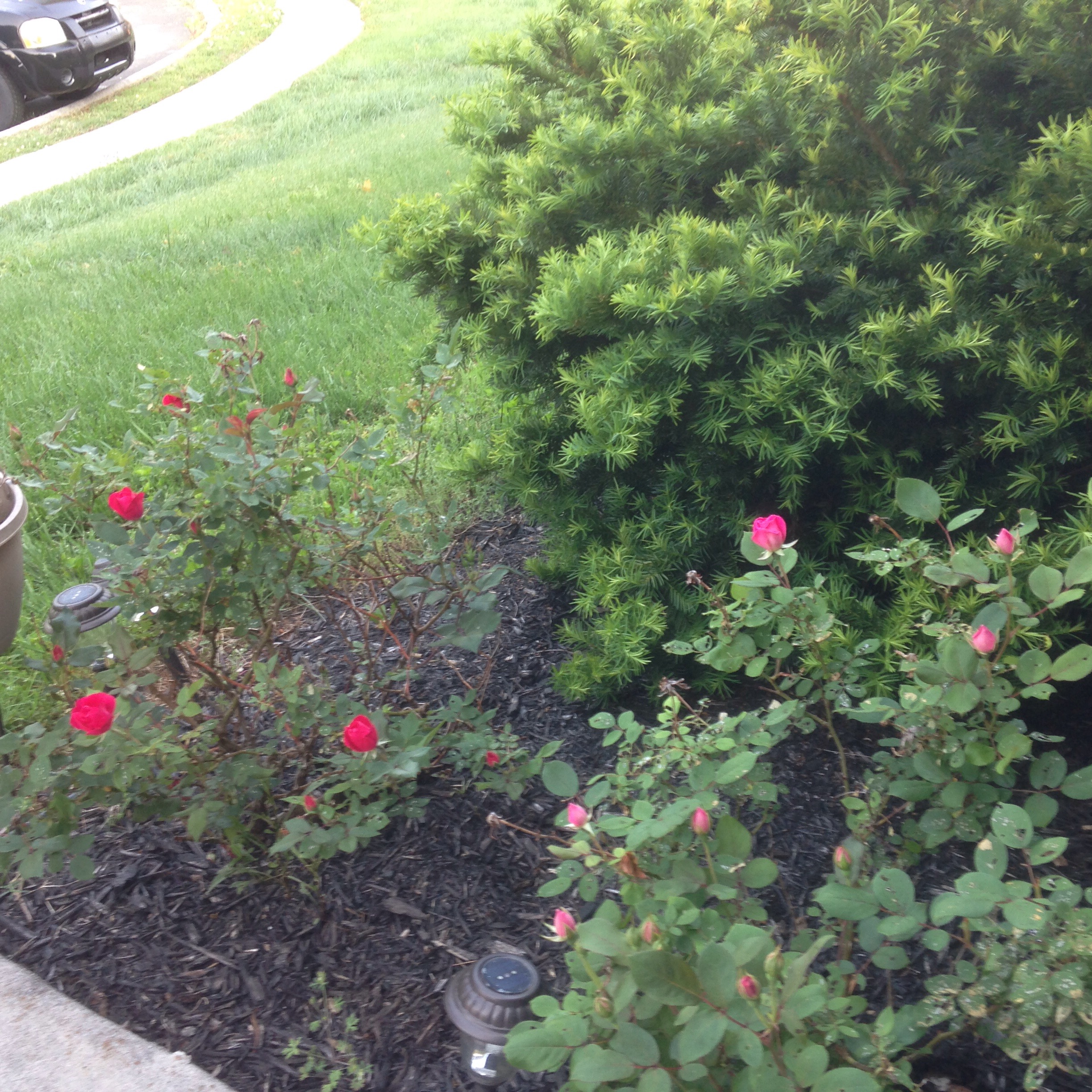
5. Roses budding! I didn’t think they would for a few weeks yet.

IMG_1192

Hope you have a great weekend remembering and honoring your mom!

Book Review: Feeding Your Appetites

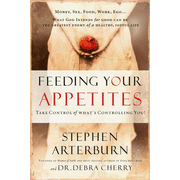
AppetitesFeeding Your Appetites: Taking Control of What’s Controlling You by Stephen Arterburn and Debra Cherry is based on the premise that most of our out-of-control desires are based on God-given appetites that are not wrong in themselves (food, sex, work, rest), but they can wreak havoc when they get out of balance. Even appetites for things that are wrong in themselves (gambling, drugs) can have a basis in a desire that’s not wrong.

Stephen discusses the nature, good purposes, and value of appetites God created within us. But “when pleasure becomes what we are searching for, we will soon learn that there is never enough to satisfy” (p. 33). “Our poor choices are rooted in self-indulgence and obsession with self-entitlement. We indulge to seek pleasure and avoid pain because we think we are entitled to it. The fleshly pleasure we seek is self-serving” (p. 35).

He discusses how change begins (seek forgiveness, stop make excuses, stop blaming others, stop believing falsehoods, and others), the many factors that influence us (including biology, culture, and a host of others), the ways Satan uses our desires against us to tempt us, ways to deal with or redirect our desires, and ways to cultivate a “divine appetite.” The last chapter on “The Surrendered Life” ties it all together in emphasizing that the only way to keep our appetites in their proper places is to walk surrendered to God every day. An appendix and study guide in the back help apply the truth personally.

Sprinkled throughout the book are case studies which are very helpful in fleshing out the principles Stephen is discussing. My only minor quibble with them is that they came in the middle of rather than at the end of sections. I don’t like having to either interrupt the section I am reading to read the case study or read on to finish the section I am in and then turn back to the case study when it could have easily been placed between sections. But, again, that is a relatively minor irritation.

A few quotes I found helpful:

[In Eden] Eve couldn’t overeat because her appetite for food would have been under control and submissive to her primary appetite to obey God” (p. 18).

When we have an out-of-control appetite for food, it signals that we have put that appetite above its rightful place as a necessary and God-given function (p. 18).

The question of how to satisfy our appetites becomes instead a call to seek to obey God in all circumstances and through all appetites and desires. That means making the necessary choices to satisfy our appetites in a manner that honors Him. When we do, true fulfillment is our reward (p. 25).

There were a few little points where I disagreed with his teaching, but not enough to get into long explanations. I will say that I disagreed with his concept of meditation, which he seemed to define as listening to God as opposed to talking to Him in prayer. Meditation is more of a ruminating, thinking over what He has said in His Word, not listening for Him to speak apart from His Word (see next to last paragraph here.)

Overall it’s a very good book. It covers some of the same ground as Taste For Truth by Barb Raveling except it expands to cover about every appetite you could think of whereas Barb’s book focuses on food. Barb’s style is much more direct, which I tend to prefer. I felt Stephen tended to over-explain or use too many words, but that may have been because I had just read many of the same principles in Barb’s book. This book might be especially helpful for a non-Christian or new Christian or a Christian who had not been taught very well along the way. But really, it can benefit anyone. I gleaned much good from it.

(This review will also be linked to Semicolon‘s Saturday Review of Books.)

Dealing With Caregiver Resentment

I’ve never tried to portray myself as anywhere near perfect or as having it all together, but one fault that seems abominable and embarrassing to have to admit is that sometimes I resent having my mother-in-law here and caring for her. I mentioned some of the disadvantages of caring for a parent at home about seven paragraphs down here.

I Googled caregiver resentment and came up with some practical, helpful tips, but nothing really for the deeper issues. One post even advised just accepting it as part of the whole package. While I can accept that resentment might naturally arise, I can’t accept that as normal and okay: it’s miserable to live with, but even worse, as a Christian, it’s an evidence of my own selfishness. So then I Googled something along the lines of overcoming resentment as a Christian and looked at several of the articles that came up, but most of them dealt with resentment against someone who has done you wrong and the need to forgive.

So I decided to write down some of the things that help me during those times both so it’s here for me to refer back to when needed and so hopefully it might be a help to someone else. And I am calling it “dealing with” rather than “overcoming” caregiver resentment because, although I’d like to have a conversation like this just once and have that take care of my attitude forever, I’ve found I have to go over these things periodically. I guess that is part of living with a sinful nature and needing to renew one’s mind.

So here are ways to deal with resentment, beginning with the practical and moving on toward the spiritual:

1. Take care of your own health, including getting enough sleep. Everything seems worse if you’re sleep-deprived or dragging because you’re not eating right.

2. Talk to someone. My husband and I feel free to talk honestly with each other, and he’s not offended that I do get frustrated with the situation sometimes. I know I have an open door to talk with him about it whenever needed.

3. Get away from the situation sometimes. I am thankful we do have a caregiver here in the mornings so I can run errands or take care of other things, and occasionally we’ll have someone come in for an evening or stay longer on a Saturday so we can have an outing.

4. Remember what brought you to this place. As we trace our history with my mother-in-law’s care, we come again to the same conclusion, that this is the best situation for her at this stage. There may come a time when one or both of us become unable to care for her or her needs become greater than what we can manage at home, but for now, this is best.

5. Remember that caring for a loved one at home used to be the norm before assisted living facilities and nursing homes became widespread, and it still is in some countries.

6. Remember her care of you or your husband for so many years, and look at this as an opportunity to repay her love and care.

7. Remember it could be worse. My mother-in-law is not hard to get along with at all. Some of the residents we encountered in assisted living or the nursing home perhaps made us appreciate that fact even more.

8. Take it a day at a time, or a moment at a time. If we think, “How many years will I have to do this?” we can feel defeated and depressed. All we have to do is deal with this moment, this day, and trust God’s grace will be sufficient for all the days ahead.

9. Think how you would want to be regarded and treated if you were in the same situation.

10. Accept it as God’s will. Maybe you didn’t have time to sort through options, as we did, to come to the conclusion to bring an elderly parent home, or maybe there are extenuating circumstances that compound the resentment you feel. Maybe you don’t have a parent at home, but you’re the only sibling in town to visit them or oversee their care in a facility. Maybe it is even time to do something different. But for this moment right now, this is God’s will for you, and if you surrender it to Him, He will provide the grace to deal with it. “In acceptance lieth peace,” a poem by Amy Carmichael attests.

11. Pray. Sometimes just before going into my mother-in-law’s room to change her, I pray that I might be “Strengthened with all might, according to his glorious power, unto all patience and longsuffering with joyfulness,” part of Paul’s prayer in Colossians 1:9-13. Or, as the ESV puts it, “May you be strengthened with all power, according to his glorious might, for all endurance and patience with joy.” That encompasses so much: that I need His strength, longsuffering, and patience, that He has the “glorious power” to give it, and that He can help me to go beyond just acting out of duty, but He can enable me to serve with joy. I also frequently pray that He will help me have a more loving, unselfish heart.

12. Remember the Christian life is one of service, not self-focus. Claudia Barba said in The Monday Morning Club, “The Christlike life has nothing at all to do with satisfying, coddling, or promoting self, but everything to do with being poured out for others” (p. 55). You see it in the life of Christ and Paul and others in the Bible both in instruction and in example. That doesn’t mean we’re doormats or martyrs or that we can never we can never do anything just for fun. But our primary purpose is serving Him by serving others. Some verses that help in this regard are:

Now we exhort you, brethren…comfort the feebleminded, support the weak, be patient toward all. (I Thessalonians 5:14).

Whosoever shall give to drink unto one of these little ones a cup of cold water only in the name of a disciple, verily I say unto you, he shall in no wise lose his reward (Matthew. 10:42).

To do good and to communicate forget not: for with such sacrifices God is well pleased (Hebrews. 13:16).

God is not unrighteous to forget your work and labour of love, which ye have shewed toward his name, in that ye have ministered to the saints, and do minister (Hebrews. 6:10).

So after [Jesus] had washed their feet, and had taken his garments, and was set down again, he said unto them, Know ye what I have done to you? Ye call me Master and Lord: and ye say well; for so I am. If I then, your Lord and Master, have washed your feet; ye also ought to wash one another’s feet. For I have given you an example, that ye should do as I have done to you (John 13:12-15).

With good will doing service, as to the Lord, and not to men (Ephesians 6:7).

And let us not be weary in well doing: for in due season we shall reap, if we faint not. (Galatians 6:9)

For I was an hungred, and ye gave me meat: I was thirsty, and ye gave me drink: I was a stranger, and ye took me in; naked, and ye clothed me: I was sick, and ye visited me: I was in prison, and ye came unto me. Inasmuch as ye have done it unto one of the least of these my brethren, ye have done it unto me (Matthew 25:35-36, 40).

13. Accept this as my primary ministry. This is one area I struggle with the most. As the nest starts emptying, though we miss our kids intensely, we begin to look to other things that have been put on the back burner for a while: maybe now we can write that book, get that degree, travel, sew up all that fabric or complete all those projects. But now we’re tied down again. Or maybe some have had to step back from other ministries at church in order to care for a parent. We need to remind ourselves that this is not a hindrance to our ministry: it is our ministry. Even limitations set the parameters of our ministry. Elisabeth Elliot has said:

This job has been given to me to do. Therefore, it is a gift. Therefore, it is a privilege. Therefore, it is an offering I may make to God. Therefore, it is to be done gladly, if it is done for Him. Here, not somewhere else, I may learn God’s way. In this job, not in some other, God looks for faithfulness.

I don’t mean to reduce caring for a parent to a “job,” but I believe we can substitute “ministry” for “job” there.

I hope some of these are helpful for any reader facing any kind of resentment in your situation, and I’d be happy to hear any other thoughts or tips you might have.

EldercareSharing at Thought-Provoking Thursday. and Works For Me Wednesday.

Book Review: The Monday Morning Club

Claudia Barba is one author I know in person. I first knew her sister when we were classmates in college. Her dad was one of my teachers there. I met her mother as well through activities with her sister. Claudia and her husband and son came to our church for a week once when her husband was the keynote speaker for a conference, but I am sorry to say I did not introduce myself to her or get to know her at that time. Some years later her sister, now a pastor’s wife in a neighboring city, invited the ladies of our church to a weekend ladies’ conference where Claudia was the speaker. A few of us went…and I was greatly blessed by her speaking. Her strawberry story (which I am glad to see is in her book) especially convicted and touched me.

Claudia’s husband was a pastor at first, then traveled with his family in evangelism for a few years. Then he and his wife began Press On Ministries, in which they travel to spend a few months at a time helping a church planter get a new church off the ground and stable, and then they travel to another new church plant and do the same. One year our ladies’ group was looking for a speaker for our ladies’ luncheon, and Claudia and her husband were working near enough that I thought it might be a possibility that she could speak for us. A few e-mails and it was all arranged, and Claudia’s message was again a blessing.

Now we live in TN, and the Barba’s home base is close enough that they pop into our church every now and then between ministries. At their last visit, Claudia asked me if I had her new book, and when I said I didn’t, she took my address and sent me a copy – for free, with no expectation or request for a review, but rather just to be nice. 🙂

MMCThat book, The Monday Morning Club: You’re Not Alone — Encouragement For Women in Ministry, began with Claudia and her mother and sisters, who were all married to men in the ministry. They would e-mail each other on Monday mornings when they needed a friend to talk to, someone to “share my joys without jealousy and hear my frustrations without judgement” “whether Sundays were thrilling or discouraging.” (p. xiii). Then another friend asked to be included, and eventually it grew into an e-mail list to women all over the world. This book is a compilation of some of these Monday morning thoughts and devotions. Though many of them are aimed at ministry wives in particular, the bulk of them would be applicable to any Christian women. Even those that are specific to pastor’s wives are helpful for the rest of us to read because they give us a window into some of the trials, temptations, thoughts, and feelings a pastor’s wife might wrestle with, and give us a better idea how to pray for and encourage our own.

There are 94 in all, each covering only one to three pages. They could be read one or two at a time straight through, or dipped into at random, or there is a topical index where you can look up columns by need, such as “When you’re discontent,” or “When you’re lonely,” etc.

I love Claudia’s way of writing and speaking. It’s simple, but deep; sweet, but clear. She advises with wisdom and grace. Often she goes straight to my heart.

Here are a few samples:

When a friend thought that “marrying a pastor morphed an ordinary woman into a super saint”: I’m sure in her own mind she was honoring me by placing me on a pedestal. That is, after all, where we place statues of people we admire. But it’s not a comfortable place for a plain old human to live. It’s lonely on a pedestal. Other people think you are looking down on them. There are pigeons. And if you stumble even once, you’ll fall off (p. 5).

The Christlike life has nothing at all to do with satisfying, coddling, or promoting self, but everything to do with being poured out for others (p. 55).

When discussing her husband’s tendency to “jump off cliffs” spiritually in “great leaps of faith” and her own tendency toward security: “The fences I thought meant security were the walls of a prison instead…A fearful spirit is never from the Lord (2 Timothy 1:7). It’s the prison, not the cliff, that’s the scary place. It’s awful to realize that my female anxieties can hinder God’s working through my husband. When His divine leading is clear to my human leader, it’s time for me to stop digging in my heels and join him in bold strides of faith, not because my husband is flawless, but because it’s God’s work we are doing, and He’s the One Who keeps us safe” (p. 123).

Stability is not innate or effortless for most of us female-type humans. Only in Christ is “no variableness, neither shadow of turning.” He is the solid, immutable Rock of Ages, and He can keep you stable. When your earth quakes, anchor your thoughts to His unchanging promises. When storms roll in, hide in His shadow. When you’re too tired to handle the demands of the day, let Him be the Rock of your strength. When your heart is unsatisfied, let the sweet water flowing from the Rock quench your thirst. Whenever any scary or upsetting thing happens, just run straight to the Rock (p. 153).

Sometimes all that’s needed to heal a wounded soul and lift a sagging spirit is one loving listener, for at its core, listening is love–love that sacrifices its need to be heard in favor of hearing, a desire to lecture in favor of learning, an opportunity to show off in favor of showing compassion. Instead of always leading the way, a patient listener, just by nodding in all the right places, can help a wanderer discover the right path on her own (p. 170).

You can read more samples of Claudia’s writing here in their web site. One of my all-time favorites, “His Dear Wife,” is not in the book but a copy is here. I previously reviewed her Bible study When Christ Was Here.

There is a Kindle version of The Monday Morning Club here. I hope you’ll give it a try. I think it will truly challenge, encourage, and bless you.

Friday’s Fave Five

FFF spring2

It’s Friday, time to look back over the blessings of the week with Susanne at Living to Tell the Story and other friends.

It’s been a pretty nice week. Here are a few favorites from it:

1. A new sewing machine!

2. A “puttering” Saturday. Some Saturdays are catch-up days with laundry, errands, or housework, some are event Saturdays with an outing or get-together planned. But puttering Saturdays are when there’s nothing urgent going on, I got all my usual errands and such done earlier in the week, I don’t have to go anywhere, and I can putter around the house taking care of tasks I don’t usually get to or working on a project. Very enjoyable!

3. The teens’ bake sale. The teens at our church held a bake sale to raise money for a mission/camping trip this summer. Always nice to get some goodies I didn’t have to cook! I enjoyed getting a number of small things to sample.

4. Pinterest wins. I have to confess that I pin a lot of things that I don’t go back and look at again, but some of my boards I do peruse sporadically for inspiration. I’ve felt in a rut with cooking lately, so I’ve been looking over and trying some of my Pinterest recipes. Chicken Spaghetti was good, though I don’t like to use Velveeta too much. I might try it with a different cheese some time. Crock Pot Smothered Pork Chops were really good, though it would probably be easier with boneless pork chops. Everything was falling off the bone, and due to bony pieces plus the “goo” from the meat, I ended up removing the meat and running the liquid through a strainer before making the gravy. My favorite was Easy Loaded Potato Bites. We enjoyed them as a side dish with meat loaf, but they’d be good as appetizers or party food.

5. Storms missing us. Last weekend there was a lot of bad weather forecast, and some parts of the city got hail and thunderstorms, but we only got a little rain.

Happy Friday!

Book Review: His Last Bow: Some Reminiscences of Sherlock Holmes

HisLastBowHis Last Bow: Some Reminiscences of Sherlock Holmes by Sir Arthur Conan Doyle is another collection of his Sherlock Holmes short stories, most originally published in magazines. One story, “The Cardboard Box,” was originally in another volume and added to this one in later printings.

The book opens with a preface from Dr. Watson saying that Holmes was retired and doing well except for occasional bouts of rheumatism. He had refused many offers to take up cases until called into service by his government on the eve of war with Germany. Watson states that the last story in this collection contains the details of that incident, and the other stories are some that he has had on hand for some time but not used in his other collections, but added them here to supplement the last story.

There are eight stories all together, covering various time periods (some when Watson was married, some when he was rooming with Holmes. Most contain trademarks of the other Holmes stories. A few are different, however.

In “The Adventure of Wisteria Lodge” (sometimes published as two stories, “The Singular Experience of Mr. John Scott Eccles” and “The Tiger of San Pedro”), the inspector on this case, Inspector Baynes, is the only police official that Holmes has thought well of and thought almost as competent as himself. He had learned to work with Lestrade and Grayson and others, though he usually figured out the case long before they did. But Baynes he admired and predicted he would go far in his profession.

Some of the other cases involve assumed identities, stolen naval plans, a woman receiving severed ears in the mail, an incident that kills one sister and drives two brothers mad, a kidnapped woman, and Holmes’ seemingly fatal illness.

The last story, “His Last Bow,” is different in a few ways. It opens with someone other than Holmes or Watson, is told in the third rather than the first person, and is a spy story more than a detective story. It’s set after Holmes has retired but has been asked to help his government, and when it’s over, he and Watson reminisce as if they haven’t seen each other in a while and are catching up. I wonder if Doyle wasn’t planning to write more Holmes stories after this. There is one Holmes novel whose writing overlaps the time period when these stories were published, and one more collection of stories after this one. If all the stories were laid our chronologically, this one would be the last in the time frame though it’s not the last one written. It was published during WWI, and this quote was probably meant to encourage Doyle’s fellow countrymen:

“There’s an east wind coming, Watson.”

“I think not, Holmes. It is very warm.”

“Good old Watson! You are the one fixed point in a changing age. There’s an east wind coming all the same, such a wind as never blew on England yet. It will be cold and bitter, Watson, and a good many of us may wither before its blast. But it’s God’s own wind none the less, and a cleaner, better, stronger land will lie in the sunshine when the storm has cleared.”

In many of the stories, Holmes makes reference to Watson’s writings and even offers suggestions about what to include, even though he doesn’t like the way Watson tells the stories.

I found further evidence that Holmes was neither always rude nor antisocial or even autistic, as some modern portrayals seen to suggest. When interrupted from a project when asked to take on a case he is not interested in at first, Watson notes that  “Holmes was accessible upon the side of flattery, and also, to do him justice, upon the side of kindliness. The two forces made him lay down his gum-brush with a sigh of resignation and push back his chair.” In another case,

Holmes leaned forward and laid his long, thin fingers upon the woman’s shoulder. He had an almost hypnotic power of soothing when he wished. The scared look faded from her eyes, and her agitated features smoothed into their usual commonplace. She sat down in the chair which he had indicated.

In another place he said, “[The landlady] was fond of him, too, for he had a remarkable gentleness and courtesy in his dealings with women. He disliked and distrusted the sex, but he was always a chivalrous opponent.”

Watson does admit, though, in another case that, “It was one of my friend’s most obvious weaknesses that he was impatient with less alert intelligences than his own,” in this case Lestrade’s.

Holmes also doesn’t misuse Watson, as some modern depictions portray. In one case here he sends Watson on a mission when he can’t leave the case he is currently involved with, and when he does catch up with Watson, he exclaims,

“I cannot at the moment recall any possible blunder which you have omitted. The total effect of your proceeding has been to give the alarm everywhere and yet to discover nothing.”

“Perhaps you would have done no better,” I answered bitterly.

“There is no ‘perhaps’ about it. I HAVE done better. Here is the Hon. Philip Green, who is a fellow-lodger with you in this hotel, and we may find him the starting-point for a more successful investigation.”

The only time that he seems genuinely rude was when he was ill but did not want Watson to examine him, saying, “After all, you are only a general practitioner with very limited experience and mediocre qualifications. It is painful to have to say these things, but you leave me no choice.” Watson “was bitterly hurt.” But later Holmes discloses that he did not want Watson near him because he was on a case to try and catch someone, and Watson’s “astute judgment” would determine on a close examination that Holmes was well, and Holmes needed him to believe in the urgency of the situation in order to convince the man Holmes wanted to come. He assures Watson of his high “respect for your medical talents.”

In one unguarded moment after Watson saves both their lives, Holmes declares,

“Upon my word, Watson!” said Holmes at last with an unsteady voice, “I owe you both my thanks and an apology. It was an unjustifiable experiment even for one’s self, and doubly so for a friend. I am really very sorry.”

“You know,” I answered with some emotion, for I have never seen so much of Holmes’s heart before, “that it is my greatest joy and privilege to help you.”

He relapsed at once into the half-humorous, half-cynical vein which was his habitual attitude to those about him.

There was one other glimpse in Holmes’ heart when, in a case where someone avenged the death of his loved one, Holmes said, “I have never loved, Watson, but if I did and if the woman I loved had met such an end, I might act even as [he] has done.” That also seems further proof of something I asserted in an earlier book, that Irene Adler was not the love interest many thought her to be, but rather just a woman he admired for being one of the few people to ever outsmart him.

I listened to the audiobook read by Simon Vance, who did a great job with the different accents and inflections. Overall I enjoyed these continuing adventures of Holmes and Watson and and discovering more of their personalities. I look forward to the last two books.

(This review will also be linked to Semicolon‘s Saturday Review of Books.)

A new gadget!

One evening while my husband perused some of the “deal of the day” sites he follows while I was making dinner, he asked me if I wanted a new sewing machine.

No, I replied. My little faithful, uncomplicated Kenmore had served me well for 30+ years now, and I figured I’d just keep using it until it gave out. Besides, those newfangled computerized ones would probably require a significant learning curve to become comfortable with, whereas I knew my Kenmore so well I could operate it almost without thinking.

But he began to read some of the features of the one on sale, and the more he read, the more attractive it sounded. And, I began to reason, when my machine does give out, there might not be a deal like this readily available. So I said, “Sure, if you want to get it for me.” 🙂 So he did.

It arrived last Saturday, and thankfully he was here to help me get it out of the box and figure out some of the diagrams to get started with it.

IMG_1181

This photograph with the light on isn’t as good, but you can see the screen display:

IMG_1180

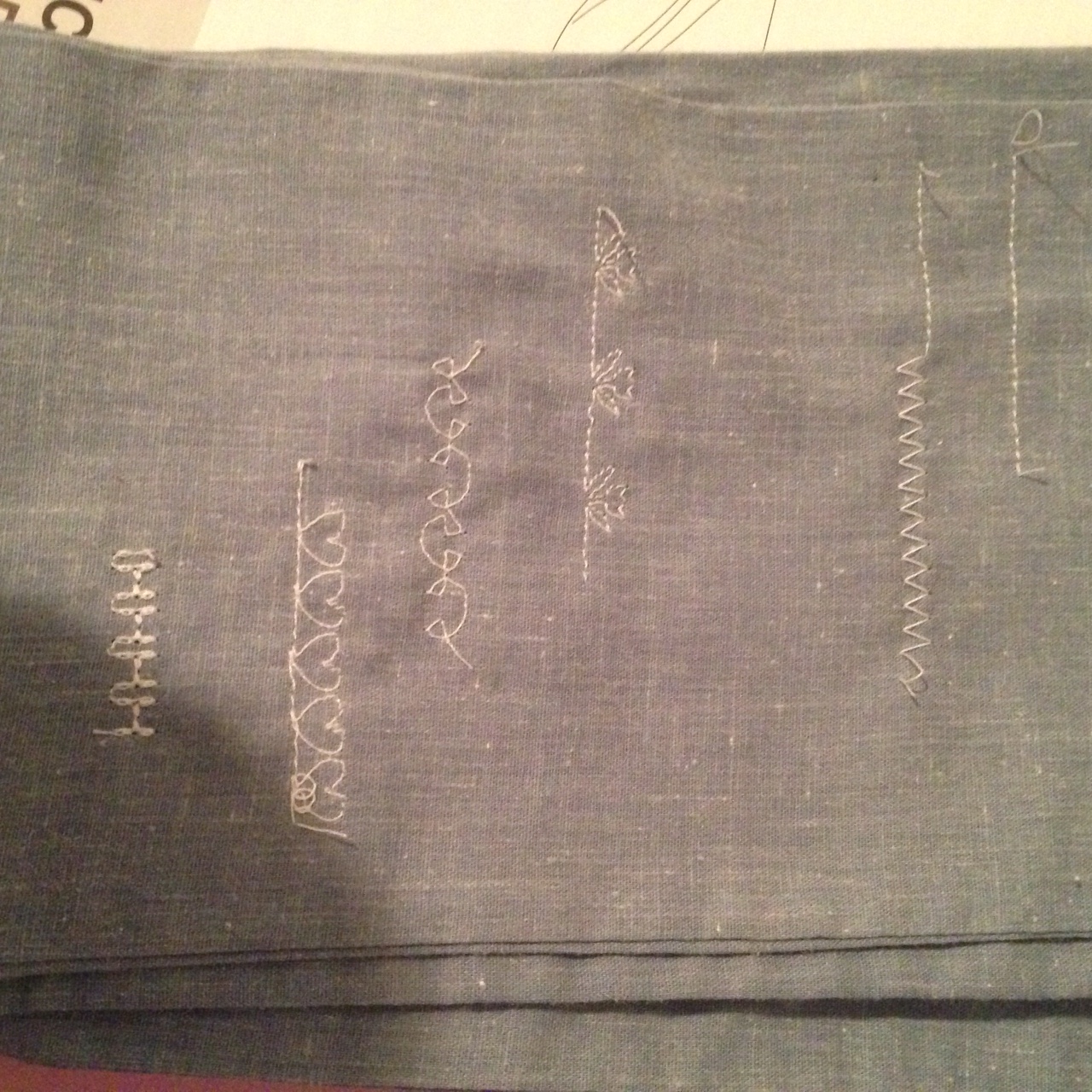
Some of the basics like threading it and the bobbin were a little hard to figure out: some of the specialty stitches were easy, and I had fun playing with those a bit.

IMG_1182

It will take a while to feel “at home” with it, but that should come with use. It’s supposed to have an automatic needle threader which I haven’t figure out yet but which should come in really handy: I keep a little magnifying glass in the desk drawer for help with threading now. One feature I really like is that there is a little push button on the side that opens a little drawer for all the extra presser feet, bobbins, etc., thus freeing up crowded drawer space.

And, as an added bonus, the sewing machine cover I made for my old sewing machine last year came out a bit too big for it, but – you guessed it, it fits this one nicely. It’s a bit snug, but it still covers it.

As I moved my old sewing machine and began gathering all its attachments, I felt like I should give it a hug for all its good work through the years and pat it and tell it what a good job it has done. But when I feel sentimental about appliances, this video comes to mind:

So even though I am a little intimidated at figuring out things with the new machine, I am looking forward to it as well, and I am thankful for my husband’s love and generosity.

What’s On Your Nightstand: April 2015

 What's On Your NightstandThe folks at 5 Minutes For Books host What’s On Your Nightstand? the fourth Tuesday of each month in which we can share about the books we have been reading and/or plan to read.

Wow – it’s hard to believe we’re in the last week of April. Where did it go so fast?

Since last time I have completed:

A Million Little Ways: Uncover the Art You Were Made to Live by Emily Freeman, reviewed here. Had some issues with parts of it but overall it’s a good message.

He Is There and He Is Not Silent by Francis Schaeffer, reviewed here. A short book about philosophy, apologetics, metaphysics, epistemology – good but stretches one’s brain to the limit.

Being Mortal: Medicine and What Matters In the End by Atul Gawande. As I said in my review, if you’re planning on getting old, dying, or helping a parent as they age, you need to read this book.

War and Peace by Leo Tolstoy, audiobook, reviewed here. Glad to be know the story now but glad to be done with it finally. 🙂

The Swan House by Elizabeth Musser, reviewed here. Loved.

Songs of the Morning: Stories and Poems for Easter compiled by Pat Alexander, including excerpts from C. S. Lewis, E. B. White, and others, reviewed here.

I’m currently reading:

The Monday Morning Club: You’re Not Alone — Encouragement For Women in Ministry by Claudia Barba.

Feeding Your Appetites: Taking Control of What’s Controlling You by Stephen Arterburn

His Last Bow: Some Later Reminiscences of Sherlock Holmes by Sir Arthur Conan Doyle, audiobook

A pre-reading of a friend’s novel – will be happy to share more with you when the time comes! 🙂

Gentle Savage Still Seeking the End of the Spear: The Autobiography of a Killer and the Oral History of the Waorani by Menkaye Aenkaedi with Kemo and Dyowe. Just  started this one. These men were among the Waorani (or Aucas, as they were then known) who killed the five men who came to share the gospel with them (Jim Elliot, Nate Saint, and the others) and who later became Christians, Menkaye becoming like a grandfather to Steve Saint’s children. I am very curious to read their story in their own words.

Next Up:

Walking With God in the Season of Motherhood by Melissa B. Kruger

Christy by Catherine Marshall for Carrie‘s Reading to Know Classics Book Club for May. Read this years ago and am eager to revisit it.

Taken, the latest by Dee Henderson. Just got word it’s on it’s way!!! Can’t wait!

The Valley of Fear and The Case-Book of Sherlock Holmes by Sir Arthur Conan Doyle, audiobooks, to finish off the good detective’s stories.

Pioneer Girl: The Annotated Autobiography by Laura Ingalls Wilder, edited by Pamela Smith Hill. I don’t know if I will actually get to this in the coming month: I hope so.

That should keep me busy for a while. 🙂 What are you reading?