Winner of The Tenth Plague

Not an illness – a book. 🙂 Congratulations to Lou Ann, who won the giveaway I had for an e-version copy of Adam Blumer‘s book, The Tenth Plague.

Thanks to all who entered! I wish I could give one to each one. If you haven’t read it yet, you can find it for the Kindle, the Nook, or through iBooks.

The-Tenth-Plague

Help! Questions about scrapbooking and photo albums

Pile-o-polaroids photo photography-1.jpg

One of my side projects I hope to at least make a dent in this year is to get shoe boxes full of photos (from pre-digital days) into photo albums and to redo my old photo albums which are those old sticky kinds that are supposed to be bad for your pictures. Whenever I make any efforts in this direction, questions come up about the best ways to do it, so I thought I’d share those questions with you all and get some advice.

  1. Do you arrange your photo albums chronologically or by event or some combination? Do you do separate albums for vacations or other topics?
  2. When you make a baby album for a child, how for do you go in it? Do you just cover the first year or so? I struggle with what photos to put there and what to put in the regular family album.
  3.  What do you do with photos like the ones of animals in the zoo from 20 years ago that no one is that interested in any more or the extra photos of an event that you’re not sure whether to throw away? Do you end up still keeping some photos in a box?
  4. When you use a scrapbook, do you mat every single picture?
  5. Do you use those little corner holders, or do you use glue and page protectors? Don’t the corner holders poke into photos on the opposite page?
  6. What kind of glue do you use?
  7. When you do digital scrapbooking, do you print it out or does it stay digital? How do other people see it?
  8. What are your favorite tools?

I think that’s all for now.

For the record, I’ve made one photo album for each child up to maybe 1 1/2 to 2 years of age and then chronological albums (not one per year, but each one covers maybe 3-4 years). I’ve thought of making a “Friends and Family” album of those school and professional photos people have sent over the years. I’ve only made a couple of scrapbooks: one for Jason’s high school graduation of highlights of his life and one for Jesse’s graduation just of school and class pictures through the years. My scrapbooks are more about the pictures than the decorations – so far I haven’t gotten too decorative, both because of the time factor (both were made under a deadline) and also because I prefer to emphasize the photos rather than the layouts. But now that I’m doing this on my own timetable, I might try to be more creative with them.

I appreciate your feedback!

Friday’s Fave Five

 It’s Friday, time to look back over the blessings of the week with Susanne at Living to Tell the Story and other friends.

Since this is where I’ve been sharing updates about my little grandson, Timothy, I’ll go ahead and share this here. He had a bit of a setback this week with a higher number of heart-rate drops (bradycardia) and apnea than before, and some pretty deep ones (requiring more than just jostling him to bring it back up to normal), so they put the oxygen cannula back on. He had a couple of tests earlier in the week and those may have tired him out too much. I’m not sure how much longer he’ll have to have the oxygen. The doctors have said that usually by 36 or 37 weeks from conception the heart rate drops will start to fade out as his system matures, and we just passed the 36 week mark. Then he’ll have to go for 5-7 days without one (we’ve heard different numbers from different doctors) before he can go home. The first neonatal doctor we talked to told us this would be a journey of ups and downs rather than steady upward progress, but the downs are still discouraging. But — hopefully he’ll be ready to come home soon. Every day is one step closer. 🙂

1. Stability. After everything else this week, Timothy is holding steady now, and we hope he can come off the oxygen soon.

2. This:

IMG_7359

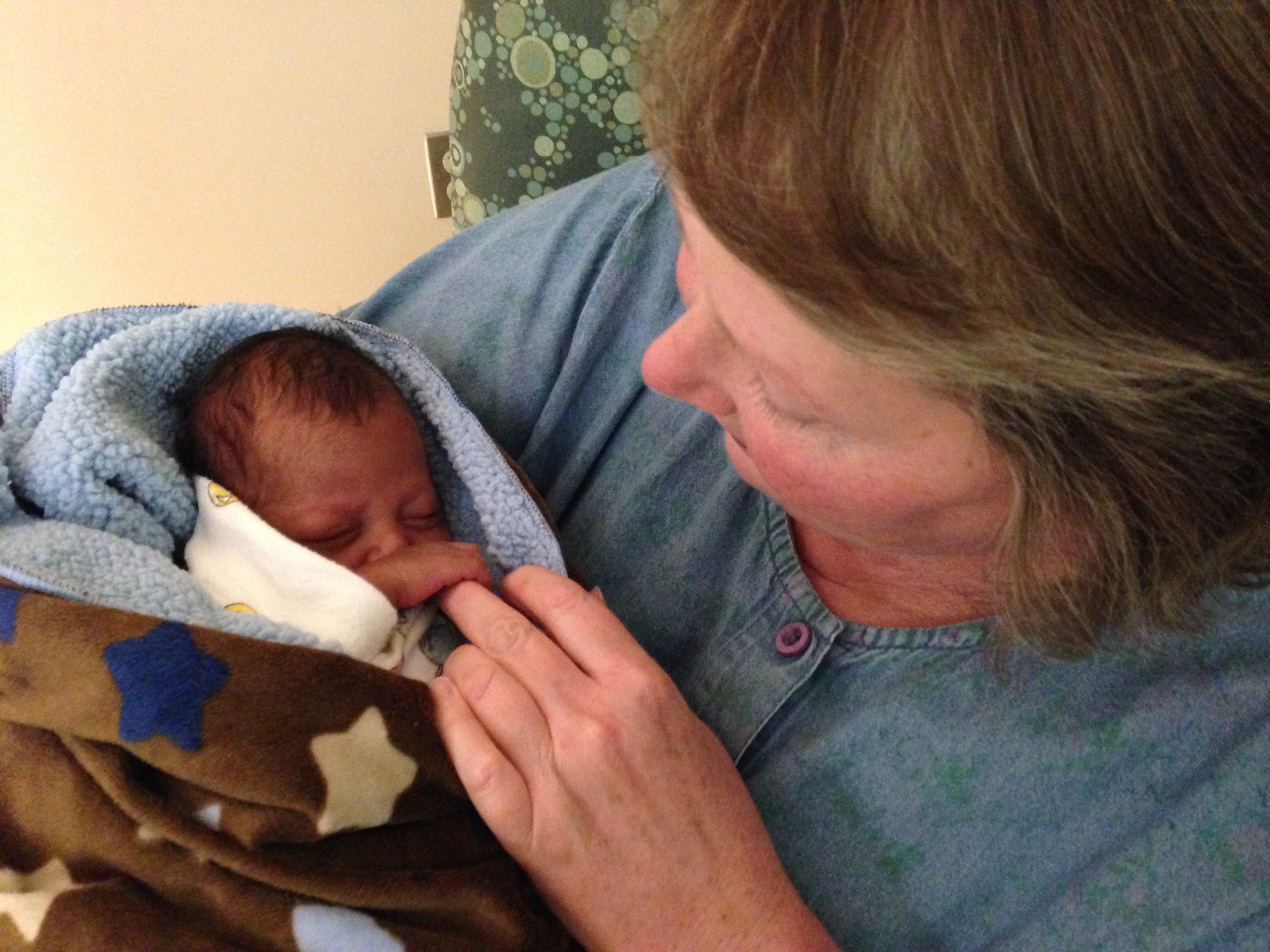
I got to hold him for the first time. 🙂 I thought I couldn’t until he got out of the NICU, but when they offered, I said yes!

3. Paying it forward. When I stopped to get my weekly pass for the hospital parking lot, the attendant told me someone had “paid forward” a weekly pass for the next person who needed one. That’s the first time anything like that has ever happened to me, and it was a blessing.

4. Pitching in. Last weekend Jason and Mittu were expecting company and needed a few little things done around the house before they came. Their guest bed had broken when they moved plus they’d ordered the crib but hadn’t had a chance to put it together, plus with recovering from childbirth and then spending time at the hospital, they were understandably behind on some things. Jim, Jesse, and I went over last Saturday morning so they could help put things together and I could help with whatever else needed to be done. I had originally thought I wouldn’t be able to go because Grandma’s (I guess I should say Great-Grandma now!) caregiver was going out of town, but that turned out to be the next weekend. It was fun to be able to help in a concrete way and to do it all together. Plus they ordered pizza when we were done. 🙂

5. A four day weekend. Monday was Memorial Day and Jim took Friday off, too.

Hope you have a great weekend!

Give-away: E-version of The Tenth Plague

The-Tenth-PlagueSeveral days ago I commented on a post on Adam Blumer’s Facebook page to be entered in a drawing for an e-version of his book, The Tenth Plague. I had thought I was entering to win his new book – which, if I’d thought about it for a second, I would have realized that wasn’t possible because it is not even out yet (I can be a little dense sometimes. 🙂 ). I did happen to win Adam’s drawing, and since I’ve already read The Tenth Plague (reviewed here, along with an author interview), I asked him if I could have a copy sent to one of you instead, and he agreed.

The story is a sequel to Adam’s first novel, Fatal Illusions (reviewed here), but can be read independently. It involves Marc and Jillian Thayer, who have just adopted a new baby boy, and a friend has invited them to  a Christian-themed resort for some rest and time together as a new family. But soon odd things begin to happen: someone rigs the water system to dispense what appears to be blood from the faucets. At first this is thought to be a weird prank, but soon other events occur which are based on the ten plagues of Egypt found in the book of Exodus in the Bible. Marc and a retired detective friend try to find out what is going on while Gillian runs into someone from her past who has hurt her deeply. One of the major themes in the book is the need to extend forgiveness.

Adam writes suspense very well, and his characters are realistic, everyday Christian people trying to discern and apply God’s will in their circumstances.

You can read an excerpt here.

If you’d like to be entered in a drawing for a free Kindle or Nook version of The Tenth Plague, leave one comment on this post. I’ll use random.org to draw a name from among the comments next Wed. morning (June 4).

The drawing is concluded and the winner is Lou Ann! I’ll be contacting her shortly. Thank you all for entering!

What’s On Your Nightstand: May 2014

What's On Your NightstandThe folks at 5 Minutes For Books host What’s On Your Nightstand? the fourth Tuesday of each month in which we can share about the books we have been reading and/or plan to read.

Since last time I have completed:

Mere Christianity by C. S. Lewis, reviewed here. Great Christian classic.

Wednesdays Were Pretty Normal: A Boy, Cancer, and God by Michael Kelley, reviewed here. Probably will be one of my top ten books of the year.

The Great Divorce by C. S. Lewis, reviewed here. Interesting….

Courageous by Randy Alcorn, audiobook, reviewed here.

My Man Jeeves by P. D. Wodehouse, audiobook, for Carrie’s  Reading to Know Classics Book Club selection for April, reviewed here. Wodehouse is always good for some light-heartedness.

The Little White Horse by Elizabeth Goudge for Carrie’s  Reading to Know Classics Book Club selection for March. I was very late with this one. Reviewed here. It was ok – I didn’t enjoy it as much as I thought I would.

The Seamstress: A Memoir of Survival by Sara Tuvel Bernstein, audiobook, reviewed here. Probably will be another of my top ten books of the year. (Actually, looking at my last Nightstand post, I had finished it last month but didn’t get the review up until later).

I’m currently reading:

The Brothers Karamazov by Fyodor Dostoyevsky via audiobook. It’s not on Carrie’s  Reading to Know Classics Book Club list until August, but I know it will take a while to get through and I wanted to get a head start.

Loving the Church by John Crotts, sent to me by Carrie a long time ago.

Next up:

The Book of Three by Alexander Lloyd, first book in the Prydain Chronicles.

Why We Are Not Emergent: By Two Guys Who Should Be by Kevin DeYoung, Ted Kluck, and David F. Wells (which makes 3 guys….)

The Knowledge of the Holy by A. W. Tozer

I’m wanting to get through my TBR Challenge list, but I am also wanting to take a break and read something just for fun, too. I’ve been itching to get to Dee Henderson’s Undetected, so I may lay aside the lists and challenges and do that.

Book Review: Mere Christianity

Mere ChristianityI first read Mere Christianity by C. S. Lewis some seven or so years ago and tried to write a review, but ended up mainly just listing quotes, which is not a review. It wasn’t hard to read or to follow — for the most part Lewis’s thinking was actually pretty easy to track, and he writes in a logical, almost conversational style rather than like a theology textbook. It was more a matter of there being too much to take in and process and too many goods things to share to reduce it to anything like a review. I read a quote by Elisabeth Elliot (which I neglected to keep track of) something to the effect that she could understand Lewis by reading him through the first time, but needed to read him again to be able reconstruct his arguments. I feel the same way. I’m thankful The Cloud of Witnesses Challenge sponsored by Becky at Operation Actually Read Bible spurred me to pick this up again. I feel I got much more from it this time, maybe just because of a second reading, maybe because of several years of (hopefully) maturing in the meantime, maybe because our church has been talking about “Coffee Shop Apologetics” on Wednesday nights using some of Lewis’s material here and there.

It is interesting to read how Lewis came from an atheistic background and what the Lord used to convince him that Christianity was the truth. Although this book is not his “testimony” per se, he does touch on his own personal journey to faith.

The book is divided into four sections: “Right and Wrong as a Clue to Meaning in the Universe,” in which he argues for Christianity and why it is the best solution to universal moral and logical dilemmas, then “What Christians Believe,” “Christian Behavior,” and “Beyond Personality: Or First Steps in the Doctrine of the Trinity.” Originally the various segments were radio talks in the 1940s which were then tweaked to better fit written form.

I have many more places marked than I can possibly share here. Goodreads has a list of several quotes from the book, some you’ll recognize as classic Lewis. One of my favorite quotes about love comes from this book. Here are a few others hat stood out to me:

From the chapter “We Have Cause to Be Uneasy”:

For the trouble is that one part of you is on His side and really agrees with his disapproval of human greed and trickery and exploitation. You may want Him to make an exception in your own case, to let you off this one time; but you know at bottom that unless the power behind the world really and unalterably detests that sort of behaviour, then He cannot be good. On the other hand, we know that if there does exist an absolute goodness it must hate most of what we do. This is the terrible fix we are in. If the universe is not governed by an absolute goodness, then all our efforts are in the long run hopeless. But if it is, then we are making ourselves enemies to that goodness every day, and are not in the least likely to do any better tomorrow, and so our case is hopeless again. We cannot do without it, and we cannot do with it. God is the only comfort, He is also the supreme terror: the thing we must need and the thing we most want to hide from. He is our only possible ally, and we have made ourselves His enemies. Some people talk as if meeting the gaze of absolute goodness would be fun. They need to think again. They are still only playing with religion. Goodness is either the great safety or the great danger -according to the way you react to it. And we have reacted the wrong way.

From the chapter “The Practical Conclusion”:

[The Christian] does not think God will love us because we are good, but that God will make us good because he loves us.

From the chapter “Social Morality”:

I may repeat “Do as you would be done by” till I am black in the face, but I cannot really carry it out till I love my neighbor as myself: and I cannot learn to love my neighbor as myself until I learn to love God.

From the chapter “Sexual Morality”:

We may, indeed, be sure that perfect chastity-like perfect charity-will not be attained by any merely human efforts. You must ask for God’s help. Even when you have done so, it may seem to you for a long time that no help, or less help than you need, is being given. Never mind. After each failure, ask forgiveness, pick yourself up and try again. Very often what God first helps us towards is not the virtue itself but just this power of always trying again. For however important chastity (or courage, or truthfulness, or any other virtue) may be, this process trains us in habits of the soul which are more important still. It cures our illusions about ourselves and teaches us to depend on God. We learn, on the one hand, that we cannot trust ourselves even in our best moments, and, on the other, that we need not despair even in our worst, for our failures are forgiven. The only fatal thing is to sit down content with anything less than perfection.

From the chapter “The Great Sin”:

Pleasure in being praised is not Pride. The child who is patted on the back for doing a lesson well, the woman whose beauty is praised by her lover, the saved soul to whom Christ says, “Well done,” are all pleased and ought to be. For here the pleasure lies not in what you are but in the fact that you have pleased someone you wanted (and rightly wanted) to please. The trouble begins when you pass from thinking, “I have pleased him; all is well,” to thinking, “What a fine person I must be to have done it.”

That was immensely helpful to me. I don’t know if anyone else experiences this, but sometimes when you receive a compliment, then you feel a rush of pleasure, that feel guilty for that pleasure and feel you need to redirect the attention to the Lord, and in trying to do so sound awkward and overly pious. For that reason, when someone, say, sings a solo in church that I enjoyed, I try to tell them it blessed my heart rather than just “I enjoyed your song this morning.” Though I mean the same thing by both sentences, the second one makes people feel awkward and self-conscious. This thought did help me to understand it’s not wrong to feel pleasure in pleasing someone else or accepting a compliment.

From the same chapter:

Do not imagine that if you meet a really humble man he will be what most people call “humble” nowadays: he will not be a sort of greasy smarmy person, who is always telling you that, of course, he is a nobody. Probably all you will think about him is that he seemed a cheerful, intelligent chap who tool a real interest in what you said to him….He will not be thinking about humility: he will not be thinking about himself at all.

From the chapter “Charity”:

Good and evil both increase at compound interest. That is why the little decisions you and I make every day are of such infinite importance. The smallest good act to-day is the capture of a strategic point from which, a few months later, you may be able to go on to victories you never dreamed of. An apparently trivial indulgence in lust or, anger to-day is the loss of a ridge or railway line or bridgehead from which the enemy may launch an attack otherwise impossible.

From the same chapter:

Nobody can always have devout feelings: and even if we could, feelings are not what God principally cares about. Christian Love, either towards God or towards man, is an affair of the will. If we are trying to do His will we are obeying the commandment, ‘Thou shalt love the Lord thy God.’ He will give us feelings of love if He pleases. We cannot create them for ourselves, and we must not demand them as a right. But the great thing to remember is that, though our feelings come and go, His love for us does not. It is not wearied by our sins, or our indifference; and, therefore, it is quite relentless in its determination that we shall be cured of those sins, at whatever cost to us, at whatever cost to Him.

From the chapter “Hope”:

If I find in myself a desire which no experience in this world can satisfy, the most probable explanation is that I was made for another world. If none of my earthly pleasures satisfy it, that does not prove that the universe is a fraud. Probably earthly pleasures were never meant to satisfy it, but only to arouse it, to suggest the real thing. If that is so, I must take care, on the one hand, never to despise, or be unthankful for, these earthly blessings, and on the other, never to mistake them for the something else of which they are only a kind of copy, or echo, or mirage. I must keep alive in myself the desire for my true country, which I shall not find till after death; I must never let it get snowed under or turned aside; I must make it the main object of life to press on to that other country and to help others to do the same.

From the chapter “Faith”:

But supposing a man’s reason once decides that the weight of the evidence is for [Christianity]. I can tell that man what is going to happen to him in the next few weeks. There will come a moment when there is bad news, or he is in trouble, or is living among a lot of other people who do not believe it, and all at once his emotions will rise up and carry out a sort of blitz on his belief. Or else there will come a moment when he wants a woman, or wants to tell a lie, or feels very pleased with himself, or sees a chance of making a little money in some way that is not perfectly fair: some moment, in fact, at which it would be very convenient if Christianity were not true. And once again his wishes and desires will carry out a blitz. I am not talking of moments at which any real new reasons against Christianity turn up. Those have to be faced and that is a different matter. I am talking about moments when a mere mood rises up against it.

Now Faith, in the sense in which I am here using the word, is the art of holding on to things your reason has once accepted in spite of your changing moods. For moods will change, whatever view your reason takes. I know that by experience. Now that I am a Christian I do have moods in which the whole thing looks very improbable: but when I was an atheist I had moods in which Christianity looked terribly probable. This rebellion of your moods against your real self is going to come anyway. That is why Faith is such a necessary virtue unless you teach your moods ‘where they get off,’ you can never be either a sound Christian or even a sound atheist, but just a creature dithering to and fro, with its beliefs really dependent on the weather and the state of its digestion. Consequently one must train the habit of Faith.

From a second chapter titles “Faith”:

And, in yet another sense, handing everything over to Christ does not, of course, mean that you stop trying. To trust Him means, of course, trying to do all that He says. There would be no sense in saying you trusted a person if you would not take his advice. Thus if you have really handed yourself over to Him, it must follow that you are trying to obey Him. But trying in a new way, a less worried way. Not doing these things in order to be saved, but because He has begun to save you already. Not hoping to get to Heaven as a reward for your actions, but inevitably wanting to act in a certain way because a first faint gleam of Heaven is already inside you (emphasis mine).

From the chapter “Nice People or New Men”:

But we must not suppose that even if we succeeded in making everyone nice we should have saved their souls. A world of nice people, content in their own niceness, looking no further, turned away from God, would be just as desperately in need of salvation as a miserable world – and might even be more difficult to save.

For mere improvement is not redemption, though redemption always improves people even here and now and will, in the end, improve them to a degree we cannot yet imagine. God became man to turn creatures into sons: not simply to produce better men of the old kind but to produce a new kind of man…

If what you want is an argument against Christianity (and I well remember how eagerly I looked for such arguments when I began to be afraid it was true) you can easily find some stupid and unsatisfactory Christian and say, ‘So there’s your boasted new man I Give me the old kind.’ But if once you have begun to see that Christianity is on other grounds probable, you will know in your heart that this is only evading the issue. What can you ever really know of other people’s souls-of their temptations, their opportunities, their struggles? One soul in the whole creation you do know: and it is the only one whose fate is placed in your hands. If there is a God, you are, in a sense, alone with Him. You cannot put Him off with speculations about your next door neighbours or memories of what you have read in books. What will all that chatter and hearsay count (will you even be able to remember it?) when the anaesthetic fog which we call ‘nature’ or `the real world’ fades away and the Presence in which you have always stood becomes palpable, immediate, and unavoidable?

There were a very few places I disagreed with him. In “The Perfect Penitent” he thinks the theory “about our being let off because Christ had volunteered to bear a punishment instead of us” is a silly one and says he doesn’t understand the point of punishing an innocent person for a guilty one, though he says he can understand it better in terms of paying a debt. I’m not sure how he could have missed the teaching that God’s just letting us off the hook would be a violation of His justice and righteousness, and Christ’s innocent death satisfied that justice (Romans 3:24-26). In “The Practical Conclusion” he says “a Christian can lose the Christ-life which has been put into him, and he has to make efforts to keep it,” which I would disagree with very much. When we’re saved we are born again: we don’t get unborn. Our spiritual life may get weak and sickly with neglect, and we do need to nurture that life and mature in it, but we don’t lose it. Then in “Counting the Cost” he says that God said in the Bible that we are “gods” and “He will make the feeblest and filthiest of us into a god or goddess, dazzling, radiant, immortal creature…which reflects back to God perfectly (though, of course, on a smaller scale) His own boundless power and delight and goodness)”. I’m not quite sure how to take him there. Both Psalm 82:6-7 and John 10:34-36 have the term “You are gods,” and, frankly, I am not quite sure what is meant in those cases, either. The Bible talks about us becoming one with the Father and Son and becoming partakers of the divine nature, but we don’t become Deity like Christ is. I don’t think Lewis is saying that we do – I am just not sure what he is saying. If you’ve read his Space Trilogy, you know he portrays the mythical gods and goddesses as some kind of created being more powerful than humans but not like angels, either. Perhaps all he is talking about it what we’ll be like in glory: perfected yet still less than God the Father and Jesus Christ. And in “The Practical Conclusion,” he says that three things that spread the “Christ-life” to us are baptism, belief, and communion (the Lord’s Supper). I would say only faith does: the others are matters of obedience and blessing, but they are symbolic and not life-giving in themselves (see the outline for “Why We Know Baptism Does Not Save.”)

Much more could be discussed, on these points or others in the book. Despite those few caveats mentioned, I feel this is a valuable book and one of those Christian classics that everyone should read at least once, probably several times over.

(This will also be linked to Semicolon‘s Saturday Review of Books.)

Two Memorials

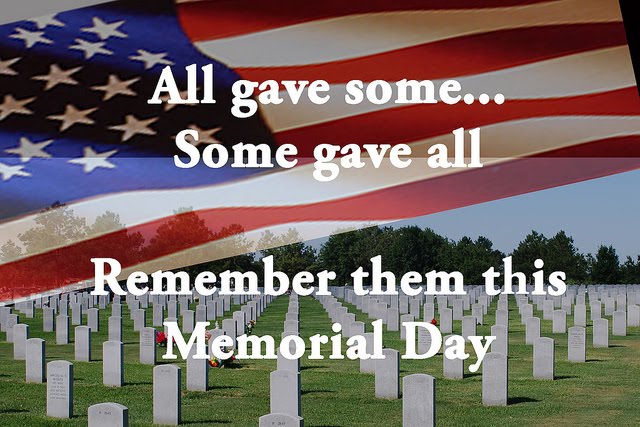
On this Memorial Day I want to honor those who paid the ultimate price for the freedoms we have today…

memorial-day2014

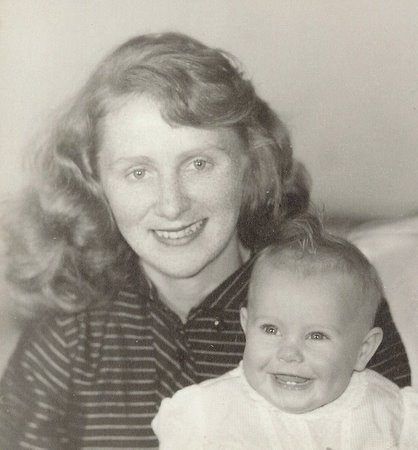
…And my mother, who would have been 77 today but passed away nine years ago:

image03.jpg

Friday’s Fave Five

 It’s Friday, time to look back over the blessings of the week with Susanne at Living to Tell the Story and other friends.

After all the busy-ness of the last couple of weeks, this one has been refreshingly relaxing, at least since Sunday. Here are five favorite parts of it.

1. Jesse’s graduation party. We enjoyed visiting with a few friends and then munching on leftover goodies for the next few days. 🙂 Plus after the flurry of housecleaning in preparation for it, it was nice not to have to think about all of that for a few days.

2. Chinese take-out. After the party my son and daughter-in-law offered to pick up Chinese take out for dinner. It was lovely to just crash and relax afterwards.

3. Timothy (baby grandson in the NICU) is at 5 lbs. now! They’ve said going home is “on the horizon.” I think they’re primarily just waiting for his heart-rate drops to stabilize: he’ll have to go 5 days without one before he will be able to go home.

4. Catching up on sleep. Much needed, much appreciated.

5. Catching up on my Feedly account of the blogs I try to keep up with – though I am behind again now. 🙂 But I should be able to catch up again over the weekend.

Hope you have a great Memorial Day weekend!

Book Review: Wednesdays Were Pretty Normal

Wednesdays-Were-Pretty-NormalWhen Wednesdays Were Pretty Normal by Michael Kelley showed up on a list of Kindle books on sale at the time, the sub-title caught my eye: A Boy, Cancer, and God. Although I’ve wrestled with the truth of God’s allowing suffering many times and come to some kind of peace with it, I still have to go through those truths some times, especially concerning the suffering of a child. Even though I knew this book would be heart-rending and gut-wrenching, I wanted to hear the story and hear how the author dealt with it. I think I am so often drawn to books like this because I know the truths the author has learned are not going to be just armchair theology: they’ve been tested in the extremities of real life, life that isn’t going the way one would have expected or hoped.

The story begins with a visit to the doctor to treat a rash on two and a half year old Joshua, the author’s son. A blood test showed that Joshua had leukemia, with 82% of his blood cells affected. Immediately questions flooded Michael’s stunned mind: the physical (Are you sure? He looks fine! How do we treat this? Is Joshua going to die?) as well as the spiritual (Why, God? Did we do something wrong?).

Michael then tells about Joshua’s three year chemotherapy regimen, the effects of not only the chemotherapy but also the massive amounts of steroids, time in the hospital, the strain of not being able to play with other kids or even go on a fast food playground due his immune system, hair loss, etc. The title comes from the fact that Wednesdays were the day before Joshua’s regular cancer treatments, so he was feeling his best and those days were more normal than the rest.

But most of the book is spent on how the author dealt with his son’s illness and its effects spiritually. Having grown up with his basic needs being met and without any really major problems, he “realized faith had never been hard. It had never been work. But it surely was now.”

“This was a moment when we couldn’t just have faith; we had to choose faith. It had to be as conscious as any other decision….If my family was really going to choose faith, then we would have to come to grips with the fact that there are parts of God and His plan that at best we don’t understand; at worst we don’t even like. We could no longer pick and choose certain parts of our belief system; we had to embrace it all.”

“There is nothing quite like pain to force long-held ideals and beliefs from the comfort of intellectualism into the discomfort of reality and trying to square with them there.”

“Coming to the knowledge that you thought you knew something inside and out and then figuring out you really don’t know it at all is a strange feeling.”

There are some ramifications of cancer in the family that you would expect: pain, financial considerations, hospital time, weariness of working long days and spending long nights with a child who is not feeling well, etc. But the author deals with some that I probably would not have thought of otherwise. One was his own loss of identity. He’d left his job as a pastor to fulfill a dream of writing and speaking while his wife worked full time, but when this happened, she needed to stay with Joshua, so Michael has to find a regular 9-5 office job that he disliked. “I missed my old life. Everything that had made me feel important and significant was gone, and I was facing a crisis of self-identification. I felt poor, not just in the wallet but in my sense of self. Poor is more than a description of a financial state. It’s a state of being. And according to Jesus, being poor is being blessed.” He found comfort in the story of the rich young ruler. “People defined him the same way we define him today – as rich, as young, and as a ruler. Jesus wanted more for him. He wanted to get to this man’s core, to his real self. Selling his possessions would strip this man of his marks of identity. Only by stripping those things away, in that moment of crisis, could he define himself the way Jesus wanted – by his faith.”

One of the concepts that spoke the most to me was the idea of being “between.” When Joshua went into remission, the chemotherapy and everything involved still had to continue, and his father felt like his life was paused, stuck between “the good old days” when everything was normal and the future when everything would hopefully be normal again. A couple of instances in the Bible of God’s ministering to people similarly “stuck” in a “between” time helped, like Paul’s thorn in the flesh and God’s promised grace in II Corinthians 12:9-10 and Jeremiah’s prophesy to Israelites who were going to have to remain in captivity for a number of years (Jeremiah 29, especially verse 11).

“The good parts of living “in between” are many. Such a life makes you realize more and more that this earth is not your home, and you consequently begin to long for heaven. A life between develops perseverance and character that wouldn’t have been there otherwise. And a life between forces you to a dependence on Jesus that you might not have chosen except for the pain.”

“This was going to be a long journey. A journey of years. There was to be no immediate relief for the pain, but as Paul discovered, that didn’t mean the Lord was absent.”

“The days when we were at the end of our rope were also the days when the sustaining grace and strength of God were to be most visible. He did not promise us that the pain would go away; but he did promise that in the midst of it, His grace would be all that we needed. We were left with the hard choice of believing that to be true. We had to choose to trust not in our own ability to be patient with a child on steroids, or even to get out of bed in the morning, but in the One who promised He would be strong in our stead. But the great news of the gospel is that the power to sustain us comes from Jesus, who knows even better than we do what it is like to have one foot in heaven and one foot on earth. Sustaining grace for life between comes from One who knows both the glory and the pain.”

“[Jesus] was more than capable of eradicating cancer from my little boy’s body. But He didn’t. And maybe that’s because, in His wisdom, He knew that doing so immediately and publicly would be, in some way, short-changing the ultimate healing He wanted to accomplish. Living in the meantime has brought to light diseases I didn’t know I had. It’s brought to light my shallowness…my idealistic view of faith…my dependence on circumstances [and more]. Had Jesus chosen to heal Joshua immediately and pluck us from the grip of the meantime, these diseases would have remained firmly implanted in my heart and soul…From that perspective, Jesus’ refusal to heal immediately is really His commitment to longer, better, more complete healing.”

“Hope is the confidence that even during the meantime God is still busy.”

“It’s not that I thought God was using my son as some sort of object lesson to me: that wasn’t it at all. It was more the sense that, whether we knew it or not, the Lord was using cancer to break up unplowed ground in my heart.”

“I didn’t have the luxury of a passive faith any more…Real faith is active. And it’s hard. Faith is something you have to fight for. It’s something you have to choose. And you have to fight and choose in the face of evidence rather than with the evidence on your side.”

I have a multitude more quotes marked, but I probably should not reprint that much of the book. 🙂

There were a couple of places I didn’t quite agree with the author’s interpretation of a passage, but I don’t feel the need to delineate those here.

I didn’t realize, when I chose this as one of my books for the TBR challenge, or when I started reading it some time back, that I’d be smack in the middle of it when my son and daughter-in-law’s child arrived 11 weeks early. Though the health situations for a preemie and a cancer patient are very different, parts of the book especially ministered to me at this time, especially the sections about life being “on hold” in a “between” phase of a long medical situation.

Overall I would highly recommend this book not only to those with children who are ill in some way, but to anyone who wrestles with why God allows suffering.

(This will also be linked to Semicolon‘s Saturday Review of Books.)

Book Review: Courageous

CourageousCourageous is a novelization by Randy Alcorn of a movie by the same name written by  Alex and Stephen Kendrick and produced by the same church that produced Facing the Giants and Fireproof. I’ve never seen the film, but when the audiobook was on sale I decided to check it out.

The basic theme of the book is encouraging fathers to be men of integrity and to take the responsibility to raise their children in a godly manner as well as mentoring other young men. The story follows four men who are policemen and a fifth who is not on the force but becomes a good friend. Law enforcement has to be one of the toughest jobs on families, so I can see why the authors chose that profession for their characters.

A couple of the fathers are on the right track but need guidance and wisdom and maybe a little course correction, at least for one of them, before major trouble hits. One means well but is alienating his son with his lack of involvement and interest. Another fathered a child in a former relationship but hasn’t seen mother or child in years. When a tragedy strikes one of them, it sends repercussions throughout their whole group.

A subplot involves a gang that is wreaking havoc in the town of Albany, Georgia, their various encounters with the police force, and one fatherless wannabe gang member in particular.

Though the premise of the story is a good one, the writing is driven more by the points the author wants to make than by the plot or the characters, an accusation often aimed at Christian fiction. Nevertheless, the points are good ones, and if you think of it more as an extended parable or sermon illustration than a novel it’s a little easier to take.

I enjoyed a phone interview with Alcorn at the end of the audiobook in which he discussed the ramifications of expanding a two-hour screen play into a full length novel, when usually the process goes the opposite direction. I appreciated, too, the point he made that a film will reach many people, but when people read a book, they’re spending 10 or more hours with it and thus the principles involved have a longer time to affect the reader’s thinking.

One little quibble I had with the story involved the resolution that the fathers all eventually sign. One father came up with it after studying out what the Bible had to say about being a godly father, and when he told the others about it, they wanted to sign it, and eventually word of it and promotion for it went out to the whole church. The resolution sounds like a good thing in itself, but like so many of these kinds of things, the emphasis shifts to it rather than the principles behind it. After the resolution, instead of a character saying, “I can’t do this…” or “I must do this…” because of Biblical instruction or principle, they say I can’t or I must do such and such “because I signed the resolution.” When I was composing this post in my head before sitting down to write, my mind went to various scenarios where we tend to shift our focus to the tool rather than the reason for it: starting a Bible study program to aid in reading and understanding the Bible, and then getting caught up in the tenets of the program rather then delving deeper into the Bible, or having an accountability group to encourage one another in a certain area, and then experiencing a subtle change in our thinking to want to look good in the eyes of the members rather than growing in holiness before God. Small groups are not my favorite thing, but I do acknowledge they can be beneficial, and I acknowledge that they work best if everyone in the group participates, yet that participation doesn’t mean that every member must say something every meeting. I tend to say something if I have something to say, but sometimes I’m processing, sometimes I’m still on the point made ten minutes ago when the rest of the group has moved on, etc. Once when I hadn’t said anything in a couple of meetings, our group leader spoke to my husband and wondered if he should call on me during the meetings – perhaps he thought I was shy and needed the encouragement to speak out (though calling on a shy person in public would NOT be an encouragement to them!) My husband, thankfully, said that would probably not be the thing to do. Then a few days later, our leader’s wife called to ask me to do something for an upcoming activity, in what seemed a subtle attempt to “get Barbara involved,” when I was involved and participating all along, even if I wasn’t saying anything. That kind of thing puts pressure on a person to feels she has to dream up something to say every week so people don’t think she’s unspiritual, which is totally fake and, again, turns the focus on the tool (getting everyone to participate by making everyone speak in small group) rather than on the reason the group is meeting in the first place.

Please forgive the rabbit trail. 🙂 I don’t have a problem with the resolution itself (or any of these other tools), but with this tendency to focus on the tool rather than using the tool to help us focus on the Lord. I did also appreciate a point Alcorn made in the phone interview, that this book and film are not “the” tools, but just some tools that churches or groups could use. Most churches who preach and teach anything about godly fatherhood would incorporate the principles in the book, but it helps some to have a vehicle like this in which to do so, and that’s primarily what the authors wanted to do: to provide a film and book that would be food for thought and and encouragement to people in their walk with God.

I finished the book a week or two ago but had wanted to see the film before writing this review. However, there is no telling when I might get time for that, so I wanted to go ahead and get this review up. I thought the audiobook narrator, Roger Mueller, did a wonderful job reading the book, but I could have done without the dramatic music between chapters.

(This will also be linked to Semicolon‘s Saturday Review of Books.)