Be Encouraged: Wiersbe on 2 Corinthians

The church in Corinthians had lots of problems. 2 Corinthians is actually the fourth letter Paul wrote to the church at Corinth. His second letter to them is our 1 Corinthians. Some of Paul’s opponents had invaded the church and stirred up rebellion. A previous visit by Paul to deal with the issues had not gone well. Paul left and then sent by Titus a “severe” letter. He rejoiced that many in Corinth repented. So in this letter, Paul wanted to encourage those who had repented but warn those who had not.

He also had to defend his apostleship from various charges.

Plus, the Corinthians had promised some time before to send an offering for the poor in Jerusalem, but had not done so yet. Paul planned to pick up their donations to take along with what he had collected from other churches, so he encouraged them to give and give cheerfully. The offering would not only help meet material needs, but would help unite the Jewish and Gentile congregations.

Dr. Warren W. Wiersbe’s short commentary on 1 Corinthians is Be Encouraged (2 Corinthians): God Can Turn Your Trials Into Triumphs.

In the first chapter, Wiersbe writes:

One of the key words in this letter is comfort or encouragement. The Greek word means “called to one’s side to help.” The verb is used eighteen times in this letter, and the noun eleven times. In spite of all the trials he experienced, Paul was able (by the grace of God) to write a letter saturated with encouragement.

What was Paul’s secret of victory when he was experiencing pressures and trials? His secret was God. When you find yourself discouraged and ready to quit, get your attention off of yourself and focus it on God. Out of his own difficult experience, Paul tells us how we can find encouragement in God (p. 18).

Wiersbe also points out:

The words comfort or consolation (same root word in the Greek) are repeated ten times in 2 Corinthians 1: 1–11. We must not think of comfort in terms of “sympathy,” because sympathy can weaken us instead of strengthen us. God does not pat us on the head and give us a piece of candy or a toy to distract our attention from our troubles. No, He puts strength into our hearts so we can face our trials and triumph over them. Our English word comfort comes from two Latin words meaning “with strength.” The Greek word means “to come alongside and help.” It is the same word used for the Holy Spirit (“ the Comforter”) in John 14—16.

God can encourage us by His Word and through His Spirit, but sometimes He uses other believers to give us the encouragement we need (2 Cor. 2: 7–8; 7: 6–7) (p. 20).

Dr. Wiersbe also shares that “There are ten basic words for suffering in the Greek language, and Paul uses five of them in this letter” (p. 20).

I won’t go point by point through Corinthians–Wiersbe includes an outline as well as discussion. But some of the most well-known passages in this book of the Bible are these: God comforts us in all our affliction and we comfort others (1:2-7); when we behold God, we become more like Him (3:18), “we have this treasure in jars of clay, to show that the surpassing power belongs to God and not to us” (4:7-12), though outwardly we’re wasting away, inwardly we’re renewed day by day, and our “light momentary affliction” prepares for us “an eternal weight of glory beyond all comparison” (4:16-18), the ministry of reconciliation (5), Now is the day of salvation (6:2), we’re God’s temple and shouldn’t be yoked up with darkness (6:14-18), godly grief vs. worldly grief (7:5-12), grace giving (8:1-15), the cheerful giver, sowing and reaping (9:1-15), “God is able to make all grace abound to you, so that having all sufficiency in all things at all times, you may abound in every good work” (9:8), Paul’s thorn in the flesh, God’s strength in our weakness, (12:7-10), “Examine yourselves, to see whether you are in the faith” (13:5).

Some other quotes from Wiersbe that stood out to me:

The word sufficiency means “adequate resources within” (see Phil. 4: 11). Through Jesus Christ, we can have the adequacy to meet the demands of life. As Christians, we do need to help and encourage one another; but we must not depend on one another. Our dependence must be on the Lord. He alone can give us that “well of water” in the heart that makes us sufficient for life (John 4: 14) (p. 117).

God did not give Paul any explanations; instead, He gave him a promise: “My grace is sufficient for thee.” We do not live on explanations; we live on promises. Our feelings change, but God’s promises never change. Promises generate faith, and faith strengthens hope (p. 160).

How do people measure the ministry today? By powerful oratory or by biblical content? By what the media says or by Christian character? (p. 169).

Paul prayed for their perfection, which does not mean absolute sinless perfection, but “spiritual maturity.” The word is part of a word family in the Greek that means “to be fitted out, to be equipped.” As a medical term, it means “to set a broken bone, to adjust a twisted limb.” It also means “to outfit a ship for a voyage” and “to equip an army for battle.” In Matthew 4: 21, it is translated “mending nets.”

One of the ministries of our risen Lord is that of perfecting His people (Heb. 13: 20–21). He uses the Word of God (2 Tim. 3: 16–17) in the fellowship of the local church (Eph. 4: 11–16) to equip His people for life and service. He also uses suffering as a tool to equip us (1 Peter 5: 10). As Christians pray for one another (1 Thess. 3: 10) and personally assist one another (Gal. 6: 1, where “restore” is this same word perfect), the exalted Lord ministers to His church an makes them fit for ministry (pp. 170-171).

Sometimes the minister of the Word must tear down before he can build up (see Jer. 1: 7–10). The farmer must pull up the weeds before he can plant the seeds and get a good crop. Paul had to tear down the wrong thinking in the minds of the Corinthians (2 Cor. 10: 4–6) before he could build up the truth in their hearts and minds. The negative attitude of the Corinthians made it necessary for Paul to destroy, but his great desire was to build (pp. 171-172).

2 Corinthians closes with a well-known benediction: “The grace of the Lord Jesus Christ and the love of God and the fellowship of the Holy Spirit be with you all” (13:14).

Wiersbe says of this verse:

If each believer is depending on the grace of God, walking in the love of God, and participating in the fellowship of the Spirit, not walking in the flesh, then he will be a part of the answer and not a part of the problem. He will be living this benediction—and being a benediction to others! (p. 174).

Amen.

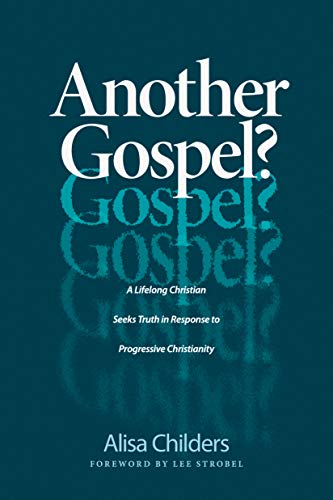
Another Gospel? A Lifelong Christian Seeks Truth in Response to Progressive Christianity

Alisa Childers’ faith wasn’t shaken by an atheist professor or a New Age neighbor.

Her beliefs were dismantled by her pastor.

She knew and trusted him. He had invited a select group of “out of the box thinkers” to a special class, a “safe zone to process our doubts and questions.” Alisa was surprised when he began to question and then to take apart the doctrines she had always believed.

“I wouldn’t hear the term progressive Christianity until years later. But it was clear that this group of people wanted to ‘progress’ beyond the Christianity they had known. They were going through what would practically become a rite of passage in this new and flourishing movement: deconstruction. In the context of faith, deconstruction is the process of systematically dissecting and often rejecting the beliefs you grew up with” (p. 24).

There were things that bothered Alisa about Christianity as it had always been presented, things like massive altar calls where people streamed forward. Did those people know what they were doing? Did their decision “stick?”

But those things didn’t cause her to question her foundational beliefs. Her pastor’s class did. She realized she knew what she believed, but not why. She had grown up in a Christian family who actively ministered to others. But her faith was “intellectually weak and untested” (p. 5).

“When progressive Christianity first entered the scene, its proponents raised some valid critiques of evangelical culture that the church needed to examine and reevaluate. But those progressives who reject essential teachings—like the physical resurrection of Jesus—can confuse unsuspecting Christians and kick the foundation out from under them” (p. 8).

This class led her into a dark pit, “a spiritual blackout—a foray into darkness like I’d never known” (p. 8). What if everything she had ever believed was false? Another girl in the class stood next to her in choir practice one day and said, “It’s funny that we’re all singing these songs and none of us have any idea what we believe!” (p. 28).

That wasn’t good enough for Alisa. “When I have doubts about my faith, or deep nagging questions that keep me up at night, I don’t have the luxury of finding ‘my truth’ because I am committed to the truth. I want to know what is real. I want my worldview (the lens through which I see the world) to line up with reality. God either exists, or he doesn’t. The Bible is his Word, or it’s not. Jesus was raised from the dead, or he wasn’t. Christianity is true, or it isn’t. There is no ‘my truth’ when it comes to God” (p. 10).

“I wanted to progress in my faith . . . in my understanding of God’s Word, my ability to live it out, and m relationship with Jesus. But I didn’t want to progress beyond truth” (p. 25).

Alisa prayed for God to send her a lifeboat. And He did, sending more than one. Alisa took time to study in detail the claims of the foundational doctrines of Christianity. It was a long process. Sometimes her study brought up more questions.

“Slowly and steadily, God began to rebuild my faith. The questions that had knocked the foundation out from under my beliefs—the ones I had never thought to ask, the ones I didn’t know existed—were not simply being answered. They were being dwarfed by substantial evidence and impenetrable logic so robust that I felt like a kid in a candy store—who had just found out that candy exists” (p. 227).

Her faith didn’t look exactly as it had before. She corrected some beliefs and determined some, while important, weren’t essential. But her beliefs in the fundamental truths of historic Christianity were now on a firm foundation.

Another Gospel: A Lifelong Christian Seeks Truth in Response to Progressive Christianity is Alisa’s testimony and the result of her study. She takes a great deal of information and distills it to its essentials in an understandable way.

She quotes from progressive Christianity’s authors to show what they believe and how it differs from historic Christianity. Then she draws from her extensive research to share why she believes the evidence supports historic Christianity.

There’s so much I wish I could tell you and quote from this book. But I’ll touch on just a few issues.

One big difference between historic and progressive Christianity is their views of Scripture. Alisa spends three chapters on the different threads of thought in regard to the Bible and the abundant proof that it is accurate and reliable and authoritative.

Other major differences involve who Jesus is and why He came. Some call the idea of Jesus dying for our sins “cosmic child abuse.” But Jesus said He willingly gave His life. Atonement wasn’t an idea borrowed from primitive religions. It was worked into the fabric of the OT sacrifices and symbols and came into fruition in Jesus’ death for our sins. Many NT books expound on it.

If more churches would welcome the honest questions of doubters and engage with the intellectual side of their faith, they would become safe places for those who experience doubt. If people don’t feel understood, they are likely to find sympathy from those in the progressive camp who thrive on reveling in doubt. In progressive Christianity, doubt has become a badge of honor to bask in, rather than an obstacle to face and overcome (pp. 51-52).

As I navigated through my faith crisis, I realized that it’s not enough to simply know the facts anymore . . . we have to learn how to think them through—to assess information and come to reasonable conclusions after engaging religious ideas logically and intellectually. We can’t allow truth to be sacrificed on the altar of our feelings. We can’t allow our fear of offending others to prevent us from warning them that they’re about to step in front of a bus (p. 11).

The progressive wave that slammed me against the Rock of Ages had broken apart my deeply ingrained assumptions about Jesus, God, and the Bible. But that same Rock of Ages slowly but surely began to rearrange the pieces, discarding a few and putting the right ones back where they belonged (p. 9).

Those of you who have read here for a while know that I am not given to gushy superlative statements. But this is one of the most important books I have ever read. I had seen some of the things Alisa described mentioned here and there, and her book helped those pieces click into the bigger picture.

These doctrines matter. There are many areas where we can differ from other Christians and give each other grace. But it’s not enough to have a nebulous belief in a generic Jesus. It’s vital that we know Who and what we believe in and why.

I strongly encourage you to read this book. It will help you discern the threads of progressive Christianity. It will strengthen your own faith and its foundations. It will help you minister to others.

(I often link up with some of these bloggers.)

100 Best Bible Verses to Overcome Worry and Anxiety

100 Best Bible Verses to Overcome Worry and Anxiety is compiled from writings of several authors and published with Bethany House.

Each two- to three-page spread begins with a Bible verse. The author then adds a brief paragraph about the context the verse was set in. Then several paragraphs about the meaning of the verse and one or two of application are included. Then a few references are listed for additional reading.

When I first saw this book reviewed at Joanne’s, I thought it was a great idea. I’ve mentioned before that anxiety is probably not something that can be conquered by answering an altar call or sitting down for one massive Bible study. Rather, battling anxiety is a matter of continually feeding our souls truth. This book is a wonderful way to keep God’s provision, protection, and promises continually before us in small but substantial doses.

I very much appreciated that the writers delved into the context of the verses before explaining the meaning and applying them. The context enriches our understanding of the passage and keeps us from spinning our own take on a single sentence.

I’ve repeatedly heard that there are 365 Bible verses that say, “Fear not.” That declaration is often followed by the quip, “One for every day of the year.” I had thought this would be a collection of those verses. It’s not (though such a collection would be a great idea for a devotional book). I was surprised at some of the verses used, as they didn’t seem to directly relate to anxiety or worry. But I came to understand they were foundational verses about God’s character or promises. The more we know Him, the less reason we have to be anxious about anything.

Here are just a few of the quotes I marked in this book:

[On John 16:33] It’s a strange way to promise peace—Jesus starts by telling his disciples that they are about to go through a time of sorrow and fear. How is that peaceful? they might have wondered, especially after Good Friday, when their teacher was killed, and it seemed like the world had won.

Still, Jesus’ words, “Take heart!” are a command in the original language, not just an inspirational phrase but something God wanted them—and us—to actively do. It could be phrased “Choose hope!” or “Be encouraged!” (p. 39).

Some seasons, taking heart might be among the hardest of God’s commands to follow. Until we remember the rest of the verse: “I have overcome the world” (p. 40).

[On 2 Timothy 1:7] Fear is a tool of the enemy that exists to keep us from advancing the kingdom of God. It distracts us from trusting him, and instead tempts us to protect ourselves and rely on our own abilities” (p. 51).

In verses 7 and 8 [of Joshua 1], God connects being strong and courageous to faithfully following his Word. Not believing in God’s Word nor taking it seriously had been the sin that forced the Israelites to wander in the wilderness for forty years (p. 62).

[On Lamentations 3:57] His response will always be, “Do not fear.” Not condemnation for being afraid, but telling us there is no need for it. He is holding on to us tightly, a good Father whose perfect love casts out fear . . . if we just ask (p. 65).

[On Genesis 50:20] [Joseph] endured some of the most difficult circumstances and betrayals and still honored the Lord in the midst of them. He refused to see his journey as one setback after another, but instead chose to believe that God was writing a much bigger story (p. 78).

Allow your confidence to be informed by your faith, not your circumstance (p. 79).

[On Psalm 61:2] We don’t need to strive so hard to be self-sufficient when the chaos threatens to overwhelm us, but we can rest in the truth that God is infinitely more capable than we are (p. 121).

[On Psalm 23:4] Dark valleys don’t stay dark. The beauty of a valley is that it dips down but then rises back up. Valleys aren’t endless stretches of defeat, but stretches we walk through and rise from. What a beautiful promise. We are not alone in our valleys. Even as we “walk through,” we don’t need to sprint through in a panic; we will walk through our valley with Jesus by our side and emerge safely, made stronger by the experience (p. 125).

This book doesn’t just try to make readers feel better. It continually points the reader back to God’s character and His Word. Thus, it is an excellent resource when worries or fears try to pull our gaze away from Him.

The Middle Matters

I’ve often thought that the “middle-aged spread” refers not to an expanding waistline, but to the number of years we claim middle age. Because what’s next after middle age? Old? Elderly? We need some designation between the middle and the end.

At any rate, even though I’m on the far side of middle age, Lisa -Jo Baker’s book caught my eye when it was on sale for the KIndle app: The Middle Matters: Why That (Extra)Ordinary Life Looks Really Good on You. I had heard Lisa Jo’s name but never read her, and I’ve not often seen books for this stage of life.

Lisa-Jo discusses the impact of our middle years in eight areas: our bodies, marriage, parenting (which gets two chapters), our homes, failures, friendship, and faith. “Discusses” is probably too formal a word. Each topic is addressed in three to seven essays. Lisa-Jo writes in a breezy chatting-with-girlfriends style.

It’s hard to summarize a series of essays, so I’ll just give you some samples.

One of my favorite chapters is “When You Think Your Love Story Is Boring.” The epigraph of this chapter comes from a teenager quoted in Huffington Post who feels her love life will never be adequate “until someone runs through an airport to stop me from getting on a flight.” Lisa-Jo shares many examples of love demonstrated in the everyday rather than the once-in-a-lifetime grand gesture.

He lays down his life, and it looks like so many ordinary moments stitched together into the testimony of a good man who comes home to his family driving the old minivan, the one with the broken air-conditioning (p. 40).

And this is a love life: to live each small, sometimes unbearably tedious moment… together. To trip over old jokes and misunderstandings. To catch our runaway tongues and tempers and tenderly trust them to the person who now knows firsthand our better and our much worse (p. 41).

He’s never run through an airport for me. But he goes to Walmart at 9: 30 p.m. for back-to-school supplies that we’ve had all summer to get and of course have left till the last minute. When he walks into the living room at 11: 00 p.m. with bags full of the obligatory red, green, yellow, and blue folders and all the million pre-sharpened number-two pencils, it’s the sexiest thing I’ve seen all week (p. 41).

Another chapter that I loved told of a joyous night with Lisa-Jo’s daughter’s triumph in a school program. When Lisa-Jo looked at the photos taken that evening, first she saw the joy. Then, looking more closely, she noticed a picture of her “generous muffin top bulging over her jeans as she presses up next to her daughter” (p. 26). Instead of being embarrassed or deleting the photo, she decided “There was too much happiness to ever diminish it by worrying about waistlines” (p. 26).

In “What You Don’t Know About Parenting,” Lisa-Jo tells of a time her daughter was in another program, where she struggled with what Lisa-Jo thought was pre-program jitters which would be fine once the performance started. But her daughter had full-blown stage fright, tears streaming as she danced her part. Lisa-Jo struggled with indecision as to the best course of action—sweeping her daughter off the stage or letting her finish. “I don’t know if we can ever actually protect our kids from their own fears. Maybe all we can do is show them how brave they are to face them” (p. 90). After the program was over and everything settled down, Lisa-Jo called her mother-in-law to pour out her heart.

And as mothers have always done, she listened and loved me and then encouraged me with the deep understanding born of her own lifetime of learning what you don’t know by simply walking through it. This is what we mothers do for each other—we offer our own failures as proof that our sisters and daughters, our nieces and grands, will make it through the perilous journey of mothering too. Because no matter how many books you read or podcasts you listen to, nothing can prepare you for the fall you weren’t expecting (p. 91).

When heroes fall, Lisa-Jo wants her children to know, “fame is not where we go when we’re looking for something to believe in. Neither is the pulpit nor the soccer field, nor the stage nor the movie studios, for that matter. . . . power and influence and fame can be a slippery, lying slope” (p. 95).

When her son wants to race in the Olympics:

When they ask you if you believe that they’ll make their way to the Olympics someday, what do you—that mother behind the steering wheel who can’t see the future—tell your son?

Do I really want to be the anchor here holding him back? How do I cheer for him while also being a plumb line for truth? (p. 163).

Concerning a twice-monthly potluck hosted at her home: “Some weeks I look forward to it. Some weeks I’m exhausted at the thought of it. But we just keep opening the door no matter how we feel” (p. 136).

A couple more quotes:

Sometimes friendship is a deep conversation. Sometimes it’s a shared ugly cry. But sometimes friendship is the gift of not being afraid of silence (p. 204).

I don’t have easy answers to the hard questions, whether they’re on the news or coming from your doctor or your kid’s teacher or your coworker or a dear friend. I have only the hope of a hand in mine. The hand of this man, Jesus, who isn’t afraid and who builds things that don’t sink (p. 242).

I enjoyed this book and found it very easy to read. Lisa-Jo definitely has a way with words and weaves them with humor and poignancy. Some reviewers felt the book was more of a memoir or only appealed to women in the exact same stage of life–forty-something, married with kids. But I benefited from it even though I am an older empty-nester. Even though Lisa-Jo’s style is not didactic, readers can learn much from what she shares.

(This book will count for the Nonfiction Reader Challenge, where I am doing the Nonfiction Grazer track of basically doing my own thing. 🙂 But this would also fit in the “Linked to a Podcast” category a of the challenge since Lisa-Jo has a podcast [which I have not yet listened to] with Christie Purifoy called Out of the Ordinary.)

Be Wise (1 Corinthians)

If there was ever a church full of problems, it was the one in Corinthians in the NT era. The church was divided over their favorite preachers. Blatant immorally was tolerated. They turned the Lord’s Supper into a feast which showed up who had plenty and who did not. They were proud of their gifts.

But Paul didn’t wash his hands of them, at least not without trying to help them first. He wrote them in one letter that we don’t have. They responded with questions, and 1 Corinthians is his answer to them

In Be Wise (1 Corinthians): Discern the Difference Between Man’s Knowledge and God’s Wisdom, Warren W. Wiersbe gives us some insights into Paul’s letter.

Wiersbe points out that “when you have proud people depending on human wisdom, adopting the lifestyle of the world, you are going to have problems. In order to help them solve their problems, Paul opened his letter by reminding them of their calling in Christ” (p. 20, Kindle version). Everything Paul would say to the Corinthians would be couched in and would spring from that truth.

Then Paul thanked God for them and commended them. This was not just a softening in preparation for the hard things he would have to say to them, but a recognition that God was at work in them. That’s a good reminder for us when we tend to have “all or nothing” views about people’s standing with the Lord. The Corinthians had some severe problems and some stern truths which needed to be pointed out, yet there was evidence God was at work in them.

Then Paul addresses the Corinthians issues while also answering questions they had sent him. He discusses their divisions, sexual immorality in the church, their ungodly way of handling disputes with each other, marriage, how to handle differences of opinion concerning food offered to idols, the Lord’s Supper (communion), spiritual gifts, and the resurrection.

All of these issues are vital for us today. Most of the world doesn’t have to deal with food offered to idols, but the principles Paul discusses are helpful with differences of opinions believers face over other issues today.

1 Corinthians also contains classic passages like chapter 13 on godly love (placed, interesting, in the middle of discussion about spiritual gifts) and chapter 15 about the resurrection (which we tend to hear a lot from during funerals, but we need its truths daily.

Paul wraps up his letter, as he often does, with personal greetings, news, travel plans. It’s easy just to breeze past this section, but Wiersbe points out good food for thought here as well. For instance, Paul mentions Apollos, one of the preachers that a “fan club” had developed around. The fact that Paul urged Apollos to go to the Corinthians showed that there was no animosity or competition between the men themselves.

Then Wiersbe gives a brief history of Timothy and Priscilla and Aquilla, who are also mentioned in this section, and how their ministries intertwined with Paul’s.

Here are a few of the quotes in the book that stood out to me:

Paul depended on the power of the Holy Spirit. It was not his experience or ability that gave his ministry its power; it was the work of the Spirit of God. His preaching was a “demonstration,” not a “performance” (p. 35).

To “have the mind of Christ” does not mean we are infallible and start playing God in the lives of other people. Nobody instructs God! (Paul quoted Isa. 40: 13. Also see Rom. 11: 33–36.) To “have the mind of Christ” means to look at life from the Savior’s point of view, having His values and desires in mind. It means to think God’s thoughts and not think as the world thinks (p. 43).

A mature Christian uses his gifts as tools to build with, while an immature believer uses gifts as toys to play with or trophies to boast about. Many of the members of the Corinthian church enjoyed “showing off” their gifts, but they were not interested in serving one another and edifying the church (p. 50).

Perhaps we cannot help but have our personal preferences when it comes to the way different men minister the Word. But we must not permit our personal preferences to become divisive prejudices. In fact, the preacher I may enjoy the least may be the one I need the most! (p. 57).

There can be a fine line between a clear conscience and a self-righteous attitude, so we must beware (p. 63).

Church discipline is not a group of “pious policemen” out to catch a criminal. Rather, it is a group of brokenhearted brothers and sisters seeking to restore an erring member of the family (p. 73).

Knowledge can be a weapon to fight with or a tool to build with, depending on how it is used. If it “puffs up” then it cannot “build up [edify]” (p. 99).

“A know-it-all attitude is only an evidence of ignorance. The person who really knows truth is only too conscious of how much he does not know. Furthermore, it is one thing to know doctrine and quite something else to know God. It is possible to grow in Bible knowledge and yet not grow in grace or in one’s personal relationship with God. The test is love, which is the second factor Paul discussed (p. 99).

It is interesting that Paul mentioned the offering just after his discussion about the resurrection. There were no “chapter breaks” in the original manuscripts, so the readers would go right from Paul’s hymn of victory into his discussion about money. Doctrine and duty go together; so do worship and works. Our giving is “not in vain” because our Lord is alive. It is His resurrection power that motivates us to give and to serve (p. 178).

As always, Wiersbe’s knowledge and insights were very helpful in navigating the important truths in this book of the Bible.

Treasures of Encouragement

Although Treasures of Encouragement: Women Helping Women is not primarily about author Sharon W. Betters, the book grew out of her situation. Her teenage son and his friend were killed in a car accident within minutes of leaving the Betters’ home in 1993.

The book’s theme verse comes from Isaiah 45:3, where Sharon found hope in her deep grief: “I will give you the treasures of darkness and the hoards in secret places, that you may know that it is I, the Lord, the God of Israel, who call you by your name.” Though God sometimes leads through dark valleys, treasures are there that can’t be found anywhere else.

Sharon writes:

The healing balm of encouragement eventually stopped the spread of despair’s infection and began replacing it with hope’s healthy glow. God’s Word was the healing balm, and God’s people applied it lavishly to sooth the searing pain in my soul. Biblical encouragement is soul work. God unleashes its mysterious power every time a child of God follows the Holy Spirit’s direction and steps into the suffering of another person (pp. 9-10).

Each chapter starts with one or two women’s testimonies about being either on the receiving or giving end of encouragement.

Throughout the book. two points are repeatedly emphasized. First, encouraging someone else spiritually is the outgrowth of our own walk with the Lord and time spent in His Word. Second, because we have those resources–God’s Word to inform and guide us and His Spirit within us—we have what we need to encourage others.

Part 1 of the book explores thinking Biblically: defining and exploring what encouragement involves and what our responsibilities are as believers to each other.

To ease the guilt of noninvolvement, we charge the church with the job of meeting needs. We forget that we are the church! (p. 18)

Biblical encouragers know that their role is part of a process; it is seldom, if ever, the solution. They understand God is doing soul work through the interaction of members of His body. They recognize that He uses circumstances to strip people of obstacles that keep them from knowing Him, and so they ask themselves, How can I help this person through the peeling process of sanctification without hindering what the Holy Spirit is doing?

Often we want to rush into a difficult situation and make everything better. But that is not God’s method. He uses the rough spots of life to sand away the rough spots in character so that the reflection of “Christ in us” becomes increasingly clear (p. 73).

Because of who our Father is, and because of the riches of our inheritance, we always have something to offer to others (p. 37).

Part 2 covers living Biblically: the necessity of prayer, listening well, helpful vs. non-helpful words, spiritual mothering, pursuing restoration rather than judgment, Biblical exhortation, letting God use your spiritual gifts in large or small ways, offering practical help.

The church, like a home, is not a place where perfect people enjoy each other’s company. It’s a place where spiritual nurture, training, and discipline help imperfect people take on the image of their perfect heavenly Father. The church is not a place for hibernation; it’s a place where we learn, grow, take risks, make mistakes, and get up and try again (p. 99).

Will it be easy? No. Initially, obedience is hard, but in the long run, disobedience is harder (p. 131).

When we have a clear picture of our own sinfulness and inadequacies, we may conclude that we are unfit to carry the great gospel message. But our wrong conclusions will not thwart God’s purposes. For reasons we do not understand, God has chosen us to spread His message of hope and redemption (p. 198).

Spiritual mothering often happens more around a kitchen table that in a structured study (p. 213).

Though the book can be read by individuals, it’s designed for a twelve-week group study. Each chapter ends with six day’s work of questions or exercises. On one hand, I didn’t want to take twelve weeks to read the book. But on the other, I didn’t want to skip over the “homework” between chapters. I felt the time exploring further or meditating on each chapter’s truths would help the ideas take firmer root. I did sometimes combine some of the individual days’ exercises, though.

One appendix shares 50 very practical ideas for extending encouragement to others. All 50 won’t appeal to or be possible for everyone, but they give a rich variety to choose from.

I appreciated the address to older and younger women in the church with encouragement to settle the differences that can sometimes arise between the two groups (pp. 137-138).

This book was originally published twenty-five years ago. It was updated and reprinted in 2021.

Just occasionally, I found the tone in the book got a little more authoritarian than encouraging. One example from the exercise questions after the first chapter: “Who will you encourage today? Write a brief statement about how Christ, through you, can encourage that person. Now do it!” (p. 26).

But overall, I found much good food for thought on both the necessity to be an encourager and the ways God can work in and through us. This is a book I am sure I will return to in the future.

(I often link up with some of these bloggers.)

Book Review: Be Available

The book of Judges is one of the oddest in Scripture. The phrases “There was no king in Israel” and “Everyone did what was right in his own eyes” are repeated. In the preceding book, Joshua was the nation’s leader who had followed Moses. Now there was no national leader and Israel had by and large fallen away from following God as they had promised. The behavior in the book dramatically shows the need for godly leadership and personal righteousness.

Warren Wiersbe helps readers navigate through the book of Judges in Be Available: Accepting the Challenge to Confront the Enemy.

Wiersbe points out that, ““Deuteronomy 6 outlined the nation’s basic responsibilities: Love and obey Jehovah as the only true God (vv. 1–5); teach your children God’s laws (vv. 6–9); be thankful for God’s blessings (vv. 10–15); and separate yourself from the worship of the pagan gods in the land of Canaan (vv. 16–25). “Unfortunately, the new generation failed in each of those responsibilities” (p. 18, Kindle version). “The sin in our lives we refuse to conquer will eventually conquer us” (p. 26).

“The first step the new generation took toward defeat and slavery was neglecting the Word of God, and generations ever since have made that same mistake” (p. 23). Wiersbe applies this across the ages: “I fear that too many believers today are trying to live on religious fast food dispensed for easy consumption (no chewing necessary) by entertaining teachers who give people what they want, not what they need” (p. 23).

Wiersbe makes this interesting observation: “Whether in a nation or a local church, the absence of qualified leaders is often a judgment of God and evidence of the low spiritual level of the people” (p. 112).

By the time of the Judges, ““Unfortunately, God’s people aren’t working together to defeat the enemy, but here and there, God is raising up men and women of faith who are experiencing His blessing and power and are leading His people to victory” (p. 20, Kindle version).

Sometimes those leaders were a surprise: ““When God goes to war, He usually chooses the most unlikely soldiers, hands them the most unusual weapons, and accomplishes through them the most unpredictable results” (p. 31). “Never underestimate the good that one person can do who is filled with the Spirit of God and obedient to the will of God” (p. 36). Others were a disappointment: though they yielded to God and were used by Him, at other times they yielded to the flesh.

The last few chapters show the low level Israel sank to and set us up for the monarchy to come. But even though some of the future kings were godly and inspiring, all of them failed in various points. One of my former pastors used to say that throughout the OT, we see the best of the judges and kings, but we also see the worst. These point us to the only completely righteous and perfect King, the Lord Jesus Christ.

C. S. Lewis: Christian Reflections

Reading C. S. Lewis’ nonfiction is always a stretch for the brain muscles. Even Elisabeth Elliot, a deep thinker herself, said that she could follow his line of reasoning but couldn’t always reproduce or explain it.

Lewis’ writings for the general population, like Mere Christianity, are accessible–I would not want to scare anyone away from them.

However, I checked out Lewis’ Christian Reflections several month ago–and laid them aside several times. I was about to give up on them completely when I decided to try once more, praying for understanding and discernment. And then I was able to follow the gist of what he was saying.

This book is a collection of Lewis’ essays on various topics pertaining to Christianity or from a Christian point of view. They were assembled and published by Walter Hooper, Lewis’ longtime secretary, after Lewis’ death. In Hooper’s preface, he shares which of the essays had been previously published or never before published. Many were written for Lewis’ peers, which explains the elevated level of philosophic thought (and the plethora of unfamiliar Latin phrases. I wished I had read this in my Kindle app, where at a touch I could get the translations).

There are fourteen essays in all, touching on topics like Christianity and Literature, Christianity and Culture, ethics, church music, and the psalms. Others delve into things like subjectivism and historicism and de futilitate. I’ll try to give a sentence or two about each:

“Christianity and Literature.” These first two were the ones I was most looking forward to, but they were also the most difficult. I can’t really sum them up in a short sentence or two. I think I need to come back and read them again some time in the future to get more out of them. This blogger has created a helpful outline of the essay.

“Christianity and Culture.”

“Religion: Reality or Substitute?” This essay discusses faith vs. reason and whether religion is a substitute for reality.

“On Ethics.” Lewis discusses whether “the world must return to Christian ethics in order to preserve civilization, or even in order to save the human species from destruction” p. 44).

De Futilitate.” Lewis debunks the idea that we can’t really know anything so therefore everything is futile. Doesn’t that sound depressing?

“The Poison of Subjectivism.” This sounds a lot like the postmodernism of our era: maybe the seeds of it began here. “There are modern scientists, I am told, who have dropped the words truth and reality out of their vocabulary and who hold that the end of their work is not to know what is there but simply to get practical results” (p. 72). Indignation against another person’s or country’s morality . . .

is perfectly groundless if we ourselves regard morality as a subjective sentiment to be altered at will. Unless there is some objective standard of good, over-arching Germans, Japanese and ourselves alike whether any of us obey it or no, then of course the Germans are as competent to create their ideology as we are to create ours. If ‘good’ and ‘better’ are terms deriving their sole meaning from the ideology of each people, then of course ideologies themselves cannot be better or worse than one another. Unless the measuring rod is independent of the things measured, we can do no measuring (p. 73).

“The Funeral of a Great Myth” takes a look at evolution not in the scientific sense but in the sense of society. Lewis says the thought of humanity continually getting better has been around longer than Darwin but at no point has been witnessed or proven true. Rather, just the opposite seems to be the case. Nor does the complex arise from the simple, but the complex often offers the seed of the simple.

“On Church Music.” In Lewis’ day, church music “glorifies God by being excellent in its own kind; almost as the birds and flowers and the heavens themselves glorify Him. In the composition and highly-trained execution of sacred music we offer our natural gifts at their highest to God, as we do also in ecclesiastical architecture, in vestments, in glass and gold and silver, in well-kept parish accounts, or the careful organization of a Social” (p. 95). “But in most discussions about Church Music the alternative to learned music is popular music” (p. 95) which he says can be shouted and “bellowed” as well as sung. Either one can be done to the glory of God—or simply because it’s what people like. Each one could be done with pride and condescension. Or, the musician “of trained and delicate taste” can “humbly and charitably sacrifice his own . . . desires and give people the humbler and coarser fare than he would wish” (p. 96), and the the less musically learned could “humbly and patiently, and above all silently, listen to music which he . . . cannot fully appreciate, in the belief that it somehow glorifies God (p. 96). To both, “Church Music will have been a means of grace; not the music they have liked, but the music they have disliked. They have both offered, sacrificed, their taste in the fullest sense” (p. 97) for love of others, the glory of God, and the good of the church.

“Historicism.” ““What I mean by a Historicist is a man who asks me to accept his account of the inner meaning of history on the grounds of his learning and genius” (p. 101). He doesn’t have a problem with those who find “causal connections between historical events” (p. 100), a work belongs to historians. “The mark of the Historicist, on the other hand, is that he tries to get from historical premises conclusions which are more than historical; conclusions metaphysical or theological or (to coin a word) atheo-logical” (pp. 100-101).

“The Psalms.” I’ve always appreciated the psalms for their humanness, their depth of emotion. So I was a little surprised Lewis called them “shockingly alien,” until he described his religious experience of “Anglican choirs, well laundered surplices, soapy boys’ faces, hassocks, and organ, prayer books” (p. 114). He has an interesting discussion on the call for justice in the psalms, “not something that the conscience-stricken believer fears but something the downtrodden believer hopes for” (p. 123), “the continual hope of the Hebrews for ‘judgement’, the hope that some day, somehow, wrongs will be righted” (p. 124). I would disagree with his view of imprecatory psalms, but I admit I don’t always know how to interpret them.

“The Language of Religion.” Lewis begins by discussing different kinds of language: ordinary (his example: “It was very cold.”), scientific (“There were 13 degrees of frost.”), and poetic, with several lines from Keats. He discusses how each type conveys some level of accuracy and elicits some degree of emotion, yet each has its failings. Then he applies this to apologetics, which he compares to trying to convey a certain shade of color to a blind man who has never seen color.

“Petitionary Prayer: A Problem Without an Answer.” Lewis struggles here with the difference between biblical promises that we receive whatever we ask for in faith vs. Jesus’ prayer in Gethsemane that the cup be removed, yet “not my will but Yours be done.” He doesn’t have a problem with a loving providence saying no. But he seems to have a problem with so many promises of answers to prayers of faith for what one asks, even of mountains being moved (acknowledging the metaphorical aspect), that it would seem that Jesus did not pray with that kind of faith. But I think Jesus did pray with that kind of faith–faith that the Father’s will would ultimately be done. To me, the mystery is that Jesus prayed that the cup would be removed when that cup was the very reason He came, as He said earlier. I’ve only been able to conclude that this shows the human side of our Lord. And it shows that deep dread of a coming crisis in the will of God is not necessarily sin. Jesus had planed and prepared for this before creation–it was His own will (I lay down my life, no on can take it from me) as well as the Father’s. Yet His human side shrank from it. That gives me great comfort.

“Modern Theology and Biblical Criticism.” This essay was not only fairly easy to follow, it was delightful. Lewis takes on the problem of modern theologians who “ask me to believe they can read between the lines of the old texts; the evidence is their obvious inability to read (in any sense worth discussing) the lines themselves” (p. 157). These Biblical critics “seem to me to lack literary judgement, to be imperceptive about the very quality of the texts they are reading” (p. 154). “I have been reading poems, romances, vision-literature, legends, myths all my life. I know what they are like. I know that not one of them is like this [the Biblical text]” (p. 155).

Lewis speaks not as a theologian, but as a “sheep telling shepherds what only a sheep can tell them” (p. 152). He claims some authority on the basis of how people have wrongly evaluated his writings and that of his friends, assuming things about the background and meaning which weren’t true. A longer quote:

A theology which denies the historicity of nearly everything in the Gospels to which Christian life and affections and thought have been fastened for nearly two millennia—which either denies the miraculous altogether or, more strangely, after swallowing the camel of the Resurrection strains at such gnats as the feeding of the multitudes–if offered to the uneducated man can produce only one or other of two effects (p. 153).

Those effects, Lewis goes on to say, would be to look elsewhere for spiritual truth or to become an atheist.

“The Seeing Eye.” Lewis here refers to the Russian astronauts who said they had not found God in space. He replies, ‘It is not in the least disquieting that no astronauts have discovered a god of that sort. The really disquieting thing would be if they had” (p. 167).

Space-travel really has nothing to do with the matter. To some, God is discoverable everywhere; to others, nowhere. Those who do not find Him on earth are unlikely to find Him in space. (Hang it all, we’re in space already; every year we go a huge circular tour in space.) (p. 171).

He then discusses various scenarios of what kinds of other creatures we might find on other worlds and how we’d likely respond to them. He explored this to a degree in his science fiction series.

In the end, I was glad I persevered. I did enjoy and benefit from several of the essays, though it would take multiple readings to really grasp everything Lewis was saying in some of them. But it’s good to give one’s brain a workout.

I’m counting this book for the essay category for the Nonfiction Reading Challenge.

Be Right (Romans): How to Be Right with God, Yourself, and Others

Warren W. Wiersbe sheds some light on the book of Romans in Be Right (Romans): How to Be Right with God, Yourself, and Others. The title comes from the fact that some form of the word “righteousness” is used over sixty times in Romans. Also, the most important pursuits in the world are being right with God and our fellow humans.

Romans has some of the most familiar verses in the Bible, but also many difficult passages.

We typically use verses from Romans when sharing the gospel with others.

“For all have sinned and fall short of the glory of God” (Romans 3:23).

For the wages of sin is death, but the free gift of God is eternal life in Christ Jesus our Lord” (Romans 6:23).

God shows his love for us in that while we were still sinners, Christ died for us” (Romans 5:8)

“If you confess with your mouth that Jesus is Lord and believe in your heart that God raised him from the dead, you will be saved. 10 For with the heart one believes and is justified, and with the mouth one confesses and is saved” (Romans 10:9-10).

But these are not isolated verses. They come from a context of Paul’s detailed explanation of man’s sin, Christ’s sacrifice, and more.

Chapters 6-8 detail the struggle between the flesh and Spirit.

Romans also discusses God’s plan for Jews and Gentiles. He has not forsaken the Jews, but he has “grafted in” the Gentiles (chapters 9-11). Paul shows that this was God’s plan all along. The section about election and free will from Romans 9 was very helpful to me.

Then chapters 12-14 are full of practical instructions. Paul often deals with the doctrinal first, then shows how doctrine manifests itself in everyday lives. Romans 14:1-15:7 particularly deal with disagreements among Christians over what we call “debatable” matters.

Romans ends with Paul’s warm greetings to several individuals.

As always, I have several passages marked. Here are a couple that stood out to me:

In the Christian life, doctrine and duty always go together. What we believe helps to determine how we behave. It is not enough for us to understand Paul’s doctrinal explanations. We must translate our learning into living and show by our daily lives that we trust God’s Word.

Christian living depends on Christian learning; duty is always founded on doctrine. If Satan can keep a Christian ignorant, he can keep him impotent.

The law was a signpost, pointing the way. But it could never take them to their destination. The law cannot give righteousness; it only leads the sinner to the Savior who can give righteousness.

Does a strong Christian think he is making a great sacrifice by giving up some food or drink [for the sake of a weaker believer]? Then let him measure his sacrifice by the sacrifice of Christ. No sacrifice we could ever make could match Calvary.

A person’s spiritual maturity is revealed by his discernment. He is willing to give up his rights that others might be helped. He does this, not as a burden, but as a blessing. Just as loving parents make sacrifices for their children, so the mature believer sacrifices to help younger Christians grow in the faith.

Spiritual gifts are tools to build with, not toys to play with or weapons to fight with. In the church at Corinth, the believers were tearing down the ministry because they were abusing spiritual gifts. They were using their gifts as ends in themselves and not as a means toward the end of building up the church. They so emphasized their spiritual gifts that they lost their spiritual graces! They had the gifts of the Spirit but were lacking in the fruit of the Spirit—love, joy, peace, etc. (Gal. 5: 22–23)

This is a fairly short commentary, so Wiersbe didn’t go into as much detail as he could have in some sections. But I think this is a good book for those who want more insight from Romans without slogging through a massive volume.

The Devil in Pew Number Seven

“The story you are about to read actually happened, every last detail of it. As the plot unfolds, my hunch is that you’ll need to remind yourself of this reality more than once.” So Rebecca Nichols Alonzo opens her book The Devil in Pew Number Seven.

Her hunch was right.

Rebecca tells the story of a man who harassed—no, terrorized her family for several years as she was growing up.

Rebecca’s father was the new pastor of a small church in Sellerstown, NC, in 1969. He found that one man, a Mr. Watts, held key positions in the church even though he was not a member. Recognizing Mr. Watts’ “stranglehold” on the church, Pastor Nichols “made changes to end his dominance” (p. 48).

Mr. Watts did not take his loss of position well, nor the pastor’s difference of opinion over issues like the style of the new church roof. Mr. Watts started acting up in church from pew number seven, making faces at the pastor while he preached, tapping on his watch, walking out and slamming the door loudly before the sermon was finished.

The Nichols family started receiving threatening anonymous phone calls in the middle of the night and unsigned letters. One letter promised the pastor’s family would leave “crawling or walking, running or riding, dead or alive” (p. 54).

Then followed several incidents of escalating attacks: home invasions while the family was away, which one time included water in the fuel tank and oil in the water pump; shots fired at the outside walls; dynamite set off near the house.

The Nichols family, the neighbors, the church, and even the police knew who was behind these attacks, but no one could prove it. Some of the incidents occurred while Mrs. Nichols was pregnant and then while the family had a newborn.

Finally events came to a tragic head. (It’s no spoiler to say this since it’s mentioned in the first chapter).

The rest of the book tells of the long-term effects these years had on the family and the necessity of learning to forgive those involved.

Rebecca was a child when much of this happened, but she read her parents’ journals, newspaper reports, court documents, and interviewed several people from the town.

It’s hard to fathom how far this man went to drive out the pastor. Rebecca’s father felt he couldn’t leave, because that would mean Mr. Watts would again assert his dominance over the church if Pastor Nichols left. The pastor and his wife also believed and modeled for their children “Love your enemies and pray for those who persecute you” (Matthew 5:44).

I first heard of this book from my friend Lou Ann. But I kept passing it by on my TBR list because I thought it might be too hard to read. I finally listened to the audiobook nicely read by Pam Ward. Then I checked the book out of the library to see the pictures and read the afterword.

The book was not hard to read or listen to. Rebecca doesn’t sensationalize the violence. She begins with the climactic incident, but then backtracks to tell how her parents met, were called to the ministry, how they came to Sellerstown, and other “normal” occurrences.

Some of my favorite quotes:

With a few rare exceptions, everyone in Sellerstown was related to one another in some way. Which is why at times, shotguns in hand, they watched out for one another. The Sellers kin are true salt-of-the-earth people . . . although some were saltier than others (p. 31).

I knew [God] said in the Bible that He’s a father to the fatherless and to the brokenhearted. I was both, so we had a perfect fit. There was one more insight I came to embrace. I needed God more than I needed to blame God (p. 235).

I didn’t ask for this abrasion on my soul to be a part of my life; it just is. Now, day by day, I have the choice to forgive the two men who took so much from me, or I can choose to wallow in a toxic brew of bitterness. True, I forgave . . . a long time ago. But that doesn’t mean I still don’t have to forgive him again and again . . . (p. 250).

I’m the one who remains in jail if I withhold God’s grace by failing to forgive when wronged (p. 251).

My one critique is that the author seems to belabor some points overmuch. For instance, with the first threatening phone call, a little more than a page is spent on describing what happens inside the phone when it rings, explaining how phones in those days didn’t have optional ring tones and couldn’t be left off the hook without setting off a warning tone, how her father couldn’t take the phone off the hook anyway because a country pastor was “on call” 24/7 just like a country doctor was. Maybe this was supposed to build suspense with three rings leading up to the first threat, but it just seemed extraneous and a touch irritating. But, this is a minor criticism and for the most part doesn’t hinder the story.

Sometimes the circumstances were hard to read about and illustrated how “truth is stranger than fiction,” But I highly recommend this book. Ultimately it’s about God’s grace and strength through the most difficult of times.