Do You Want to Be Free?

I did not start going to church regularly until my mid-teens. It seems like we sang a lot of songs then about being free from sin.

One our youth choir sang was called “Set Me Free.” That’s the only place I ever heard this particular song. I haven’t been able to remember enough of the words to look it up.

One we sang often in my early married years was “Free From the Law.”

Then there was, “Power in the Blood“:

Would you be free from the burden of sin?
There’s pow’r in the blood, pow’r in the blood;
Would you o’er evil a victory win?
There’s wonderful pow’r in the blood.

Would you be free from your passion and pride?
There’s pow’r in the blood, pow’r in the blood;
Come for a cleansing to Calvary’s tide–
There’s wonderful pow’r in the blood.

There is pow’r, pow’r, wonder-working pow’r
In the blood of the Lamb;
There is pow’r, pow’r, wonder-working pow’r
In the precious blood of the Lamb.
– Lewis E. Jones

And “I Will Sing the Wondrous Story“:

I was bruised, but Jesus healed me;
Faint was I from many a fall;
Sight was gone, and fears possessed me,
But He freed me from them all.
– Francis H. Rowley

There are a couple I haven’t heard in church, like “For Freedom, Christ Has Set Us Free” and “Glorious Freedom.”

It occurred to me that I don’t hear these kinds of songs, or the theme of freedom from sin in Christ, much any more.

Jesus once said “if the Son sets you free, you will be free indeed” (John 8:36). I wonder if the world doesn’t appreciate the impact of that statement because they don’t understand that they’re not free.

They think they are.

2 Peter warns of false prophets and teachers who use false words to entice people. They appeal to greed and lust to deceive. “They promise them freedom, but they themselves are slaves of corruption. For whatever overcomes a person, to that he is enslaved” (verse 19).

Their chains are so pleasurable, they don’t realize they are bound. They’re so comfortable and having such fun, they don’t want to be free.

But the pleasures of sin, Hebrews 11:25 says, are only for a short season.

Jesus also said that He is the light of the world. We need to pray that He will shine in people’s hearts and show them their need of Him and His love for them.

Jesus said He is the bread of life. He invites, “If anyone thirsts, let him come to me and drink” (John 7:37). We need to pray God would create in hearts hunger and thirst for Him greater than what the world has to offer.

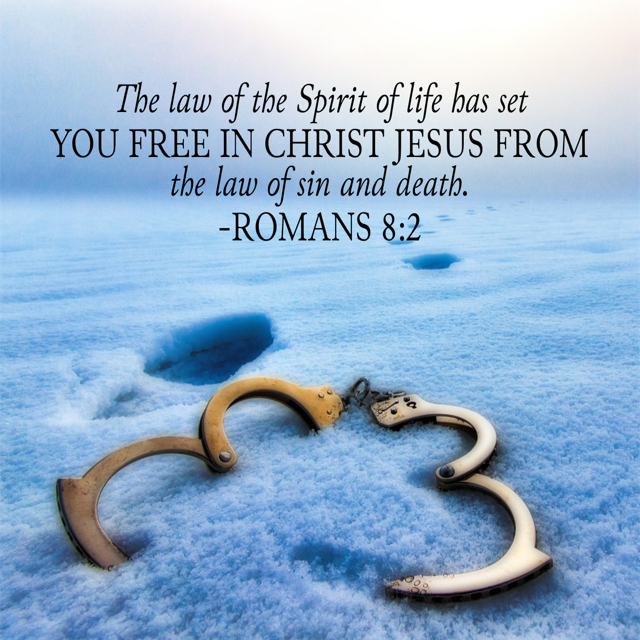
And we need to tell them about Him. May they find that “the law of the Spirit of life has set you free in Christ Jesus from the law of sin and death” (Romans 8:2).

The whole world was lost in the darkness of sin,
The Light of the world is Jesus!
Like sunshine at noonday, His glory shone in;
The Light of the world is Jesus!

No darkness have we who in Jesus abide;
The Light of the world is Jesus!
We walk in the light when we follow our Guide!
The Light of the world is Jesus!

Ye dwellers in darkness with sin-blinded eyes,
The Light of the world is Jesus!
Go, wash at His bidding, and light will arise;
The Light of the world is Jesus!

Come to the light, ’tis shining for thee;
Sweetly the light has dawned upon me;
Once I was blind, but now I can see:
The Light of the world is Jesus!
– P. P. Bliss

(I often link up with some of these bloggers.)

A Steady Soul

One September morning almost twenty-eight years ago, my left hand started feeling a little funny, like I’d slept on it wrong. I shook and flexed it while I continued packing my husband’s lunch for the day.

After a while, I realized that numbish feeling was spreading up my arm.

Then it started in both feet, spreading upward.

Within three hours, my left arm, both legs, and my lower torso were numb. I couldn’t walk on my own. I developed a laundry list of other symptoms.

After multitudes of tests and blood draws over eight days in the hospital, I was diagnosed with transverse myelitis.

Transverse Myelitis occurs when a virus hits the spine, triggering an autoimmune response which causes the body to attack the myelin sheath around the nerves as well as the virus. Symptoms vary depending on where along the spine the attack occurred. If the lower spine is affected, one might experience numbness and tingling. An attack high on the spine, however, could result in losing the ability to breathe, requiring a ventilator.

My spine was affected in the thoracic region. With much prayer and months of physical therapy, I progressed from a wheelchair to a walker to a cane to wobbly steps on my own.

I still have numb areas and odd sensations. But my biggest problem is balance.

I can walk in a straight line on level ground without problems most days. But uneven ground, slopes, and stairs are a challenge.

Sometimes people will offer me an arm for support, which helps. But what helps the most is a handrail, something solid and unmovable.

Oddly, though, I have the most trouble with balance when standing still.

Proprioreception has to do with knowing where your body is in space. Some people might not know where their hands and feet are without looking at them. I don’t have that problem, but if I stand still for more than a few minutes I lose balance. Usually I’ll inch towards a chair or wall to touch as a reference point to reset my bearings.

I told you all of that to tell you this:

A few years ago when I read 2 Peter 2 in a new-to-me translation, the word “unsteady” jumped out at me because I well knew what being unsteady felt like.

Peter talks in this chapter about those with unsteady souls. Other translations say unstable, unestablished, unsettled. These souls are easily enticed by false teachers (verse 14).

How do false teachers entice these souls? 1 Peter speaks of the false prophets’ sensuality, lust, greed, passion, so they “entice by sensual passions” (verse 18). James 1:14 uses the same Greek word for “entice,” which carries the idea of baiting, alluring, deceiving, when it says, “But each person is tempted when he is lured and enticed by his own desire.” They “despise authority” (verse 10). “They promise them freedom, but they themselves are slaves of corruption” (verse 19). They “exploit you with false words” (verse 3). They’re blasphemous (verses 10-13).

Probably many of the people who fall away to false teachers are not saved in the first place, but weak or new believers are susceptible as well. A true Christian can’t lose his or her salvation, but a believer can get tangled in false doctrines to their own confusion as well as that of everyone in their sphere of influence. But even those of us who think we’re strong need to “take heed lest we fall.” (1 Corinthians 10:12).

How can we make sure we’re not unsteady or unstable spiritually?

By orienting ourselves with the solid, unchanging Word of God.

Rest on the Bible’s sure foundation. Earlier in his letter, Peter told his readers that God’s Word was more sure than even his experience watching Jesus’ transfiguration (2 Peter 1:16-19, KJV).

Know that Scripture comes from God. Peter assured that that “no prophecy of Scripture comes from someone’s own interpretation. For no prophecy was ever produced by the will of man, but men spoke from God as they were carried along by the Holy Spirit” (2 Peter 1:20-21).

Know God Through His Word. Peter said “His divine power has granted to us everything pertaining to life and godliness, through the true knowledge of Him who called us by His own glory and excellence,” which we learn about from “His precious and magnificent promises, so that by them you may become partakers of the divine nature, having escaped the corruption that is in the world on account of lust.” (1:3-4, NASB). Everything pertaining to life and godliness! The first time this verse impacted me, I was nearly bowled over. There may be many things we don’t comprehend about God, but He’s given us everything we need to live for Him through knowing Him through His Word.

Don’t twist the Scriptures as the unstable do. “There are some things in them that are hard to understand, which the ignorant and unstable twist to their own destruction, as they do the other Scriptures” (2 Peter 3:15-16). The unsteady twist (wrest in the KJV) the very thing which could stabilize them. We read it in context so we understand its meaning. We don’t wrangle it to make it say what we want it to say. We don’t adjust it to us: we adjust ourselves to it.

Be watchful. “Take care that you are not carried away with the error of lawless people and lose your own stability (2 Peter 3:17).

Keep growing “in the grace and knowledge of our Lord and Savior Jesus Christ” (3:18).

Listen to sound teaching. Contrast the characteristics Peter lists of false teachers in 2 Peter to what he says about godly shepherds in 1 Peter 5. Paul tells Timothy in 2 Timothy 4: “preach the word; be ready in season and out of season; reprove, rebuke, and exhort, with complete patience and teaching. For the time is coming when people will not endure sound teaching, but having itching ears they will accumulate for themselves teachers to suit their own passions, and will turn away from listening to the truth and wander off into myths.” We seek to feed our souls His truth rather than feeding our own desires.

Jesus said the one who hears his words and does them is like a man who built his house on a rock which was unshaken by winds and flood waters.

So we watch ourselves, that we’re not being led away of wrong desires. We read and listen to God’s Word as it’s written, in context, not trying to twist it. We listen to pastors and teachers who faithfully proclaim God’s Word. We we obey it. We get to know our Savior better and better and remind ourselves of His truth. and we keep growing spiritually. Doing all of these things might bring persecution, which Peter discusses often in both of his letters. But we can trust God to keep us and deliver us. Then we can say, “My steps have held to Your paths; my feet have not slipped” (Psalm 17:5).

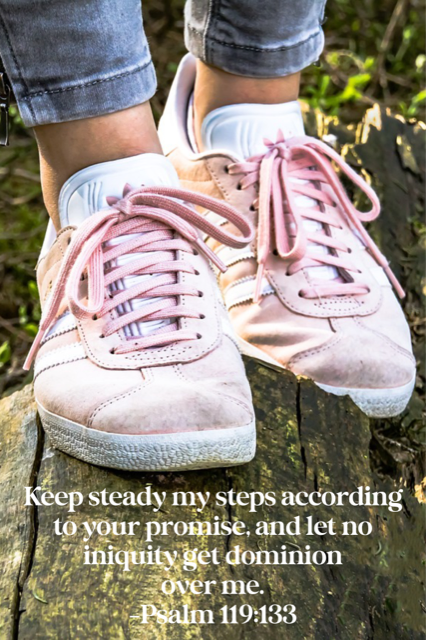
Keep steady my steps according to your promise,
and let no iniquity get dominion over me (Psalm 119:133).

Revised from the archives.

(I often link up with some of these bloggers.)

Fathers and Children

Fathers have a tremendous impact on their children, for good or bad. We need God’s grace to overcome the effects of a bad father and not lose the benefits of a good father.

In Keep a Quiet Heart, Elisabeth Elliot shared an excerpt from a book titled Fathers and Sons written by Phillip Howard, her grandfather:

Do you remember that encouraging word of Thomas Fuller’s, a chaplain of Oliver Cromwell’s time? It’s a good passage for a father in all humility and gratitude to tuck away in his memory treasures:

“’Lord, I find the genealogy of my Savior strangely checkered with four remarkable changes in four immediate generations.

Rehoboam begat Abijah; that is, a bad father begat a bad son.
Abijah begat Asa; that is, a bad father begat a good son.
Asa begat Jehoshaphat; that is, a good father begat a good son.
Jehoshaphat begat Joram; that is, a good father begat a bad son.

I see, Lord, from hence that my father’s piety cannot be entailed; that is bad news for me. But I see also that actual impiety is not always hereditary; that is good news for my son.”

We’re not doomed by a bad father. We may have to overcome what we learned from him. We may have long-lasting wounds of spirit by how he treated us. But we don’t have to follow in his footsteps. When we turn from our own way in repentance and faith and follow Christ, we have a new, perfect, kind Father. The better we know Him, the more He changes us to be more like Himself. What we missed in our earthly father we can find in our heavenly one.

He came to his own, and his own people did not receive him. But to all who did receive him, who believed in his name, he gave the right to become children of God (John 1:11-12).

See what kind of love the Father has given to us, that we should be called children of God (1 John 3:1).

Similarly, we’re not saved by a good father. His teaching may help us on the road of life. His example may be the highest we have to follow. His love and care may settle deep in our hearts and give us needed security and confidence. But his faith is not automatically passed down to us. We each have to choose to believe in, follow, and obey God personally. Our earthly father can’t be to us everything our heavenly Father is, but he can point us to Him.

And you, Solomon my son, know the God of your father and serve him with a whole heart and with a willing mind, for the LORD searches all hearts and understands every plan and thought. If you seek him, he will be found by you, but if you forsake him, he will cast you off forever (1 Chronicles 28:9).

The LORD is my strength and my song, and he has become my salvation; this is my God, and I will praise him, my father’s God, and I will exalt him. (Exodus 15:2).

Of course, most fathers are a mixture of good and bad. They’ll have some habits we want to emulate and others we want to avoid.

It’s natural for children to want to forge their own paths, make their own decisions, follow their own way as they mature. We become independent of our earthly fathers. But we should become ever more dependent on our heavenly Father. He can take us farther than our earthly father can.

There’s no greater example of parenthood than our heavenly Father. As we spend time with Him and behold Him, we become more like Him.

Fatherlike He tends and spares us;
Well our feeble frame He Knows.
In His hands He gently bears us,
Rescues us from all our foes.
Alleluia!
Alleluia!
Widely yet His mercy flows!

Henry Lyte, “Praise My Soul, the King of Heaven”

(I often link up with some of these bloggers.)

Laudable Linkage

Some good reads found this week:

Does Maturity Still Matter? HT to Challies. “The spectacle of businesses, journalistic organizations, and even ministries catering to their ‘most emotionally immature’ members is familiar. Even more important is the dynamic Sayers describes, whereby those hyperactive members become ‘de facto leaders,’ because their actual leaders—and, by extension, their peers—come to see avoiding controversy as job number one.”

Forgiving Ourselves, HT to Challies. “If God’s forgiveness of us is to be the paradigm for our forgiveness of others, is it, therefore, also to be the paradigm for our forgiveness of ourselves? And could this then be a solution to all the problems we face in regard to our own failures and sins?”

Mama Bear, HT to the Story Warren. “As moms, our job is to raise these little people who have been entrusted to us and teach them to be capable, productive adults who chase after God. Perhaps the largest part of that is teaching them how to deal with when things in life don’t go the way they want,” whether due to their own shortcomings or someone else’s perceived unfairness. We need balance here–it’s possible to go too far one way or the other.

Beyond Safe: 6 Prayers for the Mom of the Graduate. This is good for moms in general. Our tendency is to pray and work for our kids to remain “safe.” But God may call them to take risks.

To Surprise Us at the Last Day. A lovely reminder that sometimes God’s work is hidden. Lesley touches on a similar theme with Whether Quickly or Not.

Beware the Leech’s Daughters. Insight on a puzzling verse in Proverbs and what it might mean.

Storms and Rainbows

storms and rainbows

Rainbows in the sky seem almost magical. Even though science can explain the presence of rainbows, God is the one who created the science and the elements that make up a rainbow. So rainbows still inspire awe and wonder and delight.

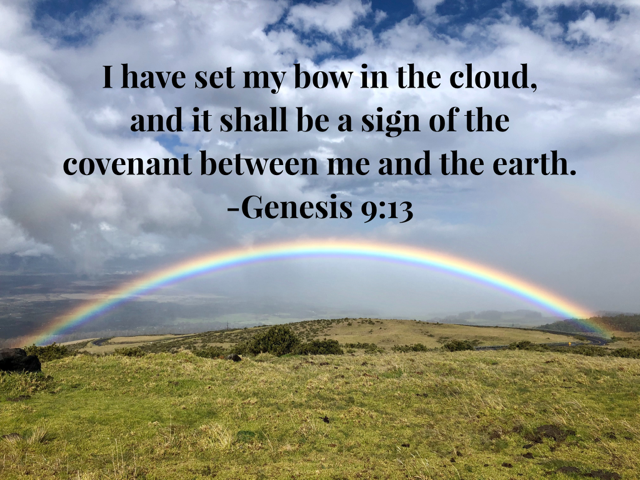
The first time we see a rainbow in Scripture is in Genesis 9, just after the great flood has dissipated and Noah and his family come out of the ark to live again on dry land.

God shares with Noah the details of His covenant with him in Genesis 9:1-17. God says the sign of His covenant is the rainbow, which will be a reminder that “the waters shall never again become a flood to destroy all flesh” (verse 15).

I never thought about it before, but I imagine after such a harrowing experience as the flood, perhaps Noah and his family wondered if it could happen again. They might be nervous about coming out of the ark and starting over. Before the flood, the land had been watered by a mist. Afterward, Noah’s family might have been terrified the next time they felt raindrops. But God reassures them and millions of subsequent readers that God will never again cause a worldwide flood.

This doesn’t mean that God won’t judge sin any more. He will. But not in that way.

God has to judge sin, for a number of reasons. But He prefers that people turn from their sin rather than face judgment. He told Ezekiel to tell Israel, “Say to them, As I live, declares the Lord God, I have no pleasure in the death of the wicked, but that the wicked turn from his way and live; turn back, turn back from your evil ways, for why will you die, O house of Israel?” (Ezekiel 33:11).

The rainbow reminds us of God’s mercy, of the new start He offers.

The next time we see a rainbow in the Bible is in Ezekiel 1, where Ezekiel records “a stormy wind came out of the north, and a great cloud, with brightness around it, and fire flashing forth continually, and in the midst of the fire, as it were gleaming metal” (verse 4). Out of the storm cloud came fantastic creatures like those never seen on earth before or since. He sees them darting around amidst the lightning.

Then Ezekiel sees something he doesn’t quite have the words to describe. Eight times Ezekiel uses the word “appearance.” He keeps saying “like” and “likeness.” “It was something like this”: “The likeness of a throne, in appearance like sapphire; and seated above the likeness of a throne was a likeness with a human appearance. And upward from what had the appearance of his waist I saw as it were gleaming metal, like the appearance of fire enclosed all around. And downward from what had the appearance of his waist I saw as it were the appearance of fire, and there was brightness around him” (verses 26-27). Ezekiel says a few verses later this was “the appearance of the likeness of the glory of the Lord.”

And above this bright creature on a throne Ezekiel sees “the appearance of the bow that is in the cloud on the day of rain” (verse 28).

Noah saw a rainbow after the worst storm of his life. Ezekiel saw a rainbow during a storm, after which God gave him a commission to warn His erring children to turn from their ways and come back to Him.

It’s amazing that a rainbow is around God’s throne as well as in the sky after rain. It’s like God put a little piece of His throne in the heavens to remind us of His beauty, majesty, and glory.

But the rainbow also reminds us of God’s grace, mercy, and faithfulness.

We see the rainbow a third time in Revelation 4, when John sees a vision of God’s throne. Like Ezekiel, John speaks in terms of appearances and likenesses. “Behold, a throne stood in heaven, with one seated on the throne. And he who sat there had the appearance of jasper and carnelian, and around the throne was a rainbow that had the appearance of an emerald.” “ From the throne came flashes of lightning, and rumblings and peals of thunder” (verses 3-5). A storm is brewing. Just a couple of chapters later, the seals of God’s judgment open up upon the earth.

In Be Worshipful (Psalms 1-89): Glorifying God for Who He Is, Warren W. Wiersbe says at the end of Psalm 29:

After the thunder, lightning, wind, and rain comes the calm after the storm when “the LORD blesses his people with peace” (v. 11 NIV; and see 107: 29). Noah saw the rainbow of the covenant after the storm (Gen. 9: 8–17), the apostle John saw it before the storm (Rev. 4: 3), and Ezekiel saw the rainbow in the midst of the storm (Ezek. 1: 26–28). We always have God’s promise to encourage us (p. 116, emphasis mine).

Before the storm, in the midst of the storm, after the storm—in every situation we have the reminder that God’s heart is for restoration, that He blesses His people with peace.

Rainbows are a sign of God's covenant

(I often link up with some of these bloggers.)

(Thanks to Dr. Wiersbe for setting in motion the thoughts for this post.)

Laudable Linkage

Here are some of the latest good reads discovered this week:

God Is Eager to Forgive You. “God promises to show favor at the faintest whisper of a cry. He promises to answer ‘as soon as He hears.’ No probation. Just the ear of God, listening to the cry of a penitent sinner’s heart. He doesn’t see you as ‘damaged goods,’ a ‘second-class citizen,’ or a blight on His church. The sinner who has turned to Christ in forgiveness has the righteousness of the Savior credited to his account. It’s this righteousness, not the black mark of sin, that the forgiving Father sees.”

Emphasizing What The Bible Emphasizes. “When our issue of the moment begins to dominate our thoughts and conversations—to the exclusion of other healthy, worthy topics—what is missing is balance and proportion.”

Are You Casual with the Holiness of God? HT to Challies. “Imagine that, after suffering a loss on the battlefield, an American army general decided to galvanize his troops by taking the Declaration of Independence into battle. Sounds a little farfetched, I know. What kind of general would play so fast and loose with one of the most precious artifacts in the nation’s history? Though it may not seem likely to happen with American soldiers, this scenario actually did play out in Israel as the era of judges came to a close.”

To Rejoice with Those Who Rejoice, HT to the Story Warren. “As we pondered what we’d both seen, we concluded that often the people of God are better at mourning than rejoicing. Leaning into support, lifting up in prayer, and bringing a meal are actually easier than being a champion for, celebrating, and truly finding joy in someone else’s experience of blessing.”

The Ministry of the Pew: Sunday Morning for Normal Christians. “May I introduce you to what others have called the ministry of the pew? Ministry that you — normal Christian — perform every Lord’s day. Such is the ministry of the Not-Up-Fronts, the army sitting facing the pulpit.”

Anything Worth Doing, Is Worth Doing Badly, HT to Challies. “As Christians we should be those who work most excellently, because we are serving a better, more worthy, Master. And yet, I’m afraid this ideal of excellence often causes well meaning Christians to stop ‘doing’ altogether. They turn the adage into, ‘If it can’t be done well, don’t do it at all.’ And that is unbiblical.”

Willing Spirit, Weak Flesh: The Real Meaning of Matthew 26:41, HT to Knowable Word. “If willingness alone can’t overcome the weakness of our flesh, what will?”

Tagless, HT to Challies. A modern day parable with a good lesson.

When It’s Good to Be Dependent

As parents, we ultimately work ourselves out of a job. As much as we love our children and miss them when they leave home, we want them to be able to stand on their own two feet as responsible adults. We’ll always listen, support, and help them when they need it, if we’re able. But there is every likelihood we’ll be gone before they are, so they need to function independently.

Spiritually, though, we never outgrow our dependence on God. In fact, we mature more spiritually the more we realize our need for dependence on God.

In Psalm 30, David said, “As for me, I said in my prosperity, “I shall never be moved.” By your favor, O Lord, you made my mountain stand strong; you hid your face; I was dismayed” (verses 6-7). Warren Wiersbe says “prosperity” here means “careless ease, a carefree self-assurance because things are going well” (Be Worshipful [Psalms 1-89]: Glorifying God for Who He Is, p. 116).

That happens all too easily, doesn’t it? When things are going well, we forget God is the One who made them go well. We get comfortable, and we forget our need for God . . . until a crisis comes up. The Bible is replete with examples of individuals and nations who went through that pattern.

My friend J. D. Wininger is a rancher who wrote recently about depending on God through unpredictable weather. His area faced eighteen months of drought last year. Now they’ve had so much rain, he can’t harvest some crops or plant others. I’ve often thought that the life of a farmer or rancher is one of felt dependence on God through all the things that can happen to influence the outcome of crops and herds.

But people in other occupations are just as dependent, even if they don’t know it. Employees think everything is going fine, until they receive notice that their particular job has been phased out, or their company is closing or has been bought by someone else. A new technology can put a whole industry out of business.

As the recent pandemic showed us, one part of society affects another. Suddenly we couldn’t count on finding basic supplies at the grocery store or even a bed in the hospital when needed.

And it’s not just in the area of physical provision that the rug can be pulled out from under us. We can be on top of the world socially. Then a poorly-worded tweet gets us “canceled.” Or a rumor or misunderstanding turns friends against us. David wrote, “All who hate me whisper together about me; they imagine the worst for me . . . Even my close friend in whom I trusted, who ate my bread, has lifted his heel against me” (Psalm 41:7, 9). Job lamented, “My relatives have failed me, my close friends have forgotten me. . . All my intimate friends abhor me, and those whom I loved have turned against me” (Job 19:14, 19).

Many of us have had the experience of being in perfect health one day only to be hit with a debilitating illness out of the blue. Or a loved one who seemed fine is found to have cancer that has been growing for months.

Does God shake things up for us sometimes as a thump on the head to remind us that we need Him? I don’t think so. He’s a loving father, not a capricious one.

We live in a fallen world and have an active enemy. God allows suffering for many reasons.

But I think He does teach us through His Word and through life experiences to remember to depend on Him for everything. He reminds us that He is our creator, provider, protector, friend. He promises to meet all our needs. He promises to be with us in any trial.

When we forget any of those things and become self-reliant, we usually get ourselves into trouble. I did a study once on what happens when we want our own way. It’s not pleasant.

Recently I was praying over a recurrent physical issue. As pondering and prayer intermingled, my thoughts ran something like this; “You know, most people don’t even think about this, much less pray about it. Am I going to have to pray about this every day? Can’t I just ask You to take care of it now and forever?”

The “Lord’s prayer” came to mind, where Jesus instructed His disciples to pray, “Give us this day our daily bread.” Our daily bread. Not enough for the week, or a lifetime. But just what we need for today.

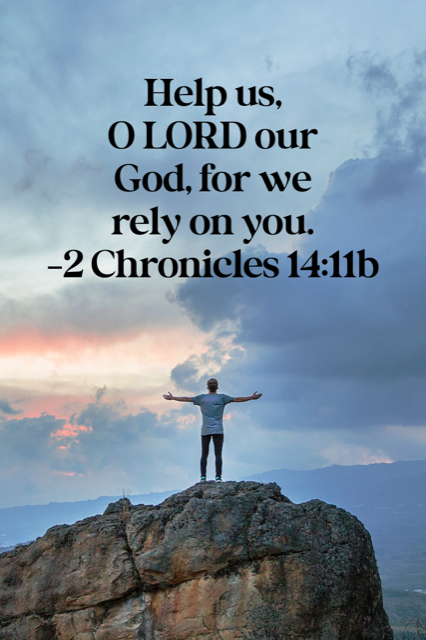
One day King Asa of Judah faced a much larger army from Ethiopia that had come against Judah (2 Chronicles 14). “And Asa cried to the Lord his God, ‘O Lord, there is none like you to help, between the mighty and the weak. Help us, O Lord our God, for we rely on you, and in your name we have come against this multitude. O Lord, you are our God; let not man prevail against you’” (verse 11).

I looked up the Hebrew word translated “rely” and read some of those occurrences here. The word can also be translated, lean, stay, and rest.

Rest.

Isn’t that what happens when we rely on God? We don’t have to worry about what’s going to happen. We can trust and obey.

Jean Sophia Pigott caught this idea of resting in the Lord in her marvelous hymn, “Jesus, I am Resting, Resting.”

Simply trusting thee, Lord Jesus,
I behold thee as thou art,
And thy love, so pure, so changeless,
Satisfies my heart;
Satisfies its deepest longings,
Meets, supplies its ev’ry need,
Compasseth me round with blessings:
Thine is love indeed.

As God’s child, I never outgrow my need for Him. I never become independent from Him. The farther I go in life, the more I realize I need Him for everything, great and small.

Abide in me, and I in you. As the branch cannot bear fruit by itself, unless it abides in the vine, neither can you, unless you abide in me. I am the vine; you are the branches. Whoever abides in me and I in him, he it is that bears much fruit, for apart from me you can do nothing. (John 15:4-5).

(I often link up with some of these bloggers.)

Laudable Linkage

There’s so much good writing on the Internet each week. Here’s some I found:

Opposition is Bad, but Hell is Worse, HT to Challies. “In the early centuries of Christianity, the Church understood that a false understanding of salvation was more dangerous than persecution. Persecution can only kill the body, but a false gospel can kill the soul. Today, many live as if political evils are worse than hell.”

How Do You Forgive the Unpardonable? Debbie covers several good aspects of this question.

Store Up Today for Tomorrow’s Crisis, HT to Challies. “The real application of Jesus’s saying lies further back. To take his words to heart, our focus should be not so much on what we should say as what we should store. To apply Jesus’s insight, if we want to be the kind of person who speaks words of wisdom and grace, then we have to begin by storing up wisdom and grace.”

The Funny Thing About Hope, HT to Challies. “Hope is a crazy thing. Without hope, life becomes very hard and difficult. With hope, people manage stress, pressures, and tough circumstances better. Yet, when in tough circumstances, one of the easiest things to lose is hope. When hope is lost, the circumstances only grow in magnitude. At this point, the tendency is downward. Light easily turns to darkness. Joy turns to sorrow. Stability turns to anxiety. Confidence turns to fear.”

A Response to an Employer’s Request for Pronouns, HT to Challies.

An Open Letter to My High School Self, HT to the Story Warren. I did something similar several years ago: Dear Me in 1973.

Healing from Past Hurts

Before Jonathan Goforth became a widely-used missionary to China, he was a farm boy eager to go to Knox College in Toronto in the 1880s. Jonathan originally wanted to go into politics, but God saved him and called him to the ministry.

His mother, noted among the neighbours for her fine needlecraft, worked far into the night putting her best effort on the finishing touches to shirt or collar for the dear boy who was to be the scholar of the family (Rosalind Goforth, Goforth of China, p. 29).

Jonathan’s heart thrilled as he thought how soon he was to live and work with other young men who, like himself, had given themselves to the most sacred, holy calling of winning men to Christ. He had visions on reaching Knox of prayer-meetings and Bible study-groups where, in company with kindred spirits, he could dig deeper into his beloved Bible. So his joyous, optimistic spirit had reached fever heat when he arrived in Toronto and entered Knox College (p. 30).

However, instead of finding kindred spirits, Jonathan became the object of ridicule. “He was unconventional to a degree, and utterly unacquainted with city habits and ways” (p. 31). He realized his lovingly homemade clothes “would not pass muster.” He didn’t have much money, but he bought some cloth to take to a seamstress for a more appropriate outfit. But some of his fellow students found out.

Late that night a number of them came into his room, secured their victim, then, cutting a hole at one end of the material . . . they put his head through and forcing him out into the corridor, made him run the full length up and down through a barrage of hilarious students (p. 31).

Later, Jonathan became involved in a ministry to reach people in the slums. His “enthusiastic innocence” annoyed and amused his fellow students.

He became a subject for an ‘Initiation Ceremony’; hailed at midnight before his judges, students of Knox College, he was subjected, I learned, to indignities, and warned against further breaches of good form by his tales of his ‘experiences with sinners’ (p. 33).

Goforth was deeply hurt, not so much for himself, but that such a thing should happen in a Christian college (p. 33).

Jonathan reported the latter incident to the principal, who soothed his feelings but took no action against what he deemed “a silly prank of foolish boys.”

Many of us have experienced hurt from the past. Sometimes it’s been in the form of passive neglect. We have easily made friends in other schools or neighborhoods, but for some reason, in a new place, we can’t seem to make headway socially. People aren’t actively rude or mean, but we always remain at the bottom of the social pecking order, never really a part of the group.

Other times, like Jonathan, people experience active hazing, ridicule, meanness. Sometimes one person becomes the one everyone likes to pick on or make fun of.

Though I am thinking of incidents from school days, some of these things happen in later life as well.

And some incidents continue to hurt for decades.

What can we do to heal from them?

Draw close to God. After the first incident mentioned above, Jonathan

. . .knelt with his Bible before him and struggled through the greatest humiliation and the first great disappointment of his life. The dreams he had been indulging in but a few days before had vanished, and before him, for a time at least, lay a lone road (p. 32).

We see something similar in Joseph’s story in Genesis 37-50. His own brothers stripped him of the special coat their father had made for him, threw him into a pit, ignored his distress and cries (Genesis 42:21), and sold him into slavery. Then at his first place of service, he was lied about and imprisoned.

Just a few chapters later, we see Joseph taken out of prison and made Pharaoh’s right hand man. So, everything worked out for him in the end. But those chapters represent years of being alone. We see just a glimpse of Joseph’s suffering in the name he chose for his children: “Joseph called the name of the firstborn Manasseh. ‘For,’ he said, ‘God has made me forget all my hardship and all my father’s house.The name of the second he called Ephraim, ‘For God has made me fruitful in the land of my affliction'” (Genesis 41:51-52).

Though God made us to live in community, He seems to sometimes call His people to walk alone with Him for a time. David “encouraged himself in the Lord” (1 Samuel 30:6) when his followers turned against him, desiring to stone him. Joseph had to have done the same thing for him to later be able to face his brothers with grace and forgiveness and faith. Two life-changing encounters God had with Jacob happened while Jacob was alone. Paul spent a few years alone before becoming accepted by the other apostles and starting his ministry.

Though all others forsake us, Jesus never will. We can pour out our souls to Him.

Look to the right and see:
there is none who takes notice of me;
no refuge remains to me;
no one cares for my soul.

I cry to you, O Lord;
I say, “You are my refuge,
my portion in the land of the living.”
Attend to my cry,
for I am brought very low!

(Psalm 142: 4-6)

Trust God’s providence. When Joseph finally met up with his brothers years later, he was able to say that God had sent him ahead of them to provide for them in famine (Genesis 45:4-8). Rosalind Goforth said of Jonathan’s “lone road” that “It is not hard to see God’s hand in this, forcing him out as it did into an independence of action which so characterized his whole after life” (p. 32). This doesn’t mean Goforth became a “lone ranger.” But he pioneered missions in many areas and had to stand against the tide of modernism when it crept in.

Wrongdoers aren’t off the hook just because God brings good out of their bad. But God has promised “And we know that for those who love God all things work together for good, for those who are called according to his purpose” (Romans 8:28).

The example of passive neglect I mentioned earlier was my experience when we moved to a new area just before I went into 8th grade. I was so miserable, my mom had to almost literally push me from the car when she took me to school. Finally I found one other friend and then other acquaintances.

But I found out later God had a reason for keeping me from the popular group. Things were going on among them that would not have been good for me to be a part of. Plus, it would be just three years later before we moved to Houston and my life changed when I came to know the Lord. As hard as it was to move, it would have been even harder if I were more firmly entrenched with the group there. Plus, If I had gotten involved with them, my heart might not have been receptive to God later.

Some have used past wrongs to be more sensitive to others facing the same thing or to actively advocate for them.

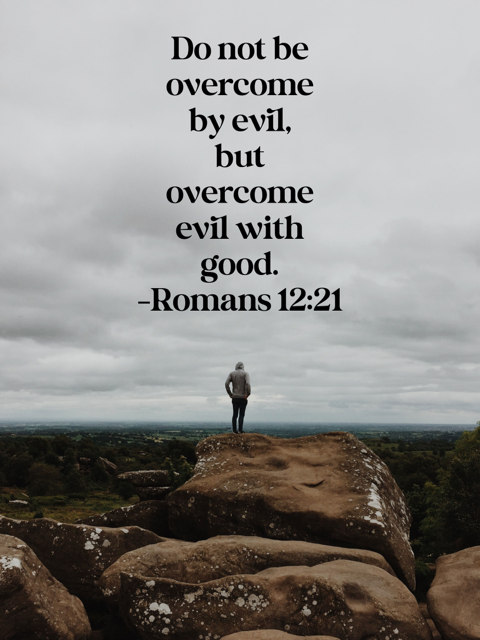
Don’t get back at them. “Beloved, never avenge yourselves, but leave it to the wrath of God, for it is written, “Vengeance is mine, I will repay, says the Lord.” To the contrary, ‘if your enemy is hungry, feed him; if he is thirsty, give him something to drink; for by so doing you will heap burning coals on his head.’ Do not be overcome by evil, but overcome evil with good” (Romans 12:19-21).

Forgive and do them good. We might never again run into people who have hurt us. But they can keep hurting us if we hold onto bitterness. Jesus said, “Love your enemies! Do good to those who hate you. Bless those who curse you. Pray for those who hurt you” (Luke 6:27-28, NLT).

And Jesus provided an example Himself. “For to this you have been called, because Christ also suffered for you, leaving you an example, so that you might follow in his steps. He committed no sin, neither was deceit found in his mouth. When he was reviled, he did not revile in return; when he suffered, he did not threaten, but continued entrusting himself to him who judges justly” (1 Peter 2:21-23).

Separate truth from the flawed vessel that contains it. Some who felt neglected or hurt at church have walked away from Christian community entirely. But that would be a mistake. As we get to know God and His Word better, we can discern His truth from the false actions of others who profess His name. I’ve always loved what Jackie Hill Perry once tweeted (though she is no longer on Twitter): “Do you know who God used to heal me of my church hurt? The church.” If we’ve come from a bad church situation, we can pray for His leading to the place He would have us.

Disconnect if necessary. Some hurts from school days are the result of the immaturity of fellow students. But some people keep their penchant for hurting people, either with ridicule or hurtful remarks or worse. Romans 12:18 tells us, “If possible, so far as it depends on you, live peaceably with all.” While we need to obey this admonition, it frankly admits that there are some people that we can’t live peaceably with.

Let it go. Sometimes, long after such hurtful incidents are over, our thoughts can wander back to them. It can take a while to process and heal. But we can get stuck replaying such incidents over and over, especially if we’re feeling down for other reasons. We can remind ourselves, “That’s over. God loves me and cares for me. He’s brought better friends into my life (if not, we can pray for them). He’s given me His grace and work to do.”

I am not a counselor, and my advice is only from experience and Scripture. There are some issues that are deeper than the kinds of things I’ve talked about. Some may experience post-traumatic stress. In these cases, it would be helpful to talk with a pastor, counselor, or trusted mature friend. Abuse needs to be dealt with.

Before Jonathan Goforth graduated, “every student who had taken part in what had hurt and humiliated him . . . had, before he left the college, come to him expressing their regret” (Goforth of China, p. 34).

Further, though his fellow students originally “set him down as a crank” for his “missionary enthusiasm,” “this did not cool his ardor, and his enthusiasm proved contagious. Gradually there developed among the student body a remarkable interest in the cause of foreign missions” (p. 53). When Jonathan’s home church could not afford to send him to the mission field, fellow students raised funds to send him.

Not everyone who experiences hurt and humiliation sees such a turnaround. But it can happen. Until it does, keep walking with God, resting in His love and grace, doing His will.

Updated to add: Donna has a beauitful post this week titled Wounded Healers which takes these thoughts a step further. Go often uses our wounds to develop a sensitivity to others and a place of ministry to them of the same comfort we’ve received (2 Corinthians 1:3-4).

(I often link up with some of these bloggers.)

Laudable Linkage

Links of interest to Christians

Here’s my latest list if laudable links to good, thought-provoking, beneficial reading.

Staying on Your Feet is Really All About Grace. “God is not asking you to single-handedly plan a VBS, execute elaborate parties for your children, or maintain a spotless house.  He is not impressed by heroic efforts or long days or endless lists. He wants you to bend your knees.  He wants you to relax into the rhythm of his keeping.”

A Few Thoughts about Daily Devotions. “Taking time every day to draw near to God through His Word and prayer might be one of the most life-changing disciplines we can cultivate. Below are a few thoughts that I pray will help you develop the discipline of daily devotions.”

Read the Bible in Bigger Chunks, Too, HT to Challies. “Reading the Bible exclusively, or primarily, in small chunks is like that. When we do this, we’re spending our time focusing on the trees. And not only the trees, but the branches, and individual leaves of the trees. And we’re right to do this, of course. Those ‘small’ details matter. But when that’s all we focus on, if we don’t zoom out once in a while, we can miss the forest.”

7 Biblical Truths Countering the False Gospel of “Emotional Health and Wealth,” HT to Challies. We hear a lot about what’s wrong with the “prosperity gospel,” the false idea that God blesses those who obey Him with health and wealth. But sometimes we falsely believe that if we do everything “right,” God will take away any emotional distress as well.

Ten Diagnostic Questions for the Potential Ideologue, HT to Challies. “While boiling political positions and strategies down to binary choices may make for effective political campaigns, biblical faithfulness may not be so easily reduced.” Though this is mainly about handling differing political viewpoints with fairness and grace, the principles hold true for differences of opinion in any category.

When Your Kids Make Poor Parenting Choices, Do You Feel Like a Failure? “We forget that fulfillment for our kids and grandkids will be found only in obedience to God and not elsewhere. This may require that we get out of God’s way and trust his perfect parenting of our adult children.”