Unknown's avatar

About Barbara Harper

https://barbarah.wordpress.com

The Lady and the Lionheart

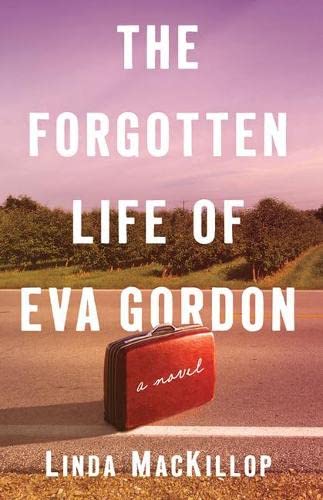
The Lady and the Lionheart by Joanne Bischof takes place in the Virginia of 1890. Ella Beckley has moved away from heartbreak in her mountain hometown to be a nurse in bigger city. The problem is that her knowledge is self-taught. The doctor with whom she applied won’t hire her for her homespun remedies. But he does let her work as a scullery maid, occasionally allowing her to assist in other ways.

One snowy evening, Ella is nearly bowled over by a tall, panicked stranger with a feverish baby. Busy, the doctor tells Ella to attend to the child. Ella learns that the man is a performer with the new circus in town. The doctor only lets the man and baby stay overnight since the man doesn’t have enough money to continue the baby’s care.

Risking her own job, Ella runs after the man, whom she learned was named Charlie Lionheart. She goes to his tent where she meets Regina, a widow who has become the baby’s godmother and who helps Charlie out. Ella tends the baby and checks back each day.

Circus life is a whole new world for Ella. Charlie has always kept his personal life private from “rubes”–circus outsiders who pay to laugh and gawk at performers but who think circus folks “beneath” fine society. But Ella’s kindness and persistent questions slowly break down his resolve, and he opens up to her.

They grow in appreciation and then attraction to each other, but the situation is impossible. Ella can’t run away and join the circus, after all. And Charlie is contracted for more than Ella knows. Plus they each have secrets from their pasts which have scarred them and affected their futures–secrets they’ve not yet shared.

I listened to the free audiobook version of this story, which did not contain any back matter. I’d love to know what inspired the author to write this story. I loved the subtle theme about not judging a book by its cover. The swarthy, heavily tattooed circus performer may have a heart of gold and a selfless reason for what he does. The pretty, kind nurse may hold a depth of pain behind her smile. But I especially loved when one character makes the point that when people are deeply damaged, and no amount of faith will make the circumstances or the past go away, they are still not to be discarded like a broken vase. They still have great value–and not only value, but beauty.

A few reviews I saw expressed dismay at how people perceived a man’s tattoos. They were offended the author would insinuate that anything was wrong with tattoos. But the author was portraying attitudes in the 1890s. The doctor says early on that tattoos were associated with ex-cons in that era.

I had gotten this audiobook not only because it was free, but especially because I had very much enjoyed the author’s Sons of Blackbird Mountain and Daughters of Northern Shores a few years ago. I felt that this story dragged just a bit (although another reviewer appreciated that it was “unrushed,” so maybe the pacing was a matter of perspective). It seemed the two main characters kept circling around the same issues over and over. There were a few editorial oddities that distracted me.

But despite those minor issues, I enjoyed the story, theme, and characters.

The Lost Art of Discernment

Most of think of discernment from the negative side. We want to discern good from bad so we can avoid the bad. We want to teach our families to avoid the bad as well. And that’s necessary. There is a lot of bad to avoid.

But constantly looking out for the potential bad can warp our thinking. Hannah Anderson says, “Facing so many variables, with good and bad so quickly blurring, most of us find it easier to retreat to safe spaces, cluster in like-minded tribes, and let someone else do our thinking for us” (p. 11). She goes on to share:

For a long time, I didn’t think very clearly at all because my actions and choices were shaped more by the brokenness around me than the reality of God’s goodness and nearness. When faced with a decision, I played defense: What will keep me safe? What are other people expecting me to do? What will happen if I make a mistake?

But in trying to keep myself safe, in obsessing over making the “right” choices, I found myself making a whole lot of wrong ones. Because I lacked a vision for goodness, I also lacked discernment. And without discernment, I had little chance of finding the security and happiness that I wanted—that I think we all want (pp. 11-12).

Hannah suggests a different approach. Why not discern good from bad in order to pursue the good? That’s just what she proposes and demonstrates in All That’s Good: Recovering the Lost Art of Discernment.

But what if there were a way to see clearly once again? What if we could see the world as God sees it—in all its brokenness and beauty—and in seeing, be able to do more than endure this life? What if we could flourish in it? I think we can. In fact, I’m convinced of this good news: Despite all the pain, all the sorrow, all the questions, goodness still exists because God still exists. And because He does, He has not left us to sort through the mess alone (p. 11).

God created the world and the people in it and pronounced them good (Genesis 1). But sin marred the world and our hearts (Genesis 3). Yet God has promised to restore goodness some day. And for now, even in spite of a marred visage, we can still trace God’s goodness in what He created. As we believe in and follow Him, “He is busy transforming you, renewing your mind ‘so that you may discern what is [His] good, pleasing, and perfect will'” (Romans 12:2) (pp. 12-13).

Hannah explains what discernment is and isn’t, what hinders “our ability to experience His goodness,” how “simply reacting to established culture is not enough, why naïveté and isolationism can cause us to misstep just as quickly,” how discernment and virtue intertwine,  what habits we can employ, and how God walks with us (p. 12).

Then Hannah devotes a chapter apiece to the things Paul told us in Philippians 4:8 to think on: “whatever is true, whatever is honorable, whatever is just, whatever is pure, whatever is lovely, whatever is commendable, if there is any excellence, if there is anything worthy of praise.”

Hannah weaves each of these truths with observations from everyday life: detective stories, vacations, pearls, art museums, making pies.

I took this book slowly, just reading one chapter a week and letting it sink in. I appreciated so much not only what Hannah said, but how she said it. I marveled at how she wove different elements together in her chapters.

I’ve got dozens of quotes marked, but here are just a few more:

There are no hacks to discernment. No three easy steps to follow, no lists or tricks or tips to ensure that you’ll be able to make good decisions when you need to. In order to make good decisions, you must become a discerning person, a person skilled in wisdom and goodness itself. And to be these kinds of people, we must be humble enough to be willing to learn (p. 27).

What Solomon realizes is that our life on earth, all the things we experience, all the work we do, all the good things we enjoy, aren’t simply a hurdle to the next life. They are designed by God to lead us to the next life. They are designed to lead us to Him. Like the grooves on a record, God’s good gifts are designed to draw us closer and closer to the center, to draw us closer and closer to eternity and Him (p. 53).

At its essence, worldliness is a disposition of the heart—the belief that goodness comes from the immediate satisfaction of temporal desire. But because worldliness is a disposition of the heart, we can’t simply retreat into religious contexts to escape it. We also can’t rely on adopting certain positions or practices to avoid it—especially if we use them to avoid the more difficult task of examining our own heart motives. As long as we’ve picked the “right” education for our children, go to the “right” church, watch the “right” movies, and vote for the “right” candidate, we won’t have to face the deeper truth about how easily our hearts are led astray. We could be consumerist, pragmatic, and completely worldly but never know it because we see our choices as “right” and thus are convinced that we are as well (pp. 53-54).

You develop discernment by becoming a person who knows how, not simply what, to think (p. 57).

In order to become discerning people, we also must separate our need for approval from our decision making. But to do that we’ll need a source of honor that is not dependent on how people perceive us. We’ll need a source of honor that doesn’t rest on presenting just the right look at just the right moment. And we find that honor, not in image crafting, but in the One who first crafted us in His own image (p. 84).

I didn’t realize until I was almost finished with the book that the last chapter contained review points and discussion questions for each chapter. That would have been helpful to know and use.

Hannah hosts a podcast called Persuasion along with Erin Straza.

If you are a member of Audible.com, the audiobook of All That’s Good is currently free with your subscription. They shuffle their free titles around at intervals, so I am not sure how long this one will be free. I did not listen to the audiobook—I can’t listen to books like this and get as much out of them as I can when highlighting and occasionally rereading parts. But I know some of you prefer nonfiction via audio.

But I encourage you to get and partake of this book. I can’t recommend it highly enough.

(I often link up with some of these bloggers.)


We Need Time Alone with God

In a recent magazine article, a Christian college professor expressed concern that his students weren’t Biblically literate even though they read their Bibles every day and even had parts of it memorized. His solution was that people should shift away from private, personal time in the Bible to communal times.

I don’t want to dissect and discuss the article here. However, I wanted to focus on the concept of communal vs. private times in God’s Word.

Do we need time together in the Bible? Yes. Reading and studying the Bible with others helps us get more out of the passage, encourages us, and (hopefully) keeps us from going off on tangents due to misinterpretation.

But I’m concerned that, in the battle against individualism and people pulling away from church attendance, we might go too far the other way and de-emphasize our personal walk with God.

God is the heavenly Father of all those who believe in Him. But we don’t relate to Him only as a group. Wise human fathers spend time with the family all together but also with individual members one-on-one. Our Father in heaven is even wiser. Though He created us to interact with and encourage each other, He also has a personal relationship with each of His children. And relationships thrive on communication.

When I was in college, we were sometimes reminded a Christian university was one of the easiest places to grow cold in our walk with God. Even though we heard the Word of God regularly in classes, in chapel, and in prayer groups, we couldn’t just coast on the spiritual atmosphere. We shouldn’t let Bible classes take the place of our personal time in Scripture.

Our time with others informs our personal time with God. And our time alone in His Word informs our time all together.

The psalms were sung in the congregation. Yet they are full of personal singular pronouns.

I sought the LORD, and he answered me and delivered me from all my fears (Psalm 34:4).

He drew me up from the pit of destruction, out of the miry bog, and set my feet upon a rock, making my steps secure. (Psalm 40:2).

O God, you are my God; earnestly I seek you; my soul thirsts for you; my flesh faints for you, as in a dry and weary land where there is no water (Psalm 63:1).

My soul will be satisfied as with fat and rich food, and my mouth will praise you with joyful lips, when I remember you upon my bed, and meditate on you in the watches of the night; for you have been my help, and in the shadow of your wings I will sing for joy. My soul clings to you; your right hand upholds me (Psalm 63:5-8).

As much as we need each other, sometimes we have to stand alone with God.

David “encouraged himself in the Lord” (1 Samuel 30:6) when the men of Israel were ready to stone him.

Joseph spent years as the only apparent believer in the one true God that he knew when he was a slave in Egypt. His witness did seem to spread to others. But he had to remind himself of God’s truth on his own.

Two turning-point meetings with God in Jacob’s life happened when he was alone.

Daniel had friends of the same faith, but he faced the lion’s den alone, received visions alone, and prayed alone.

Paul ministered with companions but sometimes was alone.

Jesus dealt with crowds of people yet sought His Father alone.

We’ll each give account of ourselves personally to God. “For we must all appear before the judgment seat of Christ, so that each one may receive what is due for what he has done in the body, whether good or evil” (2 Corinthians 5:10).

If we’re reading the Bible regularly and still don’t know much about it, there are ways to improve. Jen Wilkin’s book, Women of the Word, was written for just that reason. I’m trying to write a book on the same topic. There are aids all over the Internet to improve our devotional time, or quiet time, or time in God’s Word. I’ve written about several aspects here.

But let’s keep things in balance. Meet with other believers to read and study God’s Word. But meet with Him alone as well.

(I often link up with some of these bloggers.)

Laudable Linkage

Here are some of the posts that especially resonated with me this week:

If God Would Outsource His Sovereignty. “I want you to imagine that, at least for a time, the Lord would see fit to involve us in selecting the providences we would receive from his hand. I want you to imagine that through one of his deputies—an angel perhaps—he would approach us to ask how we would prefer to serve him.”

Struggling with the Struggle. “The main feeling that is overwhelming me right now is guilt. After all, shouldn’t I be overjoyed that God is teaching me intense lessons right now? And then I judge myself harshly for thinking that hard times are actually hard and not much fun.”

There Is Something Better Than Never Suffering, HT to Challies. “To suffer, with Christ, is a vastly superior to a life of comfort without him. And if he has saved you through his death, manifesting all his divine power in his own human weakness unto death, do you not think he can be your power in your suffering?”

It All Holds True, HT to Challies. “We want to shield our kids from pain. We want them to learn perseverance and endurance and real, personal faith without having to go through anything hard. That’s not quite how it works in the Christian life. Perseverance is cultivated in adversity.”

He Is Not an It: Understanding the Person of the Holy Spirit. “The Holy Spirit is not a force, feeling, or phenomenon. He is not a ghost or an “it.” He is a Person that we should know and love.”

On Being the Main Character in Your Own Sermon. I can identify with this, even though I am not a preacher. “I pray for the humility to go unseen, unacknowledged, and unremembered, so long as Christ is seen, acknowledged, and remembered. In fact, I pray that Christ would be so present and so visible that people would fail to think of me at all.”

Where Do You Get That From the Text? HT to Knowable Word. “This matters because not every comment in every bible study is of equal worth. Not every application of scripture is a valid application of scripture.”

Why Read If You Forget Most Everything Anyway? HT to Challies. “If you can’t remember most of what you read, why even bother? Aren’t there better ways to use your time?”

God's Word is a treasure

Friday’s Fave Five

It’s been another up-and-down week, weather-wise. We’ve had lows in the 20s and highs in the 70s. Thankfully the rain didn’t come the same nights as the hard freeze warnings.

Everything else has been more even, thankfully. Some of us enjoy pausing on Fridays with Susanne and friends at Living to Tell the Story to reflect on the blessings of the week, lest they slip from memory too soon.

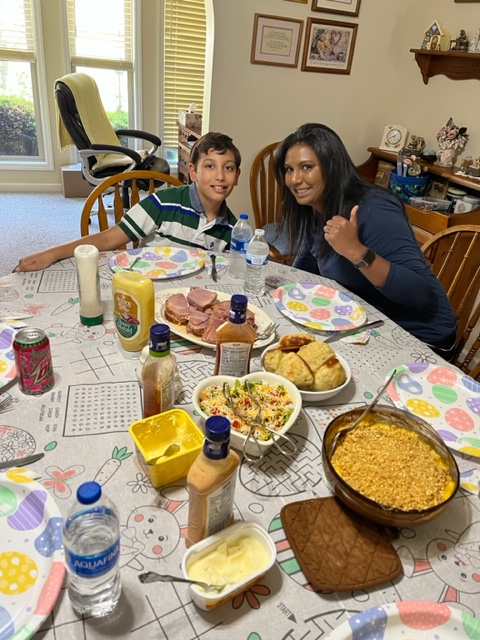
1. Belated Pi Day. Since Jim was away and I was busy on March 14 (3.14, or pi), we missed “Pie Day.” But later in the week, Mittu made quiche for dinner and a chocolate pie with pretzel crust for dessert. That met my craving for both pie and quiche!

2. Stretches. It seems like all my muscles are tightening up lately. I searched YouTube for “senior stretches” and tried out a few. They seemed to help. I also saw some other exercises I might try. I have some walking DVDs with Lesley Sansone, but I’ve used them so much I know exactly what she’s going to say. Even if I turn off the sound and listen to other music or an audiobook, I am just mind-numbingly bored. So trying different short exercise videos on YouTube might help with that.

3. Sunday lunch with the family. We picked up some whole pork loin on sale, and Jim put it in a teriyaki marinade in his sous vide cooker that Jeremy had made him, then finished it off on the grill. All our local kids were free to come over and eat with us.

4. A good Sunday. Jason Mittu, and Timothy came with us to the church we’re currently visiting; not only did I know all the songs, but they were some of my favorites; the sermon was really good; we had lunch with the family; and then I had a long nap when everyone left. Jim and I puttered around the kitchen for something to eat (which we usually do on Sunday nights) and then watched America’s Funniest Home Videos. It was just a really nice day all around.

5. A good critique group session. This week was my turn to present something. I sent in my “problem chapter” that’s been stalling my work so far. Even though I’ve spent more time on it than the other chapters, it still wasn’t coming together. I was able to pour a lot of time in it the week before, and after earnest prayer, tried some changes. The group didn’t think it was terrible, so that was encouraging. 🙂 They gave me some great feedback and further ideas to shape it up better.

If you’re an aspiring writer, I can’t encourage you strongly enough to find or form a critique group!

And that’s it for a good week overall. How was yours?

Be Patient: Waiting on God in Difficult Times

Job is not an easy book to read. The first two chapters and the last one aren’t bad, but all that bickering between Job and his friends in the middle is hard to follow. But taking it a section at a time with my ESV Study Bible and Be Patient (Job): Waiting on God In Difficult Times by Warren W. Wiersbe helped.

Job’s suffering was extreme. He lost all of his wealth and his ten children in one day. Then he lost his health. The person closest to him, his wife, was not much support (but then, she was grieving, too). Job’s friends came and sat with him in his grief for a whole week. They were better friends to him then than when they opened their mouths. They all wondered the same thing: Job, what in the world did you do to bring such suffering on yourself? God blesses the righteous and punishes the wicked, right? So you must have really done a number to warrant all this.

Job tried to point out, several times, that the wicked aren’t always punished–at least not in the time or way we would think. Therefore the opposite is true: people who do right sometimes suffer for no apparent reason.

God had said in the beginning that Job was an upright man. He didn’t allow Satan to torment Job for punishment. Rather, Satan had accused that Job only followed God because God had blessed him. Basically, he said God bought Job’s allegiance by all He had blessed him with. Take away all that, and “he will curse you to your face.”

Job never cursed God. He maintained his integrity and faith. Yet at times, knowing he was in the right caused him to question whether God was doing right in His treatment of His faithful servant.

In the end, God set straight the three friends plus Job.

Here are some of the insights Dr. Wiersbe offered:

In times of severe testing, our first question must not be, “How can I get out of this?” but “What can I get out of this?” (p. 24).

The problem with arguing from observation is that our observations are severely limited. Furthermore, we can’t see the human heart as God can and determine who is righteous in His sight. Some sinners suffer judgment almost immediately, while others spend their lives in prosperity and die in peace (Eccl. 8: 10–14) (p 37).

Nothing that is given to Christ in faith and love is ever wasted. The fragrance of Mary’s ointment faded from the scene centuries ago, but the significance of her worship has blessed Christians in every age and continues to do so. Job was bankrupt and sick, and all he could give to the Lord was his suffering by faith; but that is just what God wanted in order to silence the Devil (p. 52).

Beware of asking God to tell others what they need to know, unless you are willing for Him to show you what you need to know (p. 60).

Now Job had to put his hand over his mouth lest he say something he shouldn’t say (Prov. 30: 32; Rom. 3: 19). Until we are silenced before God, He can’t do for us what needs to be done (p. 186).

I especially appreciated what Wiersbe said at the conclusion of Job’s trials, after God had restored him: “Job’s greatest blessing was not the regaining of his health and wealth or the rebuilding of his family and circle of friends. His greatest blessing was knowing God better and understanding His working in a deeper way” (p. 192).

If you’d like even more resources on Job, I can recommend Beyond Suffering: Discovering the Message of Job by Layton Talbert and The Misery of Job and the Mercy of God, a poetic rendering of Job by John Piper (linked to my reviews of them). Also, I wrestled a few years ago with Where Is God’s Compassion and Mercy in Job?

Is It Wrong to Read Romance Novels?

Recently I visited an old Christian message board that I used to frequent to see if it was still active. I came across a conversation where someone asked if reading romance novels was wrong. The only respondents were men. One said he thought they weren’t wrong, but they were a silly waste of time. Another said he thought they could be wrong.

I didn’t want to take the time to find my log-in information and wasn’t inclined to get into the discussion anyway. But I thought about the question for a few days.

So, do I think it’s wrong to read a romance novel?

It depends.

“Romance” covers a wide territory. Many books outside of the romance genre will contain a love interest. But in a romance, the main point of the plot is two people coming to realize and declare their love for each other.

Is there anything wrong with that as a basic plot? No. The Bible contains romances (Song of Solomon, Ruth and Boaz, Jacob and Rachel). Ephesians 5 tells us marriage is a picture of Christ and the church.

When I’m getting to know a couple, one of the first things I want to know is how they met. That usually leads into a longer story of how they knew they were right for each other. It’s always neat to see the Lord’s hand in bringing them together.

But that’s real life. Isn’t a fictional romance a waste of time?

No, a story isn’t a waste just because it’s imaginary. Jesus used fictional stories to make a point. So did OT prophets.

Fiction fleshes out truth. When I’m listening to a sermon, I might get the pastor’s point but wonder what it looks like in real life. Then he shares a sermon illustration so I see the truth in action.

Randy Alcorn said, “Some Christians view fiction as the opposite of truth. But sometimes it opens eyes to the truth more effectively than nonfiction.”

We read fiction for a number of reasons: to see life through another’s eyes, to get to know how other people think, to develop empathy, to experience other cultures, to stimulate thinking, to learn discernment, gain information, to broaden our horizons.

Can we do all that with romances? Sure.

Some of the classics are romances: Romeo and Juliet, Jane Eyre, Wuthering Heights, all of Jane Austen’s novels.

But the best romances have something going on besides falling in love. One or both characters will need to grow or overcome something. In Pride and Prejudice, for example, the two main characters need to get past their titular characteristics before they can come together. In Sense and Sensibility, one sister needs to learn the value of restraint and appreciating more about a potential husband than good looks, charm, and excitement. All of Austen’s romances involve a whole lot more than just the love story. They are commentary on the times and culture in the setting as well.

The same things can happen in a modern romance.

So how can romances be wrong?

When they produce longings that can’t be fulfilled now. If you’re struggling with being single, a romance might encourage you that God could do the same for you. Or it might discourage you because He hasn’t done so yet. If you’re in a long engagement before you can be married, you’ll have discern whether reading romances makes waiting harder for you.

When they focus too much on the physical. I avoid most modern secular fiction, especially romances, for this reason. I only pick one up after carefully researching reviews or receiving a good report from a trusted friend. But even Christian romances can go too far here. And even if a romance avoids bedroom scenes, there can be an overemphasis on her seeing his bulging muscles under his shirt, wondering what it would be like to kiss him, feeling an electric jolt when they accidentally touch. Do such things happen when people are becoming attracted to each other? Sure. But in real life or fiction, the physical shouldn’t be the main thing.

When they make you discontent with everyday life. Lisa-Jo Baker shared in The Middle Matters that a teenager quoted in the Huffington Post felt her love life would never be adequate “until someone runs through an airport to stop me from getting on a flight.” The girl probably saw that in a movie somewhere. Her romantic life is going to be difficult if she sets up a test scenario in an airport every time she thinks she’s in love. Real love is usually shown in everyday ways more than the grand gesture.

When you long for a perfect “Mr Right.” There is no perfect Mr. or Mrs. Right. The best writers write flawed, realistic characters. But sometimes a character can seem so exquisitely attractive that no one in real life could measure up. If you find yourself looking down on your husband (or potential husband, if you’re not yet married) because he falls short of a fictional hero, it might be time to lay aside the book.

I sometimes see romance writers talking about writing swoon-worthy characters, especially male characters. A character having admirable qualities is one thing. But I don’t want to swoon for anyone other than my husband.

Personally, romances aren’t my favorite genre. I read some. But I don’t want the story to stop with a wedding and a promise of happily ever after. To me, the wedding is a beginning, not an ending. I prefer women’s fiction or historical fiction, where there is more going on than an initial romance, though there may be romance in the story.

But thankfully, there are romances that are good stories, where the characters grow and learn, where we learn about the culture or setting of the book, where we can connect with human growth and experience.

“It is only a novel… or, in short, only some work in which the greatest powers of the mind are displayed, in which the most thorough knowledge of human nature, the happiest delineation of its varieties, the liveliest effusions of wit and humour, are conveyed to the world in the best-chosen language” ― Jane Austen, Northanger Abbey

Surprised by Joy

I’ve read a few biographies of C. S. Lewis and recently watched The Most Reluctant Convert, based on his journey from atheism to theism to Christianity. It occurred to me while watching the latter that I had never read Lewis’ testimony in his own words, Surprised by Joy. So I got the audiobook version of his book.

I thought that, since these other sources all quoted heavily from this book, I’d be familiar with most of it. Much was familiar, but there was a lot I didn’t know. There were also some incidents missing that I thought came from this book.

Lewis writes that this book is not an autobiography of his whole life til that point. He focuses mainly on everything that led to his conversion. That story encompasses much of his early life and what went into his becoming the personality and type of thinker he was. As he goes on, the focus narrows to just his spiritual movement.

One fact that I don’t remember reading before was that both Lewis and his brother had only one workable joint in their thumbs. Trying to make models of things or cut cardboard with scissors ended in frustration and tears. Games at school were the bane of his existence because he could never play them well. He could write and draw, though, and he liked solitude, which factors led to his creating stories about “dressed animals” in what he called “Animal Land.” His brother drew and wrote stories about India and trains and ships. Eventually they combined their imaginary worlds into what they called Boxen.

It was quite interesting to follow all that made Lewis into the man he became, from being unable to reason with his father, to (mostly negative) experiences at school, to his time with a private tutor (the “Great Knock”) who demanded that he be able to defend every opinion he expressed. Then the books he read and people he came across and conversations he had with them at various junctions all led step-by-step to his becoming a Christian. His journey was driven by philosophy more than emotion.

Surprised by Joy was written after the majority of Lewis’ other books were published. He said he wrote the book partly to answer questions he regularly received and partly to correct some misconceptions. Some of his detractors assumed he came from a Puritanical background, but Lewis assures them that the family he grew up in was not religious at all. Then when he came to make his own choice about religion, he turned against it though he did not tell his father. It was only many years and much reading later, after he began his career, that he came to believe. He likened it to a chess game where God knocked down his objections and false beliefs one by one by one.

The joy in Lewis’ title was what he described as a feeling of longing. It first came upon him when his brother brought in a toy garden he had made in the lid of a tin. It was something beautiful but ineffable, a small glimpse into something greater. “Joy is distinct not only from pleasure in general but even from aesthetic pleasure. It must have the stab, the pang, the inconsolable longing” (p. 86, Kindle version). At times through his life, he sought to recreate that feeling. After he became a Christian, he realized that what he thought of as joy was not an end in itself, but a signpost to point him to God.

A few quotes from the book that stood out to me:

The greatest service we can do to education today is to teach fewer subjects. No one has time to do more than a very few things well before he is twenty, and when we force a boy to be a mediocrity in a dozen subjects we destroy his standards, perhaps for life” (p. 137).

[Of his tutor, Kirk] Here was talk that was really about something. Here was a man who thought not about you but about what you said. No doubt I snorted and bridled a little at some of my tossings; but, taking it all in all, I loved the treatment. After being knocked down sufficiently often I began to know a few guards and blows, and to put on intellectual muscle. In the end, unless I flatter myself, I became a not contemptible sparring partner (p. 167).

I knew very well by now that there was hardly any position in the world save that of a don in which I was fitted to earn a living, and that I was staking everything on a game in which few won and hundreds lost. As Kirk had said of me in a letter to my father (I did not, of course, see it till many years later), ‘You may make a writer or a scholar of him, but you’ll not make anything else. You may make up your mind to that.’ And I knew this myself; sometimes it terrified me (p. 224).

I was by now too experienced in literary criticism to regard the Gospels as myths. They had not the mythical taste. (p. 288).

There’s a verse of “Just As I Am” by Charlotte Elliott that is not as well known as the rest of the hymn, but seems to sum up Lewis’ journey of faith:

Just as I am, Thy love unknownHas broken every barrier downNow to be Thine, yea, Thine alone,O Lamb of God, I come, I come.

I’m grateful God pursued Lewis and “broke every barrier down,” both for Lewis’ sake and our own. What a gift Lewis has been to us, even so many years after he lived. But his example gives me hope that God will do the same for dear ones I pray for.

The Power of God’s Word

When I was in college, the “Iron Curtain” separated the extended Soviet Union from the rest of the world. One campus group I participated in prayed regularly for Christians who had been arrested for their faith in eastern European countries under the rule of communism. Georgi Vins was one of the prisoners we prayed for, and it was a thrill when he was released.

One occasional guest speaker in chapel was an evangelist who made clandestine trips into the Soviet Union to encourage the Christians there. He may have smuggled Bibles and Christian literature in—I don’t remember. It’s probably a good thing that I can’t remember his name.

Once he told of a particular couple in one underground church. The wife was a Christian. The husband was not, but went with his wife to church meetings even though he was deathly afraid of being arrested.

The church didn’t have enough Bibles for everyone. It would have been too conspicuous for people to have Bibles in their homes, anyway. So when the church met in the woods, the leaders would tear out pieces of a Bible and hand the scraps to the congregants.

This particular man got a piece of Scripture that read, in part, “The Lord said to Jeremiah . . . ” Frustrated, the man thought, “Jeremiah? Who is this Jeremiah? Who has even heard of him?”

After a while, though, the man was encouraged. “If God can speak to this Jeremiah, who no one has even heard of, then God sees me and can speak to me, too.” This was the first step that led to the man becoming a believer in the one true God.

Such is the power of the Word of God that He can use even an obscure phrase of it to draw someone to Himself.

God’s Word is so powerful, He made everything in the world, except people, just by speaking. Over and over in Genesis 1, God said, “Let there be. . . ,” and there was. “By faith we understand that the universe was created by the word of God, so that what is seen was not made out of things that are visible” (Hebrews 11:3).

Jesus “is the radiance of the glory of God and the exact imprint of his nature, and he upholds the universe by the word of his power (Hebrews 1:3).

Jesus healed, stilled a storm, cast out demons, and raised the dead all by His words.

Jesus resisted Satan with Scripture (Matthew 4:1-11). Ephesians 6:16-17 says the Word of God is our spiritual sword. As Luther wrote in “A Mighty Fortress Is Our God”:

The prince of darkness grim,
we tremble not for him;
his rage we can endure,
for lo! his doom is sure;
one little word shall fell him.

Jesus is the Living Word. The Holy Spirit breathed out God’s Word through the people He used to give us the written Word in Scripture.

God’s Word is so powerful that people who sought to disprove it, like Lee Strobel and Viggo Olsen, were instead converted by it.

God’s Word is powerful to convict of sin. When Peter preached it, men were “cut to the heart, and said to Peter and the rest of the apostles, ‘Brothers, what shall we do?'” (Acts 2:37).

“For the word of the cross is folly to those who are perishing, but to us who are being saved it is the power of God” (1 Corinthians 1:18).

“For I am not ashamed of the gospel, for it is the power of God for salvation to everyone who believes, to the Jew first and also to the Greek” (Romans 1:18).

God’s power, though His Word, enables us to live for Him. “His divine power has granted to us all things that pertain to life and godliness, through the knowledge of him who called us to his own glory and excellence, by which he has granted to us his precious and very great promises, so that through them you may become partakers of the divine nature, having escaped from the corruption that is in the world because of sinful desire” (2 Peter 1:3-4).

God’s Word is so powerful, we can lean the weight of our entire soul upon it. It’s not a magic wand: it doesn’t promise healing or prayers answered just the way we want. But it promises God’s wisdom and grace. When it says we can be saved by trusting Jesus, we can. When it says He will meet our needs, He will.

God’s Word is so powerful, we can use it even when people say they don’t believe it. We shouldn’t club them with it or be obnoxious about sharing it. But as we share with people what God said, He will use His Word to open their eyes and shine His light in their hearts.

Don’t be afraid to rely on and share God’s Word. He promises it “shall accomplish that which I purpose, and shall succeed in the thing for which I sent it” (Isaiah 55:11). “For the word of God is living and active, sharper than any two-edged sword, piercing to the division of soul and of spirit, of joints and of marrow, and discerning the thoughts and intentions of the heart” (Hebrews 4:12).

(I often link up with some of these bloggers.)

Laudable Linkage

Here’s my latest set of interesting reads discovered this week.

The Courage of Confession. “The gift of repentance only comes to the penitent heart, providing the courage of confession. Yet instead of coming to God in sorrow and humility, we come bearing an armload of excuses for our sin, finding true confession and subsequent forgiveness difficult.”

The Gospel of Self-Forgiveness, HT to Challies. “Can you point me to one example of someone forgiving themselves in the Bible? There is no category of self-forgiveness in the Bible. And that is a freeing truth! Your shame and guilt is not dependent upon your ability to forgive yourself.”

See Me, HT to Challies. “We all have a need–a craving–to be noticed. And in the noticing, praised. Esteemed. Wanted. Loved. But too often our parents disappoint us. And our friends become our competition.”

Squinting for the Glory of God, HT to Challies. “Your greatest weakness may be the kingdom’s greatest asset since it can become an occasion for God to flex his might.”

Your Past Does Not Have to Be Your Future, HT to Challies. “Are you on the sidelines because you messed up? Have you checked out because something went wrong? Do you believe you are damaged goods because of your failures?”

Encouragement for Fainting Disciplers. It’s hard when you work with someone to help them come to know the Lord and grow in Him, and then they suddenly seem to lose interest. This article offers some help for that scenario.