What’s On Your Nightstand: April 2014

What's On Your NightstandThe folks at 5 Minutes For Books host What’s On Your Nightstand? the fourth Tuesday of each month in which we can share about the books we have been reading and/or plan to read.

Oh wow – I was totally caught off guard for the Nightstand post this month. That’s more likely in months like this when there are five Thursdays, but I think I have an especially good excuse for being distracted since the premature birth of my little grandson. 🙂 Anyway – here is the super-quick version:

Since last time I have completed:

Crowded to Christ by L. E. Maxwell, reviewed here.

Bleak House by Charles Dickens via audiobook, reviewed here.

Made to Crave Action Plan Participant’s Guide by Lysa TerKeurst and Ski Chilton, reviewed here.

My Man Jeeves by P. D. Wodehouse for Carrie’s Reading to Know Classics Book Club April selection, review coming soon.

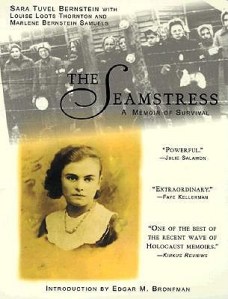
The Seamstress: A Memoir of Survival by Sara Tuvel Bernstein via audiobook, reviewed coming soon here.

I’m currently reading:

The Little White Horse by Elizabeth Goudge for Carrie’s  Reading to Know Classics Book Club for March. Yes, March. 😳 I just haven’t been inclined to pick this one up very much, but I am almost done.

Wednesdays Were Pretty Normal: A Boy, Cancer, and God by Michael Kelley

Mere Christianity by C. S. Lewis, a reread that I enjoyed it the first time but am getting much more from now.

Courageous by Randy Alcorn (audiobook).

Next up:

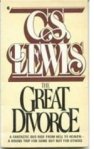
The Great Divorce by C. S. Lewis

The Book of Three by Alexander Lloyd, first book in the Prydain Chronicles.

I think I am going to skip the May and June selections from Carrie’s  Reading to Know Classics Book Club, just because I have so many other books to get to, but I may get an early start on July’s choice of The Brothers Karamazov by Fyodor Dostoyevsky. I have a feeling that one will take a good while. 🙂

Happy Reading!

Book Review: Made to Crave Action Plan Participant’s Guide

A few weeks ago I went through Made to Crave (linked to my review) by Lisa TerKeurst during an online study with the Proverbs 31 Ministries. After completing that book, they MadetoCraveActionPlanPGdecided to go through the Made to Crave Action Plan video series and workbook, so I signed up for that as well. The videos were only online for a week at a time (the rest of their posts on the series are here). This is a different series from one made to go along with the original book: this one was co-authored by a Dr. Ski Chilton.

Each video had an introduction by Lysa, a clip of her speaking about a couple of spiritual principles, a brief time of discussion with Dr. Chilton, closing remarks by Lysa, and then a testimony from someone who had benefited from the Made to Crave book.

The first Made to Crave book was primarily about “want to,” motivation to control impulses and get healthy, primarily spiritual motivation: this book purported to discuss more of the “how to.” They did not discuss a specific diet plan, but rather principles like drinking water, eating more fiber, exercising, taking Omega 3 and polyphenols, increasing fish, fruit, and vegetable consumption.

To me the biggest value in this book is the section of action plans in each chapter: readers were encouraged to look through various activities, choose one or two, and then work through them by the following week. Some focused on the spiritual principles, some on the physical. there are also a number of valuable charts and worksheets.

I didn’t know, until this book, that not all fish is good for you or what Omega 3s and polyphenols were all about.

Some of the quotes or principles I found especially helpful are:

“Temptation is Satan’s invitation to get our needs met his way rather than God’s way” (p. 63).

“Hidden behind a temptation is often a legitimate human need. The challenge comes in how we choose to meet that need…How do you imagine God might want to meet the legitimate need behind the temptation?” (p. 67).

Commenting on James 1:2-4 (Consider it all joy, my brethren, when you encounter various trials, knowing that the testing of your faith produces endurance. And let endurance have its perfect result, so that you may be perfect and complete, lacking in nothing): “We have to consider it because we won’t always feel it. When we consider something, we take time to think about it carefully. We concentrate on the issue and weigh the possibilities before taking any course of action” (p. 129).

““Between any trial and the blessing that comes from that trial, there is a pathway we must walk — that pathway is perseverance. Perseverance means having an urgency, firmness, resolve, and consistency.”

There were a few places, however, where I disagreed. One is where Dr. Chilton speaks about how the food industry and lifestyles have changed over the years and how that makes it harder to make wise nutritional choices: he then says, “It’s not your fault. You are not bad, horrible, and lazy.” Actually, making wrong food choices is our fault, and we have to take the responsibility to make better choices even though it might be harder.

In another, Lysa told her pastor she was afraid of of “letting God down” by failing in her journey toward better health. her pastor replied, “You can’t let God down. You weren’t holding Him up in the first place.” She thought that was great, but I thought it was flippant and unhelpful. I wrote more about this here, but in the same place I think I would have appreciated reassurances that God knows we’re going to fail, but He wants us to seek His grace for forgiveness and getting up again, etc.

In another, Lysa read a letter from someone talking about having trouble exercising regularly because she was lazy. Lysa spoke a great deal about lazy being a label the devil puts on us to discourage us and tells the writer that we’re not lazy, we’re courageous. I thought this missed the mark as well: the writer was probably speaking from past experience, and, again, if I were in her place and said that, I probably would have been looking for help to overcome that inertia to get moving and then to stay with it. Maybe thinking of laziness as a label helps other people. To me it doesn’t help to discuss it as a label when I know it is a reality (for myself.)

To me these were more a matter of being a bit off base rather than major doctrinal flaws. Overall I thought the book and videos were very helpful. I probably would not have bought the series, but since the videos were available for a while for this study, I’m glad I had the opportunity to go through them.

(This will also be linked to Semicolon‘s Saturday Review of Books.)

Book Review: Crowded to Christ

Crowded to ChristThe first I remembering hearing of Crowded to Christ was in an online sermon from a former pastor that I think I listened to while home sick one Sunday. He must have mentioned it before, but this time he recommended finding a copy and reading it. It was first published in 1950 and is apparently out of print now, but I found an inexpensive used copy online.

Its author, L. E. Maxwell, was a co-founder, principal, and eventually president of Prairie Bible Institute in Alberta, Canada, which I don’t know much about except that Elisabeth Elliot attended there for a time and Don Richardson (author of Peace Child and other books) graduated from there.

Maxwell’s main theme is that God uses a variety of measures – the law of God as well as pain, pressure, and other means – to draw or to “crowd” people to Christ in the sense of realizing He is the only answer.

For instance, “In his determination to be humble, to love His enemies,… to be more than conqueror – in other words, to be like Christ –  the Christian may come sooner or later to a sense of crushing failure and defeat.” He realizes he can’t possibly do this on his own. Some go on half-heartedly, thinking full victory will just never be possible, while others, “not having made Paul’s deep discovery, ‘I know in me (that is, in my flesh), dwelleth no good thing,’ they redouble their efforts…They think that if they are only more watchful, more prayerful, more diligent, they will yet be able to attain. They strive and struggle; they fight and fast; they yearn and pray.” He quotes Hudson Taylor as saying, “I felt I was a child of God: His Spirit in my heart would cry: ‘Abba, Father’; but to rise to my privileges as a child I was utterly powerless.” Maxwell continues, “Not until they had come to an end of all self-righteousness and satisfaction in themselves, not until all their peace and joy and strength of will and resolution and purpose had been ‘slain by the law,’ could faith stretch forth her hands for victory. Only when they sensed the tragedy, the futility, the folly and failure of every human attempt to overcome the law of sin and death, were they shut up to Him who not only ‘justifies the ungodly’ but also ‘quickens the dead'” (pp 17-18).

He describes how God sometimes puts us in extenuating circumstances that result in a crisis of faith that drive us to Him as our only way through, like Jacob on his way home finding out Esau was coming to meet him, or Israel’s being caught between Pharaoh’s army and the Red Sea, or Israel when called to enter into Canaan but looked at the obstacles instead of God and failed.

I have far too many quotes marked to share, but here are a few that stood out to me:

“Have you ever had God lay hold of you in the wee hours and reduce you until you had ‘Nothing left to do but fling/Care aside and simply cling?'” (p. 29).

“God must secure our confidence, and…He tries us in order to make us trust where we cannot trace. Without faith it is impossible to please Him. ‘Thy way is in the sea.’ While, therefore, He has no pleasure in our agony and perplexity, He knows that it is in the trackless and traceless sea of trouble that we come to trust” (p. 38).

“To be self-centered is to be self-destroyed…The preservation of self is the surest path to self-destruction” (p. 128).

“When the Lord Jesus dealt with souls, His method was adapted to the need of the individual. However, it is remarkable that almost invariably He brought souls face to face with some one thing which in their own strength they could not do, and there demanded an act of obedience…In order to create a sense of sin and a need of divine strength Jesus gave command just where men were inclined to wander or argue or excuse themselves” (p. 150).

“If only the Saviour had asked me to do something else! But that something else would not have reached your heart. You could have done that other thing without faith and without grace; yes, without even being right with God. So, in asking you to do the one impossible thing, Christ crosses your will through your withered limb” (p. 178).

“Grace is no mere favour conferred upon the ungodly, but it is to be experienced as a ruling force and sufficiency, reigning in our hearts as the new, living ‘law of the Spirit of life in Christ Jesus,’ and enabling us to prove the no-more dominion of sin. Grace abounding is to lead at once to grace reigning” (p. 219).

In ways simple and inscrutable and fiery God must drain away the dregs of self-confidence. He must let the flesh fail…when all those remaining are convinced that God alone is their rescue and remedy…” (p. 256).

The New Testament is enfolded in the Old, and the Old Testament is unfolded in the New” (p. 272).

“Love and righteousness are not contrary principles” (p. 299).

He spends a good deal of space in the book talking about the law of God. Though Christ has fulfilled the law and we never could, and in this day of grace are not required to, still, God has uses for the law, which the Bible describes as “good” and “spiritual.” “By the law is the knowledge of sin.” His appendices on “The Old and New Testaments Compared” and “The Purpose of the Law” are some of the best parts of the book, especially on this point.

Overall I enjoyed, benefited from, and saw myself in the pages of this book. I wasn’t quite so interested in arguments about dispensationalism and ultra-dispensationalism or Calvinism vs. Armenianism: those seemed to make the book drag a bit, but I understand their necessity, especially with Maxwell coming from an academic background where students have debated these things back and forth for ages.

I think the only places where I disagreed with him were some such as when he described a man who did not want to go into a grove and pray as the folks in that place and time did when they wanted to meet with God after a service. He acknowledged that there is nothing in the Bible about doing such a thing and that one can get right with God without that action, but this man had no peace until he finally did so. I guess perhaps I could see that if it was just a matter of pride or something, but I’d still have trouble saying he should have done that when it is not a Biblical issue.

This book often brought to mind a quote from Hudson Taylor, though the quote itself is not in the book: “It doesn’t really matter how great the pressure is. What matters is where the pressure lies, whether it comes between me and God or whether it presses me nearer His heart.” As Maxwell says in the second quote listed above, God takes “no pleasure in our agony and perplexity.” He is not dreaming up ways to torture us, but He knows best what we most need in our inmost hearts to grow in our faith and relationship with Him.

(This will also be linked to Semicolon‘s Saturday Review of Books.)

Book Review: Bleak House

Bleak HouseIt’s hard to summarize in a line or two what Bleak House by Charles Dickens is about, as there are several story lines going on at the same time. In fact, it is a little hard to get into at first because, like A Tale of Two Cities, different strands of the whole are mentioned individually at first and not woven together until several chapters in (as opposed to David Copperfield, which starts at the beginning with David’s birth and progresses from there.) SparkNotes helped a lot with the early chapters, although I’d advise against reading the character list or overview until after you are well into the story due to spoilers (ditto with the Wikipedia article on the book). I followed the individual chapter discussions and analysis on Sparknotes.

The point of view switches back and forth from a third person present tense narrator to a first person past tense narrative of Esther, one of the main characters. From what little I’ve read Dickens was praised by some and criticized by others for this. The two viewpoints do give us the advantage of two perspectives and I enjoyed hearing both.

One strand of the story is the case of Jarndyce vs. Jarndyce which has been languishing in the Court of Chancery for years. Dickens based the Chancery on the real-life one, and the opening foggy scenes are symbolic of it. One note said the Jarndyce case was based on a real one that went on for 53 years. We’re not really told what the case is about except that the inheritance of some of the characters are tied up in it. John Jarndyce himself has given up on it and wants no more to do with it.

Another strand of the story involves bored, cold, haughty Lady Dedlock, whose demeanor, we discover, hides a secret sorrow and then a secret fear.

Another involves Esther Summerson, an orphaned girl who was raised by her aunt until the aunt dies, then sent to school, then asked by John Jarndyce to become a companion to his niece, Ada, who had become his ward as well as a nephew, Richard. Esther shares the narrative at points, and one of the interesting things about the writing is how her voice seems faltering at first (she claims she is not clever) and then gains confidence as she goes on.

Ada and Richard fall in love, which pleases Mr. Jarndyce, but he urges Richard to choose a profession before the relationship goes any further. Richard is affable and likable but doesn’t have any clear interests. He tries apprenticing at a few different professions before ending up in the military. However, after visiting the Chancery one day, he gets caught up in the Jarndyce case, and it becomes the focus of his life, despite his guardian’s warnings against pinning his hopes on the outcome of a case that could go on for years.

Another strand involves the poor of the town, particularly a mother, Jenny, whose baby dies, and a boy named Jo who is apparently homeless and constantly being told to “move on.” Others involve a somewhat flighty lady named Miss Flite who has been waiting for years for her own settlement and the noble soldier George Rouncewell.

One of Dickens’ skills is creating memorable characters, and there are some four dozen in this book. There is Mrs. Jellyby, caught up in the cause of Borrioboola-Gha in Africa while severely neglecting her own family. Inspector Bucket was based upon a real Scotland Yard detective and is reputed to be one of the first detectives in English literature. Mr Skimpole, whom I did not like, was also based on a real person (who evidently did not take kindly to the portrayal.) He calls himself “a child,” especially in business or money matters, but something about him seemed not quite right to me, which proved to be the case. He did not have the same endearing qualities as the feeble-minded Mr. Dick of David Copperfield.

There are different kinds of love portrayed – romantic, familial, friendship. If I can say this without giving away a major plot point, the Dedlocks certainly don’t seem the epitome of a warm and loving couple, but his response late in the novel showed he loved her deeply. I particularly loved the Bagnets and his calling her “the old girl” and asking her to tell his opinions. One of my favorite scenes was her birthday when the family was making her dinner while she tried to subtly signal to her daughters to add more of this, less of that, and nothing was done the way she would have done it herself, but she endured with grace out of love for them and their efforts.  There are a couple of mysteries, including a murder. There is a case of spontaneous combustion, which Dickens was severely criticized for including, but he countered that at the time he wrote it was thought to be a real phenomenon. There are different people affected by the Chancery, mostly negatively. There are observations of social injustice. There is sadness and joy and humor. There are a lot of secrets causing varying degrees of sorrow to those involved. There are a variety of reconciliations, a couple of them sorely delayed due to pride and shame, and the most heartbreaking is the one that did not occur but could have.

Esther’s story did end up where I hoped it would. One of the oddest things in the story (minor spoiler alert) was when her guardian proposed. That seemed a little creepy to me, but he releases her from the engagement later on. Another favorite scene is after he proposes, when Esther is in her room brushing her hair, determining to make him very happy, but crying, for reasons which she doesn’t quite know – or at least doesn’t tell the reader, but the reader guesses. It’s not a favorite scene because she is crying but because of Dickens’ way of showing what was going on in her heart without spelling it out.

I have heard the 2005 BBC production is really good and would like to see it some time. Here is a trailer for it:

But as it is over 8 hours long, I might have to wait for a heap of ironing or some sick days or summer break when there is nothing else on.

I listened to the audiobook narrated by Peter Batchelor but dipped into the hard copy at points and read its introduction and afterword as well.

Some say this is Dickens’ best; some disagree. I think it is masterfully written and I enjoyed it a lot (especially the last third or so of it), but I liked A Tale of Two Cities and David Copperfield much better. Dickens’ books usually improve upon rereading, though, so next time I visit Bleak House I might enjoy it even more.

(This will also be linked to Semicolon‘s Saturday Review of Books.)

This also completes one of my requirements for the  Back to the Classics Challenge hosted by Karen at Books and Chocolate.

classics2014

.

What’s On Your Nightstand: March 2014

What's On Your NightstandThe folks at 5 Minutes For Books host What’s On Your Nightstand? the fourth Tuesday of each month in which we can share about the books we have been reading and/or plan to read.

Feb. seemed long for a short month: March has seemed short for a long month. Of course, there’s about a week of it left, but for WOYN purposes, it’s time to discuss what’s on our reading agendas.

Since last time I have completed:

Made to Crave: Satisfying Your Deepest Desire With God, Not Food by Lisa TerKeurst, reviewed here.

Walking From East to West: God in the Shadows by Ravi Zacharias, reviewed here.

Farmer Boy by Laura Ingalls Wilder for my Laura Ingalls Wilder Reading Challenge and for Carrie’s  Reading to Know Classics Book Club, reviewed here.

The House Is Quiet, Now What? Rediscovering Life and Adventure As a Empty Nester by Janice Hanna and Kathleen Y’Barbo, reviewed here.

I’m currently reading:

Crowded to Christ by L. E. Maxwell

Bleak House by Charles Dickens via audiobook

The Little White Horse by Elizabeth Goudge for Carrie’s  Reading to Know Classics Book Club for March. I need to step on it with this one!

Wednesdays Were Pretty Normal: A Boy, Cancer, and God by Michael Kelley

Made to Crave Action Plan Participant’s Guide by Lysa TerKeurst and Ski Chilton (which is a different thing from the Made to Crave Participant’s Guide, as I discovered after ordering the wrong book…) It is a follow-up to Made to Crave, and the Proverbs 31 Ministries site has been posting the videos in the Action Plan series and going through this book.

Next up:

The Great Divorce by C. S. Lewis

My Man Jeeves by P. D. Wodehouse for Carrie’s April selection.

The Book of Three by Alexander Lloyd (pub. 2006), first book in the Prydain Chronicles

Other bookish posts this month included one on censorship of YA literature and rereading.

As always, happy reading!


Booking Through Thursday: Rereading

btt  button Booking Through Thursday is a weekly meme which poses a question or a thought for participants to discuss centering on the subject of books or reading.

Today’s question has to do with rereading:

I’ve asked before if you re-read your books (feel free to recap), but right now I want to know if that habit has changed? Did you, for example, reread more as a child and your access to new books was limited by how often you could convince your mother to take you to the library? Has the economy affected your access so that you’re forced to reread more often now? Have you grown to look at old books as old friends so that you’re happy to spend time with them rather than rushing the next new thing?

I don’t remember whether I reread much as a child, though I imagine I did with a few favorite books. I don’t think the economy has had much effect on rereading: if I couldn’t afford new books, there are hundreds through the library. But I do reread some books, for several reasons:

1. It is like a visit with an old friend, much like listening to the same music, rewatching a movie, telling the same stories at family gatherings. It’s cozy, comfortable, and familiar.

2. It’s hard to get everything from most books the first time through. To me the best books are those I can revisit many times and still gain something from.

3. It’s hard to remember everything we got from the first read, especially (for me) with nonfiction.

4. It reinforces what I learned from the book before.

5. I identify with different characters or parts of the book differently at different stages. Little Women is a classic example: I identified with different ones of the girls as a child and young teenager; as a young wife I identified with Meg; as an older mom I saw Marmee through new eyes (and the girls, too, for that matter, looking on them from a mother’s point of view rather than as friends.)

6. It can be just plain fun to revisit a story.

The problem is that there are so many enticing new books to choose from that it is hard to make the decision to reread an old one. Sometimes with nonfiction I choose to reread because I need those lessons or that information again. But with fiction, audiobooks are a great way to revisit books. Although I do listen to new books that way, I can tend to miss something from them if I can’t hit the replay button (like when I am driving or cooking). But that’s not so much an issue with a familiar book. Plus by listening I don’t feel like the old book, especially if it is an old, longer classic, is monopolizing so much of my reading time. And hearing it read can bring out facets I may have missed in my own reading.

Here is a list I made a few years ago of books I have reread and would like to reread. I’m happy to say I have reread many from the latter list since then, most via audiobook.

Book Review: Walking From East to West: God in the Shadows

Walking From East to WestWalking From East to West: God in the Shadows by Ravi Zacharias first came to my attention when Sherry recommended it to me. I had heard Ravi speak on the radio several times and appreciated his ministry and his way of thinking, and I generally like biographies and memoirs, so I was glad to pick this up.

The book came about when his publishers asked him to write his memoirs “in the simplest terms, with your heart on your sleeve.” In the beginning of the book, Ravi shares these lines from James Russell Lowell’s “The Present Crisis“:

Truth forever on the scaffold, Wrong forever on the throne,—
Yet that scaffold sways the future, and, behind the dim unknown,
Standeth God within the shadow, keeping watch above his own.

Ravi shapes his story by pointing out God “in the shadows,” God at work throughout his life even when he did not perceive Him.

Ravi’s story begins in the East, in Chennai (formerly Madras) in India. His earliest religious associations were bound by fear but also by the rich heritage of the cultural stories, myths, and celebrations. His mother was spiritual but also superstitious. They even had an astrologist do readings of the family once, revealing a “cultural mix of religion, superstition, and ‘cover all bases’ mentality with regard to the supernatural.” A couple of Jehovah’s Witnesses were allowed to teach the children to read, especially the Bible, and the children were awed until they got to their teaching that only 144,000 were going to make it to Paradise. When Ravi realized that there were more than 144,000 Jehovah’s Witnesses worldwide, so that not even all of their people were going to make it, much less the people they were teaching, he rejected their study as well as Christianity. He didn’t know then that there were differences between different sects, and between sects and cults.

His father had a powerful position in the government, and his siblings all seemed to have leadership personalities. Being successful professionally and influentially was one of the highest values of his culture. For various reasons, Ravi’s father did not seem to have the same esteem for him that he did his other children. He had names of endearment for the others, but not for Ravi, and Ravi was “consistently on the receiving end of his rather violent temper.” This, of course, made him even more hesitant around his father than he already was naturally, and made his father react against him further. His father told Ravi he was a failure and repeatedly told him in so many words that he would never amount to anything. Ravi felt the same way: even the astrologer mentioned gave him a disappointing reading. He felt an intense loneliness and inferiority even with friends, because they were all “either rich or brilliant, and I was neither. While they were always at the top of the class, I never did well in studies.” They always had money to spend, and he didn’t: he could only participate in what they did if they paid his way. No one “bared their heartaches or inner struggles” in his culture, so he kept it all inside.

He found something of an escape in sports, where he did excel, especially in cricket, though his father never came to any of his matches. He thought about playing professionally, but even the professional cricket players could not make a living at it and worked at other jobs. Ravi had been so poor at his studies that by his teens, when he was supposed to be finding his way in life, he had no idea what to do, and his father’s consistent belittling and his increasing sense of loneliness were all coming to a head.

About this time his sister started attending Youth For Christ rallies and invited him along. He was bored at first but came again when his sister was singing with a group that night. Then he heard a message on John 3:16 that spoke to his heart, and he responded to the invitation and prayed to receive Christ. Things were still vague and fuzzy for him for a long while.

Ravi went on to college but fell into his old habits of not studying and began to fail. His lack of purpose and sense of shame and failure finally led him to attempt to take his own life. As he recovered in the hospital over several days, a Youth For Christ leader brought his mother a Bible with a passage marked for Ravi. This leader had not known of the suicide attempt (no one did), but the passage he marked was John 14:19: “Because I live, you will also live.” When Ravi was well enough to receive it, “the words hit [him] like a ton of bricks.” He grasped at the hope in it and prayed that if God would get him well, he “would leave no stone unturned in [his] pursuit of truth.”

God continued to work in his heart, and he began to attend Youth For Christ functions more  often. He had never been a reader, but now he began to devour Christian biographies and Bible commentaries. “For the first time, I felt my mind being stretched – and I loved it. I realized that thinking could be fun, and with that simple realization I was sent headlong into the lifelong discipline of reading.”

A friend of his father’s was a hotel manager and great chef, and Ravi admired him and decided he wanted to follow in his footsteps. His father pulled some strings to get him into the Institute of Hotel Management. He excelled and now felt he had a purpose, both life and in a profession.

As he continued to grow spiritually, reading, attending Youth For Christ and a new church, eventually he went with a team to a Youth Congress, part of which was a preaching contest. His friend who was designated to preach could not due to a conflict, so Ravi was asked to fill in with only three hours notice. Some of the men in that assembly recognized God’s hand on him and encouraged him. He still didn’t think that was what God was calling him to do, but he went on more preaching ministries and teams with Youth For Christ.

His family moved to Canada after his father’s retirement, and God continued to lead Ravi to people, churches, and organizations that helped him grow, and where he met his future wife. He continued studying and working in hotel management, but began to sense that “[his] priorities and [his] ‘heartbeat’ were changing toward other things.”

One thing that stood out to me was the encouragement from older Christians that God used in his life. He writes, “I don’t think older Christians can ever fully know what an important role they play in the affirmation of younger believers. When you’re just a youth, it means so much to have someone who’s farther along the road say to you, ‘I see something in you, and I want you to be encouraged in it.'”
As he continued preaching as opportunities came, many people told him they felt he was gifted with evangelism. He was encouraged but didn’t know the difference then between being an evangelist and “just preaching.” But he knew that “a special sensation rose up in me as I preached. I had an intense urge to persuade….I knew I wanted to preach to people who were on a quest, people whose minds were challenging what they saw around them, who were hurting on the inside, and who needed someone to speak to those issues.”

Eventually God led him to become a full-time preacher, to overseas opportunities to preach, and eventually into apologetics. Of the last, he said that people talk about truth having to get from the head to the heart for one to be converted, and that was true, but after he was converted, the truth traveled from his heart back to his head again, and he developed a “hunger to know the great depths of truth behind my faith.” He wanted to understand all the whys and wherefores of the faith, and his reading and study helped him find answers. “Most of the preaching in evangelism was geared to the ‘unhappy pagan.’ What about the ‘happy pagan, I thought, ‘the one who has no qualms about his life?’ Life was about to change for me in my heartfelt desire to preach to the skeptic” and intellectuals.

Eventually God led him (and provided in a miraculous way!) to form “a ministry that would communicate the gospel effectively within the context of the prevailing skepticism. It would seek to reach the thinker and to clear all obstacles in his path so that he or she could see the cross, clearly and unhindered…I wanted to address those struggling people – the Thomases of the world –  who saw life as not making sense. If the church didn’t place a value on a person’s questioning, then we were effectively absolving ourselves of any responsibility to that person. At the same time, if the skeptic’s questions weren’t honest, we had to address them in ways that exposed his or her dishonesty. Apologetics had to be about much more than answering questions – it had to focus on questioning the questions and clarifying truth claims.” “It is up to the thinking Christian to train the mind, take seriously the questioner, and respond with intelligence and relevance.”

I know some people demean apologetics, since it’s not the gospel, which is the power of God unto salvation (Romans 1:16), but I’ve always agreed with Ravi’s thought here that it can help prepare the way for the gospel plus it can help clarify truth for the believer as well.

The ministry borne out of all this was Ravi Zacharias International Ministries (RZIM). Ravi had another name in mind, but the others involved felt the ministry should have his name and “stand up behind your integrity, or fall with the lack of it,” a scary proposition indeed.

Regarding some of the dangers that came about in his ministry (including death threats), he says, “You have to learn that you cannot claim a path just because it is less intimidating. You must keep in mind that God does have an appointment with you, that there is a cost to serving Him. At the same time, you have to be wise and not careless. To deny the reality that there are some places where you cannot go is to play the fool. More important, if you have not learned to pay the smaller prices of following Christ in your daily life, you will not be prepared to pay the ultimate price in God’s calling.”

A few more quotes that stood out:

“Successes are hollow if you do not know the author of life and His purpose.”

After telling the United Nations that there are four absolutes that we all agree to, love, justice, evil, and forgiveness: “Only on the cross of Jesus do love, justice, evil, and forgiveness converge. Evil, in the heart of man, shown in the crucifixion; love, in the heart of God who gave His Son; forgiveness, because of the grace of Christ; and justice, because of the law of God revealed.”

“There are some wonderful things from your painful past, things with a beauty you may not have realized at the time.”

“Caution laced with wisdom and commitment must always be the key to the onward step.”

“Jesus wasn’t just the best option to me; He was the only option. He provided the skin of reason to the flesh and bones of reality. His answers to life’s questions were both unique and true. No one else answered the deepest questions of the soul the way He did.”

“Sometimes in the shadows of one’s self lie the problems, and in the shadows of one’s shaping lie the answers.”

A lot of the explanation behind the differences in Eastern vs. Western thinking was quite interesting.  There is a plethora of fascinating information here, including various testimonies of God at work (including Ravi’s own father’s salvation) and how we led in Ravi’s personal life, family, and ministry.

I know some of my readers would wonder, so I’ll have to say here that, no, I wouldn’t endorse every single person and ministry mentioned in the book, but there is no denying the hand of God in the life and ministry of Ravi Zacharias. I loved reading this book and highly recommend it to you.

(This will also be linked to Semicolon‘s Saturday Review of Books.)

Reading Challenge Update

2014tbrbuttonRoof Beam Reader, who hosts the 2014 TBR Pile Challenge, has check-in points around the 15th of each month so we can summarize how we’re doing.

Of the 12 books I’ve listed here, since last month I’ve finished Made to CraveSatisfying Your Deepest Desire with God, Not Food by Lisa TerKeurst, The House Is Quiet, Now WhatRediscovering Life and Adventure As a Empty Nester by Janice Hanna and Kathleen Y’Barbo, both linked to my reviews, and just this morning I finished Walking From East to West: God in the Shadows by Ravi Zacharias. Reviewing it is next on my agenda. Combined with the one I finished last time, Ida Scudder, I’ve completed 4 out of the 12, so I am pretty much on target for this point in the year. I’m more than halfway through Crowded to Christ, reading a chapter a day 4 or 5 days a week.

classics2014For the Back to the Classics Challenge, I’ve completed The Woman in White and Farmer Boy. That brings to completion 3 of the 6 required categories and 2 of the 5 optional categories. I’m over halfway through Bleak House, so I’m feeling pretty good about this list as well.

Crowded to Christ is also part of the The Cloud of Witnesses Challenge. And Crowded to Christ, Made to Crave, Ida Scudder, The House Is Quiet, Now What? and Walking From East to West are all eligible for the Nonfiction Reading Challenge in which I am aiming to read 11-15  nonfiction books.

So I am pretty much on target all around, thankfully. Yay!

Book Review: The House Is Quiet, Now What?

House Is QuietI came across The House Is Quiet, Now What? Rediscovering Life and Adventure As a Empty Nester by Janice Hanna and Kathleen Y’Barbo a few years ago on a clearance table at a Christian bookstore. My “nest” wasn’t quite empty yet, and still isn’t, but I thought it would be worthwhile to look ahead.

For what it’s worth, I haven’t been worried about that time: I have a lot of interests and won’t have any problem finding things to do with myself. The hardest part of the empty nest, I think, is just missing those people who have been an everyday part of your life for 20+ years. I had a taste of that when we first moved to TN 3 1/2 years ago. My oldest son was still living with us until then and decided it was time for him to step out on his own. My middle son was married and out of the house but lived close by, and we saw them often. They stayed behind in SC at first when we moved, so it felt like 2/3 of the kids left at once, and that was hard. The intensity does lessen over time – being able to keep in touch frequently via Facebook, texts, and Skype or Face Time has helped, as opposed to the time when I left home and we could only afford long distance phone calls once a month or so.

Plus I haven’t really mourned that that part of my life is almost over. Maybe it will hit when my youngest leaves. 🙂 There was a bit of that with menopause, but it was also mixed with relief (I had friends who had babies during middle age and didn’t think I was quite up for that, though I knew God would give grace if that’s what He allowed. So, there was some relief that I didn’t have to think about any surprise pregnancies any more). I actually thought about or dreaded the empty nest more when everyone was home. There were pangs when my middle son started packing up his room before his marriage (he had been away for summers working at a camp or for mission trips, but this packing-up was much more permanent!), when we left SC with only one son, when I made my last high school lunch, etc. But I was also looking a bit forward to a more relaxed schedule, more quiet, less housework, more free time to pursue interests that had been on the back burner.

So starting this book with that mindset, I found it to offer a little more hand-holding than I personally needed, but then again, some women do go through deep depression during that time, so I understand the author’s tone (and I may have appreciated it a bit more if I had read the book that first summer after my oldest two moved out.)

This book did make a lot of good helpful points: that there is a lot you can do, from traveling to taking lessons to starting a new career (they list several women’s achievements occurring after age 40); that God will help you; that you need to find balance so as not to be overcomitted, etc. There were some good thoughts about still being a mom to adult kids yet letting them be adults and make their own decisions (and when to advise if their decisions appear to be taking them in a wrong direction) as well as things to consider if the kids move back home or if you have to move in with them. The chapter that was probably the most helpful to me at this time was the one on the “sandwich generation,” when one has nearly grown kids and then has a parent who needs care. When the kids move out, we can look forward to having some “me time,” only to have a parent then move in. But the authors pointed out that there have always been “sandwich generations”: this is not a new phenomenon. And I have learned over and over that looking for and feeling I “deserve” “me time” only makes me feel contentious, but trusting God to provide it when He knows I need it allows me to go on and accomplish what He wants me to. This is my ministry for this time in my life, and if God wants me to do anything else, He will open up the way.

All in all I’d say it is a pretty useful book. There were definitely things about it that rubbed me the wrong way, but they were more a matter of personality rather than right vs. wrong. It was excessively perky and bubble (and I am not. 🙂 But I know that would appeal to some readers), and there was a lot of repetition. It was overly thematic. I like themes in decorating, parties, and even books, but one can go overboard. Calling the reader “Mama Bird” often and having a number of avian illustrations got irritating after a while. The chapters were divided up into sections titled “Bye-bye, Birdie,” which discussed the main subject matter of the chapter, “Flight Patterns” with stories of several women in relation to the chapter, “Spreading Your Wings,” a list of issues to consider, “Liftoff,” which discussed the list from “Spreading Your Wings” in more detail (which, in my opinion, rendered the list section unnecessary), and “Smooth Sailing,” which focused on a few Scripture verses connected with the chapter subject matter. The different sections not only overdid the bird theme, but they also incorporated some of the excess repetition. I think the book would have been more cohesive and provided a sharper focus without the cutesy theme, but, again, that may not bother anyone but me.

I was also a little surprised that with all of the things they suggested a woman with an empty nest could do, they only mentioned the one thing the Bible gives older women to do (Titus 2:3-5) in one poem (other than saying that she could get involved in and teach a Bible study).

Despite my nitpicking, I do think the book had a lot of good advice to offer and good food for thought.

Related:

Why Don’t Older Women Serve?
How Older Women Can Serve.
Mentoring Women.

(This will also be linked to Semicolon‘s Saturday Review of Books.)
Laura Ingalls Wilder Reading Challenge Winner

Laura Ingalls Wilder Reading Challenge

As promised last week, today I am drawing a name from among the participants of the Laura Ingalls Wilder Reading Challenge to win a copy of The Little House Cookbook, compiled by Barbara M. Walker and illustrated by Garth Williams (the same illustrator for my set of Little House books). (If you already have this book, I can substitute a similarly-priced Laura book of your choice.) I used random.org to choose a name, and the winner is……Susan!

If you haven’t yet, I encourage you to visit the posts of those who participated (links are here): there is some interesting reading! I learned about two sets of books I hadn’t known about and read of one person’s grandfather’s similar history to the Ingalls’ and one person’s trip to Laura’s home.

Thanks to all who participated, and I hope you’ll join us again for next year’s challenge!