Book Review: Katie’s Dream

Katie Katie’s Dream is the third installment in Leisha Kelly’s book about the Wortham family. In the first book, Julia’s Hope, Sam and Julia Wortham had come to the end of their resources when they discovered an empty house needing work and asked if they could live in it and let repairing it be their rent. The owner, Emma, agreed, and the Worthams even made it possible for Emma to move back home. They forged a new kind of family and learned from and helped each other. In the next book, Emma’s Gift, both Emma and a neighbor passed away. The neighbor was the mother of ten children. The Worthams had to help the neighbor’s grieving husband plus deal with their own grief and the consequences of Emma’s passing.

In  Katie’s Dream, the Worthams and their neighbors, the Hammonds, have settled into a routine. Half the Hammond children are at the Wortham’s house at any given time. Sam Wortham and George Hammond help each other with the farming. Life is still hard and resources are few, yet everyone is doing well.

But suddenly life is turned upside-down when Sam’s brother, Edward, shows up on their doorstep after being released from prison. He claims that Katie, the little girl he has with him, is Sam’s daughter.

Sam is dumbfounded. He has never been unfaithful, has never even met the girl’s mother. Why would Edward do such a thing? What will the townspeople think? What will Julia think? And what should be done with poor Katie, who just wants a home?

Samuel has never talked about his family much in the years Julia has known him, but now she learns about his mother’s alcoholism, his father’s violence, and his brother’s antics. It wasn’t that Samuel was ashamed of them, but he just wanted to forget the life he came from and start a new one. But now the old one won’t leave him alone. But perhaps he and Julia can find the grace to listen, to forgive, and to share God’s love with those who seem to have no interest in it.

The plot is a somewhat unusual premise: I don’t think I have ever read a story quite like this. But I liked the truths that were subtly conveyed. For one, you don’t have to come from a pristine family to go on and serve the Lord and change the course of your own life. Too, troublesome people (even family members) are not just a plague to be avoided: it’s a challenge to show them love and grace, but sometimes that’s exactly why God brings them to us. As Julia says, “Thank God for the opportunity to know Hazel and George and Edward and all the other difficult people we’d ever had to love. God knows what he’s doing wrapping up the crazy mix he put on this earth.”

There’s also a subplot with the Hammond family. One son, Frankie, is smart but can’t learn to read. He’s somewhat dreamy, but can say the most insightful things at times. His father, George, just doesn’t understand him and sometimes unwittingly hurts him by his reactions. This comes to a head when Frankie is injured.

I think each of these books could be read as a stand-alone novel, but the story is enhanced greatly by reading them all.

I loved visiting with the Worthams once again and am looking forward to the next book.

(Sharing with Carole’s Books You Loved)

It’s okay to say it hurts

It's Okay to Say It Hurts: The Difference Between Lament and Complaint


Several years ago someone stood up in a church prayer meeting and requested prayer for a young couple. The husband had just been diagnosed with cancer, and the wife reportedly “wasn’t taking it very well.”

I wondered what was meant by this comment on the wife’s reaction, and I wondered how in the world one does take such news well. If she threw over her faith because she didn’t want to believe in a God who would do such a thing, yes, that would constitute reacting poorly. But I doubt this mutual friend was conveying such a severe response.

Perhaps she got upset, cried, even got angry. But are those responses wrong? Is the Christian life one of perfect serenity and beatific smiles no matter the circumstances?

It doesn’t appear that way in Scripture. The psalms show a range of emotions: grief, confusion, anger, despair. Paul speaks of being with the Corinthians “in weakness and in fear and much trembling” (1 Corinthians 2:3) and being “hard pressed on every side . . . perplexed . . . persecuted . . . struck down” (2 Corinthians 4:8). He reports being “in troubles, hardships and distresses; in beatings, imprisonments and riots; in hard work, sleepless nights and hunger . . . through glory and dishonor, bad report and good report; genuine, yet regarded as impostors; known, yet regarded as unknown; dying, and yet we live on; beaten, and yet not killed; sorrowful, yet always rejoicing; poor, yet making many rich; having nothing, and yet possessing everything” (2 Corinthians 6:4-10). Even the Lord Jesus wept (Luke 19:41; John 11:33-35) and sweat great drops of blood (Luke 22:44). We don’t “grieve as others do who have no hope” (1 Thessalonians 4:13), but we do grieve.

I was once subscribed to an email group of transverse myelitis patients, back in the days before forums, message boards, or Facebook groups. I was conscious of wanting to glorify God and be a good testimony there, both of which were good goals. But I felt that in order to be a good testimony, I had to present myself as always victorious and overcoming and positive. At some point another Christian lady joined the group, and I was blessed as she did not gloss over the hardship and pain and frustration, yet she glorified God in the midst of all of that. Not only did her testimony ring true, but it also made her more relatable. We might admire the people who seem like they’ve always got it all together, but we’re not likely to go to them for help. We’re more drawn to those we can identify with, who’ve been in the trenches we’ve been in and yet survived them with grace.

On the other hand, it’s not good to wallow where the Lord extends grace to overcome. I’ve read people who readily admit to weakness, fear, pain, and grief, yet never exhibit God’s grace in dealing with those things. They seem to glory in their perpetual “mess.” Paul admits being “hard pressed on every side . . . perplexed . . . persecuted . . . struck down,” but he doesn’t stop there. He says he is “not crushed . . . not driven to despair . . . not forsaken . . . not destroyed” ((2 Corinthians 4:8). He is “sorrowful, yet always rejoicing” (2 Corinthians 6:10). He doesn’t “lose heart” (2 Corinthians 4:16). Why? Because “Though our outer self is wasting away, our inner self is being renewed day by day. For this light momentary affliction is preparing for us an eternal weight of glory beyond all comparison, as we look not to the things that are seen but to the things that are unseen. For the things that are seen are transient, but the things that are unseen are eternal” (2 Corinthians 4:16-18) And later on in chapter 12:7-10, Paul shares that God did not remove something grievous in response to Paul’s prayers, but instead  promised “‘My grace is sufficient for you, for my power is made perfect in weakness.’ Therefore I will boast all the more gladly of my weaknesses, so that the power of Christ may rest upon me. For the sake of Christ, then, I am content with weaknesses, insults, hardships, persecutions, and calamities. For when I am weak, then I am strong.”

We do need to distinguish between lament and complaint. We see lament all through the psalms and in some of the prophets, a crying out to God in the midst of painful circumstances. But 1 Corinthians 10:9-10 says of Israel during their trek from Egypt to Canaan: “We must not put Christ to the test, as some of them did and were destroyed by serpents, nor grumble, as some of them did and were destroyed by the Destroyer.” One of those incidents of complaint occurred in Numbers 11:1-3. The people had previously grumbled about lack of water and food (Exodus 15:22-25; 16; 17;1-7), and God just met their need miraculously. He was longsuffering with them, perhaps because they had not been out of Egypt long and had not been taught His ways. But by Numbers 11, God responded to their complaints with fire and a plague. Did God just run out of patience with them? No, but by that time they had seen His miraculous deliverance from Egypt and provision of water and food. They should have gotten to know Him better and exhibited trust in Him at that point, plus grasped the larger picture of what He was delivering them to. What are the differences between lament and complaint? I don’t know all of them: that’s something I would like to study out more. Tim Challies points out the difference in one’s posture of either pride or humility. Complaint in these cases seemed to include a lack of faith, as I mentioned, and even an attack on God’s leadership, and by way of implication, on God. The laments in the psalms honestly admit the dire circumstances and hardships, but there is an element of faith running through them.

In George H. Guthrie’s book Read the Bible for Life: Your Guide to Understanding and Living God’s Word, Michael Card says:

Lament teaches us that we have to go through the process of dealing with our suffering before God. You don’t just stuff your feelings down and put a good face on it, like a lot of us tend to do. You need to go through the process of pouring your heart out to God. And if you don’t have the language for it, the Bible will give you the language.

Almost all of the psalms of lament involve the psalmist reminding himself of the truth he knows. God is good and righteous. He loves us. He sees and knows what’s going on. He will bring about justice in His own time. He has the power to deliver us, and at some point He will. But in the meantime we can rest in Him. Through prayer and praise, the psalmist exhibits faith that God hears him and will do what’s best.

So when our friends are going through a hard time, we don’t need to add to their burden by judging their tears and lamentations. We can lend a listening ear, a shoulder to cry on, and gently remind them of God’s truth.

Enduring hardship as a Christian is not just a matter of a stiff upper lip or a smile that glosses over painful circumstances. When we’re in the midst of pain and sorrow ourselves, we can “take it to the Lord in prayer,” as the old hymn says. Sometimes we can cry out to Him in ways that we could not before others. We remind ourselves of the truth we have gleaned from His Word, that He knows all about it, He cares, He has the bigger picture in view, and He has promised His grace for our every need. And He’ll be glorified as others see His grace in us through the hard times.

But you, O Lord, are a shield about me, my glory, and the lifter of my head. I cried aloud to the Lord, and he answered me from his holy hill. Psalm 3:3-4, ESV

(Sharing with Inspire Me Monday, Literary Musing Monday, Tell His Story, Let’s Have Coffee, Woman to Woman Word-filled Wednesday, Porch Stories, Wise Woman, Faith on Fire, Grace and Truth.
Linking does not imply full endorsement.)

GraceTruth-Featured-2


Laudable Linkage

Here are some great reads from around the Web:

I Learned to Read the Bible Through Tears, HT to True Woman. “But on days when I felt desperate, I didn’t care about duty. I was dedicating time to be with God because I needed it — not because I had to. I approached my Bible reading with a different mindset, with expectation and anticipation, not a sense of obligation.”

How Reading the Bible Changed My Life, HT to Challies.”So when I look back at that time in my life, I don’t see a 14-year-old who suddenly became ‘spiritual’; I see a gracious God who chose to intervene in an apathetic teen’s life. I don’t see my own faithful heart; I see the faithful heart of God that kept on pursuing me, despite my faithlessness, and that still pursues me to this day.”

Am I Invisible? One Mom’s pain-relieving response to being excluded, HT to Linda.

Age-ism: The New (or Old) Prejudice, HT to Out of the Ordinary. “About forty percent thought that older people should be banned from public activities, like shopping. Then the vitriol gets worse. Some of sites declared that older folks should ‘hurry up and die already.’ One quote went, ‘Anyone over the age of 69 should immediately face a firing squad.’ This is nothing but brutal hate-speech.”

Children Who Get What They Want Are Not Creative, HT to The Story Warren. Interesting piece on how creativity thrives within structure and discipline rather than in total freedom. “When we [always] give a three-year-old whatever he wants, we are just postponing that child’s battle with his desires until a time in which he will find the fight far more difficult.” I don’t know that the best reason to serve a child food that he doesn’t like is so that he can engage his creativity by figuring out various ways to get rid of it, but I am thinking that section might be written tongue-in-cheek.

My Mother Practiced the Piano. “Certainly motherhood may limit your participation in certain endeavors, and there are some years that moms mostly just have to survive. However, if you are reading a site like Story Warren, my guess is that you are already highly committed as a parent, and that commitment frees me up to remind you that your passion and curiosity matter. There’s nothing selfish about working toward your artistic interests as God allows the time. In fact, your children can benefit from watching you model discipline and discovery, so don’t give up on your art, invite your kids into it. Let them watch you conquer little pieces of the world so that they will know how to tame their own chaos one measure at a time.”

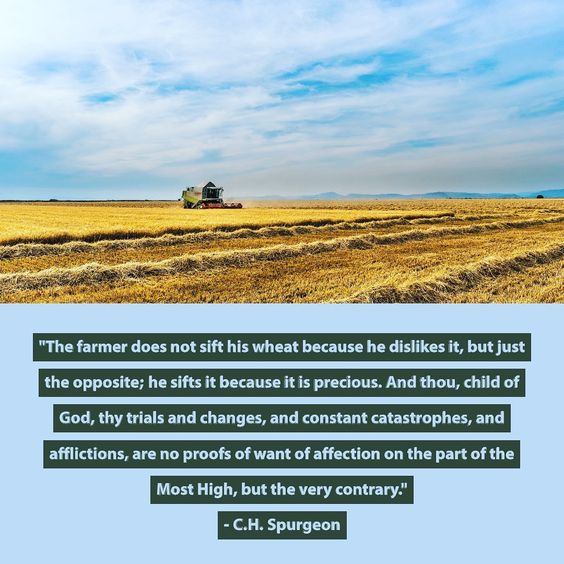
Finally, seen on Pinterest from the Prince of Preachers site, this principle is not easy, but it is true.

Friday’s Fave Five

FFF snowflakes

It’s Friday, time to look back over the blessings of the week with Susanne at Living to Tell the Story and other friends.

This is our first “normal” week after my mother-in-law’s passing, so we’re still getting used to the changed rhythms of our days. Here are some of the best parts of the week:

1. A memorial service for my mother-in-law. Since her funeral was in ID, we weren’t originally planning to have a service here in TN as well. Not too many people really knew her here. But then we felt that her caregiver, especially, as well as her hospice team might benefit from the closure that such a service offers since they could not attend the one in ID. The pastor of the church we attended the first eight years we lived here as well as our current pastor participated.

2. Lunch with old friends who were in town for an appointment. Nice to catch up with them and the extended family.

3. Frozen meals. We often get a meal or two out on the weekends, but we’d had to eat out quite a bit while out of town. So I figured I ought not to ask to eat out for a while. I got a frozen lasagna which sufficed for two dinners and a frozen Asian beef and broccoli stir-fry which made one dinner and several lunches. It’s nice to have a variety of ready-made meals available.

4. Change of work station. I had mentioned before that when my husband’s job involved working from home more, the only place available was the dining room table, just a few feet from my desktop. It was hard for me to write while listening to one-sided business conversations, and housework noises like the dishwasher, washing machine, and dinner preparation impeded his hearing conference calls. We plan to transition his mom’s room back into his office, but for now he has cleared a table in there to work. He’s even hooked up his computer to her TV, so he has a much bigger screen. Another advantage: he can leave his computer set up without having to clear the table for dinner. He jokes about his long commute to work. 🙂 But it’s worked out much better for both of us.

5. Sorting and organizing. Weeding out expired coupons led to a complete clean-out of our aptly named junk drawer in the kitchen. (How do crumbs accumulate in a drawer that stays closed during dinner preparation?!) It felt good to get that done. Plus we’ve set aside several bags from other rooms in the house to be taken to the thrift store and found new homes for some items. One fun find in the kitchen drawer: a coupon book Jason and Mittu had made for me several years ago. They said they’d probably still honor them even though they’re expired. 🙂

Happy Friday!

Why Laura Ingalls Wilder Is Still Worth Reading

IMG_1338

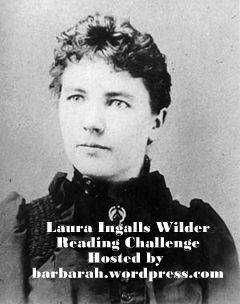
I have hosted the Laura Ingalls Wilder Reading Challenge during the month of February for the past eight years. In recent years Laura Ingalls Wilder’s books and legacy have come under closer cultural scrutiny. There’s evidence that Pa knowingly homesteaded on land that belonged to Indians and skipped town to avoid debts. Last year Laura’s name was even removed from the Association for Library Service to Children’s award due to perceived “inconsistency between Wilder’s legacy and the association’s core values of inclusiveness, integrity and respect, and responsiveness” and “anti-Native [American] and anti-black sentiments in her work.”

Some who charge Wilder with racism fail to read the concerning passages in context. For instance, one oft-quoted passage states that “the only good Indian is a dead Indian.” But, in context, this statement was made by the Ingalls’ neighbor in Little House on the Prairie, and “Pa said he didn’t know about that. He figured that Indians would be as peaceable as anybody else if they were left alone.” In The Long Winter, Pa advocates believing and following the advice of an Indian predicting a severe winter ahead. Another troubling sentence in Little House on the Prairie reads, ” … there were no people. Only Indians lived there.” When an editor pointed out to Laura that the sentence made it sound as if Indians weren’t considered people, Laura had the sentence changed to “‘… there were no settlers.’ She wrote to the editor, ‘It was a stupid blunder of mine. Of course Indians are people and I did not intend to imply they were not.'”

Pa participates in a minstrel show in blackface. But the family enjoyed and respected a black doctor whom they credited with saving them from scarlet fever. Pamela Hill Smith has a section in Pioneer Girl explaining how blackface was viewed at the time, saying that “Before the American Civil War, many abolitionists embraced minstrelsy as a way to reach a broader American audience, and some minstrel troupes performed songs with distinctly abolitionist themes” (p. 254, note 62). It was not considered offensive then, though it is now.

Even the ALSC said that “Changing the name of the award should not be viewed as an attempt to censor, limit, or deter access to Wilder’s books and materials…This change is not a call for readers to change their personal relationship with or feelings about Wilder’s books, nor does it suggest that anyone stop reading Wilder’s books, talking about them, or making them available to children. The change, however, may prompt further critical thinking about Wilder’s books and the discussions that can take place around them.”

Here on Laura’s 152nd birthday, I want to share why I believe Laura is still worth reading:

1. Her books depict accurate, if not right, views of the times. Parents and teachers who use Laura’s book should discuss the larger picture. Probably most of the settlers’ negative feelings about Native Americans sprang from fear. A major massacre by Native Americans occurred during this time in history, so naturally settlers were afraid and wary. But study can be made about why the Native Americans reacted as they did and the ways they were mistreated. Our country’s treatment of Native Americans is one of the worst marks on its record. But it would be anachronistic to have the characters of the late 1800s depicting enlightened thinking of the early 2000s.  The books can also act as a springboard to discussion of how times and attitudes have changed over the years. No time or culture has every aspect right. It takes long years to change cultural thinking. We don’t learn from history by excising the parts we disagree with today. Wrong attitudes can be viewed in light of the times, not to excuse them but to understand them and to trace how those attitudes have changed since that time. Society still has a long way to go, but we can look back and see that progress has been made.

2. Laura is not responsible for her father’s wrongdoing. She was a child when he made his decisions.

3. Laura’s books are historically based fiction. Some have faulted Laura for not including some aspects of her family’s history in the books and for changing some details. But the books were not meant to be completely autobiographical. Laura originally wrote her life story in Pioneer Girl, but then changed her focus to stories for children.

4. Laura’s books represent a significant swatch of American history. Through story Laura shares with us what is was like to travel in a covered wagon, build a homestead, establish a town, and so many other aspects of pioneer life.

5. Laura’s book depict strong family values like industriousness, independence, frugality, hospitality, community, resilience through hardships, thoughtfulness towards others.

6. Laura’s books can spark discussions, such as:

  • Every culture has its blind spots. What were some of theirs? What are some of ours?
  • Every person and culture has good and bad points. What were some good and bad attitudes in the Little House books? (Good: industriousness, frugality, hospitality. Bad: wrong views of other races, Laura’s wanting to “get back” at others, particularly Nellie Olsen).
  • What led to the hostility between settlers and Native Americans? How could things have been handled differently?
  • Look at how far society has come in its thinking about other races over the years. But our racial attitudes on an individual and national level are still not what they should be. How can we grow in this area?
  • Were there any signs in the books that attitudes were changing? (For instance, Laura’s family was treated by a black doctor at one time. Pa interacted with the Indians sometimes, assured Ma it was fine to do so, and in The Long Winter believed an Indian who came to warn the white men that a bad winter was coming).

7. Laura’s writing is realistic, not idyllic. Some have charged Laura with painting the pioneering family and life as idyllic. But…locusts? Blindness? Bilzzards? Wolves? Fire? Drought? Lack of food and resources? No, nearly every book deals with some kind of calamity. And Laura even realistically depicts sibling squabbling and parental tension.

8. Laura’s writing is excellent. Her stories would not have been read and loved all these years if they were not readable and enjoyable.

9. If we stopped reading people with flaws, we wouldn’t have anyone to read.

I agree with Katrina Trinko’s conclusion here:

Wilder — an amazing writer who poignantly and vividly depicted a crucial part of American history — deserves to remain honored as an icon of American children’s literature. By all means, let’s pair reading her with conversations about America’s past and what was right and what was not and what remains debated.

But let’s encourage critical thinking, not purging.

See also:

The Real Story Behind “The Little House on the Prairie” Controversy
Learning From Laura Ingalls Wilder
Historical Perspective or Racism in Little House on the Prairie?

(Sharing with Literary Musing Monday)

Book Review: Murder in an English Village

EnglishIn Murder in an English Village by Jessica Ellicott, Beryl Helliwell seeks adventure all over the world in the 1920s. Brash, impulsive, and outspoken, she’s become famous as newspapers cover her exploits. “Beryl had a great deal of experience with people in the throes of shock. It tended to happen to others at an alarming rate when she was in the vicinity.”

But she has become bored and restless. After a while “one camel caravan is very much like another.” Finding an ad for a room to rent in the small English village of Walmsley Parva, Beryl decides to take a break and rest a while.

Edwina Davenport has been a quiet pillar in Walmsley Parva for decades, but the economy after WWI has greatly reduced her resources. When she decides to rent a room, she’s delighted when her old school chum, Beryl, asks to rent it. As the two get reacquainted, Edwina admits that she’s embarrassed to go into the village and face scrutiny and gossip because of her financial constraints. Beryl takes it upon herself to help out: she tells the chief rumormonger in town that she and Edwina are secret agents, and “Ed’s” seemingly reduced circumstances are just a front.

Edwina’s dismay at Beryl’s storytelling morphs into deep concern after someone makes an attempt on Edwina’s life in her own back yard. Who in sleepy little Walmsley Parva would have a secret that they don’t want investigated?

I had not heard of this book or author until I was sorting through a 2-for-1 sale at Audible. I had found one book I wanted, but couldn’t find another among the sale items. Then I saw this title. Normally I am wary of modern fiction, because usually it contains bad language or sexual scenes. But I perused a few reviews that said this was a clean story, so I took a chance on it.

As a “cozy mystery,” it’s a lot of fun. Well, except for a murder investigation and several sad tales connected with it. But Beryl and Edwina play well off each other. The story has a cast of distinctive characters. It dragged just a bit for me in the middle as the two women interviewed several people, but as the clues unfolded, the mystery came together satisfactorily. The ending left the possibility open for more Beryl and Edwina stories, and I found that a sequel has been written. The two have good potential for a running series.

I don’t recall that there was any bad language except Beryl uses one word as an idiom which I didn’t understand. Edwina didn’t, either, but her sensibilities were “shocked.” (I wasn’t about to look it up…). Besides that one incident, and the mention of a man having “octopus hands,” the book is clean. Someone is found to have had an adulterous relationship, but nothing explicit is discussed or shown. Beryl does have a penchant for alcohol and divorce.

I saw some reviews criticizing the narrator of the audiobook, Barbara Rosenblat, for some odd hesitations. But I did not find them distracting and thought she did a great job.

Overall I thought it an enjoyable story.

(Sharing with Carole’s Books You Loved)

Book Review: Marilla of Green Gables

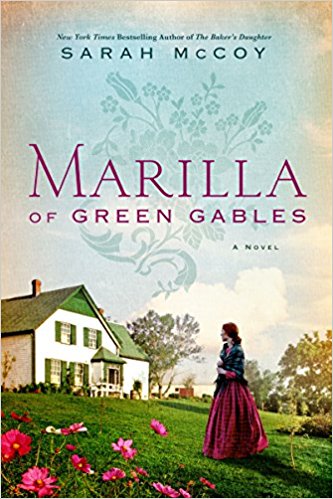
MarillaWhen I first saw mention of Marilla of Green Gables by Sarah McCoy, I was intrigued but wary. So many dearly love the Anne of Green Gables series by Lucy Maud Montgomery: how could anyone in our day add to the story? Would it just be fan fiction? Would the author make Marilla’s story too modern and politically correct? Somewhere, in a link I forgot to note, I read that the Montgomery family was also wary of McCoy’s book, but liked it in the end. So that gave me impetus to read it for myself.

In this interview, McCoy tells how she searched and marked the Anne books for clues about Marilla herself. This interview shares some other background information as well.

The book opens with a scene right before Marilla and Matthew decide that he needs help with the farm, and they discuss sending for an orphan boy. The next chapter takes the story back to Marilla as a thirteen-year-old girl. Her brother, Matthew, is in his twenties, still living at home and helping on the farm. Her mother is expecting her third child. Green Gables is being built but is not finished or named yet.

Marilla and Matthew work hard on the farm, and we see each of their personalities as they might have been. Matthew is quiet and shy. Marilla is sensible and practical, but she is a teenage girl and not an older spinster at this point. So she has hopes and dreams and enjoys idle time reading a magazine.

She makes friends with the chatty and opinionated Rachel White (later Lynde) and meets a young, strong John Blythe. Marilla’s first unusual opportunity to travel with Rachel’s family to another town to deliver shawls knitted by the ladies of Avonlea for orphans broadens her horizons and opens her eyes to people and needs outside their small community.

Tragedy strikes at home, which colors Marilla’s decisions for the rest of her life. Suddenly she has to work harder than ever. But she finds outlets for other causes when she’s tapped to lead the newly formed Ladies’ Aid Society.

Political issues in their region pit neighbor against neighbor and cause ripples of unrest. And Marilla finds that helping others sometimes involves risk and sacrifice.

I felt that the author did a good job with the setting and characters. The story did have a familiar Avonlea feel. Most of the main characters seemed reasonable representations (Rachel seemed the least like her LMM counterpart to me). It was bittersweet watching Marilla and John’s romance unfold, knowing it was not going to work out. But I liked that the author presented the break-up as sad but not unrecoverable. Marilla did fine as an independent single woman. I wasn’t thrilled with the political aspects of the story: I don’t remember there being much of anything political in the Anne books. On the other hand, the author researched issues that would have been important in PEI at the time, and it’s reasonable to think those issues would have impacted Avonlea. I liked the fact that each section of the contents echoed the titles of the Anne books (Marilla of Green Gables, Marilla of Avonlea, Marilla’s House of Dreams).

My one main objection centers around Marilla and John’s kiss scene. I felt that a sweet, chaste kiss would have been more in keeping with the setting and style of the books. Instead, the author has John falling in a brook, taking his wet shirt off, and Marilla’s sensation of her hands on his “naked body” (even though we was only shirtless, not naked.) The whole scene was written much more sensually than it needed to be. Sure, Marilla would have been a normal teenage girl with normal sensations and urges, and I suppose that’s what the author was trying to convey. Even still, I would venture to guess that most people’s first kiss even in our day would not border on erotic.

There was also a scene early on where someone thinks a bee is in the house, and the reaction from the other ladies was tremendously overblown, in my opinion, with ladies fleeing the house in panic, and the owner giving the house a thorough cleaning, even calling for the county inspector.

But for the most part, I enjoyed the story and the visit back to Avonlea.

(Sharing with Carole’s Books You Loved, Literary Musing Monday)

A tribute to my mother-in-law

My mother-in-law, Colleen, was born two months premature 90 years ago, before we had all the technology for preemies that we do today. She weighed around two pounds. Her parents made her a bed in a shoebox and kept it by the stove for warmth.

It’s a miracle that she survived. She did end up with a number of physical issues. One was severe scoliosis. I was told that she was also diagnosed with cerebral palsy: although that’s not exactly what she had, it was the closest diagnosis they could make.

She told me once that she could not take P.E. because of physical issues, so she spent that class being the girl who checked people in and out of the gym locker room.

She didn’t let physical problems stop her from living life to the fullest. She went to college for a couple of years, married, bore and raised four healthy children, canned produce from her husband’s garden. The family made regular expeditions to the hills to gather wood for the wood-burning stove that was their primary source of heat. Colleen split wood well in to her seventies, long after her husband no longer could due to his own health issues. Until the day she died, the nurse commented on how strong her heart was.

She also had a good mind and loved to use it. She was the editor of her high school newspaper. Reading was her favorite hobby, and she regularly walked to the library for a new armful of books. Reader’s Digest was her favorite magazine. Once she saw an article that seemed to fit her husband’s symptoms and convinced the doctor to investigate. Sure enough, he found that her husband had an abdominal aneurysm. The one time she didn’t want anyone to talk to her was when the news was on. A few years ago my husband was using Google Earth on his laptop to show her some of the various houses where she used to live. Fascinated, she said, “If I had one of these things, I’d never get anything done!” When she was in assisted living, often when I visited, she would ask, “What’s new?” Not much had happened since I saw her the day before, so I usually did not have a good answer. “Well…I got the laundry done…” She’d say, “Come on, you’re out there in the world. Surely you have some news.” I’m not into watching the news, but it’s one of my regrets that I didn’t look up some interesting fact or news item to share with her in those visits.

Her life was marked by quiet industriousness until her limbs no longer worked for her. She rarely did anything on a small scale. Why make one lasagna when you could make two or more and freeze the excess? One Thanksgiving when almost all of the family was there, she had almost one pie per person.

She was a child of the Depression, and so she was marked by frugality almost to a fault. Many family stories revolved around her thriftiness. Empty margarine and Cool Whip tubs were her Tupperware, causing one sister-in-law to ask, while holding open the refrigerator door, “Which one of these really has butter in it?” I remember her pulling some corn out of the refrigerator, commenting that it didn’t look very good, and, instead of throwing it out, adding more corn to the leftovers. Her husband worked in a grocery store and often brought home cans that had lost their labels, prompting many a mystery meal determined by what was in a given can. He also brought home out-of-date dairy products, prompting someone to remark once on “milk with pulp.” In her book, it was a sin to throw food away. She also tucked money away in odd places, like pockets of unused clothes hanging in the closet.

She could be feisty. One day, for some reason, she asked me if Jim and I had had any fights lately. As she asked, she had her fists doubled up like an 80 year old boxer. I explained that, no, we didn’t usually fight: we’re both more the type to get quiet when we’re angry or upset. She said, “Really? You never fight?” while swirling those fists around. She and her husband did sometimes, but they just took it as a matter of course and made back up after the argument was over.

She loved the outdoors. The family camped frequently. When she came to help with my oldest son, then nine months old, after my gall bladder surgery, she took him and the playpen outside every day for fresh air.

She did not grow up in a stable, loving home environment. Without going into all of the specifics, suffice it to say that after her mother died, Colleen said, “All my life I tried to get my mother to love me, and I never succeeded.” Colleen’s mother did not have the easiest life, either, but she chose to be bitter, and that bitterness spread to everyone her life touched. Colleen experienced her mother’s bitterness and saw how it affected all her life and relationships, and Colleen chose a different way.

I’ve heard different versions of which person in the family first became a Christian and how it all happened. Unfortunately, by the time I thought to ask about the specifics, Colleen was past the point of being able to articulate them. One story was that her parents started attending church and made a profession of faith which led to Colleen’s attending the same church. Another story had Colleen’s children invited to VBS or something at a church, which led to Colleen’s visiting. Perhaps both of those scenarios are true and involved the same church. At any rate, the pastor there remembers leading Colleen to the Lord when she was a young wife and mother.

Colleen was so enthused about her new relationship with God that she wanted her best friend, Margie, to understand and experience it, too. There were no concordances or Bible programs in that day, but Colleen spent much time poring over her Bible, noting and jotting down verses to share with her friend. Eventually Margie and her husband, Ken, became believers as well. Ken later became a Sunday School teacher and had my husband, Jim, in his class and led him to the Lord. Marge and Ken’s son-n-law led the singing at Colleen’s funeral.

Colleen’s husband made a profession around the same time, but he was not as into fully living the Christian life as she was. He lived by Christian morals, but he rarely attended church with her, and he sometimes got angry at her desire to give offerings to the church. She worried that perhaps he was not actually a Christian, that perhaps he had just followed Colleen and their friends without experiencing a real heart change himself. Late in his life, as he began experiencing health issues, she told him she had to know where he was spiritually. He assured her that he was saved, and their last few years together they had the spiritual fellowship that they’d lacked for so long. Neither of them came from good homes, and it’s amazing to me that they were married 54 years.

But if you can picture her as a mother of four children, with maddening nonsense occurring with her own parents all their lives, and being out of tune with her husband spiritually, you’ll understand that her life wasn’t easy even after becoming a Christian. She found stolen moments to pray in the shower and to read her Bible. She insisted that her children go to church as long as they were under her roof, though some of them protested. I don’t know if she knew this song – another regret is that I never asked her what her favorite hymns were – but this stanza from “Jesus Is All the World to Me” by Will Lamartine Thompson seemed to characterize her:

Jesus is all the world to me:
My life, my joy, my all.
He is my strength from day to day;
Without Him I would fall.
When I am sad, to Him I go;
No other one can cheer me so.
When I am sad, He makes me glad;
He’s my Friend.

She was not an “out in front” kind of person, but she found quiet ways to serve God. She was the church treasurer for years. She served in Awanas, listening to children’s memory verses, until her hearing loss made that unfeasible. Just at her funeral, a friend told us that Colleen and her close friend, Sybil, had visited this woman’s parents in their last years. Who knows what kinds of ministries like that she participated in without any of the rest of us ever knowing.

And she prayed. As her own children grew, left home, and started their own families, prayer was her main ministry for each of them.

She was not one to complain. In fact, there were times there were underlying family issues going on that we didn’t know about until we visited. We’d ask, “Why didn’t you tell us any of this?” “Well, I didn’t want you to worry.” That’s why, when she could no longer live alone, we wanted to move her near family who could watch out for her and check on her. We knew if she stayed 2,000 miles away, we would never know if she wasn’t being treated well, because she’d never say otherwise. The only time I saw her cry after she moved here was when we told her house house in ID had sold. She knew that was coming, but the loss of that last tie with the home she had known so long was understandably sad.

Ten and a half years ago we moved her to an assisted living facility near us in SC. Two years later, my husband’s company wanted to move him to TN. Jim tried to get out of it, both because we didn’t want to uproot Jesse from the school he’d attended all his life, plus we didn’t want to move Jim’s mom again after having just had the major upheaval of moving two years before. But we ended up having to move anyway. After we were all settled in TN and Jim’s mom was in a new assisted living facility, Jim told her that he appreciated her having such a good attitude about it all. She replied, “Well, it doesn’t do any good to have the other kind.”

Our boys enjoyed finally having a Grandma close by, since we had lived away from all of our parents. For a few years we’d pick her up to attend Jesse’s basketball games and take her with us to Wendy’s or somewhere afterwards. We’d pick her up for church on Sundays and bring her home for dinner afterward. We visited almost every day and attended family dinners and special functions at her facility. We’d bring her to the house for holidays and other get-togethers.

But eventually she declined to the point of not being very mobile. She passed the level of care her assisted living facility provided, so she had to be moved to another. Neglect of the part of this facility led to a UTI going septic, which sent her to the hospital for 8 days. She was released to a nursing home, and around this time started having trouble swallowing and had to start eating pureed food. After about six months in the nursing home, she was down to 90 lbs. and not doing well. We brought her home to die among loved ones.

But instead, she thrived with one on one care and gained weight. We had not known that the doctors had her on a narcotic painkiller until we received her medication list when she was discharged. We don’t know why: they never spoke with us about what they did or why. Perhaps they thought her arthritis required painkillers, or perhaps they started them when she had a bedsore and then never stopped them. At any rate, we weaned her off of them, and she became more clear-headed. She was still bedridden, except the couple of hours a day we had her in a wheelchair. But she was aware and could talk with us.

But, of course, no one could stop the long-term decline, and many of you have followed with us as she lost the ability to speak and became less able to move over the last few years, until she passed away January 18.

On her last night, as Jim stood by her bed stroking her head and talking to her, he leaned down to kiss her on the cheek. He saw a tear streaming from her eye, which he took as her good-bye. She took her last breath at 8:18. Jim remarked that it would have been neat if it had occurred at 8:28, since Romans 8:28 speaks of all things working together for good to those who love God. The next day, I looked up Romans 8:18:

 For I consider that the sufferings of this present time are not worth comparing with the glory that is to be revealed to us.

In the providence of God, our church had been reading through 1 and 2 Corinthians together the last few weeks. 1 Corinthians 15, the great “resurrection chapter,” was our reading the morning of her passing. Other passages in the last two weeks have been:

Blessed be the God and Father of our Lord Jesus Christ, the Father of mercies and God of all comfort, who comforts us in all our affliction, so that we may be able to comfort those who are in any affliction, with the comfort with which we ourselves are comforted by God. (2 Cor. 1:3-4)

 So we do not lose heart. Though our outer self is wasting away, our inner self is being renewed day by day. For this light momentary affliction is preparing for us an eternal weight of glory beyond all comparison, as we look not to the things that are seen but to the things that are unseen. For the things that are seen are transient, but the things that are unseen are eternal. (2 Cor. 4:16-18)

For we know that if the tent that is our earthly home is destroyed, we have a building from God, a house not made with hands, eternal in the heavens...For while we are still in this tent, we groan, being burdened—not that we would be unclothed, but that we would be further clothed, so that what is mortal may be swallowed up by life. (2 Cor. 5:1,4)

Also the evening reading for Daily Light on the Daily Path for that night focused on what God is preparing for those who love Him, like “Eye hath not seen, nor ear heard, neither have entered into the heart of man, the things which God hath prepared for them that love him” (1 Cor. 2:9-10).

These truths were not new to us, but they blessed us by considering them again during this time, knowing that God knew beforehand what we’d be going through those days and had this reading planned for us. We witnessed Colleen’s “outer self wasting away.” But we know that, since she had long ago repented of her sins, believed on the Lord Jesus Christ, and turned from her own way to His, that He has prepared for her that eternal home in heaven, and she is with Him now.

Her funeral in ID and memorial service here in TN both emphasized those facts: that Christ had made a profound difference in her life, and that difference rippled forth to turn the direction of her family and bless whose who knew her. She would not have claimed perfection. She would not have enjoyed the spotlight and would not have wanted anyone to exalt her above measure. But we commend her for her faith, for her following her Savior, for her contentment within His will, for her example of a changed life. I think the words Jesus spoke of another woman in Scripture who demonstrated her love for Him could be spoken of Colleen as well: “She has done what she could.” And just as the perfume in that situation spread, so too Colleen’s life manifested His fragrance:

But thanks be to God, who in Christ always leads us in triumphal procession, and through us spreads the fragrance of the knowledge of him everywhere. For we are the aroma of Christ to God among those who are being saved and among those who are perishing, to one a fragrance from death to death, to the other a fragrance from life to life. Who is sufficient for these things? (2 Cor. 2:14-16).
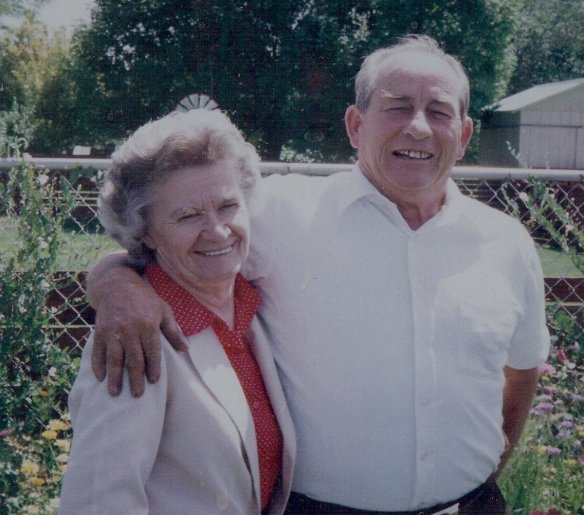
(Sharing with Literary Musing Monday, Inspire Me Monday, Tell His Story, Let’s Have Coffee, Porch Stories, Woman to Woman Word-filled Wednesday, Wise Woman, Faith on Fire, Grace and Truth)


Friday’s Fave Five

FFF snowflakes

It’s Friday, time to look back over the blessings of the week with Susanne at Living to Tell the Story and other friends.

It’s been a full week, physically and emotionally, but a good one. Here are the best parts:

1. A great trip to Idaho for my husband’s mother’s funeral. Though the cause for our travel was sad, other aspects of the trip were fun. We had not traveled together as a family since Jason’s wedding, almost ten years ago. It was neat to be part of Timothy’s first flight. He loved it and handled everything wonderfully. Being in a hotel, visiting each other’s rooms, meeting various ones in the breakfast area were all enjoyable. My husband’s oldest brother and sister-in-law were at the same hotel, so we spent a lot of time in the breakfast room chatting. The boys liked the indoor pool and hot tub in the evenings.

2. A sightseeing tour through Jim’s home town. Mittu and Timothy had never been to ID, and the rest of us had not been in ages. The boys had only distant memories. We drove by Jim’s old house and noted the changes, various places he worked and went to school, walked a little bit around Snake River Canyon and Shoshone Falls. It was too cold and we didn’t have enough time to stay outside long, but it was fun.

3. Reconnecting and catching up with extended family and friends. Jim had gone back to ID over ten years ago to bring his mom back to our place, and much of the family met together then. But the rest of us had not seen his side of the family in maybe 18-20 years or more. Some we’ve kept in touch with on Facebook, which is nice but not quite the same. But some of the nieces and nephews aren’t on FB very much. It was almost like a family reunion. One niece remarked that the only thing wrong was that Grandma wasn’t there to enjoy it. She would have loved it. If she could see us from heaven, I’m sure she was happy to see us all together. A special treat was meeting one of her friends that I had been corresponding with for a few years and who has become a sweet reader and commenter on my blog.

4. Wonderful hotel staff. Various ones of us were in three different hotels and didn’t really have a central place to meet. In past years the gathering place would have been Grandma’s house. Our hotel served breakfast, but otherwise the breakfast room was not in use except for keeping coffee available for guests. The staff let us meet there as much as we liked and even allowed us to bring in pizzas to share after the funeral, offered bowls and tongs for ice, etc. We tried to clean up as best we could, straightening and wiping off tables, but I know we caused them more work with extra trash and vacuuming. They could not have been nicer.

5. A few days off from regular chores. It was nice not to have to cook or wash dishes and to have a maid tidy up the room for a few days.

Bonus: Praying friends and answered prayer. I had messaged a few friends with prayer requests for various aspects of the trip and funeral. Traveling with IBS was a particular concern. All that I had asked prayer for went amazingly well. I’m so thankful to God for His grace and for friends who upheld in prayer and sent encouraging notes along the way.

Jim is off (well, mostly – still having to deal with emails and a few phone calls related to work) the rest of this week, but we’re transitioning back to normal. Or a new normal, I should say, adjusting to life without Grandma’s care.

Laura Ingalls Wilder Reading Challenge 2019 Sign-up

It’s time for the Laura Ingalls Wilder reading Challenge for 2018! The basic idea is to read anything by, about, or relating to Laura Ingalls Wilder during February, the month of her birth and death. I have an extensive book list here if you’d like some ideas beyond the Little House series, but if course the Little House series is delightful to read or reread.

In the comments below let us know what you’re planning to read. On Feb. 28 I’ll have a wrap-up post where you can tell us how you did and what you thought, either in the comments or with a link back to your posts. You don’t have to have a blog to participate, but if you do I’d appreciate your linking back here.

Sometimes participants have done projects or made recipes from the series as well. If you do so, please do share with us! Annette at Little House Companion has some activities and other resources.

At the end I’ll draw a name from those who participate to win their choice of a prize:

The Little House Cookbook compiled by Barbara M. Walker

OR

Laura’s Album: A Remembrance Scrapbook of Laura Ingalls Wilder by William Anderson

OR

Little House Coloring Book, which contains art and quotes from the books. It’s not designed as an “adult” coloring book, but adults could certainly use it. 🙂

If none of those suits you, I can substitute a similarly-priced Laura book of your choice. To be eligible, leave a comment on the wrap-up post at the end of the month telling us what you read for this challenge. I’ll choose a name through random.org. a week from then to give everyone time to get their last books and posts finished.

This year I am planning to read On the Way Home, written by Laura as she, Almanzo, and Rose traveled from South Dakota to Mansfield, Missouri, and The Road Back, in which Laura and Almanzo traveled back to De Smet for a visit.

How about you? Will you be joining us this year? What will you be reading?

(Sharing with Literary Musing Monday)