Book Review: Love of the Summerfields

Summerfields

Love of the Summerfields by Nancy Moser takes place in England in the 1880s and touches on lives in the manor house, both family and servants, and in the village as well. Some of the characters and their situations are:

Adelaide Weston, the dowager countess of the manor. A strong-willed, take-charge woman, her life turns upside down when an old love comes back into her life.

Frederick and Ruth Weston are the current earl and countess. Frederick is a decent man, but the manor is coming into hard times with more outgo than income. Ruth has become a recluse, both because of feeling intimidated by her mother-in-law and guilt over some of her actions in the past.

Clarissa Weston is their spoiled daughter who has not made a “match” yet, so her father and grandmother make one for her, partly to relieve the financial affairs of the manor.

Jack and Fidelia Hayward are shopkeepers. Jack is a fine, decent, patient man, but Fidelia is a bitter, controlling, unkind gossip. Lila is their daughter, a sweet girl in love with a man out of her reach. To make matters worse, she is pressed into acting as the go-between with this man and his fiancee. The Hayward’s son, Morgan, is in love with Ruth’s maid, Molly, but they have to keep it quiet because a lady’s maid is not supposed to have suitors. When Jack’s father dies, the family takes in his mother.

When a secret threatens to upend the lives of several in both village and manor, good for some but seemingly bad for others, the first instinct of those who uncover it is to keep it concealed. Will they let truth prevail even though it will cost them, or will hiding it bring greater repercussions?

This book is marketed as “If you like Downton Abbey, you’ll enjoy” this book. I don’t know if that’s the best way to present it. It is from the same era with the same strict class rules, and it even has a feisty dowager countess. But all the other characters and storylines are vastly different. So those who don’t want it to be too much like DA might avoid it, and those who want it to be just like DA will be disappointed. But if you like stories like from this time and place and type of people (which is what I think the slogan is actually going for), then you’d probably like this book. From the author’s notes after the book, the story was inspired by her own reading interests and her family history, not DA.

This book is the first in a series of three, and although I enjoyed it, I wasn’t planning on reading the sequels – until I got to the end and then read an except from the next book. Now I want to find out what happens!

(Sharing with Semicolon‘s Saturday Review of Books, Literary Musing Monday and Carole’s Books You Loved)

Save

Save

Recent Cards

It has been a while since I’ve shared with you some cards I have made, so I thought I’d catch up. 🙂

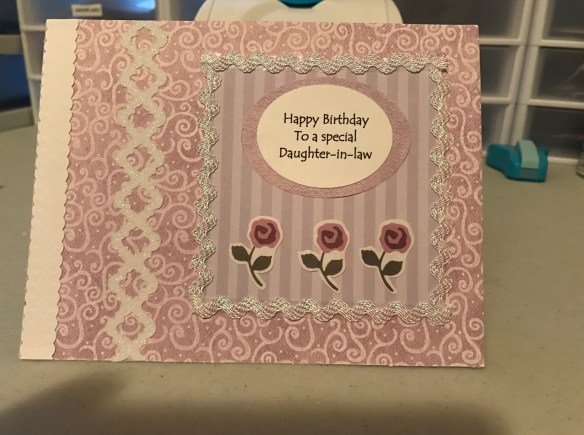
This was for Mittu’s birthday. She likes purple and lavender, so I tried to incorporate those.

IMG_0087

This was for Timothy’s birthday. He is very much into anything on wheels right now, especially construction vehicles.

IMG_0140

Though I have been driving for decades, somehow I got the traffic light upside down…but when I noticed it, I didn’t want to try to peel it off and tear the paper underneath. I don’t think he noticed. 🙂

This card is the only one I have made on more than one occasion (only with different colors of paper), the occasion being a bridal shower. Since the recipients were in different states and didn’t know each other, I didn’t have to worry about them comparing notes. 🙂

IMG_0123

I got the idea from Pinterest, and the dress part of the card there took up more space and the top and bottom of the dress flared out more. But both the girls I was making this for are very slim, so I slimmed down the dress here. I ran white card stock through my Cuttlebug to get the embossed pattern on the dress. I printed off the label on the computer and used two different sized punches for it. If you turn the punch upside-down, you can position a phrase in the opening, though it is a little tricky to get it to stay centered and still while you punch the design.

Paper punch

I don’t have a steady hand for cutting, so punches help a lot. (Punches can be expensive, but craft stores often have them on sale 40-50% off, and with gift cards I’ve collected a good many.)

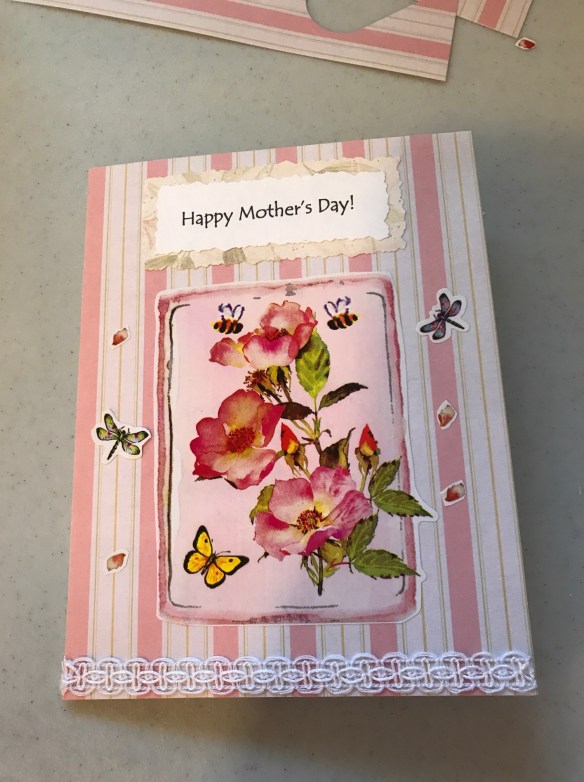
The next three were for Mother’s Day.

This one was for a friend, someone I consider a second mother:

IMG_0209

This was for Jim’s mom, who likes yellow:

IMG_0212

Even though I don’t care for yellow myself, this ended up being one of my favorite cards I’ve made.

Up til now, I’ve made the inside sentiment of the cards on the computer, printed them out, and cut them out, and glued them in, but I felt that came across a little tacky and made it look home-made in a negative rather than positive sense. I don’t do lettering or even write well, so I didn’t want to do anything by hand. I could run cards through the computer. But for now I decided to try embellishing the inside as well as the outside.

IMG_0213

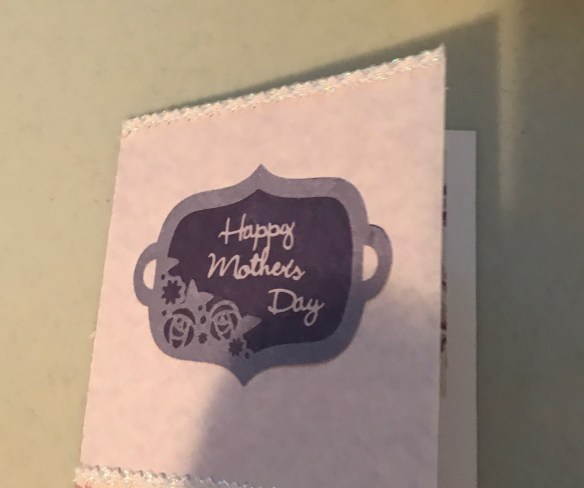
This was for Mittu’s Mother’s Day.

IMG_0219

Sorry about the shadows! This was the only one I’ve used the Cricut on lately. If I had it to do over, I’d use the lighter color as the floral frame and the medium color as the background. But I didn’t think of that til a few hours after it was done. 🙂 I didn’t realize at first that the little flowers look like little faces:

IMG_0218

I have a Cards and Paper-crafts board on Pinterest where I go for ideas and inspiration. Sometimes, as with the bridal shower card, I’ll have a specific idea in mind before I start. Other times, like with the rest of these, I’ll look through the papers and embellishments I have in the colors or theme I want to use, and then ideas of how to put them together will arise. Sometimes I’ll scroll through the Cricut Design Space online either at their ready-to-make cards, or, as with the last card, I’ll search there for specific items, like flowers or sayings, and then put them together.

At any rate, this is a creative outlet I enjoy, and I wanted to share it with you.

Finishing Well

I am reading in Chronicles just now. Though it has a reputation for being pretty dry, it actually has many great truths in it. Chronicles covers the history of the kings of Israel and Judah from the time of Solomon until the Babylonian captivity. Most of the kings were bad, in that they did not follow Jehovah God in the way He prescribed, and many followed idols and false gods instead. Most of the few who did start out well did not finish well. And though “finishing well” is probably not what “the” theme of the book is, it stands out for consideration.

Solomon, for all his wisdom and all the blessings he experienced during his early reign, fell away when his many wives led him to other gods.

“Asa did that which was good and right in the eyes of the LORD his God” (II Chronicles 14:2), was marvelously helped in battle after prayer, took down idols, removed even his own mother from her position because of the image she made. But in later years he sought the help of a pagan king instead of God and even imprisoned the prophet who came to warn him (16:1-10). He ended up with diseased feet for which he did not seek the Lord at all.

“Joash did that which was right in the sight of the LORD all the days of Jehoiada the priest” (24:2), but after Jehoiada died, Joash fell away to the point of killing Jehoaida’s son (24:19-27).

Amaziah “did that which was right in the sight of the LORD, but not with a perfect heart” (25:2). He received great help from the Lord when he did things His way, yet instead of continuing to follow Him, he “he brought the gods of the children of Seir, and set them up to be his gods, and bowed down himself before them, and burned incense unto them.  Wherefore the anger of the LORD was kindled against Amaziah” (25:14-15).

Uzziah, “as long as he sought the LORD, God made him to prosper” (26:5), and “And God helped him against the Philistines” and other enemies, “and his name spread abroad even to the entering in of Egypt; for he strengthened himself exceedingly” (26:7-8). “And his name spread far abroad; for he was marvellously helped, till he was strong. But when he was strong, his heart was lifted up to his destruction: for he transgressed against the LORD his God, and went into the temple of the LORD to burn incense upon the altar of incense” (26:15-16). The NASB puts it this way: “But when he became strong, his heart was so proud that he acted corruptly, and he was unfaithful to the LORD his God.”

Josiah was one of Judah’s best kings, leading a revival after the book of the law was found during temple repairs, yet he went to battle and “hearkened not unto the words of Necho from the mouth of God” and ended up dying of wounds received in that battle.

Will I forget the things I knew, like Solomon did, and be led away by other loves, or will I keep my first love? Will I forget from whence my help comes, like Asa did, and look for help elsewhere? Will I fall away after my spiritual mentors are gone, like Joash? Do I serve God with a perfect (complete) heart, or am I holding anything back, like Amaziah? Will I be lifted up with pride like Uzziah? Will I neglect to listen to wise counsel from God’s Word, like Josiah?

May I heed the warnings and lessons in these examples. May God save me from these and other failures and help me to keep my eyes on Him and to finish well.

(Adapted from the archives)

(Sharing with Inspire Me Mondays, Literary Musing Monday, Testimony Tuesday, Tell His Story, Wise Woman, Woman to Woman Word-filled Wednesday, Faith on Fire)

Save

Save

Save

Save

Honoring the moms in my life

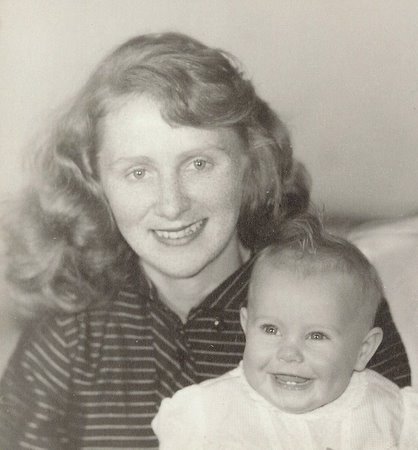
May always makes me think of my mom, because Mother’s Day and her birthday are both this month. She passed away eleven years ago at the age of 68, much sooner than either of us wanted to say good-bye. That first spring I couldn’t go near a card shop because all of the items out for Mother’s Day were just too painful. Now, though the grief of missing her is still there, it is tempered with good memories.

One of the things I most appreciated about my mom was that she could be a friend to us without sacrificing her authority. I could talk to her about anything.

image03.jpg

My mom and I when I was a baby.

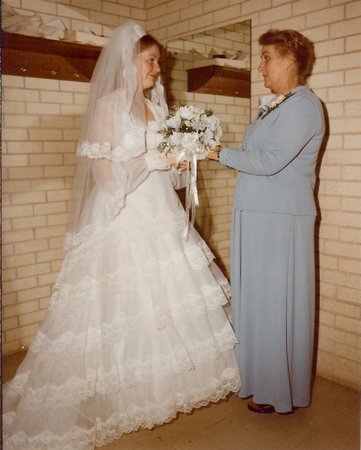
My mom and I before my wedding.

In my college years God brought a new family to our church. They noticed that I came to church alone and invited me home with them often. Mrs. C. became like a second mother to me. I’ve often referred to her as my spiritual mom. Her gentle example as a wife, mother, and homemaker taught me much, though I don’t think she was deliberately trying to teach me anything. We’ve corresponded for years, though her notes have become less frequent as she has gotten older and developed several health issues. I’ll always be thankful for her influence on me.

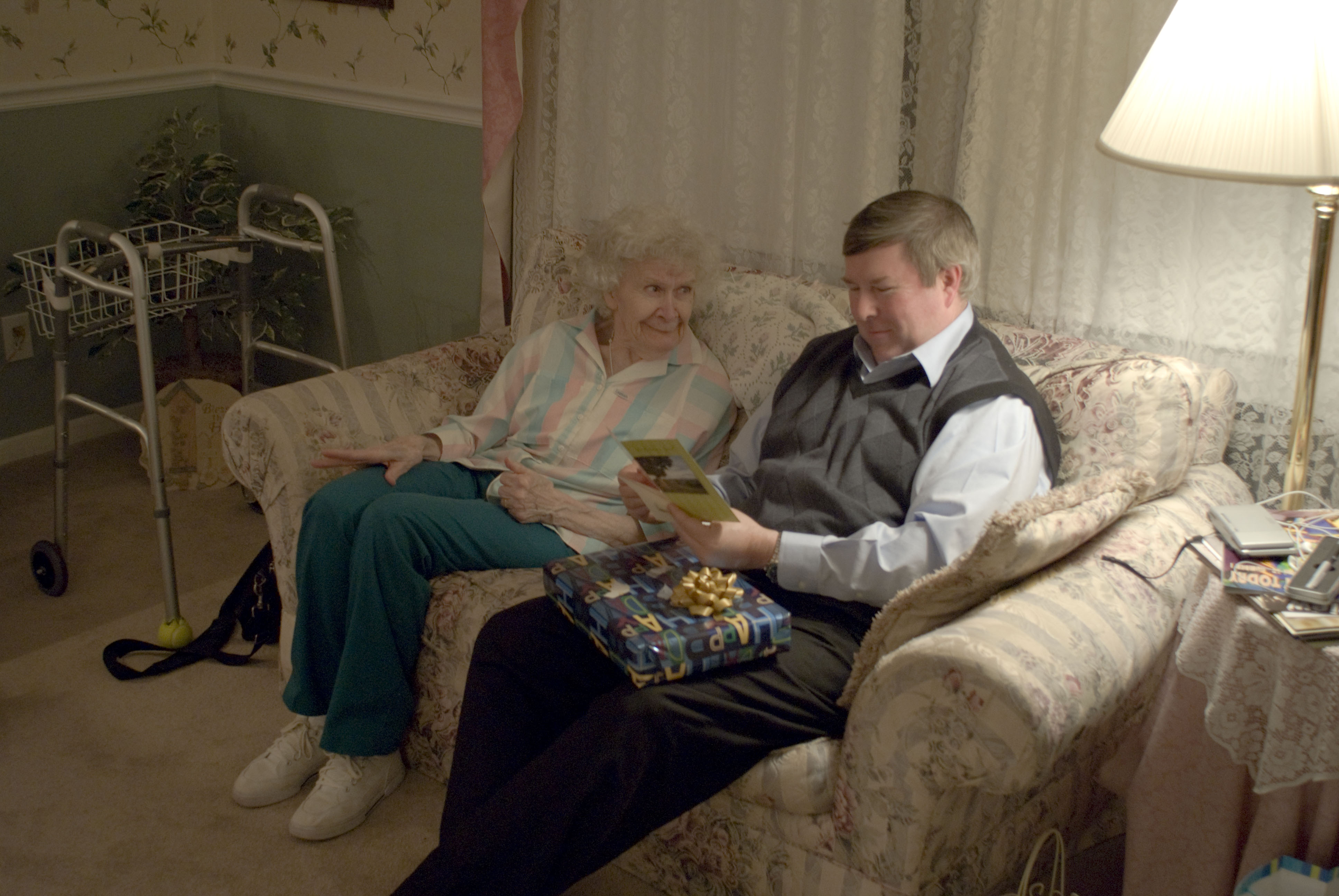
My third mom came into my life when I got married. My mother-in-law and I have had a very amiable relationship with no in-law horror stories. She had several problems in her life that would have made some people angry and bitter, but instead she sought God’s grace to surround the irritants like an oyster making a pearl. It has been sad to see her decline over the last few years, but we’ve been blessed to move her near us and to be able to include her in our family life.

2009

2015

The newest mom in my life is my sweet daughter-in-law, who is a loving wife to my son and mother to the cutest grandson in the world. 🙂

IMG_0044

There have been other women as well who had a word of encouragement for me along the way.

I am thankful for “Aunt Sylvia,” my mom’s best friend, who never married or had children of her own but brought us Christmas presents, was always kind to us, and who bravely battled cancer. She once stepped in to pick me up from camp to explain that my parents were with my sister who had been hurt in an accident while I was away, and I am sure her calmness affected me.

I remember spending many nights with my grandmother when she lived near us and accompanying her on road trips in the summer. She was always crocheting any time she was sitting down and her hands were free.

I remember working on a church bulletin board with a lady whose oldest was a teenager while mine was still a toddler. She encouraged me not to dread either the “terrible twos” or the teen years or any stage in between but to believe that even those stages can be good, and I am happy to report they were.

I am thankful for Aunt Bobbye, my mother’s sister, for her being available to us any time we needed her, for her zany sense of humor, her care and support at my mom’s viewing and funeral, and for her love and care and continued interest throughout my life.

I remember and am thankful for walks and breakfasts and lunches and “play dates” with friends in the same season of life as we encouraged each other in our mothering.

I am thankful for godly pastor’s wives I’ve had and their sweet spirit and godly counsel.

In every season of life there have been a few ladies just ahead of me that I could watch and learn from, though they may not have known they were being observed. Even now, on the cusp of an empty nest, I’m inspired by a couple of older ladies who have been shining and cheerful examples in their “upper middle age” years.

I am thankful for so many women who were examples to me and made me a better woman, wife, and mother. I hope I can encourage others as these ladies did me.

I hope you have a wonderful Mother’s Day and feel renewed in your roles this morning.

mothers-day-flowers-13

Save

Laudable Linkage

IMG_0195

Here are some interesting reads discovered in the past couple of weeks:

It Is Never Right to Be Angry With God, HT to Challies.

What Our Stay-at-Home Mom taught us About Human Dignity, HT to Challies.

What to Do When Your Friend Loses a Baby.

When Mother’s Day Isn’t a Celebration.

Celebrating All Mothers by a Not-Yet Mother.

How to End Sibling Rivalry Like a Christian.

Unity About Modesty Among Differences of Opinion and Practical Considerations About Modesty, 3 and 4 in a series.

What’s Too Violent for Christian Readers?, a discussion with several authors. Pretty much agree with these points.

Animal Expressions, HT to Lisa. These are so cute! Especially the lamb and the baby gorilla with its mom.

And finally, some smiles, found on Pinterest:

I actually do that kind of thing sometimes….

Happy Saturday!

Save

Friday’s Fave Five

It’s Friday, time to look back over the blessings of the week with Susanne at Living to Tell the Story and other friends.

Thursday morning as I was thinking about what I might include in this week’s FFF, I thought, “Well, I don’t know. It’s been a pretty bad week.” And then I had to correct myself, as it was really only one bad day, and that wasn’t even the whole day. So I am thankful for the FFF, because otherwise I would have let that one day shade all the rest.

1. My mother-in-law’s regular caregiver. Most of you know we have someone from a health-care agency in our home a few hours a day to take care of my mother-in-law so I can run errands, make and go to appointments, or just have a break. Our regular helper is wonderful – the best we’ve had either at home or in any facility. She needed a day off this week, so the agency sent a substitute. We’ve had this substitute before, and while she was not our favorite, we figured she could handle the basics well enough. But she was the source of my Very Bad Day this week. She won’t be coming back. And she made me appreciate our regular person even more. It was so nice, the day she came back, to be able to relax and do whatever I needed to do, knowing that Jim’s mom was in good hands.

2. Pool time with Timothy. The little wading pool we had for him is cracked and too small now, so his parents brought theirs over. It was fun to get the little pool toys out again and to show him a couple of new ones I had gotten. I may be a grandma, but I still get excited about little wind-up animals that “swim” in the water. 🙂

3. Pleasant evenings. Both during the “pool night” and one other evening when I was refilling bird feeders and watering plants, it was so pleasant outside. Just the right temperatures, little humidity, and a little breeze.

4. Time off from cooking. I know I say this frequently – but it’s a favorite whenever it happens. 🙂 Jason and Mittu brought barbecue from a favorite place one evening last weekend, and Jim and I brought McAlister’s Deli home for Sunday dinner since Jesse had plans with friends. Then Mittu brought dinner over for the “pool night.”

5. My husband’s thoughtfulness. He had to leave early one morning to go out of town. He usually makes his mom’s breakfast, but I would need to that morning. But he set everything out, crushed her pills (that always takes me a long time), measured out her coffee, and got as much ready as he could ahead of time. And then he even got the bathroom set up for her shower (towels on the floor under the ramp, shower curtain tucked out of the way, etc.). He’s a keeper. 🙂

Happy Friday!

Save

Book Review: Waiting For Peter

I’m sorry I’ve written about nothing but books so far this week. I’ve been working on another post for some time now but just haven’t had the time and mindset to pull it together this week. I guess book reviews are easier posts, in a way, because I am dealing with definite subject matter, and while I’m sharing my thoughts, it’s different from wrestling through a subject and the Biblical implications and coming to a conclusion. And I just happened to finish several books lately. 🙂

I’m not normally drawn to animal stories. They’re often designed to be heartwarming – and my heart needs warming as much as anyone else’s – but I find myself perversely resistant to stories that I know upfront are going for that effect. Or they’re sad, sometimes while simultaneously being heartwarming. One son shared a quote with me something to the effect that getting a dog is an investment in a small tragedy. Because they live a much shorter time than humans, generally, we’re going to have to deal with their deaths.

Waiting For PeterSo I don’t think I would normally have picked up the novella Waiting for Peter except that I really like Elizabeth Musser. This is a short book: only 90 pages. And it’s heartwarming and sad. But it’s good.

The story is about a boy named Peter who was in an accident that took the life of his friend and left Peter with severe injuries. He survives with nothing worse than a limp physically, but his confidence is shattered. His whole world has been shaken up and nothing is the same. His parents decide to let him choose a dog to try to help him, and Peter finds one who seems a little sickly and neurotic, but responds to him.

Dog and boy grow up together. They have adventures and Peter learns to extend himself (talking to strangers when not naturally prone to, etc.). Mom has to deal with the messes, chewed up household items, etc., but likes how dog and boy are both developing. When she deals with her own midlife issues – physical changes, aloof daughter, emptying nest – the dog becomes her companion, too.

The back of the book says, in addition to the book being about “the healing power of love between a boy and his dog,” it is also an “allegory of how we should view our relationship with God, our Master.” Those parts were a little more…not didactic, exactly, but more direct, more like one would see in a devotional than in fiction. That’s not characteristic of Musser, but maybe because the book was so short, there wasn’t space to develop it like one would in a novel. Or maybe she meant it exactly like she wrote in order to make the points she made. I’m not criticizing it or saying it’s bad – it’s just different from how she usually writes.

The story is told alternately from the points of view of the mom, Lanie, and the dog…the latter of which could be a little tricky, but it was kind of fun reading Sunny’s “thoughts.”

There is not a forward or afterward, so I don’t know if the story is based on one from the author’s life (although on her author’s page she does mention having a neurotic dog).

Overall, though not my usual cup of tea, I enjoyed it.

(Sharing with Semicolon‘s Saturday Review of Books and Carole’s Books You Loved)

Save

Save

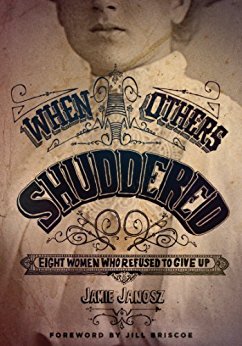
Book Review: When Others Shuddered

When Others ShudderedWhen Others Shuddered: Eight Women Who Refused to Give Up by Jamie Janosz contains eight short biographies of women who lived between 1820 and 1955 who influenced their world for God. They came from different walks of life: some single, some married, some wealthy, some former slaves. They were ordinary women except, as the title indicates, they didn’t “shudder,” they didn’t turn away from circumstances or tasks that many of us would have, and thus they can inspire us.

They are:

Fanny Crosby, who was blinded due a mistreatment to her eyes when she was six weeks old. Yet she later thanked God for this “gift,” feeling that it set the course of her life and made her more attuned to God working in and through her. Fanny determined to be optimistic, and her mother and grandmother tried to give her as normal a childhood as possible and teach her about God. She went to a blind school, taught there, married, was active in Christian work. She had always loved music and reading and composed poems since her girlhood, and that grew into hymn writing, many of her hymns well-known ones that we still sing today. The book shares her manner of hymn-writing and many of the incidences that led to hymns.

Emma Dryer was “a thinker, a dreamer, a girl who wanted more out of life” (p. 37). She loved and excelled at school and eventually became a teacher even though extra schooling was thought to “make women unfit for marriage and motherhood” (p. 37). She loved teaching and the orderliness of her life, but wondered if there was something more. A bout of severe typhoid fever hanged her life and made her want to give herself to Christian work. Visiting the growing city of Chicago, she was burdened with the needs of people, particularly women, there who came to the city to work but were often led astray. She felt “the Bible was the solution to the social problems” she saw there (p. 42). A meeting with D. L. Moody and the Great Chicago Fire of 1871 convinced her that she was needed in Chicago. Eventually Moody talked with her about a training school he wanted to establish, something right up Emma’s alley. Emma worked and planned toward that end, but Moody, distracted with his travels, meetings, and other work, didn’t get around the the school for some time. When Emma, who could be outspoken and confrontational at times, wrote strongly to him about it, he was offended and decided to leave Chicago and start a school in NY. But another letter and the urging of his wife and others led him to Chicago and the founding of the Moody Bible Institute.

Nettie McCormick was the wife of Cyrus McCormick, wealthy from his invention of a reaper. A number of her children died, she suffered several miscarriages, two of her children developed mental illnesses, and Nettie herself went deaf at age 34. She “struggled to see God’s hand” (p. 66) but wrestled in prayer and rested in Him. The McCormicks were always generous, giving to many good causes and works, and after Cyrus died, Nettie continued to give wherever she could, even to missionary schools in other countries. She wasn’t self-promotional and did much behind the scenes, but she didn’t stay behind her four walls: she traveled and even planted trees herself in front of a building she had funded. She was close friends with Emma Dryer and a major supporter of Moody and the Institute.

Sarah Dunn Clark grew up wealthy and privileged, but in her mid-twenties felt God’s urging to work in that which will last for eternity. She moved to Chicago and helped in many ways by visiting needy families and establishing a mission Sunday School. She met her husband there: they moved in the same social circles and had similar burdens. They visited slums and jails and opened a small rescue mission “in the heart of what people called ‘the devil’s territory'” (p. 80), which eventually eventually became the Pacific Garden Mission (which you may know of from the radio program Unshackled). George was called by some “the poorest preacher who ever tried to expound God’s Word,” but he was “deeply convicted and spoke emotionally about the condition of the lost” (p. 81). Sarah became the “mother of the mission,” ministering to people on a personal level. “In her quiet way, she extended respect and dignity to people regardless of their condition. It was this steadfast love that broke through many hardened hearts” (p. 87). The Clarks invested all of their money in the mission and lived simply and frugally.

Amanda Smith grew up the child of parents who were slaves at two different farms. Her father purchased his freedom, and the rest of the family was set free as the dying wish of the family’s daughter they tended. Her parents “believed in God,” “demonstrated a calm and steady faith” (p. 92) and were active helpers for the Underground Railroad. Amanda was only able to attend a short time of school and then began domestic work. Lonely one day, she decided to attend church, where the preaching and singing reminded her of home, and she felt God “wanted her, a poor, simple black girl, to serve Him” (p. 93). She wanted to be a “consistent, downright, outright Christian” (p. 99). Her first husband was a drunkard and died; only one of her children lived to adulthood; her second husband deceived her as to what kind of a man he was so she would marry him, deserted his family, and later died. She was invited to camp meetings, began to sing and testify at them, and soon people were paying her expenses to do so at other camp meetings. She had opportunity to travel to England, India, and Africa. She never asked for money, but prayed, and God sent her money that she then used to meet needs she saw in other places. She became active in the Christian temperance union, established an orphanage, and wrote a book about her life.

Virginia Asher became active in Christian work after her salvation, in time particularly drawn to “‘fallen women’ and the madams who ran houses of prostitution. She was often called in to read and pray with the sick, write letters to parents, dress wounds, and whisper words of peace to the dying” (p. 119). She helped care for their children: though she was unable to have her own, she “took in the world of lost souls and mothered them with divine love” (p. 122). She and her husband sometimes entered saloons and ask if they could put on a brief service for their customers – and they were allowed to. She established Business Women’s Councils.

Evangeline Booth was the daughter of William and Catherine Booth, founders of the Salvation Army in London, who “believed in the three ‘S’s while reaching those the rest of society rejected: soup, soap, and salvation” (p. 148). Evangeline remained single and eventually became the head of the Salvation Army in the US, and eventually led it internationally.

Mary Mcleod Bethune was born after the Emancipation Proclamation to parents who had been slaves. She thirsted for education and prayed earnestly for it. God answered through a local mission school and later through scholarships to other schools, eventually to Moody Bible Institute. She had a beautiful singing voice and toured with the choir. She wanted to be a  missionary in Africa, but God closed the door. She eventually established a school in Florida with the meagerest of supplies, in opposition to the white community and the KKK, which eventually joined with another college to become Bethune Cookman. She became an advisor to presidents, eventually taking the newly created position of administration of the Office of Minority Affairs for FDR and then other government posts, and established the National Council of Negro Women. She realized her dream of going to Africa when as a US representative she went to Liberia for the inauguration of their new president when she was in her seventies.

Along with more detail about the life and faith of these women, there are three chapters on “Woman and Education,” “Women in Missions,” and “Women in Politics,” detailing a bit of the history of the times in each of those areas. A final chapter wraps up “Being That Kind of Woman,” discussing some of the key features they had in common. None had a trouble-free life: some dealt with poverty, health issues, marital problems, deaths of children, opposition. None were faultless or flawless. But each sought to follow God in the way that He led them and relied on Him for what they needed to do so.

You may have noticed that most of them had some connection with D. L. Moody and/or the Moody Bible Institute. That’s because the author is a professor at Moody and her initial research into Emma Dryer’s life led her to a study of all these women.

If you like biographies, you will probably like this book. If you don’t like biographies but feel you might be able to take them in smaller doses, this book is worth a try. If you like hearing how God has worked in people’s lives and get inspired by them in your own – which is why I like biographies – you will glean a lot from this book.

(Sharing with Semicolon‘s Saturday Review of Books, Literary Musing Monday, and Carole’s Books You Loved)

Save

Save

Book Review: A Portrait of Emily Price

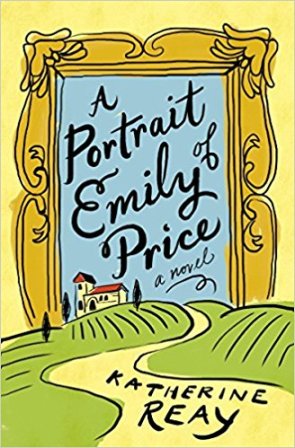
Emily PriceIn  A Portrait of Emily Price by Katherine Reay, the title character is a “fixer.” She works for an insurance company in restoration, particularly of art pieces, but she also tackles wall damage, toys, even appliances. In the rest of her life, her dysfunctional broken family developed the “fixer” in her as well. When her sister can’t keep a job, Emily has to find a new one for her. When her clients reveal issues beyond the fire damage in their home, she tries to help the visible as well as invisible family problems. She would like to be an artist as well and has a degree of talent, but something is missing.

Though she lives in Chicago, she’s been sent to Atlanta for her most recent assignment, and her company rented space in a conservator’s studio for her work. The proprietor, Joseph, takes her to his aunt and uncle’s Italian restaurant her first night in town, where she meets his brother, Benito, or Ben. Ben is visiting from Italy, where he works in his family’s restaurant, and is helping his aunt and uncle revitalize their place. Immediately attracted to Ben, Emily agrees to help him restore the restaurant in her spare time. They fall in love (no spoiler, as this happens early in the book and is mentioned in the summary on the back), marry, and she accompanies him back to Italy.

But it’s no fairy tale honeymoon. Ben’s mother doesn’t approve and feels hurt that she was left out of her son’s wedding. Much of the family lets her know in covert ways that she doesn’t fit in. She feels constantly in the way, and efforts to help usually end up making things worse. Ben’s time away has left the family restaurant in a mess, so he’s working all hours to get things back in shape. Only Lucio, Ben’s father, shows Emily any kind of warmth or welcome, and later, Ben’s sister Francesca does as well.

Emily’s fixer mode kicks in, but without understanding the background of the issues, the family, and the culture, her advice and actions backfire. She has to learn that everything can’t be fixed, and furthermore, it’s not always her job to try. But somehow amidst all the pain, she finds a new freedom in her own art.

Yet when she unwittingly stumbles across a long-hidden family secret, it seems to be the last straw, for her as well as Ben’s mother. Will all the relationships shatter, or can they find the grace to heal?

One of Reay’s hallmarks is the wealth of literary allusions in her books. There didn’t seem to me to be quite as many this time, and they mainly came in Lucio’s book recommendations to Emily. Sadly, I wasn’t familiar with most of them, but one I did know was Jane Austen’s Emma. One review at Amazon mentioned this book was a nod to Emma. I hadn’t really caught that – the plots aren’t similar, but Emma and Emily do share “fixer” tendencies (and name similarities I just noticed.) I wished I had thought of that in the passages where Emily discussed her thoughts on Emma.

Reay also usually writes Christian fiction, and around 3/4 of the way into the book, I realized that aspect was absent, and Emily herself seemed woefully ignorant about the Bible or spiritual things. But it does come through in the end. Since it’s in Italy, it’s heavily Catholic-flavored, but the need and provision for grace do come through.

Reay infuses the book with a lot of detail about art restoration, Italy, and Italian cooking, but it flows naturally and nothing sounds overly technical. I almost felt like I could see the sunflowers out the window and smell some rich sauce simmering in the kitchen.

I loved her characters here, especially Emily, Ben, and Lucio, but all of them are well fleshed-out.

This was a book that pulled me in and made me want to spend all day curled up with it.

Update: Here is an interview with the author about this book, her blog, and the C. S. Lewis roots to her stories. It’s an excerpt from a longer interview here.

(Sharing with Semicolon‘s Saturday Review of Books and Carole’s Books You Loved)

Save

Save

Save

Friday’s Fave Five

It’s Friday, time to look back over the blessings of the week with Susanne at Living to Tell the Story and other friends.

Wow – May already! I am enjoying this spring so much, I’m not eager for summer yet. So I’m trying to  treasure the days as they go by. Here are some favorites parts of the last week:

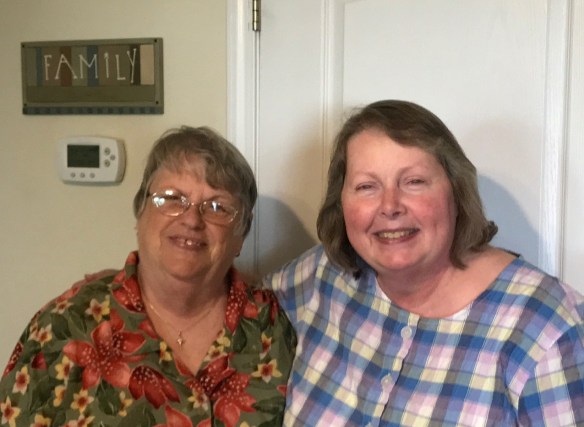
1. Meeting Melanie! We’ve been following each other’s blogs for…I don’t know how many years now. She recently moved to TN after caring for her mom for many years until her mom’s recent passing. We got together for lunch, and enjoyed talking so much. We had our faith in common as well as caregiving, and as we talked, we just seemed to find more and more areas of similarity. She’s a sweet lady. It was such fun to meet her in person, and we’re already planning our next get-together!

IMG_0201

2. Clean curtains, windows, and blinds, at least in three rooms. These weren’t originally on my agenda this week, but some spatters on the valance above the sink led to taking it down to be washed (actually, asking Jesse to take them down – I found I couldn’t reach them even with my step-ladder), which led to taking down the curtains in my bedroom and bathroom to make a full load, which led to cleaning the blinds and windows while I had everything off of them. You don’t notice how much dust, spiderwebs, etc., have accumulated on those things til you get up close! And I thought all but the kitchen valance would be ready to hang back up from the dryer, but they all needed ironing. Even though it’s not something immediately noticeable, it’s a nice feeling to know they’re all fresh and clean. And since I’ve made that start, I am planning to do some of the other windows in the next few days.

3. Sheet pan meals. Have you heart of these? I’d seen them mainly on the Skinnytaste blog and then searched for more. The basic idea is that meat (usually chicken) and vegetables and sometimes potatoes are all baked together on one cookie sheet. I printed off a few different recipes, which all had different cooking temperatures and spices, and drew from the different ones to make my own creation. 🙂 I cooked the chicken a bit too long, but the roasted broccoli, cauliflower, and carrots turned out really well. Jesse isn’t usually crazy about broccoli, but loved them this way – less crunchy than raw, but not limp. Plus it was nice not having several pans to clean. I’m looking forward to trying more variations of this.

4. Neighbors coming together. One neighbor lost half of a huge tree in his front yard during some strong winds this week. It was so neat to see many of the neighbors pitching in to help cut up and clean up the debris. When Jim got in from work, he took his chain saw over and helped.

IMG_0196(1)

IMG_0207

I hope it survives. It’s my favorite tree in the neighborhood, beautiful especially in the spring and fall.

5. Cute Timothy moment of the week. Timothy and his parents were over last night and went over to look at the tree. He was taking various sticks from one of the piles of debris and playing with them, pretending the kinds of things little boys do with sticks. Then he took his stick and put it into a crack in the bark of the “broken” tree – to “fix” it by trying to put some branches back in.

Happy Friday!

Save