Victorian Short Stories of Successful Marriages

I got Victorian Short Stories: Stories of Successful Marriages both because the Kindle version was free and because I thought all the stories were by Elizabeth Gaskell (author of favorites North and South and Wives and Daughters).

As it turned out, each of the five stories in the book was written by a different author: only the first was from Gaskell. But I generally like stories from this era, and it was an opportunity to read some new-to-me authors.

The first story, “The Manchester Marriage,” is by Gaskell. It opens with a Mr. and Mrs. Openshaw moving from Manchester to London. Mrs. Openshaw had formerly been married to a cousin who was lost at sea. She was known as Mrs. Frank then, and she and her ill daughter and mother-in-law took a small house and took in lodgers, one of whom was Mr. Openshaw. Mr. O., over time, took a particular interest in Mrs. Frank’s ailing daughter, devising ways to amuse her and procuring things to help her. He was not a sentimental man, but he liked how Mrs. Frank did things. He offered an unromantic proposal, but Mrs. Frank accepted. They got along well, had a good life, and the little daughter thrived.

Then Mrs. Openshaw’s first husband showed up.

The second story is “A Mere Interlude” by Thomas Hardy. Baptista Trewthen was thought to be “a young woman with scarcely emotions or character.” “No crisis had come in the years of her early maidenhood to demonstrate what lay hidden within her, like metal in a mine.” She trained to become a teacher, but with her first job discovered she hated teaching. An old bachelor proposed. She didn’t love him, but thought life with him would be better than teaching. So she accepted.

After her term was over, she was going to head to her parents house to prepare for the wedding. But she missed her boat, and the next one wasn’t due for a couple of days. She took a room and then went for a walk—and ran into her former boyfriend from college.

This one had a couple of unexpected twists after this point.

In “A Faithful Heart” by George Moore, a Major Shepherd is secretly married because he doesn’t think his sisters will approve of his wife. He has only a small house and allowance for his wife because “He had so many expenses: his club, his clothes, and all the incidental expenses he was put to in the grand houses where he went to stay.” But she managed. She didn’t care about Appleton Place, her husband’s estate home. Her only wish was to take her daughter to see it one day.

The fourth story is “The Solid Gold Reef Company, Limited” by Walter Besant. Reg loves Rosie, but he has no money, and she has no intention of marrying anyone without money. He leaves, she gets engaged a couple of times without ever marrying, he makes his fortune. Her father gives permission for Reg to call upon Rosie again. But though they both get what they want, it’s not exactly happily ever after.

The final story, “The Tree of Knowledge,” is by Henry James. Honestly, I had a hard time with this one. The author had a penchant for very long sentences made up of three or more clauses. I had sort of followed the thread, but I had to look up some other sources to understand the story.

Peter Brent is a writer who is close friends with a sculptor, Morgan Mallow. He doesn’t think Morgan is talented, however. He loves Mrs. Mallow from afar, but he has never acted on his feelings or indicated them to her in any way. He’s also godfather to the Mallows’ son, Lance.

When Lance wants to go to Paris to become a painter, Peter tries to discourage him. Peter is afraid either Lance will have the same level of talent as his father, or his eyes will be opened to good art and then he’ll know his father is a fraud. They both end up being surprised.

There is nothing at the beginning or end of the book to say when these stories were compiled together. Since most of them originally appeared in other publications, I am assuming that this compilation is recent. The publication date for this edition is 2012.

I don’t know what the compiler thought a successful Victorian marriage was. Not all of these marriages were what I would call happy. But if “successful” meant they made a go of it and stayed married, they were all successful.

I thought Gaskell’s story was very sweet. I didn’t like Major Shepherd in the third story or Rosie in the fourth. But each story had something to offer and enjoy and think about. It’s surprising how many twists and surprises came up in such short works. Short stories are not normally my favorite reading material, but I did enjoy these.

I originally chose this book because a book of short stories was one category in the Back to the Classics Reading Challenge. However, when I was nearly finished, I looked again at the rules, and there had to be six short stories in the book to count for the challenge. This one had only five. So I can’t count it for the challenge, but I am still glad I read it.

As I said above, I was familiar with Gaskell. I’d heard of Hardy and James but never read them. I had not heard of Moore or Besant. Have you read any of these stories or authors?

Spiritual Freedom

Many a child has watched the clock count down to the last school bell on the last day of school before summer.

Then they burst through the school doors with a William Wallace burst of “Freeeedom!!!”

No more alarm clocks, homework, lunch lines, math. Only three glorious months of doing what they want. Sleeping in. Watching cartoons. Playing games. Going swimming. Seeing friends.

Yet they are not entirely free to do what they want, are they? They are free from one kind of restraint. But they still have to eat the green stuff at dinner, mind their manners, entertain little brother while mom is busy, take out the trash, etc., etc., etc.

Teenagers chomping at the bit to become adults and “do whatever they want” find the same thing. They do get one kind of freedom, but also a greater burden of responsibility.

Proponents of “free love” in the 60s found that their actions weren’t really free. Disease, unexpected pregnancy, and no long term security were not what they bargained for in their freedom.

There’s a sense in which no one experiences entire freedom to do whatever they want.

The Bible says, “But I say, walk by the Spirit, and you will not gratify the desires of the flesh. For the desires of the flesh are against the Spirit, and the desires of the Spirit are against the flesh, for these are opposed to each other, to keep you from doing the things you want to do” (Galatians 5:16-17).

There doesn’t seem to be any middle ground. We’re either yielding to the flesh or the Spirit. Sure, we have to yield to parents, employers, family, the police, etc. But all of those are within the context of the flesh or Spirit. Sometimes we yield to others in an effort to keep life running smoothly—ultimately a desire to please ourselves.

Some who most desire the freedom to do what they want are the most enslaved to their own passions.

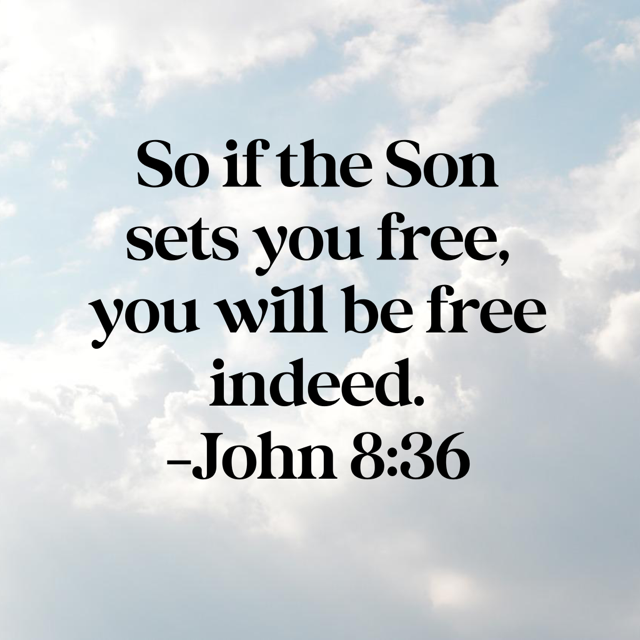
What does it mean, then, that “Now the Lord is the Spirit, and where the Spirit of the Lord is, there is freedom”? (2 Corinthians 3:17). Or “So if the Son sets you free, you will be free indeed”? (John 8:36). Surely that doesn’t mean the “do whatever I want” kind of freedom, does it?

No. The death of Jesus Christ freed us from:

  • The law of Moses that people in the OT were under. “Let it be known to you therefore, brothers, that through this man [Jesus] forgiveness of sins is proclaimed to you, and by him everyone who believes is freed from everything from which you could not be freed by the law of Moses” (Acts 13:38-39). The book of Galatians was written to people who had freedom in Christ yet thought they had to go back under this yoke. “For freedom Christ has set us free; stand firm therefore, and do not submit again to a yoke of slavery” (Galatians 5:1).
  • Sin and death. “For the law of the Spirit of life has set you free in Christ Jesus from the law of sin and death” (Romans 8:2). We still have to battle sin, but its power over us has been broken. “For if we have been united with him in a death like his, we shall certainly be united with him in a resurrection like his. We know that our old self was crucified with him in order that the body of sin might be brought to nothing, so that we would no longer be enslaved to sin” (Romans 6:5-6). By God’s grace, we have the ability to fight it and win now. And we still have to face physical death (unless the Lord returns before that happens), but not the second death in the lake of fire (Revelation 20:11-15). Even physical death has lost its sting, because death takes us to God (2 Corinthians 5:6-10).
  • Condemnation. “There is therefore now no condemnation for those who are in Christ Jesus” (Romans 8:1).
  • Darkness. “For at one time you were darkness, but now you are light in the Lord. Walk as children of light” (Ephesians 5:8).

We have also been freed to something.

  • God our Father. “And because you are sons, God has sent the Spirit of his Son into our hearts, crying, “Abba! Father!” (Galatians 4:6).
  • Sanctification eternal life: “But now that you have been set free from sin and have become slaves of God, the fruit you get leads to sanctification and its end, eternal life” (Romans 6:22).
  • Light. “Again Jesus spoke to them, saying, ‘I am the light of the world. Whoever follows me will not walk in darkness, but will have the light of life'” (John 8:12).
  • Grace and Mercy. “Let us then with confidence draw near to the throne of grace, that we may receive mercy and find grace to help in time of need” (Hebrews 4:16).
  • Rest. “Come to me, all who labor and are heavy laden, and I will give you rest. Take my yoke upon you, and learn from me, for I am gentle and lowly in heart, and you will find rest for your souls. For my yoke is easy, and my burden is light.” (Matthew 11:28-30).
  • Sufficiency: “And God is able to make all grace abound to you, so that having all sufficiency in all things at all times, you may abound in every good work” (2 Corinthians 9:8).
  • Heaven. “Father, I desire that they also, whom you have given me, may be with me where I am, to see my glory that you have given me because you loved me before the foundation of the world” (John 17:24).

And so much more!

So what kind of freedom is this, exactly?

The Pulpit Commentary on 2 Corinthians 3:17 sheds some light: “The liberty of confidence (ver. 4), and of frank speech (ver. 12), and of sonship (Galatians 4:6, 7), and of freedom from guilt (John 8:36); so that the Law itself, obeyed no longer in the mere letter but also in the spirit, becomes a royal law of liberty, and not a yoke which gendereth to bondage (James 1:25; James 2:12) – a service, indeed, but one which is perfect freedom (Romans 5:1-21; 1 Peter 2:16).”

We’re freed from trying to earn righteousness with God. When we believe on Jesus as Savior and Lord, He cleanses us and enables us to do everything God wants us to do. We serve Him as His children, out of love, by His grace.

And can it be that I should gain
An int’rest in the Savior’s blood?
Died He for me, who caused His pain?
For me, who Him to death pursued?
Amazing love! how can it be
That Thou, my God, should die for me?

Long my imprisoned spirit lay
Fast bound in sin and nature’s night;
Thine eye diffused a quick’ning ray,
I woke, the dungeon flamed with light;
My chains fell off, my heart was free;
I rose, went forth and followed Thee.

Charles Wesley, from “And Can It Be”

(I often link up with some of these bloggers.)

Laudable Linkage

Here are some of the good reads found this week.

Four Compelling Reasons I Am Pro-Life, HT to Challies. I can echo just about all this. I’d add to the science section that the DNA of an embryo or fetus is separate from its mother’s. So an unborn baby is not just part of the mother’s body.

Life Is Precious, HT to Challies. “Are children a limit on personal autonomy? Yes. There’s no getting around it. They take resources. They need help, care, support, food, time, energy, and the list goes on and on. They need everything supplied to them for a long time. And is there a better way to use autonomy than this?”

Whose Choice? HT to Challies. “In 1973 I was 19 years old and a sophomore in college when the Supreme Court decided the Roe vs Wade case and legalized abortion. Honestly, however, I never expected the Court’s landmark decision to affect me personally.”

Tell God the Unvarnished Story. “Though we profess that God is all-seeing and all-knowing, that he understands not merely the actions of our hands and the thoughts of our minds but even the intentions of our hearts, still we sometimes feel as if we need to hold back from telling him all that we have thought, all that we have done, all that we have desired. Yet if we are to confess our sins before him, we need to confess them all, for he knows them anyway.”

Finding Family, HT to Challies. “God’s family is a precious thing, bound by wine and bread instead of blood and resemblance. Its members don’t dress alike, share a uniform culture or a common language. But whether it be in a building or a living room, whether through candles and liturgy or guitars and blue jeans, whenever believers gather, we belong to each other. And wherever two or more of us come together, Jesus is there.”

When the Mob Shows Up the Monday After Roe, HT to Challies. “Using umbrellas and masks to shield their identities from security cameras, they smashed almost every ground-floor window on the side of the building that hadn’t yet been boarded up and covered the building in vile graffiti aimed specifically at Christians.”

These posts are a few years old, but they were just shared on the Elisabeth Elliot Quotes Facebook page recently: Lar’s and Elisabeth’s Love Story and Elisabeth Elliot’s Final Days.

If You Find Listening to Sermons Boring, Try This, HT to Challies. “During my lifetime I reckon I’ve heard about 4,000 sermons. Often I have been challenged, uplifted, provoked, transformed. Sadly, other times, I have been bored.”

On the Supreme Court Decision to Overturn Roe v. Wade. A look at the legal arguments.

Happy 4th to my fellow Americans! It’s nice that it made for a long weekend this year.

Audiobook Challenge Check-In

The Audiobook Challenge, hosted by Caffeinated Reader and That’s What I’m Talking About, is having its mid-year checkpoint today. Here are the audiobooks I have listened to so far this year (titles link to my reviews):

  1. The Other Bennet Sister by Janice Hadlow. The events of Jane Austen’s Pride and Prejudice and beyond from the viewpoint of Mary, the quiet, bookish middle sister. Excellent.
  2. Framley Parsonage by Anthony Trollope, the fourth of his Barsetshire Chronicles. A young vicar trying to get in with society’s elite gets into trouble. The village matron’s son falls in love with the vicar’s sister rather than the beautiful but cold society maiden his mother had picked out for him.
  3. The Path Through the Trees by the “real” Christopher Robin of the Winnie-the-Pooh books, Christopher Milne. This book is the sequel to his first, The Enchanted Places (both are reviewed at the ink.
  4. The Small House at Allington by Anthony Trollope, the fifth in his Barsetshire Chronicles, had numerous threads, but the main plot focuses on a widow and her two daughters who live in a small house on the property of her brother-in-law, who owns the manor house and never liked his sister-in-law.
  5. The Last Chronicle of Barset by Anthony Trollope, the final book in his Chronicles of Barsetshire series. A stern vicar is accused of stealing and resistant to the community’s attempts to help him. All the threads from the previous books in the series are satisfyingly tied up.
  6. To Sir, With Love, an autobiographical novel by E. R. Braithwaite about a Black teacher in a London school of rowdy students in the 60s.
  7. The Winnie the Pooh books by A. A. Milne (When We Were Very Young, Winnie-the-Pooh, The House at Pooh Corner, and Now We Are Six). All four reviewed together. I’ll just count them as one entry since they are so short.
  8. Mary Barton by Elizabeth Gaskell. Part helping rich and poor understand each other, part coming-of-age, part unraveling a crime.
  9. Eugene Onegin by Alexander Pushkin. Russian classic about a bored young rich man who turns away the naive girl who loves him only to find he does lover her when it’s too late.
  10. The Confessions of St. Augustine. Challenging to listen to, but I am glad I did.
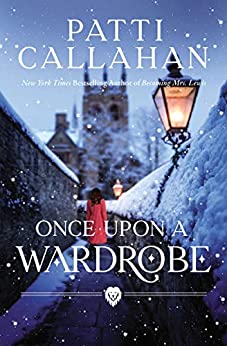
  11. Once Upon a Wardrobe by Patti Callahan. Novel about a college girl asking C. S. Lewis about Narnia for her dying younger brother.
  12. Hospital Sketches by Louisa May Alcott. Stories about her brief time as a Civil War nurse.

I had chosen to aim for the Binge Listener level at 20-30 audiobooks this year, and I am well on my way to that goal.

Friday’s Fave Five

We’re halfway through 2022! And we’re starting a new month. Time goes by so quickly, it’s nice to pause for a moment and recollect the best parts of the week with Susanne and friends at Living to Tell the Story.

1. A “routine” cardiologist’s visit. I almost could’ve phoned it in except for their need to listen to my heart. Hopefully, if my heart behaves itself, after my next visit I can see them once a year instead of every six months.

2. A nice gesture. I had to eat lunch early before my appointment, so I got a little hungry while out running errands afterward. I went through a drive-through for a snack and found out the person ahead of me paid for my order. I think that’s the first time that has ever happened to me.

3. Lunch with Melanie. It was fun to eat out, though we were sad to learn O’Charley’s doesn’t do Free Pie Wednesdays any more. (We got pie anyway, though. I had been looking forward to their chocolate pie for days!) It was even more fun to catch up in person.

4. A yucky job done. An investigation into why and where our refrigerator was rattling led my husband o pull it away from the wall and vacuum its coils and clean the floor underneath it. I think most of us would say that’s not a job we do often, so the dust and such really builds up. I am thankful he took care of it all.

5. No thunderstorms. My weather app forecasted thunderstorms a few days this week. Though we heard thunder a couple of times, we didn’t get any heavy storms. We did get some needed rain, but I am thankful it wasn’t heavy and didn’t happen while either of us was on the road.

I wish my Canadian friends a happy Canada Day and my fellow Americans a happy Independence Day Monday!

June Reflections

We began this month with an end-of-school party for Timothy. We enjoyed celebrating Father’s Day 2/3 of the way through the month. And now we’re gearing up for the Fourth of July.

It’s been too hot out to do much else, but Jim did get the patio spiffed up for summer. We need to get new patio chairs but haven’t looked yet. We’ve had a couple of cookouts already. One evening,Timothy brought over sidewalk chalk, bubbles, and “pop-its”–those things you throw on the concrete where the make a loud pop. The weather was nice that evening, and it felt like a summery thing to do.

My middle son, Jason, had to leave his employer when the employer couldn’t pay his salary for a few weeks. He’s been making deliveries for a few different companies and has been able to make just about his regular salary. He likes the flexibility, and he says it’s kind of like playing Santa Claus–you get to deliver stuff to people and make them happy. I don’t know how long he’ll do this kind of thing, but it’s a nice change from the pressure he was under.

Timothyisms

When we play Jackbox games together as a family, we have to sign in with our names. Timothy usually calls me Grandma, but one night I just put “Gram” in for my name. Then he started calling me Gram Cracker, and more recently, Gramster. 🙂

But what really cracked me up was when Jason texted that Timothy had said, “Oh, man! I need to pay my bills! I haven’t paid any in 8 years!” Thankfully, he won’t have to worry about that for a few years yet.

Creating

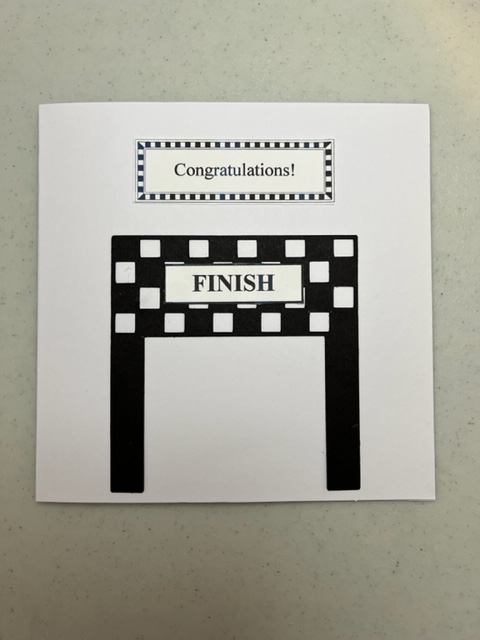
The first card I made this month was for Timothy’s end-of-second-grade party:

I made the words on the computer and the sign on the Cricut.

This was for my step-father for Father’s Day:

Once again, the words were done on the computer and the mustache on the Cricut.

This was for my husband for Father’s Day:

I had gotten the idea for these two on Pinterest and adapted them. The tape measure was done on the Cricut.

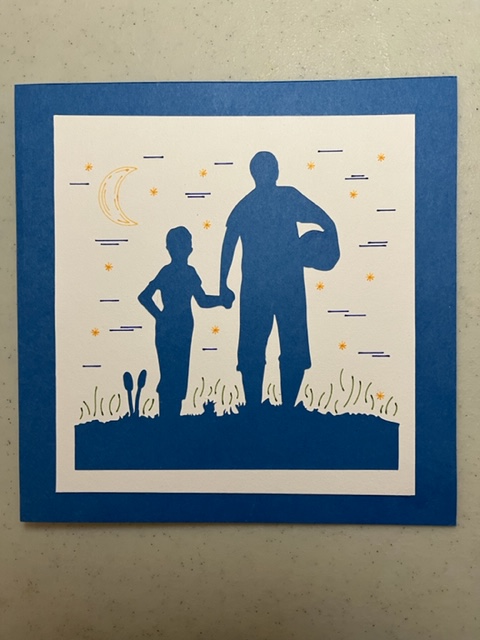
And this one was for Jason for Father’s Day:

The silhouettes were cut on the Cricut, but the moon and stars and squiggles were drawn by the Cricut with markers my oldest son just got for me either for Christmas or Mother’s Day. It was fun to experiment with those. I loved how much this design looked like Jason and Timothy.

This was for a friend’s birthday:

The bird and butterflies are multi-layer stickers. I did the words on the computer and then used two different-sized scalloped hole punches.

Watching

There’s not a lot on this time of year. We enjoy America’s Got Talent (though you have to have the remote at the ready sometimes) and reruns of America’s Funniest Home Videos (usually I’ve forgotten enough of them that it is like seeing a new program. 🙂 ).

We streamed a really good movie titled In Harm’s Way about an American pilot who heads a bombing raid on Japan just after Pearl Harbor was bombed. He crashes in China, and a young widow helps nurse him back to health and hides him from the authorities. I don’t know if the movie is based on a particular true story, but the end screen said many Chinese helped Americans in such ways, and, sadly, the Japanese killed many Chinese because of it. Even though much of the film was in subtitles, it was easy to follow and get caught up in the story. It was one of the best movies I have seen in a while. Here’s the trailer:

I had watched The Boy in the Striped Pajamas a few years ago after reading the book, but Jim had never seen it. So we watched it together one night. It’s about a boy whose father is put in charge of a work camp in Germany. The boy thinks the camp is a farm and the people where funny striped pajamas. One day while exploring, he sees a boy on the other side of a fence, and they start talking. Eventually they become friends. The ending is very sad. But maybe because I knew what was coming, I noticed other things this time, like the various attitudes of different people and the boy’s wrestling with whether or not his father is a good man.

Reading

Since last time, I finished (titles link to my reviews):

I’m currently reading:

  • Shadows in the Mind’s Eye by Janyre Tromp
  • Hospital Sketches by Louisa May Alcott
  • Victorian Short Stories of Successful Marriages by Elizabeth Gaskell and others.
  • Be Compassionate (Luke 1-13): Let the World Know Jesus Cares by Warren Wiersbe
  • Aging With Grace: Flourishing in an Anti-Aging Culture by Sharon Betters and Susan Hunt InstaEncouragements is hosting a study of this book on Tuesdays through July.

Blogging

Besides book reviews, Friday Fave Fives, and Saturday Laudable Linkage, I’ve posted these since last time:

Around the corner

We’ll probably have a cookout on the 4th. Jason’s birthday is this month. Otherwise, I am not sure what’s on the horizon yet.

How was your June? Anything you’re looking forward to in July?

Once Upon a Wardrobe

In Once Upon a Wardrobe by Patti Callahan, Megs Devonshire is a college student at Oxford in the 1950s. Her 8-year-old brother, George, has a heart condition and is not expected to live long.

George has become enamored with The Lion, the Witch, and the Wardrobe by C. S. Lewis. George wonders often if Narnia is a real place. If not, where did it come from? When he learns that the author of the book is a professor at Megs’ school, George begs her to ask Lewis about Narnia for him.

Megs demurs. First, she explains to George, Oxford is made up of different colleges, and Lewis doesn’t teach at the one she attends. Plus, Megs studies math and physics and is not much for stories. She prefers logic and black and white answers. Of course Narnia is just a figment of the author’s imagination, she insists.

But George keeps asking, and Megs loves him. So she finds a way to meet Mr. Lewis.

Lewis is very hospitable. But he doesn’t answer Megs’ question directly. Instead, he tells her a series of stories about his life over several visits.

George enjoys the stories. But Megs is frustrated that she can’t get a straight answer. And their mother wonders if George is spending too much time thinking about an imaginary world.

There are three levels, or threads, to this story. One is Megs and George and their family. One is Lewis’ biography. And another is Megs’ learning the value of stories. Having read On Stories by Lewis, I recognized a lot of his points in this novel. He’s not saying that the world doesn’t need logic and math and facts. Rather, “Reason is how we get to the truth, but imagination is how we find meaning” (p. 52).

The middle section of the book seemed a little formulaic. Megs’ point of view is written in the first person. She’d visit Lewis and come back with a story for George. As she begins to tell it, the point of view switches to George’s, but in the third person. Then, as if the scene is unfolding in George’s imagination, a section of Lewis’ story is told in the third person.

In the final third or so of the book, the action picked up and there were no more switches, so it was easier to get caught up in the story.

The scenes with C. S. and his brother, Warnie, made me feel like I was there in their room with the fireplace going, listening in. Callahan had studied Lewis’ life for her first book, Becoming Mrs. Lewis, and I am not surprised another book about him grew from all that research. The details shared showed a familiarity with Lewis’ home and school without overpowering the story.

Callahan writes in her note after the story that she wasn’t interested in “ascribing logic, facts, and theory to the world of Narnia,” as that has been done by so many others. But she wanted to explore how Narnia changes readers and how, as Lewis said, “Sometimes fairy stories may say best what needs to be said.”

I’ve read many biographies of Lewis, so most of his story was familiar to me. There were parts that surprised me, though. For instance, I knew he took some children from London into his home during the Blitz, but I had never heard anything about them until this book. It also occurred to me that, though I had read much about Lewis, I had never read his book about himself: Surprised by Joy. I’d seen that book quoted in anything else I’d read about him, so I thought I knew it. But I should read it some time.

There were a couple of places the theology was a little wonky. I wasn’t sure whether these were from the author’s beliefs or a character’s.

But overall, this was a sweet and touching story.

I listened to most of the book via audiobook, read nicely by Fiona Hardingham. But I had also gotten the Kindle version on sale and looked up many sections there.

The Four Loves

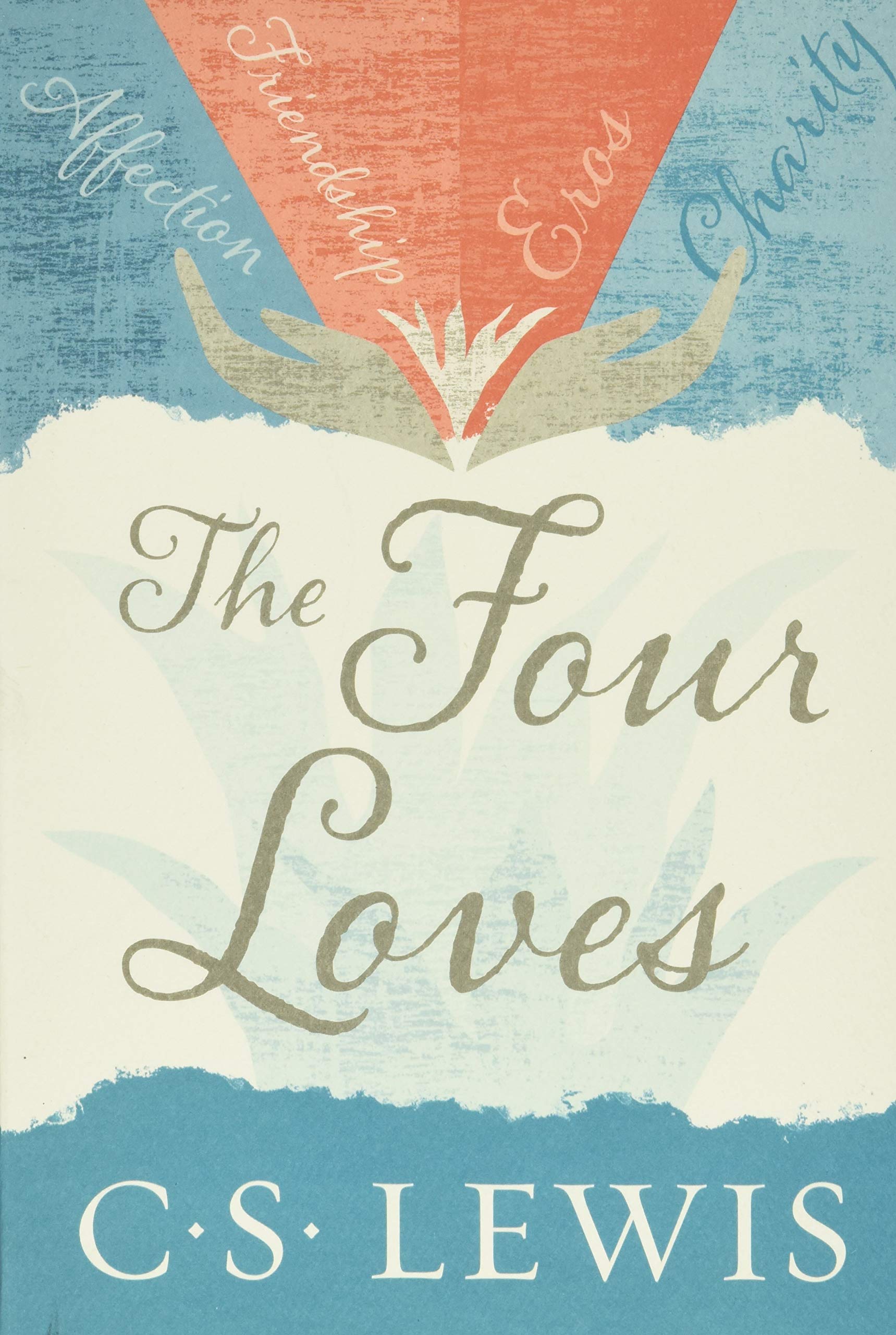
In The Four Loves by C. S. Lewis, he says that when he contemplated writing about love, he thought there were two types: Need-Love and Gift-Love. Need-love is that of a child for its parents, who meet its needs and comfort when frightened. Gift-love is that of a man who works hard for the well-being of his family. Lewis was going to propose that the latter is more like God because He gives and needs nothing. Need-love, however, seemed totally selfish and not deserving of the name “love.”

But, he reasoned, no one thinks a child is selfish for looking to its parents for comfort or an adult selfish for wanting the companionship of friends. And man’s love to God is almost totally Need-love.

It would be a bold and silly creature that came before its Creator with the boast ‘I’m no beggar. I love you disinterestedly.’ Those who come nearest to a Gift-love for God will next moment, even at the very same moment, be beating their breasts with the publican and laying their indigence before the only real Giver. And God will have it so. He addresses our Need-love: ‘Come unto me all ye that travail and are heavy-laden,’ or, in the Old Testament, ‘Open your mouth wide and I will fill it’ (pp. 3-4).

Lewis also differentiates between Need-pleasures and Appreciation-pleasures. One quote stood out to me here because I see this in online discussions all the time.

We must be careful never to adopt prematurely a moral or evaluating attitude. The human mind is generally far more eager to praise and dispraise than to describe and define. It wants to make every distinction a distinction of value; hence those fatal critics who can never point out the differing quality of two poets without putting them in an order of preference as if they were candidates for a prize (pp. 14-15).

Next he writes a chapter titled “Likings and Loves for the Sub-Human”—about love of nature, home, family, country. There’s much to contemplate here, but I’ll just share this one quote from this chapter: “All natural affections, including this, can become rivals to spiritual love: but they can also be preparatory imitations of it, training (so to speak) of the spiritual muscles which Grace may later put to a higher service” (p. 30).

Then Lewis determined that there were four loves and dedicated a chapter each to each one.

First is Affection, or storge in the Greek (“two syllables and the g is ‘hard,'” p. 41). He describes Affection as “a warm comfortableness . . . satisfaction in being together . . . the least discriminating of loves” (p. 41). Affection is “the humblest love. It gives itself no airs” (p. 43). Affection can be in combination with the other loves or not.

Next comes friendship. You’d think that would be part of Affection. But Affection can be felt for pets and even people we don’t like very much. If I understand it rightly, it’s not as deep as friendship.

This chapter contains Lewis’ famous quote, “The typical expression of opening Friendship would be something like, ‘What? You too? I thought I was the only one'” (p. 82).

“To the Ancients, Friendship seemed the happiest and most fully human of all loves; the crown of life and the school of virtue. The modern world, in comparison, ignores it” (pp. 72-73). This book was published in 1960 and its elements were first shared in a series of radio talks. I don’t know if Lewis would say the same today. However, I am sure he would emphasize even more in our day that “It has actually become necessary in our time to rebut the theory that every firm and serious friendship is really homosexual” (p. 76).

Those who cannot conceive Friendship as a substantive love but only as a disguise or elaboration of Eros betray the fact that they have never had a Friend. The rest of us know that though we can have erotic love and friendship for the same person yet in some ways nothing is less like a Friendship than a love-affair. Lovers are always talking to one another about their love; Friends hardly ever about their Friendship. Lovers are normally face to face, absorbed in each other; Friends, side by side, absorbed in some common interest (p. 77).

Friendship is also not just between two people, though it can be. A group of friends enhances the friendship of each with the other. “In each of my friends there is something that only some other friend can fully bring out. By myself I am not large enough to call the whole man into activity; I want other lights than my own to show all his facets” (p. 77).

Friendship also has its good and bad sides. There is a certain exclusiveness to friendship–we can’t be as close to everyone as we are with our closest friends. But that can turn to snobbishness or cliqueishness. It can also form an “us against the world” attitude where we close off criticisms or efforts to point out problems or disagreements. Friendship must “invoke the divine protection if it is to remain sweet” (p. 111).

The third love, Eros, is what Lewis calls romantic love. I’ve always heard the Greek word eros meant sexual, physical love, but Lewis call that Venus. People can experience Eros and Venus together or just one or the other.

Sexual desire, without Eros, wants it, the thing in itself; Eros wants the Beloved. The thing is a sensory pleasure; that is, an event occurring within one’s own body. . .

Now Eros makes a man really want, not a woman, but one particular woman. In some mysterious but quite indisputable fashion the lover desires the Beloved herself, not the pleasure she can give (p. 120).

Eros, like Friendship, can have good and bad sides. Our fallen nature can corrupt any good thing.

The last of the four loves, according to Lewis, is Charity or agape in Biblical Greek. Lewis warns many times that our natural loves can act as rivals to the love of God. But he also warns that love of God does not erase or demean our naturals loves. Rather, His love infuses them to be what He created them to be.

Lewis gives an example from Augustine (which, in the providence of God, I just finished reading). Augustine had a dear friend, Nebridius, whose death plunged him into despair and desolation. “This is what comes, [Augustine] says, of giving one’s heart to anything but God” (p. 153). Therefore, he concludes we shouldn’t love other people so much. “If love is to be a blessing, not a misery, it must be for the only Beloved who will never pass away” (p. 153). Lewis responds:

Of course, this is excellent sense. . . I am a safety-first creature. Of all arguments against love none makes so strong an appeal to my nature as ‘Careful! This might lead you to suffering.’ To my nature, my temperament, yes. Not to my conscience. When I respond to that appeal I seem to myself to be a thousand miles away from Christ. If I am sure of anything I am sure that His teaching was never meant to confirm my congenital preference for safe investments and limited liabilities. I doubt whether there is anything in me that pleases Him less (p. 153-154).

To love at all is to be vulnerable. Love anything, and your heart will certainly be wrung and possibly be broken (p. 155).

The only place outside Heaven where you can be perfectly safe from all the dangers and perturbations of love is Hell. I believe that the most lawless and inordinate loves are less contrary to God’s will than a self-invited and self-protective lovelessness. It is like hiding the talent in a napkin and for much the same reason. . . Christ did not teach and suffer that we might become, even in the natural loves, more careful of our own happiness (p. 155).

We shall draw nearer to God, not by trying to avoid the sufferings inherent in all loves, but by accepting them and offering them to Him; throwing away all defensive armour. If our hearts need to be broken, and if He chooses this as the way in which they should break, so be it (pp. 155-156).

Lewis then goes on to a good discussion of what it means when God says He loved Jacob but hated Esau, or what God meant when He tells us we can’t be His disciples without hating mother, father, etc., which He tells us in other places to love. One helpful quote from this section:

To hate is to reject, to set one’s face against, to make no concession to, the Beloved when the Beloved utters, however sweetly and however pitiably, the suggestions of the Devil. A man, said Jesus, who tries to serve two masters, will ‘hate’ the one and ‘love’ the other. It is not, surely, mere feelings of aversion and liking that are here in question. He will adhere to, consent to, work for, the one and not for the other (p. 157).

But then we’re called to show this agape kind of love to others. And when we try, we quickly see it’s not in us naturally.

The invitation to turn our natural loves into Charity is never lacking. It is provided by those frictions and frustrations that meet us in all of them; unmistakable evidence that (natural) love is not going to be ‘enough’— . . . But in everyone, and of course in ourselves, there is that which requires forbearance, tolerance, forgiveness. The necessity of practising these virtues first sets us, forces us, upon the attempt to turn—more strictly, to let God turn—our love into Charity. These frets and rubs are beneficial (p. 173).

These can be raised with Him only if they have, in some degree and fashion, shared His death; if the natural element in them has submitted—year after year, or in some sudden agony—to transmutation (p. 174).

Even though this is an overly long review, I still feel I’ve only scratched the surface of the book. And even though I gleaned much from the book, I can already tell I’ll need to read it again some time.

I like to read whole chapters of this kind of fiction at a time so I can follow and hopefully retain the author’s thoughts all the way through. But with only six chapters in a 192-page book, the chapters are long. It wasn’t until the last chapter that I hit on the idea of taking it in much shorter bits and chewing on that for a while before moving on. I’ll have to try that through the whole book next time.

As always, Lewis has a way of stating and illustrating some things in a way to make them startlingly clear and convicting.

I’ll close with one last quote sharing the need for surrendering to God:

This pretence that we have anything of our own or could for one hour retain by our own strength any goodness that God may pour into us, has kept us from being happy. We have been like bathers who want to keep their feet—or one foot—or one toe—on the bottom, when to lose that foothold would be to surrender themselves to a glorious tumble in the surf. The consequences of parting with our last claim to intrinsic freedom, power, or worth, are real freedom, power, and worth, really ours just because God gives them and because we know them to be (in another sense) not ‘ours’ (pp. 167-168).

I’m counting this book for the Nonfiction Classic in the Back to the Classics Challenge.

What to Do with Regret

I regret hitting my sister.

I don’t remember our ages or the circumstances. Probably a lot of hitting occurred between the six of us siblings over the years, though I’m sure my parents discouraged it.

But I think my regret over this particular incident indicates that I was old enough to know better at the time.

I’ve accumulated a lot of regrets since then. Things I said and shouldn’t have. Things I should have said but didn’t. Wrong or thoughtless choices. Selfish actions and attitudes. Time wasted. Projects unfinished or not even started.

The regret that haunts me the most is my wrong attitude while caring for my mother-in-law. Instead of welcoming the opportunity to show love to her by caring for her at her neediest, I resented the encroachment on my own time and plans and the pervasive weight of responsibility.

Not all regrets occur because of sin. Unstarted projects, for example, are a reminder that I am limited and can’t do everything I’d like to do. Yet they can serve to remind me to seek God’s wisdom in what I spend my time on.

Some regrets are due to mistakes or not enough knowledge at the time.

There are some regrets where I still don’t know whether I was right or wrong, like my college major. I wanted to major in English, but then decided Home Economics Education was more practical. However, by the time I got to my second senior year (I crammed four years into five . . .), I knew I didn’t want to teach. I liked the imparting knowledge part, but not the discipline and inspiring uninterested students. I felt like I wasted all that time and money since I didn’t “use” my major in the expected sense. Now I wish I had majored in English for the sake of writing. Yet God has used what I learned in college. I rest in Proverbs 16:9: “The heart of man plans his way, but the LORD establishes his steps.”

All too often, though, regrets are the aftermath of sin.

Regret vs. repentance

Regret is not repentance. Judas regretted betraying Christ, but as far as we know, did not repent of it. He is an illustration of the “grief produces death” Paul mentioned in 1 Corinthians 7:10.

Peter regretted denying he knew Christ and wept bitterly over it. But he repented and was restored. His sermon and actions after Pentecost and his epistles show a changed man.

King Saul and David both said, “I have sinned.” King Saul kept going back to his murderous ways in pursuing David. David gave us Psalm 51.

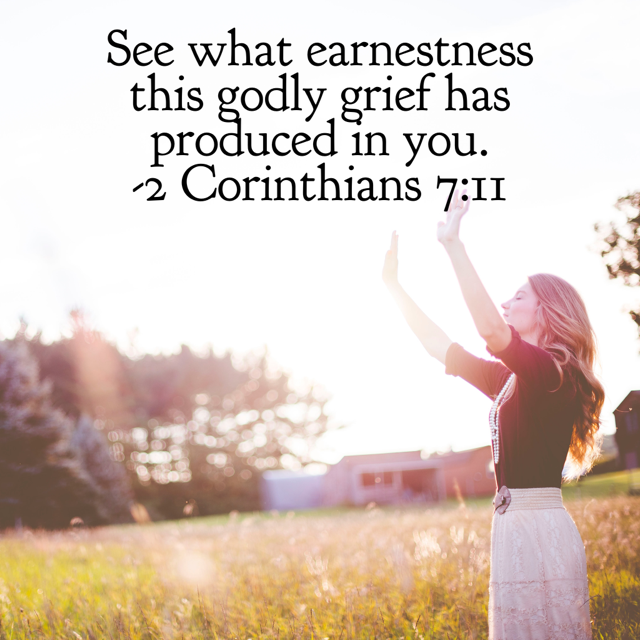
2 Corinthians 7 shows how repentance changes our attitudes. Paul had written a stern letter to the Corinthians over their sin and waited to hear how they would receive his admonitions. He was comforted when Titus came with news that the Corinthians responded with longing, mourning, and zeal (verse 7). Paul notes the changes in the Corinthians produced by godly repentance. I like how the Amplified Bible explains it: “For [godly] sorrow that is in accord with the will of God produces a repentance without regret, leading to salvation; but worldly sorrow [the hopeless sorrow of those who do not believe] produces death. For [you can look back and] see what an earnestness and authentic concern this godly sorrow has produced in you: what vindication of yourselves [against charges that you tolerate sin], what indignation [at sin], what fear [of offending God], what longing [for righteousness and justice], what passion [to do what is right], what readiness to punish [those who sin and those who tolerate sin]!” (verses 10-11).

I’ve confessed my selfish attitudes to the Lord. I lean on the blessed promise of 1 John 1:9: “If we confess our sins, he is faithful and just to forgive us our sins and to cleanse us from all unrighteousness.” I’ve always been told that “confess” in that verse means to say the same thing God says about our sin. We don’t downplay it or make excuses for it. We call it what it is in all its bald-faced despicableness.

When regret lingers

But even after confessing to the Lord and being assured of His forgiveness, regret still lingers, quite heavily sometimes.

The inclination is to confess it to the Lord all over again. But if we believe His word, He forgave us the first time we confessed our sin to Him.

Another inclination is to beat ourselves up over our wrongdoing. While it’s good to note our foolishness, wrong thinking, and actions, it doesn’t help to keep self-rebuke on repeat. We usually end up discouraged but not moving forward.

So what do we do with the regret that remains?

The only solution I have found is to let that regret spur me on to different actions and attitudes now.

I received my only traffic ticket while speeding on a road that I frequently traveled. I was humiliated and embarrassed by being pulled over by the police and questioned. I paid my fine with no contest, because I knew I was in the wrong.

Every time I traveled down that road again, I slowed down when approaching the place where I got my ticket. The discomfort of the previous encounter made me want to avoid experiencing that pain again and take extra steps to make sure I was doing right.

Some years ago, I broke and dislocated my little toe when I banged it against the wall while coming out of my bathroom door. I’ve come through that door hundreds of times—I don’t know why I didn’t do so properly then. Observing the x-ray, the doctor said my toe looked like a jigsaw puzzle. You can bet I walked very carefully through that door and around corners for weeks afterward to make sure my poor, battered toe didn’t come anywhere near them. But even after the pain subsided, the carefulness remained.

The pain of regret can do the same for us, instilling a carefulness, sensitivity, and watchfulness we might not otherwise have had. Those features often expand from the particular thing we regret to our walk in general.

We need to let regret lead us to repentance. Then we need to let God’s grace and forgiveness seep down into our souls and and enable us to make whatever changes we need to make.

The regret over a missed opportunity to share Christ with someone can help us pray and prepare for the next time. Regret over lost temper and harsh words can drive us to the Scriptures and prayer for help.

My regrets over my attitudes as a caregiver remind me of my selfishness and my need to seek God’s grace to serve Him and others, not my own desires. I knew caring for my mother-in-law was the right thing to do, even though I didn’t feel glad about it then. But I can say now that I am thankful we did.

How about you? Does regret weigh you down or spur you on?

(I often link up with some of these bloggers.)

Laudable Linkage

Here are some good reads found this week:

How to Make the Case Against Abortion in Less Than a Minute, HT to Challies. With the Supreme Court ruling on abortion in the news, abortion discussions will multiply. This video helps pare pro-life position to key points.

Confess Your Sins to God When Applying Scripture. “It is good for us to think about the different spheres and directions for our Bible application. But confessing sin is often a necessary step in the process. It is not just that we need a different strategy for loving our neighbor or a new approach to handling gossip. Frequently, we must confess that what we have been doing (or not doing) is offensive to God and deserving of his anger.”

Dear Daughter: On Outrage and Its Remedy. “Outrage is when you get really upset about someone else’s decisions or actions — so upset that you want them to be punished or forced to change. Outrage insists on being heard. It always points a finger but never at itself. It assumes it is the supreme authority on a matter regardless of whether it has any actual knowledge of it. It creates caricatures of its opponents and refuses to acknowledge the complexities of their human souls.”

Teach Us to Number Our Days, HT to Challies. “Psalm 90:12 speaks of ‘numbering our days,’ but like these two toddlers, we often don’t get it right. While we know exactly how many candles should go on our birthday cake (even if we prefer that no one else knew), we still tend to get the math wrong.”

5 Reasons We Should Not Stop Using Male Pronouns for God, or to turn it around, because the title confused me at first: why we should use male pronouns for God. HT to Challies. “It is right to believe that God is transcendent: God is not a man. Even little children learn in the catechism that ‘God is a Spirit and has not a body like men.’ And certainly, in Scripture God’s character and actions are sometimes described using feminine imagery (cf. Isa 49:15). But none of that means we should abandon male pronouns for God.”

How Were the Books of the Bible Chosen? “Inspired Scripture was recognized, not chosen. Genuine works by prolific artists such as Monet and Degas hang in museums because art experts have recognized them to be authentic pieces, not forgeries. They didn’t choose any of the paintings to be a Monet or a Degas. They scrutinized them for the unique signs of the artist’s imprint and recognized them as genuine.”

Sky Painting, HT to Challies. “I’m not sure if I’ve ever seen a boring sky. Even when the sky is an unending morass of steely grey cloud that stretches from horizon to horizon, I’ll give you that it’s technically dull, there’s a lack of sunlight, but it’s hardly boring.” I love the conclusion here.