Book Review: Five Brides

five-bridesFive Brides by Eva Marie Everson tells the story of five different women who come together to share an apartment in Chicago in the early 1950s. Their different work schedules and social lives leave them with little time for interaction, but one rare Saturday when they are all free, they decide to go shopping in town. They’re not shopping for a wedding dress, but they see one in a shop window that stops them in their tracks. Just for fun they decide to go in and try it on. By the time they’re done, they decide to pool their resources and buy the dress together so each of them can wear it. One girl will store it and send it to the one getting married, and each bride will have it cleaned and send it back to the girl who is storing it. The last bride gets to keep it.

The five girls:

Betty is from a rich family in Chicago who is pressuring her to marry a man she doesn’t love.

Joan immigrated from England to meet up with her pen pal, Evelyn, to live and work in Chicago. She’s working multiple jobs to send money back home and has no time for or interest in dating…yet.

Evelyn’s father is a Georgia farmer, and she is more or less expected to marry another farmer, but she wants something more from life.

Inga is breaking free from a very strict Lutheran home in Minnesota. She finds a job as a stewardess and a boyfriend in LA, but is going after her ambitions in the wrong way.

Madga is Inga’s bookish sister, who finds a job in a publishing firm and has secret aspirations of writing her own book one day.

I didn’t realize, until I got to the author’s note at the end of the book, that this was based on a true incident (it was mentioned in the acknowledgements at the beginning, but it didn’t click as I read the story). Joan’s story was factual, and while the other girls were made up, Joan really did buy the dress with four other roommates, and each of them wore the dress.

Overall it was an enjoyable story. I liked the era: you don’t see much fiction written in this time following recovery from WWII. I don’t often read romances, but it was fun to follow the girls’ different journeys and see how things worked out for them. With their bosses, coworkers, love interests, friends, and families, it was a little hard sometimes to keep up with who was whom, but usually it just took a second to get oriented when the scene or point of view changed.

The girls all live together in the first part of the book, but in the latter part they are scattered. The first one marries and goes to live with her husband, one goes to work overseas, one goes home brokenhearted, one goes home under a cloud, and the fifth stays in Chicago but has to find a different place. It seemed to me that after they separated, the story splintered and felt a little rushed at the end. We didn’t see one of the girl’s weddings, though the others’ were described, but we did see her legacy, so I guess that offset it. One of the girls whose marriage started out with the most problems is not heard from much again after the wedding: she was the one I most wondered whether everything worked out for her.

This is not a big deal, but one thing that I found irksome was how often the author referred to people pointing – some 67 0r so times, and often in situations where I would find it odd for people to be pointing. Maybe she is just more demonstrative than anyone else I know. As I said, not a big deal, but once I noticed it, it began to grate every time I’d see it again.

I would call this inspirational fiction rather than Christian fiction. The girls are from a variety of religious backgrounds, some more devout than others, and I wouldn’t quite agree with everything in that department in the book, but it is probably historically accurate.

There are others of Eva’s books I have enjoyed much more than this one, but it’s a nice story with clean romances.

Genre: Inspirational fiction
Potential objectionable elements: An unwed pregnancy, but details are not explicit.
My rating: 6 out of 10

(Sharing at Semicolon‘s Saturday Review of Books)

Save

Save

The Introvert in Assisted Living

img_1894One of the things that stood out to me in Quiet: The Power of Introverts in a World That Can’t Stop Talking by Susan Cain was just how much society is set up for the extrovert, from schools to businesses. I don’t know if she mentioned assisted living facilities or nursing homes, but I found that they, too, were developed primarily with extroverts in mind.

Most activities at the facilities my mother-in-law has been in involved  trying to get everyone together in the common room for some event or performer. We’d get a calendar of events every month, filled with exercise classes, bingo, craft times, magicians, movie nights, and various groups coming to sing. I’m sure many of the residents loved a lot of those opportunities.

My mother-in-law was always content with a small circle of friends. She never drove. Her husband got groceries and ran most errands. She enjoyed going to church and helping with Awanas there until she couldn’t hear well enough to continue. A big portion of her dislike of getting together in large groups had to do with her hearing. She has worn hearing aids in all the nearly 40 years I have known her, and she told me once that in crowds, the aids magnified everything, so it was not only hard to pick out the voice of the person you were talking to, but it was unnerving that everything was so loud (they may have improved on that aspect now – I’m not sure). But even besides the hearing issues, she preferred home to just about anywhere else. They loved to go visit family or a handful of close friends, or go and get wood in the hills for their wood stove. She didn’t have many hobbies besides reading, her favorite activity when her work was done. She and her husband loved to watch the Atlanta Braves baseball games together and tinker in their garden or around the house.

One of our reasons (not the main one) for having her in assisted living rather than in our home was so that her world wouldn’t be reduced to just us. But when any of the aides asked if she’d like to come for whatever was going on down in the common room, she’d politely say no, she’d like to just stay in her room and read her book. Occasionally they could get her to if they didn’t ask, “Would you like to…” but rather just said, “It’s time for…” If they started helping her out the door for something that she seemed to be expected to do, she wouldn’t protest, though she didn’t like it (you do have to be careful of that kind of thing, though, so that you’re not running roughshod over their wishes). But once when I walked in and she was out with the others listening to a church group, she couldn’t understand what they said when they were talking, but she could get enough of the melody of old familiar hymns that she could sing along.

Once when I was trying to encourage her to participate more and telling her it would be good to get out of her room sometimes, she said, ” I DO get out of my room three times a day for meals!” Residents had to go to the common room for meals and sit at a table with two or three others (unless they were sick, and then a tray was taken to their room). And I thought, that’s true, and that’s quite a lot of social interaction compared to her life before assisted living. So I didn’t urge her that way any more.

She enjoyed coming with us to my son’s basketball games and to our home and church. We would take her out to eat with us sometimes, and I could tell she was tense and not entirely comfortable, but as long as we ordered for her (so she wouldn’t have to) and stayed close, she was fine.

Now, of course, with her decline over the years, her lack of mobility and speaking, about the only place she goes is outside occasionally in her wheelchair.

I know it was more cost effective and needed fewer workers to do things as a group rather than have one-on-one activities. There were just a few individual activities they did that worked well. A couple of the places would bring in therapy dogs and take them to individual rooms for residents to pet and interact with for a short time. She always had pets until assisted living, so I think she enjoyed that. One activity director would come to her room and paint her fingernails. I don’t think she ever painted her fingernails in her life before that, so I never knew quite what she thought about that one. But at least it was one-on-one.

My husband and I often thought that someone could make a business out of being a personal trainer in those kinds of facilities. My mother-in-law was under a physical therapist’s care at different times, but eventually their time with a patient comes to an end, and they leave them with a list of exercises. My mother-in-law never did the exercises on her own and didn’t want to go down to the group exercise classes, but she would work with the physical therapist (as she declined, she needed my husband to be there for the first few sessions so they could learn to communicate with each other. He was from Croatia, and she couldn’t understand him, so he thought she was just being uncooperative, and she didn’t really care if he came back or not. :-/ But after just a few visits with my husband there to interpret for her and urge her on, and showing the therapist how to communicate with her, they got along quite well.) We didn’t want our own visits with her to be all about exercising, so it would have been nice if there was someone on staff, or even someone who worked with different facilities, to come in and help people with their exercises.

One lady who used to visit my mother-in-law used to read and discuss with her parts of the Reader’s Digest, her favorite magazine. Nowadays, visitors often read a part of the Bible to her, valuable since she can’t read for herself any more (it’s important to remember if you are reading to someone with hearing problems that you stand or sit where they can see you clearly and speak loudly). Other one-on-one activities that we’ve done and others could do are taking her outside (one facility had a lovely screened in porch) for a change of venue, looking through pictures or photo albums with her (people love to talk about their families), or show her things on the computer. Sometimes when we had her over for a meal, my husband would show her some of the family members’ Facebook pages, or use Google Earth to see some of the places where they used to live. We talked some about her life before I knew her (I discovered she had been the editor of her high school newspaper!), but I wish I had done that more and then written it down. I also wish I had come up with some bit of interesting news or information to share with her. Often our conversations would start out with, “Well, what’s new?” And I’d reply, “Well, not much.” When you visit someone almost every day there is really not much new every visit. I did share family and church news and sometimes current events, but I wish on those days when I didn’t have anything new to share that I had taken the time to look up or come up with something she’d find interesting. I also wish I had put some of her old photos in a scrapbook with her, not just for the activity, but to hear more about the people in them.

Although my mother-in-law would not have had the dexterity or interest in these, some might enjoy games or puzzles (although she did enjoy Scrabble sometimes at our home. We had to take it very slowly and she’d argue with us about words like “qi” and “xi.” 🙂 ). Some might even enjoy some of the group activities if they have a companion they know to go with them, at least the first few times.

The biggest help, though, both in any facility or in our home now, is just visiting with her personally. At different times over the years different individuals from our church would take it upon themselves to just go see her. Sometimes different groups within the church or community would make something for residents and bring it to their rooms, and that was nice, but really, the main help was just a short time of personal conversation and interaction.

When I was in college, one of the ministry groups I participated in for a couple of years was a “foster grandparent” program. There were other groups from college who would do Sunday morning and week night services at a nursing home, but our group would ask for names of residents who didn’t get as many visitors, and we would each choose two and then spend Friday nights visiting those two, just to talk and get to know them. I still have fond memories of “my ladies.”

Of course, staff members do not have time to do all of these things, and some are best done by family. But for those like the activities director who only painted fingernails, ministry groups, and individual visitors, these are a few ideas of things to do with one older person rather than a group activity.

Social interaction is important to every person, but introverts prize it on a smaller and more infrequent scale, with one or two people and quieter activities. That may be a little more time- and labor-intensive than group activities, but it can be highly valuable for both sides.

For more in the Adventure in Eldercare series, click the graphic below.

Eldercare

(Sharing with Inspire Me Mondays)

Save

Save

Save

Book Review: Knowable Word

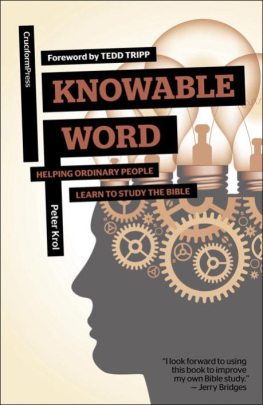
knowable-wordKnowable Word: Helping Ordinary People Learn to Study the Bible by Peter Krol lives up to its title. It begins with a section about why to study the Bible (to get to know the Person behind it). It concedes that Bible studies and commentaries and such are valuable in many ways, but promises to give the tools for the reader to mine from the Bible on their own and to get to know God better.

Sometimes…we seek a mountaintop experience where we can behold His glory and see Him face to face. We want to hear His voice speaking with clarity and power. We long to be wowed from on high. The apostle Peter had such an experience with Jesus, and he concluded that you and I don’t need to have to same experience.

“We were eyewitnesses of his majesty. For when he received honor and glory from God the Father, and the voice was borne to him by the Majestic Glory, ‘This is my beloved Son, with whom I am well pleased,’ we ourselves heard this very voice borne from heaven, for we were with him on the holy mountain. And we have the prophetic word more fully confirmed, to which you will do well to pay attention as to a lamp shining in a dark place.” (2 Peter 1:16b-19a) (pp. 13-14).

After a brief discussion of a few off-base approaches to Bible study, Krol dives into the method he advocates and teaches, which is not new but today goes by the acronym OIA:

  1. Observation – what does it say?
  2. Interpretation – what does it mean?
  3. Application – how should I change? (p. 16)

He discusses each in more detail, explains why each is important, illustrates it from everyday conversation and from Jesus’ teaching when He brought out truth from the OT. He reminds us that no method or set of tools replaces our dependence on the Holy Spirit to guide and illuminate us.

The next several chapters discuss each of these steps in more detail and shows how to use them by applying them to Genesis 1 and 2. Observation, for example, means that we don’t bring in preconceived notions or gloss over familiar passages because we think we know what they say. Observation involves considering genre, the author, repeated words, grammar, structure, and mood or tone. He similarly delves into more detail with interpretation and application.

This a short book at 117 pages, but it is densely packed and contains little to no fluff. I have sticky tabs and markings on almost every other page.

One area where I would disagree with Krol just a bit is in application. I agree that we need to be doers of the Word and not just hearers (James 1:22) and we need to be specific rather than vague. He does admit that he delves into this more in the book for illustration and that in reality he would just take one or two specific applications. I agree that we need to apply the Bible inwardly as well as outwardly, and as he advocates, apply it to head, hands, and heart. The point where I have a problem is in coming up with measurable actions steps from each day’s reading. Sometimes that might be the case. As we read, we need to be asking God for wisdom in applying what He teaches us and we need to act on anything He convicts us about. But I imagine a scenario like this: I’m convicted about my need to be more loving (often) and my need to get out of myself and reach out to others. So after reading a Bible passage about Christian love, I might sit and think of ways to show more love to others and interest in them. So I decide I’ll bake some cookies for my neighbor and make my husband’s favorite dinner. And that may be exactly what I need to do. But in my thinking, after I have done those things, I can check “be more loving” off my list because I have done my good deeds for the day. On the other hand, if I ask God’s help to carry the reminder to be more loving with me throughout the day, He can guide me into situations that I didn’t know were going to come up and apply it all day. (Actually I have found that telling myself to “be more loving” focuses on my lack and inability. But if I remind myself to “love as Jesus loved me,” that removes the focus from me to Him, from my lack to His fullness.) There are points in the day I know I will desperately need that reminder, like when someone interrupts me at the computer and I lose my train of thought for the paragraph I am writing, and I have to remind myself that people are more important than tasks. Or when I go in to change my mother-in-law. Since she’s not verbal and often groggy, it’s easy to fall into just doing the task at hand and forget the person. But I have to remind myself to look her in the eye, smile, speak even if she doesn’t respond, show love and care and interest in her as a person. As I read about loving as Christ loved, those two examples come to mind first. But I’ll need to apply that truth in multiple ways, not just the two I thought about while considering application. I think Krol would agree with this: he’s not advocating just generating lists to check off. And measurable action steps are not necessarily a bad result of Bible reading. I just don’t know that I would end every Bible reading time with such a list.

One other section that had me scratching my head a bit described his church hiring a brand new preacher who made some mistakes in his first sermon, realized it, and braced for some criticism from the leadership. I agreed with them in dealing with the issues but assuring him that Jesus had died for him, including these issues, and they’d rather he “give it his all, making a few mistakes in the process, than that he hold back out of fear of imperfection. He was free to live out his calling as a preacher with confidence that he was accepted by God and already approved” (p. 96). But what I thought odd was that, under the idea of “If you’re going to make a mistake, make a big one,” the author said, “So let’s study (and especially apply) the Bible with such great confidence that we can ‘sin boldly,’ as Martin Luther once advised his student Philip Melanchthon, ” and then he shares this quote from Luther: “Be a sinner, and let your sins be strong, but let your trust in Christ be stronger, and rejoice in Christ who is the victor over sin, death, and the world. We will commit sins while we are here, for this life is not a place where justice resides. We, however, says Peter (2. Peter 3:13) are looking forward to a new heaven and a new earth where justice will reign.” I don’t know the context of Luther’s quote, and I do know that “where sin abounded, grace did much more abound” (Romans 5:20), and I agree that we should “give it [our] all, making a few mistakes in the process, [rather] than…hold back out of fear of imperfection.” But still – I don’t see any encouragement in the Bible to “sin boldly” because we’re under grace.

As I said, I have multiple places marked in the book, but I’ll try to share just a few of the quotes I found most helpful:

Careless presumption will kill your Bible study. It will strangle observation and bear stillborn application. It will make you look like the stereotypical, narrow-minded Christian, and it will diminish your influence for the Lord. By strengthening your confidence in questionable conclusions, presumption will cloud your relationship with Jesus and your experience of his grace. When it comes to Bible study then, guard yourself against every form of unexamined presumption (p. 47).

Since we’ll continue observing new things in God’s Word until Jesus returns, our observations could be infinite in number. But interpretations are not infinite (though our grasp of them may mature over time). Biblical authors had agendas, and we are not authorized to add to those agendas. We investigate the facts of the text until we’re able to think the author’s thoughts after him. And since biblical authors wrote God’s very words, good interpretation trains us to think God’s thoughts (p. 49).

Don’t use minor details to make the text say what you want it to say. Don’t build a theology from one unclear verse (p. 51).

Ancient authors didn’t waste space with meaningless details. Every word has a purpose. Every sentence captures an idea. Every paragraph advances the agenda. And every section has a main point. The accumulation of these points promotes the goal of bringing the audience closer to the Lord. And once we understand how that main point directed the original audience toward the Lord, we’ll be ready to consider how it should shape us (p. 59).

I’d highly recommend this book to anyone, whether a new reader of the Bible or one who has read it multiple times for years.

Genre: Nonfiction
Potential objectionable elements: A couple of minor areas of disagreement.
My rating: 9 out of 10

(Sharing at Semicolon‘s Saturday Review of Books and Carol‘s Books You Loved )

Books you loved 4

Save

Save

Save

Save

Save

Book Review: I Am Malala

malalaNo doubt you remember the news story from 2012 about a 15 year old girl, Malala Yousafzai, who was an outspoken advocate of education for girls in Pakistan who was shot by the Taliban. I am Malala: The Girl Who Stood Up For Education and Was Shot by the Taliban is her story, written by herself and coauthored by journalist Christina Lamb.

The book was published about a year after the shooting and the prologue opens with the events of that day. Then the story backtracks to Malala’s birth and includes the history of her family as well as her beloved Swat Valley in Pakistan.

Normally the birth of a girl is not celebrated by her people, but her father looked into his newborn’s eyes “and fell in love,” saying he knew “there is something different about this child.” He himself was “different from most Pashtun men.” He married the girl he fell in love with in a land that usually arranged marriages. He confided in her and discussed things with her though most men in that culture considered that a weakness. Even though he was poor and not from a ruling family, he had a passion for education for both girls and boys and opened schools. He was outspoken on many issues, thus earning him respect among many in the community, but anger from those who practiced a stricter view of Islam.

The Taliban’s rise to power in the area was both fascinating and chilling. A charismatic leader swayed many through radio programs, but his ascendancy tightened the Taliban’s control over the area. The Taliban bombed schools and eventually closed them and publicly flogged people for violating their extremist rules. Women could not be in public unless accompanied by a male relative – even if the relative was five years old. Policemen were beheaded. Malala’s family fled the area for several months until they heard that the army had driven the Taliban out. They returned but discovered that the Taliban influence was still behind the scenes.

Malala would travel with her father and sometimes even speak at education rallies. in 2008 she was asked to write an anonymous blog for the BBC on life of a schoolgirl under the Taliban. A New York Times Documentary was made of the family when Malala was 11, covering the time just before their school was closed through their times as Internally Displaced Persons until they finally were able to come back. She was nominated for and won many prizes, including the National Youth Peace Prize.

Her father received death threats but refused a bodyguard. One reason was that one of their leaders was shot by his own bodyguard; another was that suicide bombers would blow themselves up right next to their target as well as bodyguards, and if he was going to die, he didn’t want anyone else to die because of him. Though the family used precautions, Malala was shot while on a school bus, and two of her classmates were shot as well.

The rest of the story details what happened for both Malala and her family after the shooting. The bullet had missed her brain, but bone fragments injured the membrane.  A  facial nerve was severed and the bullet eventually lodged in her back. Part of her skull had to be removed because of her brain swelling. It was eventually decided to move her to Birmingham, England, for more treatment and extensive rehabilitation. Her parents followed as soon as arrangements could be made. Healing required time, rehab, and a few more surgeries, one on the facial nerve and one to cover her skull.

The family had no idea they would not be returning to their valley. Though they appreciated the provision and safety in their new home, they understandably missed their friends and home. Ludicrous rumors surfaced, some of them that Malala worked for the CIA, or that her shooting was “staged” so the family could leave Pakistan and live in “luxury.”

At the time the book was published, Malala was nominated for the Nobel Peace Prize, and in 2014 she was its co-recipient. She has continued to speak out for education and has established the Malala Fund for that purpose.

This was a fascinating book. I admit I’m not as well versed as I should be in international news, so I learned a lot from the deftly-told history of the region. It was eye-opening to read of a different culture and to see what politics looks like from others’ viewpoints. Though we are from different cultures and religions, and would have different views on some aspects of politics, I highly respect Malala and her father and hope that their campaign for girls’ education and tolerance of different viewpoints is successful. I hope they get to return to their beloved Swat Valley some time. At different points in the book Malala wanted to be a doctor, an inventor, or a politician. I think she is well on her way to becoming a politician, and I think she’ll make an excellent one.

Genre: Nonfiction biography
Potential objectionable elements: Some areas of disagreement.
My rating: 9 out of 10

(Sharing at Semicolon‘s Saturday Review of Books)

Save

Save

Save

Save

Friday’s Fave Five


FFF delicate leaves

It’s Friday, time to look back over the blessings of the week with Susanne at Living to Tell the Story and other friends.

I can’t believe we’re almost halfway through October already! We’ve had lovely fall weather this week: 40s or 50s at night, 70s during the day. I don’t think we got above 80 degrees all week. Here are some highlights of the last week or so:

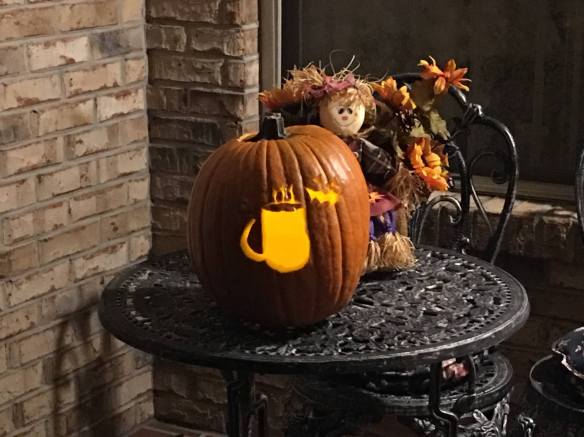
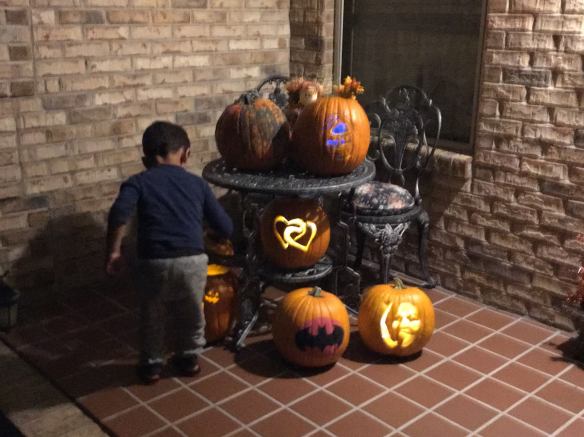
1. Pumpkin decorating night. I wrote more about it here, but we enjoyed having the family together to paint or carve pumpkins and eat goodies.

2. Ready-made slow cooker meals. I found at W-Mart some prepared, just dump in the crockpot meals in the freezer section. Great for when you know you have a busy day ahead.

3. Getting some mending done. Items needing mending tend to sit there for…much longer than I care to admit. I didn’t get as far as I wanted to, but getting started propels the momentum to get finished.

4. Fall decorations. I hadn’t been feeling very autumnal, but decided that preparation for our pumpkin decorating night should probably include some fall decorating. I’m glad I have them out now. I love my everyday “stuff,” but it’s nice to change things around for the season.

img_1888

img_1890

img_1887

img_1891

5. A rainbow. While bringing dishes to the counter after dinner one night, I noticed part of a rainbow through the kitchen window. My husband and I went outside to look and saw the rest of it arcing to the right. And it hadn’t even been raining!

Bonus: There was an Amber Alert in our area this week, but the child was recovered and the suspect arrested pretty quickly.

Happy Friday!

Save

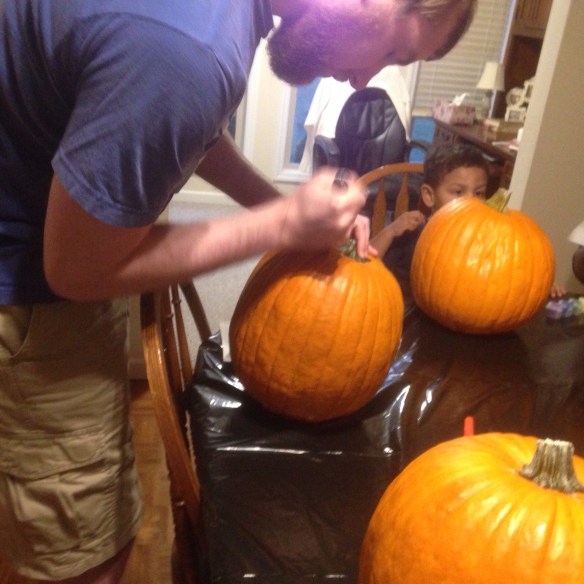
Pumpkin Decorating 2016

We haven’t always carved/decorated pumpkins. When my kids were little I was overly concerned about the evil origins of everything. But when Mittu and Jason wanted to try it a few years ago, I decided that decorated pumpkins were far removed from any evil origins, and it has been an annual activity ever since. We got together to do so last Saturday.

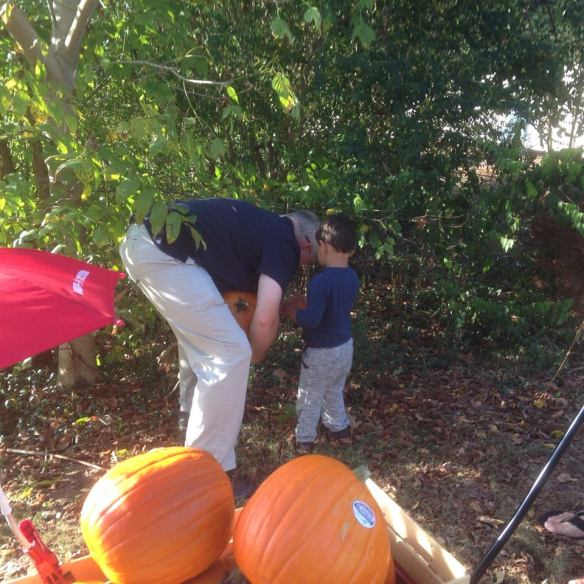
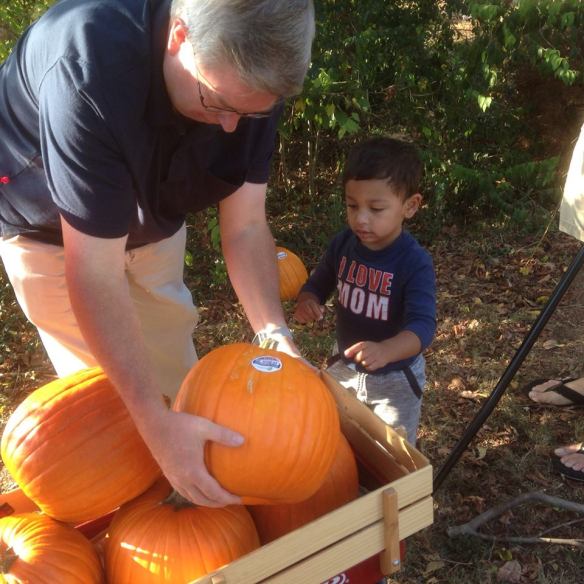
Jim bought the pumpkins ahead of time and then arranged them in a little pumpkin patch at the back of the yard for Timothy to “find” and gather.

14681864_10210307052729720_8519211066517562174_n

14642217_10210307051649693_8795084892389324231_n

After Mittu made grilled cheese sandwiches and tomato soup, we got to work.

img_0003

img_0006

14708230_10210307052689719_3679369957269114540_n

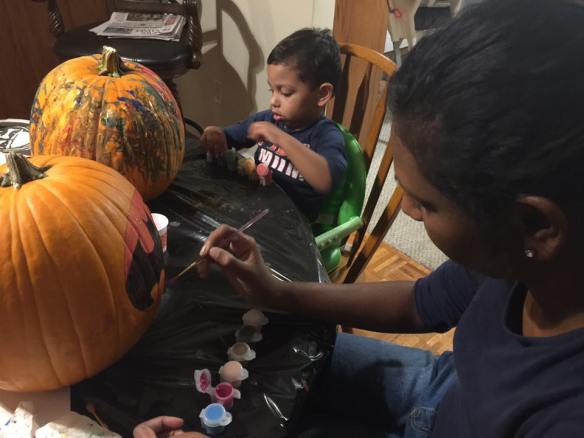
Timothy, of course, can’t carve yet, so he painted his. Mittu joined him so he wouldn’t feel like the odd one out.

painting

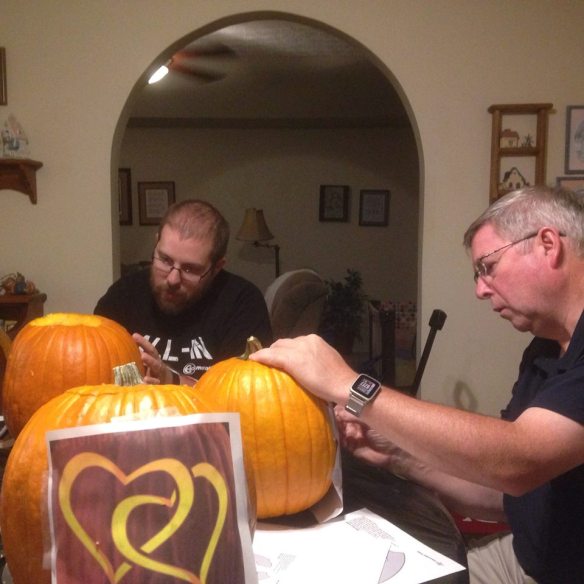
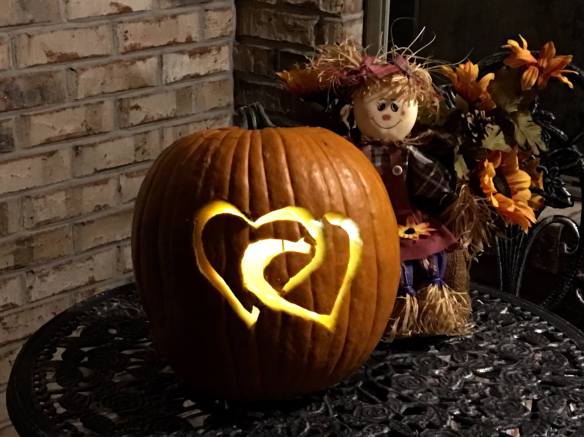
I used a heart design, but it fell apart right at the end because I had gotten a couple of places a little too thin. But Jim mended my broken heart. With toothpicks. 😀

14691434_10210307051769696_4535970547873997535_o

Jim usually does a political design. Can you guess who this is?

img_00411

Most of us used designs we found online, but Jason created his own.

jasons-pumpkin

Mittu’s painted Batman pumpkin.

mittus-pumpkin

Jesse went a little more spooky that we usually do. One of the lights I picked up changed colors, making this seem even more ghoulish.

14692078_10210307053449738_636386651195192367_o

Timothy checking out the finished products. He was quite intrigued.

14682157_10210307053489739_6168178553342817012_o

14713033_10210307051729695_1144278487947890306_o

But of course the best thing to do with pumpkins is to eat them in a pie. 🙂

img_00131

Mittu had made a pumpkin pie with chocolate chips and I made gluten-free sugar cookies in leaf shapes and pumpkin spice cookies (both from mixes from Wal-mart) – forgot to take a picture, and they’re all gone now. We each didn’t know the other was making dessert, so we had kind of a sugar overload for a few days, but it was good!

It was a fun night!

A God We Don’t Understand

When Adoniram Judson first went to Burma, six long years passed before anyone fully received his message and was converted. A few years later he was arrested and accused of being a spy when his country was at war with Burma. His feet were tied to poles that were then raised so that only his shoulders rested on the ground. Prisoners were executed daily, and no one knew when their time would be next. They were taken on a death march to another prison. Finally he was released after two years. But his brave and faithful wife died from a fever, with their child soon following after – their third child to have died. For a while Adoniram built what he called a hermitage in the woods where he would go off to be alone. He dug an empty grave and spent time looking at it and contemplating death. On the third anniversary of his wife’s death, he wrote, “God is to me the Great Unknown. I believe in Him, but I find Him not.”

After C. S Lewis’s wife died, in his grief he wrote, “Not that I am (I think) in much danger of ceasing to believe in God. The real danger is of coming to believe such dreadful things about Him. The conclusion I dread is not ‘So there’s no God after all,’ but ‘So this is what God’s really like.'”

The book of Job is filled with his laments and questionings of God. Jeremiah accused God of deceiving him.

Our 52 year old pastor died of pancreatic cancer right in the middle of a fruitful ministry. A young mom in our church died suddenly and totally unexpectedly due to a reaction to a drug, leaving behind a grieving  husband and two children. The 3 year old grandson of friends has been diagnosed with leukemia; the 25 year old daughter of friends is fighting breast cancer, the 6 year old relative of a brother-in-law was shot in cold blood at his school. When I started writing this, a hurricane was barreling toward the east coast after having already passing over several islands.

In some ways man’s inhumanity to others is understandable in that God gives people free will, and many choose to exercise it away from Him rather than toward Him. It doesn’t explain why a teenager would shoot a child except that it’s an extreme example of exercising self-will to sin against another.

We can even come to terms with death in the big picture view of the result of living in a fallen world.

But a child getting leukemia, adults dying in their prime, death and destruction from storms — that’s a little harder to come to grips with.

He doesn’t always explain why He allows what He does. Sometimes He just wants us to trust Him. But sometimes I think He doesn’t explain because we just wouldn’t understand.

I always told myself that I would never be one of those parents who said something must be done “Because I said so!” But I learned early on that you can’t always explain something to a child. They don’t have the understanding, the context, or the experience to comprehend why certain things are required of them and why others things are denied them. At times they think that the parents who are trying to do what’s best for for the children they dearly love are horribly unfair. Sometimes they just want what they want when they want it and they don’t care about any reasons why they can’t have it.

It helps to remind ourselves there are Scriptural reasons for suffering. It helps even more to go back to what we know of the character of God. He is kind. He is good. He is love. He loves us. Nothing that happens to us negates any of those truths.

Amy Carmichael, when pondering some of the same questions, wrote:

Yet listen now,
Oh, listen with the wondering olive trees,
And the white moon that looked between the leaves,
And gentle earth that shuddered as she felt
Great drops of blood. All torturing questions find
Answer beneath those old grey olive trees.
There, only there, we can take heart to hope
For all lost lambs – Aye, even for ravening wolves.
Oh, there are things done in the world today
Would root up faith, but for Gethsemane,

For Calvary interprets human life;
No path of pain but there we meet our Lord;
And all the strain, the terror and the strife
Die down like waves before his peaceful word,
And nowhere but beside the awful Cross,
And where the olives grow along the hill,
Can we accept the unexplained, the loss,
The crushing agony – and hold us still.

Children who love their Father know that when He says, “All things work together for good to them that love God,” He must mean the best good, though how that can be they do not know….

What does a child do whose mother or father allows something to be done which it cannot understand? There is only one way of peace. It is the child’s way. The loving child trusts.

I believe that we who know our God, and have proved Him good past telling, will find rest there. The faith of the child rests on the character it knows. So may ours, so shall ours. Our Father does not explain, nor does He assure us as we long to be assured… But we know our Father. We know His character. Somehow, somewhere, the wrong must be put right; how we do not know, only we know that, because He is what He is, anything else is inconceivable. For the word sent to the man whose soul was among lions and who was soon to be done to death, unsuccored, though the Lord of Daniel was so near, is fathomless: “And blessed is he whosoever shall not be offended in me.”

There is only one place we can receive, not an answer to our questions, but peace — that place is Calvary. An hour at the foot of the Cross steadies the soul as nothing else can. “O Christ beloved, Thy Calvary stills all our questions.” Love that loves like that can be trusted about this.

And when Job, Adoniram Judson, and so many others mentioned come out on the other side of the trial, though they may not have answers to their “whys,” they often testify that they know God better, felt His goodness and grace like never before, found Him good and faithful and trustworthy, found themselves upheld in ways they could not have imagined. Adoniram Judson wrote in a letter, “The love of Christ! The breadth and length and depth and height of the love of Christ! If I had not felt certain that every additional trial was ordered by infinite love and mercy, I could not have survived my accumulated sufferings.”

As one whom his mother comforts, so I will comfort you…Isaiah 66:13a

I believe that I shall look upon the goodness of the Lord in the land of the living!
Wait for the Lord; be strong, and let your heart take courage; wait for the Lord! Psalm 27:13-14

For I consider that the sufferings of this present time are not worth comparing with the glory that is to be revealed to us. Romans 8:18

Surely he has borne our griefs and carried our sorrows. Isaiah 53:4a

img_1866

(Sharing With Inspire Me Monday, Testimony Tuesday, Tell His Story, Woman to Woman Word Filled Wednesday, Thought-provoking Thursday. Linking does not imply 100% endorsement.)

Save

Save

Save

Save

Save

Love Through Me, Love of God

Love through me, Love of God;
There is no love in me.
O Fire of love, light Thou the love
That burns perpetually.

Flow through me, Peace of God;
Calm River, flow until
No wind can blow, no current stir
A ripple of self-will.

Shine through me, Joy of God;
Make me like Thy clear air
That Thou dost pour Thy colors through,
As though it were not there

O blessed Love of God,
That all may taste and see
How good Thou art, once more I pray:
Love through me—even me.

~ Amy Carmichael

Laudable Linkage

Time again for another roundup of links I found noteworthy over the last couple of weeks:

What to Do When God Says No, Not Right Now.

The Instagram Bible. “Beware the Instagram Bible, my daughters – those filtered frames festooned with feathered verses, adorned in all manner of loops and tails, bedecked with blossoms, saturated with sunsets, culled and curated just for you. Beware lest it become for you your source of daily bread. It is telling a partial truth.”

3 Quick Questions Before Quitting Your Church.

What the Old Testament Prophets Say to Us During This Election Season. This is helpful if you, like me, are discouraged with our choices this election and the state of our nation in general.

Parenting 001. I linked to this on a recent book review, but for those who may not have seen it there, I wanted to share it again.

Third Culture Adult Identity Crisis by my friend Lou Ann, a missionary for 32 years. Helpful not only for missionaries but for those who minister to them.

And finally, an entertaining ballet number, even if ballet is not your thing. I was thinking that it is probably harder to do it this way that the “right” way.

Happy Saturday!

Friday’s Fave Five

FFF fall flowers

It’s Friday, time to look back over the blessings of the week with Susanne at Living to Tell the Story and other friends.

Here we are, a week into October already! Here are some highlights of the last week.

1. The ending of the UT/UGA football game. We’ve never been major football fans, but living in the midst of UT Vols fandom, we’ve watched a few games the last couple of years. Last Saturday we turned on the game in the third quarter, and UGA had led the whole game. But, man, the last minute was as exciting and dramatic as they come!

2. Offertories. A couple of years ago for various reasons our church went to singing a congregational hymn during the taking of the offering rather than having instrumentalists play an offertory. I always felt the offertories were one of the most worshipful times of the service that especially ministered to me, and I’ve missed them. Just this last Sunday offertories were played at both the morning and evenings services! Such a blessing. I hope they are back to stay.

3. Cookie sharing. This is not something new this week, but we keep a few “Lunchables” on hand for my youngest son and husband to snack on. I don’t know how it got started, but Jesse always shares one of the cookies in it with me, and sometimes Jim does as well.

4. Lunch with Jason, Mittu, and Timothy. I got a text this week that Timothy wanted to have me over for lunch the next day. I was happy to oblige.

5. Getting errands done on a tight schedule. I had a few things I needed to get done before a dental appointment this week and wasn’t sure if I’d have time, but figured I’d head out and get as far as I could. It would not have been the end of the world if they hadn’t been taken care of then, but it just would have been nice to get them all wiped out in that time period when I was in the area needed for them all, so it was a small but gratifying mercy that everything worked out.

Favorite photos of the week:

Timothy mowing with Granddad:

mowing

I saw this at a local grocery store and it cracked me up. I was trying to come up with a catchy caption, but all I could muster was something about children mourning everywhere.

img_1864

Happy Friday!

Save