Laudable Linkage

Laudable Linkage

Here’s my weekly list of good reads:

Jesus Was No Victim. “It was physically dark, as the very sun refused to shine on the crucifixion of its Maker (Matthew 27:45). And it was morally dark, as a collection of bitter rivals joined to commit history’s most grotesque crime, the murder of the Son of God. Scripture holds Jesus’ murderers guilty for their crime (Acts 2:24, 36; 3:13-15; 4:10, 27). And yet, it would be wrong for us to see Jesus as the victim.”

The Silence of the Lamb. Adrian Rogers discusses why Jesus did not explain or defend Himself during His trials before crucifixion. One of my favorite parts of this: “If Jesus had risen up in his own defense during his trials, I believe that he would have been so powerful and irrefutable in making his defense that no governor, high priest, or other legal authority on earth could have stood against him! In other words, if Jesus had taken up his own defense with the intention of refuting his accusers and proving his innocence, he would have won! But we would have lost, and we would be lost for all eternity.”

How to Protect Your Kids from Sexual Abuse, HT to Challies. “Parents, educators, caring adults, and the church have grown more alert to the need to teach kids tangible ways to stay safe from abuse. Since concerned adults like you and me can’t always be with children, we must educate them in concrete, child-appropriate safety skills.”

Jesus Loves Me, This I Know, HT to the Story Warren. A mother reflects on what her son has taught her about Jesus’ love on World Down Syndrome Day.

On Whales, Menopause, and Thanks to God, HT to Challies. “In God’s good design, we humans share this somewhat rare life stage with only six other species on earth. Humans, however, are the only creatures who are able to reflect upon the experience of menopause, and even (stay with me here) thank God for it.”

Talk to God About What Hurts, HT to Challies. “When life is painful, God invites us to talk to Him about it. He wants us to cry out to him in humility–to talk to him about what hurts–that we might grow in our childlike trust in Him and His Word.”

Just Checking In: How’s Your Bible Reading Plan Going? HT to Challies. “I want to give a little encouragement for those who are trying to read through the Bible this year.”

Does God Care How You Cook Your Goat? The verses in the Old Testament about not boiling a baby goat in its mother’s milk are puzzling, both from the standpoint of why it was a law at the time and how it applies to us today. Tim Challies shares a couple of interpretations and applications.

Our Lord has written the promise of resurrection,
not in books alone but in every leaf of springtime.
Martin Luther

What Did Jesus’ Death on the Cross Accomplish?

What did Jesus' death on the cross accomplish?

Often we want to get right to the happy part of Easter: springy clothes, family get-togethers, church services with songs of triumph and victory.

But we shouldn’t rush too quickly past the cross. Without the cross, there would be no redemption; without death, there would be no resurrection.

I thought I’d take a little time to look up verses that share what Jesus’ death on the cross accomplished for us. We know Jesus died for our sins, but we don’t often think of other things that happened as a result of the cross.

I’m sure there’s much, much more that could be said. But here is some of what I found:

Expression of God’s love

In this the love of God was made manifest among us, that God sent his only Son into the world, so that we might live through him. In this is love, not that we have loved God but that he loved us and sent his Son to be the propitiation for our sins (1 John 4:9-10).

The forgiveness of our sins

For while we were still weak, at the right time Christ died for the ungodly. . . but God shows his love for us in that while we were still sinners, Christ died for us. Romans 5:6, 8

Reconciliation to God

For if while we were enemies we were reconciled to God by the death of his Son, much more, now that we are reconciled, shall we be saved by his life (Romans 5:10).

For in him all the fullness of God was pleased to dwell, and through him to reconcile to himself all things, whether on earth or in heaven, making peace by the blood of his cross. And you, who once were alienated and hostile in mind, doing evil deeds, he has now reconciled in his body of flesh by his death, in order to present you holy and blameless and above reproach before him (Colossians 1:19-22).

Opportunity to become God’s children through faith and repentance

But when the fullness of time had come, God sent forth his Son, born of woman, born under the law, to redeem those who were under the law, so that we might receive adoption as sons. And because you are sons, God has sent the Spirit of his Son into our hearts, crying, “Abba! Father!” So you are no longer a slave, but a son, and if a son, then an heir through God (Galatians 4:4-7).

Opportunity for Gentiles to become part of God’s family

Therefore remember that at one time you Gentiles . . . were at that time separated from Christ, alienated from the commonwealth of Israel and strangers to the covenants of promise, having no hope and without God in the world. But now in Christ Jesus you who once were far off have been brought near by the blood of Christ. For he himself is our peace, who has made us both one and has broken down in his flesh the dividing wall of hostility by abolishing the law of commandments expressed in ordinances, that he might create in himself one new man in place of the two, so making peace, and might reconcile us both to God in one body through the cross, thereby killing the hostility. And he came and preached peace to you who were far off and peace to those who were near. For through him we both have access in one Spirit to the Father. So then you are no longer strangers and aliens, but you are fellow citizens with the saints and members of the household of God (Ephesians 2:11-19).

Canceled our debt of sin

And you, who were dead in your trespasses and the uncircumcision of your flesh, God made alive together with him, having forgiven us all our trespasses, by canceling the record of debt that stood against us with its legal demands. This he set aside, nailing it to the cross (Colossians 2:13-14).

Fulfillment of God’s Law

 For God has done what the law, weakened by the flesh, could not do. By sending his own Son in the likeness of sinful flesh and for sin, he condemned sin in the flesh, in order that the righteous requirement of the law might be fulfilled in us, who walk not according to the flesh but according to the Spirit (Romans 8:3-4).

Our holiness

And you, who once were alienated and hostile in mind, doing evil deeds, he has now reconciled in his body of flesh by his death, in order to present you holy and blameless and above reproach before him (Colossians 1:21-22).

Change of life and focus

He died for all, that those who live might no longer live for themselves but for him who for their sake died and was raised (2 Corinthians 5:15).

For our sake he made him to be sin who knew no sin, so that in him we might become the righteousness of God  (2 Corinthians 5:21).

Victory over death and its fear

Since therefore the children share in flesh and blood, he himself likewise partook of the same things, that through death he might destroy the one who has the power of death, that is, the devil, and deliver all those who through fear of death were subject to lifelong slavery (Hebrews 2:14-15).

The new covenant

Therefore he is the mediator of a new covenant, so that those who are called may receive the promised eternal inheritance, since a death has occurred that redeems them from the transgressions committed under the first covenant (Hebrews 9:15).

Assurance of His provision

He who did not spare his own Son but gave him up for us all, how will he not also with him graciously give us all things? (Romans 8:32).

Opportunity to live with Him

Our Lord Jesus Christ, who died for us so that whether we are awake or asleep we might live with him (1 Thessalonians 5:1).

Eternal Life

For God so loved the world, that he gave his only Son, that whoever believes in him should not perish but have eternal life (John 3:16).

Crucifixion was one of the most painful and humiliating deaths possible. In that sense, it seems strange to be thankful for it, despite all it accomplished for us. I love how Chris Anderson captured this in his song, “My Jesus Fair”:

O love divine, O matchless grace—
That God should die for men!
With joyful grief I lift my praise,
Abhorring all my sin,
Adoring only Him.

As we contemplate the cross this week and beyond, may we respond like Chris wrote above and like Isaac Watts wrote in “Alas and Did My Savior Bleed“:

Thus might I hide my blushing face
While His dear cross appears.
Dissolve my heart in thankfulness,
And melt mine eyes to tears.

But drops of grief can ne’er repay
The debt of love I owe;
Here, Lord, I give myself away,
’Tis all that I can do.

2 Corinthians 5:21

(I often link up with some of these bloggers.)

Resurrection Hope Beyond Easter

We think of Easter as the joyful end of a long period of sadness. Even if we don’t formally practice Lent, we spend the time leading up to Easter contemplating the last week of Jesus’s life, His trial, and His crucifixion. We mourn over our sinfulness, which required such a price for atonement.

But then we burst forth into joy and praise on Easter Day. Christ is risen! He overcame death and the grave!

And then Monday we go back to our normal routine. We don’t think much about the resurrection again until next Easter or until someone dies. Then we’re encouraged that we’ll see our missing loved ones again.

But the resurrection changed everything. It touches our lives much more than one day a year.

Here are some ways resurrection hope affects our lives:

Testifies that Jesus is the Son of God. Jesus “was declared to be the Son of God in power according to the Spirit of holiness by his resurrection from the dead” (Romans 1:4).

Dismantles our fear of death. Hebrews 2:14-15 tells us, “Since therefore the children share in flesh and blood, he himself likewise partook of the same things, that through death he might destroy the one who has the power of death, that is, the devil, and deliver all those who through fear of death were subject to lifelong slavery.”

In Isobel Kuhn’s books, she cites that many Lisu people came to faith in Christ due to the resurrection. Their previous beliefs held no hope after the grave. They thought death was the end of the body, soul, and spirit. Some mourned inconsolably at a loved one’s grave or cowered in abject terror at the thought of their own end. Learning who Jesus was, the salvation He accomplished for their forgiveness, and the hope of eternal life transformed them.

Jesus told Martha, “I am the resurrection and the life. Whoever believes in me, though he die, yet shall he live, and everyone who lives and believes in me shall never die. Do you believe this?” (John 11:25).

Allows Christ to live in us. Paul said part of the ministry given to him was to preach “the riches of the glory of this mystery, which is Christ in you, the hope of glory” (Colossians 1:27). We not only have His fellowship, comfort, and so much more, we have His power to live. “I have been crucified with Christ. It is no longer I who live, but Christ who lives in me. And the life I now live in the flesh I live by faith in the Son of God, who loved me and gave himself for me” (Galatians 2:20).

Assures justice will be done. When the King comes to reign, everything will be as it should be.

Removes death’s sting. 1 Corinthians 15:54-57 says:

When the perishable puts on the imperishable, and the mortal puts on immortality, then shall come to pass the saying that is written:

“Death is swallowed up in victory.”
“O death, where is your victory?
    O death, where is your sting?”

The sting of death is sin, and the power of sin is the law. But thanks be to God, who gives us the victory through our Lord Jesus Christ.

Jesus’ death breaks the power of sin in our lives. We still have to fight the old nature and resist the devil, but they have no more authority over us.

Gives meaning to our labor. 1 Corinthians 15 is the great “resurrection chapter.” After 57 verses about the resurrection, Paul says, “Therefore, my beloved brothers“—because of all he had said about the resurrection up til now—“be steadfast, immovable, always abounding in the work of the Lord, knowing that in the Lord your labor is not in vain.” We can be steady in our labor for God, even if we don’t see any results. Galatians 6:9 puts it another way: “And let us not grow weary of doing good, for in due season we will reap, if we do not give up.”

Gives comfort and hope in our sorrow. Our grief when a loved one dies is tempered by the fact that we’ll see them again.

But we do not want you to be uninformed, brothers, about those who are asleep, that you may not grieve as others do who have no hope. For since we believe that Jesus died and rose again, even so, through Jesus, God will bring with him those who have fallen asleep. For this we declare to you by a word from the Lord, that we who are alive, who are left until the coming of the Lord, will not precede those who have fallen asleep. For the Lord himself will descend from heaven with a cry of command, with the voice of an archangel, and with the sound of the trumpet of God. And the dead in Christ will rise first. Then we who are alive, who are left, will be caught up together with them in the clouds to meet the Lord in the air, and so we will always be with the Lord. Therefore encourage one another with these words (1 Thessalonians 4:13-18).

We still grieve and miss them sorely, but we have great joy to look forward to.

Gives perspective to our sufferings. When we’re suffering, our pain can take over our minds and emotions. Suffering seems endless. It outweighs everything else. But as heavy as suffering is, in heaven, our time of suffering will seem “light” and “momentary.” “So we do not lose heart. Though our outer self is wasting away, our inner self is being renewed day by day. For this light momentary affliction is preparing for us an eternal weight of glory beyond all comparison” (2 Corinthians 4:16-17). Romans 8:18 puts it this way: “For I consider that the sufferings of this present time are not worth comparing with the glory that is to be revealed to us.”

Provides a new address. Philippians 3:20 tells us, “But our citizenship is in heaven, and from it we await a Savior, the Lord Jesus Christ.” Warren Wiersbe says in his commentary on Philippians, Be Joyful, “We look at earth from heaven’s point of view” (p. 95). Our time here is relatively brief, and eternity is long.

Promises reward for our service. The Bible speaks of crowns that will be rewarded to various believers. Jesus said that when we have a feast, we should not only invite friends and loved ones. We should gather in those who can’t repay us, “and you will be blessed, because they cannot repay you. For you will be repaid at the resurrection of the just” (Luke 14:14).

Shows forth God’s power. One of the things Paul prays that the Ephesians might know is “the immeasurable greatness of his power toward us who believe, according to the working of his great might that he worked in Christ when he raised him from the dead and seated him at his right hand in the heavenly places” (Ephesians 1:19-20). Paul’s burning desire was “that I may know him and the power of his resurrection, and may share his sufferings, becoming like him in his death, that by any means possible I may attain the resurrection from the dead” (Philippians 3:10-11).

Gives focus for our daily walk. 1 Corinthians 4:18 says, “as we look not to the things that are seen but to the things that are unseen. For the things that are seen are transient, but the things that are unseen are eternal.” Paul says, “But one thing I do: forgetting what lies behind and straining forward to what lies ahead, I press on toward the goal for the prize of the upward call of God in Christ Jesus” (Philippians 3:13-14).

Because of the resurrection, we know this life is not all there is. “If then you have been raised with Christ, seek the things that are above, where Christ is, seated at the right hand of God. Set your minds on things that are above, not on things that are on earth. For you have died, and your life is hidden with Christ in God. When Christ who is your life appears, then you also will appear with him in glory” (Colossians 3:1-4). One of our former pastors used to frequently quote from a little chorus by Al Smith, “May I do each day’s work for Jesus, With eternity’s values in view.”

I love this stanza in “I’ve Found a Friend” by James G. Small:

I’ve found a friend, O such a friend!
All power to Him is given,
To guard me on my onward course,
And bring me safe to Heaven.
The eternal glories gleam afar,
To nerve my faint endeavor;
So now to watch, to work, to war,
And then to rest forever.

May the “eternal glories” that “gleam afar” nerve our own “faint endeavors.” May we carry resurrection hope in our hearts every day.

(I often link up with some of these bloggers.)

Laudable Linkage

I don’t observe Lent in a formal way. But I do like to spend some time in the weeks leading up to Easter by reading either the gospel accounts of Jesus’ death and resurrection or a book on the subject.

I had just read the gospel of John recently, so I didn’t want to go through it again so soon.

A couple of my favorite books for this time of year are The Women of Easter by Liz Curtis Higgs and Jesus, Keep Me Near the Cross compiled by Nancy Guthrie. But I wasn’t inclined to pick up one of those again, and I didn’t have any new material I wanted to read. I’m in a number of books already and didn’t want to start something lengthy.

Then I saw that Revive Our Hearts recently posted about the seven last sayings of Christ on the cross. That series just fit my needs this year. If you have some time today and tomorrow, you might want to look at a few of them to prepare your heart for Easter:

Here are some of the other good reads I found this week:

You Know What’s Crazy? HT to Challies. “I had 13 hours to sit and think about the drama we’d just been involved in. I thought, ‘It’s crazy that this guy still thought he was all right to fly.  He was totally irrational. Any normal person could see that he was in a bad way. But he couldn’t see it. He thought he was fine.’ The thought occurred to me that this is a lot like the irrationality of sin and sinners.”

Intentional Gardening–and an Intentional Life–in Partnership with God. “Standing or stooping in my garden, I portray the work that’s required for spiritual cultivation, for I believe God is pleased when I come to spiritual disciplines with the same fervor I bring to the elimination of ragweed between my tomato plants.”

The Shadow Is a Small and Passing Thing, HT to Challies. “One evening, while Frodo slept and Sam watched, Sam looked up at a single star in the sky above Mordor. Thinking on that star, Tolkien wrote, ‘the thought pierced him that in the end the Shadow was only a small and passing thing: there was light and high beauty for ever beyond its reach.'”

The Unexpected Beauty of Babel, HT to Challies. “It seems as if, as he so often does, God has chosen to bring beauty through judgment, a greater grace and glory than would have existed had the judgment never taken place. After all, this is the logic of the cross and salvation history. Yes, judgment falls. Yet amazingly God’s grace shines even brighter for it. Should we be surprised that God delights to also do this with the arc of language history?”

Overcome Your Enemies by Dying. “What do you do when people turn against you? When those who reject the Lord Jesus Christ come after you for daring to follow him? When nitpicking and backstabbing are the standard operating procedure in the workplace? When family members use guilt and pressure to manipulate you into doing what they want?”

Protect Teens from Sextortion, HT to Challies. “Last month, international law enforcement agencies released a warning: ‘In 2022, the FBI received thousands of reports related to the financial sextortion of minors, primarily boys, representing an exponential increase from previous years. Unfortunately, the FBI is also aware of more than a dozen suicides following these incidents.”

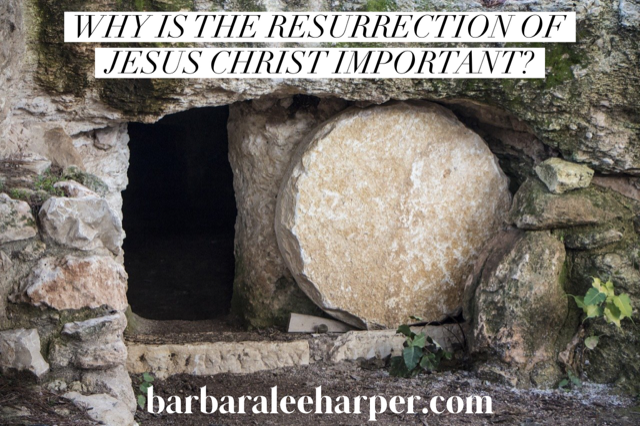
Why Is the Resurrection of Jesus Christ Important?

Why is the resurrection of Jesus Christ important

Easter Day! Time for new, springy clothes, a ham dinner, brightly colored eggs, and chocolate bunnies.

And the celebration of Jesus’ resurrection.

I’m not against those other things. I enjoy them all. But I do fear that the resurrection gets lost in the shuffle except for a special church service and hymns.

Even as Christians, sometimes we’re so used to the resurrection, we forget how special, how life-changing, how dynamic it is.

Or we might be comforted by the resurrection when a loved one dies, but we don’t think it affects everyday life much.

So I thought I’d spend some time thinking about just why the resurrection of Christ is important.

The resurrection of Christ proves His deity.

Set apart for the gospel of God, which he promised beforehand through his prophets in the holy Scriptures, concerning his Son, who was descended from David according to the flesh and was declared to be the Son of God in power according to the Spirit of holiness by his resurrection from the dead, Jesus Christ our Lord (Romans 1:1b-4).

He has fixed a day on which he will judge the world in righteousness by a man whom he has appointed; and of this he has given assurance to all by raising him from the dead (Acts 17:31).

The resurrection of Christ validated what He said. He foretold many times that He would rise after three days in the grave. Here are just a few:

From that time Jesus began to show his disciples that he must go to Jerusalem and suffer many things from the elders and chief priests and scribes, and be killed, and on the third day be raised (Matthew 16:21).

As they were gathering in Galilee, Jesus said to them, “The Son of Man is about to be delivered into the hands of men, and they will kill him, and he will be raised on the third day.” And they were greatly distressed (Matthew 17:22-23).

And as they were coming down the mountain, he charged them to tell no one what they had seen, until the Son of Man had risen from the dead (Mark 9:9).

The resurrection is part of the gospel. When Paul spoke of sharing the gospel, the resurrection was an integral part of it.

Now I would remind you, brothers, of the gospel I preached to you, which you received, in which you stand, and by which you are being saved, if you hold fast to the word I preached to you—unless you believed in vain.

For I delivered to you as of first importance what I also received: that Christ died for our sins in accordance with the Scriptures, that he was buried, that he was raised on the third day in accordance with the Scriptures (1 Corinthians 15:1-4).

That is why his faith was “counted to him as righteousness.” But the words “it was counted to him” were not written for his sake alone, but for ours also. It will be counted to us who believe in him who raised from the dead Jesus our Lord, who was delivered up for our trespasses and raised for our justification (Romans 4:22-25).

Without the resurrection, we’re still in our sins.

And if Christ has not been raised, your faith is futile and you are still in your sins. Then those also who have fallen asleep in Christ have perished. If in Christ we have hope in this life only, we are of all people most to be pitied (1 Corinthians 15:17-19).

I’ve heard some say to the unsaved, “If I’m wrong and you’re right, I’ve lost nothing. But if I’m right and you’re wrong, you’ve lost everything.” But that’s not what the Bible says. “If in Christ we have hope in this life only, we are of all people most to be pitied.”

Since Christ was raised, we know we will be, too.

But in fact Christ has been raised from the dead, the firstfruits of those who have fallen asleep. For as by a man came death, by a man has come also the resurrection of the dead. For as in Adam all die, so also in Christ shall all be made alive (1 Corinthians 15:20-22).

For the Lord himself will descend from heaven with a cry of command, with the voice of an archangel, and with the sound of the trumpet of God. And the dead in Christ will rise first. Then we who are alive, who are left, will be caught up together with them in the clouds to meet the Lord in the air, and so we will always be with the Lord. Therefore encourage one another with these words (1 Thessalonians 4:16-18).

Jesus said to her, “I am the resurrection and the life. Whoever believes in me, though he die, yet shall he live” (John11:25).

Since we will all be raised, we will see our loved ones again.

But we do not want you to be uninformed, brothers, about those who are asleep, that you may not grieve as others do who have no hope. For since we believe that Jesus died and rose again, even so, through Jesus, God will bring with him those who have fallen asleep (1 Thessalonians 4:13-14).

The resurrection removes death’s sting. Death is still grievous. It is still an enemy (1 Corinthians 15:26). But knowing that we’ll live again afterward and can meet God forgiven, cleansed, and accepted takes away death’s sting.

When the perishable puts on the imperishable, and the mortal puts on immortality, then shall come to pass the saying that is written:

“Death is swallowed up in victory.”
“O death, where is your victory?
    O death, where is your sting?”

The sting of death is sin, and the power of sin is the law. But thanks be to God, who gives us the victory through our Lord Jesus Christ (1 Corinthians 15: 54-57).

Because Jesus died and rose again, Satan is defeated.

In him also you were circumcised with a circumcision made without hands, by putting off the body of the flesh, by the circumcision of Christ, having been buried with him in baptism, in which you were also raised with him through faith in the powerful working of God, who raised him from the dead. And you, who were dead in your trespasses and the uncircumcision of your flesh, God made alive together with him, having forgiven us all our trespasses, by canceling the record of debt that stood against us with its legal demands. This he set aside, nailing it to the cross. He disarmed the rulers and authorities and put them to open shame, by triumphing over them in him (Romans 11-15).

Since therefore the children share in flesh and blood, he himself likewise partook of the same things, that through death he might destroy the one who has the power of death, that is, the devil, and deliver all those who through fear of death were subject to lifelong slavery (Hebrews 2:14-15).

The “rulers and authorities” mentioned in the last verse are thought to refer to Satan and his minions, the unseen “rulers of darkness.”

God’s power in the resurrection is the same power with which He works on our behalf.

That you may know . . . what is the immeasurable greatness of his power toward us who believe, according to the working of his great might that he worked in Christ when he raised him from the dead and seated him at his right hand in the heavenly places, far above all rule and authority and power and dominion, and above every name that is named, not only in this age but also in the one to come. And he put all things under his feet and gave him as head over all things to the church, which is his body, the fullness of him who fills all in all. (Ephesians 1:19-23).

Because of the resurrection, we can walk in newness of life.

We were buried therefore with him by baptism into death, in order that, just as Christ was raised from the dead by the glory of the Father, we too might walk in newness of life (Romans 6:4).

For the death he died he died to sin, once for all, but the life he lives he lives to God. So you also must consider yourselves dead to sin and alive to God in Christ Jesus. Let not sin therefore reign in your mortal body, to make you obey its passions. Do not present your members to sin as instruments for unrighteousness, but present yourselves to God as those who have been brought from death to life, and your members to God as instruments for righteousness. For sin will have no dominion over you, since you are not under law but under grace (Romans 6:10-14).

Jesus’ resurrection gives hope and meaning to our suffering.

So we do not lose heart. Though our outer self is wasting away, our inner self is being renewed day by day. For this light momentary affliction is preparing for us an eternal weight of glory beyond all comparison, as we look not to the things that are seen but to the things that are unseen. For the things that are seen are transient, but the things that are unseen are eternal. (2 Corinthians 4:16-18).

For I consider that the sufferings of this present time are not worth comparing with the glory that is to be revealed to us (Romans 8:18).

Because He died and rose again, we come to a throne of grace.

Since then we have a great high priest who has passed through the heavens, Jesus, the Son of God, let us hold fast our confession. For we do not have a high priest who is unable to sympathize with our weaknesses, but one who in every respect has been tempted as we are, yet without sin. Let us then with confidence draw near to the throne of grace, that we may receive mercy and find grace to help in time of need (Hebrews 4: 14-16).

Because Jesus rose again, He is interceding for us.

Who is to condemn? Christ Jesus is the one who died—more than that, who was raised—who is at the right hand of God, who indeed is interceding for us (Romans 8:34).

Because of the resurrection, we can be steadfast. After spending 57 verses talking about the resurrection in 1 Corinthians 15, Paul says, “Therefore”—because of all that he said in those 57 verses—

Therefore, my beloved brothers, be steadfast, immovable, always abounding in the work of the Lord, knowing that in the Lord your labor is not in vain (1 Corinthians 15:58).

In Isobel Kuhn’s Nests Above the Abyss, she says the Lisu “have no hope beyond the grave.” She had heard their wail “for the dead and my heart could hardly stand the hopelessness of their agony.” One five-year-old child screamed incessantly when his beloved neighbor died and he understood death for the first time. When he became a young man, he admitted, “after that awful introduction to the fact of death, he could not come upon a grave on the mountainside without getting cold all over.” This, Isobel says, is “a typical scene.” Another “cried so hard and so long he was ill for days” upon learning about death. Some who bury loved ones “sometimes weep themselves blind, and some lose their minds.” Some harden themselves by trying to forget their dead loved one.

That first five-year-old boy grew up to become an evangelist. One time he related his story, then told how he heard one of the missionaries speak on John 11:25, where Jesus said, “I am the resurrection and the life. Whoever believes in me, though he die, yet shall he live.”

“As she explained that verse, suddenly the truth of it broke in on my understanding, and the fact of eternal life, a life after death, a hope beyond the grave, shone before me. I was thrilled through and through; faith and acceptance of the Saviour were born right then in my soul. It was that verse on the resurrection that brought me to Christ; and I have a feeling that I am not the only Lisu to become a believer because of this truth. All of you who were led to become Christians by the resurrection doctrine, hold up your hands.” Ans all over the building hands shot into the air and the glowing joy on their faces told its own story (pp. 16-18).

May those of us who have heard of the resurrection all our lives be impressed anew with its truth, its hope, its victory. May we come to love and appreciate it now more than ever. May the resurrection impact us not just at Easter, but every day.

And may those who have not yet believed do so soon.

(I often link up with some of these bloggers.)

Laudable Linkage

Here’s another collection of reads that especially caught my eye this week.

Meat From the Sky and the Resurrection’s Plausibility, HT to Challies. “No one knows for certain how a half-bushel of raw meat fell from the heavens. The very idea of a meat shower seems absurd. And yet there are good reasons to think it really happened. Two of them can also help us trust the veracity of Jesus’s resurrection.”

One of the Most Overlooked Arguments for the Resurrection, HT toChallies. “It is an often overlooked fact that provides the necessary context for the discussion. That fact is simply this: the earliest Christians came to believe, against all odds and against all expectations, that Jesus of Nazareth had been raised from the dead.”

More Than Doing: Categories for Applying God’s Word. “But how do we do Bible texts like those found in the book of Judges? How do we do narratives, historical accounts, chronologies, prophetic literature, or Old Testament laws written for the people of Israel? How do we apply God’s Word when there’s nothing in the passage for us to do?”

Was Jesus Punctual? HT to Challies. “The English phrase ‘don’t waste your time’ has an equivalent in Spanish: ‘no pierdas el tiempo’, which strictly translated means ‘don’t lose [the] time’. There is, nonetheless, a subtle difference between the English and the Spanish. Whereas a Westerner feels they can control time (by deciding whether to waste it or not), a Latin American feels they cannot control time (it gets lost).”

Seedlings Need the Weather, HT to Challies. “When we asked a gardener friend, he told us that the absence of difficulty was not the solution to their problem. It was the problem. The trouble for our seedlings—the trouble that made them weak—was that they had no trouble. Without at least some exposure to the elements, they would never grow strong.”

Who Will Speak Up for the Transgender Kid? HT to Challies. “This is the brutal reality of ‘gender affirming care.’ It’s not really gender affirming. It’s body destroying. And yet, our culture appears to be so under the spell of transgender propaganda that even some parents are going along with barbaric medical experiments performed on their own children. Some parents are manipulated into it against their better judgment after gender counselors put before them an ultimatum.”

Mother Yourself Out of a Job: Nurturing Children Toward Independence. “The journey from dependent child to independent adult is never without its pulling and stretching on both sides. As young adult children relinquish their need for hands-on parenting and take up responsibility for their own lives, there is a mirrored relinquishment for which we, as their loving parents, usually need plenty of grace.”

Finally, I don’t know who originally said this quote, but it’s one of my favorites this time of year:

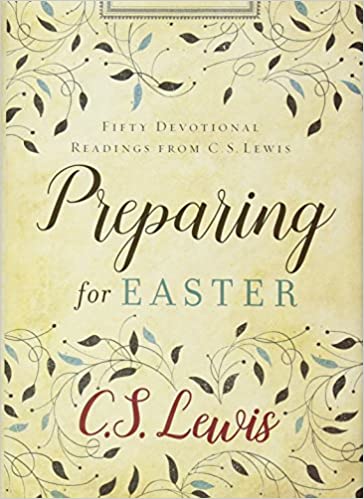
Preparing for Easter with C. S. Lewis

Preparing for Easter: Fifty Devotional Reading from C. S. Lewis. is a compilation of selections from his writings.

C. S Lewis is one of the most quotable Christians to have lived, maybe second to C. H. Spurgeon. In fact, I have a book titled The Quotable Lewis. So any book of quotes by him will have value.

By the title of this book, you’d expect an arc of quotations on the subject and application of Christ’s death, burial, and resurrection, leading up to Easter Day. If there was such an arc, I didn’t detect it. The book just seemed more like a random collection.

Of course, the death, burial, and resurrection of Christ touch everything in the Christian life, so, in one sense, any subject within Christendom could be related. Yet many selections in this volume didn’t seem to fit the theme. For instance, one had to do with the value of myths. Did the compiler feel that any part of the true Easter story was a myth? Or was he applying this quote to the bunnies and eggs part of Easter? I don’t know.

The book is set up to begin about six and a half weeks before Easter, with the last reading for Easter Day. The readings aren’t numbered in the book, but I numbered them in my notes. I was confused when I ended up with forty-seven. Then I remembered some day’s readings contained two short selections. So, as the title says, there are fifty readings, but not over fifty days. I started a week late, so I ended the Sunday after Easter.

Some readings are familiar quotes, such as those from the Narnia series or Mere Christianity. Others are from more obscure sources, like private letters. I’m always amazed at how literary Lewis sounds even in a letter. I wonder if he was a perfectionist who made several copies of a letter until it sounded just right? Or did such prose just flow from him? I remember reading somewhere that his books did not need much editing, so perhaps the latter is true.

Though some of the selections were easy to grasp, some suffered from the loss of their context.

I was also reminded that, though I love much of what Lewis wrote, I don’t agree with him on every little point of doctrine. I have several of those places marked, but I don’t think I’ll list them all here for the sake of time and space.

So, all told, I was more than a little disappointed in this volume. Nevertheless, as I said, there are always rich nuggets in his writing. Here are a few I found:

Our model is the Jesus, not only of Calvary, but of the workshop, the roads, the crowds, the clamorous demands and surly oppositions, the lack of all peace and privacy, the interruptions. For this, so strangely unlike anything we can attribute to the Divine life in itself, is apparently not only like, but is, the Divine life operating under human conditions (p. 7, originally from The Four Loves).

I think that many of us, when Christ has enabled us to overcome one or two sins that were an obvious nuisance, are inclined to feel (though we do not put it into words) that we are now good enough. He has done all we wanted Him to do, and we should be obliged if He would now leave us alone. As we say, ‘I never expected to be a saint, I only wanted to be a decent ordinary chap.’ And we imagine when we say this that we are being humble. But this is the fatal mistake. Of course we never wanted, and never asked, to be made into the sort of creatures He is going to make us into. But the question is not what we intended ourselves to be, but what He intended us to be when He made us. He is the inventor, we are only the machine. He is the painter, we are only the picture. How should we know what He means us to be like? (p. 14, originally from Mere Christianity).

We may be content to remain what we call ‘ordinary people’: but He is determined to carry out a quite different plan. To shrink back from that plan is not humility: it is laziness and cowardice. To submit to it is not conceit or megalomania; it is obedience (p. 15, originally from Mere Christianity).

A continual looking forward to the eternal world is not (as some modern people think) a form of escapism or wishful thinking, but one of the things a Christian is meant to do. It does not mean that we are to leave the present world as it is. If you read history you will find that the Christians who did most for the present world were just those who thought most of the next. The Apostles themselves, who set on foot the conversion of the Roman Empire, the great men who built up the Middle Ages, the English Evangelicals who abolished the Slave Trade, all left their mark on Earth, precisely because their minds were occupied with Heaven (p. 58, originally from Mere Christianity).

If I find in myself a desire which no experience in this world can satisfy, the most probable explanation is that I was made for another world. If none of my earthly pleasures satisfy it, that does not prove that the universe is a fraud. Probably earthly pleasures were never meant to satisfy it, but only to arouse it, to suggest the real thing. If that is so, I must take care, on the one hand, never to despise, or be unthankful for, these earthly blessings, and on the other, never to mistake them for the something else of which they are only a kind of copy, or echo, or mirage. I must keep alive in myself the desire for my true country, which I shall not find till after death; I must never let it get snowed under or turned aside; I must make it the main object of life to press on to that other country and to help others to do the same (pp. 60-61, (p. 58, originally from Mere Christianity).

If the new Self, the new Will, does not come at His own good pleasure to be born in us, we cannot produce Him synthetically (p. 72, originally from Present Concerns).

The world is so built that, to help us desert our own satisfactions, they desert us. War and trouble and finally old age take from us one by one all those things that the natural Self hoped for at its setting out. Begging is our only wisdom, and want in the end makes it easier for us to be beggars (p. 72, originally from Present Concerns).

God cannot give us a happiness and peace apart from Himself, because it is not there. There is no such thing (p. 80, originally from Mere Christianity).

Keep back nothing. Nothing that you have not given away will be really yours. Nothing in you that has not died will ever be raised from the dead. Look for yourself, and you will find in the long run only hatred, loneliness, despair, rage, ruin, and decay. But look for Christ and you will find Him, and with Him everything else thrown in (p. 212, originally from Mere Christianity).

One of the most poignant passages to me was a letter from Lewis to a Warfield Firor about facing the ramifications of aging (including compulsory retirement and rheumatism) and letting those “begin . . .to loosen a few of the tentacles which the octopus-world has fastened on one” and remind that “what calls one away is better” (pp. 138-139). (A portion of the letter is here.)

Though I doubt I’ll reread this book in coming Lenten seasons, I was blessed by some of its pages. I was also encouraged to reread Mere Christianity some time and to look up The Letters of C. S. Lewis.


Laudable Linkage

A collection of good reading online

I had some ideas for a blog post about the results of Jesus’ resurrection. But when I began to research it, I found several posts that already did a better job than I could have:

Here are a few more good reads discovered this week:

It Is Finished. An imaginative account of what the betrayal, trial, and crucifixion of Jesus might have looked like from Satan’s point of view.

React vs. Respond. This was a helpful distinction.

A Few Short Truths regarding how teaching Biblical sexuality is not hate and does not incite to murder.

When America Put the Bible on Trial, HT to Challies. A look at the Scopes trial and its effects 100 years later. “Liberalism believes that you can hold on to cultural influence by compromising your convictions. And in so being and doing, it is a fool’s errand. For one, the world or culture is not interested in compromise. Nothing short of wholesale endorsement will suffice. Second, compromising the Bible’s truthfulness and trustworthiness destroys the foundation and the superstructure of Christianity itself. The church does not stand over God’s word. Culture or ‘progress’ does not have the final word on matters.”

Losing Forgiveness, HT to Challies. “It is apparently fine to be concerned about a deceased horse, while being part of a baying crowd that seeks to destroy a man. In our rush to virtue signal, or to vindicate our own omniscient appraisal of a situation, we lose perspective—we lose sight of the person.”

While I Was Still a Marxist Christ Rescued Me, HT to Challies. Wonderful account of the conversion of Marvin Olasky, editor in chief of World Magazine.

Leading in Prayer, HT to Challies. This is some good advice for when you’re asked to lead in public prayer. Though it’s for a particular slot in a particular church’s service, it has some good general principles for any gathering. I especially like the part about not making political points or preaching mini-sermons during prayer.

The Louvre Just Put Its Entire Art Collection Online, HT to The Story Warren.

I hope you have a wonderful weekend remembering the death, burial, and resurrection of Jesus Christ for you.

Easter Teaches Us of New and Better Life

Several years ago, we got word that a lady in our former church had been diagnosed with Alzheimer’s. She had been one of the merriest people I’d ever known. When we went back to that town for a visit, it was hard to see her in the church lobby looking confused and suspicious.

When our former pastor announced he had pancreatic cancer a few years ago, I was stunned that God would take someone in his prime with an active ministry and love for people who was doing so much good. Our pastor admitted he was going to have to take by faith that what God had for him in heaven was going to be so much better, because what he had on earth up til that time was pretty good.

I wondered why God would let one of His beloved children end up in pain or confusion.

But then I remembered this was not their end. Alzheimer’s and cancer were just stopping places in their long journey home. God promised that their sufferings would produce and eternal weight of glory.

 So we do not lose heart. Though our outer self is wasting away, our inner self is being renewed day by day. For this light momentary affliction is preparing for us an eternal weight of glory beyond all comparison, as we look not to the things that are seen but to the things that are unseen. For the things that are seen are transient, but the things that are unseen are eternal.. (2 Corinthians 4:16-18)

We get so caught up in the things we have to and want to do, our families, our ambitions, that we forget this world isn’t all there is.

We look forward to heaven . . . some day. But when we get there, we’ll probably wish we could have come sooner.

C. S. Lewis wrote to a friend of the unpleasant effects of aging: “the growing realisation that there were a great many things one wd. never have time to do,” studies one could never take up, facing retirement and “the infernal nuisance (to put it no higher) of patching up some sort of new life somewhere,” and so on. “I am therefore (with some help from the weather and rheumatism!) trying to profit by this new realisation of my mortality. To begin to die, to loosen a few of the tentacles which the octopus world has fastened on one.” He acknowledged that a good night’s sleep or a pleasant day would likely dispel his gloomy mood. But, he went on to say:

One ought not to need gloomy moments of life for beginning detachment, nor be reentangled by the bright ones. One ought to be able to enjoy the bright ones to the full and at that very moment have the perfect readiness to leave them, confident that what calls one away is better. . . (Letters of C. S. Lewis, October 15, 1949).

It was said of those in the “hall of faith” in Hebrews 11 that they desired “a better country, that is, a heavenly one. Therefore God is not ashamed to be called their God, for he has prepared for them a city” (verse 16).

I admit I am too caught up in the bright moments of this life. God kindly breaks in and turns my attention up and away to that world to come. “Eternal glories gleam afar . . .”

I’ve found a Friend, O such a friend! All pow’r to Him is given,
To guard me on my onward course, and bring me safe to heaven.
The eternal glories gleam afar, to nerve my faint endeavor;
So now to watch, to work, to war, and then to rest forever.

James G. Small, “I’ve Found a Friend, O Such a Friend

Easter speaks to me of many things—redemption, forgiveness, new life, and more. But this year it reminds me that this world and its pleasures and problems are temporary. We’re going to spend a lot more time in eternity than we did here. Are we ready?

Jesus came to earth as the Son of God, God in flesh. He lived a perfect life in our place because we never could. He died to take on the punishment for our sin so we wouldn’t have to. When we repent of our sin and believe on Him as Lord and Savior, His righteousness goes on our account: God sees Him instead of us.

Forgiveness of sin, His presence, His peace, his help, His grace—and heaven too!

Do you know Him? Are you ready for eternity?

(Sharing with Inspire Me Monday, Hearth and Soul, Scripture and a Snapshot, Senior Salon, Tell His Story, InstaEncouragements, Recharge Wednesday, Let’s Have Coffee, Share a Link Wednesday, Heart Encouragement, Grace and Truth, Faith on Fire)

Laudable Linkage

Here my latest round-up of good reads online. Many are about the pandemic, but a few are not.

On Easter. I had never seen this poem by John Updike before, but I really like it.

Celebration of the Resurrection’s Not Canceled. “We may forfeit long-celebrated Easter activities and traditions. But if we miss celebrating the resurrection, we end up missing the greatest celebration of all time. He is risen!”

Corona Virus Could Kill Consumer Christianity. “Because coronavirus has rapidly taken away the excesses of church, all the bells and whistles, all the nice-to-haves we’ve come to see as must-haves. What remains are bare essentials: Jesus, the Word, community, prayer, singing. What remains is the reality that the church can never be vanquished: we are Christ’s body and will live eternally with him. Things are suddenly spartan in how we do church—but what we are remains as vibrant as ever.”

What Might God Be Doing With the Coronavirus? Lots of good possibilities listed.

Along the same lines, Do We Really Want to Go Back to Normal? HT to Challies. “But the truth is, whatever will become ‘normal’ on the other side of the coronavirus crisis will not be the old normal. It will be something new. We are not going back. So here’s the question I hope we will begin to ask instead: Do we really want to go back to normal? Was the old normal good?”

100 Days that Changed the World, HT to Challies. A timeline of how quickly the virus spread.

Hard Times Are Coming. “We can trust God and be completely convinced that what He does is good and right, yet still hope to avoid tragedy, pain, suffering, hard times. The real testing of our faith comes when those hard times hit.”

We’re All Children Now, HT to Challies. A recent tragedy reminded the writer how little control we have in life. But that helps us acknowledge our need, like the children Jesus said we should be like to come into His kingdom.

The Art of Remembering How Good You Really Have It.

A Strong Conscience or Immaturity? HT to Challies. It’s hard to tell sometimes. But the person who doesn’t do a questionable thing is not always the “weaker brother.”

The Record Keeper. I love this picture of Matthew using his gift of record-keeping to tell others about Christ. I don’t know why I never made the connection between his record-keeping as a former tax collector and his gospel account.

Remember the Wonders. A neat way God answered a young son’s prayer.

Covid-19: Anxious About Money? “‘Your heavenly father knows that you need them [life’s essentials].’ Since you are especially valuable to your Father, he knows and remembers what you need. Your needs are impressed on his heart.”

And along the same lines, HT to The Story Warren, this is a sweet song inspired by Matthew 6: