Unknown's avatar

About Barbara Harper

https://barbarah.wordpress.com

Friday’s Fave Five

It’s Friday, time to look back over the blessings of the week
with Susanne at Living to Tell the Story and other friends.

I hope you all are still doing well through our current circumstances. FFF is always a good practice to look for the good things God sprinkles through our days: otherwise we might miss them or easily forget them. Here are a few from my week:

1. My husband going to the store. He’s always willing to go, but I’ve done most of the shopping since he works long hours. I don’t want him to have to take on this task on top of working 8-12 hours a day. But he’s been working from home, and one day he offered to go to the store just to get out of the house and see how things were out there. Then later he said it might be best if just one of us goes out for now, so he has been doing the shopping ever since.

2. Store hours for at-risk people. Many grocery stores are trying to dedicate early morning hours for shoppers in at-risk categories. They can’t really restrict others from coming then, but they appeal to others to set aside this time if possible.

3. Enough supplies so far. Maybe not the brand or size we’d normally get, but we haven’t hurt for anything.

4. Successful new recipe. A few weeks ago I found some cubed steak for $1.93 a pound and got a couple of packages for the freezer. Trying to decide what to do with them, I thought of beef and broccoli, a favorite I sometimes order from Asian restaurants. I tried this recipe for the instant pot, using only half the sugar called for. It was so good, and Jim and Jesse liked it, too.

5. Camouflage scraps. My husband wanted me to make him a face mask, and he specifically wanted it out of camouflage fabric. I wasn’t sure if I had any, but he found a good sized piece in my stash. I was thankful for his sake that I had kept it on hand. I used Laura’s instructions and links. He was pleased. πŸ™‚ He said he’d probably continue to use it after the virus scare for yard work in allergy season.

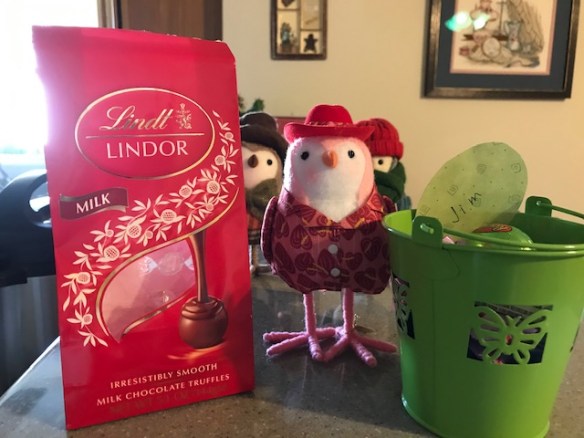
As a bonus, I was thinking this week of how many things we had done in the couple of weeks before the virus impact started: going on our Biltmore visit, having lunch with a friend, my son getting his cat, even buying Easter basket things. Most of those would not be possible now.

I hope in the midst of changed schedules and new concerns, you’ve seen God’s hand at work as well. What’s one good thing from your week?

Book Review: Be Reverent

Warren Wiersbe has written a “Be” series commenting on almost every book of the Bible. The individual books cover more than a study Bible would, but they are not as in-depth as some commentaries. They are good study aides. Wiersbe gives background information, word meanings, different interpretations for passages as well as his reasons for the interpretation he chooses, and applications for modern-day believers. His style is easy to read.

The books are available in paperback, but I often see a few at a time on Kindle app sales for 99 cents to $1.99. I’ve collected most of them, but, I’m sorry to say, they stayed tucked away and forgotten in my app.

Our church has been reading trough Ezekiel for the last several weeks. Ezekiel is known for having some of the toughest passages in all of Scripture to understand and interpret, so I figured perhaps a bit more help than my study Bible might be needed.

Wiersbe sets the theme for Ezekiel right in the title: Be Reverent (Ezekiel): Bowing Before Our Awesome God. Judah had been taken over by the Babylonians, and most of the nation was sent to Babylon in three different deportations. God had called Jeremiah to warn the people before the kingdom fell to Babylon. He called Ezekiel to preach to the people in Babylon.

Many prophets would act out object lessons for the people. But Ezekiel seems to have been given not only the most of what the ESV Study Bible calls “street theater” messages, but also the most unusual. Wiersbe calls them “actions sermons.”

One of our former pastors taught that many of the prophets prophesied during the same era, and one reason was that different people responded to different personalities. Some may have thought Ezekiel a little weird or might have been uncomfortable watching him, but others would have been drawn especially because he was different.

Wiersbe points out several repeated phrases in the book:

  • God is called β€œLord God” (β€œ Sovereign Lord” NIV) over four hundred times.
  • “I am the Lord” occurs fifty-nine times.
  • “You will know that I am the LORD” (6:7 NIV) . . . is found seventy times.
  • Ezekiel is called “son of man” ninety-three times.
  • “The phrase ‘the word of the Lord came’ is used fifty times in his prophecy and speaks of the authority of his message, and ‘the hand of the LORD’ is found also in Ezekiel 3: 14, 22; 8: 1; 33: 22; 37: 1; and 40: 1. The word of the Lord brings enlightenment and the hand of the Lord enablement (see Eph. 1: 15–23).”

Wiersbe notes that “The Jews were sinning against a flood of light” in that they had the books of Moses, “knew the terms of the covenant,” had heard the messages of several prophets, “yet persisted in disobeying God’s will.” “The attitude of the people wasn’t that of militant opposition but rather passive indifference.” “In their pride, they had cultivated a false confidence that the Lord would never allow His people to be exiled or His temple destroyed, but their sin had now ‘matured’ and both were now about to happen.”

We must correctly distinguish regret, remorse, and true repentance. Regret is an activity of the mind; whenever we remember what we’ve done, we ask ourselves, β€œWhy did I do that?” Remorse includes both the heart and the mind, and we feel disgust and pain, but we don’t change our ways. But true repentance includes the mind, the heart, and the will. We change our minds about our sins and agree with what God says about them; we abhor ourselves because of what we have done; and we deliberately turn from our sin and turn to the Lord for His mercy.

Ezekiel assured the people that “Though His people were in exile and their nation was about to be destroyed, God was still on the throne and able to handle every situation. In His marvelous providence, He moves in the affairs of nations and works out His hidden plan.”

Ezekiel had to deal with the people about their sin and idolatry, but he also held out hope that one day God would set up a future shepherd (34:22-24), a covenant of peace (34:25-31), and His presence with them (34:30; 48:35).

One of the applications Wiersbe says Ezekiel brings out for us is “Too much so-called worship is only a demonstration of man-centered religious activity that fails to bring glory to the Lord.” He warns against falling into the trap Judah did in keeping outward forms of worship and religious activity without engaging the heart.

There is a lot of controversy in Ezekiel, too, especially over what the details of the new temple mean in the last few chapters.

There’s so much more, both to Ezekiel and Wiersbe’s comments. But perhaps this gives you taste of both. I’m looking forward to exploring more of the “Be series” in the future.

(Sharing with Carole’s Books You Loved, Booknificent)

An Anxiety Playlist

anxiety playlist

A book I am reading lists a few titles from the author’s playlist at the end of each chapter. I’m not familiar with most of the songs so far. But her playlist sharing gave me an idea.

One of my playlists centers around anxiety and peace. With all that’s happened in the last couple of weeks, music is a welcome respite. However, though any music might take our minds off troubles, music seeped in Scripture helps take our thoughts captive and fills our minds with truth.

So I thought I’d share some of the songs that most help me when I am feeling anxious or even when I just need the reminder that God is in control and will take care of us. Some of these are by the same singers as the ones in my playlist. But I don’t know some of these folks: some of the songs in my phone don’t have a corresponding YouTube video, so I looked for one that sounded the closest to what I have. And I added a few that I don’t have recordings of but sing to myself.

This one is filled with so much good truth:

“Still, My Soul, Be Still” by Keith and Kristyn Getty and Stuart Townend, sung by the Pettit Evangelistic Team. You can find the words here. I’m not posting much of the lyrics because I’m not sure what the copyright restrictions are.

This one, “How Can I Fear With Jesus,” was written by Ron Hamilton. I think it was originally written for children for his Patch the Pirate character. But good children’s songs are good for adults too. The words are on the video, but they are also listed here.

This another one written for children but good for everyone: “Peace,” written by Bob Kauflin, sung here by the Galkin Evangelistic Team (words here). This one is special to me because the first time I heard it was the week after our pastor announced he had terminal pancreatic and liver cancer six years ago (he passed away just a few months later.) The children’s choir director didn’t come up with this song after hearing that news: the children had been practicing it for weeks, long before they knew this news was coming. That was a special message of comfort for our folks.

I have three different version of “Be Not Afraid” on my phone. It’s written by Taylor Davis, orchestrated by Dan Forrest. I can’t find the lyrics online, but they’re taken from Isaiah 43:1-7. I’ve always been struck by the fact that this passage doesn’t say if you pass through the water and fire, but when. (There is a similar song by the same name,based on Isaiah 43:1-4, written by Craig Courtney, which I have on the Soundforth Singers CD, Refuge, but I can’t find it on YouTube).

A different song based on the same passage written by Mac Lynch is “Don’t Be Afraid”: the words are underneath the video on YouTube.

This, “Do Not Let Your Heart Be Troubled,” was written by Lloyd Larson. I have it on the Soundforth CD, When Jesus Comes. That rendition isn’t on YouTube, but this is the same arrangement. The lyrics are based on John 14:1.

“I’ll Never Forsake You,” written by David L. Ward, is another deeply meaningful one to me. Words and a bit of background are here.

.

“Jesus, I Am Resting, Resting” is an old beloved hymn by Jean S. Pigott (words here). I love the traditional melody, but I love this newer one, too:

This one, “Rest,” I know little about except that it’s written by by Phill McHugh and Greg Nelson. It’s on my phone sung by the National Christian Choir, but I couldn’t find a video of their version. It’s much like this one, however. I first heard it on afternoon on the radio when I was waking up from a nap and have loved it ever since.

This is an old one: “Simply Trusting” by Edgar P. Stites in 1876, music by Ira Sankey (words and a bit of background here.). This video is instrumental, but includes the written words. The chorus comes to mind often:

Trusting as the moments fly,
Trusting as the days go by;
Trusting Him whate’er befall,
Trusting Jesus, that is all.

Another old but good one: “Tis So Sweet to Trust in Jesus,” written by by LouΒ­iΒ­sa M. R. Stead in 1882 (words here):

And, of course, an old one that speaks straight to the subject: “All Your Anxiety” by Edward H. Joy (words here).

“Peace, Perfect Peace” by EdΒ­ward H. BickΒ­erΒ­steth, Jr., 1875.

Peace, perfect peace, in this dark world of sin?
The blood of Jesus whispers peace within.

Peace, perfect peace, by thronging duties pressed?
To do the will of Jesus, this is rest.

Peace, perfect peace, with sorrows surging round?
On Jesus’ bosom naught but calm is found.

Peace, perfect peace, with loved ones far away?
In Jesus’ keeping we are safe, and they.

Peace, perfect peace, ’mid suffering’s sharpest throes?
The sympathy of Jesus breathes repose.

Peace, perfect peace, our future all unknown?
Jesus we know, and He is on the throne.

Peace, perfect peace, death shadowing us and ours?
Jesus has vanquished death and all its powers.

It is enough: earth’s struggles soon shall cease,
And Jesus call us to Heaven’s perfect peace.

A newer one titled “Perfect Peace” by Joe Zichterman (words are under the video as well on YouTube).

And another newer one, “Hide Away in the Love of Jesus” (also called “Come Weary Soul,” by Steve and Vickie Cook, words here.)

And I think I’ll end with this one, because ultimately it comes down to remembering who God is and trusting Him: “Bow the Knee” by Chris Machen and Mike Harland (words here). (For those of you who know Ron Hamilton’s music, he has a different song by the same title with a little different focus.)

Well, that’s much more music than any of you can listen to in the time you have to visit, I’m sure. But perhaps you found an old or new favorite, and I hope your heart has been encouraged.

Are there any particular songs that help “calm and quiet your soul?”

(Sharing with Grace and Truth, Faith on Fire, Inspire Me Monday, Global Blogging,
Senior Salon, Hearth and Home, Purposeful Faith, Tell His Story, Happy Now,
InstaEncouragement, Worth Beyond Rubies, Anchored Abode, Let’s Have Coffee,
Heart Encouragement.
Links do not imply complete endorsement.)


How to Avoid Spiritual Automatic Pilot

IMG_2125?ver2I made two mistakes one day that could have been serious.

The first thing I do after I stumble out of my bedroom in the morning is take a pill that needs to be taken on an empty stomach. Then I use my exercise bike, have a quiet time with my Bible and the Lord, shower, have breakfast. After that, I take other medications that I am supposed to take with food.

One Saturday after breakfast, I opened my medication container sorted by day and took the first pill. Then I realized I had actually opened the p.m. side rather than the a.m. No problem: that medication was one I took twice a day. So I opened the a.m. side to take the rest, only to discover that same medication was already gone from that side, and the one I usually take first thing in the morning was still there. I must have taken the wrong medication first thing in the morningβ€”but now I had taken both the morning and evening doses within three hours of each other instead of twelve.

I called the pharmacist immediately to see if I was going to face any dire consequences due to my carelessness. Thankfully, she assured me that some people do take twice the dosage I usually do and told me just not to take any more til the next day.

While immensely relieved, I was also chagrined because this was not the first time I had a medication mix-up. I had purchased my pill sorter to help me keep better track of my medications. But I still have to remind myself not to be distracted or go on automatic pilot while taking them. I need to stop, think, and pay attention.

Automatic pilot isn’t always a bad thing. If you ask me on any given day if I washed my armpits or knees in the shower, I wouldn’t be able to tell you. But I trust the routine process covers all the bases without my thinking about it much. A friend said that operating on automatic pilot got him through the first months after his wife’s death.

Automatic pilot in other areas can cause a range of problems, though. If I am not paying attention while driving, I might miss my turn, drift into the next lane, or miss the person speeding through the red light. I recently turned on the most-used stove burner rather than the one I needed and caught a nearby piece of waxed paper on fire (which thankfully burned itself out in seconds).

It’s all too easy to operate on automatic pilot in my spiritual life as well. I can check off my daily Bible and devotional reading and not remember an hour later what I read. I can pray, lapsing unwittingly into all the same phrases. I can go through the day without seeking God’s guidance and help, unless a major problem arises.

There are a number of ways I can combat automatic pilot living.

Be alert

When I take medicine or drive, I need to be alert. Multitasking is fine with some activities but deadly for others. The same is true spiritually.

Ephesians 8:16 says, “praying at all times in the Spirit, with all prayer and supplication. To that end, keep alert with all perseverance, making supplication for all the saints.” The Greek word for alert means “to watch; give strict attention to, be cautious, active; to take heed lest through remission and indolence some destructive calamity suddenly overtake one.” It’s often translated “watch,” but is also translated “wake” and “vigilant.” It’s used in connection with:

  • prayer (Ephesians 6:18, Colossians 4:2)
  • watching for the Lord’s return (Matthew 24:42-43; 25:13; Mark 13:34-35; Luke 12:37-39; 1 Thessalonians 5:1-7)
  • watching out for false teachers (Acts 20:29-32)
  • guarding against Satanic attack (1 Peter 5:8)
  • In Revelation 3:1-3, the ESV uses “wake up” while the KJV uses “watch”: “I know your works. You have the reputation of being alive, but you are dead. Wake up, and strengthen what remains and is about to die, for I have not found your works complete in the sight of my God. Remember, then, what you received and heard. Keep it, and repent. If you will not wake up, I will come like a thief, and you will not know at what hour I will come against you.”

I shouldn’t walk around half-asleep and inattentive, physically or spiritually.

Be careful

When I operate on automatic pilot, I’m not cautious, not aware of danger, not engaged. Ephesians 5:15 says, “Look carefully then how you walk, not as unwise but as wise.” I like the word the KJV uses: circumspectly. I need to pay attention to my thoughts and actions rather than just drifting through the day.

I need to watch out not only for negative thoughts and attitudes, but I need to look for active ways to minister to others. I’m too often caught up in my own head and miss ways to bless others.

Be purposeful

Any relationship can grow stale when one person stops appreciating the other and starts taking the other for granted. It’s possible to go through daily routines side by side without connecting.

When I read the Bible, pray, attend church, I need to remember that the Christian life is not just a series of duties. It’s a relationship.

Routines can help us maintain good habits. One key to having a regular devotional time is setting a regular time, place, and plan to follow. But if routine creeps into our thinking, we find ourselves just going through the motions.

Nancy DeMoss Wolgemoth said in A Place of Quiet Rest, “But if your study of the Word does not lead you to know God, you have missed the whole purpose” (p. 56). When I pray, I need to remember Who I am talking to and why. When I go to church, I need to remember this is not just what we do on Sunday morning: we’re going to hear God’s Word and fellowship with His people.

Be focused

We always have distractions. They may not be bad in themselves, and they don’t mean there’s anything wrong with us. But we do have to deal with them. One near medication mix-up occurred when I was talking to my son. I needed to either wait til we were finished or ask him to give me a second to attend to what I was doing before resuming the conversation.

We can be distracted by entertaining things, mind-numbing things, or hard things. The current crisis can draw us into a closer dependency on and hope in God, or it can distract us from Him. No matter what else is going on in our lives, we need to remember God’s Word is our truth, food, hope, guidance, and so much more. We may have to adjust our usual course of reading, but we need to keep time with God the priority of the day.

Be engaged

God told Israel in Amos 5 that He hated their sacrifices, offerings, and feasts (see also Isaiah 1:11-20). Hated them? Didn’t He ordain them, require them? Yes. But the offererers weren’t seeking Him (verses 5-6) and their lifestyles were full of injustice and oppression (10-13) and worship of idols and false gods (26). In Hosea 6:6, God said, “For I desire steadfast love and not sacrifice, the knowledge of God rather than burnt offerings.” He wants our obedience, yes, but He wants our hearts most of all.

Though we don’t observe the OT sacrificial system today (see Hebrews), it’s still all too easy to lapse into the forms of worship without engaging our hearts

I remind myself to stop and think before taking medication. I often pray before I drive that God will help me be watchful and careful. And I pray that God will help me stay spiritually focused, alert, intentional, and engaged.

What ways have you found to avoid automatic piloting?

(Sharing with Inspire Me Monday, Global Blogging, Senior Salon, Hearth and Home, Purposeful Faith, Tell His Story, Happy Now, InstaEncouragement, Anchored Abode, Recharge Wednesday, Worth Beyond Rubies, Share a Link Wednesday,
Let’s Have Coffee, Heart Encouragement, Grace and Truth, Faith on Fire.,
Blogger Voices Network. Links do not implyΒ  100% agreement.)

Laudable Linkage

IMG_0195

I don’t want to “laud” my own writing, but I wanted to let you know The Perennial Gen published a piece I wrote titled “Limitations Don’t Limit Your Ministry.”

Here are some great reads discovered this week:

How to Study Your Bible in 2020.

How a β€œYou do You” Culture Has Made Us Vulnerable to the Coronavirus, HT to Challies. “We can only stop the virus by doing what is best for others not just for ourselves.”

A Life That Points Others to Christ. “My most earnest prayer is that when someone hears my testimony, they would be compelled to go find Jesus and His Word for themselves.”

God Is Always Good. “We evaluate God’s character based on our circumstances, when we should evaluate our circumstances based on God’s unchanging character.”

Safe, HT to Challies. A poem by Paul Tripp.

β€˜Progressive’ Christianity: Even Shallower Than the Evangelical Faith I Left, HT to Challies. β€œI’ve walked in both shoes: the shoes of those who deserted and the shoes of Peter who couldn’t leave, no matter how hard it seemed to stay. I was an #exvangelical who left the faith of my youth for β€˜progressive Christianity.’ Then I returned. Here’s my #revangelical story.”

Was Jesus Married to Mary Magdalene? Revisiting a Stubborn Conspiracy Theory, HT to Challies. In a word, no. This post debunks some of the false claims.

Surrendering Control When Facing Coronavirus, or any other situation where we don’t have control. “I’ve found it helpful, when facing out-of-control situations that cause me anxiety, to sort my concerns into two categories: 1. What I Can Control; 2. What I Cannot Control.”

3 Ways of Confronting the Problem of Diminishing Attention Spans Through the Great Books, HT to Challies. Good reasons to read the classics.

Guides for Kids and Middle-Schoolers to Take Notes During the Sermon, HT to Challies.

The Story Warren has a round-up of “awesome good-priced, free, discounted, livestreamed, giveaway, etc., stuff” being offered online during our “sheltering at home.”

Finally this video shows How Soap Kills the Coronavirus, HT to Challies.

Have a good Saturday, and stay safe.

Friday’s Fave Five

It’s Friday, time to look back over the blessings of the week
with Susanne at Living to Tell the Story and other friends.

What a week! In these times where there are so many causes for concern, it’s more important than ever to consciously note the blessings God has graciously sprinkled through our days.Earlier,Β  I wrote a specific list about what I am thankful for during the coronavirus pandemic. Here are some other blessings:

1. Pi Day. We celebrate Pi Day because the date, 3.14, is the value of pi. And any excuse to eat pie is a good one. πŸ™‚ But then my husband noticed that the value of pi written backwards also spells pie!

Pi dayWe had Hamburger Pie for dinner (no crust, but a meatloaf-type texture on the bottom topped by mashed potatoes and cheese), and Mittu brought a great salad. Then we had Chocolate Pretzel Pie for dessert.

Pi Day dinner2. Spring is here! The signs of spring are hearteningβ€”daffodils coming up, flowering trees blooming. But knowing that we’re now officially in spring boosts my spirit.

3. Pink heart bird feeder. I found this in a bargain bin a while back, but stashed it in my closet. Now that the weather is nicer, I need to figure out where to put it. I probably won’t use it as a feeder–I’d have to refill it several times a day.

4. Supplies. Thankfully we were pretty well set for most supplies when the mania hit. I try to buy one or two ahead of most toiletries and some nonperishables anyway. Two stores were out of TP, but my husband found some at a local discount store and my son found some for his family at Walgreens. I found most of the grocery items I needed this week. Hopefully by the time we start running out, the stores will be replenished. I’ve seen notices that most stores will limit the purchase of certain items to combat hoarding.

5. Providential reading. I’ve had Breaking Anxiety’s Grip by Dr. Michelle Bengston on my shelf since September. I picked it up several weeks ago, then set it aside for some Easter reading. When my regular Bible reading ran shorter than usual this week, I picked this book up again. It was just what I needed this week! The truth that dealing with anxiety, worry, and fear is not a one-time event, but a process, and several paragraphs on relinquishing control to God especially hit home. Also, she quoted Psalm 131:2. I was used to the KJV version, which says, “I have behaved and quieted myself,” but other versions say “I have calmed and quieted my soul.” Reading it that way reminded me that “calmed” and “quieted” are actions verbs, and that we can and should remind ourselves of the truth and comfort of God’s Word.

That’s my week. How was yours?

Things I Am Thankful for During the Coronavirus Pandemic

IMG_2116?ver2

These are certainly unsettling times. I have never seen anything like the coronavirus or the mass panic buying.

We all have a number of concernsβ€”the spread of the virus, health and safety of ourselves and our loved ones, availability of supplies, the economic impact of closed or reduced businesses, and so much more. I’ve cycled through feeling mildly ill-at-ease to full-blown panic to peace and back again. Perhaps you have, too.

As with any other crisis, we remind ourselves of what we know to be true. This situation has not taken God by surprise. He knows our needs. He cares even about a sparrow falling. All our worrying can’t add an hour to our lives and will only make us miserable. If God allows us to suffer in some way, He will provide the grace to deal with it.

As I calm and quiet my soul, I have found plenty to be thankful for.

  • The speed of communication. The Spanish flu, the “Black Death,” and other epidemics spread quickly far and wide before anyone could get on top of them. Even though the current virus spread through our global traveling, global communication got the word out quickly. Every day we can get new information and recommendations almost immediately.
  • Medical technology. We live in unprecedented days for medical research, testing, sharing knowledge and equipment.
  • High levels of sanitation. We’ve come a long way since the plagues of yesteryear in our basic knowledge and practice.
  • Easy ways to sanitize. Though supplies are short right now, most of us already had hand sanitizer, wipes, etc. on hand.
  • Many ways to keep in touch. Social distancing is hard on several levels. But we have phones, texting, FaceTime, social media, and other ways to keep in touch with and check on each other. Churches and other groups have found a way to “virtually” meet. Even though all these are not quite the same as being together, they are far better than nothing.
  • A number of ways to keep busy and entertain ourselves at home. Books, home projects, games, program streamingβ€”we’ve never had more access to more means of entertainment than we do now.
  • Time. I’ve seen friends on social media mention time to slow down, to just hang out with their kids.
  • Humor. Even though the virus is serious, a bit of humor diffuses tension. I don’t know if I ever enjoyed America’s Funniest Home Videos more than I did this week. Clever memes and comments on Facebook and Twitter about the realities of a socially distanced life bring a smile.
  • Courageous and generous people. We’ve been frustrated by those who hoard needed goods and then try to profit by selling them or by price gouging. But many other people are going the extra mile, like health care workers. I read of authors helping other authors whose book launch events were canceled. I’ve heard individual stories of ways someone showed a bit of kindness here or there in stores or other places.
  • The ability to work and take classes at home. No, not everyone can work from home. But everyone who can helps “flatten the curve” that much more and helps all the rest of us. Online teaching ensures that the academic year isn’t lost.
  • Better economy and stewardship. I’ve had a tendency to use some supplies as if they will always be available. Putting more thought and care into how I use things will hopefully carry over when life gets back to “normal.”

All of us face degrees of disappointment in our current situation. Long anticipated commencement services, trips, conferences, and outings have all been cancelled. But comparing what could have been, what has been in past epidemics, to what’s going on now will give us a better perspective.

And some of the systems I mentioned still have room for improvement. But better minds than mine are working on those issues, and we need to give grace that most are doing the best they can in unprecedented circumstances.

Much is out of our control. But we can trust God and take measures to help, to foster safety, and to love our brethren.

Have you found anything to be thankful for during the current crisis?

_____

(I don’t mean to minimize the pain some are going through from illness, loss of someone they loved, or dire need. My heart goes out to those folks. Certainly we need to reach out and support them. But in one sense, that’s all the more reason to be thankful for the steps that are being taken so that as few people as possible will experience this virus.)

(Sharing with Grace and Truth, Inspire Me Monday, Global Blogging, Senior Salon,
Hearth and Home, Purposeful Faith, Happy Now, InstaEncouragement,
Worth Beyond Rubies, Let’s Have Coffee, Heart Encouragement.
Links do not implyΒ  100% agreement.)

Book Review: The Last Castle

The Last Castle: The Epic Story of Love, Loss, and American Royalty in the Nation’s Largest Home by Denise KiernanΒ The Last Castle: The Epic Story of Love, Loss, and American Royalty in the Nation’s Largest Home by Denise Kiernan is about the Biltmore House in Asheville, NC, and the people involved with it. I wanted this book first of all because the Biltmore has been a favorite place to visit. But Denise’s previous book, The Girls of Atomic City, about the rising up of the Secret City of Oak Ridge, TN during WWII, was so well done and enjoyable, I knew she would do an equally good job with the Biltmore’s history.

George Washington Vanderbilt’s grandfather, Cornelius, made his fortune in the railroads. He also had Grand Central Station built. I was thankful I had read Mark Twain’s The Gilded Age last year, because that book covers this era. The old-family-money folks, the Four Hundred, as they were called, looked down on the new-money people like Cornelius Vanderbilt. Cornelius himself was rather rough around the edges.

But by George’s time, the family members were accepted in society. His two older brothers took over the family business, but George had no interest in it. He was introverted and liked reading, travel, and art. He kept record of the books he read and, as an adult, “averaged eighty-one books a year” (p. 126).

Diary entries from when George was thirteen years old reveal him to be a penitent, thoughtful young man: “I read my Bible this morning and began Isaiah and I think that was what made me feel so happy through the day. . . I have been reading a book this afternoon from which I ought to learn a very useful lesson of truth and gaining control over my temper, but I can do nothing without God’s help because if I rely on my own resolution I am sure to fail. . . . I don’t think I have spent today as I should have done. I have trusted too much in my own ability and not enough in Jesus (p. 12).

At age twenty-five, George visited the Asheville, NC, area with his mother, who was recovering from malaria. George himself did not have a robust constitution, and tuberculosis was a feared disease at the time. Asheville had several “breathing porches” for those wanting fresh mountain air. When George saw Mt. Pisgah, he fell in love with the area. It was common for prominent NY families to have summer homes, and George decided this was the place for his. He began quietly buying tracts of land.

Construction began in 1889. George hired famed architect Richard Morris Hunt to construct a home out of Indiana limestone to look like a French chateau. Frederick Law Olmsted , who constructed Central Park in NY, supervised the grounds. The land had been severely depleted, and Olmsted “was not impressed.” But he did a masterful job, considering not only what the landscape needed at the time, but how it would grow in the next hundred years.

George opened the home to family and friends in 1895, but it was far from finished. Construction went on for anther five years, but some parts of the house were still unfinished when George died.

George was still a bachelor until age thirty-five. I enjoyed hearing how George’s sisters encouraged one of his friends to arrange time for George and Edith Stuyvesant Dresser to have time alone together while on a ship to Paris. Edith was from one of the “four hundred” families, but both her parents had died and the family’s funds had greatly dwindled.

George and Edith were married in 1898. Their only child, Cornelia, was born in 1900.

Edith was the perfect choice for George’s wife and the lady of Biltmore. She “strode deftly between these two worlds, one of Victorian elegance, the other of rugged mountain simplicity. She may have appeared to live the life of the elite, but to those beyond the iron gates of the estate, Edith quickly emerged as one who was decidedly of the people” (p. 156).

George had plans for the estate to become self-sustaining. That didn’t happen for decades, but he started a dairy, was responsible for the first forestry school, and had several other plans for a working estate.

George and Edith were both involved in numerous charitable endeavors. George built a village for estate workers and funded the building, upkeep, and personnel of All Souls Episcopal Church. Edith not only provided funds but actively participated in several endeavors in the area.

Though George Vanderbilt was not a statesman, his contributions to history, culture, and forestry cannot be denied as he employed some of the greatest minds behind America’s civic, private, and untamed places. Though Edith was not the wife of a president, her tireless efforts in the community changed many a life; ensured the education of those with limited access to school, books, and teachers; and fostered craftsmanship and self-sufficiency (p. 302).

Sadly, George died fairly young, at age 51, after an appendectomy. The estate cost a great deal of money to keep up. Edith sold land to create the Pisgah National Forest, eventually sold off Biltmore Industries, and took various measures to preserve George’s dream.

In 1930, Cornelia and her then husband, John Cecil, opened the house to the public. It still took several years before the estate became truly self-sufficient and then started turning a profit. The Cecils divorced, with John staying in the bachelor’s wing of the estate and Cornelia selling out her portion. The house eventually came to George’s youngest grandson, William Cecil. George’s great-grandson was the current CEO at the time the book was written. Over time, the Cecil family added new features (a winery, inn, Antler Village, etc.).

The Biltmore is still privately owned. “Private ownership means that the estate receives no government grants, nor is it eligible for any associated not-for-profit tax breaks. Property and inheritance taxes remain a financial hurdle to be cleared” (p. 298).

The book goes on to tell what happened with each of the family members and many of their friends, the effects of the Depression, WWII (the Biltmore secretly stored art from Washington, DC, in case of attack on the capital), a record-setting destructive flood, and changes of times and tastes. If you’re familiar with Downton Abbey, one of the overarching themes of the show was the family’s adjustment to the major changes of the times. Those associated with the Biltmore faced these changes, too, from Gilded Age opulence to the Progressive Era and Arts and Crafts movement. “The artificial would soon give way to the natural; that which was of the elite, would soon be of the people” (p. 156). A caption under one picture of the house says, “No home in the United States has ever come close to beating the size of the 175,000-square-foot Biltmore House. But its greatest achievement may well be the fact that it has survived into the twenty-first century while other Gilded Age masterpieces have long since disappeared.”

There are so many other tidbits from the book I’d love to share (the effects of the estate on the area, a number of authors associated with Asheville, Cornelia’s life, the associations with the Grove Park Inn, which we have visited several times, and so much more.) But this post is quite long already.

I wish we could have gotten to know a bit more about the Vanderbilt family member’s personalities: Denise wished that, too, but there were not many diaries or personal letters to draw from.

My only small disappointment with the book is the cover. While the Biltmore is glorious at night, a daytime shot with the hills behind, the esplanade in front, and the grounds is so much prettier.

Denise has done tremendous amounts of researchβ€”there are over 50 pages of end notes. Yet she has managed to weave all this detail into a flowing and fascinating story.

One of the things I love about the Biltmore is that the whole house is a work of art. Every aspect was crafted with thought and taste. And, as Denise says:

Though it may be necessary to look past a sea of Bermuda shorts and ball caps and navigate legions of audio-tour zombies, a walk through the house today can transport you. . . . Walking the halls of Biltmore House for a day is a journey back in time (p. 297).

If you have an interest in the Biltmore House, the Vanderbilts, or this time in history, you’ll love The Last Castle.

(Sharing with Carole’s Books You Loved, Booknificent)


Let Trouble Draw You Nearer

Let troubles draw you to God

When loved ones go through hard things, I pray that they may be drawn closer to God in all that is happening to them. I know that trials have the potential to turn people away from rather than to God.

In thinking through some of the reasons God allows suffering recently, part of me marveled that God would risk the negative reactions some people would have. Some get angry and rail against God or the universe or their loved ones. Some fear and panic.

But faith is strengthened by testing. And some people won’t turn to God until they are put in a position where there is no other choice.

Thankfully, as the psalms indicate, many work through the bad reactions, remind ourselves of what we know to be true about God, and rest in Him

As we experience this current pandemic, I’ve seen a variety of reactions already. Many are tense and on edge in the face of uncertainties: health of self and loved ones, possible lost time from work, shortage of supplies.

Hudson Taylor once said, β€œIt does not matter how great the pressure is. What really matters is where the pressure lies — whether it comes between you and God, or whether it presses you nearer His heart.”

Let these current trials and pressures draw you to Him. Don’t let them come between you. He knows what’s going on in the world. He is wise, kind, loving, and good. “God is our refuge and strength, a very present help in trouble” (Psalm 46:1). He has promised to supply all our needs.

Do the practical things: wash hands, disinfect, avoid crowds. etc. But in faith. And, as Laura said, watch out for others who night need extra help in times like this.

A stanza in Henry Lyte’s hymn, “Jesus, I My Cross Have Taken,” says:

Man may trouble and distress me, ‘twill but drive me to Thy breast.
Life with trials hard may press me; heaven will bring me sweeter rest.
Oh, ’tis not in grief to harm me while Thy love is left to me;
Oh, ’twere not in joy to charm me, were that joy unmixed with Thee.

(Sharing with Inspire Me Monday, Global Blogging, Hearth and Home, Senior Salon, Purposeful Faith, Tell His Story, InstaEncouragement, Happy Now,
Recharge Wednesday, Worth Beyond Rubies, Share a Link Wednesday,
Let’s Have Coffee, Heart Encouragement, Faith on Fire, Grace and Truth,
Blogger Voices Network)

Laudable Linkage

IMG_0195

These are some noteworthy reads if you have time today:

Look for Life Among the Living. “Don’t seek the living among broken mirrors, unfulfilled longings, and external doings. He is not there. He has risen!”

Never Read a Bible Verse (and Never Listen To a Sermon Clip). “I read the paragraph, not just the verse. I take stock of the relevant material above and below. Since the context frames the verse and gives it specific meaning, I let it tell me what’s going on.”

Allow Parenting to Push You Toward Humility. “We can admit our own shortcomings while also pointing our children to the truth of God’s word. To do one without the other is not true discipleship”

We Are Okay, and We Are Not Okay, HT to the Story Warren. From a family 40 days into quarantine in China. “If I only go where I feel safe, is that trust? If I only follow where I am guaranteed to be okayβ€” health or otherwiseβ€” will my faith grow? If I only wander as far as I have placed my own protective boundaries, will I know the ever-sweeter presence of a Savior who would take me to the heights? Or will I be safe, but stunted?”

Your Child May Not Ask Questions, But He Needs Answers Anyway. “Kids are interesting little people. They are always thinking, always assessing, always making decisions in their minds about how things are. I think we forget that about them. We assume that if they aren’t talking about it, they aren’t thinking about it, but nothing could be further from the truth.”

And to end on a smile:

Happy Saturday!